品牌年轻化转型

Search documents
张小泉归母净利最高预增171.53% 产品矩阵扩容打破刀剪品类依赖
Chang Jiang Shang Bao· 2026-01-18 23:50
Core Viewpoint - Zhang Xiaoqin, a time-honored brand with nearly 400 years of history, is expected to achieve a significant increase in net profit for 2025, projecting between 48 million to 68 million yuan, representing a year-on-year growth of 91.67% to 171.53% [1][2] Group 1: Financial Performance - The company reported a net profit of 37.976 million yuan for the first three quarters of 2025, showing an increase of over 120% year-on-year [2] - The overall gross profit margin reached 38.52% in the first half of 2025, an increase of 2.01 percentage points year-on-year, indicating the ongoing profitability effects of product upgrades [3] Group 2: Product and Brand Strategy - Zhang Xiaoqin has optimized its product structure, focusing on "defining consumption scenarios" and launching a series of new products, creating a diversified product lineup that includes high-end kitchen knives, aesthetic cookware, and personal care hardware [2] - The company has transitioned from being a "knife and scissors expert" to a "kitchen lifestyle brand," successfully winning a significant order from China Telecom for new kitchen products [3] Group 3: Channel Strategy - The company employs an omnichannel strategy, integrating online and offline efforts to enhance channel efficiency and drive sales growth [4] - Online sales have been boosted through platforms like Tmall and JD, while also exploring interest-based e-commerce channels like Douyin, leveraging user data for better decision-making [4] - Offline, the company has strengthened partnerships with major retailers and opened new types of stores, such as scenic area stores and cultural experience stores, to enhance consumer experience and channel coverage [4] Group 4: New Growth Opportunities - In January 2026, the company entered the China Telecom Xinwei Preferred Points Exchange platform, expanding its product reach through collaboration with a major telecom operator [5] - The company's diversified channel strategy is proving effective, contributing to tangible performance growth and positioning it well for future market expansion [5]
“衣中茅台”比音勒芬注销合伙企业重归主品牌
Jing Ji Guan Cha Bao· 2025-12-26 07:50
Core Viewpoint - The high-end menswear brand Bi Yin Le Fen (002832.SZ), once dubbed the "Moutai of clothing," has announced the dissolution and liquidation of its controlled investment fund, Guangzhou Hou De Zai Wu Industrial Investment Fund Partnership (Limited Partnership), due to underperforming luxury brand acquisitions [1][2]. Group 1: Fund and Acquisitions - The fund was established in 2022, with Bi Yin Le Fen contributing 748.9 million yuan, holding a 99.86% stake, primarily for acquiring global trademark rights of the French brand "CERRUTI 1881" and the British brand "KENT&CURWEN" [1]. - The company invested 57 million euros and 38 million euros for the acquisitions in 2023, aiming to promote brand internationalization [1]. - Both brands had a history of ownership changes and operational struggles before being acquired, with CERRUTI 1881 known for menswear and accessories, and KENT&CURWEN recognized for its association with David Beckham [1]. Group 2: Performance Challenges - Post-acquisition, the brands did not achieve the expected recovery, attributed to the company's lack of experience in operating high-end luxury brands and a cooling global luxury market, alongside declining demand for men's formal wear [2]. - The fund is projected to incur losses in 2024 and the first half of 2025 [2]. - The company faces dual challenges: revitalizing the two international brands and advancing the main brand's youth-oriented transformation to attract Generation Z consumers [2]. Group 3: Strategic Adjustments - By dissolving the fund, the company aims to transfer the related brand assets into the listed company structure for direct management, intending to optimize cost structure and operational efficiency [2]. - The future performance of the international brands and the success of the youth-oriented strategy will be critical factors influencing the company's development [2].

老凤祥:公司优化业务体系组建成立电商部
Zheng Quan Ri Bao Wang· 2025-12-03 13:15
Core Viewpoint - The company is transforming its business model by establishing an e-commerce department and integrating online and offline sales strategies to attract a diverse customer base [1] Group 1: Business Strategy - The company has optimized its business system by forming an e-commerce department [1] - It is utilizing a combination of online and offline strategies, including member malls and private domain traffic [1] - The company is increasing advertising investments on new media platforms such as Douyin and Xiaohongshu [1] Group 2: Sales and Marketing - The company has opened an official flagship store on Tmall and is employing live streaming as a new sales method [1] - It is focusing on cross-industry collaborations with top IPs to attract younger consumers [1] - The company aims to enhance brand youthfulness through these marketing strategies [1] Group 3: Product Development - The company is capitalizing on the growth of national trend products by researching consumer needs and preferences [1] - It is deepening the cultural connotation of its brand and focusing on innovative research and development [1] - The company is continuously renewing and enriching its original design products [1]

旺旺真的“落伍”了吗?
Sou Hu Cai Jing· 2025-11-28 06:15
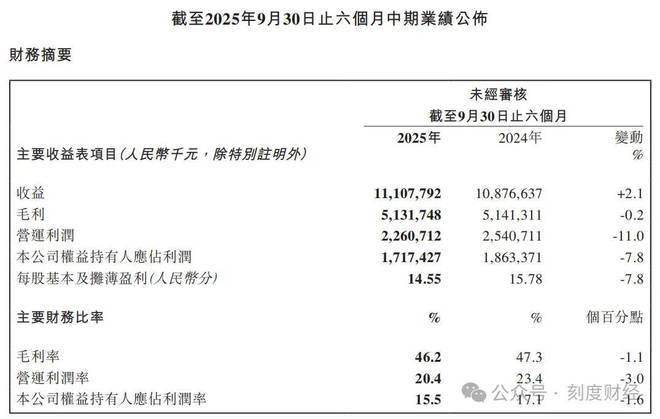
Core Viewpoint - China Wangwang's financial performance for the first half of the 2025 fiscal year shows a mixed result, with total revenue of 11.11 billion RMB, a year-on-year increase of 2.1%, while both gross margin and net profit margin are under pressure [1][5][6] Financial Performance - Total revenue reached 11.11 billion RMB, up 2.1% from 10.88 billion RMB in the previous year [3] - Gross profit decreased slightly by 0.2% to 5.13 billion RMB, resulting in a gross margin of 46.2%, down 1.1 percentage points [3][6] - Operating profit fell by 11% to 2.26 billion RMB, and profit attributable to equity holders decreased by 7.8% to 1.72 billion RMB [3][6] - Basic and diluted earnings per share dropped to 14.55 RMB, down 7.8% from the previous year [3] Market Position and Challenges - The company faces intense competition in the snack food industry, with rivals like Salted Fish and Three Squirrels gaining market share through targeted channel strategies and younger product offerings [4][11] - Rising costs of key raw materials, such as imported whole milk powder and palm oil, have negatively impacted profit margins, despite some decreases in other ingredient costs [7][10] - The shift towards lower-priced products in emerging channels has further diluted profit margins [7] Strategic Initiatives - Wangwang is expanding its online presence through platforms like Tmall, Douyin, and Xiaohongshu, and has established a matrix of self-operated flagship stores [5][22] - The company is also enhancing its offline channels by optimizing community stores and specialized outlets to improve brand reach [6][11] - Significant investments in marketing and promotional expenses have increased by 10.6% to adapt to new channel operations and brand rejuvenation efforts [8][10] Product Performance - The dairy and beverage segment, which accounts for 53% of total revenue, saw a slight decline of 1.1% to 5.94 billion RMB [12][14] - The snack food segment achieved a 7.8% increase in revenue, reaching 2.94 billion RMB, driven by double-digit growth in ice products and a focus on health-oriented offerings [14][15] - The rice cracker segment maintained steady growth, generating 2.13 billion RMB, up 3.5%, with an increase in gift product sales [14][15] Brand Transformation - Wangwang is undergoing a transformation to address its "mid-life crisis," focusing on product innovation, channel diversification, and marketing strategies to appeal to younger consumers [19][24] - New product lines, such as low-calorie snacks and health-oriented offerings, are being introduced to align with changing consumer preferences [19][20] - The company is leveraging its nostalgic brand image while attempting to engage younger audiences through innovative marketing campaigns and collaborations [23][24]

【IPO前哨】海澜之家闯港股:男装巨头失速,创二代能否破局?
Sou Hu Cai Jing· 2025-11-24 11:32
Core Viewpoint - The company, Hailan Home, is facing significant challenges as it prepares for its IPO in Hong Kong, including slowing growth and high inventory levels, despite maintaining its position as a leading men's apparel brand in China for 11 consecutive years [2][5][16]. Company Overview - Hailan Home, established in 1997, is synonymous with "value for men's clothing" and has rapidly expanded through a light-asset and franchise model, covering a wide range of men's apparel [3][5]. - At its peak, Hailan Home had a market share that ranked it first in China's men's clothing sector and second globally by 2024, with over 7,200 stores worldwide [5][16]. Current Challenges - The overall apparel industry is experiencing a downturn, with a reported 2.4% decline in industrial added value for major clothing enterprises in the first nine months of 2025, and a 16.19% drop in total profits [5][7]. - Hailan Home's revenue growth has stagnated, with a mere 3% increase in revenue to 11.24 billion RMB in the first half of 2025, while net profits have been declining [7][9]. - The company is grappling with a significant inventory issue, with stock levels reaching 11.52 billion RMB by September 2025, a 12.3% increase from June 2025, and an average inventory turnover period of 361 days [9][16]. Financial Performance - Hailan Home's gross merchandise volume (GMV), transaction numbers, and average store revenue have all declined since 2024, with 195 franchise stores closing in the first half of 2025 [7][9]. - The company's sales expense ratio has increased from 13.38% in 2020 to 24% in 2024, indicating rising costs associated with marketing and sales efforts [12][16]. Strategic Initiatives - The new leadership under Zhou Licheng has implemented various marketing strategies, including celebrity endorsements and a focus on online sales, but these efforts have not yet translated into significant financial recovery [10][12]. - Hailan Home has attempted to diversify its offerings by entering the sportswear market and expanding its international presence, with overseas revenue growing by 27.42% in the first half of 2025 [14][15]. Conclusion - The upcoming IPO in Hong Kong is seen as a critical move for Hailan Home to secure necessary funding to address its growth challenges, high inventory costs, and marketing expenses [16]. The company must shift its focus from mere expansion to quality growth through targeted marketing and product innovation to regain investor confidence [16].


华帝人事变动:两副总裁续任不足半年离职,韩伟接棒
Nan Fang Du Shi Bao· 2025-11-19 11:58
Core Viewpoint - The recent personnel changes at Vatti Corporation, including the resignation of two vice presidents and the appointment of Han Wei, are seen as strategic moves to enhance the company's marketing efficiency and adapt to industry challenges [1][8][10]. Group 1: Personnel Changes - Wang Cao and Jiang Lingwei resigned from their positions as vice presidents due to personal reasons, ending their terms ahead of schedule [1][9]. - Han Wei has been appointed as the new vice president, taking over the responsibilities of Wang Cao and Jiang Lingwei to integrate marketing operations [4][8]. Group 2: Company Strategy - The adjustments in leadership are part of Vatti's initiative to improve its marketing system and decision-making efficiency in response to industry challenges [8][10]. - The company aims to deepen its long-term strategy and enhance operational efficiency through these changes [8]. Group 3: Financial Performance - Vatti's financial performance has been under pressure, with a reported revenue of 4.16 billion yuan for the first three quarters of 2025, a year-on-year decline of 9.1% [9]. - The net profit attributable to shareholders was 360 million yuan, down 11.9% year-on-year, while sales expenses slightly decreased by 4.3% to 1.06 billion yuan, marking a sales expense ratio of 25.5%, the highest in three years [9][10]. Group 4: Industry Context - The kitchen appliance market in China is facing challenges, with a reported sales decline of 0.6% in the first nine months of 2025, and significant drops in specific categories such as integrated stoves, which saw a 40.9% decrease [10].

进博会第五届老字号创新发展大会举行全聚德周延龙分享年轻化实践与国际化路径
Xin Lang Cai Jing· 2025-11-08 06:09
Core Viewpoint - The conference highlighted the importance of the transformation and modernization of traditional Chinese brands, particularly focusing on the youth-oriented strategies employed by established companies like Quanjude [1][3]. Group 1: Brand Transformation Strategies - Quanjude's General Manager emphasized that the key to brand rejuvenation lies in balancing tradition with innovation, ensuring the preservation of authentic culinary skills while adapting to modern consumer preferences [3]. - The company has implemented thematic renovations in its major stores to cater to the personalized and themed dining experiences demanded by the new consumer market [3]. - A new menu has been introduced, with innovative and customizable dishes contributing significantly to sales, indicating a successful approach to attracting younger customers [3]. Group 2: New Channels and Content - Quanjude has experienced rapid growth through its online marketplace, "Quanjude Goods," and has engaged in various online and offline collaborations to meet diverse customer needs [3]. - The company aims to inject "new content" into its brand narrative, utilizing its museum resources to tell its story in innovative ways [3]. - The focus on creating a global chain ecosystem involves simultaneous breakthroughs in both quantity and quality in international market expansion, with operations established in four countries [5].


进博会第五届老字号创新发展大会举行 全聚德周延龙分享年轻化实践与国际化路径
Huan Qiu Wang· 2025-11-08 05:17
Core Insights - The event aimed to promote international brand exchange and cooperation, focusing on the theme "Inheriting Tradition and Innovating Development" [1] - The discussion highlighted the importance of brand rejuvenation and the construction of a new global chain ecosystem [1][7] Group 1: Brand Rejuvenation Strategies - The key to brand rejuvenation lies in balancing tradition and innovation, ensuring the preservation of authentic skills while innovating expression [3] - Fulljuede has explored new scenes, products, channels, and content over the past five years, achieving significant results [3] - New thematic restaurant designs have been implemented in major locations, attracting younger consumers and becoming popular social media spots [3][4] Group 2: Product and Channel Innovations - The new menu includes traditional and innovative dishes, with the latter contributing 50% of sales despite only making up 30% of the menu [4] - The company has experienced rapid growth in its online marketplace and has partnered with delivery platforms to create "satellite stores" focusing on specific menu items [4][5] - New content has been introduced through cultural products and educational activities, linking the brand with younger consumers [5] Group 3: Global Expansion and Quality - Fulljuede's international strategy focuses on both quantity and quality, with eight stores in four countries and plans to enter the Middle East [7] - The Vancouver location has received a Michelin star, establishing Fulljuede as a benchmark for high-end Chinese cuisine globally [7] - The company aims to maintain authentic flavors while building a global supply chain to ensure the integrity of its culinary offerings [7] Group 4: Future Directions - Fulljuede emphasizes the need for innovative products, attractive dining experiences, and engaging narratives to appeal to younger audiences [8] - The company plans to continue its systematic rejuvenation strategy across scenes, products, channels, and content to enhance its appeal in the modern market [8]

不为短期波动所扰:洋河三季度报背后的价值坚守
Zhong Jin Zai Xian· 2025-10-31 07:03
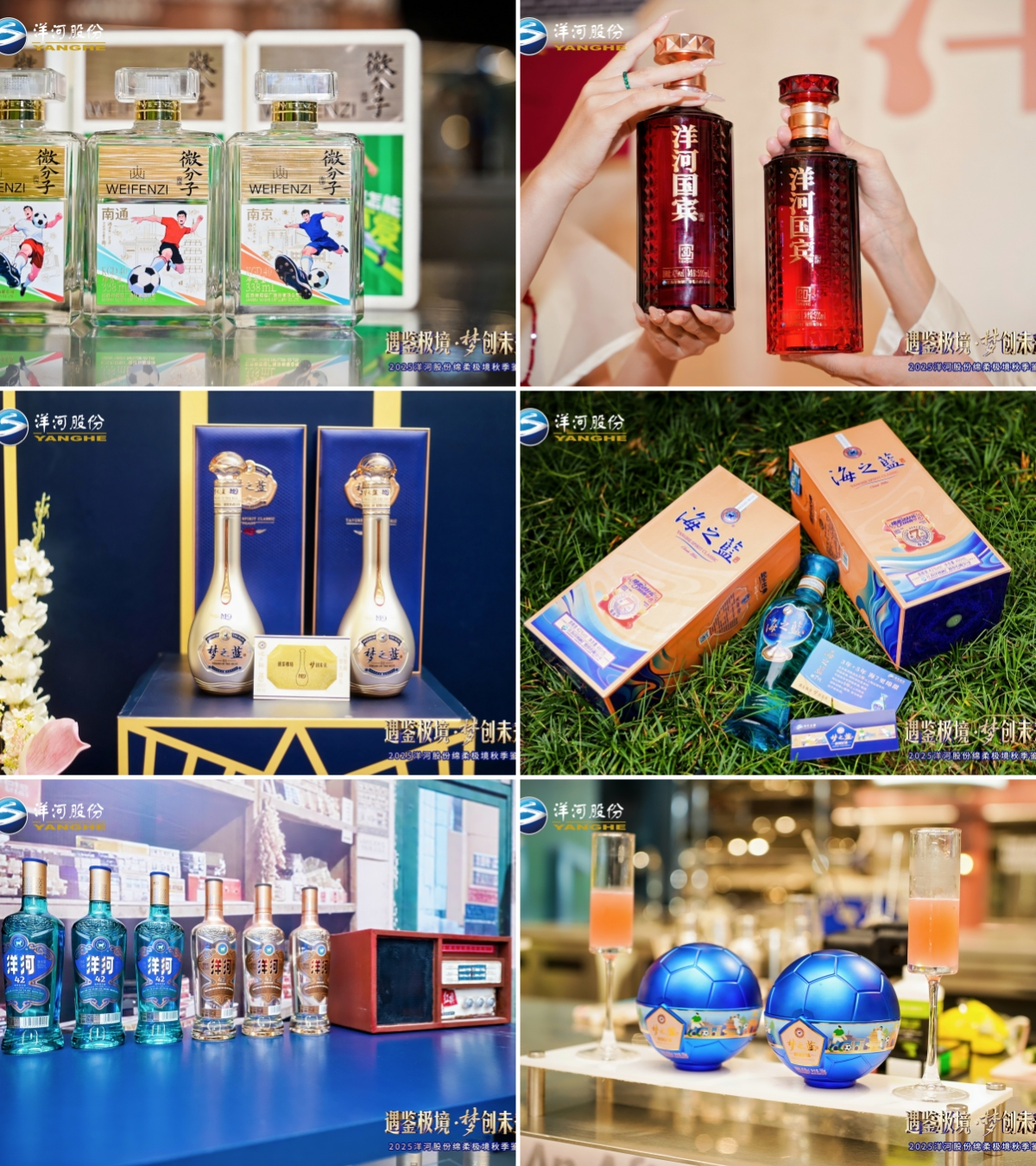
Core Viewpoint - The white liquor industry is experiencing a significant divergence, with a concentration of market power among leading companies, while smaller enterprises face increasing survival challenges. The competition has shifted from mere distribution to a focus on core competencies and product innovation [1][2]. Financial Performance - Yanghe Co. reported a revenue of 18.09 billion yuan and a net profit of 3.975 billion yuan for the first three quarters of 2025. The company is prioritizing internal capabilities over scale growth during this adjustment phase [1][5]. Strategic Focus - Yanghe is maintaining strategic consistency by emphasizing quality through traditional methods and focusing on consumer-defined value. The company is targeting younger consumers with a "bottle-opening" approach to enhance engagement [2][4]. Product Development - The company is diversifying its product offerings by introducing new products like the seventh generation of Hai Zhi Lan and low-alcohol beverages, while also exploring new consumption scenarios. This strategy aims to create a comprehensive product matrix that spans from high-end to mass-market segments [4][5]. Investment in R&D - Yanghe's R&D investment increased by 77.92% compared to the previous year, indicating a commitment to product upgrades and market share consolidation. The company's contract liabilities rose to 6.424 billion yuan, reflecting a positive outlook on channel confidence [5][6]. Brand Strategy - Yanghe is building a multi-dimensional brand communication system that integrates content, scenarios, and experiences to enhance brand recognition and consumer engagement. Initiatives like sponsoring sports events and cultural programs are designed to connect with consumers on a deeper level [7][9]. Market Insights - The main consumer demographic for white liquor is shifting, with younger generations (born between 1985-1994) becoming the primary market segment. Yanghe is adapting its branding and product strategies to resonate with this demographic's cultural identity [9]. Future Outlook - Analysts suggest that Yanghe's current strategic positioning may lead to a significant rebound in performance by the end of 2026, contingent on inventory management and pricing adjustments [9].

锚定中国市场 日产汽车开启电驱智能新征程
Zhong Guo Qing Nian Bao· 2025-10-23 02:55
Core Insights - Nissan is actively promoting its global strategy centered on the Chinese market, emphasizing innovation and local adaptation as key components of its growth [2][4][5] Group 1: Product Launches and Innovations - Nissan unveiled the world's first plug-in hybrid sedan, the N6, and the world's first fuel vehicle equipped with HarmonyOS, the Tianlai HarmonyOS, during its brand night event [2][7] - The company plans to introduce the performance model Z NISMO to the Chinese market by 2026, showcasing its commitment to high-performance vehicles [2][7] Group 2: Strategic Importance of the Chinese Market - The Chinese market is viewed as a strategic pivot for Nissan's global transformation, with the company aiming to leverage local insights to drive innovation and product development [4][5] - Nissan's history in China dates back to 1973, marking it as one of the earliest foreign automotive brands to enter the market, which has allowed it to build a strong foundation for local partnerships and product localization [3][4] Group 3: Collaborative Efforts and Market Adaptation - The partnership with Dongfeng Motor Group has been crucial for Nissan, enabling resource sharing and mutual growth, which has been essential for adapting to local consumer preferences [3][5][6] - Nissan's management emphasizes the importance of accelerating transformation to seize opportunities in the competitive Chinese market, supported by increased autonomy in decision-making for the local team [5][6] Group 4: Future Vision and Brand Positioning - Nissan's "Re:Nissan" plan aims to reshape the brand's core values, focusing on reliability, safety, and high quality, while also appealing to younger consumers through innovative products and marketing strategies [4][6][7] - The company is committed to a youthful and innovative brand image, moving away from traditional perceptions and engaging directly with consumers to better meet their needs [7]