TONGWEI CO.,LTD(600438)

Search documents
证监会:始终把维护市场稳定作为监管工作首要任务丨盘前情报
Sou Hu Cai Jing· 2025-07-03 00:38
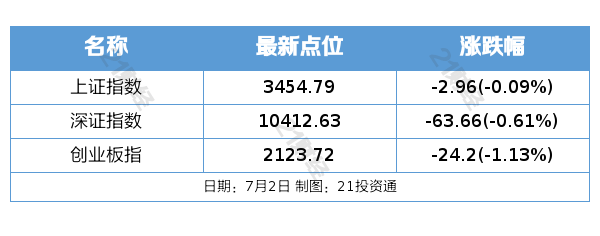
昨日A股 7月2日,A股三大指数集体下跌,截至收盘,沪指跌0.09%,深成指跌0.61%,创业板指跌1.13%,北证 50指数跌1.23%。全市场成交额14051亿元,较上日缩量914亿元。全市场超3200只个股下跌。板块题材 上,光伏、钢铁、养殖、代糖、煤炭、海工装备板块涨幅居前;算力硬件、半导体、脑机接口、数字货 币、多元金融板块跌幅居前。 盘面上,光伏板块集体大涨,钢铁板块午后强势拉升,海工装备板块集体爆发,算力硬件板块集体走 低,脑机接口板块集体调整。 | 名称 | 最新点位 | 、涨跌幅 | | --- | --- | --- | | 上证指数 | 3454.79 | -2.96(-0.09%) | | 深证指数 | 10412.63 | -63.66(-0.61%) | | 创业板指 | 2123.72 | -24.2(-1.13%) | | | 日期:7月2日 制图:21投资通 | | 隔夜外盘 纽约股市三大股指7月2日涨跌不一。截至当天收盘,道琼斯工业平均指数比前一交易日下跌10.52点, 收于44484.42点,跌幅为0.02%;标准普尔500种股票指数上涨29.41点,收于6227.42点 ...


通威股份: 通威股份有限公司关于子公司永祥股份引入战略投资者进展暨实施增资扩股完成并办理工商变更登记的公告
Zheng Quan Zhi Xing· 2025-07-02 16:27
Overview - Tongwei Co., Ltd. announced the completion of capital increase and share expansion for its subsidiary Yongxiang Co., Ltd. to enhance capital strength and optimize financial structure in the photovoltaic industry [1][10] Capital Increase Details - Yongxiang Co., Ltd. plans to introduce strategic investors with a pre-investment valuation of 27 billion yuan [1][10] - The total capital raised from strategic investors is approximately 6.82 billion yuan [2][10] - The capital will be used primarily to repay bank loans and supplement working capital for Yongxiang and its subsidiaries [10] Strategic Investors - Key strategic investors include Industrial and Commercial Bank of China Financial Asset Investment Co., Ltd. and China CITIC Financial Asset Management Co., Ltd. [2][3] - The shareholding structure post-capital increase shows a total of 63,143,126,251 shares held by major investors, representing 78.69% [3][8] Financial Assessment - As of September 30, 2024, Yongxiang's audited equity attributable to the parent company was 25.693 billion yuan, with a valuation of 28.215 billion yuan, reflecting a valuation increase of 252.25 million yuan and a growth rate of 9.82% [10][11] Corporate Changes - Yongxiang has completed the business registration changes and received a new business license from the market supervision authority [10][12] - The registered capital of Yongxiang increased from 1,060,866,905 yuan after the capital increase [12]
新一轮供给侧改革!
Datayes· 2025-07-02 11:22
Core Viewpoint - The steel industry is experiencing a significant price increase due to production cuts driven by environmental regulations and government policies aimed at eliminating outdated capacity. This has led to a reduction in steel output expectations, particularly in Tangshan, where a 30% production cut has been mandated from July 4 to July 15. The market anticipates further impacts on steel production as a result of these measures [1][3]. Group 1: Steel Industry Insights - The recent meeting of the Financial and Economic Committee emphasized the need to push for the elimination of outdated production capacity, directly influencing the steel market [1]. - Tangshan steel mills have received directives for a 30% production cut, which is expected to significantly lower steel inventories and production levels [1]. - The China Iron and Steel Association reported that steel billet exports in the first four months of 2025 have already surpassed the total for 2024, prompting suggestions for export restrictions [1]. - A total of approximately 30 million tons of production cuts have been ordered for the year, coinciding with a seasonal demand lull, which has heightened market expectations for reduced steel output [1]. Group 2: Market Reactions and Trends - Longjiang Securities noted that administrative production cuts could act as a bullish option for the steel sector, particularly in July, which is traditionally a slow season for demand [3]. - The announcement of production cuts in the photovoltaic glass sector has also led to significant price increases in that market, indicating a broader trend of supply-side reforms impacting various sectors [3]. - The steel sector saw a strong rally in stock prices, with companies like Liugang and Chongqing Steel hitting their daily price limits amid these developments [9][10]. Group 3: Broader Economic Context - The overall A-share market experienced a decline, with major indices falling and a significant number of stocks trading lower, reflecting broader economic pressures [9]. - The government is expected to focus on structural adjustments across multiple industries, including steel, refining, and new energy sectors, as part of its economic strategy [7]. Group 4: Investment Trends - Institutional investors have begun to sell off some positions in response to the recent price increases in steel, indicating a cautious approach to the current market dynamics [1][4]. - The market's reaction to production cuts in both the steel and photovoltaic sectors suggests a growing trend towards supply-side management as a means to stabilize prices and manage excess capacity [3].




主力资金丨尾盘涨停!主力资金盯上这只光伏概念股
Zheng Quan Shi Bao Wang· 2025-07-02 10:55
Group 1 - The core point of the article indicates that the main funds in the Shanghai and Shenzhen markets experienced a net outflow of 331.9 billion yuan, with the ChiNext board seeing a net outflow of 185.3 billion yuan [2] - Among the 15 industries that rose, the steel industry had the highest increase of 3.37%, while the coal and building materials industries also saw increases of over 1% [2] - Eight industries received net inflows of main funds, with the electric equipment industry leading at 15.95 billion yuan, followed by agriculture, forestry, animal husbandry, and fishery at 8.24 billion yuan, and food and beverage at 7.36 billion yuan [2] Group 2 - The stablecoin concept stocks saw the highest net inflow of main funds, with Yuyin Co., Ltd. leading at 6.64 billion yuan, and the stock rose by 6.05% [3] - Controlled nuclear fusion concept stocks, such as Rongfa Nuclear Power, had a net inflow of 5.33 billion yuan, with significant gains in related stocks [3][4] - Over 110 stocks experienced a net outflow of more than 1 billion yuan, with 35 stocks seeing outflows exceeding 2 billion yuan [5] Group 3 - The leading stock for net outflow was Jihua Group, with an outflow of 6.44 billion yuan, followed by OFILM Technology with 5.78 billion yuan [6] - Popular stocks like Dongfang Caifu and Xuanji Information also saw significant net outflows, with Annie Co. hitting a limit down and experiencing a net outflow of 4.11 billion yuan, the highest since February 6, 2023 [6] Group 4 - At the end of the trading session, the main funds saw a net outflow of 18.91 billion yuan, with the ChiNext board experiencing a net outflow of 6.58 billion yuan [7] - Among individual stocks, Tongwei Co. saw a net inflow of 9150.48 million yuan, while Jingao Technology had a net inflow of 8534.54 million yuan [8][9] - The main contract for polysilicon futures saw a significant increase, contributing to the rise of photovoltaic concept stocks [9]
通威股份(600438) - 通威股份有限公司关于子公司永祥股份引入战略投资者进展暨实施增资扩股完成并办理工商变更登记的公告
2025-07-02 10:30
| 股票代码:600438 | 股票简称:通威股份 | | | 公告编号:2025-063 | | --- | --- | --- | --- | --- | | 债券代码:110085 | 债券简称:通 | 22 | 转债 | | 通威股份有限公司关于 子公司永祥股份引入战略投资者进展暨实施增资扩股完成 并办理工商变更登记的公告 本公司董事会及全体董事保证本公告内容不存在任何虚假记载、误导性陈 述或者重大遗漏,并对其内容的真实性、准确性和完整性承担法律责任。 一、基本情况概述 2025 年 3 月 28 日,通威股份有限公司(以下简称"通威股份"或"公司") 召开第八届董事会第二十六次会议审议通过《关于子公司永祥股份拟引入战略投 资者暨实施增资扩股的议案》,为进一步增强四川永祥股份有限公司(以下简称 "永祥股份"或"标的公司")资本实力,优化公司财务结构,把握光伏产业发 展机遇,持续巩固与提升公司在高纯晶硅产业领先的综合竞争力,永祥股份拟引 入战略投资者并实施增资扩股,以第三方评估机构出具的评估报告为基础,综合 考虑永祥股份市场竞争力以及增资扩股过渡期损益等因素,本次拟以增资扩股前 永祥股份股权估值 270 ...
通威股份(600438) - 通威股份有限公司关于对外提供担保的进展公告
2025-07-02 10:30
股票代码:600438 股票简称:通威股份 公告编号:2025-062 债券代码:110085 债券简称:通 22 转债 通威股份有限公司 关于对外提供担保的进展公告 公司董事会及全体董事保证本公告内容不存在任何虚假记载、误导性陈述或者重 大遗漏,并对其内容的真实性、准确性和完整性承担法律责任。 重要内容提示: 被担保人名称: 2025 年 6 月 1 日—2025 年 6 月 30 日期间(以下简称"本次期间")公司担保事 项被担保人均为非上市公司关联人。被担保人如下:公司下属 5 家全资子公司:通威 太阳能(成都)有限公司、淄博汇祥新能源有限公司、通威渔光科技(海安)有限公 司、东营通裕新能源有限公司、和平通威有限责任公司;公司下属 5 家控股子公司: 内蒙古通威高纯晶硅有限公司、天津滨海新区通力新能源有限公司、越南天邦饲料有 限公司、通威(海南)水产食品有限公司、海南莱克食品有限公司;公司部分客户。 本次期间担保金额及已实际为其提供的担保余额: 本次期间,公司及下属子公司相互提供担保金额为 13.19 亿元;公司及子公司未 对合营公司、联营公司提供担保;公司子公司通威农业融资担保有限公司(以提供担 保为 ...
通威股份(600438) - 通威股份有限公司关于可转换公司债券转股结果暨股份变动的公告
2025-07-02 10:17
重要内容提示: 累计转股情况:自"通 22 转债"2022 年 9 月 2 日进入转股期截至 2025 年 6 月 30 日,累计有 167,400 张"通 22 转债"转为通威股份有限公司(以下 简称"公司"、"本公司")A 股股票,累计转股金额 16,740,000.00 元,累计 转股股数 437,908 股,累计转股股数占"通 22 转债"转股前公司已发行股份总 额 4,501,548,184 股的 0.00973%。 未转股可转债情况:截至 2025 年 6 月 30 日,尚未转股的"通 22 转债" 金额为人民币 11,983,260,000.00 元,占"通 22 转债"发行总额的比例为 99.86050%。 | 2025-061 | | | | | --- | --- | --- | --- | | 股票代码:600438 债券代码:110085 | 股票简称:通威股份 债券简称:通 22 | 转债 | 公告编号: | 通威股份有限公司 关于可转换公司债券转股结果暨股份变动的公告 本公司董事会及全体董事保证本公告内容不存在任何虚假记载、误导性陈 述或者重大遗漏,并对其内容的真实性、准确性和完整 ...
突发利空!A股午盘跳水,光伏、钢铁大消息,掀起涨停潮
Sou Hu Cai Jing· 2025-07-02 09:25
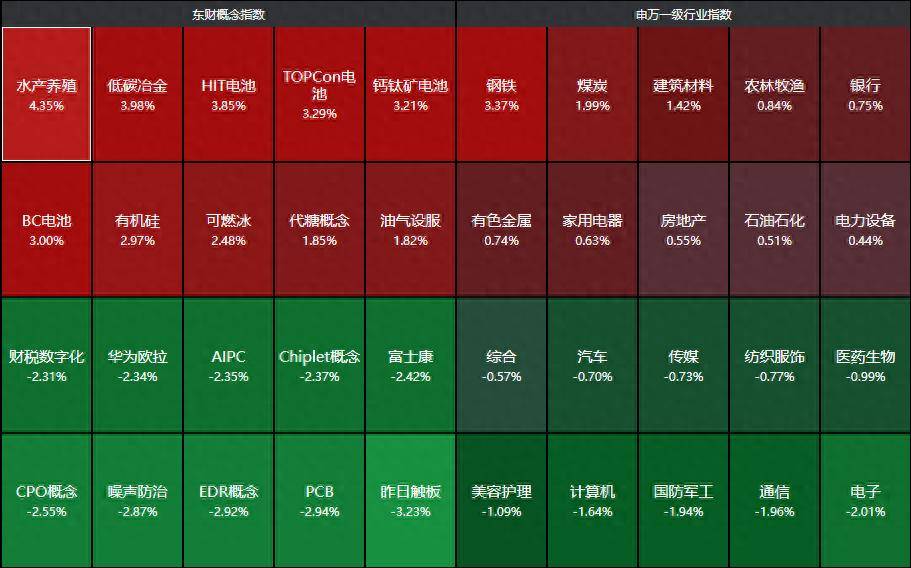
Group 1 - The A-share market experienced a significant increase in trading volume at the end of June, attributed to institutional net value adjustments, followed by a decrease in trading volume in early July, with a shift in market style favoring high-dividend bank stocks over technology stocks [1] - The market indices showed varied performance, with the East Finance Concept Index reflecting a range of sector performances, including a notable increase in sectors like aquaculture and low-carbon metallurgy, while sectors like finance and pharmaceuticals faced declines [2] - The Shanghai Composite Index is at a critical level, attempting to break through the 3500 mark, which has historically been a resistance point, with expectations that it may challenge previous highs later in the year [3] Group 2 - The U.S. Senate passed a comprehensive tax and spending bill supported by Trump, which is now pending a vote in the House of Representatives, indicating potential implications for market sentiment [5] - Recent market movements in the U.S. showed a rotation in style, with technology stocks like Nvidia experiencing significant adjustments while small-cap stocks gained, suggesting a shift in investor focus [6] - Reports indicate that approximately half of the steel mills in Tangshan have received notifications regarding a 30% production cut for sintering machines, which could impact supply dynamics in the steel market [8] Group 3 - The Chinese government is addressing "involution" in competitive sectors such as solar components and electric vehicles, aiming to enhance product quality and manage low-price competition, which has led to a surge in futures prices for new energy materials [10] - The market reacted positively to the news of production cuts and regulatory changes, with significant gains in the photovoltaic and steel sectors, as evidenced by multiple stocks hitting their daily price limits [11] - The People's Bank of China introduced new regulations for anti-money laundering in the precious metals and gemstones sector, requiring reporting for transactions exceeding 100,000 RMB, which may affect operational practices in the industry [12]


突然爆发!A股涨停潮、港股最高涨超130%,发生了什么
Zheng Quan Shi Bao· 2025-07-02 09:24
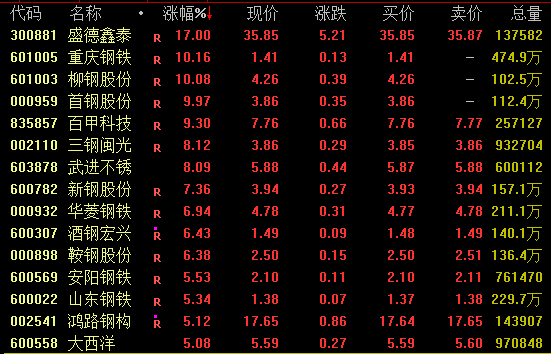
Core Viewpoint - The steel and photovoltaic sectors experienced significant market movements due to news of production cuts, with steel stocks surging and photovoltaic companies responding to planned production reductions. Steel Sector - The steel sector saw a substantial rally, with stocks like Shengde Xintai rising by 17% and several others hitting the daily limit up [3][6] - Chongqing Steel's stock surged over 90% at one point during the trading session, reflecting strong market sentiment [4][6] - Reports indicate that approximately half of the steel mills in Tangshan received notifications regarding production cuts, which could reduce daily output by 30,000 tons [6][9] - The China Iron and Steel Association is set to hold a meeting to discuss the industry's progress and challenges, indicating a focus on future strategies [6] Marine Economy - The marine economy sector showed strong performance, with stocks like Klete and Deepwater Haina hitting their daily limit up [7][9] - The Central Financial Committee emphasized the importance of high-quality development in the marine economy, which is expected to attract more investment and policy support [8][9] Photovoltaic Sector - The photovoltaic industry saw significant gains, with stocks like Xiuchang and Daye Intelligent reaching their daily limit up [10][12] - Major photovoltaic glass manufacturers are planning a collective production cut of 30% starting in July, which is expected to help stabilize the market [11][12] - Analysts suggest that the demand for photovoltaic products may weaken in the second half of the year, prompting companies to adjust their production strategies [12]


突然爆发!A股涨停潮、港股最高涨超130%,发生了什么?
证券时报· 2025-07-02 09:15
Core Viewpoint - The article highlights the significant market movements in the steel and photovoltaic sectors, driven by news of production cuts and environmental regulations in Tangshan, as well as collective production reductions in the photovoltaic glass industry [1][7][13]. Steel Sector - The steel sector experienced a substantial surge, with stocks like Shengde Xintai rising by 17% and several others reaching their daily limit [4][5]. - The market is reacting to reports of increased environmental production cuts in Tangshan, with approximately half of the steel mills indicating they received notifications regarding these measures [7]. - If the production cut policies are strictly enforced, the capacity utilization rate could drop from 83% to 70%, leading to a daily reduction of 30,000 tons in sintering ore production [7]. - The China Iron and Steel Association is set to hold a meeting to discuss the industry's progress and challenges, indicating a focus on future strategies [7]. Marine Economy - The marine economy sector saw strong performance, with stocks like Kelaite and Deepwater Haina hitting their daily limits [9][10]. - A recent meeting emphasized the importance of high-quality development in the marine economy, focusing on innovation, policy support, and the involvement of social capital [11]. - The deep-sea technology industry is identified as a key area for growth, with increasing demand for deep-sea materials and equipment [12]. Photovoltaic Sector - The photovoltaic industry saw a notable rise, with stocks like Xiuchang and Daye Intelligent reaching their daily limits [14][15]. - Reports indicate that leading photovoltaic glass companies plan to collectively reduce production by 30%, which is expected to support sustainable industry development [16]. - The industry is currently facing pressure with prices falling below cash cost lines, prompting a need for supply-side reforms [16].