
TONGWEI CO.,LTD(600438)

Search documents
1月8日重要资讯一览
Zheng Quan Shi Bao Wang· 2026-01-08 13:36
Group 1 - China Petroleum & Chemical Corporation and China Aviation Oil Group have received approval from the State Council for a restructuring [2] - The Guangzhou Municipal Government has issued a plan to accelerate the construction of an advanced manufacturing city from 2024 to 2035, focusing on reusable rocket technology and establishing testing bases for large liquid rockets [2] - On January 8, polysilicon futures hit the limit down with a decline of 9%, following a meeting where the State Administration for Market Regulation discussed monopoly risks with major solar companies [2] Group 2 - Nestlé has initiated a precautionary recall of specific batches of infant formula in several European countries, with the Chinese subsidiary complying with the recall to protect consumer rights [3] - Fenglong Co. may apply for a trading suspension if its stock price continues to rise abnormally [5] - Pritchard Co. does not expect large-scale orders for its LCP film products in the brain-computer interface sector in the short term [6] - Vanke A has announced the resignation of its retiring executive vice president, Yu Liang [7] - Jiangshun Technology is planning to jointly invest in the establishment of an investment fund [8] - Kuanse Co. clarified that it is not involved in commercial aerospace or satellite navigation businesses, countering media reports [9]




【求证】业内人士:市场监管总局约谈6家光伏龙头及行业协会,不得约定产能及销售价格等
Zhong Zheng Wang· 2026-01-08 13:16
Core Viewpoint - The State Administration for Market Regulation (SAMR) has conducted discussions with several major companies in the Chinese photovoltaic industry regarding monopoly risks and has issued clear rectification requirements [1] Group 1: Regulatory Actions - SAMR has required the China Photovoltaic Industry Association and the companies involved not to agree on production capacity, capacity utilization rates, production volumes, or sales prices [1] - The companies are prohibited from market division, production allocation, and profit distribution through any form of investment ratio [1] - SAMR has mandated that the association and the companies submit written rectification measures by January 20 [1]
又见小作文影响市场,多晶硅期货跌停!业内人士回应来了
Zhong Guo Zheng Quan Bao· 2026-01-08 12:14
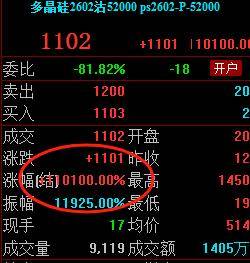
Group 1 - The State Administration for Market Regulation (SAMR) has conducted interviews with major companies in the photovoltaic industry, including China Photovoltaic Industry Association, Tongwei Co., GCL-Poly Energy, Daqo New Energy, Xinte Energy, Asia Silicon, and Dongfang Hope, regarding monopoly risks and required corrective actions [1] - SAMR has mandated that the interviewed companies and the association must not agree on production capacity, utilization rates, sales volumes, or pricing; they are also prohibited from market division, production allocation, or profit distribution through any form of capital contribution [1] - A written report detailing corrective measures must be submitted to SAMR by January 20 [1] Group 2 - On January 8, domestic commodity futures experienced significant volatility, with polysilicon futures hitting the limit down, and precious and non-ferrous metals markets also declining sharply [2] - Polysilicon futures dropped by 9%, while other metals like silver, nickel, and copper saw declines of over 5% to 8% [2] - The price of put options for polysilicon surged dramatically, with some contracts experiencing increases of over 110,000% in a single day [2][3]


业内人士:市场监管总局约谈6家光伏龙头及行业协会,不得约定产能及销售价格等
Zhong Guo Zheng Quan Bao· 2026-01-08 12:12
Core Viewpoint - The State Administration for Market Regulation (SAMR) has conducted discussions with several major companies in the Chinese photovoltaic industry regarding monopoly risks and has issued clear rectification requirements [1] Group 1: Regulatory Actions - SAMR has required the China Photovoltaic Industry Association and the companies involved not to agree on production capacity, capacity utilization rates, production volumes, and sales prices [1] - The companies are prohibited from market division, production allocation, and profit distribution through any form of investment ratio [1] - SAMR has mandated that the association and the companies submit written rectification measures by January 20 [1]
又见小作文影响市场,多晶硅期货跌停!有认沽期权价格单日暴涨110100%,多晶硅或回到边际成本定价模式,实现市场化出清
Sou Hu Cai Jing· 2026-01-08 10:17
Core Viewpoint - The domestic commodity futures market experienced significant volatility on January 8, with polysilicon futures hitting the limit down, and precious and non-ferrous metals markets plummeting. The sharp decline in polysilicon prices is attributed to regulatory concerns regarding monopolistic risks in the photovoltaic industry [1][4]. Market Performance - Polysilicon main futures dropped by 9%, closing at the limit down, while other related commodities such as aluminum, nickel, and silver also saw declines of over 5% to 8% [1]. - The price of polysilicon put options surged dramatically, with the polysilicon 2602 put option increasing by 110,100% to close at 1,102, with a transaction volume of 14.05 million yuan [1][2]. Regulatory Impact - A leaked meeting summary indicated that the State Administration for Market Regulation had discussions with major players in the photovoltaic sector regarding monopolistic risks and required corrective actions [3][4]. - Industry insiders confirmed the authenticity of the leaked document and indicated that the recent price drop in polysilicon futures was likely influenced by these regulatory discussions [4]. Industry Developments - A polysilicon capacity acquisition platform has been officially established, aimed at addressing the "involution" issue within the photovoltaic industry. This platform is expected to operate under a dual model of "debt acquisition and flexible capacity storage" [5][6]. - The platform is anticipated to help alleviate potential debts amounting to hundreds of billions, restore reasonable pricing, and enhance the overall competitiveness of the industry [6]. Future Outlook - The basic supply-demand dynamics for polysilicon remain weak, with a current production of 24,000 tons and an estimated demand of 85,000 tons for January, indicating an oversupply situation [7]. - If the underlying support logic for the industry is disrupted, inventory pressures may become more pronounced, leading to further downward pressure on polysilicon prices in the short term [7].
中国光伏协会推动的所有行业自律,被全面叫停!



Xin Lang Cai Jing· 2026-01-08 09:58
Core Viewpoint - The meeting minutes from the State Administration for Market Regulation indicate a halt to self-regulatory practices in the photovoltaic industry due to antitrust concerns, which could significantly impact market dynamics and pricing strategies in the sector [1][2][3]. Group 1: Antitrust Concerns - The meeting highlighted multiple reports of price manipulation in the polysilicon market under the guise of industry self-regulation since July 2025 [1][14]. - Companies have been accused of signing commitment letters and forming a platform company to control production and sales, effectively dividing the market and squeezing downstream players [1][15]. - The association has been warned multiple times to comply with regulations but failed to report progress to the authorities [1][16]. Group 2: Rectification Measures - The authorities have mandated a comprehensive review of existing practices, requiring detailed documentation of agreements and protocols related to funding and corporate governance [2][17]. - Companies are instructed to create rectification plans that prohibit agreements on production capacity, utilization rates, sales volumes, and pricing [2][18]. - The association and companies must establish internal antitrust regulations and conduct self-assessments to prevent future violations, with a deadline for submitting written rectification measures set for January 20 [2][18]. Group 3: Market Reactions - Following the announcement, polysilicon futures contracts experienced a significant drop, indicating market apprehension regarding the implications of the regulatory actions [6][21]. - There were rumors about the potential cancellation of polysilicon futures trading, which were confirmed to be untrue [6][21]. Group 4: Comparative Insights - The article suggests that the Japanese model for industry self-regulation, which includes legal exemptions and administrative approvals for collaborative actions, could serve as a reference for the Chinese photovoltaic industry [8][23]. - Examples of legal exemptions in Japan highlight the importance of government oversight and transparency in managing industry practices to avoid price manipulation [8][24][25].

市场监管总局通报多晶硅垄断风险?相关方回应:信息以官方披露为准
Zheng Quan Shi Bao· 2026-01-08 09:12
Group 1 - On January 8, polysilicon futures hit the limit down, with a decline of 9% [1] - A leaked meeting summary indicated that on January 6, the State Administration for Market Regulation held discussions with several companies in the photovoltaic sector regarding monopoly risks and required corrective actions [1] - Industry insiders did not deny the authenticity of the leaked meeting content, suggesting that companies will comply with regulatory requirements and disclose information as mandated [1] Group 2 - The drop in polysilicon futures is likely influenced by the leaked meeting summary, indicating a potential shift towards a marginal cost pricing model in the market [1] - An industry representative expressed confidence that the "anti-involution" measures in the photovoltaic sector will succeed, albeit with possible changes in approach [1]

钙钛矿技术领涨太空光伏,商业航天引爆390亿美元新蓝海
Jin Rong Jie· 2026-01-08 08:19
Core Insights - Recent focus on space photovoltaics has significantly increased among listed companies in the photovoltaic sector, including Junda Co., JinkoSolar, and Trina Solar, with a particular emphasis on the application prospects of perovskite technology in space [1] - Junda Co. has shown active trading behavior, achieving two trading limits within three days, while other companies like Hanhua Steel and JinkoSolar have also experienced varying degrees of stock price increases [1] - According to Huajin Securities, the global in-orbit data center market is projected to reach $39.09 billion by 2035, indicating a strong demand for lightweight, high-efficiency energy solutions that align well with the advantages of space photovoltaics [1] - Dongwu Securities believes that the rapid development of commercial space and low-orbit satellites will enhance the performance of space photovoltaic energy supply [1] - Guohai Securities suggests that the acceleration of the commercialization process in the space industry will provide more momentum for development [1] Industry and Company Analysis Perovskite Batteries - Jinjing Technology focuses on glass manufacturing, positioned as an upstream TCO glass supplier with a transmittance rate of 94%, already applied in leading perovskite production lines, and possesses full-chain autonomous production capabilities [1] - Wanrun Co. specializes in the R&D and production of perovskite-related materials, positioned as an upstream supplier covering various material categories, with bulk sales to clients like GCL-Poly Energy in the first half of 2025 [2] - Jing Shan Light Machine is engaged in the R&D and manufacturing of photovoltaic equipment, positioned as a midstream RPD equipment supplier, with orders from GCL-Poly Energy and a coating equipment capacity of 15 GW [2] Commercial Space - Shunhao Co. is involved in new tobacco and eco-friendly packaging materials, positioned as a participant in the commercial space sector, having invested 110 million yuan in Orbit Chen Guang, holding a 19.3% stake, focusing on building space data centers [3] - Xice Testing provides environmental reliability testing services, positioned as a commercial space testing service provider, enhancing capabilities for thermal vacuum experiments and satellite payload testing [3] - Zhenlei Technology specializes in the R&D and manufacturing of electronic components for specialized fields, positioned as a supplier of commercial aerospace-grade devices, with products applied in satellite internet [3] Photovoltaics - Tongwei Co. covers silicon materials and battery cells in photovoltaic product R&D and production, positioned as a multi-segment supplier, having established an advanced battery laboratory for perovskite/silicon tandem battery R&D, achieving a conversion efficiency of 34.69% [4] - Longi Green Energy focuses on silicon wafers and modules, positioned as a manufacturer of photovoltaic products, participating in industry capacity integration discussions [4] - Sungrow Power Supply specializes in photovoltaic inverter R&D and manufacturing, positioned as an inverter supplier with capabilities for both string and centralized inverters [4] - Jingyuntong is involved in photovoltaic equipment and silicon wafer production, positioned as a supplier in these segments, with a focus on monocrystalline silicon wafer production and monocrystalline furnace equipment manufacturing [4]






太平洋证券:光伏行业反内卷加速供需重塑 重视新技术、新场景
Zhi Tong Cai Jing· 2026-01-08 02:55
Core Viewpoint - The photovoltaic industry is expected to accelerate supply-demand restructuring driven by the "anti-involution" trend, leading to gradual profit recovery by 2026 [1] Group 1: Supply-Demand Restructuring - The "anti-involution" spirit is deeply penetrating the photovoltaic industry, with main chain prices recovering from the top down, and auxiliary material leading companies showing significant profit recovery by Q3 2025 [1] - The rapid development of energy storage, alongside the implementation of grid parity for solar storage in key markets like China, the US, and Europe, is expected to alleviate the impact of increased photovoltaic installations on the grid [1] - The long-term demand outlook is optimistic due to rising computing power needs and breakthroughs in core photovoltaic technologies for space stations, which will open new application scenarios [1] Group 2: Technology Iteration and Profit Recovery - The penetration rate of low-silver and silver-free technologies is expected to rise quickly, with leading companies likely to recover profits faster than the industry average due to rapid cost reduction in component production [2] - The introduction of low-silver solutions by JinkoSolar and silver-free technologies by LONGi Green Energy is highlighted as key developments in this technology iteration [2] Group 3: Auxiliary Material Companies - Auxiliary material companies are expected to accelerate profit recovery through diversified business layouts, as the pressure on the photovoltaic main chain has been ongoing for over three years [3] - Leading companies in auxiliary materials are preparing for a second growth phase, with non-photovoltaic business proportions expected to increase, contributing to revenue and profit reversals [3] Group 4: Beneficiary Analysis - Companies leading in low-silver and silver-free technology iterations, such as LONGi Green Energy, JinkoSolar, Aiko Solar, and Tongwei Co., are expected to benefit from cost advantages [4] - Companies actively integrating energy storage with photovoltaic operations, like Trina Solar, JinkoSolar, LONGi Green Energy, and JA Solar, are likely to see profit recovery [4] - Leading companies in supporting facilities, such as DKE Holdings, Juhua Materials, and Foster, are expected to continue profit recovery through new technology breakthroughs and business expansions [4]



反内卷加速供需重塑,重视新技术、新场景
Tai Ping Yang Zheng Quan· 2026-01-07 10:46
Group 1 - The "anti-involution" trend is reshaping supply and demand in the photovoltaic industry, with price recovery expected as the market stabilizes. The introduction of energy storage at parity in key markets is accelerating, alleviating pressure on the grid from rapid increases in photovoltaic installations. The long-term demand outlook is optimistic due to rising computing power needs and breakthroughs in photovoltaic technology for space applications [2][12][14]. Group 2 - The penetration of low-silver and silver-free technologies is expected to increase rapidly, with leading companies likely to recover profitability faster than the industry average. The rise in silver prices is driving the adoption of these technologies, which are crucial for cost reduction [3][38][43]. Group 3 - The auxiliary material sector, under pressure for over three years, is expected to see a recovery in profitability as companies diversify their business models. Leading firms are preparing for a second growth phase, which will enhance their revenue streams [4][63]. Group 4 - Beneficiary analysis indicates that companies leading in low-silver and silver-free technology, such as Longi Green Energy and JinkoSolar, are well-positioned to benefit from cost advantages. Companies actively investing in energy storage, like Trina Solar and JA Solar, are also expected to see early recovery in profitability [5][73]. Group 5 - Global demand for photovoltaic installations is projected to grow, with an estimated 600 GW and 610 GW of new installations in 2025 and 2026, respectively. However, growth rates may slow due to market saturation in core regions like China and Europe [8][14]. Group 6 - The supply side is experiencing overcapacity, with significant production increases expected in silicon materials and components. The "anti-involution" movement is leading to reduced capital expenditures, which may help manage supply effectively [12][30]. Group 7 - The photovoltaic industry is witnessing a shift towards new technologies and applications, such as space photovoltaics and perovskite solar cells, which are expected to expand market opportunities significantly [49][54].