Shede Spirits (600702)

Search documents
A股收评:三大指数齐涨!创业板指涨超2%,固态电池板块飙升
Ge Long Hui· 2025-08-29 07:31
Market Overview - Major A-share indices collectively rose, with the Shanghai Composite Index up 0.37% to 3857 points, the Shenzhen Component Index up 0.99%, and the ChiNext Index up 2.23% [1] - The total trading volume for the day was 2.83 trillion yuan, a decrease of 170.7 billion yuan compared to the previous trading day [1] - Over 3,300 stocks declined, while the Shanghai Composite Index increased by 0.84%, the Shenzhen Component Index by 4.36%, and the ChiNext Index by 7.74% for the week [1] Sector Performance - The lithium battery and lithium mining sectors surged, with CATL rising by 14% at one point [2] - The insurance sector saw widespread gains, with New China Life Insurance reaching a historical high [2] - The liquor sector also experienced significant increases, with Kweichow Moutai and other brands showing strong performance [6][7] - The CRO (Contract Research Organization) sector saw notable gains, with Haoyuan Pharmaceutical rising over 13% [8][9] - Military equipment stocks surged, with Northern Long Dragon hitting the daily limit and Aerospace Hongtu rising over 17% [10] Notable Stocks - Solid-state battery stocks experienced a significant rally, with companies like Xian Dao Intelligent and Jie Bang Technology hitting the daily limit [4][5] - Industrial Fulian closed at a limit-up price of 53.83 yuan, with a total market value of 1,069 billion yuan, marking a year-to-date increase of 155% [14][15] - Semiconductor stocks continued to adjust, with companies like Qipai Technology and Hengxuan Technology seeing declines of over 9% [11] Economic Insights - The recent rebound in the Chinese stock market is supported by multiple factors, including accelerated technological progress and improved market sentiment regarding the long-term economic outlook [21] - The government's increased focus on the economy, real estate, and stock market has contributed to a perception of limited downside risk [21] - The reduction of debt burdens for both the government and households is seen as crucial for broader market support [21]





舍得酒业(600702):2025年秋季策略会速递:精细化经营,静待需求恢复
HTSC· 2025-08-29 07:13
Investment Rating - The report maintains a "Buy" rating for the company with a target price of RMB 79.42 [6][7]. Core Insights - The company emphasizes long-termism, focusing on channel health and inventory reduction, with a stable operational trend expected to continue [1]. - Despite external challenges affecting business consumption, the company has met its operational targets for the first half of the year, with significant growth in its mass-market products [2]. - The company is actively expanding its market presence, particularly in core base markets, and aims to increase its e-commerce share over the next two years [2][3]. - Recent sales data indicates a recovery in demand for key products, with a notable improvement in sales performance in July and August [3]. - The company plans to innovate products targeting younger demographics and enhance brand influence through strategic channel management [3]. Summary by Sections Product Performance - The company faced a contraction in business consumption but achieved its operational goals for the first half of the year. Key products like "She Zhi Dao" and "T68" saw significant growth, while the high-end product line continues to be developed [2]. Channel Strategy - The company is focusing on base markets and has initiated campaigns in six major cities to enhance channel construction and consumer engagement. It aims to create several core model cities with revenues between RMB 500 million to 1 billion [2]. Recent Operational Feedback - Sales performance has shown recovery, with key products performing steadily. The company has increased investments in banquet markets and is expanding into group purchasing channels [3]. Future Outlook - The company is expected to benefit from a recovery in consumer demand, with a focus on four core products and innovative offerings for younger consumers. The strategy emphasizes channel expansion and brand enhancement [3][4]. Financial Projections - The company forecasts revenues of RMB 46.9 billion, RMB 49.0 billion, and RMB 52.1 billion for 2025 to 2027, with corresponding EPS of RMB 1.47, RMB 1.57, and RMB 1.71 [4][10].
舍得酒业等投资成立酒旅度假管理公司
Zheng Quan Shi Bao Wang· 2025-08-29 06:55
Group 1 - A new company, Sichuan Tuopai Shede Tourism Resort Management Co., Ltd., has been established with a registered capital of 20 million yuan [1] - The legal representative of the new company is Gao Ping, and its business scope includes tourism services, accommodation services, liquor sales, food sales, internet food sales, catering services, and commercial performances [1] - The company is wholly owned by Sichuan Tuopai Shede Cultural Tourism Development Co., Ltd., which is jointly held by Shede Liquor (600702) and Sichuan Tuopai Shede Group Co., Ltd. [1]
白酒行业触底反弹?中央汇金出手加仓,估值重塑与业绩修复可期
Ge Long Hui A P P· 2025-08-29 04:12
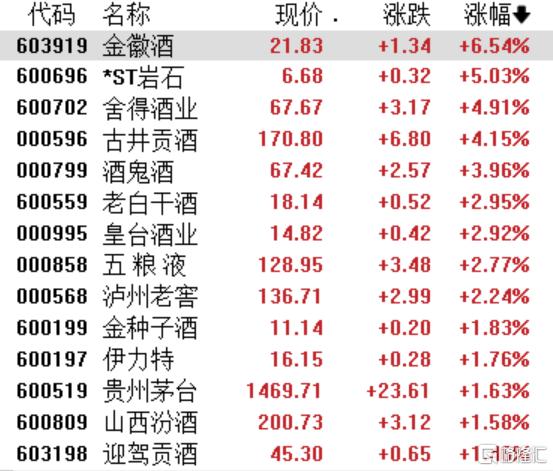
Core Viewpoint - The white liquor sector has seen a significant increase in stock prices, with a notable rise in the index by over 13% since August, driven by investor interest amid low valuations and recent institutional buying activity [1][2][6]. Group 1: Market Performance - As of August 29, several white liquor stocks have shown strong performance, with Jinhuijiu rising over 6%, and others like Shede Liquor and Gujing Gongjiu increasing by over 4% [1][2]. - The white liquor index has increased by more than 13% since the beginning of August [1]. Group 2: Institutional Investment - Central Huijin has increased its holdings in white liquor ETFs, acquiring 121 million shares, bringing its total to 581 million shares, making it the third-largest holder [4][5]. - This move is seen as a long-term strategy to stabilize the market, particularly in the context of the white liquor sector's recent downturn [6]. Group 3: Financial Performance of Companies - Many white liquor companies have reported significant declines in revenue and profit for the first half of 2025, with companies like Kuaijiu and Shede Liquor experiencing double-digit drops [7][9]. - In contrast, leading companies like Kweichow Moutai and Wuliangye have reported growth, with Kweichow Moutai achieving a revenue of 91.094 billion yuan, up 9.16% year-on-year [10][11]. Group 4: Industry Trends - The white liquor industry is facing challenges, with a reported 5.8% decline in production for the first half of 2025 and increasing inventory issues among distributors [12]. - The average inventory turnover days have reached 900 days, indicating potential overstocking and pricing issues [12]. - Analysts suggest that the industry may be approaching a cyclical bottom, with expectations for a recovery in performance by mid-2026 [13].



舍得酒业的2025:上半场显露发展韧性下半场新品蓄势待发
Xin Lang Cai Jing· 2025-08-29 03:05
Core Viewpoint - Shede Liquor achieved impressive financial results in the first half of 2025, with revenue of 2.7 billion and a net profit of 443 million, despite the traditionally weak second quarter for the liquor industry [1][2] Group 1: Financial Performance - In the first half of 2025, the company reported a revenue of 2.7 billion and a net profit of 443 million [1] - The net cash flow from operating activities increased by 427.77% year-on-year, indicating strong financial health [1] - In Q2 2025, the company generated revenue of 1.125 billion and a net profit of 97.17 million, showcasing resilience in a challenging market [1] Group 2: Strategic Initiatives - The company focused on channel development, emphasizing e-commerce, group purchases, and collaboration with both new and existing merchants to build a more resilient distribution network [2] - Shede Liquor is actively expanding into group direct sales and overseas markets, promoting Chinese liquor culture globally [2] - The product strategy includes a dual focus on high-end and mass-market products, with significant advancements in both segments [2] Group 3: Product Innovation - The company plans to launch its first low-alcohol drink, "Shede Zizai," on August 30, 2025, to cater to changing consumer preferences [2] - The introduction of "Shede Zizai" aims to capture new market segments, particularly among younger consumers who prefer low-alcohol options for social gatherings [2] - The overall strategy combines classic products to maintain the core market while innovating to explore new opportunities [2]
这一板块涨幅居前
第一财经· 2025-08-29 01:57
Core Viewpoint - The article highlights the rebound of the liquor sector, particularly the significant rise in Jinhuijiu's stock price, indicating a positive trend in the industry [3]. Group 1: Liquor Sector Performance - Jinhuijiu's stock reached the daily limit, while other liquor companies such as Shede Liquor, Laobai Ganjiu, and others saw increases of around 5% [3]. - The overall performance of the liquor sector suggests a recovery, with multiple companies experiencing notable gains [3]. Group 2: Market Overview - The total trading volume in the Shanghai and Shenzhen markets exceeded 500 billion [6]. - The ChiNext 50 Index experienced a decline, with a drop of 3% [7]. - The A-share market opened with mixed results, with the insurance sector showing strong performance [9]. Group 3: Company-Specific News - Cambrian Technology opened down by 6.8%, with an announcement projecting annual revenue between 5 billion to 7 billion for 2025 [8].



白酒:从周期角度看白酒的布局时点:充分考虑周期的学习效应,当下或是绝对收益起点
Hua Yuan Zheng Quan· 2025-08-28 06:26
Investment Rating - The report rates the white liquor industry as "Positive" (First Time) [1] Core Viewpoints - The current moment is seen as a potential starting point for absolute returns in the white liquor sector, considering the cyclical learning effects [4] - The white liquor industry has returned to cyclical characteristics, with fund holdings dropping to levels seen in 2017, and the food and beverage sector's overweight ratio has decreased significantly from a peak of 11% in 2019 to 3.2% [4][13] - The valuation of the white liquor sector has declined by 72% over the past four years, indicating a slow and steady adjustment process, unlike previous cycles [4][18] - Historical analysis suggests that the bottoming out of the white liquor index occurred after the 2014 Spring Festival, which is anticipated to happen again during the current cycle [5][22] Summary by Sections 1. Decline in White Liquor Holdings and Return to Cyclical Stock Characteristics - Fund holdings in the white liquor sector have decreased to 2017 levels, indicating a shift back to cyclical stock characteristics [10][13] - The overweight ratio of the food and beverage sector has significantly decreased, reflecting a gradual exit of funds focused on long-term value [4][13] 2. Review of Previous Cycle's Bottoming Characteristics - The previous cycle's bottoming process involved several stages, including a decline in dealer profitability, reduced receivables, and a subsequent recovery in real demand [4][18] - The current cycle is expected to show a similar pattern, with the learning effect potentially leading to an earlier inflection point for absolute returns [4][18] 3. Upcoming Investment Timing - The report suggests monitoring for signs of risk clearance in financial statements and early inventory reduction among dealers as indicators for potential investment opportunities [4][6] - Specific companies to watch include Luzhou Laojiao for its high dividend yield and Yingjia Gongjiu for its low valuation and inventory clearance [4][6]





低度白酒之战,早在2022年便拉开了序幕
Xin Hua Wang· 2025-08-28 02:19
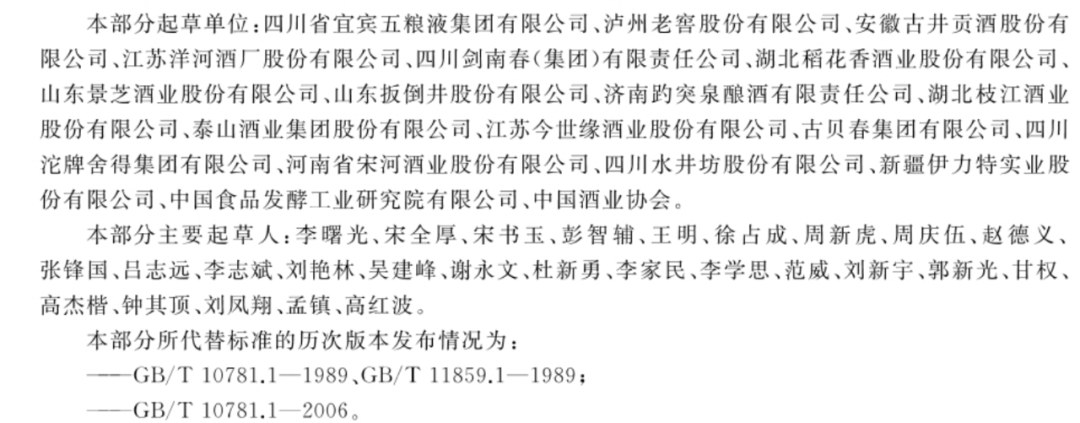
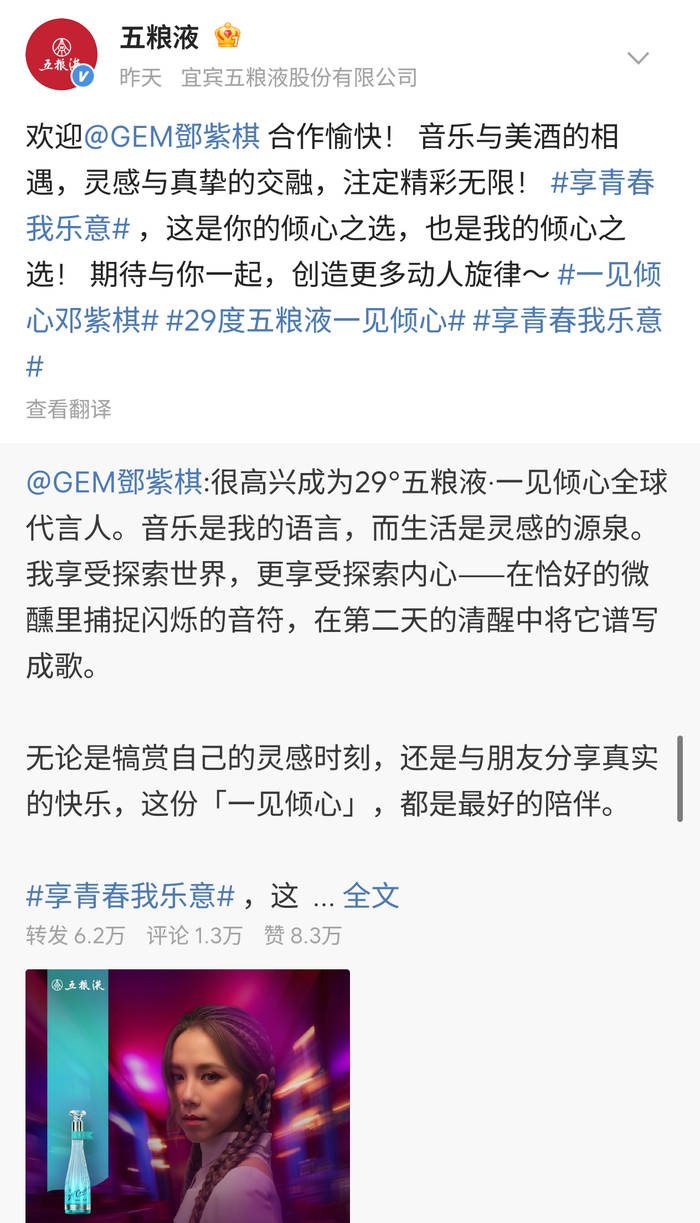
Core Viewpoint - The low-alcohol fragrant liquor market is experiencing a resurgence, driven by major companies like Wuliangye, Luzhou Laojiao, and others launching new products, indicating a competitive yet collaborative environment among the "fragrant liquor" sector [1][8]. Industry Developments - The new national standard for fragrant liquor, effective from April 1, 2022, defines low-alcohol liquor as having an alcohol content between 25% and 40% [2][3]. - The introduction of this standard aims to stabilize the quality of low-alcohol fragrant liquor by setting specific physicochemical indicators for products based on their production date [3][7]. Product Launches - Wuliangye announced the launch of its 29-degree product "Wuliangye·A First Glance" in June 2023, followed by Luzhou Laojiao's 28-degree "Guojiao 1573" [9][12]. - Other companies, such as Shede and Gujing Gongjiu, are also entering the low-alcohol market with their respective products, indicating a trend among major players to diversify their offerings [9][12]. Technological Advancements - The production of low-alcohol fragrant liquor requires advanced techniques to ensure quality, including adsorption filtration, cold filtration, and molecular sieving, which help maintain flavor while reducing alcohol content [10][11]. - Companies like Wuliangye and Luzhou Laojiao have developed proprietary technologies to achieve "low but not bland" products, focusing on the balance of aroma and flavor [10][11]. Market Trends - The low-alcohol fragrant liquor segment is seen as a response to changing consumer preferences, with a need for innovation and new market scenarios as traditional high-alcohol products face challenges [7][12]. - The competitive landscape is shifting, with major brands actively promoting low-alcohol options, which may lead to increased market acceptance and sales [12].
白酒市场生变,酒企纷纷“降度”
Sou Hu Cai Jing· 2025-08-27 12:48
Group 1 - Major Chinese liquor companies, including Wuliangye and Shede, announced the launch of low-alcohol products, indicating a shift in the market towards lower alcohol content [1][4] - The trend of reducing alcohol content is a response to changing consumer preferences, particularly among younger demographics who favor taste and health [4][9] - The China Alcoholic Drinks Association's report highlights a mismatch between traditional liquor offerings and the demands of younger consumers born between 1985 and 1994 [4][5] Group 2 - Companies like Luzhou Laojiao and Yanghe are actively developing low-alcohol products, with Luzhou Laojiao planning to introduce a 28-degree version of its flagship product [5][4] - The introduction of low-alcohol products is seen as a proactive measure to adapt to a market undergoing significant adjustments, with many companies experiencing declining sales [4][9] - The market for low-alcohol beverages is expanding, with various companies launching products in the range of 15 to 28 degrees [4][5] Group 3 - In addition to lowering alcohol content, liquor companies are entering the craft beer market, with Wuliangye launching its first craft beer product [7] - Young consumers are driving the craft beer market, with over 75% prioritizing unique flavor experiences [7][9] - The strategy of combining liquor and beer aims to create a synergistic ecosystem, leveraging shared distribution channels and consumer engagement [7][9] Group 4 - Despite the opportunities presented by low-alcohol and craft beer strategies, companies face challenges such as technical difficulties in producing low-alcohol beverages and regional market differences [9] - The need for effective supply chain management is critical as beer has a shorter shelf life and higher consumption frequency compared to traditional liquor [9] - The dual strategy of lowering alcohol content and entering the beer market is essential for addressing the loss of younger consumers and the competitive landscape [9]
滞涨洼地!吃喝板块全线回调,食品ETF(515710)跌超2%!机构:建议关注估值修复机会
Xin Lang Ji Jin· 2025-08-27 11:53
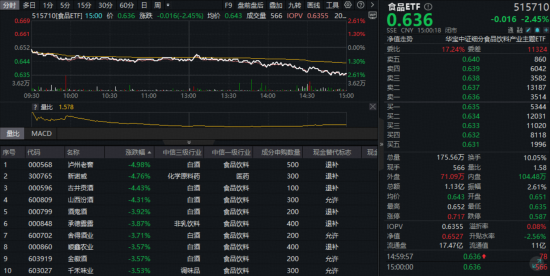
Group 1 - The food and beverage sector experienced a significant decline on August 27, with the Food ETF (515710) dropping by 2.45% to close at 0.636 [1][2] - Notable declines were observed in liquor stocks, with Luzhou Laojiao, Gujing Gongjiu, and Shanxi Fenjiu falling over 4%, while Kweichow Moutai and Wuliangye also saw declines exceeding 2% [1][2] - The overall market sentiment indicates that despite previous gains, the liquor sector remains at a low point, with institutions suggesting that the current market conditions may present attractive opportunities for high-quality liquor stocks [1][3] Group 2 - According to institutional analysis, the current environment, characterized by policy-driven demand and favorable supply-side conditions, is expected to gradually improve the supply-demand dynamics in the liquor sector [3] - The Food ETF's price-to-earnings ratio stands at 21.35, placing it in the 10.57 percentile over the past decade, indicating a favorable long-term investment opportunity [3] - Analysts from Ping An Securities believe that the liquor sector's fundamentals are stabilizing, with upcoming festive seasons likely to boost consumption [4] Group 3 - The liquor sector has faced pressure since the implementation of the alcohol ban, but recent policy changes are expected to alleviate some of this pressure, setting the stage for a potential recovery [4] - Investment strategies suggest focusing on high-end liquor, mid-range liquor with national expansion, and local market strongholds as key areas for potential growth [4] - The Food ETF (515710) is highlighted as a core asset for investors looking to gain exposure to the food and beverage sector, with a significant portion of its holdings in leading liquor stocks [5]