Shede Spirits (600702)

Search documents
白酒板块午后持续走高
Di Yi Cai Jing· 2026-01-29 12:25
Core Viewpoint - The liquor industry is experiencing significant stock price increases, with several companies reaching their daily limit up. Group 1: Stock Performance - Shui Jing Fang, Shede Liquor, Huangtai Liquor, Jiu Gui Liquor, and Jin Hui Liquor all hit the daily limit up [1] - Luzhou Laojiao is approaching the daily limit up [1] - Jinzhongzi Liquor, Gujing Gongjiu, Shanxi Fenjiu, and Kweichow Moutai all saw stock increases exceeding 7% [1]


今日白酒板块表现强势,皇台酒业、酒鬼酒、金徽酒、水井坊、泸州老窖、金种子酒领涨,板块整理
Jin Rong Jie· 2026-01-29 10:46
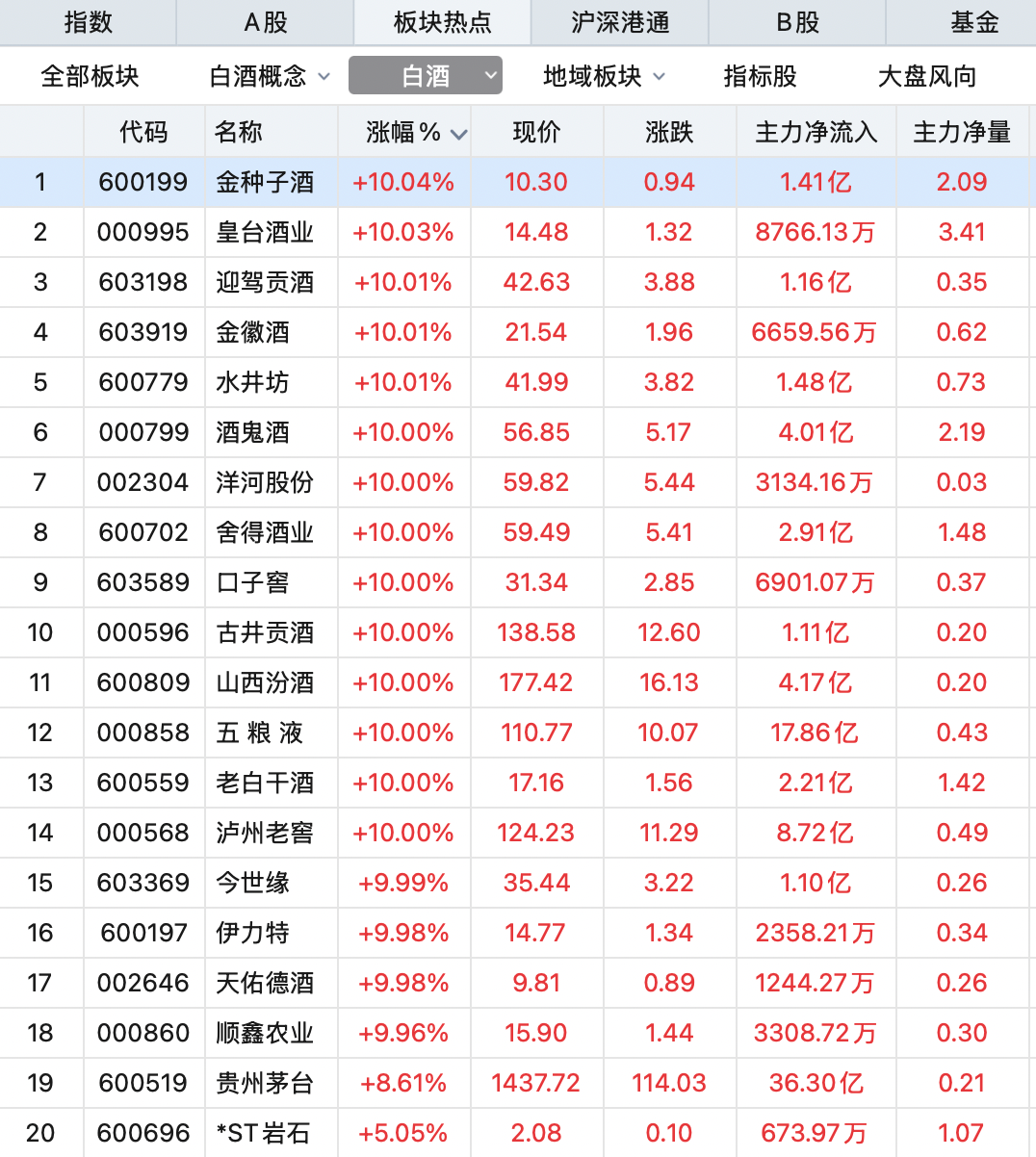
Core Viewpoint - The liquor sector, particularly the baijiu (Chinese liquor) segment, is experiencing a significant surge, with multiple stocks hitting their daily limit up due to consumer recovery expectations. Company Summaries - **Huangtai Liquor (000995.SZ)**: Latest stock price is 14.48 CNY with a daily increase of +10.03%. It is a regional liquor company in Gansu with a historical brand presence [1]. - **Jiu Gui Liquor (000799.SZ)**: Latest stock price is 56.85 CNY with a daily increase of +10.00%. It is known for its unique flavor profile and is a pioneer in the fragrant liquor category [2]. - **Jin Hui Liquor (603919.SH)**: Latest stock price is 21.54 CNY with a daily increase of +10.01%. It is a leading liquor company in Northwest China with two major brands [3]. - **Shui Jing Fang (600779.SH)**: Latest stock price is 41.99 CNY with a daily increase of +10.01%. It is a well-known high-end liquor brand in China [4]. - **Luzhou Laojiao (000568.SZ)**: Latest stock price is 124.23 CNY with a daily increase of +10.00%. It is recognized as the originator of the strong aroma liquor category [5]. - **Jin Zhong Zi Liquor (600199.SH)**: Latest stock price is 10.30 CNY with a daily increase of +10.04%. It focuses on promoting new fragrant liquor products in Anhui [6]. - **Shede Liquor (600702.SS)**: Latest stock price is 59.49 CNY with a daily increase of +10.00%. It is one of the "Six Flowers of Sichuan Liquor" and adheres to an old liquor strategy [7][8]. - **Gu Qing Gong Liquor (000596.SZ)**: Latest stock price is 138.58 CNY with a daily increase of +10.00%. It is one of China's eight famous liquors and a leader in Huizhou liquor [9]. - **Shanxi Fen Liquor (600809.SH)**: Latest stock price is 177.42 CNY with a daily increase of +10.00%. It is a leading clear aroma liquor brand with rapid national expansion [10]. - **Wuliangye (000858.SZ)**: Latest stock price is 110.77 CNY with a daily increase of +10.00%. It is a well-known brand representing high-end strong aroma liquor [11]. - **Jin Si Yuan (603369.SH)**: Latest stock price is 35.44 CNY with a daily increase of +9.99%. It is a quality liquor company in Jiangsu known for its unique product [12]. - **Lao Bai Gan Liquor (600559.SH)**: Latest stock price is 17.16 CNY with a daily increase of +10.00%. It is a leading liquor company in Hebei implementing a multi-flavor and multi-brand strategy [13]. - **Kou Zi Jiao (603589.SH)**: Latest stock price is 31.34 CNY with a daily increase of +10.00%. It is a core Huizhou liquor company emphasizing traditional brewing techniques [14]. - **Ying Jia Gong Liquor (603198.SH)**: Latest stock price is 42.63 CNY with a daily increase of +10.10%. It is a major representative of Huizhou liquor focusing on ecological brewing [15]. - **Tian You De Liquor (002646.SZ)**: Latest stock price is 9.81 CNY with a daily increase of +9.98%. It represents Qingke liquor with unique regional advantages [16].


久违,大面积涨停!贵州茅台,突然爆发!段永平:“茅台当前股价不贵”
Mei Ri Shang Bao· 2026-01-29 10:39
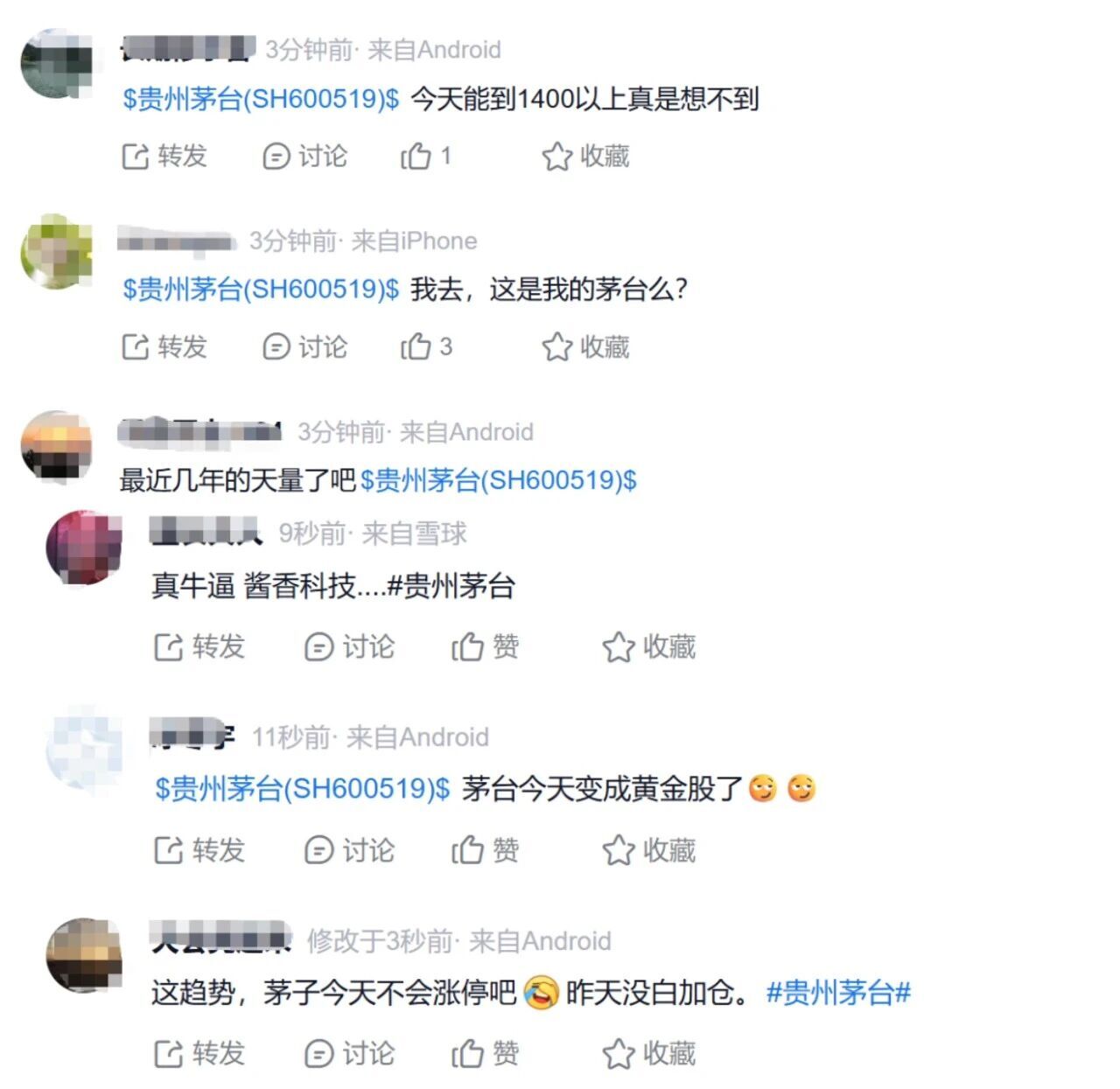
Group 1 - The price of Feitian Moutai has been rising recently, reaching 1610 yuan per bottle, driven by strong demand ahead of the Spring Festival [7][8] - On January 29, the A-share market saw Guizhou Moutai's stock price surge by 8.61%, marking a recent high in daily gains [1][5] - The white liquor sector experienced a significant rally, with the sector index soaring nearly 10%, making it the top-performing sector in the A-share market [3][4] Group 2 - Several white liquor stocks, including Huangtai Liquor and Wuliangye, hit their daily price limits, indicating a strong market sentiment [3][4] - The recent price increase of Feitian Moutai is attributed to the depletion of inventory among distributors for January and February [8] - Analysts from CITIC Securities anticipate a stable performance for the white liquor industry during the upcoming Spring Festival, suggesting a positive outlook for the sector [8]



白酒板块罕见大涨!
Zheng Quan Ri Bao Wang· 2026-01-29 10:29
Core Viewpoint - The A-share liquor sector experienced a significant surge, with the liquor ETF rising by 10.08% and the China Securities Liquor Index increasing by 9.79% on January 29, driven by macroeconomic expectations and seasonal factors related to the upcoming Spring Festival [1][2]. Group 1: Market Performance - 20 liquor companies saw stock price increases, with 18 reaching the daily limit, including notable gains from Kweichow Moutai (8.61% increase) and others like Jinzhongzi Liquor and Huangtai Liquor, both around 10% [1][2]. - The wholesale price of Feitian Moutai has been rising, surpassing 1600 yuan, indicating a market recovery signal as the product remains sold out on official platforms [3]. Group 2: Expert Insights - Experts attribute the price increase to a combination of Moutai's proactive price control and seasonal demand, suggesting that the liquor sector is a target for capital investment due to its cyclical nature [4]. - The overall industry is under pressure, with several companies forecasting significant declines in net profit, indicating a challenging competitive landscape and increased inventory issues [4]. Group 3: Future Outlook - Analysts suggest that the proactive inventory adjustments by liquor manufacturers and the stabilization of high-end liquor prices could lead to a healthier market development [5]. - The upcoming Spring Festival is expected to boost demand, with the liquor sector seen as a value opportunity for investors, despite the need for cautious optimism regarding long-term trends [5].



白酒板块1月29日涨9.16%,金种子酒领涨,主力资金净流入83.24亿元
Zheng Xing Xing Ye Ri Bao· 2026-01-29 09:03
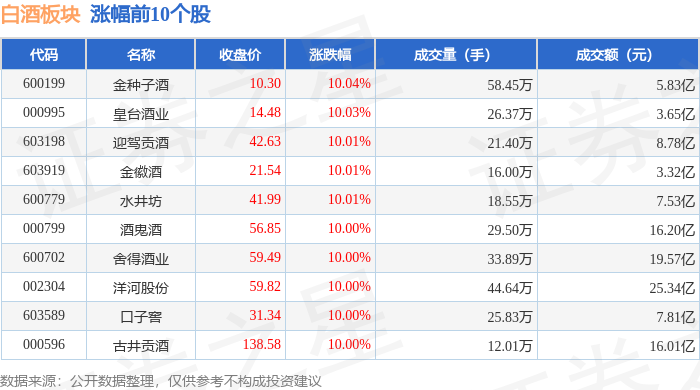
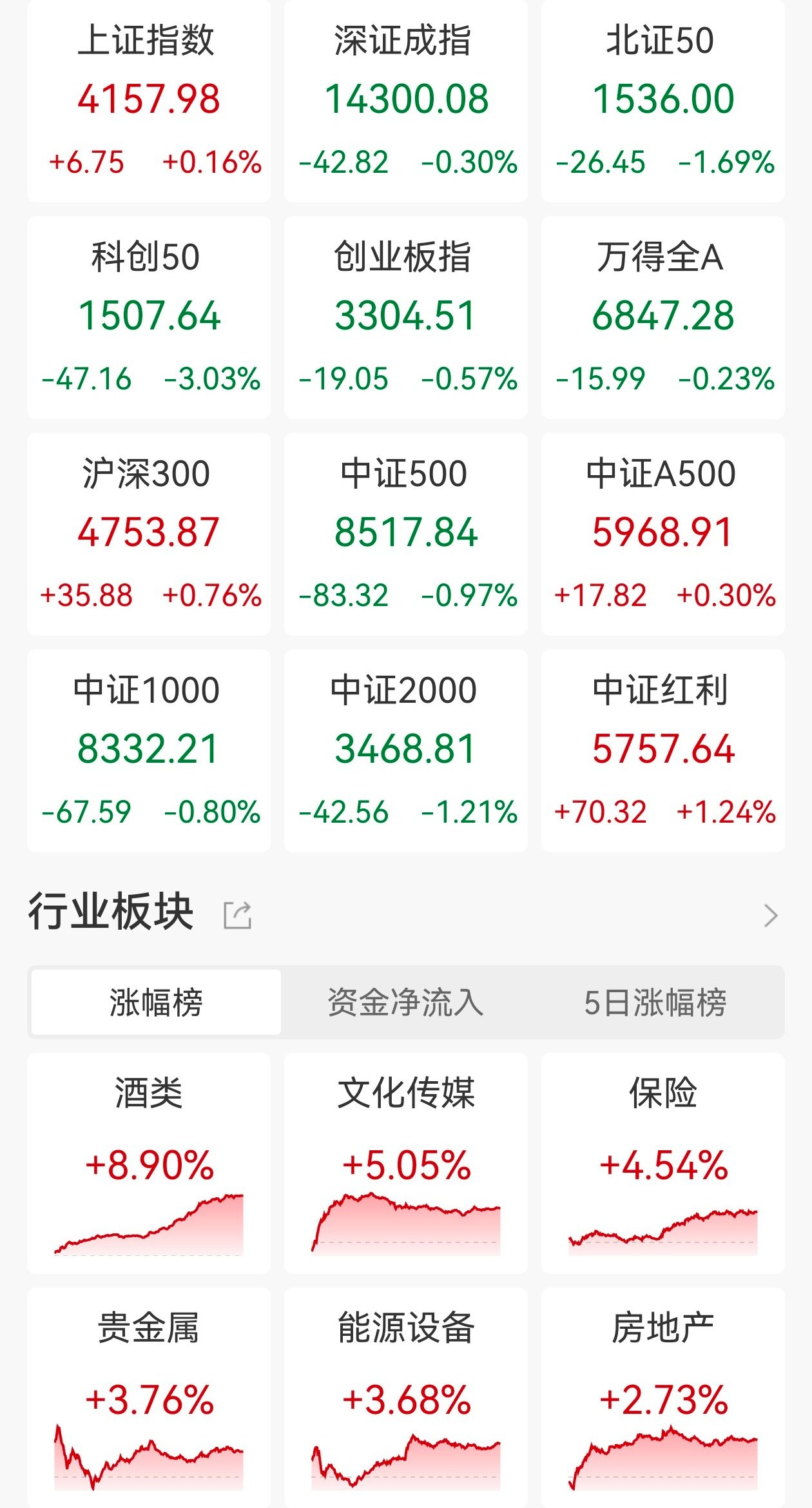
Group 1 - The liquor sector experienced a significant increase of 9.16% on January 29, with Jinzhongzi Liquor leading the gains [1] - The Shanghai Composite Index closed at 4157.98, up 0.16%, while the Shenzhen Component Index closed at 14300.08, down 0.3% [1] - Key stocks in the liquor sector showed substantial price increases, with Jinzhongzi Liquor rising by 10.04% to a closing price of 10.30 [1] Group 2 - The main capital inflow into the liquor sector was 8.324 billion yuan, while retail investors saw a net outflow of 2.849 billion yuan [1] - Major stocks such as Moutai and Wuliangye had mixed capital flows, with Moutai experiencing a net outflow of 33.37 million yuan from main funds [2] - Wuliangye saw a net inflow of 1.703 billion yuan from main funds, representing 16.29% of its total capital flow [2]
“老登股”大反攻!白酒板块全线飘红,泸州老窖等18股封板
2 1 Shi Ji Jing Ji Bao Dao· 2026-01-29 08:49
Market Performance - On January 29, A-shares showed mixed performance with the Shanghai Composite Index experiencing narrow fluctuations, the SSE 50 Index rising over 1%, while the ChiNext Index peaked and then retreated, and the Sci-Tech 50 Index fell over 3% [1] Sector Analysis - The liquor sector saw a significant surge in the afternoon, with all constituent stocks in the sector closing in the green. Notable stocks such as Jinzhongzi Liquor, Huangtai Liquor, Yingjia Gongjiu, Jinhui Liquor, Shui Jing Fang, Jiu Gui Jiu, She De Jiuye, and Luzhou Laojiao all hit the daily limit, while Shunxin Agriculture, Kweichow Moutai, and Gujing Gongjiu B rose over 5% [1] Price Movements - The price of Feitian Moutai has been continuously rising ahead of the festival, with the wholesale price of a full box surpassing 1600 yuan. As of January 29, the price for a single bottle of 2026 original box Moutai increased by 20 yuan to 1610 yuan, recovering above 1600 yuan, while the price for loose bottles remained at 1570 yuan. Previously, the wholesale price of Moutai had stabilized around 1550 yuan [1] Sales Insights - The "i Moutai" platform indicated that the price of 1499 yuan for the regular Moutai has been sold out for 29 consecutive days after multiple sell-outs [1]
A股收评:成交额3.26万亿元!三大指数涨跌不一,白酒股爆发贵州茅台涨近9%
Ge Long Hui A P P· 2026-01-29 07:09
Market Performance - The A-share market showed mixed results with the Shanghai Composite Index rising by 0.16% to close at 4157 points, while the Shenzhen Component Index fell by 0.3% and the ChiNext Index decreased by 0.57% [1] - The total market turnover reached 3.26 trillion yuan, an increase of 267.1 billion yuan compared to the previous trading day, with over 3500 stocks declining [1] Sector Highlights - The liquor sector experienced a surge, with Kweichow Moutai's price rising nearly 9%, and over twenty stocks including Wuliangye and Luzhou Laojiao hitting the daily limit [1] - The precious metals sector continued to rise, with spot gold approaching 5600 USD, leading to multiple stocks like Sichuan Gold and Zhaojin Gold hitting the daily limit [1] - AI application stocks collectively surged, with a significant increase in related stocks [1] - The cultural media sector also saw gains, with stocks like Zhejiang Wenlian hitting the daily limit [1] - Insurance stocks were active, with China Pacific Insurance leading the gains [1] - Real estate, oil and gas services, and banking sectors showed notable increases [1] Declines in Specific Sectors - The high-bandwidth memory and SMIC concepts faced declines, with Jingce Electronics dropping nearly 9% [1] - The electronic chemicals sector experienced widespread declines, with Anji Technology falling over 8% [1] - The electronic components and PCB sectors also saw declines, with Yidong Electronics dropping over 11% [1] - Other sectors such as power grid equipment, superconducting concepts, and optical communication modules faced significant downturns [1]


收评:上证50指数涨1.65% 白酒、资源股全线爆发
Mei Ri Jing Ji Xin Wen· 2026-01-29 07:07
Market Overview - The three major indices showed mixed performance, with the Shanghai Composite Index experiencing narrow fluctuations, the SSE 50 Index rising over 1%, while the ChiNext Index fell back after a peak, and the Sci-Tech 50 Index dropped over 3% [1] - The total trading volume in the Shanghai and Shenzhen markets reached 3.23 trillion yuan, an increase of 264.6 billion yuan compared to the previous trading day [1] Sector Performance - The liquor sector saw a significant surge in the afternoon, with stocks such as Luzhou Laojiao (000568), ShuiJingFang (600779), SheDe JiuYe (600702), HuangTai JiuYe (000995), and JiuGui Jiu (000799) hitting the daily limit [1] - The non-ferrous metals sector was actively traded, with copper and precious metals leading the gains. Notable performances included Western Gold (601069) achieving four consecutive daily limits in seven days, China Gold (600916) with five consecutive daily limits, and Northern Copper (000737) hitting a historical high with two consecutive daily limits [1] - Oil and gas stocks continued their strong performance, with Intercontinental Oil and Gas (600759) achieving five daily limits in seven days, Zhun Oil Co. (002207) with two consecutive daily limits, and ZhongMan Petroleum (603619) recording three daily limits in four days [1] - The real estate sector experienced a rebound, with stocks like Dayuecheng (000031), Sanxiang Impression (000863), and Wo Ai Wo Jia (000560) hitting the daily limit [1] Declines - The semiconductor industry chain faced a downturn, with companies such as Meike Technology and Jingyi Equipment dropping over 9% [1] - At market close, the Shanghai Composite Index rose by 0.16%, while the Shenzhen Component Index fell by 0.3%, and the ChiNext Index decreased by 0.57% [1]


快讯:白酒板块爆拉 贵州茅台大涨8%
Xin Lang Cai Jing· 2026-01-29 06:48
来源:股市直击 1月29日消息,白酒板块午后持续走高,水井坊、舍得酒业、皇台酒业、酒鬼酒、金徽酒、泸州老窖、 金种子酒涨停,古井贡酒、山西汾酒涨超9%,贵州茅台涨超8%。消息面上,媒体报道称,受春节旺季 需求向好等因素影响,部分茅台经销商已到货的飞天茅台(53度、500ml)一月和二月配额已售罄。 ...
刚刚,大面积涨停!午后突然暴涨,久违大反攻来了
Zhong Guo Ji Jin Bao· 2026-01-29 06:45
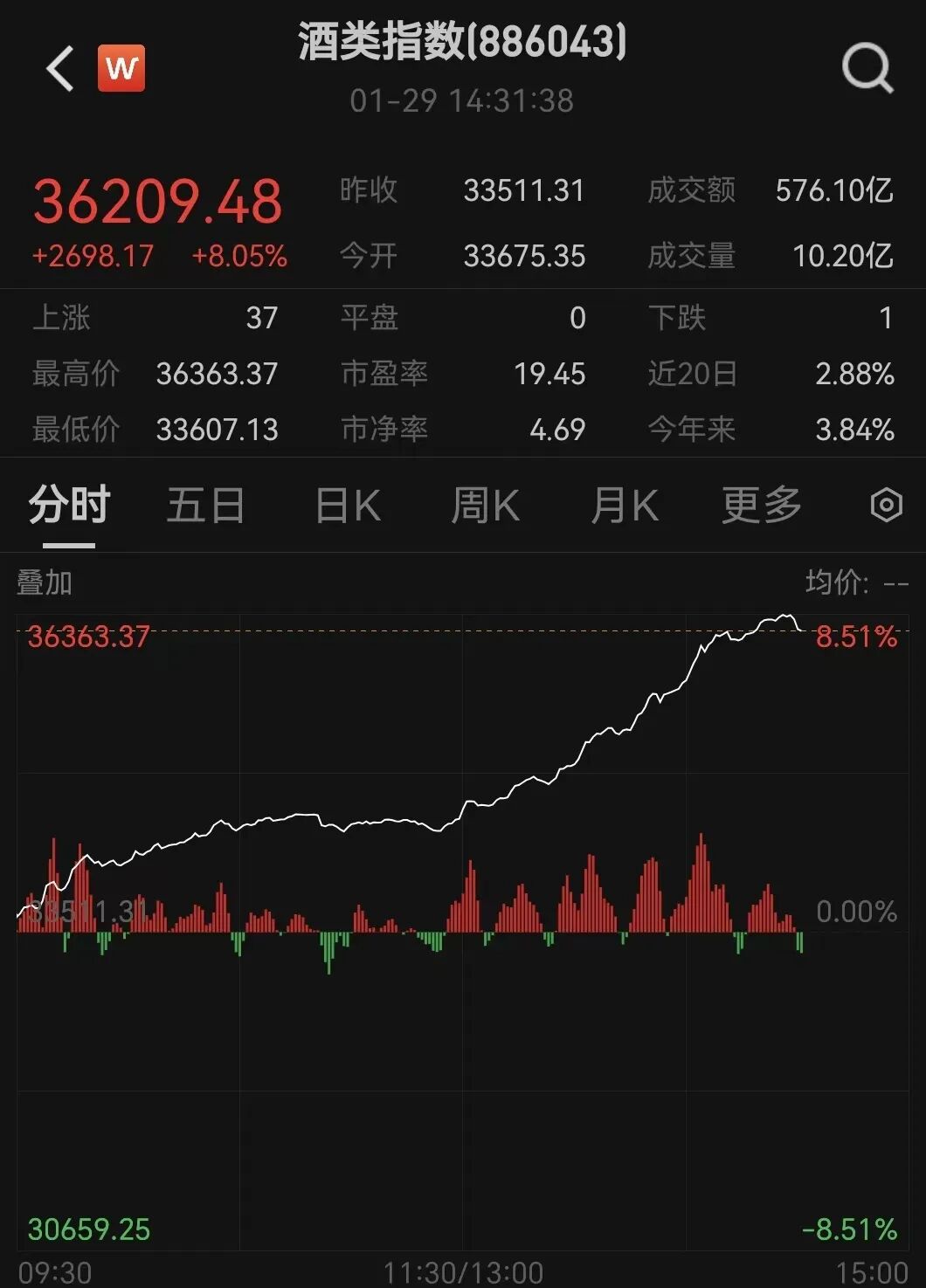
【导读】白酒板块午后集体上攻,贵州茅台涨近9% 中国基金报记者晨曦 刚刚,白酒股集体暴涨! 1月29日午后,白酒板块午后集体上攻,走出一波新行情。酒类指数大涨超8%,皇台酒业、酒鬼酒、古井贡酒、中信尼雅、金徽酒、金种子酒、舍得 酒业、泸州老窖、山西汾酒等纷纷涨停。 < w | 山西汾酒 | 177.38 | 9.98% | | --- | --- | --- | | 600809.SH | | | | 迎驾贡酒 | 42.36 | 9.32% | | 603198.SH | | | | 디子答 | 31.04 | 8.95% | | 603589.SH | | | | 五 粮 液 | 109.34 | 8.58% | | 000858.SZ | | | | 贵州茅台 | 1437.17 | 8.57% | | 600519.SH | | | | 古越龙山 | 10.72 | 8.28% | | 600059.SH | | | | 今世缘 | 34.94 | 8.44% | | 603369.SH | | | | 天佑德酒 | 9.70 | 8.74% | | 002646.SZ | | | | 老白干酒 | ...