
NMHD(600863)

Search documents
内蒙华电(600863) - 北京市嘉源律师事务所关于北方联合电力有限责任公司免于发出要约的法律意见书
2026-01-09 12:02
北京市嘉源律师事务所 关于北方联合电力有限责任公司 免于发出要约的法律意见书 西城区复兴门内大街 158 号远洋大厦 4 楼 中国·北京 二〇二六年一月 l 聖务所 A YUAN LAW OFFICES 北京 BEIJING ·上海 SHANGHAI ·深圳 SHENZHEN ·香港 HONGKONG · 广州 GUANGZHOU · 西安 XI AN 北京市嘉源律师事务所 关于北方联合电力有限责任公司 免于发出要约的法律意见书 嘉源(2026)-02-005 敬启者: 内蒙古蒙电华能热电股份有限公司(以下简称"内蒙华电")拟发行股份 及支付现金购买资产并募集配套资金(以下简称"本次重组"),北京市嘉源 律师事务所(以下简称"本所")担任本次重组的专项法律顾问,并获授权就 本次重组涉及的北方联合电力有限责任公司(以下简称"北方公司")增持内 蒙华电股份免于发出要约事宜进行核查,出具本法律意见书。 本法律意见书根据《中华人民共和国公司法》《中华人民共和国证券法》 《上市公司收购管理办法》《公开发行证券的公司信息披露内容与格式准则第 16号 -- 上市公司收购报告书》等法律法规及规范性文件的规定,按照律师行 业公 ...

内蒙华电:发行股份购买资产致股东权益变动,持股升至58.18%
Xin Lang Cai Jing· 2026-01-09 11:56
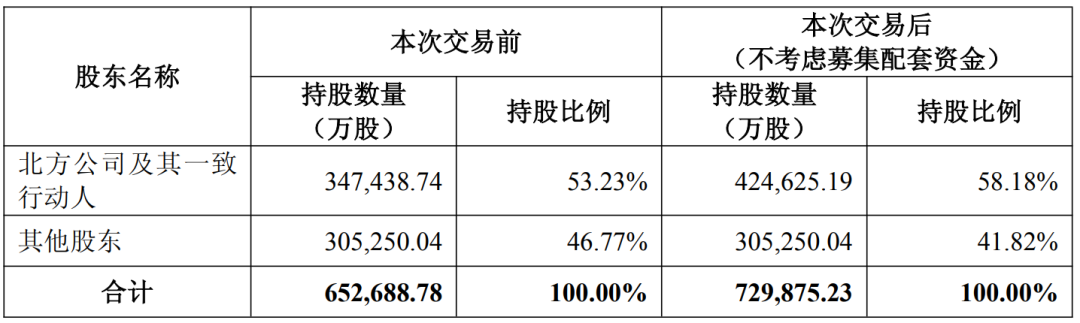
内蒙华电公告称,公司拟发行股份及支付现金,向北方公司购买北方上都正蓝旗新能源70%股权与北方 多伦新能源75.51%股权。2025年12月31日,公司获证监会相关批复。本次权益变动后,北方公司及其 一致行动人持股比例由53.23%增至58.18%,权益变动比例触及5%刻度整数倍。本次变动不会导致公司 控股股东及实际控制人变更,符合免于发出要约规定,不影响公司上市地位。 ...
内蒙华电20260108
2026-01-08 16:02
Summary of Inner Mongolia Huadian Conference Call Company Overview - Inner Mongolia Huadian is a key player in the northern thermal power sector, benefiting from a recent stock price correction that has increased expected returns, presenting a secondary investment opportunity [2][3]. Key Points and Arguments Investment Potential - The company is recommended as a top pick in the thermal power sector due to the market's reassessment of the value of such companies [2]. - The integration of coal and electricity operations provides stronger profitability stability and competitiveness, especially in fluctuating coal price environments [2][4]. Capacity Price Increase - A tiered increase in capacity prices is expected in 2026, with most regions seeing prices rise from 100 RMB/kW per year to 165 RMB/kW per year, positively impacting cash flow and dividend predictability for thermal power companies [2][8]. Dividend Policy - Inner Mongolia Huadian commits to distributing no less than 70% of its distributable profits as dividends, with a minimum payout of 0.1 RMB per share, enhancing investor confidence [2][9]. Coal Supply and Cost Management - The company produces nearly 45% of its coal needs internally, which helps reduce costs and mitigate risks associated with coal price fluctuations [2][10]. Competitive Advantages - Inner Mongolia Huadian's coal power generation capacity is 11 GW, with 6 GW serving the Inner Mongolia region and 5 GW serving the North China grid, benefiting from stable electricity prices in North China [10][12]. Market Valuation - Traditional market valuations for thermal power are considered simplistic; a reevaluation based on the company's self-sufficiency in fuel supply could yield a more competitive market valuation [11]. Additional Insights Renewable Energy Initiatives - The company is actively expanding its renewable energy portfolio, with approximately 1.8 GW of wind and solar capacity, aligning with national green development strategies [4][13]. - Recent asset injections from major shareholders into wind projects indicate strong support for the company's growth [17][18]. Future Market Dynamics - The renewable energy sector is viewed as nearing a bottom in the market cycle, with long-term potential driven by policy improvements and increased demand for green certificates [14][16]. Overall Recommendation - Inner Mongolia Huadian is recommended as a key investment target due to its stable asset profitability, reasonable valuations, high dividend yield, and ongoing expansion in renewable energy, which could provide further market value growth [19].
1天3家获证监会批复——豪掷53亿!290亿内蒙华电收购风电资产,加速新能源战略转型
Xin Lang Cai Jing· 2026-01-07 10:07
Core Viewpoint - The acquisition by Inner Mongolia Huadian (600863.SH) reflects a strategic shift towards renewable energy, aligning with national policies to optimize state-owned assets and enhance the quality of central enterprises [1][2][19]. Transaction Features - The transaction showcases typical characteristics of state-owned enterprises, involving internal asset integration under the same control of China Huaneng, which aligns with the State-owned Assets Supervision and Administration Commission's (SASAC) policies [1][17]. - The assessed value of the target assets shows a high appreciation rate, with the Zhenglanqi Wind Power project valued at an increase of 106.18%, and the major shareholder has committed to a three-year performance guarantee with a long lock-up period of 60 months, indicating confidence in long-term development [1][17]. Timeline - Key dates include: - February 11, 2025: Trading suspension - February 21, 2025: Transaction proposal - July 10, 2025: Disclosure of restructuring draft - December 31, 2025: Completion of asset transfer after approvals [18]. Industry and Business Logic - The core logic behind the acquisition is to respond to policy shifts, strengthen the renewable energy business, and optimize profit structure, ultimately enhancing asset quality and market value [2][19]. - As of the end of 2024, the company's renewable energy installed capacity reached 1.8762 million kilowatts, accounting for 14.13% of total capacity, with expectations for further growth post-transaction [20]. Transaction Overview - Inner Mongolia Huadian operates primarily in thermal power generation and has a total installed capacity of 13.2762 million kilowatts, with coal-fired generation accounting for 85.87% and renewable energy for 14.13% [3][20]. - The target assets include: - Zhenglanqi Wind Power Company with a capacity of 1.1 million kilowatts, recognized for its innovative infrastructure [4]. - Duolun Wind Power Company with a capacity of 0.5 million kilowatts [5]. Transaction Plan - The company plans to acquire 70% of Zhenglanqi Wind Power and 75.51% of Duolun Wind Power through a combination of share issuance and cash payment, with a total transaction value of 5.336 billion yuan [6][21]. - The shareholding structure post-transaction will see the controlling shareholder's stake increase from 53.23% to 58.18% [22]. Performance Commitment - The major shareholder has committed to a cumulative net profit of no less than 871.37 million yuan by the end of 2025, with further commitments for subsequent years [23][24]. Secondary Market Performance - The company has maintained a consistent profit distribution policy, with a cash dividend of 1.85 yuan per 10 shares in 2024, totaling 1.207 billion yuan [12][26]. - The historical dividend statistics show a cumulative cash dividend of 11.656 billion yuan since its listing, with an average dividend payout ratio of 56.69% [29].

内蒙古蒙电华能热电股份有限公司 关于发行股份及支付现金购买资产暨关联交易事项 获得中国证券监督管理委员会同意注册批复的公告
Zhong Guo Zheng Quan Bao - Zhong Zheng Wang· 2026-01-05 16:54
Core Viewpoint - Inner Mongolia Mengdian Huaneng Thermal Power Co., Ltd. plans to acquire 70% equity of Northern Shangdu Zhenglanqi New Energy Co., Ltd. and 75.51% equity of Northern Duolun New Energy Co., Ltd. from Northern United Power Co., Ltd. through a combination of issuing shares and cash payment, along with raising supporting funds [1][8] Group 1 - The company received approval from the China Securities Regulatory Commission (CSRC) on December 31, 2025, for the registration of the share issuance to purchase assets and raise supporting funds [1][8] - The company will issue 771,864,503 shares to acquire the relevant assets and raise no more than 265 million yuan in supporting funds [2][8] - The approval is valid for 12 months from the date of issuance, and the company must comply with relevant regulations during the implementation process [5][8] Group 2 - The company has revised the asset purchase and fundraising report, ensuring that the content does not contain any false records, misleading statements, or significant omissions [8][9] - The revised report includes minor adjustments in expression and format but does not affect the transaction [9]
申万公用环保周报:2026年度长协电价承压,11月天然气消费同比高增-20260105
Shenwan Hongyuan Securities· 2026-01-05 07:24
Investment Rating - The report maintains a positive outlook on the power and gas sectors, indicating potential investment opportunities in these areas [1]. Core Insights - The 2026 long-term electricity prices are under pressure, with significant declines observed in transaction prices across various provinces, reflecting a shift in the power generation model from reliance on thermal power to a more diversified income structure [6][7]. - Natural gas consumption saw a year-on-year increase of 5.1% in November 2025, indicating a recovery in demand, particularly due to heating needs during the winter season [34]. - The report highlights the importance of optimizing the electricity market mechanism and restructuring the power generation mix as key future trends [7]. Summary by Sections 1. Electricity: 2026 Long-term Electricity Prices - The annual transaction results for 2026 show a total transaction volume of 2,724.81 billion kWh in Jiangsu, with a weighted average price of 344.19 yuan/MWh, down 16.55% from the previous year [6][8]. - Similar trends are observed in Guangdong and Anhui, with prices decreasing by 5.03% and 10.09% respectively [6][8]. - The report suggests that coastal provinces will face significant pricing pressure in 2026, as the role of thermal power shifts from being the main energy source to a regulatory support role [7]. 2. Gas: November Natural Gas Consumption - In November 2025, the apparent consumption of natural gas reached 362.8 billion m³, marking a 5.1% increase year-on-year, while the total consumption from January to November was 3,880 billion m³, a slight decline of 0.1% [34]. - The report notes that the increase in consumption is attributed to a low base from the previous year and a recovery in industrial gas demand [34]. - The report also highlights a favorable trend in natural gas pricing, with a decrease in costs due to lower international oil prices and improved supply conditions [36]. 3. Investment Analysis Recommendations - For thermal power, the report recommends companies with integrated coal and power operations, such as Guodian Power and Inner Mongolia Huadian, as well as those with significant large unit ratios like Datang Power and Huaneng International [10]. - In the hydropower sector, companies like Yangtze Power and Guotou Power are recommended due to their sufficient capacity and expected improvements in profit margins [10]. - The report suggests focusing on nuclear power companies like China Nuclear Power and China General Nuclear Power, which have stable cost structures and high utilization hours [10]. - For green energy, companies such as Xintian Green Energy and Longyuan Power are highlighted for their stable returns and increasing operational benefits from environmental value releases [10].



绿证交易量增价稳,行业长期价值稳固
Changjiang Securities· 2026-01-04 23:30
Investment Rating - The report maintains a "Positive" investment rating for the utility sector [10] Core Insights - In November, the national trading volume of green certificates reached 132.12 million, a year-on-year increase of 143%, marking a historical high for monthly trading scale. From January to November, the trading of green certificates accounted for 41.81% of the issued tradable scale, an increase of 27.65 percentage points compared to the entire year of 2024, indicating a continuous alleviation of the oversupply issue in green certificates [2][12] - The average trading price of green certificates in November was 4.96 yuan per certificate, showing a month-on-month increase of 10.80%. The improvement in both supply and demand sides is expected to provide long-term support for green certificate prices, further catalyzing the recovery of the utility sector's attributes and growth narrative [2][12] - The report highlights a significant increase in new installed capacity for thermal power, with a historical high of 77.52 million kilowatts added from January to November, representing a year-on-year growth of 63.41%. This expansion is expected to enhance the power system's regulation capacity and alleviate the pressure on renewable energy consumption and electricity prices [2][12] Summary by Sections Green Certificate Trading - The trading volume of green certificates in November reached 132.12 million, a 143% increase year-on-year, with the trading scale hitting a historical high. The trading of green certificates from January to November totaled 728 million, a 119% increase year-on-year. The proportion of traded green certificates to the issued tradable scale reached 41.81%, up 27.65 percentage points from 2024 [2][12] - The average trading price for green certificates in November was 4.96 yuan per certificate, reflecting a month-on-month increase of 10.80%. The price stability is supported by the synchronized improvement in supply and demand, with expectations of rational expansion in supply due to policy changes [2][12] Installed Capacity - From January to November, the total new installed capacity was 44.557 million kilowatts, with November alone contributing 4.773 million kilowatts, a year-on-year increase of 27.86%. Wind and solar power installations saw significant growth, with wind power increasing by 59.42% and solar power by 33.25% year-on-year [2][12] - The report emphasizes that the substantial expansion of thermal power capacity will significantly enhance the power system's ability to accommodate fluctuating renewable energy outputs, thereby stabilizing electricity prices [2][12] Investment Recommendations - The report recommends focusing on quality thermal power operators such as Huaneng International, Datang Power, Guodian Power, and Huadian International, as well as hydropower companies like Yangtze Power and State Power Investment Corporation. It also highlights opportunities in the renewable energy sector, suggesting companies like Longyuan Power and New天绿色能源 [2][12]





长协落地电价触底,关注板块红利价值
GF SECURITIES· 2026-01-04 14:05
Investment Rating - The industry investment rating is "Buy" [2] Core Insights - The annual long-term contract electricity prices are reaching a bottom, with a focus on the dividend value of the sector. The electricity price in Guangdong is 0.372 CNY/kWh, down 0.02 CNY/kWh year-on-year, reflecting a 20% decrease from the benchmark. In Jiangsu, the price is 0.344 CNY/kWh, down 0.07 CNY/kWh year-on-year, a 12% drop from the benchmark. The market has reacted negatively to these price drops, but the long-term outlook suggests limited further declines as supply and demand improve [6][17][24]. Summary by Sections 1. Annual Long-term Contract Electricity Results - The annual electricity trading results for 2026 show significant price reductions in Guangdong and Jiangsu, with declines of 20% and 12% respectively. The transition from annual to monthly contracts is noted, with a high proportion of medium to long-term market electricity remaining stable [17][24]. 2. Weekly Review - The report highlights the recent implementation of local electricity pricing mechanisms, with a focus on the impact of coal prices and the stability of natural gas prices compared to previous years [10][18]. 3. Industry High-frequency Data Tracking - The report tracks the rapid decline in spot coal prices and the decrease in coal inventories at northern ports. The domestic natural gas prices are lower than the previous year, while overseas prices are fluctuating upwards [10][18]. 4. Key Company Announcements and Sector Performance Tracking - The report emphasizes the acquisition by Guiguan Electric Power of assets from its parent group, which is expected to enhance its growth potential. The company plans to lead the development of hydropower and new energy in Tibet, which could significantly boost profits in the coming quarters [6][10][18]. 5. Focus on Investment Opportunities - The report identifies several companies with strong dividend yields and market management strategies, including Huaneng International, Huadian International, and Guiguan Electric Power. The focus is on high dividend stocks and companies with robust market management practices, which are expected to enhance their valuation [6][10][18]. 6. Valuation and Financial Analysis of Key Companies - The report provides a detailed valuation analysis of key companies in the sector, indicating potential upside in their stock prices based on projected earnings and dividend increases. For instance, Guiguan Electric Power's acquisition is valued at 2.025 billion CNY, with a price-to-book ratio of 1.06 [7][10]. 7. Market Positioning and Future Outlook - The report concludes with a positive outlook for the public utility sector, suggesting that the current valuation levels are attractive for new investments, especially as the market begins to stabilize and recover from recent price declines [6][10][18].


年协电价落地释压,1 月新能源差价补贴最高 6.17 分/度
GOLDEN SUN SECURITIES· 2026-01-04 11:28
Investment Rating - The industry investment rating is maintained as "Increase" [4] Core Insights - The annual negotiated electricity price has been established, leading to a significant drop in trading prices in Jiangsu and Zhejiang for 2026, with a decrease of 16.5% and 16.4% respectively. The new energy price subsidy in January is at a maximum of 6.17 cents per kilowatt-hour [3][13] - The electricity market is undergoing a restructuring with the full entry of new energy sources, which is expected to bring about a new equilibrium in electricity pricing sooner than anticipated [3] - The report highlights the performance of various sectors within the electricity industry, noting a general decline in stock prices for most listed companies in the power and utilities sector [6][63] Summary by Sections Industry Overview - The average trading price for electricity in Jiangsu for 2026 is 344.19 yuan per megawatt-hour, down 16.5% year-on-year, while in Zhejiang it is 344.85 yuan per megawatt-hour, also down 16.4% [13] - The total transaction volume in Jiangsu's electricity market for 2026 is 272.481 billion kilowatt-hours, with a weighted average price of 344.19 yuan per megawatt-hour [13] - The report indicates that the electricity prices in 28 regions have been adjusted downwards, with reductions ranging from 0.65% to 24.68% [3][13] Market Performance - The Shanghai Composite Index closed at 3968.84 points, up 0.13%, while the CSI 300 Index closed at 4629.94 points, down 0.59%. The CITIC Power and Utilities Index closed at 3042.43 points, down 2.35%, underperforming the CSI 300 Index by 1.76 percentage points [6][63] - Most stocks in the power and utilities sector experienced declines, with notable drops in companies such as Guodian Power and Huaneng International [67] Investment Recommendations - The report suggests focusing on high-dividend coal-fired power leaders and companies with stable electricity prices and coal-electric integration, such as Huaneng International, Huadian International, and Guodian Power [3] - It also recommends investing in flexible coal-fired power transformation leaders and companies in the wind and solar sectors, such as Xintian Green Energy and Longyuan Power [3] - For the gas sector, it highlights quality leaders like Chengran and New Hope Energy, which are expected to recover profits while maintaining stable dividends [3]

内蒙华电(600863) - 北京市嘉源律师事务所关于内蒙古蒙电华能热电股份有限公司发行股份及支付现金购买资产并募集配套资金暨关联交易之资产交割情况的法律意见书
2026-01-04 08:30
北京市嘉源律师事务所 关于内蒙古蒙电华能热电股份有限公司 发行股份及支付现金购买资产 并募集配套资金暨关联交易 之资产交割情况的法律意见书 西城区复兴门内大街 158 号远洋大厦 4 楼 中国·北京 二〇二六年一月 关于内蒙古蒙电华能热电股份有限公司 发行股份及支付现金购买资产并募集配套资金暨关联交易 之资产交割情况的法律意见书 嘉源(2026)-02-001 嘉源律师事务所 IIA YUAN LAW OFFICES 北京 BEIJING·上海 SHANGHAI·深圳 SHENZHEN·香港 HONGKONG·广州 GUANGZHOU·西安 XI' AN 致:内蒙古蒙申华能热电股份有限公司 北京市嘉源律师事务所 敬启者: (二) 募集配套资金 根据内蒙华电的委托,本所担任内蒙华电本次重组的专项法律顾问。本所 已于 2025年 7 月 9 日就本次重组出具了嘉源(2025)-02-071《北京市嘉源律师事 务所关于内蒙古蒙电华能热电股份有限公司发行股份及支付现金购买资产并募 集配套资金暨关联交易的法律意见书》,于 2025年 7 月 25 目就本次重组出具 了 嘉源(2025)-02-080《北京市嘉源律师事务 ...