HZBank(600926)

Search documents
杭州银行获评“2025低空经济金融创新案例” 搭建产业对接平台赋能低空产业
Sou Hu Cai Jing· 2025-10-13 11:05
Group 1 - The core event of the 2025 Zhejiang Business Low-altitude Economy Cooperation Week was held in Hangzhou, attracting over 400 guests from government, research institutions, leading enterprises, and investment agencies to explore benchmark experiences in the low-altitude economy [1] - The low-altitude economy is recognized as a strategic emerging industry with a market potential of trillions, covering various segments including research and development, core component manufacturing, assembly, and operational services [1] - By 2025, the number of low-altitude economy-related enterprises in Zhejiang is expected to exceed 2,000, with a core industry scale projected to surpass 80 billion yuan, providing ample service opportunities for financial institutions [1] Group 2 - As of June 2025, the company has established a "1+7+N" specialized financial system for scientific and technological innovation, with a focus on sectors such as healthcare, intelligent manufacturing, and artificial intelligence [2] - The balance of technology loans reached 115.18 billion yuan, an increase of 20.6 billion yuan compared to the end of the previous year, while the scale of private equity investment funds reached 188.93 billion yuan, providing substantial financial support for the low-altitude economy [2] Group 3 - The company not only offers customized financial products but also builds industry connection platforms to facilitate resource integration among upstream and downstream players [3] - By June 2025, the company has nurtured 327 enterprises to go public, achieving a coverage rate of 90% for unicorn and potential unicorn companies in Hangzhou [3] Group 4 - With the national support policies for the low-altitude economy being introduced, Zhejiang is accelerating the creation of a "low-altitude economy innovation highland" [4] - The company aims to deepen the Sci-tech Finance 3.0 model, focusing on the entire chain of low-altitude economy from research and development to manufacturing and application [4]

杭州银行(600926) - 杭州银行关于独立董事任职资格获监管机构核准的公告
2025-10-13 09:45
周亚虹先生的简历详见公司2025年6月17日刊登于上海证券 交易所网站(www.sse.com.cn)的《杭州银行股份有限公司2024 年年度股东大会会议材料》。 特此公告。 杭州银行股份有限公司董事会 2025年10月14日 1 证券代码:600926 证券简称:杭州银行 公告编号:2025-074 优先股代码:360027 优先股简称:杭银优1 杭州银行股份有限公司 关于独立董事任职资格获监管机构核准的公告 本公司董事会及全体董事保证本公告内容不存在任何虚假记 载、误导性陈述或者重大遗漏,并对其内容的真实性、准确性和 完整性承担法律责任。 杭州银行股份有限公司(以下简称"公司")收到《国家金 融监督管理总局浙江监管局关于周亚虹杭州银行独立董事任职 资格的批复》(浙金复〔2025〕374号),国家金融监督管理总 局浙江监管局已核准周亚虹先生公司独立董事的任职资格。 ...
筑牢金融防线 赋能美好生活—杭州银行北京平谷支行深入农民工群体开展金融教育宣传活动
Bei Jing Shang Bao· 2025-10-13 08:21
Core Viewpoint - The article emphasizes the importance of financial literacy for migrant workers in China, highlighting the efforts of Hangzhou Bank's Beijing Pinggu Branch to enhance financial risk awareness and knowledge among this demographic during the 2025 Financial Education Promotion Week [1]. Group 1: Activity Overview - The financial knowledge promotion activities are themed "Inclusive Finance, Protecting Hard Work," aimed at delivering practical financial knowledge to migrant workers [1]. - The initiative addresses the specific needs of migrant workers, who often face challenges such as high mobility, limited access to information, and a lack of financial knowledge, making them vulnerable to financial fraud [1]. Group 2: Educational Content - The activities include core knowledge presentations using simple language to explain savings, safe investment options (like government bonds and low-risk bank products), legitimate credit channels (to avoid illegal high-interest loans), and safe mobile payment practices [4]. - One-on-one consultation stations are set up for personalized guidance on issues like salary cards, cross-regional remittances, social security contributions, and family savings planning [5]. Group 3: Engagement Approach - The communication is designed to be barrier-free, avoiding jargon and using everyday language, including local dialects, to ensure understanding [6]. - Selected case studies are relevant to the daily lives of migrant workers, enhancing relatability and providing cautionary lessons [7]. - The content is tailored to address the most common financial issues and needs faced by migrant workers, emphasizing practicality and applicability [8].

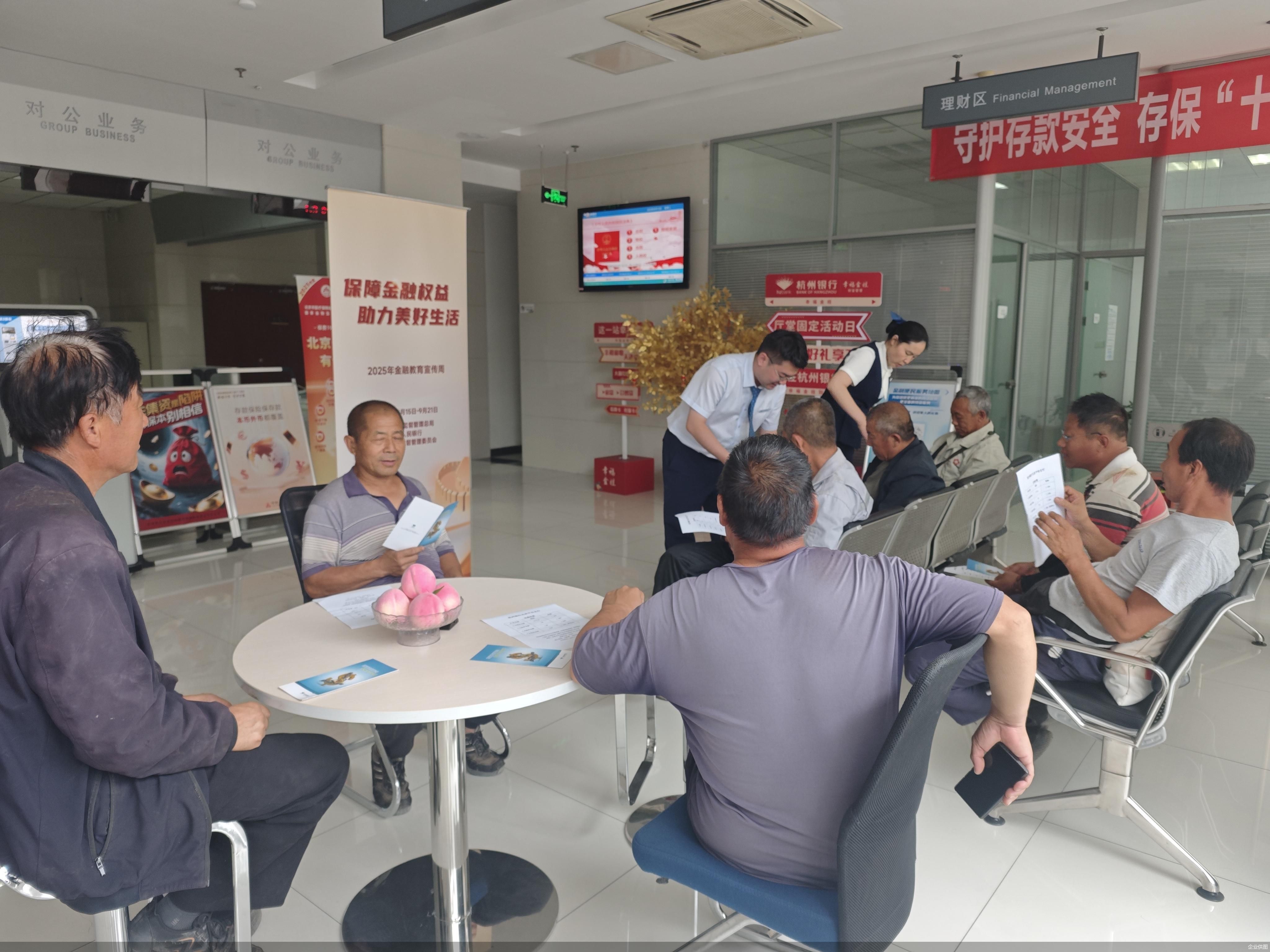
杭州银行北京平谷支行开展“桃乡情·方言韵” 主题活动
Bei Jing Shang Bao· 2025-10-13 08:08
近期,杭州银行北京平谷支行紧扣"桃乡情·方言韵"主题,精心策划了一场别开生面的客户采摘桃子活动,诚邀客户一同走进桃园,共享丰收的甜蜜与欢 乐。 支行员工们分散在人群中,时刻关注着客户的需求。他们或热情地帮客户提着竹篮,让客户能更轻松地采摘;或敏捷地协助客户采摘高处的果实,确保客户 能充分体验到桃子采摘的乐趣。在这片充满生机的桃林里,支行员工们用实际行动诠释着"最美厅堂"的服务内涵,让客户感受到无微不至的关怀。 采摘活动结束后,支行员工和客户一同返回支行。此时,平谷支行的厅堂被布置得温馨而雅致,仿佛一个充满温情的家园。大家围坐在一起,品尝着刚摘下 的新鲜桃子,那清甜的汁水在口中散开,带来满满的幸福感。在轻松愉悦的氛围中,支行客户经理巧妙地将金融知识融入其中,通过生动有趣的案例,向客 户普及反诈知识,提高客户的识诈反诈能力,真正做到了将轻松的休闲时光与专业的金融服务完美结合。 这种别出心裁的活动,宛如一座坚固的桥梁,让客户在享受田园乐趣的同时,进一步加深了对支行服务的了解与信任。未来,杭州银行北京平谷支行将持续 创新客户金融服务活动形式,增进与客户的互动交流,提升客户体验,携手客户共创美好未来。 村 州 银 行 ...

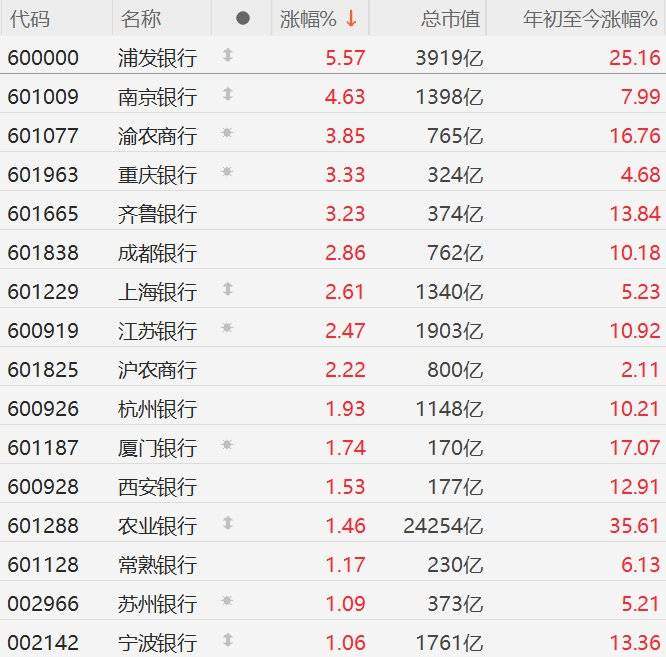
A股银行股逆势上涨,浦发银行涨超5%,南京银行涨超4%,渝农商行、重庆银行、齐鲁银行涨超3%,成都银行、上海银行涨超2%
Ge Long Hui· 2025-10-13 05:57
Core Insights - The A-share market has seen a rise in bank stocks, with notable increases in shares of several banks, particularly Shanghai Pudong Development Bank, which rose over 5% [1] - Shanghai Pudong Development Bank announced that Dongfang Asset Management increased its stake in the bank through the secondary market by purchasing common shares and converting convertible bonds [1] Summary by Category Stock Performance - Shanghai Pudong Development Bank (600000) increased by 5.57%, with a total market capitalization of 391.9 billion and a year-to-date increase of 25.16% [2] - Nanjing Bank (601009) rose by 4.63%, with a market cap of 139.8 billion and a year-to-date increase of 7.99% [2] - Other banks such as Chongqing Bank (601963) and Qilu Bank (601665) also saw increases of 3.33% and 3.23% respectively [2] Market Capitalization - The total market capitalization of major banks includes: - Agricultural Bank of China (601288) at 2,425.4 billion, with a year-to-date increase of 35.61% [2] - Jiangsu Bank (600919) at 190.3 billion, with a year-to-date increase of 10.92% [2] - Chengdu Bank (601838) at 76.2 billion, with a year-to-date increase of 10.18% [2] Investment Activity - Dongfang Asset Management's acquisition of shares in Shanghai Pudong Development Bank indicates a positive outlook and confidence in the bank's future performance [1]



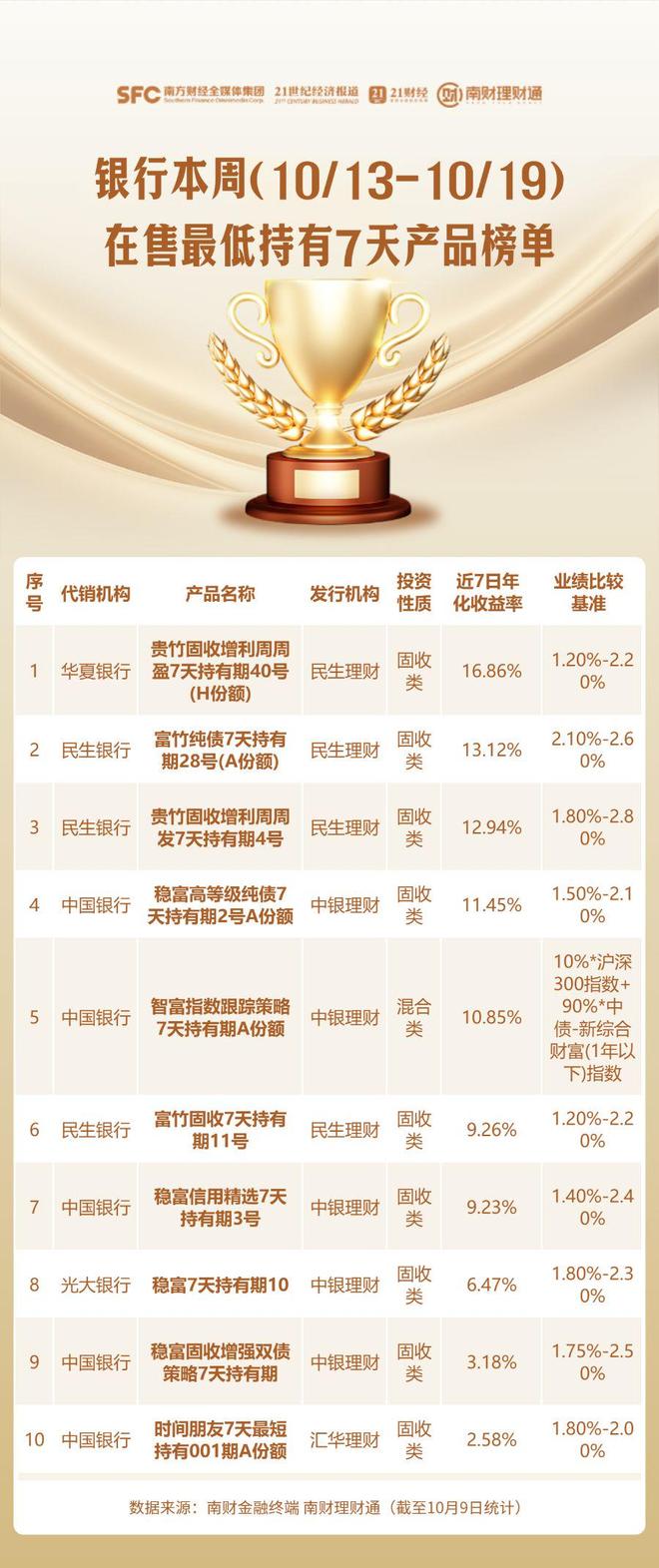
银行渠道本周在售最低持有期产品榜单(10/13-10/19)
2 1 Shi Ji Jing Ji Bao Dao· 2025-10-13 01:09
Core Insights - The article focuses on the performance of bank wealth management products with varying minimum holding periods, specifically highlighting the annualized returns of these products to assist investors in making informed choices [1][2]. Summary by Categories 7-Day Holding Period Products - The top-performing product is from Huaxia Bank, with an annualized return of 16.86% [4]. - Other notable products include: - Minsheng Bank's "Fuzhu Pure Bond" at 13.12% [4]. - Minsheng Bank's "Guizhu Fixed Income" at 12.94% [4]. - Bank of China’s "Stable Wealth High-Grade Pure Bond" at 11.45% [4]. 14-Day Holding Period Products - Minsheng Bank's "Guizhu Fixed Income" leads with a return of 13.71% [7]. - Other significant products include: - Minsheng Bank's "Fuzhu Pure Bond" at 10.97% [7]. - Bank of China's "Stable Wealth Fixed Income" at 9.67% [7]. 30-Day Holding Period Products - Minsheng Bank's "Fuzhu Pure Bond" has an annualized return of 9.51% [9]. - Other key products include: - Minsheng Bank's "Guizhu Fixed Income" at 8.99% [10]. - Bank of China's "Stable Wealth Preferred" at 7.13% [10]. 60-Day Holding Period Products - Bank of China's "Smart Wealth Index Tracking Strategy" tops the list with a return of 23.99% [12]. - Other notable products include: - Minsheng Bank's "Fuzhu Pure Bond" at 7.48% [12]. - Bank of China's "Stable Wealth Credit Selection" at 6.31% [12].





银行股的保险资金配置:有望持续提升
ZHONGTAI SECURITIES· 2025-10-12 12:46
Investment Rating - The report maintains an "Overweight" rating for the banking sector [1]. Core Insights - The scale of insurance capital investment is steadily increasing, with a significant rise in stock investment proportion, which has outpaced bond growth [3][4]. - Bank stocks have consistently held the largest share in insurance capital's heavy stock holdings, with a notable recovery in their proportion post-2023, reaching 41.9% of total stock purchases in 2025 [3][4]. - Current policies are promoting long-term capital market entry, with adjustments in insurance company assessment mechanisms to enhance equity investment ratios, a strategy validated by experiences in the US and Japan [3][4]. Summary by Sections Insurance Capital Investment: Steady Growth and Increased Stock Proportion - As of 1H25, the total insurance capital investment balance in China reached 36.2 trillion yuan, marking a year-on-year growth of 17.4%, with life insurance companies accounting for 90% of this balance [6][8]. - Stock investment growth has outpaced bond investment, with stock investment proportion rising to 8.8% in 1H25, reflecting a significant increase compared to previous years [10][12]. - The decline in long-term interest rates has been a crucial factor driving insurance companies to increase stock investments, as they seek to mitigate risks associated with interest rate spreads [24][26]. Increased Proportion of Bank Stocks in Insurance Capital Holdings - Bank stocks have maintained the highest proportion in the heavy stock holdings of insurance capital, accounting for 47.2% in 1H25, significantly higher than other sectors [29][30]. - The number of stock purchases (or "takeovers") in the banking sector surged in 2025, with bank stocks representing 41.9% of total purchases, a marked increase from previous years [29][30]. Policy Support for Increased Equity Investment by Insurance Capital - Recent policies have been implemented to facilitate the entry of long-term capital into the market, with a focus on enhancing the willingness of insurance companies to invest in equities [31][32]. - The experiences of the US and Japan demonstrate that increasing equity investment during periods of declining long-term interest rates is a viable strategy for maintaining the health of insurance companies [33][37]. Projected New Insurance Investment Funds - It is anticipated that new insurance investment funds will exceed 4 trillion yuan in both 2025 and 2026, with stock investment proportions expected to rise to 9.3% and 10.9%, respectively [41][42]. Investment Recommendations - In the current policy and macroeconomic environment, it is recommended to focus on bank stocks, particularly those with regional advantages and high dividend yields, as insurance capital is likely to increase its holdings in this sector [48].

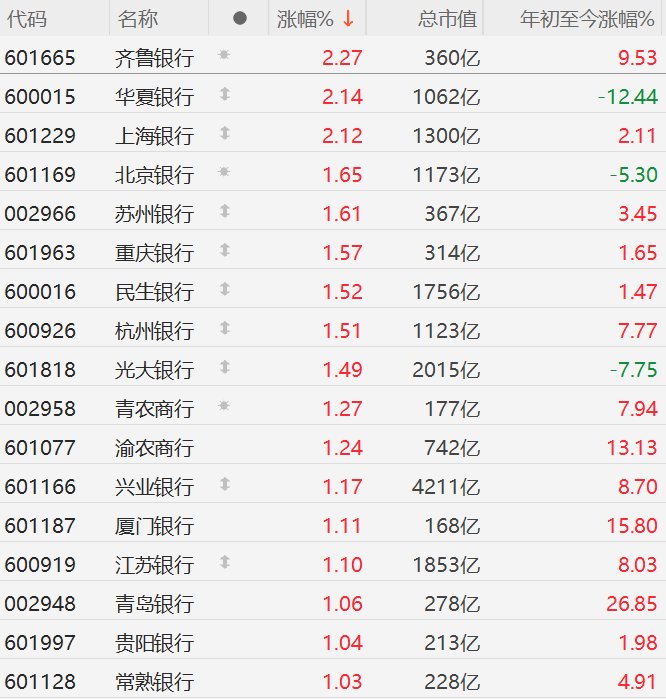
银行股逆势上涨,上海银行等涨超2%
Ge Long Hui· 2025-10-10 01:58
Core Insights - The A-share market has seen a rise in bank stocks, with notable increases in Qilu Bank, Huaxia Bank, and Shanghai Bank, all exceeding 2% [1] Group 1: Stock Performance - Qilu Bank's stock increased by 2.27%, with a total market capitalization of 36 billion and a year-to-date increase of 9.53% [2] - Huaxia Bank's stock rose by 2.14%, with a market cap of 106.2 billion and a year-to-date decline of 12.44% [2] - Shanghai Bank's stock saw a 2.12% increase, with a market cap of 130 billion and a year-to-date increase of 2.11% [2] - Beijing Bank's stock increased by 1.65%, with a market cap of 117.3 billion and a year-to-date decline of 5.30% [2] - Suzhou Bank's stock rose by 1.61%, with a market cap of 36.7 billion and a year-to-date increase of 3.45% [2] - Chongqing Bank's stock increased by 1.57%, with a market cap of 31.4 billion and a year-to-date increase of 1.65% [2] - Minsheng Bank's stock rose by 1.52%, with a market cap of 175.6 billion and a year-to-date increase of 1.47% [2] - Hangzhou Bank's stock increased by 1.51%, with a market cap of 112.3 billion and a year-to-date increase of 7.77% [2]

区域银行冲向科技金融
券商中国· 2025-10-09 11:16
Core Viewpoint - The article emphasizes the importance of fintech as a leading business segment for banks and financial institutions, highlighting the proactive approach of these entities in embracing technological advancements [1]. Group 1: Development of Fintech in Regional Banks - Many regional banks, particularly city and rural commercial banks, are following the lead of larger banks in developing fintech, although their progress may be limited by resources [2]. - Zhejiang Rural Commercial Bank has reported that since launching its fintech pilot in Jiaxing, the proportion of technology enterprise loans has exceeded 30% of corporate loans, covering 7,200 tech enterprises [2]. - Various county-level rural commercial banks in Jiaxing have begun to establish specialized mechanisms for fintech, such as dedicated departments and service models [3]. Group 2: Challenges and Strategies - The development of fintech is challenging for regional banks, which need to root their efforts in local economic structures and overcome internal limitations [5]. - A listed rural commercial bank indicated that it had been considering fintech since 2017, but only completed team formation in 2021, reflecting the long-term commitment required [4]. Group 3: Growth in Technology Loans - Despite smaller loan scales compared to larger banks, regional banks are accelerating their technology loan offerings, with significant growth rates reported [6]. - For instance, Jiangsu Bank's technology loan balance reached 2,740 billion yuan, growing by 17.80% year-on-year, while Hangzhou Bank's technology loans increased by 21.77% [7]. - Other regional banks, such as Qilu Bank and Qingdao Bank, also reported substantial growth in technology loans, with increases of 17.60% and 20.85% respectively [7]. Group 4: Organizational Structure and Specialization - Banks are adapting their organizational structures to support fintech, with many establishing dedicated departments and specialized branches [9]. - For example, Ningbo Bank has set up a technology finance department to provide comprehensive services to tech enterprises, while Qingdao Bank has developed a specialized mechanism for fintech [10]. - Hangzhou Bank has created a well-structured fintech system with multiple regional centers and specialized institutions [11].

16年老股东"清仓式撤退"!从杭州银行赚走38亿,中国人寿转身离场
Sou Hu Cai Jing· 2025-10-03 09:48
Core Insights - China Life Insurance has completely divested its stake in Hangzhou Bank after 16 years, selling 50.79 million shares for approximately 833 million yuan, marking the end of its investment journey [2][3] - The decision to exit was influenced by the need for asset reallocation, as the bank's stock price had fluctuated within a range that diminished its attractiveness for investment [6][7] Investment Performance - China Life's total investment in Hangzhou Bank was 1.635 billion yuan, resulting in a net profit of 2.24 billion yuan, yielding an investment return rate exceeding 137% [4] - Including dividends received over the 16 years, the total return rate surpassed 150% [4] Market Context - Hangzhou Bank has grown significantly, with total assets exceeding 2.2 trillion yuan and a revenue of 20.093 billion yuan, net profit of 11.662 billion yuan, reflecting a year-on-year growth of 16.66% [4] - The banking sector has faced challenges such as narrowing net interest margins and tightening regulatory policies, leading to lower valuations across the board [7][11] Shareholder Dynamics - As China Life exits, New China Life Insurance has entered, purchasing 329 million shares for 4.317 billion yuan, indicating continued institutional interest in Hangzhou Bank [9] - The shift from China Life's "value realization" strategy to New China Life's focus on potential growth reflects changing investment philosophies [9][16] Risk and Future Outlook - Despite a low non-performing loan ratio of 0.76% and a high provision coverage ratio of 520%, there are concerns about the declining trend in the coverage ratio and the bank's reliance on corporate loans [10] - The future growth potential of Hangzhou Bank remains promising, driven by local economic developments and digital transformation, although it may not replicate past high growth rates [16][17]