
NJBK(601009)

Search documents
南京银行(601009):南京银行深度报告:双U曲线巩固,股息成长兼具
GUOTAI HAITONG SECURITIES· 2026-01-24 08:14
双 U 曲线巩固,股息成长兼具 南京银行(601009) 本报告导读: 展望 2026 年,南京银行依托区位优势与负债结构优化,业绩向好趋势明确。公司兼 具稳健增长与优质股息回报,具备长期配置价值。 投资要点: | [Table_Finance] 财务摘要(百万元) | 2023A | 2024A | 2025E | 2026E | 2027E | | --- | --- | --- | --- | --- | --- | | 营业收入 | 45,160 | 50,273 | 55,567 | 60,637 | 66,702 | | (+/-)% | 1.2% | 11.3% | 10.5% | 9.1% | 10.0% | | 净利润(归母) | 18,502 | 20,177 | 21,807 | 23,867 | 26,522 | | (+/-)% | 0.5% | 9.1% | 8.1% | 9.4% | 11.1% | | 每股净资产(元) | 13.34 | 14.24 | 14.83 | 16.18 | 17.69 | | 净资产收益率(%) | 11.2% | 11.1% | 10.7% | ...

上市银行首批2025业绩快报来了!多家净利润正增长,三大特点值得关注
券商中国· 2026-01-24 05:32
Core Viewpoint - The first batch of 2025 performance reports from listed banks indicates significant improvement in performance metrics, with asset quality remaining stable [1][2]. Group 1: Performance Highlights - As of January 23, 2025, eight listed banks have released performance reports, with all achieving positive growth in net profit [2]. - Notably, the net profit of China Merchants Bank reached 150.18 billion yuan, showing a slight year-on-year increase, while Hangzhou Bank's net profit grew approximately 12% [1][2]. - Among the eight banks, the majority reported a slowdown in revenue growth, with only CITIC Bank experiencing a slight revenue decline of 0.55% [2]. Group 2: Asset Quality and Loan Performance - All eight listed banks demonstrated steady asset expansion, with smaller banks leading in growth rates [1][4]. - The non-performing loan (NPL) ratio remained favorable, with five banks maintaining NPL ratios below 1% [6][8]. - The NPL ratio for several banks improved, with Shanghai Pudong Development Bank showing the largest decline of 10 basis points to 1.26% [6][8]. Group 3: Provisioning and Coverage Ratios - Many banks increased their provisioning efforts, although the provision coverage ratios generally declined, indicating a strategy to use provisions to support profits [6][9]. - Among the eight banks, seven experienced a decrease in provision coverage ratios, with declines ranging from 5.82 to 58.77 percentage points [9][10]. Group 4: Future Outlook - Analysts predict that the net interest margin (NIM) for banks in 2026 will benefit from monetary policy, with a stabilization in the decline of NIM expected [1][10]. - Revenue and net profit growth for banks in 2026 is anticipated to improve, driven by NIM recovery and reduced credit costs [10][11]. - The banking sector is expected to maintain a stable dividend profile and benefit from economic recovery dynamics in 2026 [11].








国金红利量化选股混合A:2025年第四季度利润429.03万元 净值增长率0.74%
Sou Hu Cai Jing· 2026-01-24 04:29
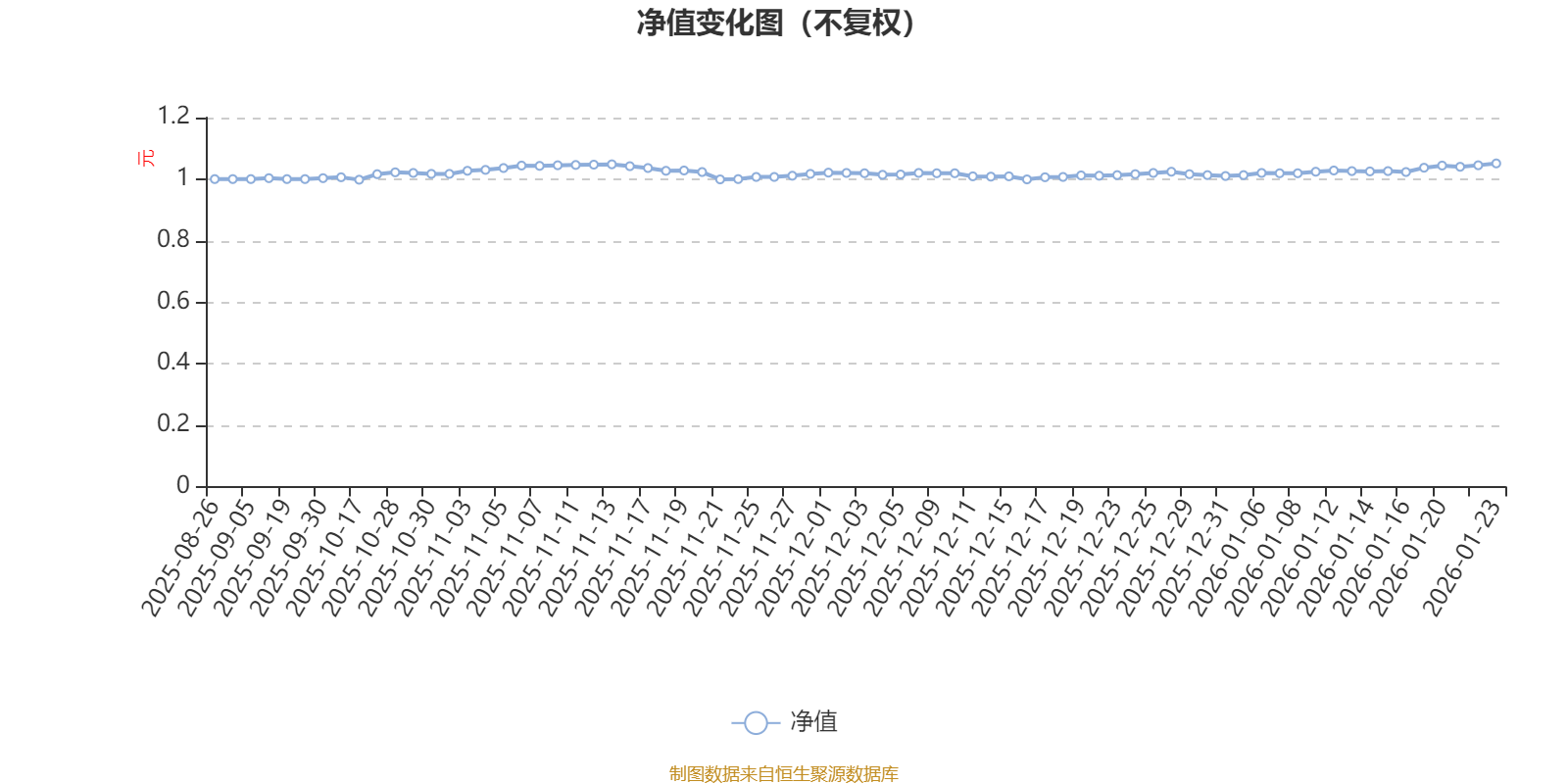
Core Viewpoint - The AI Fund Guojin Hongli Quantitative Stock Selection Mixed A (024385) reported a profit of 4.2903 million yuan for Q4 2025, with a weighted average profit per fund share of 0.0116 yuan, indicating a stable performance in a challenging market environment [1] Fund Performance - The fund's net value growth rate for the reporting period was 0.74%, with a total fund size of 312 million yuan as of the end of Q4 [1] - As of January 23, the unit net value was 1.051 yuan, reflecting a positive trend in fund valuation [1] Fund Manager Insights - The fund manager, Ma Fang, oversees seven funds, with the Guojin Quantitative Multi-Factor A achieving the highest one-year cumulative net value growth rate of 70.06%, while the Guojin Quantitative Multi-Strategy A recorded the lowest at 49.44% [1] - The fund management indicated that during the reporting period, the fund was in a closed period at certain times, adhering to a steady investment rhythm driven by quantitative models based on market conditions [1] Top Holdings - As of the end of Q4 2025, the fund's top ten holdings included Agricultural Bank of China, Gree Electric Appliances, Nanjing Bank, Tangshan Port, Guangdong Expressway A, Shandong Expressway, Phoenix Media, Shanghai Electric, TBEA Co., and Anhui Expressway [1]





最高分红率35%!上市银行春节前大派红包
Guo Ji Jin Rong Bao· 2026-01-23 16:22
Core Viewpoint - The banking sector is experiencing a trend of increasing mid-term cash dividends, with several banks announcing significant payouts, indicating a stable earnings outlook and attractiveness for conservative investors [1][2][4]. Group 1: Mid-term Dividends - As of January 23, 2025, Huaxia Bank and Chongqing Rural Commercial Bank distributed over 3 billion yuan in cash dividends, contributing to a total of 25 A-share listed banks that have completed dividend payouts [1][2]. - A total of 31 A-share listed banks announced mid-term dividends for 2025, with 25 having released their plans and completed payouts. The six major state-owned banks collectively distributed 204.657 billion yuan, with Industrial and Commercial Bank of China leading at 50.396 billion yuan [2]. - China Merchants Bank made its first mid-term dividend distribution of 25.548 billion yuan, with a per-share payout of 1.013 yuan, marking a 35% dividend ratio, the highest among listed banks [2]. Group 2: Investment Appeal - The banking sector remains attractive for stable funds due to its high dividend yield and stable earnings expectations, particularly for large banks and quality regional banks [3][4]. - Recent share buybacks by major shareholders and executives in banks like Nanjing Bank and Chongqing Rural Commercial Bank indicate confidence in the sector, with Nanjing Bank's major shareholder increasing its stake from 13.02% to 14.02% [3]. - Analysts suggest that the low-risk interest rate environment and the ongoing "asset shortage" make dividend-paying assets appealing, with banks signaling stable earnings growth and improved asset quality [3][4]. Group 3: Future Outlook - The banking industry is expected to continue its earnings recovery trend into 2026, with a stabilizing operating environment and potential for net interest margin recovery, which could enhance profitability [4]. - The market may see a divergence in performance, with high-dividend large banks and quality regional banks likely to outperform, while smaller banks may face challenges related to asset quality and profitability [4].


25Q4基金对银行持仓点评:主动基金环比持平,被动基金增持
GUOTAI HAITONG SECURITIES· 2026-01-23 11:10
股票研究 /[Table_Date] 2026.01.23 票 研 究 主动基金环比持平,被动基金增持 [Table_Industry] 商业银行 | [姓名table_Authors] | 电话 | 邮箱 | 登记编号 | | --- | --- | --- | --- | | 马婷婷(分析师) | 021-23185608 | matingting@gtht.com | S0880525100001 | | 陈惠琴(分析师) | 021-38676666 | chenhuiqin@gtht.com | S0880525100003 | 本报告导读: 25Q4 主动基金对银行持仓比例环比持平于 1.9%,被动基金持仓比例环比+1.6pct 至 7.0%,其中宁波银行、兴业银行、中国银行、建设银行等获主动基金增配。 25Q4 基金对银行持仓点评 投资要点: [Table_Summary] 2025 年四季度基金重仓持股情况披露(主动基金包括普通股票型、 偏股混合型、灵活配置型,被动基金包括被动指数型、指数增强型): [Table_Report] 相关报告 商业银行《国有大行投放力度较大,不良压力或 企稳》20 ...


丈量地方性银行(1):江苏127家区域性银行全梳理-20260123
GF SECURITIES· 2026-01-23 11:08
Investment Rating - The industry investment rating is "Buy" [2] Core Insights - The report provides a comprehensive analysis of 127 regional banks in Jiangsu Province, highlighting their asset and liability structures, profitability, and asset quality [6][18] - Jiangsu's regional banks have shown a significant increase in asset growth, with major city commercial banks growing at 19.4%, surpassing the growth of listed city commercial banks at 14.2% [24][26] - The report indicates that the loan-to-asset ratio for city commercial banks is projected to reach 48.4% in 2024, reflecting a gradual increase in lending activities [30] - Jiangsu's regional banks exhibit better return on assets (ROA) compared to listed banks, with city commercial banks outperforming by 16 basis points and rural commercial banks by 9 basis points [6][42] - The asset quality of Jiangsu's regional banks is superior to that of listed banks, with lower non-performing loan ratios and higher provision coverage ratios [6][42] Summary by Sections 1. Economic Structure of Jiangsu Province - Jiangsu Province is focusing on new industrialization and strategic emerging industries, with significant contributions from cities like Nanjing and Suzhou [13][14] 2. Overview of 127 Regional Banks in Jiangsu - The report categorizes the banks into city commercial banks, rural commercial banks, and others, with a total of 127 banks established between 2006 and 2015 [18][20] 3. Asset/Liability Structure - The asset growth of major city commercial banks is accelerating, while rural commercial banks are experiencing a decline in growth rates [24][26] - The loan-to-asset ratio for city commercial banks is expected to increase to 48.4% by 2024, indicating a shift towards more lending [30] 4. Profitability - Jiangsu's regional banks have a higher ROA compared to listed banks, with city commercial banks showing a 16 basis point advantage [6][42] 5. Asset Quality/Capital Levels - Jiangsu's regional banks maintain a lower non-performing loan ratio compared to listed banks, with city commercial banks having a 30 basis point lower ratio [6][42]



总资产破3万亿!南京银行2025年业绩稳增,高质量发展成色凸显
Jin Rong Jie· 2026-01-23 11:03
1月22日,南京银行发布2025年度业绩快报,各项核心指标表现亮眼。数据显示,该行2025年实现营业 收入555.40亿元,同比增长10.48%;归属于上市公司股东的净利润达218.07亿元,同比增长8.08%;总 资产规模首次突破3万亿元大关,达到30224.24亿元,较年初增长16.63%。这份亮眼答卷,充分彰显了 南京银行在"十四五"规划收官之年的强劲发展势能与高质量经营成色。 在宏观经济环境复杂多变的背景下,南京银行坚守主责主业、深化改革转型,实现了规模扩张、效益提 升与质量稳健的均衡协调发展。其中,2025年其利息净收入成为营收增长的核心引擎,全年达349.02亿 元,同比大幅增长31.08%,盈利结构持续优化。 资产破3万亿,盈利韧性持续增强 资产质量方面,该行持续筑牢风险防线,表现稳健向好。截至2025年末,不良贷款率维持在0.83%的较 低水平,较上年下降0.05个百分点;拨备覆盖率达313.31%,虽同比略有回落但仍处高位区间,风险抵 御能力坚实可靠,为业务持续发展保驾护航。 存贷款业务作为银行的核心业务板块,南京银行表现尤为突出。各项存款总额达16,707.89亿元,较年初 增长11.67 ...
研报掘金丨中金:维持南京银行“跑赢行业”评级,目标价13.04元
Ge Long Hui A P P· 2026-01-23 07:38
Core Viewpoint - Nanjing Bank forecasts a 8.1% year-on-year growth in net profit attributable to shareholders for 2025, with a projected 8.2% growth in Q4 2025 [1] Group 1: Financial Performance - The bank's asset scale continues to expand rapidly, benefiting from its geographical advantages and comprehensive financial service capabilities [1] - Revenue growth is accelerating, with expected strong year-on-year performance in net interest income and net fee income [1] Group 2: Asset Quality - The preliminary report indicates that the non-performing loan ratio will remain stable at 0.83% quarter-on-quarter by the end of Q4 2025, with the provision coverage ratio also stable at 313% [1] - Despite rapid loan growth, asset impairment losses are expected to increase year-on-year, but the extent is manageable [1] Group 3: Valuation and Rating - The target price is set at 13.04 yuan, corresponding to 0.8x 2026e P/B and 0.8x 2027e P/B, indicating a potential upside of 25% [1] - The rating is maintained at "outperform the industry" [1]
研报掘金丨浙商证券:南京银行营收表现超预期,维持目标价14.64元
Ge Long Hui· 2026-01-23 05:36
Group 1 - The core viewpoint of the article highlights that Nanjing Bank's revenue for 2025A has achieved double-digit growth, exceeding market expectations, with non-performing loans and provisions remaining stable quarter-on-quarter [1] - For 2025A, Nanjing Bank's operating revenue and net profit attributable to shareholders are projected to grow by 10.5% and 8.1% year-on-year, respectively, with growth rates improving by 1.7 percentage points compared to Q1-Q3 2025 and remaining stable [1] - As of the end of Q4 2025, Nanjing Bank's non-performing loan ratio and provision coverage ratio are both stable at 0.83% and 313%, respectively, compared to the end of Q3 2025 [1] Group 2 - Looking ahead to 2026, Nanjing Bank is expected to maintain a significant single-digit growth rate in revenue and profit, primarily due to high loan growth and a potential stabilization or recovery in interest margins [1] - The target price for Nanjing Bank is set at 14.64 yuan per share, corresponding to a target valuation of 0.90x PB for 2026, indicating a price upside of 40% from the current price [1]
南京银行(601009):利润继续高增,资产质量优异
GF SECURITIES· 2026-01-23 05:08
Investment Rating - The investment rating for the company is "Buy" with a current price of 10.42 CNY and a reasonable value of 14.72 CNY [4]. Core Insights - The company continues to experience high profit growth, with a reported operating income growth of 10.48% year-on-year and a net profit growth of 8.08% year-on-year for the year 2025 [8]. - The total assets of the company increased by 16.6% year-on-year, surpassing 3 trillion CNY, with both deposits and loans maintaining double-digit growth [8]. - The company has a strong asset quality, with a non-performing loan ratio of 0.83% and a provision coverage ratio of 313.31% [8]. - The core tier one capital adequacy ratio remains stable at 9.31% [8]. - A mid-term dividend of 0.3062 CNY per share was distributed, with a payout ratio of 30% based on the net profit for the first half of 2025 [8]. - The forecasted net profit growth rates for 2026 and 2027 are 7.53% and 7.48%, respectively, with corresponding EPS of 1.80 CNY and 1.94 CNY per share [8]. Summary by Sections Financial Performance - The operating income for 2025 is projected to grow by 10.48% year-on-year, with a significant increase in interest income by 31.1% [8]. - The net profit for 2025 is expected to reach 18.63 billion CNY, reflecting a growth of 8.08% year-on-year [8]. Asset Quality - The company maintains a non-performing loan ratio of 0.83%, consistent with the previous quarter, and a provision coverage ratio of 313.31% [8]. - The company emphasizes optimizing risk management and enhancing value creation [8]. Capital Adequacy - The core tier one capital adequacy ratio is reported at 9.31%, showing stability compared to the beginning of the year [8]. Dividend Policy - A mid-term dividend of 0.3062 CNY per share was declared, with an expected total payout of 37.86 billion CNY, representing a 30% payout ratio based on the net profit for the first half of 2025 [8]. Earnings Forecast - The expected net profit growth rates for 2026 and 2027 are 7.53% and 7.48%, with corresponding EPS of 1.80 CNY and 1.94 CNY per share [8].