Longi(601012)

Search documents
隆基绿能(601012.SH):预计2025年度净亏损为60亿元到65亿元
Ge Long Hui A P P· 2026-01-18 07:41
Core Viewpoint - Longi Green Energy (601012.SH) is expected to report a net loss attributable to shareholders of 6 billion to 6.5 billion yuan for the year 2025, with a net loss excluding non-recurring gains and losses projected to be between 6.8 billion and 7.4 billion yuan [1] Industry Summary - The photovoltaic industry is facing a mismatch in supply and demand, with ongoing low-price competition leading to sustained low operating rates [1] - Domestic electricity market reforms are deepening, while overseas trade barriers are intensifying, creating a challenging and complex operating environment for photovoltaic companies [1] Company Summary - In the fourth quarter, the costs of silver paste and silicon materials surged significantly, which has increased the costs of silicon wafers, batteries, and module products, further pressuring the company's operations [1] - Due to persistently low product prices and cost pressures, the company's operational performance is expected to remain in the red for 2025 [1] - The company is focusing on high-value, scenario-based solutions to create a differentiated competitive advantage, leveraging its long-standing leading products, global channels, and brand strength [1] - The company maintains a leading market share in module products, achieving expected yield rates for its high-efficiency BC second-generation products, and has successfully scaled up production with rapid shipment growth [1] - The company has completed pilot testing for the technology that substitutes silver paste with cheaper metals and is beginning to construct large-scale production capacity [1] - The company is optimizing its global business layout in response to changes in international trade conditions and enhancing its system solution capabilities through coordinated solar and storage strategies, while continuously improving organizational efficiency and reinforcing sustainable development resilience [1]
隆基绿能:预计2025年度净亏损为60亿元到65亿元
Ge Long Hui· 2026-01-18 07:36
Core Viewpoint - Longi Green Energy (601012.SH) expects a net loss attributable to shareholders of 6 to 6.5 billion yuan for the fiscal year 2025, with a net loss excluding non-recurring items projected to be between 6.8 to 7.4 billion yuan [1] Industry Summary - The photovoltaic industry is facing a mismatch in supply and demand, with ongoing low-price competition and low operating rates expected to persist in 2025 [1] - Domestic electricity market reforms are deepening, while overseas trade barriers are intensifying, creating a challenging operating environment for photovoltaic companies [1] Company Summary - In Q4, the significant increase in silver paste and silicon material costs has notably raised the costs of silicon wafers, batteries, and module products, further pressuring the company's operations [1] - Due to continued low product prices and cost pressures, the company's operational performance is expected to remain in the red for 2025 [1] - The company is focusing on high-value, scenario-based solutions to create a differentiated competitive advantage, maintaining a leading market share in module products [1] - The company has achieved expected yields for its second-generation high-efficiency BC products and is successfully scaling up production with rapid shipment growth [1] - The pilot test for the technology replacing silver paste with cheaper metals has been completed, and the company has begun scaling up production capacity [1] - The company is optimizing its global business layout in response to international trade conditions and enhancing its system solution capabilities through coordinated solar and storage strategies [1] - Continuous efforts are being made to improve organizational efficiency and strengthen sustainable development resilience [1]
国家电网“十五五”投资4万亿元,固态电池近期催化密集落地



GOLDEN SUN SECURITIES· 2026-01-18 06:32
Investment Rating - The report indicates a positive outlook for the power equipment industry, particularly in the renewable energy sector, with significant investments and technological advancements expected to drive growth [1][2][4]. Core Insights - The report highlights that the State Grid's investment during the "14th Five-Year Plan" period is projected to reach 4 trillion yuan, marking a 40% increase compared to the previous plan [2]. - The report emphasizes the stability in polysilicon prices and the continuous rise in battery component prices, with N-type battery prices increasing to 0.40 yuan per watt [15][16]. - The report identifies three key areas of focus: supply-side reform leading to price increases in the industry chain, long-term growth opportunities from new technologies, and industrialization opportunities from perovskite GW-level layouts [16]. Summary by Sections 1. New Energy Generation 1.1 Photovoltaics - Polysilicon prices remain stable, while battery component prices are on the rise, with N-type battery prices reaching an average of 0.40 yuan per watt [15]. - The report notes that leading component companies are responding to industry self-discipline by raising component prices, with distributed sales prices reaching 0.72 yuan per watt [15][16]. - Key companies to watch include Tongwei Co., GCL-Poly, LONGi Green Energy, JA Solar, and Trina Solar [16]. 1.2 Wind Power & Grid - The UK AR7 offshore wind auction results exceeded expectations, with a total scale of approximately 8.4GW, validating the upward trend in European offshore wind [17]. - The State Grid's investment is expected to enhance transmission capacity significantly, addressing bottlenecks in renewable energy delivery [18]. - Companies to focus on include Goldwind, Yunda Wind Power, Mingyang Smart Energy, and Sany Heavy Energy [18]. 1.3 Hydrogen & Energy Storage - By 2025, the production and sales of fuel cell vehicles in China are projected to reach 7,797 units, reflecting a 44% year-on-year increase [20]. - The report anticipates that new energy storage installations will reach 58.6GW/175.3GWh by 2025, with significant growth expected in the energy storage sector [21]. - Key players in the hydrogen sector include Shuangliang Energy, Huadian Heavy Industries, and Shenghui Technology [20]. 2. New Energy Vehicles - Solid-state batteries are gaining traction, with several automakers making progress towards mass production by 2026 [29]. - Companies such as BYD, Changan Automobile, and Chery are expected to achieve significant milestones in solid-state battery technology [29]. - The report suggests monitoring companies like Xiamen Tungsten, Hailiang Co., and Nanjing Advanced Lithium Battery [29]. 3. Industry Trends - The report notes a 0.4% increase in the new energy equipment sector from January 12 to January 16, 2026, with a cumulative increase of 5.3% since the beginning of the year [12]. - The photovoltaic equipment sector saw a 3.52% increase, while the wind power equipment sector experienced a decline of 1.28% during the same period [13].
告别“退税依赖” 中国光伏开启技术与全球化新竞速
Zheng Quan Shi Bao Wang· 2026-01-17 12:29
Core Viewpoint - The recent adjustment in the value-added tax export rebate policy for photovoltaic products has led to an unexpected increase in component prices, despite the typical seasonal demand downturn in the first quarter of the year [1]. Group 1: Policy Impact - The Ministry of Finance and the State Taxation Administration announced the cancellation of the value-added tax export rebate for photovoltaic products starting April 1, 2026, affecting 249 products across the entire industry chain [2]. - The cancellation of the rebate is expected to trigger a "last-minute rush" for exports, as overseas buyers place orders to avoid increased costs after the policy change [2]. - Analysts predict a significant increase in component export volume during this period, potentially boosting short-term industry demand [2]. Group 2: Financial Implications for Companies - Major photovoltaic and energy storage companies are projected to lose between 1 billion to 2 billion yuan in export rebates annually, which could reduce the profit per 210R photovoltaic component by 46 to 51 yuan, leading to a potential decline in export volume by 5% to 10% [3]. Group 3: Strategic Responses from Companies - In response to the policy changes, leading companies like Longi Green Energy, JinkoSolar, Trina Solar, and Canadian Solar are accelerating their global expansion efforts, establishing production bases in regions such as Southeast Asia, the Middle East, and the United States [4]. - Companies are focusing on local production to bypass export rebate losses and enhance supply chain resilience [4]. - The cancellation of the rebate is expected to diminish the cost advantage of Chinese photovoltaic components, prompting a shift towards technological innovation and brand development as key competitive strategies [4]. Group 4: Long-term Industry Outlook - The policy adjustment aims to address the long-standing issue of low-price competition in the photovoltaic industry, which has led to reduced profit margins and increased international trade friction [5]. - The removal of the export rebate is anticipated to redirect financial resources towards domestic technological research and development, thereby improving the efficiency of fund utilization [6]. - The adjustment is likely to accelerate industry consolidation and capacity elimination, with leading battery companies expected to enhance their global competitiveness and market share in the long run [6].
毁约式涨价!光伏组件上演“最后的疯狂”
Ge Long Hui A P P· 2026-01-17 11:23
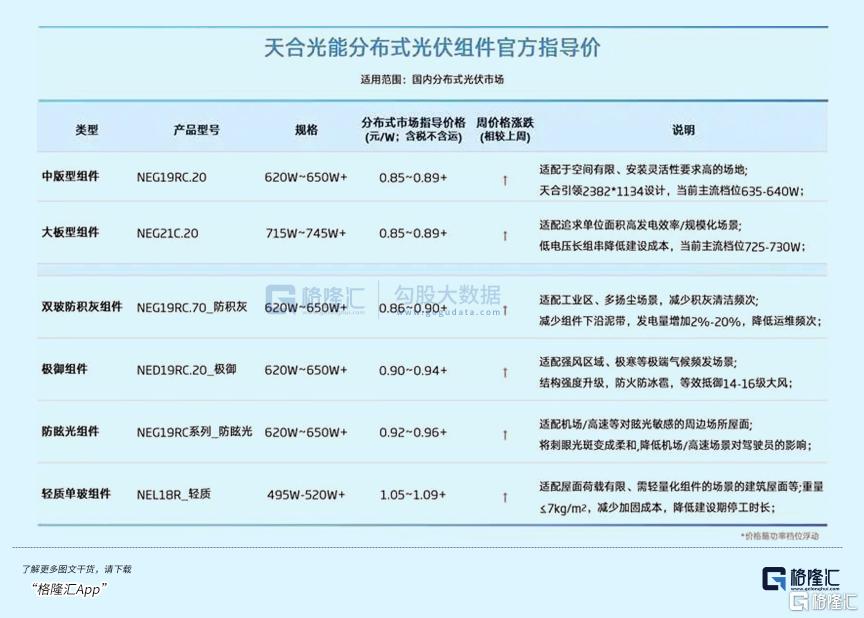
Core Viewpoint - The photovoltaic (PV) module industry is experiencing an unexpected price surge in early 2026, driven by the impending cancellation of export tax rebates and rising costs of key materials like silver and aluminum, leading to significant profit compression and potential industry-wide upheaval [1][7][19]. Price Surge and Market Dynamics - Several distributed PV investment companies have reported sudden price increases on previously agreed contracts, with one leading manufacturer raising prices from 0.73 yuan/W to 0.8 yuan/W [2]. - On January 13, Trina Solar announced a collective price increase for various distributed PV module models, with official guidance prices ranging from 0.85 to 0.89+ yuan/W [2][3]. - A total of 12 module manufacturers raised their prices this week, with increases ranging from 0.04 to 0.15 yuan/W [4]. Cost Factors - The cancellation of export tax rebates, effective April 1, 2026, is a significant catalyst for the price increases, as companies rush to fulfill orders before the policy takes effect [7][8]. - The price of silver has surged over 150% in 2025, increasing its cost share in PV modules from approximately 17% to around 30%, making it the largest cost component [10][13]. - The rising prices of aluminum and other materials have further exacerbated cost pressures, with aluminum's cost share increasing from 8-12% to 12-15% [14][16]. Industry Overcapacity and Challenges - The PV industry is facing severe overcapacity, with silicon production capacity expected to cover more than double the global demand from 2025 to 2027, while actual demand is below 600 GW [17]. - Despite the overcapacity, over 40 billion yuan is still being invested in new PV projects, worsening the supply-demand imbalance [18]. - The cancellation of export tax rebates is anticipated to trigger a brutal industry-wide clearing, with many companies lacking competitive advantages likely to exit the market [19][24]. Financial Impact and Future Outlook - The removal of export tax rebates will significantly reduce profit margins for PV companies, with estimates indicating a profit reduction of 46-51 yuan per 210R module exported [24]. - Many companies are already reporting substantial losses, with projections indicating that the entire PV silicon industry could face losses amounting to hundreds of billions in 2025 [27][28]. - The industry is expected to undergo a significant consolidation, with over 30% of inefficient capacity being eliminated, allowing leading companies with strong technology and global presence to capture over 80% of the market share [29].



毁约式涨价!光伏组件上演“最后的疯狂”
格隆汇APP· 2026-01-17 11:23
Core Viewpoint - The photovoltaic (PV) module industry is experiencing an unexpected price surge at the beginning of 2026, driven by factors such as the impending cancellation of export tax rebates and rising costs of key materials like silver and aluminum, leading to significant profit compression in the industry [2][9][18]. Price Surge and Market Dynamics - Several PV module manufacturers have announced price increases, with some companies raising prices from 0.73 yuan/W to 0.8 yuan/W, and the official guidance price for distributed PV modules now ranges from 0.85 to 0.89 yuan/W [4][6]. - A total of 12 module manufacturers raised their prices this week, with increases ranging from 0.04 to 0.15 yuan/W [6][7]. - Reports indicate that some companies are delaying deliveries and demanding price hikes, causing significant disruptions for downstream companies [7][18]. Reasons for Price Increases - The cancellation of export tax rebates is a major catalyst for the price surge, with the Ministry of Finance announcing the phased removal of VAT export rebates for PV products starting April 1, 2026 [9][10]. - The price of silver has skyrocketed, increasing from 7,600 yuan/kg at the beginning of 2025 to 23,688 yuan/kg by the end of the year, resulting in a cost increase of at least 0.16 yuan per watt for PV cells [11][13]. - The cost share of silver in PV modules has risen from approximately 17% to around 30%, surpassing silicon as the largest cost component [13]. Industry Challenges and Overcapacity - The PV industry is facing severe overcapacity, with silicon production capacity expected to cover more than double the global demand from 2025 to 2027, while actual demand is below 600 GW [19][20]. - The cancellation of export tax rebates is expected to trigger a violent market clearing in 2026, as many companies will struggle with cash flow and rising costs [21][27]. - The industry is projected to experience significant losses, with estimates suggesting that the entire PV silicon industry could face losses amounting to hundreds of billions in 2025 [28][29]. Future Outlook and Investment Strategy - The anticipated market clearing in 2026 is expected to eliminate over 30% of inefficient capacity, concentrating resources among leading companies with vertical integration and core technologies [31]. - Investors are advised to avoid high-debt, non-competitive small and medium enterprises, focusing instead on companies with stable cash flow, strong technology, and global presence [32].

8GWh!隆基合资建厂,扩大储能产能
行家说储能· 2026-01-16 10:19
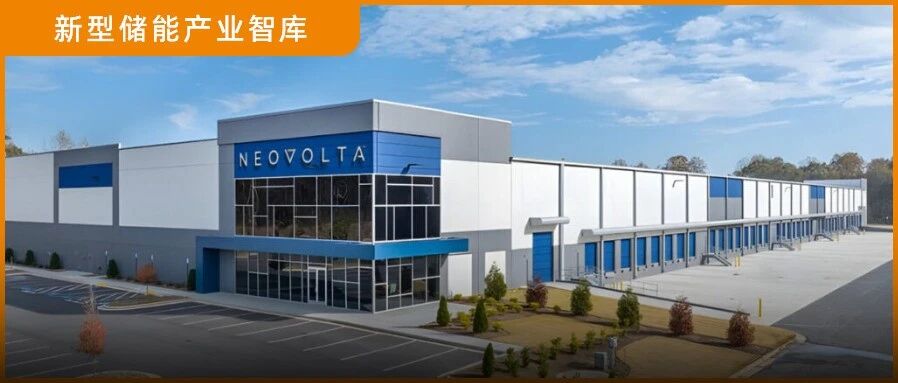
温馨提示: 投稿/合作/找圈,请联系 行家说Cindy:13609002797(微信同号) 开年以来,中企在海外市场动作频频。日前,阳光电源宣布将建设中东和非洲首个电池储能系统(BESS)制造厂,年产能达10GWh;远景能源也宣布将在 哈萨克斯坦本地化生产电池储能系统(BESS)。头部企业的密集布局,凸显出全球储能市场的旺盛需求与海外本地化生产的战略价值。 而就在1月14日,隆基绿能也传来海外储能制造的喜讯。据 隆基绿能官网消息 ,他们宣布通过合资企业NeoVolta Power生产电池储能系统(BESS),建 设周期年产能为2GWh,产能可进一步扩展至8GWh。 ▋ 未来年产能达8GWh,隆基绿能布局美国储能市场 结合 外媒Energy Storage News等报道发现 ,NeoVolta Power是由隆基绿能、精控能源(PotisEdge)及美国锂电池供应商NeoVolta共同成立的合资企 业。近日,NeoVolta Power宣布,其将在美国的佐治亚州彭德格拉斯开发美国电池储能系统(BESS)制造平台,旨在服务日益增长的美国公用事业规模及 商业与工业(C&I)储能市场。 据介绍,该产线建设初期将专注 ...
中晶科技:隆基绿能减持股份至5%以下
Xin Lang Cai Jing· 2026-01-16 09:59
Group 1 - The core point of the article is that Longi Green Energy plans to reduce its holdings in Zhongjing Technology by selling 5.2192 million shares between January 27, 2025, and January 15, 2026 [1] - After the share reduction, Longi Green Energy will hold 6.4809 million shares of Zhongjing Technology, representing 4.9999% of the total share capital [1] - The percentage of shares held by Longi Green Energy, after excluding shares in the repurchase account, will be 5.0154%, indicating a significant change in ownership structure [1]
中晶科技:隆基绿能持股比例已降至4.9999%
2 1 Shi Ji Jing Ji Bao Dao· 2026-01-16 09:58
Core Viewpoint - Longi Green Energy has reduced its stake in Zhongjing Technology, dropping below the 5% threshold for significant shareholders [1] Group 1: Shareholding Changes - Before the equity change, Longi Green Energy held 11,700,000 shares of Zhongjing Technology, accounting for 9.0265% of the total share capital [1] - Longi Green Energy plans to reduce its holdings by 5,219,150 shares through centralized bidding and block trading between January 27, 2025, and January 15, 2026 [1] - After the reduction, Longi Green Energy will hold 6,480,850 shares, representing 4.9999% of the total share capital, completing the equity change [1]
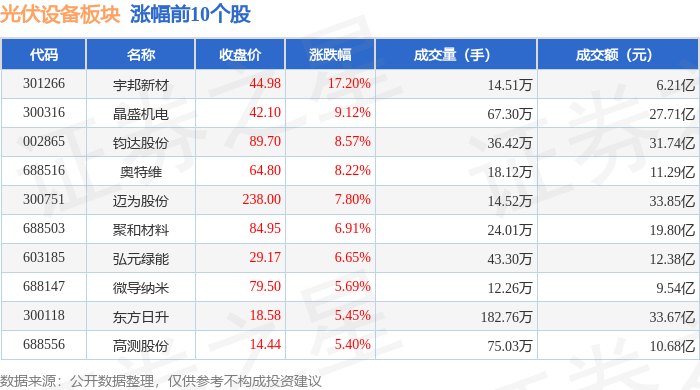
光伏设备板块1月16日涨2.09%,宇邦新材领涨,主力资金净流入26.99亿元
Zheng Xing Xing Ye Ri Bao· 2026-01-16 08:56
Core Viewpoint - The photovoltaic equipment sector experienced a significant increase, with a 2.09% rise on January 16, led by Yubang New Materials, while the overall market indices showed slight declines [1]. Group 1: Market Performance - The Shanghai Composite Index closed at 4101.91, down 0.26%, and the Shenzhen Component Index closed at 14281.08, down 0.18% [1]. - Yubang New Materials led the gains in the photovoltaic equipment sector with a closing price of 44.98, reflecting a 17.20% increase [1]. - Other notable performers included Jing Sheng Mechanical and Electrical with a 9.12% increase, and Jun Da Co., which rose by 8.57% [1]. Group 2: Trading Volume and Value - Yubang New Materials had a trading volume of 145,100 shares, resulting in a transaction value of 621 million yuan [1]. - Jing Sheng Mechanical and Electrical recorded a trading volume of 673,000 shares with a transaction value of 2.771 billion yuan [1]. - Jun Da Co. had a trading volume of 364,200 shares, leading to a transaction value of 3.174 billion yuan [1]. Group 3: Capital Flow - The photovoltaic equipment sector saw a net inflow of 2.699 billion yuan from main funds, while retail funds experienced a net outflow of 1.645 billion yuan [2]. - Major stocks like Yangguang Electric Power and Maiwei Co. had significant net inflows from main funds, indicating strong institutional interest [3]. - Conversely, stocks like Yijingsheng Electric and Aerospace Mechanical experienced notable net outflows from retail investors, suggesting a shift in sentiment [2][3].