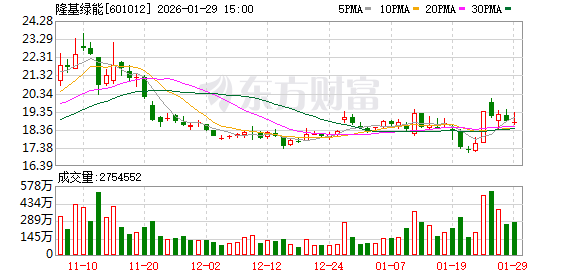
Longi(601012)

Search documents
隆基绿能:目前替代银浆技术中试已经完成
Zheng Quan Ri Bao Wang· 2026-01-29 13:41
Group 1 - The core viewpoint of the article is that Longi Green Energy is actively advancing the commercialization of alternative silver paste technology, with pilot tests completed and large-scale production capacity construction underway [1] Group 2 - The company has successfully completed the pilot testing phase for the alternative silver paste technology [1] - Large-scale production capacity construction has already begun for the alternative silver paste technology [1]

工信部召开座谈会,强调以产能调控等手段破除光伏“内卷”
第一财经· 2026-01-29 12:42
Core Viewpoint - The article discusses the ongoing efforts by regulatory authorities to address the "involution" issues within the photovoltaic (PV) industry, emphasizing the need for a return to rational competition and sustainable development [2][5]. Group 1: Industry Overview - The Chinese photovoltaic industry has been a global leader in scale, industrial chain layout, technology, and application, with manufacturing output increasing from 750 billion yuan in 2021 to 1.75 trillion yuan in 2023, and expected to remain above 1 trillion yuan in 2024 [2]. - By 2025, the installed capacity of wind and solar power in China is projected to exceed 1.8 billion kilowatts, with solar power capacity reaching 1.2 billion kilowatts, marking a year-on-year growth of 35.4% [2]. Group 2: Challenges Faced - The rapid expansion of the domestic PV industry has led to significant supply-demand mismatches and chaotic low-price competition, resulting in severe "involution" issues [3]. - From 2022 to 2025, the price of domestic PV modules has dropped from 2 yuan per watt to around 0.6 yuan, while silicon material prices have plummeted from a peak of 300,000 yuan per ton to about 55,000 yuan, causing many companies to sell products below mainstream cash cost lines [4]. - As a result, the industry has faced widespread losses since the fourth quarter of 2023, with major companies like Longi Green Energy, JinkoSolar, and Tongwei expected to report losses ranging from 60 billion to 100 billion yuan in 2025 [4]. Group 3: Regulatory Actions - In response to the chaotic situation, regulatory authorities have initiated multiple measures to promote "anti-involution" governance in the PV industry, including capacity regulation, curbing low-price competition, and supporting industry self-discipline [5]. - The Ministry of Finance and the State Taxation Administration announced the cancellation of VAT export rebates for PV products starting April 1, which is seen as a move to end the "rebate subsidy era" and promote rational pricing in foreign markets, ultimately enhancing the industry's international competitiveness [5]. Group 4: Industry Recovery Signs - Benefiting from the ongoing "anti-involution" efforts, the PV industry is reportedly approaching a cyclical bottom, with profitability gradually improving in the main industry chain [6]. - In the first three quarters of 2025, 31 companies reported a total loss of 31.04 billion yuan, with the third quarter loss narrowing by approximately 46.7% to 6.42 billion yuan, and the gross margin for the main industry chain reaching 5.61%, up from 3.64% in the previous quarters [6]. - As of November 2025, the average prices of polysilicon, silicon wafers, battery cells, and modules have increased by 38.9%, 2.2%, 0.4%, and 2.3% respectively compared to the beginning of the year [6].


隆基绿能:目前替代银浆技术中试已经完成,已开始规模化产能建设
Mei Ri Jing Ji Xin Wen· 2026-01-29 10:16
Group 1 - The core viewpoint of the article is that the company is actively advancing the commercialization of silver paste replacement technology in response to the recent surge in silver prices [2][3] - The company has completed pilot testing for the replacement silver paste technology and has begun scaling up production capacity [2]
工信部召开座谈会,强调以产能调控等手段破除光伏“内卷”
Di Yi Cai Jing· 2026-01-29 06:08
Core Viewpoint - The Chinese photovoltaic industry is undergoing a governance initiative to combat "involution" and promote rational competition, with the government emphasizing the need for coordinated efforts across various departments to address issues such as overcapacity, low-price competition, and quality control [1][3]. Group 1: Industry Governance and Regulation - The Ministry of Industry and Information Technology (MIIT) held a meeting on January 28, 2026, to discuss the "anti-involution" measures in the photovoltaic sector, highlighting the need for collaboration among departments to ensure a return to healthy competition [1]. - The MIIT aims to utilize market-oriented and legal methods to regulate the industry, including capacity control, standard setting, quality supervision, and intellectual property protection [1][3]. - The government has initiated multiple actions since the second half of 2025 to address the chaotic state of the photovoltaic industry, including a meeting on August 19, 2025, to emphasize capacity regulation and support industry self-discipline [3]. Group 2: Industry Performance and Financial Impact - The domestic photovoltaic manufacturing output value surged from 750 billion yuan in 2021 to 1.75 trillion yuan in 2023, with expectations to maintain over 1 trillion yuan in 2024 [1]. - However, the industry faces significant challenges, including a supply-demand mismatch and severe low-price competition, leading to widespread losses since the fourth quarter of 2023 [2]. - Major companies like Longi Green Energy, JinkoSolar, and Tongwei Co. are projected to incur substantial losses in 2025, with estimates ranging from 60 billion to 100 billion yuan [2]. Group 3: Quality and Compliance Issues - The photovoltaic industry has seen a decline in product quality, with the overall qualification rate of photovoltaic modules dropping from 100% in 2019 to 62.9% in 2024, indicating that over one-third of products have quality issues [2]. - In 2025, nearly 16% of the components tested from 36 companies were found to be non-compliant, with significant issues related to mechanical load and power misrepresentation [2]. Group 4: Market Recovery and Profitability - The ongoing "anti-involution" efforts are beginning to show positive effects, with the profitability of the main photovoltaic industry chain improving in the first three quarters of 2025, despite a total loss of 310.39 billion yuan among 31 companies [4]. - The gross profit margin for the main industry chain reached 5.61% in the third quarter of 2025, an increase from 3.64% in the previous quarters [4]. - By November 2025, the average prices of polysilicon, silicon wafers, battery cells, and modules had increased by 38.9%, 2.2%, 0.4%, and 2.3%, respectively, compared to the beginning of the year [4].
研判2026!中国光伏储能行业政策、产业链、装机规模、产值、市场规模、企业布局情况及发展趋势:未来十年光伏储能市场规模有望迎来爆发式增长[图]
Chan Ye Xin Xi Wang· 2026-01-29 01:28
Core Viewpoint - The photovoltaic energy storage industry is experiencing rapid growth, with significant advancements in technology and market potential, projected to become a core sector in the new energy revolution over the next decade [1][2]. Industry Definition and Classification - Photovoltaic energy storage systems combine solar power generation with storage technology, enhancing energy efficiency and grid stability [2]. - The main components include photovoltaic arrays, storage devices, inverters, and control systems [2]. Current Development Status - The supply of core hardware for photovoltaic energy storage systems is now capable of large-scale production, with a compound annual growth rate of 51.25% in industry output value from 2020 to 2024 [2][3]. - By the end of 2024, the cumulative installed capacity of photovoltaic energy storage projects in China is expected to reach 15.55 GW/36.60 GWh, with new installations of 7.31 GW/18.42 GWh [3]. Market Size and Fluctuations - The market size for photovoltaic energy storage in China is projected to grow from 22.30 billion yuan in 2020 to 115.68 billion yuan in 2024, indicating significant volatility influenced by installation numbers and system price changes [4]. Industry Chain - The upstream of the photovoltaic energy storage industry includes key materials like polysilicon and silicon wafers, while the midstream consists of system integrators responsible for design and assembly [4][6]. Policy Environment - Various policies have been introduced to promote the development of new energy storage technologies, including support for virtual power plants and smart microgrids [6]. Competitive Landscape - As of the end of 2025, there are 10,357 manufacturing enterprises in the photovoltaic energy storage sector in China, with 1,813 new companies added in 2025 [8]. - Major players in the industry include Trina Solar, Canadian Solar, and JinkoSolar, with a trend towards vertical integration in production [8]. Development Trends - The integration of photovoltaic and storage technologies is leading to optimized energy utilization and system stability [9]. - Accelerated technological advancements are evident, with breakthroughs in high-efficiency batteries and new storage technologies like sodium-ion and flow batteries [9]. - The market mechanisms are maturing, allowing energy storage to participate as an independent market entity [10]. - The industry is witnessing increased concentration, with leading companies expanding their market share through mergers and acquisitions [11]. - Chinese companies are actively expanding into international markets, enhancing their global influence in the photovoltaic energy storage sector [12].




马斯克的“太空光伏梦”,离不开中国供应链
3 6 Ke· 2026-01-28 11:06
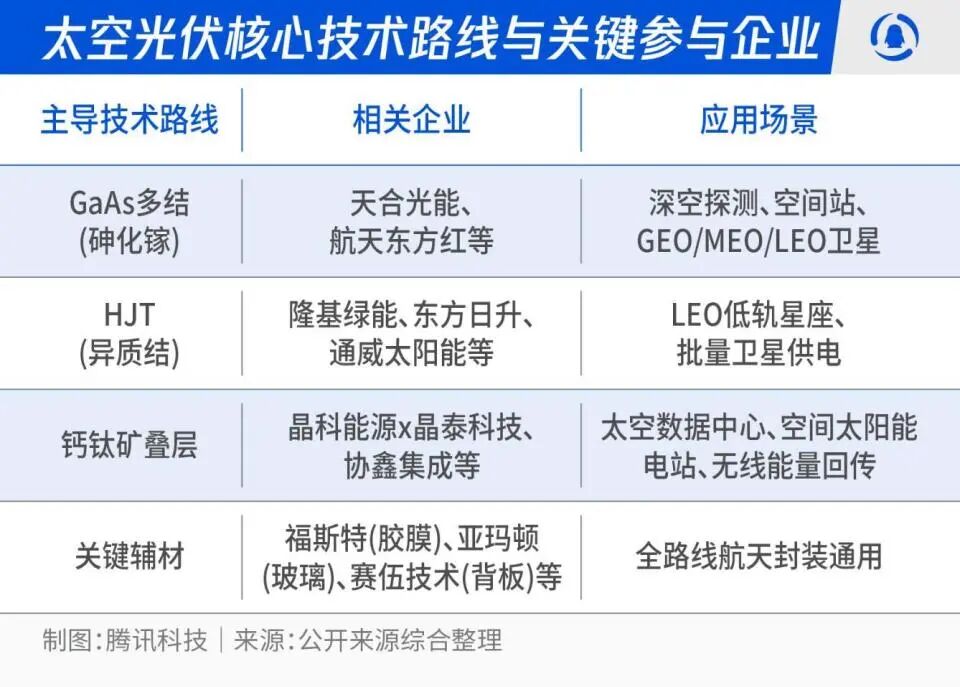
Core Viewpoint - The emergence of "space photovoltaics" is reshaping the value proposition for Chinese solar companies, positioning them as essential players in Elon Musk's space energy vision [1][4]. Group 1: Market Dynamics - The recent surge in the A-share market for solar stocks is driven by Musk's announcement at the Davos Forum about SpaceX and Tesla's plan to establish a solar production base with an annual capacity of 200GW, which is projected to meet nearly a quarter of the U.S. electricity demand [1][3]. - The excitement in the capital market is not merely speculative; it reflects a structural shift in the global energy landscape, with China having a significant role due to its established solar manufacturing capabilities [4][6]. Group 2: Industry Challenges and Opportunities - The solar industry has faced significant challenges over the past two years, including overcapacity and price wars, leading to widespread losses among companies, with projected losses totaling around 400 billion yuan [7]. - Musk's focus on space photovoltaics offers a new growth narrative for the industry, potentially alleviating some of the pressures from the current overcapacity situation [7][8]. Group 3: Technological Advancements - The global space photovoltaic market is expected to reach between $500 billion and $1 trillion by 2030, driven by the removal of traditional constraints faced by ground-based solar [3]. - The technology roadmap for space photovoltaics is anticipated to evolve through three phases, starting with GaAs cells for high-value applications, followed by HJT technology for low Earth orbit satellites, and eventually transitioning to perovskite tandem cells for large-scale deployments [9][10]. Group 4: Chinese Supply Chain Advantage - Chinese companies dominate over 70% of the global solar manufacturing supply chain, making them indispensable for any large-scale space photovoltaic initiatives, regardless of where the production is localized [5][11]. - The integration of space photovoltaics into China's existing energy infrastructure and policy frameworks positions the country favorably for future developments in this sector [5][12]. Group 5: Competitive Landscape - Various companies are exploring different technological pathways in the space photovoltaic sector, with some focusing on efficiency breakthroughs and others leveraging existing aerospace supply chain experience [11][12]. - The competition in space photovoltaics will involve not only technological advancements but also the ability to meet stringent aerospace certification requirements, which can create significant barriers to entry for new players [11][12].



隆基绿能2025年亏损收窄
Zhong Guo Hua Gong Bao· 2026-01-28 02:45
Core Viewpoint - Longi Green Energy Technology Co., Ltd. is expected to report a net loss of 6 to 6.5 billion yuan for 2025, indicating a significant improvement compared to a loss of 8.618 billion yuan in 2024 [1] Group 1: Financial Performance - The anticipated loss for 2025 reflects a recovery trend despite remaining in the red [1] - The company faced challenges due to persistently low product prices and cost pressures, particularly from rising costs of silver paste and silicon materials in the fourth quarter of the previous year [1] Group 2: Market Position and Strategy - Despite financial pressures, Longi Green Energy continues to focus on high-value, scenario-based solutions to create a differentiated competitive advantage [1] - The company maintains a leading market share in component products, supported by its long-term accumulation of leading products, global channels, and brand advantages [1] - The yield of the high-efficiency BC second-generation products has met expectations, with rapid growth in shipment volume [1]
隆基绿能成立两家新公司,含无人飞行器业务
Qi Cha Cha· 2026-01-28 02:30
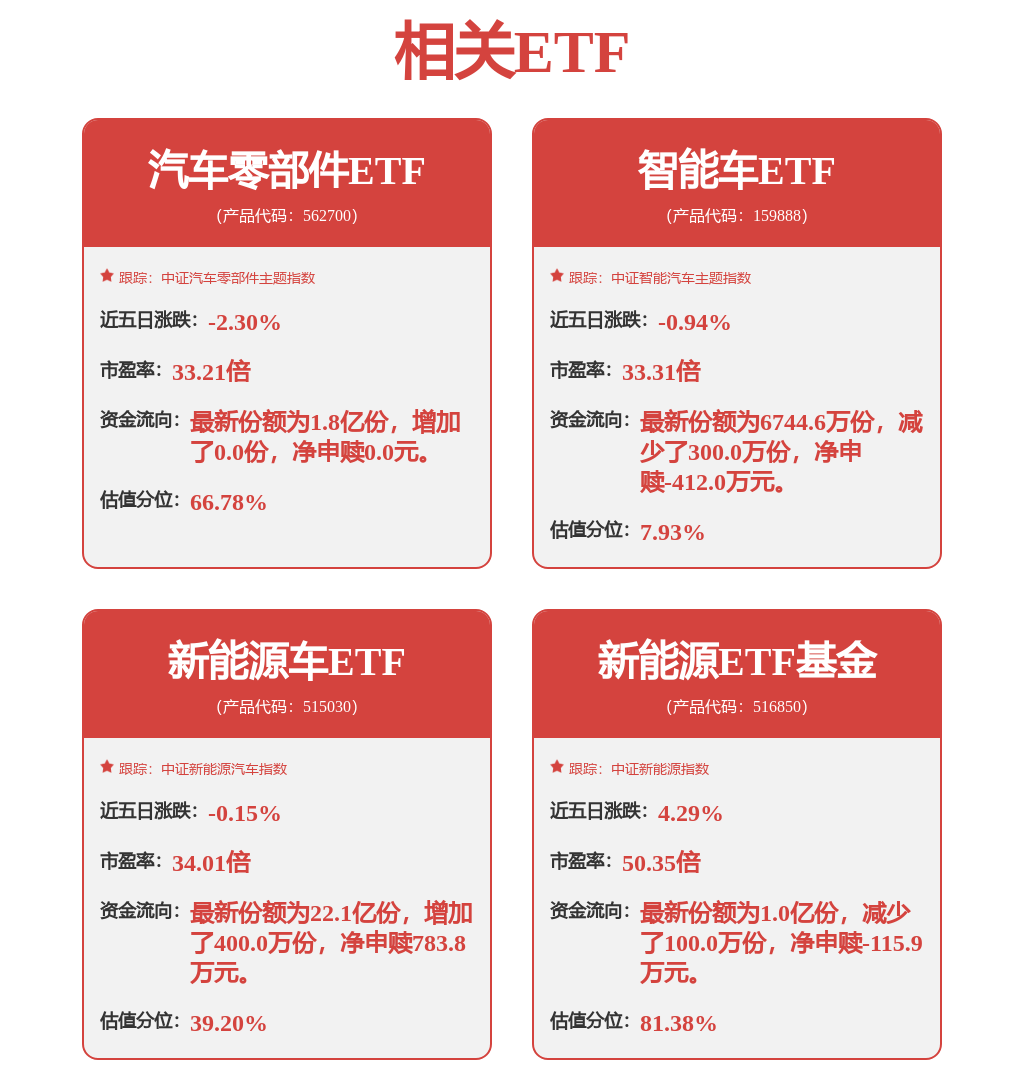
Group 1 - Shanxi Yujin Green Storage New Energy Co., Ltd. and Shanxi Xiangjin Green Storage New Energy Co., Ltd. have been established, both indirectly wholly owned by Longi Green Energy (601012) [1] - The business scope of both companies includes new material technology promotion services, resource recycling service technology consulting, and sales of intelligent unmanned aerial vehicles [1] Group 2 - Automotive Parts ETF (Product Code: 562700) tracks the CSI Automotive Parts Theme Index, with a recent five-day decline of 2.30% and a P/E ratio of 33.21 times [3] - Smart Vehicle ETF (Product Code: 159888) tracks the CSI Smart Vehicle Theme Index, with a recent five-day decline of 0.94% and a P/E ratio of 33.31 times [3] - New Energy Vehicle ETF (Product Code: 515030) tracks the CSI New Energy Vehicle Index, with a recent five-day decline of 0.15% and a P/E ratio of 34.01 times [4] - New Energy ETF Fund (Product Code: 516850) tracks the CSI New Energy Index, with a recent five-day increase of 4.29% and a P/E ratio of 50.35 times [5]
光伏反内卷攻坚,政企同心方得始终
第一财经· 2026-01-27 13:08
Core Viewpoint - The photovoltaic industry is undergoing a deep reform to combat internal competition, with regulatory measures and policy adjustments reflecting a commitment to high-quality development. However, many companies are still facing significant losses, indicating that this battle is not a short-term fix but a necessary step to resolve structural issues within the industry [2][5]. Industry Performance - Major companies like Tongwei Co., Ltd. and LONGi Green Energy are projected to incur substantial losses in 2025, with estimated net losses of 9 to 10 billion yuan and 6 to 6.5 billion yuan respectively. Other companies such as JA Solar, JinkoSolar, and Trina Solar are also expected to report significant losses, highlighting the severe challenges faced by the industry [2][3]. - The average gross margin for the entire industry is only 3.64%, with many companies trapped in a cycle of "production equals loss" due to oversupply and rising raw material costs [3][4]. Causes of Losses - The industry's performance crisis is primarily attributed to excessive homogenous production capacity and fierce price competition, compounded by soaring raw material costs. The supply of silicon materials is projected to exceed global demand by more than double over the next three years, leading to a significant imbalance [3][4]. - The price of silver, a key material in photovoltaic cells, has surged by 231% in 2025, pushing companies to adopt cost-cutting measures at the expense of technological innovation and quality [4][5]. Recommendations for Improvement - Companies must shift their focus from price competition to technological innovation and quality improvement, investing in advanced battery technologies such as TOPCon, BC, and ABC to enhance efficiency and reduce costs [4][6]. - The industry needs to establish self-regulatory standards to combat unfair competition practices, such as selling below cost and misrepresenting product capabilities, while promoting collaboration among companies to consolidate resources [4][6]. Government Role - Government policies and regulatory actions are crucial for supporting the industry's reform efforts. A unified and clear policy direction is necessary to stabilize market expectations and foster industry consensus [5][6]. - Regulatory bodies should enhance oversight on low-price dumping and set higher energy consumption and environmental standards for mature production stages, while also optimizing bidding rules to prioritize technology and quality over price [5][6]. Future Outlook - The photovoltaic industry is at a critical juncture, with the potential for recovery as companies begin to reduce losses and improve profitability. Analysts suggest that the industry may see a turning point in profitability by early 2026 [6][7]. - A collaborative effort between companies and government is essential to ensure that innovation becomes the cornerstone of industry development, allowing China to transition from a manufacturing hub to a center of innovation in the global energy transformation [7].


多数光伏企业2025年延续亏损状态,部分企业锚定2026年业绩扭亏
第一财经· 2026-01-27 12:49
Core Viewpoint - The photovoltaic (PV) industry in A-shares is facing significant losses, with many leading companies projecting substantial pre-loss figures for 2025 due to a challenging operating environment and supply-demand imbalances [2][3]. Group 1: Financial Performance and Projections - Major PV companies are expected to report significant pre-loss figures for 2025, including Tongwei Co. with a projected loss of 9 to 10 billion yuan, LONGi Green Energy with 6 to 6.5 billion yuan, and JinkoSolar with 5.9 to 6.9 billion yuan [2]. - The overall operating environment remains difficult, with many companies experiencing nine consecutive quarters of losses since Q4 2023, driven by price declines and insufficient end-demand [3]. Group 2: Industry Dynamics - The PV module prices are under pressure due to "involutionary competition" and a lack of terminal demand, with market transaction prices around 0.6 yuan per watt expected in mid-2025 [3]. - The industry is witnessing a supply surplus, with production rates declining across various segments, while core material prices, such as silver, continue to rise [3]. Group 3: Recovery Efforts and Future Goals - Some companies are beginning to emerge from the loss cycle, with LONGi Green Energy projecting a maximum reduction in losses of 30.38% and Aiko Solar up to 77.44% compared to 2024 [4]. - The China Photovoltaic Industry Association noted a 16.9% year-on-year decline in revenue for the main industry chain in the first three quarters of 2025, but an improvement in gross margins to 3.64% [4]. - Several leading PV companies have set profit targets for 2026, with Trina Solar aiming for a net profit of no less than 200 million yuan and LONGi Green Energy targeting positive net profits in subsequent years [5].