Longi(601012)

Search documents
未知机构:高盛闭门会详解中国工业的三大主题机器人aidc电力太空光伏20260201dl36-20260205
未知机构· 2026-02-05 01:40
Summary of Conference Call Records Industry or Company Involved - Humanoid Robotics Industry - Electric Power Supply Sector - Data Center Electrical Equipment - Space Solar Energy Industry Key Points and Arguments Humanoid Robotics Industry - **Cautious Outlook**: The humanoid robotics sector is viewed with caution as optimistic long-term growth expectations are already reflected in current stock prices. The rating for Sunwah Intelligent Control Asia will be downgraded from neutral starting November 2025 due to this concern [1][2] - **Challenges in Development**: Achieving general humanoid robot capabilities is more challenging and time-consuming than anticipated. For instance, Tesla's Optimus has a long-term shipment target of one million units, which is already priced into related stocks. The release of Optimus 3 has been delayed from February to the coming months, and it is still in early development stages [1][2] - **Market Demand and Growth**: The global humanoid robotics market is still in its early stages, with an expected shipment of approximately 15,000 units by 2025, which is only 3% of the annual shipment of industrial robots. Domestic leading companies are expected to achieve tens of thousands of units shipped by 2025 [3] - **Application Trends**: The demand structure is evolving, with 2025 focusing on early research applications. Future demand will shift towards specialized scenarios like guided tours, which require lower navigation and interaction capabilities [4] Electric Power Supply Sector - **Investment Logic**: The mainstream solutions for power shortages face significant bottlenecks, with 60% of AIDC power demand in the U.S. potentially met by natural gas. However, OEM manufacturers are at full capacity, leading to limited short-term expansion [5] - **Growth Projections**: INL is expected to see a 40% compound annual growth rate (CAGR) in EPS and a 25% CAGR in revenue over the next five years, driven by product structure optimization and improved profit margins [6] - **Market Share Growth**: By 2030, INL aims to achieve a revenue of 10 billion yuan, with significant contributions from partnerships with major companies like Siemens Energy and Baker Hughes [5][6] Data Center Electrical Equipment - **K Star's Competitive Edge**: K Star is a leading UPS supplier and the only Chinese company in the U.S. AI data center supply chain, with a projected 60% year-on-year profit growth in 2025. The company is expected to see a significant increase in orders from core clients [9] - **MKM's Transition Challenges**: MKM is transitioning to the global AI server power market but faces execution challenges, including managing complex supply chains and meeting project-based demands [9] Space Solar Energy Industry - **Demand Logic**: Elon Musk's plans for solar satellites have sparked expectations for increased demand in space solar energy. If Tesla and SpaceX's production plans materialize, the Chinese solar sector is expected to benefit significantly [10] - **Market Trends**: Domestic solar demand is projected to decline by 25% in 2026 but is expected to rebound by 14% in 2027, marking a critical turning point for the industry [15][19] Other Important but Possibly Overlooked Content - **Data Acquisition Challenges**: The humanoid robotics industry faces significant challenges in acquiring training data, which is crucial for AI development. Solutions include data factories and simulation training, but achieving high success rates remains a challenge [12][16] - **Electric Power Equipment Cycle**: The current cycle is driven by AI demand, contrasting with previous cycles driven by domestic policies. This shift presents new opportunities for Chinese companies in high-value markets like the U.S. [13][17] - **Execution Risks**: INL's capacity expansion plans face execution risks related to equipment yield and the need for skilled labor. MKM's transition to mass production is also under scrutiny due to potential delivery challenges [14][18]

隆基绿能:公司未对控股股东和实际控制人及其关联人提供担保
Zheng Quan Ri Bao· 2026-02-04 14:06
Core Viewpoint - Longi Green Energy announced that as of January 31, 2026, the total amount of guarantees provided by the company and its subsidiaries reached 23.742 billion yuan, accounting for 38.99% of the company's latest audited net assets [2] Group 1 - The amount of guarantees provided by the company and its subsidiaries is 23.742 billion yuan [2] - The guarantees among the company and its consolidated subsidiaries amount to 23.383 billion yuan [2] - The company has not provided guarantees for its controlling shareholders, actual controllers, or their related parties [2] Group 2 - As of January 31, 2026, the overdue compensation balance for guarantees provided to customers in the household distributed photovoltaic business is 10,100 yuan [2] - The guarantee matter is backed by a counter-guarantee from the distributor [2] - As of the date of this announcement, the compensation amount has been offset by the deposit held by the distributor in the company's guarantee fund [2]

隆基绿能(601012) - 关于提供担保的进展公告
2026-02-04 11:15
| 证券代码:601012 | 证券简称:隆基绿能 | | | 公告编号:2026-004号 | | --- | --- | --- | --- | --- | | 债券代码:113053 | 债券简称:隆 | 22 | 转债 | | | 债券代码:244101 | 债券简称:GK | 隆基 | 01 | | | 债券代码:244386 | 债券简称:GK | 隆基 | 02 | | 隆基绿能科技股份有限公司 关于提供担保的进展公告 本公司董事会及全体董事保证本公告内容不存在任何虚假记载、误导性陈述 或者重大遗漏,并对其内容的真实性、准确性和完整性承担法律责任。 重要内容提示: 担保对象及基本情况 | 被担保人名称 | 本次担保金额 | | 实际为其提供的担 | | 是否在前 | 本次担保 | | --- | --- | --- | --- | --- | --- | --- | | | | | 保余额(含本次) | | 期预计额 | 是否有反 | | | | | | | 度内 | 担保 | | 隆基绿能科技股份有限公司(以下 简称"公司")的全资及控股子公司 | 562,511.87 | 万元 | 2,33 ...
马斯克团队来“摸底”,光伏设备全线拉升,晶科能源20cm涨停
2 1 Shi Ji Jing Ji Bao Dao· 2026-02-04 09:19
Core Viewpoint - The recent surge in the stock market, particularly in the photovoltaic (PV) sector, is driven by interest from Elon Musk's SpaceX and Tesla teams exploring partnerships with Chinese PV companies, although the overall industry still faces significant financial challenges ahead [1] Industry Summary - The three major stock indices saw a late rally, with the Shanghai Composite Index returning to the 4100-point mark, driven by strong performance in the photovoltaic equipment sector [1] - Key companies in the PV sector, such as JinkoSolar, Zhonglai Co., Shichuang Energy, and Zerun New Energy, experienced a 20% surge in stock prices, while others like Haitai New Energy and Optec saw gains exceeding 10% [1] - Despite the positive market movement, major PV companies are projected to incur substantial losses in 2025, with leading firms like Longi Green Energy, Tongwei Co., and TCL Zhonghuan expected to report losses exceeding 6 billion yuan [1] - The industry is under significant survival pressure, and the anticipated recovery in the PV sector will depend on the effective implementation of measures to counteract excessive competition [1]


传马斯克团队密访中国多家光伏企业,重点考察有钙钛矿技术企业
Xin Lang Cai Jing· 2026-02-04 02:29
Group 1 - The market attention on domestic photovoltaic industry has surged due to Elon Musk's comments regarding the construction of a space solar AI data center and a 200GW photovoltaic capacity plan [1] - Musk's team has reportedly visited multiple Chinese photovoltaic companies to assess projects related to equipment, silicon wafers, and battery components, focusing on companies utilizing heterojunction and perovskite technology [1] - A photovoltaic company confirmed contact with Musk's team, stating that the details of the visit need to remain confidential [1] Group 2 - According to predictions from over five institutions, 16 perovskite battery concept stocks are expected to have a net profit growth rate exceeding 20% in both 2026 and 2027 [2] - As of February 2, the average increase of these 16 concept stocks this year has been 14.66%, with specific companies like Junda Co., Dike Co., and Aolaide seeing cumulative increases of over 30% [2] - The market capitalization and projected net profit growth rates for several key companies in the perovskite sector are as follows: Dike Co. (150.09 billion, 180.63% growth), Junda Co. (229.61 billion, 142.52% growth), and Longi Green Energy (1336.77 billion, 125.68% growth) [2]



隆基绿能2月3日获融资买入4.79亿元,融资余额61.78亿元
Xin Lang Cai Jing· 2026-02-04 01:37
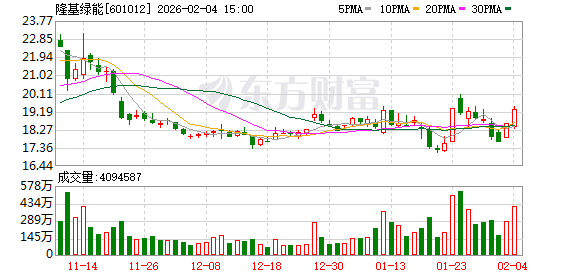
Core Viewpoint - Longi Green Energy's stock price increased by 5.27% on February 3, with a trading volume of 5.17 billion yuan, indicating strong market interest and activity in the company's shares [1] Group 1: Financial Performance - For the period from January to September 2025, Longi Green Energy reported a revenue of 50.91 billion yuan, a year-on-year decrease of 13.10% [2] - The company experienced a net loss attributable to shareholders of 3.40 billion yuan, which represents a year-on-year increase of 47.68% in losses [2] - Cumulative cash dividends paid by Longi Green Energy since its A-share listing amount to 9.27 billion yuan, with 4.32 billion yuan paid out in the last three years [2] Group 2: Shareholder and Market Activity - As of January 20, 2025, the number of Longi Green Energy shareholders reached 854,800, an increase of 4.02% from the previous period [2] - The average number of circulating shares per shareholder is 8,864, which is a decrease of 3.86% from the previous period [2] - On February 3, the company had a total margin trading balance of 6.19 billion yuan, with a financing balance of 6.18 billion yuan, accounting for 4.39% of the market capitalization [1] Group 3: Stock Trading Activity - On February 3, Longi Green Energy had a net margin purchase of 51.30 million yuan, with a financing buy-in of 479 million yuan and a repayment of 428 million yuan [1] - The company had a short selling activity where 107,000 shares were sold, amounting to 1.99 million yuan at the closing price [1] - The remaining short selling balance was 477,800 shares, with a total short selling balance of 8.87 million yuan, which is below the 20th percentile level over the past year [1] Group 4: Business Overview - Longi Green Energy, established on February 14, 2000, and listed on April 11, 2012, is based in Xi'an, Shaanxi Province [1] - The company's main business includes the research, production, and sales of monocrystalline silicon rods, wafers, cells, and modules, contributing 93.51% of its revenue from photovoltaic product sales [1] - The company is also actively developing and nurturing its photovoltaic hydrogen production business [1]
航天+AI跨界整合引爆赛道,SpaceX合并xAI打开太空光伏增量,中国企业凭硬核实力扩份额,出海提速筑牢2026增长根基
Xin Lang Cai Jing· 2026-02-03 12:52
Group 1 - Company Sunlight Power (300274) is a leading domestic enterprise in photovoltaic inverters, covering the entire industry chain including energy storage systems and photovoltaic power station development [1][43] - The company has strong technical capabilities in power electronics and system integration, with products suitable for various applications including residential, commercial, and large-scale ground power stations [1][43] - In the space photovoltaic and computing power sector, Sunlight Power's technology can be adapted for space applications, providing stable power support for space computing centers [1][43][44] Group 2 - Longi Green Energy (601012) is a leading domestic photovoltaic company focusing on the research and production of monocrystalline silicon rods and wafers, with a complete vertical integration in the industry chain [2][45] - The company excels in new generation high-efficiency battery technologies such as N-type TOPCon and HJT, with significant cost control and technical advantages [2][45] - Longi's ultra-thin silicon wafer technology meets the stringent requirements for space photovoltaic components, enabling reduced weight and improved energy efficiency for space computing centers [2][45] Group 3 - Tongwei Co., Ltd. (600438) is a dual leader in photovoltaic silicon materials and battery production, with a strong focus on high-purity crystalline silicon and photovoltaic battery manufacturing [3][46] - The company has a high market share in high-purity silicon production and is well-positioned to meet the rigorous standards required for space photovoltaic components [3][46] - Tongwei's efficient battery technology can enhance power generation in space photovoltaic applications, positioning the company as a key supplier in the space photovoltaic supply chain [3][46] Group 4 - Deye Technology (605117) is a quality enterprise with core businesses in dehumidification equipment and photovoltaic energy storage systems, excelling in household and commercial energy storage solutions [4][43] - The company's energy storage technology is crucial for providing stable energy supply in space photovoltaic applications, addressing intermittent power generation issues [4][43][44] - Deye's experience in developing equipment for extreme environments positions it well to adapt products for space applications [4][43] Group 5 - Jingcheng Machinery (300316) is a leading domestic enterprise in photovoltaic crystal growth equipment, focusing on high-end equipment for photovoltaic manufacturing [5][6] - The company's technology supports the production of high-purity silicon crystals and ultra-thin silicon wafers, essential for space photovoltaic components [5][6] - As the space photovoltaic industry matures, Jingcheng is expected to provide core manufacturing equipment for the space photovoltaic supply chain [5][6] Group 6 - Maiwei Co., Ltd. (300751) is a leading enterprise in photovoltaic battery equipment, specializing in HJT and perovskite tandem battery technologies [7][41] - The company's equipment is crucial for the mass production of high-efficiency batteries that meet the stringent requirements of space photovoltaic applications [7][41] - Maiwei's technology can support the development of space-specific battery manufacturing equipment, enhancing energy system efficiency for space computing centers [7][41] Group 7 - Foster (603806) is a global leader in photovoltaic packaging materials, focusing on EVA and POE films, with a strong market presence [8][43] - The company's packaging materials are essential for ensuring the durability and performance of photovoltaic components in extreme space environments [8][43] - Foster aims to develop specialized packaging materials for space applications, enhancing the reliability of space photovoltaic systems [8][43] Group 8 - JinkoSolar (002459) is a global leader in photovoltaic modules, with a comprehensive business model covering silicon wafers, battery cells, and modules [10][43] - The company has a strong technical foundation and global production capabilities, allowing it to meet diverse application needs [10][43] - JinkoSolar's module manufacturing technology is well-suited for space applications, with the potential to become a core supplier for space photovoltaic systems [10][43] Group 9 - TCL Zhonghuan (002129) is a core enterprise in the silicon wafer sector, focusing on monocrystalline silicon materials and semiconductor materials [12][43] - The company's high-purity silicon technology is critical for space photovoltaic components, meeting the stringent requirements for purity and performance [12][43] - TCL Zhonghuan is positioned to develop space-specific silicon products, enhancing its role in the space photovoltaic supply chain [12][43] Group 10 - Aerospace Electromechanical (600151) is a leading enterprise in the integration of aerospace and photovoltaic technologies, covering the entire industry chain from component manufacturing to power station operation [19][43] - The company's aerospace power technology can be directly applied to space photovoltaic systems, providing essential energy management solutions [19][43] - With its experience in satellite systems, Aerospace Electromechanical is well-positioned to participate in the development of space computing centers [19][43]




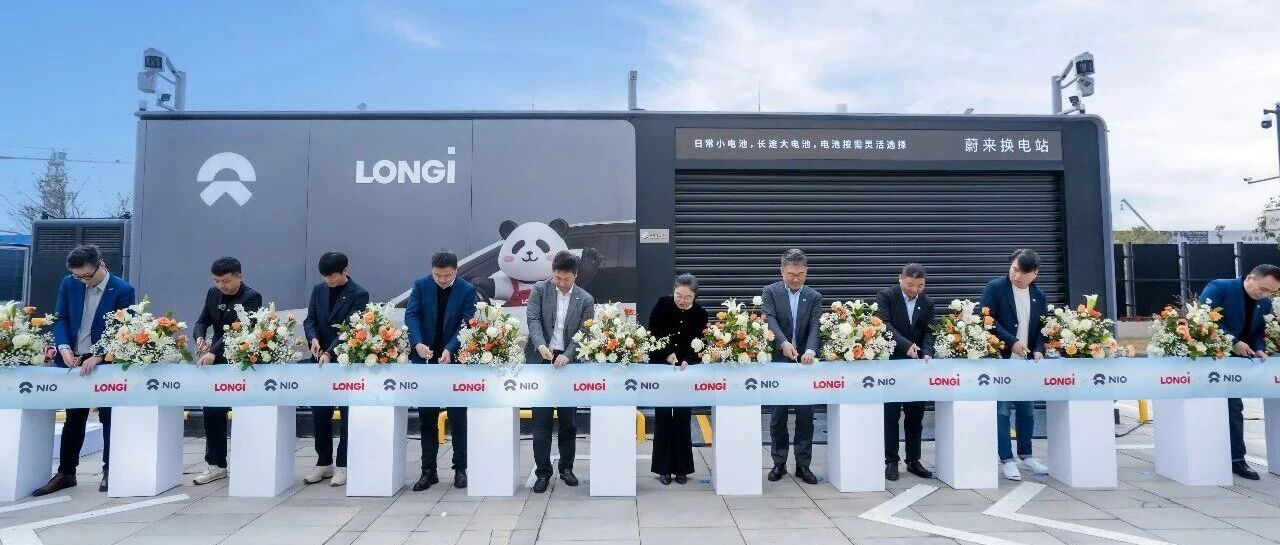
隆基绿能牵手蔚来 探索“光伏+交通”新范本
Zheng Quan Ri Bao Wang· 2026-02-03 12:17
Core Viewpoint - Longi Green Energy and NIO have launched an integrated "photovoltaic-storage-charging" project in Jiaxing, Zhejiang, showcasing a model for the "photovoltaic + transportation" sector [1] Group 1: Project Overview - The project combines photovoltaic carports, walls, noise barriers, and NIO's battery swap stations into an innovative energy solution [1] - It aims to create a closed-loop ecosystem for low-carbon transportation, integrating green power generation, safe energy storage, and efficient energy use [1] Group 2: Technological Innovations - The project introduces photovoltaic noise barriers that combine efficient solar components with noise reduction, providing clean energy while mitigating traffic noise [2] - This innovation represents a shift from single-function public infrastructure to a dual-purpose model of energy-saving and environmental protection [2] Group 3: Future Collaboration and Expansion - Longi Green Energy and NIO plan to deepen their collaboration to promote the integration of photovoltaic, battery swapping, and energy storage in transportation networks [3] - The company has explored various applications in the "photovoltaic + transportation" field, including carports, airports, subways, and ships [3]
“光伏+交通”新范本,隆基与蔚来携手打造光储充换一体化项目
中国能源报· 2026-02-03 11:47
Core Viewpoint - The collaboration between Longi Green Energy and NIO aims to create an integrated energy solution that combines photovoltaic power generation, energy storage, and electric vehicle charging, contributing to low-carbon transportation and serving as a replicable model for sustainable energy systems [2][3][12]. Group 1: Project Overview - The "NIO Battery Swap Station | Longi Global Distributed R&D Center" project integrates photovoltaic canopies, walls, and noise barriers, creating a comprehensive energy system that alleviates grid pressure and meets user charging needs [3][5]. - The project features three photovoltaic facilities: a solar canopy, a solar wall, and a solar noise barrier, ensuring green and stable power supply while minimizing carbon emissions [3][5]. Group 2: Technological Innovations - The photovoltaic noise barrier combines high-efficiency solar components with noise reduction capabilities, providing a dual function of energy generation and traffic noise mitigation [5]. - The solar canopy employs patented installation technology and a dual-layer waterproof design, ensuring safety during extreme weather while converting parking spaces into efficient green energy stations [6]. Group 3: Strategic Implications - The successful first battery swap by the NIO ET9 at the new station signifies a complete link from green energy generation to high-end green transportation [8]. - The project is part of NIO's long-term strategy to build a nationwide clean energy network, promoting similar "solar-storage-charging" demonstration projects to enhance user experience and support carbon neutrality in transportation [10][12]. Group 4: Future Collaboration - Longi and NIO plan to deepen their collaboration to promote the integration of "photovoltaics + battery swapping + energy storage" in transportation networks and explore innovative projects related to grid interaction [12].

马斯克“点名”!太空光伏概念再度走强!大面积涨停
Sou Hu Cai Jing· 2026-02-03 10:12
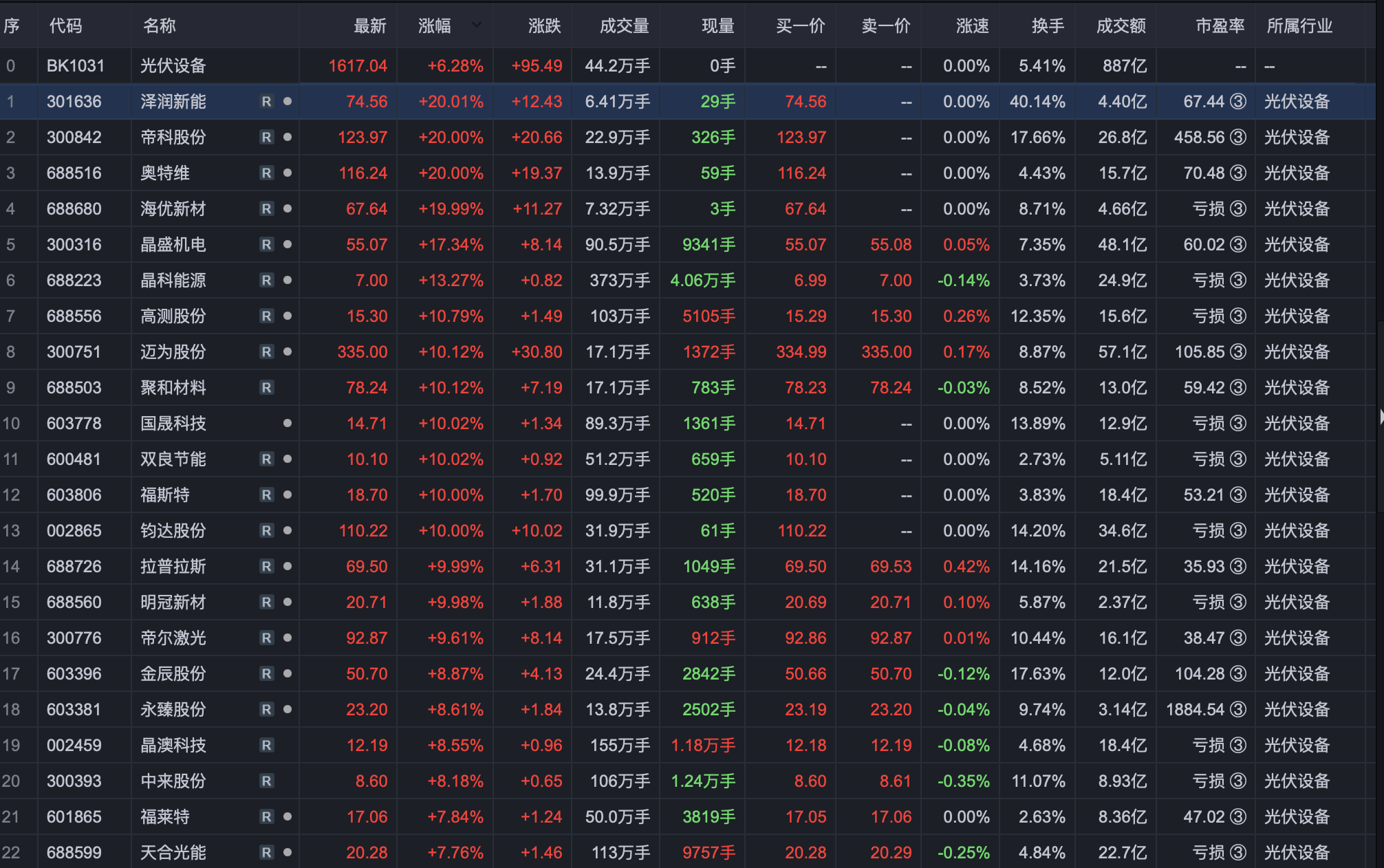
Core Viewpoint - The space photovoltaic sector is gaining momentum, driven by Elon Musk's support and significant developments in the industry, including SpaceX's acquisition of xAI and plans for deploying data centers in space [1][3]. Group 1: Market Performance - As of February 3, the photovoltaic ETF (515790.SH) closed at 1.122, with a remarkable increase of 6.05%. Several stocks, including Maiwei Co. (300751.SZ) and Junda Co. (002865.SZ), hit the daily limit, while Longi Green Energy (601012.SH) and Tongwei Co. (600438.SH) saw gains exceeding 4.5% [1]. - The photovoltaic equipment sector index (BK1031) rose by 6.28%, indicating strong market interest and activity [2]. Group 2: Industry Outlook - Institutions like Guosheng Securities and CICC express optimism about the future of space photovoltaics, predicting it could become a trillion-yuan market within five years due to increasing global demand for space energy and the restructuring of supply chains [3]. - CICC's research highlights that space photovoltaics are central to upgrading power systems in commercial aerospace, with a focus on low-orbit satellite applications, suggesting a new phase of technological advancement and industrial delivery [4]. Group 3: Technological Insights - The main photovoltaic technologies for space applications include silicon solar cells, gallium arsenide solar cells, and perovskite technology. Gallium arsenide offers superior performance but at a higher cost, while perovskite technology is noted for its low material costs and high power-to-weight ratio [5][6]. - Current market trends indicate that gallium arsenide technology dominates, but emerging technologies like HJT silicon and perovskite are expected to gain significant market share, with perovskite potentially achieving over 50% penetration [7]. Group 4: Company Developments - Companies such as Shanghai Port and Junda Co. are actively investing in space photovoltaic technologies, with Shanghai Port focusing on perovskite solar cells and Junda Co. securing contracts for related supplies [7]. - Major players like Trina Solar and JA Solar are also expanding their capabilities in crystalline silicon and perovskite technologies, indicating a robust competitive landscape in the photovoltaic sector [7].