
GAC GROUP(601238)

Search documents
广汽集团:2025年11月广汽全固态电池中试线已投产,计划于2026年进行小批量装车实验
Mei Ri Jing Ji Xin Wen· 2026-01-22 09:46
(文章来源:每日经济新闻) 每经AI快讯,有投资者在投资者互动平台提问:请尽快抢在所有车企的前面装上固态电池,别耽误了 时机了。 广汽集团(601238.SH)1月22日在投资者互动平台表示,本公司正积极推进全固态电池的自主研发与 产业化落地,2025年11月广汽全固态电池中试线已投产,计划于2026年进行小批量装车实验。后续相关 进展请关注公司官方发布的信息。 ...

地方两会丨广州市人大代表冯兴亚建言低空经济商业化
Zhong Guo Jing Ying Bao· 2026-01-22 06:48
Core Viewpoint - Guangzhou is accelerating the construction of a trillion-level automotive industry cluster, focusing on the integration of smart and electric vehicles, autonomous driving, and the localization of key components [1][2]. Group 1: Industry Development and Challenges - Guangzhou has established a robust automotive industry base with nine vehicle manufacturers and over a thousand parts suppliers, achieving an average annual growth rate of over 60% in new energy vehicle production over the past five years [2][3]. - Despite its strengths, the automotive industry in Guangzhou faces challenges in commercializing cutting-edge technologies, coordinating the supply chain, and improving infrastructure [2][3]. - The city has opened 2,601 kilometers of smart connected vehicle testing roads, with over 8.36 million kilometers of autonomous driving demonstration operations covering ten major application scenarios [3]. Group 2: Strategic Recommendations - The company suggests focusing on low-altitude economy and autonomous driving as core areas for future industry development, proposing to accelerate the commercialization of electric vertical takeoff and landing vehicles [4][5]. - Recommendations include enhancing vehicle-to-grid (V2G) policies, improving automotive export logistics, and making Guangzhou a pilot city for automotive aftermarket modifications to meet consumer demands [5]. - The Guangzhou government has set 2026 as a key year for industry development, planning to build a low-altitude industrial ecosystem and an intelligent connected vehicle industrial park [5]. Group 3: Innovation and Ecosystem - The automotive industry in Guangzhou is characterized by a collaborative ecosystem with local leaders like GAC Group driving transformation through integrated reforms and efficient operational systems [3][4]. - GAC Group has received nearly 2,000 orders for its GOVY AirCab flying car, with production expected to start soon, supporting the development of low-altitude economy applications [4]. - The company emphasizes the importance of technological innovation to overcome development bottlenecks and maintain Guangzhou's core position in the national automotive industry landscape [2][3].
广汽集团为广州汽车高质量发展建言献策
Zhong Guo Zhi Liang Xin Wen Wang· 2026-01-22 06:17
转自:中国质量报 车网互动(V2G)作为新能源汽车与电力系统融合的核心方向,正迎来规模化发展的关键期,但广州市 V2G产业在基础设施、商业模式等方面,仍存在堵点、难点。对此,冯兴亚提出完善V2G配套政策、促 进试点目标实现的建议,加速基础设施升级,提升产业可持续发展能力。 围绕汽车出海这一中国汽车产业新的增长极,冯兴亚提出进一步加强广州汽车出口物流能力建设,并围 绕长公里二手车出口产业这一潜力巨大的细分领域,提出打造长公里二手车出口基地、推动产业快速发 展,为汽车出口产业的高质量发展注入动力。 聚焦当前消费者的个性化需求,冯兴亚提出,加快推动广州成为放开汽车售后改装范围试点城市,加强 广州电动自行车规范管理,筑牢规范发展根基,推动产业高质量发展。 在低空经济领域,2025年12月发布的广州"十五五"规划建议中,首次提出建设"空天强市",明确提 出"发展壮大新兴产业、拓展低空经济应用场景"。对此,冯兴亚提出,加快拓展电动垂直起降飞行器应 用场景、推进商业化落地,加快抢占发展先机,持续打造可复制、可推广的低空经济"广州模式"。 在自动驾驶领域,L3有条件自动驾驶汽车是实现智能网联汽车从技术验证迈向规模化商业化突破 ...
个人消费贷款贴息延长至2026年底
Sou Hu Cai Jing· 2026-01-22 01:23
Group 1 - The Ministry of Finance extends the implementation period of the personal consumption loan interest subsidy policy to the end of 2026 and raises the subsidy standards [1] - The subsidy cap of 500 yuan for a single consumption loan is removed, and the cumulative subsidy limit of 1,000 yuan for each borrower at one institution is also eliminated, while maintaining the annual limit of 3,000 yuan [1] - The range of institutions eligible for the subsidy is expanded to include various financial entities such as city commercial banks and foreign banks [1] Group 2 - The National Development and Reform Commission announces a unified subsidy standard for the "two new" policies, focusing on the replacement of old consumer goods, including cars and home appliances [2] - A national-level merger fund is being considered, along with the establishment of regulations for a unified national market [2] - Plans for a strategic implementation scheme to expand domestic demand from 2026 to 2030 are being developed [2] Group 3 - The Ministry of Finance emphasizes support for small and micro enterprises through loan interest subsidies, particularly in key industries such as new energy and automotive [3] - The policy targets 14 key industrial chains, including industrial robots and medical equipment [3] Group 4 - The State Administration for Market Regulation will implement a verification and evaluation standard for domestically produced testing instruments in the automotive sector by 2026 [4] - The focus will be on creating authoritative standards and addressing critical technologies in high-end equipment [4] Group 5 - By 2025, the number of cars owned per 100 households in China is projected to increase by 1.7 vehicles, reaching 52.9 vehicles [5] - The production and sales of new energy vehicles are expected to exceed 16 million units annually [5] Group 6 - A new interim measure for the recycling and comprehensive utilization of used power batteries from electric vehicles will be implemented starting April 1, 2026 [6] - The measure aims to enhance lifecycle management and establish a nationwide information platform for battery tracking [6] Group 7 - GAC Group announces the establishment of a new business unit (BU) for its Trumpchi brand, aimed at enhancing operational efficiency and market responsiveness [7][8] - The new BU will focus on brand rejuvenation and product innovation, emphasizing a high-quality brand positioning [7][8] Group 8 - Hyundai Motor plans to introduce its high-end brand to the Chinese market, leveraging local channels for better market competitiveness [9] - This move aligns with the deepening economic cooperation between China and South Korea [9] Group 9 - Xiaomi launches a 7-year low-interest car purchase policy for its new electric SUV, the Xiaomi YU7, following a similar initiative by Tesla [10] - The policy includes a low down payment and monthly payment options, indicating a competitive strategy in the electric vehicle market [10]

广汽集团否认汽车芯片半数由格力替代传闻
Cai Jing Wang· 2026-01-21 07:23
Core Viewpoint - GAC Group denies rumors that half of its automotive chips will be replaced by products from Gree Electric, emphasizing that such statements are not factual [1] Group 1: Company Statements - GAC Group issued a statement on January 20 via its official Weibo account, clarifying that the claim regarding Gree replacing half of its automotive chips is untrue [1] - The rumors originated from a corporate exchange event on January 15, where GAC Group's chairman, Feng Xingya, visited Gree Electric and discussed industry collaboration [1] Group 2: Event Details - During the visit, Feng invited Gree's chairman, Dong Mingzhu, to experience the high-end model A800, which contains 1,004 chips, all of which have Chinese intellectual property rights [1] - Dong humorously remarked that "in the future, 500 of them will be mine," which was misinterpreted by some as a commitment to collaboration [1] Group 3: Future Collaboration - GAC Group stated that the core topic of the discussions was the integration of "people, vehicles, and home" in a smart ecosystem, focusing on industrial synergy [1] - The company assured that any future collaboration developments would be communicated through official channels [1]


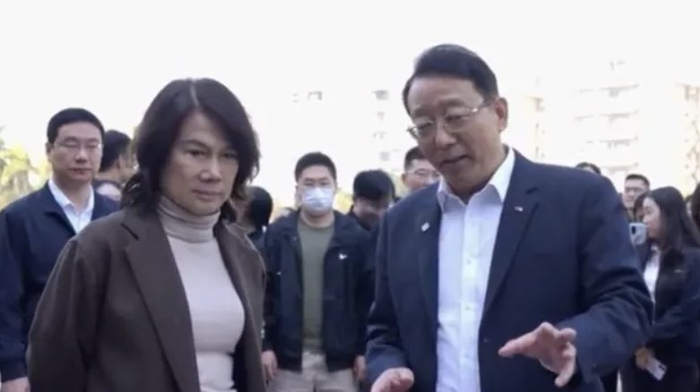
董明珠言论被过度解读!广汽集团辟谣未来芯片半数由格力替代传闻【附汽车芯片行业市场分析】
Qian Zhan Wang· 2026-01-21 06:56
Group 1 - GAC Group clarified that recent claims about future collaboration with Gree Electric on automotive chips are misinterpretations of their discussions [2] - The source of the rumor was a video from GAC's official account, where GAC Chairman Feng Xingya and Gree's Chairman Dong Mingzhu discussed potential collaboration in a casual manner [2] - GAC emphasized that the meeting was a strategic exchange and did not result in any formal agreements or supply arrangements [2] Group 2 - Gree Electric has been actively investing in the semiconductor sector since 2015, establishing a fully automated third-generation semiconductor chip factory with over 70% localization of core equipment [3] - The global automotive chip market is dominated by major international players, with the top five companies holding over 50% market share, highlighting the reliance of Chinese automakers on high-end chip supplies [3] - Chinese companies like BYD Semiconductor and Huazhong Microelectronics are making progress in domestic chip production, gradually closing the gap with international competitors [3] Group 3 - The global automotive chip market is estimated to have a 30% share from China, making it the largest regional market with the fastest growth rate [5] - The compound annual growth rate (CAGR) for China's automotive chip market is projected to reach 22%, with a transaction scale expected to hit $65 billion by 2029 [7]

广汽集团发文澄清
Nan Fang Du Shi Bao· 2026-01-21 03:41
Group 1 - GAC Group issued a clarification regarding rumors about a partnership with Gree Electric [1] - On January 15, 2026, GAC Group's chairman, Feng Xingya, visited Gree Electric to discuss the integration of "people, vehicles, and home" smart ecosystem [1] - GAC Group emphasized that any future cooperation details will be announced through official channels [1]

广东每30分钟就有一台飞行汽车下线
2 1 Shi Ji Jing Ji Bao Dao· 2026-01-21 03:30
Group 1 - The automotive industry is witnessing a significant shift with Chinese EV brands gaining attention at global events like the Munich Auto Show in 2025 [1] - Guangdong is producing flying cars at an unprecedented rate, with one unit rolling off the production line every 30 minutes, marking a new era in manufacturing efficiency [3] - The mass production factory in Guangdong has an annual output capacity of 10,000 flying cars, surpassing the global annual sales of traditional aircraft, which is less than 4,000 units [5] Group 2 - Guangdong accounts for one-fifth of China's automotive production, supported by a complete industrial chain [7] - The self-sufficiency rate of core components in new energy vehicles in Guangdong exceeds 90%, showcasing the region's manufacturing strength [8] - GAC Group has launched 12 high-performance automotive-grade chips and initiated a collaborative plan for an automotive chip application ecosystem to meet diverse consumer demands [9] Group 3 - GAC Group's chairman stated that China's new energy vehicle technology is approximately 3 to 5 years ahead in terms of products, technology, and industrial chain [11] - BYD's chairman emphasized the advantages of Guangdong as a fertile ground for entrepreneurship and its well-established industrial chain and talent base [14] - Xpeng Motors' chairman highlighted the importance of semiconductor, new energy, and biomedicine sectors in driving innovation [17] Group 4 - Guangdong's industrial manufacturing is evolving, with significant improvements in efficiency, such as a 200% increase in smart home appliance production in Zhuhai [19] - The region's strategic industrial clusters are operating continuously, with the "Shenzhen-Hong Kong-Guangzhou" innovation cluster ranking first globally [19] - Guangdong's high-tech manufacturing industry is projected to grow by 6.4% in 2025, with the highest production of industrial robots in the country [22]


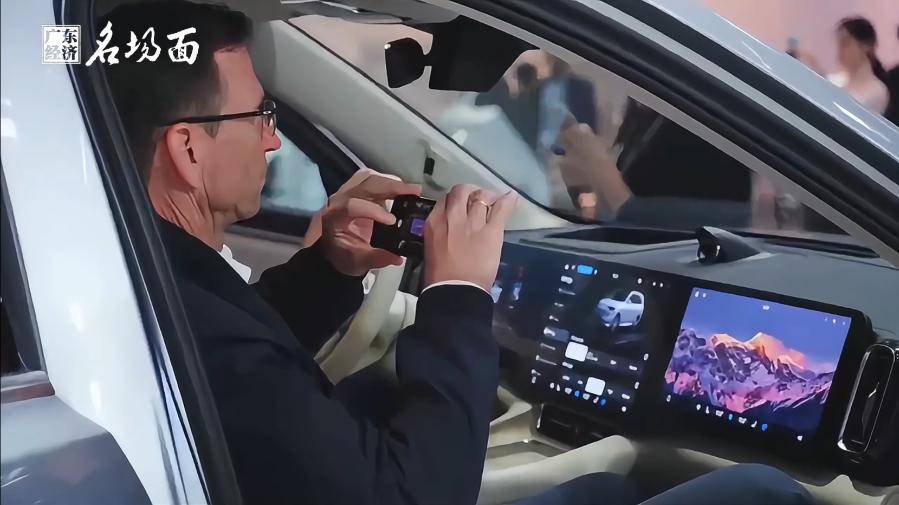
广汽集团辟谣格力替代半数汽车芯片传闻,双方聚焦生态协同与产业合作
Ju Chao Zi Xun· 2026-01-21 02:45
Core Viewpoint - GAC Group issued an official statement denying rumors that Gree Electric would replace half of its automotive chips, clarifying that the discussions between the two companies focused on collaborative development in the "smart ecosystem" of "people, vehicles, and homes" [2] Group 1: Company Collaboration - The rumors originated from a high-level meeting on January 15, where GAC Group's chairman introduced the Hyper GT model, emphasizing its 1004 chips with independent Chinese intellectual property [2] - Gree Electric has been involved in the chip sector since 2015, with a team of nearly 1,000 people and over 60% being technical staff, achieving cumulative sales of over 300 million chips by 2025 [4] - Gree's silicon carbide (SiC) chip business is accelerating, with a factory capable of producing 240,000 six-inch SiC wafers annually, and plans to launch SiC power devices for various markets by 2026 [4] Group 2: Investment and Product Development - In 2025, GAC Capital completed an investment in Chongqing Pingwei Industrial Co., which focuses on chip design and has established deep cooperation with GAC Group across its core brands [5] - The GAC Hyper GT model, featuring 100% domestically designed chips, successfully rolled off the production line in November 2025, marking a significant breakthrough in chip localization [5] - GAC Group launched 12 automotive-grade chips in April 2025, developed in collaboration with various companies, covering critical areas such as power management and safety [6] Group 3: Ecosystem Development - GAC Group initiated the "Automotive Chip Application Ecosystem Co-construction Plan" to enhance collaboration and innovation across the industry, ensuring supply chain stability and promoting technological self-reliance in the automotive sector [7]
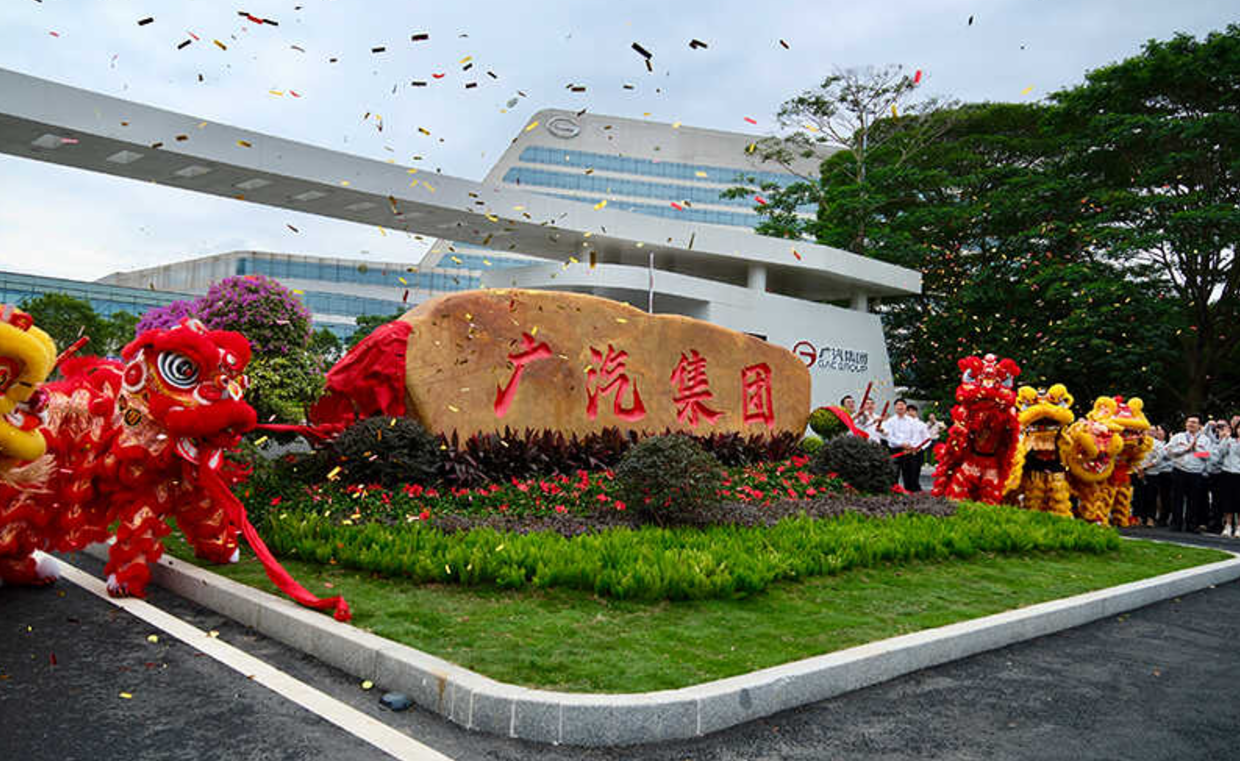
广州:支持广汽、小鹏汽车拓展业务布局 打造万亿级汽车产业集群
Ge Long Hui A P P· 2026-01-21 02:37
Core Viewpoint - Guangzhou aims to strengthen its industrial economy by promoting the integration of industry and technology, focusing on key sectors such as automotive, electronics, petrochemicals, and fashion consumption [1] Group 1: Key Industries - The city will stabilize and support the automotive industry, particularly companies like GAC and Xpeng Motors, to expand their business and achieve "smart electric transformation" [1] - There is a plan to enhance the supply chain for core automotive components, aiming to create a trillion-yuan automotive industry cluster [1] Group 2: Emerging Industries - Guangzhou will focus on developing mid-tier industries with potential, such as low-altitude economy, aerospace, biomedicine and health, and artificial intelligence [1] - The government will implement special policies and measures, establish dedicated industrial funds, and support new infrastructure layouts to foster these emerging sectors [1]