
AGRICULTURAL BANK OF CHINA(601288)

Search documents
湖南衡阳共青团:破解融资难题 助力青年创业
Zhong Guo Qing Nian Bao· 2026-01-12 04:23
Core Insights - The "Hengqing Loan" initiative, launched by the Youth League Committee of Hengyang and the Agricultural Bank of China, aims to provide financial support to young entrepreneurs aged 20-40, offering a total credit of 2 billion yuan to alleviate funding pressures [1][2]. Group 1: Youth Entrepreneurship Support - The "Hengqing Loan" project is designed to address the challenges of financing for young entrepreneurs, providing low-threshold and low-cost funding options [1][2]. - The initiative has already facilitated 26,651 loans, amounting to 1.916 billion yuan disbursed to support various entrepreneurial ventures [4]. Group 2: Case Studies of Entrepreneurs - Chen Zhipeng, a 22-year-old entrepreneur, utilized the "Hengqing Loan" to overcome funding challenges in establishing a multi-functional leisure platform in Hengyang [1][2]. - Liu Zhixiang, a 35-year-old founder of Hengyang Zhishang Technology, leveraged the "Hengqing Loan" to expand his cross-border e-commerce business, which has achieved annual sales exceeding 20 million yuan [2][3].


畜禽活体抵押融资模式“上新”
Xin Lang Cai Jing· 2026-01-11 22:25
Core Viewpoint - The joint issuance of the notification by the People's Bank of China, the Ministry of Agriculture and Rural Affairs, and the Financial Regulatory Bureau aims to promote the financing model of livestock collateral, enhancing the financial institutions' ability to utilize rural assets and support rural revitalization [1][2]. Group 1: Policy and Regulatory Framework - The notification establishes clear regulations for property rights registration, value assessment, mortgage registration models, and collateral disposal mechanisms [2]. - It encourages the use of digital technologies such as electronic ear tags and biometric identification to support the collateralization of livestock [2]. Group 2: Financial Innovations and Products - Financial institutions are developing innovative products like "Smart Animal Husbandry Loans" to address the challenges of collateralizing live assets, incorporating technology for effective post-loan management [3]. - The integration of "agricultural insurance + financing" models is encouraged to enhance risk-sharing and improve financing services for agricultural producers [3]. Group 3: Market Trends and Data - In the first three quarters of 2025, the national production of pork, beef, mutton, and poultry reached 73.12 million tons, an increase of 2.68 million tons or 3.8% year-on-year, indicating a positive trend in the livestock industry [1]. - The promotion of livestock collateral financing is seen as a pathway to broaden the range of rural collateral, addressing the valuation and monitoring challenges associated with live assets [1][2]. Group 4: Collaborative Efforts and Ecosystem Development - The development of livestock collateral financing requires collaboration between policy incentives and business innovations, with a focus on supply chain finance and dynamic risk control [4]. - Financial institutions are encouraged to build a scientific value assessment system and a comprehensive risk monitoring mechanism to transform livestock assets into viable financing options [4].
银行行业2025年度业绩前瞻:利息收入有望回正
ZHESHANG SECURITIES· 2026-01-11 15:27
Investment Rating - The industry investment rating is "Positive" [3][17] Core Insights - Interest income is expected to return to positive growth, supported by an improvement in net interest margins in Q4 2025, which will offset other non-interest impacts [1] - For the full year 2025, listed banks are projected to see a net profit growth rate of 1.8% and revenue growth of 1.2%, both showing a quarter-on-quarter improvement [1] - Quality city commercial banks are expected to lead the sector, with revenue and profit growth rates projected between 5-10% for 2025 [1] Summary by Relevant Sections Industry Outlook - The overall outlook for 2025 indicates an improvement in net profit and revenue growth for listed banks, primarily due to the alleviation of margin pressures and increased provisions [1] - The asset scale of listed banks is expected to grow by 9.0% year-on-year, reflecting a slowdown compared to previous quarters due to weak credit demand [1] Key Drivers - **Margin Stabilization**: Q4 2025 is expected to see a 2 basis point improvement in net interest margin to 1.32%, driven by a larger decline in funding costs compared to asset yields [1] - **Non-Interest Income**: Non-interest income is projected to grow by 3.2% year-on-year, a decrease from earlier quarters, with a slight positive trend in commission income [1] - **Credit Quality**: The credit cost ratio is expected to decline to 0.67%, indicating a stable improvement in non-performing loans, particularly in retail lending [1] Investment Recommendations - The report suggests that banks with new growth drivers are likely to see significant value recovery, recommending major state-owned banks and select city commercial banks as key investment targets [1][2]



北向资金,最新动向!增持这些股→
证券时报· 2026-01-10 14:15
Core Viewpoint - The Northbound Stock Connect funds have shown increased trading activity in the A-share market, with significant holdings and trading volumes reported for the fourth quarter of 2025 [2][10]. Group 1: Northbound Stock Connect Holdings - As of the end of Q4 2025, Northbound Stock Connect funds held a total of 4,014 securities, including stocks and ETFs, with overall holdings remaining relatively stable [4][5]. - Notably, Northbound funds held over 1 billion shares in 213 stocks, and in 37 stocks, holdings exceeded 5 billion shares. Key stocks with holdings over 10 billion shares include BOE Technology Group, Industrial and Commercial Bank of China, Zijin Mining, Agricultural Bank of China, and others [5][6]. Group 2: Increased Holdings - During Q4 2025, Northbound Stock Connect funds increased their holdings in over 1,600 stocks, with more than 1,000 stocks seeing an increase of over 1 million shares. Significant increases were noted in stocks such as China Aluminum, Weichai Power, and Industrial and Commercial Bank of China, with increases exceeding 10 million shares in several cases [7][8]. Group 3: Trading Activity - The trading activity of Northbound Stock Connect has been notably active, with trading volumes exceeding 300 billion yuan for four consecutive trading days, reaching a peak of 369.6 billion yuan on January 9, 2026, marking the highest level since September 2025 [10]. - Cumulatively, since the establishment of the mutual market access mechanism, the total trading volume of Northbound Stock Connect has surpassed 200 trillion yuan, with 2025's total trading volume reaching 50.33 trillion yuan, a growth of over 40% compared to 2024 [11].






当数字人民币开始计息
Jing Ji Guan Cha Bao· 2026-01-10 07:17
Core Viewpoint - The digital renminbi (e-CNY) will start accruing interest on wallet balances as of January 1, 2026, marking a significant shift from a cash-like payment tool to a deposit currency model, which aligns with economic growth and financial intermediation mechanisms [1][2][3] Digital Renminbi Transition - The People's Bank of China (PBOC) will implement a new measurement framework and management system for digital renminbi on January 1, 2026, transitioning from a cash-type model to a deposit currency model [2] - Major state-owned banks will begin to pay interest on digital renminbi wallet balances at the same rate as regular savings accounts [2] Systemic Upgrade - The ability to earn interest signifies a systemic upgrade, transforming digital renminbi from a mere tool to a comprehensive monetary system, responding to global trends in digital currencies [3][4] - The PBOC aims to redefine how money exists, circulates, and is governed, moving towards a more sustainable and operationally integrated digital currency [3][4] Cross-Border Payment Enhancements - The PBOC is focusing on enhancing cross-border payment systems, including expanding the use of the renminbi in international transactions and improving the efficiency of cross-border financial flows [5][6] - The digital renminbi is expected to become a core engine for cross-border payments, facilitating smoother transactions and reducing costs for businesses [5][6] Infrastructure Development - Recent policies indicate a strategic alignment between digital renminbi development and cross-border payment infrastructure, aiming for a cohesive system that supports both domestic and international financial activities [7][8] - The revised rules for the renminbi cross-border payment system will enhance governance and scalability, ensuring a robust framework for financial transactions [8][9] Future Implications - The transition to a deposit currency model is anticipated to significantly increase liquidity within the banking system and encourage more financial services around digital renminbi [13][14] - The internationalization of the renminbi will depend on clear rules, risk management, and compliance, which are essential for building trust among global financial institutions [14][15] Conclusion - The digital renminbi's evolution into a deposit currency represents a fundamental shift in China's monetary policy, with implications for both domestic financial stability and international currency dynamics [1][3][14]


银行网点“腾笼换鸟” 一边批量关停 一边新设补位
Shang Hai Zheng Quan Bao· 2026-01-09 18:38
Core Viewpoint - The trend of bank branches in China is shifting towards structural improvement, with both closures and new openings, rather than a simple reduction in the number of branches [2][4]. Group 1: Bank Branch Dynamics - In 2025, over 8,000 bank branches are expected to close, while more than 8,400 new branches will be established, indicating a net increase in the number of bank branches [4]. - The closures primarily involve outdated branches with low foot traffic, while new branches are being integrated into communities, offering diverse services such as financial consultations and community activities [2][3]. Group 2: Reasons for New Branch Openings - The increase in new branches is driven by the rural revitalization strategy, with a significant proportion located in county and lower regions [4]. - Mergers and acquisitions in the banking sector have led to the transformation of village banks into branch institutions, contributing to the net increase in branches [4]. - Banks are focusing on niche customer segments and enhancing service offerings that online channels cannot fully cover [4][5]. Group 3: Transformation of Bank Branch Functions - New bank branches are adopting a more digital, lightweight, and specialized approach, reducing the number of traditional counters and increasing areas for consultation and smart devices [6]. - The future of bank branches is seen as a combination of digital and community services, providing both efficient transactions and personalized service [6][7]. - The transformed branches are expected to play a crucial role in connecting resources and serving small and micro enterprises, enhancing customer loyalty and optimizing revenue structures [6][7].

数字人民币启动计息 银行加速场景生态布局
Zhong Guo Jing Ying Bao· 2026-01-09 18:33
Core Viewpoint - The introduction of interest on the balance of real-name digital RMB wallets by major Chinese banks marks a significant shift from digital currency to digital deposits, enhancing the attractiveness of digital RMB as a store of value and promoting its active use [2][3][4][5]. Group 1: Interest Payment on Digital RMB Wallets - Starting January 1, 2026, major banks in China will pay interest on the balances of real-name digital RMB wallets at the same rate as their demand deposit rates, currently set at 0.05% [2][5]. - Interest will be calculated and credited on specific dates throughout the year, and only real-name wallets will be eligible for interest, excluding anonymous wallets due to regulatory compliance [2][3]. Group 2: Transition to Digital Deposits - The People's Bank of China has initiated a transition from digital cash to digital deposit currency, with a new framework and management system set to launch in 2026 [3][5]. - This transition allows users to enjoy both payment convenience and interest income, integrating digital RMB into the banking system and enhancing wealth management opportunities [3][4]. Group 3: Impact on Commercial Banks - The shift to interest-bearing digital RMB balances will convert these funds into stable liabilities for banks, improving their lending capacity and profitability [4][5]. - The digital RMB will now be treated as a direct liability of commercial banks, allowing them to manage these balances within their asset-liability frameworks [4][5]. Group 4: Expansion of Digital RMB Applications - The digital RMB is expected to expand its application beyond simple payments to include savings, loans, and investments, enhancing its role in the financial ecosystem [4][6]. - Banks are encouraged to develop comprehensive financial products around interest-bearing wallets, targeting various sectors such as supply chain finance and cross-border payments [8]. Group 5: Internationalization of the RMB - The current global trend towards "de-dollarization" presents a unique opportunity for the internationalization of the RMB, with digital RMB facilitating innovative cross-border payment solutions [9]. - Enhancing user willingness to hold and use digital RMB, along with encouraging banks to promote its adoption, is crucial for its success in international markets [9][10].
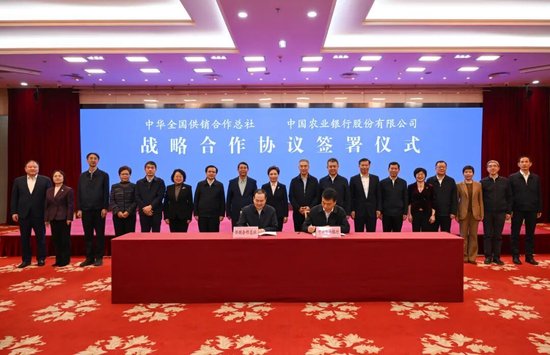
中国农业银行与中华全国供销合作总社签署战略合作协议 持续深化社银合作携手助力乡村振兴
Xin Lang Cai Jing· 2026-01-09 13:29
农业银行三农业务总监,三农对公业务部、大客户部、个人金融部、乡村振兴金融部和农户金融部等部 门主要负责人,以及全国供销合作总社相关部局和单位主要负责人陪同参加签约仪式。 责任编辑:曹睿潼 来源:中国农业银行 1月9日,中国农业银行与中华全国供销合作总社在京签署战略合作协议。农业银行董事长、党委书记谷 澍与总社理事会主任、党组书记王宇燕出席签约仪式并就双方加强合作进行会谈。农业银行行长、党委 副书记王志恒,总社党组成员、理事会副主任兼秘书长程庆新,农业银行副行长、党委委员王大军见证 签约。农业银行副行长、党委委员孟范君与总社理事会副主任、党组成员徐光洪代表双方签署协议。 来源:中国农业银行 1月9日,中国农业银行与中华全国供销合作总社在京签署战略合作协议。农业银行董事长、党委书记谷 澍与总社理事会主任、党组书记王宇燕出席签约仪式并就双方加强合作进行会谈。农业银行行长、党委 副书记王志恒,总社党组成员、理事会副主任兼秘书长程庆新,农业银行副行长、党委委员王大军见证 签约。农业银行副行长、党委委员孟范君与总社理事会副主任、党组成员徐光洪代表双方签署协议。 签约前,谷澍一行参观了中国供销集团所属全国棉花交易市场中国棉 ...
金融行业双周报(2025/12/26-2026/1/8):2025年证券行业多项核心指标创历史新高-20260109
Dongguan Securities· 2026-01-09 12:03
Investment Ratings - Banking: Overweight (Maintain) [1] - Securities: Market Weight (Maintain) [1] - Insurance: Overweight (Maintain) [1] Core Insights - The banking sector shows a continued growth trend in social financing, with a marginal decrease in the contribution of government bonds. Corporate bonds increased by 178.8 billion yuan year-on-year, becoming the main increment in social financing. However, the demand for loans remains weak, with a year-on-year decrease of 190 billion yuan in new RMB loans in November [5][44]. - The securities industry has seen multiple core indicators reach historical highs in 2025, with total stock fund transaction volume exceeding 500 trillion yuan, a year-on-year increase of over 70%. The primary market has rebounded, with IPO and refinancing scales increasing by 95.64% and 326.17% respectively, indicating improved market liquidity and financing conditions [3][46]. - The insurance sector reported a total original premium income of 57,629 billion yuan in the first 11 months of 2025, a year-on-year growth of 7.6%. Life insurance companies saw a 9.1% increase in premium income, while property insurance companies grew by 3.9% [4][47]. Summary by Sections Market Review - As of January 8, 2026, the banking, securities, and insurance indices changed by -0.87%, +0.91%, and +1.95% respectively, while the CSI 300 index increased by +2.05%. Among 31 industries, the banking and non-banking sectors ranked 29th and 21st in performance [5][13]. Valuation Situation - As of January 8, 2026, the PB ratio for the banking sector is 0.74, with state-owned banks, joint-stock banks, city commercial banks, and rural commercial banks having PB ratios of 0.79, 0.61, 0.71, and 0.63 respectively. Notably, China Merchants Bank, Agricultural Bank of China, and Ningbo Bank have the highest valuations at 0.96, 0.95, and 0.87 [22][24]. Recent Market Indicators - The one-year MLF operation rate is 2.0%, with LPR rates at 3.0% for one year and 3.50% for five years. The average interbank borrowing rates for one day, seven days, and fourteen days are 1.33%, 1.50%, and 1.60% respectively [29][30]. Industry News - The China Banking and Insurance Regulatory Commission has released guidelines for data classification and grading in the insurance asset management industry, effective January 1, 2026, aimed at enhancing data security management standards [39][40].






银行短期大额存单利率进入0字头
2 1 Shi Ji Jing Ji Bao Dao· 2026-01-09 11:46
Core Viewpoint - Major state-owned banks in China have launched new large-denomination time deposit products in early 2026, but short-term product interest rates have generally entered the "0" range, indicating a downward trend in deposit rates across the banking sector [1][2]. Group 1: State-Owned Banks - The annual interest rates for 1-month and 3-month large-denomination time deposits from major state-owned banks such as Bank of China, Agricultural Bank of China, Industrial and Commercial Bank of China, and China Construction Bank are all at 0.9%, with a minimum deposit requirement of 200,000 yuan [1]. - Some products from these banks have interest rates lower than those of regular fixed-term deposits of the same duration [1]. - Since December 2025, these banks have collectively removed 5-year large-denomination time deposits, with available products now generally limited to 3 years or less, and interest rates ranging from 1.10% to 1.55% [1]. Group 2: Other Banks - In contrast to state-owned banks, some joint-stock banks, city commercial banks, and rural commercial banks are still offering short-term large-denomination time deposits with interest rates above 1%. For instance, Citic Bank's 1-month large-denomination time deposit has an interest rate of 1.1% [1]. - Tianjin Bank's first 3-month large-denomination time deposit for 2026 has an interest rate of 1.15%, while Liu'an Rural Commercial Bank offers a similar product at 1.1% [1]. - However, smaller banks are also experiencing downward pressure on short-term interest rates, with some entering the "0" range, such as Yunnan Tengchong Rural Commercial Bank, which has set a 3-month deposit rate at 0.95% [2]. Group 3: Market Analysis - Industry experts suggest that the recent interest rate adjustments are closely related to banks' ongoing efforts to manage net interest margins and reduce funding costs [2]. - The current market environment indicates that the downward trend in deposit rates may continue [2].
