
AGRICULTURAL BANK OF CHINA(601288)

Search documents
2026年贺岁币和贺岁钞东莞地区预约兑换即将启动
Nan Fang Du Shi Bao· 2026-01-08 06:12
Group 1 - The 2026 New Year commemorative coins and banknotes will be available for reservation starting January 13, 2026, in Dongguan, China [2] - The distribution quantity for the 2026 New Year commemorative coins is set at 600,000 pieces, while the commemorative banknotes will also be 600,000 pieces, with denominations of 10 yuan per coin and 20 yuan per banknote [3] - The reservation period for the commemorative coins is from January 13, 2026, 22:00 to January 14, 2026, 24:00, and for the banknotes from January 13, 2026, 22:30 to January 14, 2026, 24:00 [4] Group 2 - Reservations can be made online through the official websites and mobile banking apps of the Industrial and Commercial Bank of China, Agricultural Bank of China, and Postal Savings Bank of China [5] - Each individual can reserve and exchange a maximum of 20 commemorative coins and 20 commemorative banknotes, requiring a valid second-generation resident ID card for the process [6] - If the second-generation resident ID card is unavailable, alternatives such as household registration books or temporary resident ID cards can be used for the reservation [6]





以金融之笔绘河州新景 农行临夏分行持续创新金融产品与服务模式
Jin Rong Shi Bao· 2026-01-08 03:35
Core Viewpoint - The Agricultural Bank of China, Linxia Branch, plays a crucial role in supporting rural revitalization through financial services, focusing on agricultural development and poverty alleviation efforts in key areas [1][2][6] Group 1: Financial Support for Agriculture - As of November 2025, the total loan balance of the Agricultural Bank of China, Linxia Branch, reached 11.692 billion yuan, with agricultural loans accounting for 4.578 billion yuan, reflecting a growth of 686 million yuan and a growth rate of 17.64% [1] - The bank has issued 5.53 billion yuan in personal loans to farmers in Dongxiang County over the past three years, supporting livestock farming and the food service industry [2] Group 2: Innovative Financial Products - The bank has introduced various financial products such as "Technology e-loan" to meet the needs of local enterprises, providing a 10 million yuan pure credit loan to a meat processing company [3] - The bank has actively promoted products like "Tax e-loan," "Electricity e-loan," and "Technology e-loan" to support small and micro enterprises, with a total loan issuance of 619 million yuan to private enterprises in 2025 [4] Group 3: Industry-Specific Financial Services - The bank has launched specialized credit services for the local food industry, issuing 318.6 million yuan in loans to small eateries and restaurants [5] - A total of 4.05 billion yuan in credit support has been provided to the entire beef and sheep industry chain, including loans to cooperatives and processing enterprises [5] Group 4: Community Engagement and Accessibility - The bank has implemented initiatives to enhance financial literacy among minority communities, including on-site services and promotional activities in local dialects [2] - The establishment of "e-push customer" platforms allows farmers to apply for loans from home, significantly improving access to financial services [2] Group 5: Future Outlook - The Agricultural Bank of China, Linxia Branch, aims to align its strategies with national policies and contribute to the modernization of rural areas in Linxia, focusing on the integration of financial services into the local economy [6]
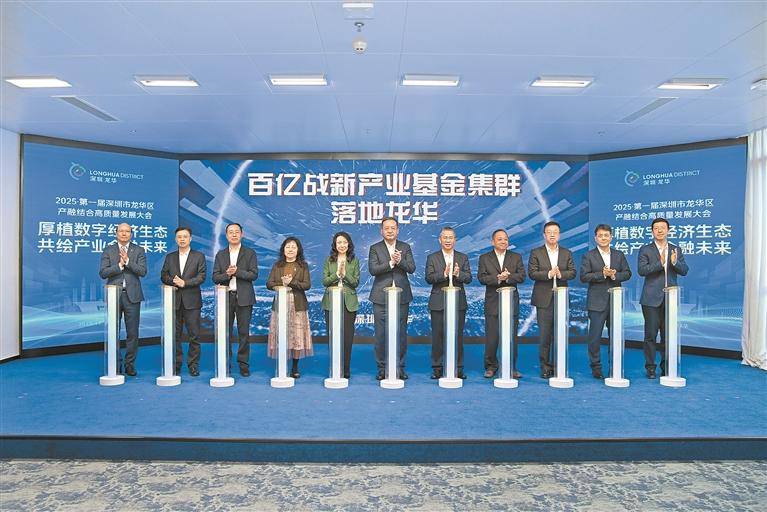
6000亿授信+百亿基金集群,全面打造产融结合示范区 龙华:金融活水奔涌中轴 产融共振向新而行
Sou Hu Cai Jing· 2026-01-08 02:38
Core Insights - The article highlights the significant progress of Longhua District in Shenzhen towards becoming a "demonstration zone for industry-finance integration," marked by a strategic credit agreement of 600 billion yuan and the launch of a cluster of industrial funds [1][5]. Industry Foundation - Longhua District's industrial sector contributes over 40% to its GDP, with advanced manufacturing being a key driver of the regional economy [2]. - As of November 2025, there are 39 listed companies in Longhua with a total market capitalization exceeding 1.9 trillion yuan, with over 80% focused on advanced manufacturing [2]. - The district has established a modern industrial system supported by digital economy initiatives, with 1,286 digital economy enterprises and a scale exceeding 563.89 billion yuan by the end of 2024 [2]. Financial Empowerment - The establishment of a cluster of industrial funds, including two AIC funds each with a scale of 2 billion yuan, focuses on key sectors such as digital economy and new energy [5]. - A strategic credit agreement of 600 billion yuan has been signed with 12 major financial institutions, targeting key areas for infrastructure and urban renewal projects [5][10]. - Innovative financial products have been developed to address the financing challenges faced by small and micro enterprises, including the "Park Loan" and "Supply Chain Loan" [6]. Financial Network Development - By the end of 2024, Longhua has attracted 356 financial institutions, including 151 banks and 87 insurance companies, creating a diverse financial service network [8]. - The presence of financial institutions has facilitated the development of a comprehensive service system tailored to various industries and enterprise stages [8][9]. Future Outlook - Longhua aims to enhance its financial development framework with a focus on collaborative growth among government, industry, and finance, targeting the achievement of ambitious economic goals [11][12]. - The district plans to implement a "1+1+N" financial development system to foster partnerships with multiple financial institutions and promote various financial sectors [12].
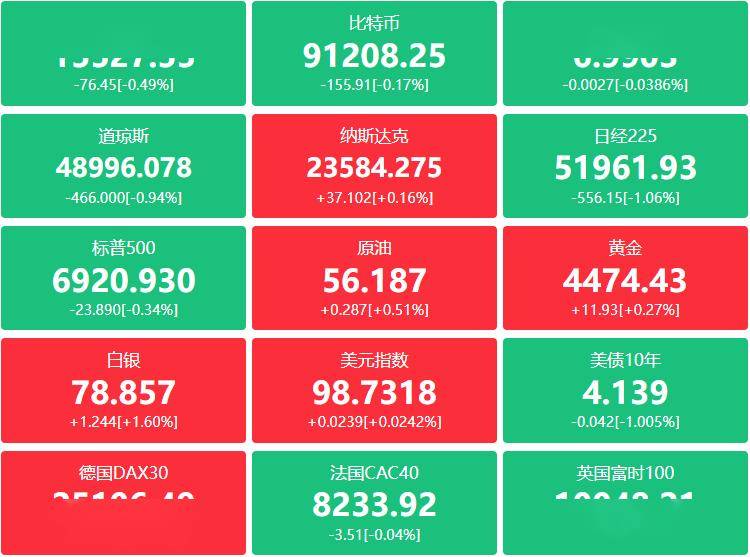
金融界财经早餐:八部门联合发文!事关“人工智能+制造”;央行连续14个月增持黄金;平安人寿再度举牌农行H股、口子窖成白酒股年报首只黑天鹅(1月8日)
Sou Hu Cai Jing· 2026-01-08 00:54
Industry Insights - The Ministry of Industry and Information Technology issued the "Action Plan for the Integration of Industrial Internet and Artificial Intelligence," aiming to enhance the integration of AI in the industrial sector, with a target of upgrading at least 50,000 enterprises by 2028 [2][6] - The brain-computer interface company Strong Brain Technology recently completed approximately 2 billion yuan in financing, marking the second-largest financing in the brain-computer interface sector after Neuralink [6] - The National Medical Products Administration is optimizing the review and approval process for urgently needed foreign drugs to meet clinical demands, encouraging simultaneous global R&D and applications in China [6] Market Developments - The copper market is expected to see an upward trend in 2026, with domestic copper prices exceeding 100,000 yuan/ton by the end of 2025, driven by supply-demand improvements and intense long-term contract negotiations [4][7] - Starlink has connected over 9 million active users across seven continents, indicating a growing market for satellite internet services [7] Company Updates - Lenovo announced a collaboration with NVIDIA to establish an "AI Cloud Super Factory," with the latest NVIDIA technology being a key component of this partnership [9] - ByteDance's TikTok Shop reached 400 million active consumers in 2025, with a GMV nearing 100 billion USD, ranking fifth among global e-commerce platforms [10] - Alphabet's market capitalization reached 3.89 trillion USD, surpassing Apple's 3.85 trillion USD, highlighting divergent AI strategies between the two companies [10]




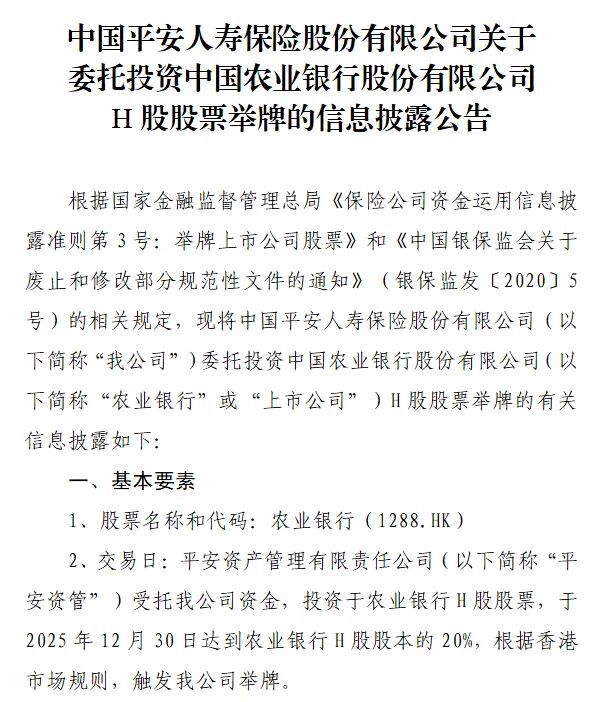
险资举牌热潮或将延续,银行股为何受青睐?
Guo Ji Jin Rong Bao· 2026-01-07 23:23
Core Viewpoint - Ping An Life has disclosed that it will increase its stake in Agricultural Bank of China H-shares to 20% by December 30, 2025, triggering a mandatory disclosure under Hong Kong market rules [1] Group 1: Investment Activities - This marks the fourth time Ping An Life has increased its stake in Agricultural Bank H-shares, having previously surpassed 5%, 10%, and 15% in February, May, and August 2025 respectively [4] - In 2025, Ping An Life also acquired 7.169 million shares of Postal Savings Bank H-shares, raising its stake to 5.01%, and subsequently increased its holdings to 10% and 15% in May and August [6] - Additionally, Ping An Life made multiple acquisitions of China Merchants Bank H-shares throughout 2025, surpassing 5%, 10%, 15%, and 20% in January, March, June, and December respectively [6] Group 2: Industry Trends - The enthusiasm for insurance capital to acquire shares has surged, with a total of 35 instances of share acquisitions in 2025, the highest since 2016 [5] - The preference for bank stocks among insurance companies is attributed to their average dividend yield exceeding 5%, which is significantly higher than the cost of liabilities (approximately 2% to 2.5%) [7] - The new financial instrument standards allow high-dividend bank stocks to be classified as FVOCI assets, reducing profit statement volatility [7] Group 3: Future Outlook - The trend of insurance capital actively acquiring shares is expected to continue into 2026, driven by low interest rates and the need for stable returns [8][10] - Analysts suggest that the motivations behind these acquisitions can be categorized into two types: one focused on stable dividend cash flows and the other on investing in mature, monopolistic enterprises with solid ROE [9][10] - The stock prices of major insurance companies have seen significant increases in 2025, with gains of 46.02% for New China Life, 35.87% for Ping An, and others [10]

银行取消手机盾业务将成趋势
Xin Lang Cai Jing· 2026-01-07 22:59
Core Viewpoint - Agricultural Bank of China announced the termination of its personal mobile banking security service, effective January 9, 2026, as part of efforts to optimize service experience and enhance efficiency [1] Group 1 - The decision to discontinue the mobile banking security service is aimed at reducing costs and improving user service experience [1] - Industry insiders indicate that this move reflects a broader trend among banks to enhance risk control quality and efficiency [1]
推动用户体验与风控质效齐升银行取消手机盾业务将成趋势
Zheng Quan Shi Bao· 2026-01-07 18:11
Core Viewpoint - Agricultural Bank of China will terminate its mobile security tool "Mobile Shield" on January 9, 2026, to enhance service efficiency and user experience while ensuring account security [1][2] Group 1: Service Optimization - The termination of the "Mobile Shield" service is part of a broader strategy by banks to reduce costs and improve user service experience and risk control effectiveness [1][2] - Users will still have access to other authentication methods that are more convenient and adaptable to various scenarios after the discontinuation of "Mobile Shield" [1] Group 2: Technology and User Experience - "Mobile Shield" is a high-security authentication tool that integrates digital certificates and biometric recognition, suitable for high-risk transactions like large transfers [2] - The reliance on "Mobile Shield" has decreased due to the increasing compatibility of banking apps with mobile device security features and the growing use of biometric technologies [2][3] - Users generally prefer more convenient and adaptable verification tools, leading to a shift away from standalone solutions like "Mobile Shield" [2][3] Group 3: Industry Trends - The discontinuation of "Mobile Shield" is expected to set a trend in the industry towards lighter, more universal authentication methods that maintain security while enhancing operational fluidity [3]
推动用户体验与风控质效齐升 银行取消手机盾业务将成趋势
Zheng Quan Shi Bao· 2026-01-07 18:01
Core Viewpoint - Agricultural Bank of China (ABC) will terminate its personal mobile security tool, "Mobile Shield," starting January 9, 2026, to enhance service efficiency and user experience while ensuring account security [1][2]. Group 1: Service Optimization - The termination of the "Mobile Shield" service is part of a broader strategy by banks to reduce costs and improve user service experiences and risk management effectiveness [1][2]. - Users will still have access to other authentication methods that are more convenient and adaptable to various scenarios after the discontinuation of "Mobile Shield" [1]. Group 2: Technology and User Experience - "Mobile Shield" is a high-security authentication tool that integrates digital certificates and biometric recognition, primarily used for high-risk transactions like large fund transfers [2]. - The decline in the usage of "Mobile Shield" is attributed to the increasing compatibility of banking apps with mobile device security features and the growing prevalence of biometric technologies, which offer a more user-friendly experience [2][3]. - The industry trend is moving towards lighter, more universal authentication methods that maintain security while enhancing operational fluidity [3].
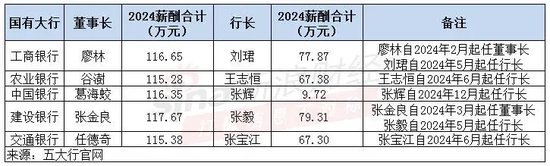
五大行董事长、行长2024薪酬大揭秘!哪位高管拿下最高年薪?
Xin Lang Cai Jing· 2026-01-07 17:31
Summary of Key Points Core Viewpoint - The five major state-owned banks in China have disclosed the salaries of their chairpersons and presidents for the year 2024, with all chairpersons earning over 1.15 million yuan annually [2][5]. Group 1: Chairpersons' Salaries - The chairperson of China Construction Bank, Zhang Jinliang, has an annual salary of 1.1767 million yuan, starting from March 2024 [5][6]. - The chairperson of Industrial and Commercial Bank of China, Liao Lin, has an annual salary of 1.1665 million yuan, starting from February 2024 [5][6]. - The chairperson of Bank of China, Ge Haiqiao, has an annual salary of 1.1635 million yuan [5][6]. - The chairperson of Bank of Communications, Ren Deqi, has an annual salary of 1.1538 million yuan [5][6]. - The chairperson of Agricultural Bank of China, Gu Shu, has an annual salary of 1.1528 million yuan [5][6]. Group 2: Presidents' Salaries - The president of Industrial and Commercial Bank of China, Liu Jun, has an annual salary of 778,700 yuan, starting from May 2024 [3][7]. - The president of Agricultural Bank of China, Wang Zhiheng, has an annual salary of 673,800 yuan, starting from June 2024 [3][7]. - The president of Bank of China, Zhang Hui, has an annual salary of 97,200 yuan, starting from December 2024 [3][7]. - The president of China Construction Bank, Zhang Yi, has an annual salary of 793,100 yuan, starting from May 2024 [3][7]. - The president of Bank of Communications, Zhang Baojiang, has an annual salary of 673,000 yuan, starting from June 2024 [3][7]. Group 3: Highest Salaries Among Executives - The highest salary among executives is held by Song Jianhua, Senior Business Director of Industrial and Commercial Bank of China, with a total of 1.4746 million yuan [9][10]. - The highest salary in Agricultural Bank of China is held by former Chief Risk Officer Wu Gang, with a total of 1.4531 million yuan [9][10]. - The highest salary in Bank of China is held by former Risk Director Zhao Rong, with a total of 1.4062 million yuan [9][10]. - The highest salary in China Construction Bank is held by Chief Financial Officer Sheng Liuyong, with a total of 1.4831 million yuan [9][10]. - The highest salary in Bank of Communications is held by Chief Risk Officer Liu Jianjun, with a total of 1.376 million yuan [12]. Group 4: Overall Salary Distribution - The total salary expenditure for Agricultural Bank of China is the highest among the five banks, exceeding 107.895 billion yuan [14][15]. - The average salary for employees in Bank of Communications is the highest at 316,400 yuan, while the other banks have average salaries below 300,000 yuan [15]. - The total salary expenditure for Industrial and Commercial Bank of China is over 95.747 billion yuan, while China Construction Bank's total is 88.276 billion yuan [14][15].

频次高结构优 上市公司分红总额屡创新高
Zheng Quan Ri Bao· 2026-01-07 17:31
Core Insights - In 2025, A-share listed companies' total cash dividends reached 2.61 trillion yuan, marking an 8.75% year-on-year increase, continuing a trend of annual growth [1][2] - The increase in cash dividends reflects improvements in corporate governance, performance, and policy guidance, indicating a profound transformation in the A-share market ecosystem [2][3] Policy and Regulatory Environment - The new "National Nine Articles" emphasizes strengthening the regulation of cash dividends and encourages measures to increase dividend yields [2] - The China Securities Regulatory Commission released a draft regulation supporting companies in formulating reasonable and stable dividend policies [2] Financial Performance - In the first three quarters of 2025, A-share companies achieved a total operating revenue of 53.46 trillion yuan, a 1.36% increase, and a net profit of 4.70 trillion yuan, up 5.50% [3] - By the end of Q3 2025, listed companies had a total cash reserve of 18.36 trillion yuan, indicating strong dividend-paying capacity [3] Dividend Frequency and Structure - The frequency of dividends has increased, with multiple distributions per year becoming the norm; over 900 companies disclosed three-year dividend plans, enhancing transparency and predictability [4][3] - In 2025, 16 companies executed four cash dividends, 88 companies executed three, and 902 companies executed two [5] Sectoral Analysis - Traditional industries like finance and oil & gas continue to dominate high dividend payouts, while technology companies are also increasing their dividend distributions [6] - In 2025, 945 companies on the ChiNext board distributed 137.45 billion yuan in cash dividends, an 8.41% increase year-on-year [6] Market Dynamics - The rise in dividend amounts is seen as a shift in the capital market's focus from financing expansion to shareholder returns, establishing predictable cash returns as a new benchmark for asset pricing [3][7] - The number of ETFs linked to dividend indices has grown, with 42 new products launched in 2025, and the total scale of these ETFs reached 1520.18 billion yuan by the end of 2025, a 70.11% increase from the previous year [7]
