AGRICULTURAL BANK OF CHINA(601288)

Search documents
喜娜AI速递:今日财经热点要闻回顾|2025年12月11日
Xin Lang Cai Jing· 2025-12-11 11:26
Group 1: Federal Reserve and Economic Outlook - The Federal Reserve announced a 25 basis point cut to the federal funds rate, bringing it to a target range of 3.50%-3.75%, marking the third cut of the year [2][7] - The decision faced dissent with three members voting against it, and the dot plot indicates one more rate cut is expected next year, with inflation projected to slow to around 2.4% [2][7] - The World Bank raised its 2025 economic growth forecast for China by 0.4 percentage points, attributing this to supportive fiscal and monetary policies, as well as a diversified export market [2][7] Group 2: Industry Developments - The wholesale price of Moutai liquor reached a historical low of 1500 yuan per bottle, just 1 yuan below the official guidance price, indicating ongoing pressure in the liquor industry [2][7] - The merger between Zhongke Shuguang and Haiguang Information was terminated, resulting in a market value loss of approximately 146 billion yuan for Zhongke Shuguang [3][8] - A significant number of A-share companies are expected to distribute cash dividends, with total dividends exceeding last year's total, marking a historical high [3][8] Group 3: Emerging Markets and Technologies - The low-altitude economy is projected to grow rapidly, with market size estimates reaching 1.5 trillion yuan by 2025 and 3.5 trillion yuan by 2035 [4][9] - The robotics industry is seeing active investment, with companies like Yushu Technology and Zhiyuan Robotics competing for high-profile sponsorships, although concerns about industry bubbles persist [3][8] - Over 200 A-share companies have been surveyed by brokerages, with a focus on storage chip companies, as the technology sector is viewed as a key investment area for 2026 [3][8]






Ping An Asset Management Co., Ltd.增持农业银行(01288)约1.20亿股 每股作价约5.74港元
智通财经网· 2025-12-11 11:16
Core Viewpoint - Ping An Asset Management Co., Ltd. has increased its stake in Agricultural Bank of China (01288) by approximately 120 million shares at a price of HKD 5.735 per share, totaling around HKD 688 million, resulting in a new holding of approximately 7.122 billion shares, representing a 23.16% ownership stake [1]. Group 1 - Ping An Asset Management Co., Ltd. acquired approximately 120 million shares of Agricultural Bank of China [1] - The purchase price per share was HKD 5.735, leading to a total investment of approximately HKD 688 million [1] - Following the acquisition, Ping An's total shareholding in Agricultural Bank of China reached approximately 7.122 billion shares [1] Group 2 - The new ownership percentage of Ping An in Agricultural Bank of China is 23.16% [1]

数说“十四五”成绩单,看金融之笔如何绘就科技新图景
2 1 Shi Ji Jing Ji Bao Dao· 2025-12-11 10:44
Core Viewpoint - The article highlights the rapid development of China's technology-driven economy during the "14th Five-Year Plan" period, emphasizing the role of financial services in supporting innovation and the growth of technology enterprises [1][6][26]. Group 1: Industry Development - During the "14th Five-Year Plan," China's robotics industry is accelerating, with the country expected to account for two-thirds of global robot patent applications by 2024 [6]. - Over 100,000 specialized and innovative small and medium-sized enterprises (SMEs) have been added since the beginning of the "14th Five-Year Plan," totaling over 140,000, with more than 14,600 recognized as "little giant" enterprises [11]. - The annual growth rate of loans to technology SMEs has exceeded 20% during the "14th Five-Year Plan" period [18]. Group 2: Financial Services Initiatives - Agricultural Bank of China (ABC) has established a dedicated credit service system for technology enterprises, focusing on diverse financial needs and a comprehensive evaluation system based on future repayment capabilities [6][26]. - As of September 2025, ABC has collaborated with over 70% of the "little giant" enterprises, with a total technology loan balance exceeding 4.7 trillion yuan [15][12]. - ABC has issued 8.255 billion yuan in "Kejie Loan" to 2,175 technology SMEs, providing timely financial support for their development [18]. Group 3: Policy Support - The People's Bank of China and other ministries have jointly established a policy tool for technology innovation and technological transformation re-loans, aimed at supporting early-stage and growth-stage technology SMEs [21]. - By September 2025, ABC has provided approximately 24 billion yuan in funding support to over 10,000 enterprises on the re-loan list, effectively reducing financing costs for technology enterprises [22].


数说“十四五”成绩单,看金融之笔如何绘就科技新图景
21世纪经济报道· 2025-12-11 10:13
Core Viewpoint - The article emphasizes the rapid development of China's technology-driven economy during the "14th Five-Year Plan" period, highlighting the role of financial services in supporting innovation and the growth of technology enterprises [1][5][27]. Group 1: Development of Technology Enterprises - During the "14th Five-Year Plan," China's robot industry is accelerating, with the number of robot patent applications expected to account for two-thirds of the global total by 2024 [5]. - Over 100,000 specialized and innovative small and medium-sized enterprises (SMEs) have been added since the beginning of the "14th Five-Year Plan," with a total exceeding 140,000, including over 14,600 "little giant" enterprises [9]. - As of September 2025, Agricultural Bank of China (ABC) has collaborated with over 70% of these specialized and innovative "little giant" enterprises [9]. Group 2: Financial Services for Technology Enterprises - ABC has established a dedicated credit service system for technology enterprises, focusing on diverse financial needs and building a comprehensive evaluation system centered on future repayment capabilities [5]. - The annual growth rate of loans to technology SMEs has exceeded 20% during the "14th Five-Year Plan" period [17]. - By September 2025, ABC has issued "Kejie Loans" totaling 8.255 billion yuan to 2,175 technology SMEs [17]. Group 3: Supportive Policies and Initiatives - The People's Bank of China and other ministries have jointly established a policy tool for technology innovation and technological transformation re-loans, aimed at supporting early-stage and growth-stage technology SMEs [21]. - As of September 2025, ABC has provided approximately 24 billion yuan in funding support to over 10,000 enterprises on the re-loan list, effectively reducing financing costs for technology enterprises [22]. Group 4: Future Outlook - ABC aims to continue enhancing the breadth, depth, and warmth of its technology financial services, contributing to high-level technological self-reliance and modernization in China [27].

A股大额分红,来了
Zhong Guo Zheng Quan Bao· 2025-12-11 09:45
Core Viewpoint - A-share companies are significantly increasing cash dividends, with total dividends exceeding last year's amount, setting a new historical high [1][3]. Group 1: Bank Dividends - On December 11, China Bank and Construction Bank are distributing cash dividends, with China Bank distributing approximately 35.25 billion yuan and Construction Bank distributing about 48.61 billion yuan [3]. - Industrial and Agricultural Banks will distribute over 76 billion yuan in cash dividends on December 15, reflecting a stable dividend rate among banks [3][4]. - The number of banks implementing mid-term dividends is increasing, with some banks raising their dividend rates, indicating strong dividend value in the banking sector [3][4]. Group 2: Other Companies' Dividends - Kweichow Moutai announced a cash dividend of 23.957 yuan per share, totaling approximately 30 billion yuan, with the ex-dividend date set for December 19, 2025 [6]. - Wuliangye will distribute 25.78 yuan for every 10 shares, amounting to about 10 billion yuan, with the ex-dividend date on December 18, 2025 [6]. - Regulatory measures are being strengthened to support cash dividends, aiming to enhance investor returns and company value [6][7].
银行行业资金流入榜:浦发银行、交通银行等净流入资金居前
Zheng Quan Shi Bao Wang· 2025-12-11 09:27
Core Viewpoint - The banking sector showed resilience with a slight increase of 0.17% on December 11, despite a broader market decline, indicating potential strength in this industry amidst overall market challenges [2][3]. Market Performance - The Shanghai Composite Index fell by 0.70% on the same day, with only one sector, banking, experiencing an increase [2]. - The banking sector was the top performer among industries, while the comprehensive and communication sectors faced significant declines of 4.31% and 3.14%, respectively [2]. Capital Flow - There was a net outflow of 744.67 billion yuan from the two markets, with only the banking sector seeing a net inflow of 67.49 million yuan [2]. - The electronic industry faced the largest net outflow of 13.586 billion yuan, followed by the communication sector with 11.340 billion yuan [2]. Individual Stock Performance - Within the banking sector, 42 stocks were tracked, with 21 stocks rising and 20 stocks falling [3]. - The top three banks by net inflow were: - Shanghai Pudong Development Bank with a net inflow of 119 million yuan [4]. - Bank of Communications with 80.991 million yuan [4]. - Nanjing Bank with 67.811 million yuan [4]. - The banks with the highest net outflows included: - China Merchants Bank with a net outflow of 303 million yuan [6]. - Minsheng Bank with 45.949 million yuan [6]. - Hangzhou Bank with 40.973 million yuan [6]. Detailed Capital Flow in Banking Sector - The following banks had notable capital flows: - Shanghai Pudong Development Bank: +1.42% with a turnover rate of 0.32% and a capital flow of 118.58 million yuan [4]. - Bank of Communications: +0.68% with a turnover rate of 0.45% and a capital flow of 80.99 million yuan [4]. - Agricultural Bank of China: +1.41% with a turnover rate of 0.09% and a capital flow of 49.85 million yuan [5].




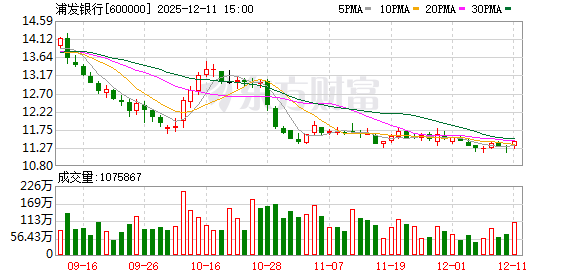
国有大型银行板块12月11日涨0.67%,农业银行领涨,主力资金净流出6802.14万元
Zheng Xing Xing Ye Ri Bao· 2025-12-11 09:08
证券之星消息,12月11日国有大型银行板块较上一交易日上涨0.67%,农业银行领涨。当日上证指数报 收于3873.32,下跌0.7%。深证成指报收于13147.39,下跌1.27%。国有大型银行板块个股涨跌见下表: 以上内容为证券之星据公开信息整理,由AI算法生成(网信算备310104345710301240019号),不构成投资建议。 从资金流向上来看,当日国有大型银行板块主力资金净流出6802.14万元,游资资金净流出1.87亿元,散 户资金净流入2.55亿元。国有大型银行板块个股资金流向见下表: ...

A股大额分红,来了!
Zhong Guo Zheng Quan Bao· 2025-12-11 08:37
Core Viewpoint - A-share listed companies in China have significantly increased cash dividends in 2023, surpassing the total amount distributed in the previous year, marking a historical high [1][3]. Group 1: Bank Dividends - On December 11, China Bank and Construction Bank distributed cash dividends, with China Bank paying approximately 35.25 billion yuan (tax excluded) and Construction Bank distributing around 48.61 billion yuan [3]. - Industrial and Agricultural Banks are set to distribute over 76 billion yuan in cash dividends on December 15, 2025, indicating a growing trend in mid-term dividend distributions among banks [3][4]. - Analysts note that the number of banks implementing mid-term dividends is increasing, with many maintaining stable dividend rates and some even raising them, reflecting the banking sector's robust dividend value [3][4]. Group 2: Other Companies' Dividends - Kweichow Moutai announced a cash dividend of 23.957 yuan per share, totaling approximately 30 billion yuan (tax included), with the ex-dividend date set for December 19, 2025 [6]. - Wuliangye announced a cash dividend of 25.78 yuan for every 10 shares, amounting to about 10 billion yuan (tax included), with the ex-dividend date on December 18, 2025 [6]. - Regulatory measures are increasingly supporting dividend distributions, with proposed regulations aimed at enhancing investor returns and promoting cash dividends among listed companies [6][7].
银行净息差专题报告:负债管理能力成为业绩分化的关键
GUOTAI HAITONG SECURITIES· 2025-12-11 08:03
Investment Rating - The report assigns an "Overweight" rating for the banking sector [7]. Core Insights - The report emphasizes the significant improvement in the cost of liabilities for banks in 2025, with a notable decrease of 28 basis points (bp) in the first half of the year, compared to only 4 bp in the same period last year. This improvement is primarily driven by reductions in deposit and interbank liabilities costs, contributing 19 bp and 7 bp respectively [3][11]. - The net interest margin (NIM) is expected to decline by approximately 5 bp in 2026, with the downward pressure on margins continuing to ease marginally, suggesting that some banks may stabilize their NIMs [2][10]. Summary by Sections 1. Liability Cost Improvement in 2025 - The first half of 2025 saw a significant reduction in the cost of interest-bearing liabilities, with the cost rate dropping to 1.70%, a decrease of 28 bp from 2024. This was supported by improvements in both deposit and interbank liability costs [11]. 2. Liability Side: Deposit Maturity and Repricing Benefits 1) **Term Structure**: The proportion of long-term deposits entering the repricing cycle has increased, with the share of deposits with a remaining maturity of 1-5 years declining by 1.5 percentage points (pct) to 22.6% by the end of Q2 2025. Some banks, such as those in Ningbo and Chongqing, experienced declines exceeding 10 pct [4]. 2) **Price Factors**: Regulatory focus on maintaining reasonable NIM levels has increased, with expectations of further interest rate cuts. The maximum reduction for three-year deposits could exceed 100 bp, indicating substantial room for cost improvement [5]. 3. Asset Side: Yield Pressure Expected to be Better than 2025 1) **Loans**: The repricing pressure on loans is expected to ease, with the five-year Loan Prime Rate (LPR) declining by only 10 bp in 2025, significantly less than the 50 bp drop the previous year [6]. 2) **Debt Replacement**: The shift from high-interest to low-interest debt is anticipated to have a limited impact on net interest margins, estimated to drag down margins by about 4 bp [6]. 3) **Bond Maturity**: The widening gap between new bond issuance rates and existing bond yields is expected to exert downward pressure on investment yields, with an estimated drag of 6 bp on margins from the reallocation of bonds maturing within one year [6]. 4. NIM Projections - The report forecasts a 5 bp decline in NIM for 2026, with the downward trend continuing to converge. The asset yield is expected to decrease by 17 bp, while the cost of liabilities is projected to improve by 13 bp, with deposit costs improving by 17 bp [7][10].



多只权重股尾盘异动
财联社· 2025-12-11 07:30
今日A股收盘集合竞价期间, 多只权重股放量异动,农业银行、中国人寿竞价涨超1%,工商银行、中国银行、中国石油不同程度冲高,收盘集合竞 价均成交超1亿元。 中国人寿(601628) 12-11 15:15:04 沪 |融 | 44.99 | | 所属行业:非银金融-1.61% > | | | 查看所属板块 > | | | --- | --- | --- | --- | --- | --- | --- | | +0.29 +0.65% | | 保险概念 -1.79% 最相关 | | 雄安新区 -1.95% | | | | 今 开 | 44.70 | 를 最 | 45.27 | 成交量 | | 12.4万手 | | 昨 收 | 44.70 | 最 低 | 44.25 | 成交额 | | 5.55亿 | | 而图 | 5.68 | 换手率 | 0.06% | 总市值 | | 1.27万亿 ▲ | | 分时 | モ日 | 日K 園K | 月K | | 分钟 ▼ | 0 | | 45.20 | | | 1.12% | 本 | | 25 | | | | | | 卖5 卖4 | 45.03 45.02 | 18 | | | ...