PING AN OF CHINA(601318)

Search documents
11家银行因虚增存贷款被罚、规模增7.5倍,违规考核问题突出
2 1 Shi Ji Jing Ji Bao Dao· 2026-02-06 10:36
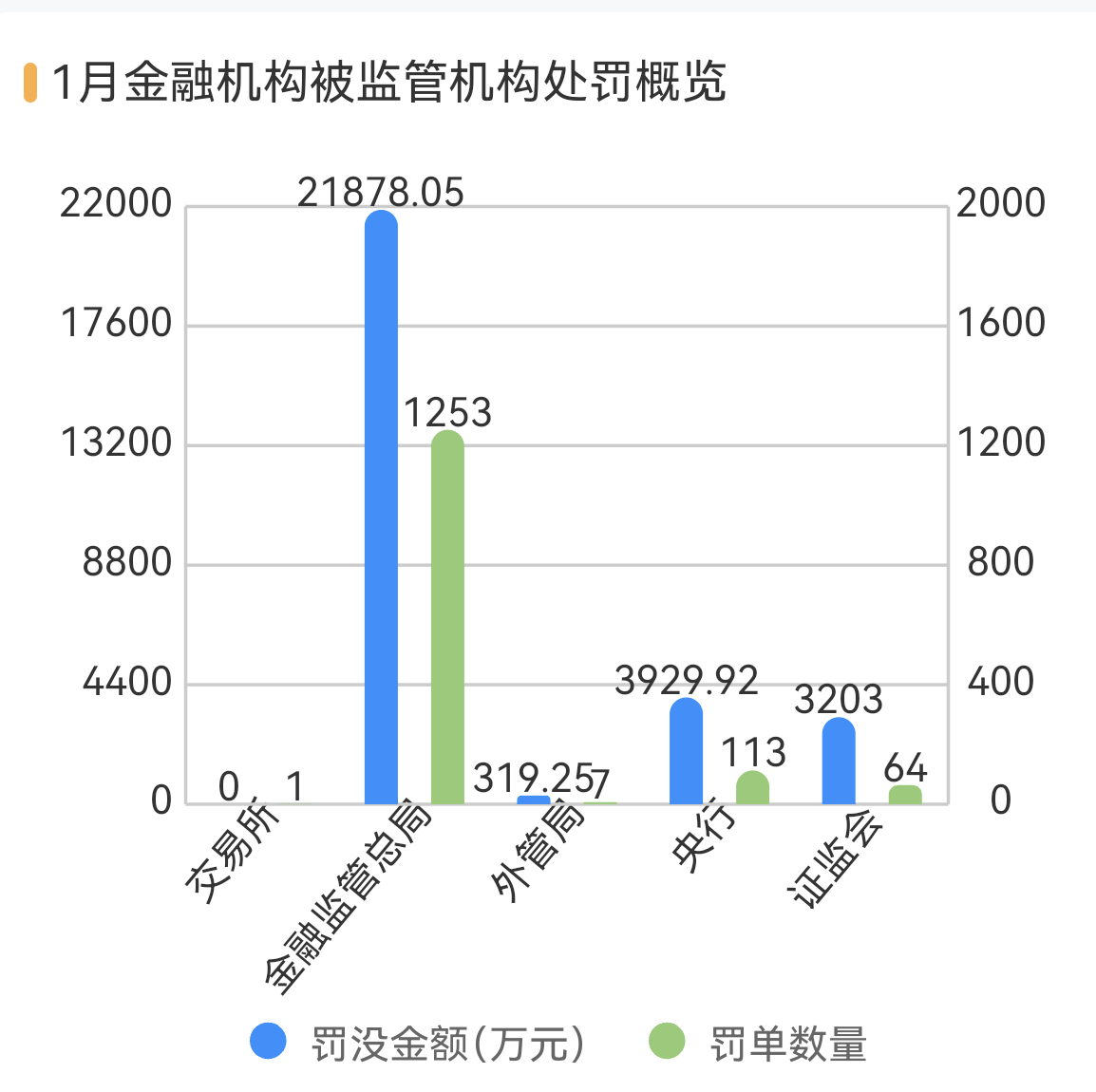
Core Insights - In January, the number of fines imposed on financial institutions increased significantly year-on-year, while the total amount of fines decreased [1][3] Group 1: Overview of Penalties - A total of 1,438 fines were issued to financial institutions in January, representing a year-on-year increase of 54.13%, with a total penalty amount of 29.3 million yuan, down 20.16% from the previous year [1] - The Financial Regulatory Bureau issued 1,253 fines, an increase of 83.19% year-on-year, with a total penalty amount of 21.9 million yuan, up 15.87% [3] - The People's Bank of China issued 113 fines, a decrease of 38.59% year-on-year, while the China Securities Regulatory Commission issued 64 fines, an increase of 18.52% [3] Group 2: Penalties by Financial Institution Type - Banks received 830 fines, an increase of 41.88% year-on-year, with a total penalty amount of 21.4 million yuan, down 25.95% [6] - The insurance sector faced 532 fines, a year-on-year increase of 84.08%, with a slight decrease in total penalty amounts [6] - Securities firms received 12 fines, and futures companies received 9 fines, while private equity firms faced 44 fines [6] Group 3: Major Penalties - Shanghai Riyi Equity Investment Fund Co., Ltd. was fined 14 million yuan for failing to operate investments as per contractual agreements [9] - The actual controller of Shanghai Riyi, Sun, received a fine of 11.9 million yuan for similar violations, including misleading investors about capital safety [9] - Zhejiang Min Tai Commercial Bank was fined 7.15 million yuan for serious violations of prudent management rules [9] Group 4: Compliance Trends - The number of fines related to inflated loan and deposit figures increased 7.5 times month-on-month, with 34 fines issued in January compared to only 4 in December [11] - Misleading sales and promotional practices resulted in 34 fines, doubling from the previous month, primarily affecting insurance companies and banks [12] Group 5: Penalty Rankings - In January, non-bank institutions, particularly insurance companies, dominated the list of penalties, with Shanghai Riyi Equity Investment Fund being the highest fined non-bank entity [17] - China Ping An Property Insurance and China People's Property Insurance ranked second and third in total penalty amounts [17]






加码“银发经济” 国寿、太保等头部险企竞逐“大康养”生态
2 1 Shi Ji Jing Ji Bao Dao· 2026-02-06 09:31
Core Viewpoint - The aging population in China is rapidly increasing, with projections indicating that by the end of 2025, individuals aged 60 and above will reach 32.338 million, accounting for 23.0% of the total population, while those aged 65 and above will total 22.365 million, making up 15.9% of the population. This demographic shift is driving the growth of the elderly care industry, which is becoming a crucial component of the national social security system and a strategic focus for insurance companies [1][3]. Industry and Company Developments - The elderly care industry is characterized by both social welfare attributes and market potential, significantly influenced by national policies aimed at encouraging social participation and promoting integrated medical and elderly care services [3][4]. - The insurance sector is responding to the demand for elderly care by increasing investments in the industry, with 130 elderly community projects initiated during the 14th Five-Year Plan period [4]. - In 2025, over 10 elderly community projects were launched by various insurance companies, including China Life, Taikang Insurance, China Pacific Insurance, and others, indicating a growing trend in the sector [5]. - The "city center model" is emerging as a new choice for elderly care, with insurance companies shifting their focus from suburban locations to urban centers to provide better access to medical resources and proximity to family [6][7]. - Major insurance companies are competing to build a comprehensive "big health" ecosystem, integrating insurance payments, health management services, and capital investment to meet the complex needs of the elderly [8][9]. - China Life has initiated a "333 strategy" focusing on elderly care, health, and finance, with significant investments in health and elderly care projects across multiple cities [9][10]. - China Pacific Insurance has established a "big health" strategy, emphasizing a comprehensive ecosystem covering elderly care, health, and rehabilitation services [10]. - Ping An Insurance has upgraded its strategy to integrate financial services with elderly care, expanding its home care services to 75 cities and serving over 160,000 clients [10]. - Taikang Insurance has been active in the elderly community sector since 2009, with a significant presence across 37 cities and nearly 90,000 beds available [10]. - Insurance funds are increasingly penetrating the medical and elderly care sectors, with nearly 30 billion yuan invested in various sub-sectors, including biotechnology and medical devices, as of the third quarter of 2025 [11].




再度举牌,平安持有中国人寿H股突破10%
Huan Qiu Lao Hu Cai Jing· 2026-02-06 08:18
Group 1 - China Ping An increased its stake in China Pacific Insurance (CPIC) by acquiring approximately 10.89 million H-shares at an average price of about HKD 33.26 per share, totaling around HKD 362 million, raising its holding to approximately 753 million shares, which is 10.12% of the total [1] - China Ping An has been consistently increasing its stake in China Life Insurance since it first acquired shares in August 2025, recently purchasing 11.89 million H-shares for about HKD 381 million, bringing its stake to 9.14%, close to the 10% threshold [1] - China Life Insurance reported a total revenue of CNY 1.28 trillion in 2025, a year-on-year increase of 11.3%, with combined premium income of CNY 887.4 billion, up 7.4%, and total assets of CNY 8.56 trillion, reflecting a 14.4% growth [1] Group 2 - Foreign investment institutions are optimistic about the insurance sector, with Citigroup indicating that retail investors will seek higher reinvestment yields as bank deposits mature, predicting a historic opportunity for life insurance stocks, particularly for leading companies like China Life [2] - China Ping An has also been actively increasing its holdings in state-owned banks, with over 10 instances of increasing stakes in Agricultural Bank, China Merchants Bank, and Postal Savings Bank since 2025, with its stake in Agricultural Bank rising from 5% in February last year to 20.1% by year-end [2] - The trend of increasing equity asset investments by insurance funds is driven by multiple factors, including declining market interest rates and regulatory guidance, making bank stocks attractive due to their large asset sizes and stable dividend returns, similar to the investment logic for insurance stocks [2]

中国平安再度举牌中国人寿H股
Shang Hai Zheng Quan Bao· 2026-02-06 06:43
Group 1 - Ping An Insurance has increased its stake in China Life Insurance H-shares by approximately 10.895 million shares at a price of about HKD 33.2588 per share, totaling around HKD 362 million [2] - Following this acquisition, Ping An now holds approximately 10.12% of China Life's total H-share capital, triggering a mandatory disclosure under Hong Kong market rules [2] - This is the second time Ping An has raised its stake in China Life within a short period, having previously invested about HKD 469 million in late January [2][3] Group 2 - The practice of insurance companies increasing their stakes in peer companies, known as "insurance capital stake increases," reflects a positive outlook on the insurance industry's fundamentals [4] - The recent trend of insurance companies acquiring shares in their peers indicates a strong demand for quality assets, driven by factors such as declining market interest rates and regulatory encouragement for insurance capital to enter the market [4] - The insurance sector is expected to experience a favorable market environment in 2026, with anticipated growth in new business value (NBV) driven by strong demand for insurance savings products [5]

朝阳监管分局同意平安产险喀左支公司变更营业场所
Jin Tou Wang· 2026-02-06 03:14
2026年1月27日,国家金融监督管理总局朝阳监管分局发布批复称,《中国平安(601318)财产保险股 份有限公司辽宁分公司关于喀左支公司变更营业场所的请示》(平保产辽分发〔2026〕9号)收悉。经审 核,现批复如下: 一、同意中国平安财产保险股份有限公司喀左支公司将营业场所变更为:辽宁省朝阳市喀喇沁左翼蒙古 族自治县大城子街道青年街55号一层北侧。 二、中国平安财产保险股份有限公司应按照有关规定及时办理变更及许可证换领事宜。 ...
平安租赁:着力推动产业高质量发展 奋力谱写时代新篇章
Jing Ji Guan Cha Wang· 2026-02-06 03:11
Core Viewpoint - The article emphasizes the role of Ping An Leasing in supporting China's high-quality development through financial services that promote industrial upgrades and infrastructure projects, aligning with national strategies for modernization and urban development [1][9]. Group 1: Financial Support for Infrastructure - Ping An Leasing focuses on serving the real economy by providing tailored financial solutions for various sectors, including engineering construction, manufacturing, and urban infrastructure [1][3]. - The company has invested nearly 150 billion yuan, serving over 1,300 engineering enterprises, thus becoming a significant financial force behind major national projects [3]. Group 2: Manufacturing Sector Engagement - As a leader in the manufacturing leasing sector, Ping An Leasing has established long-term partnerships with over 2,600 manufacturing companies, including the notable Luoyang Bearing Group, to support their technological upgrades and operational efficiency [4][5]. - The company has played a crucial role in the transformation of traditional manufacturing into intelligent manufacturing, contributing to the overall competitiveness of China's manufacturing industry [5]. Group 3: Urban Development Initiatives - Ping An Leasing is actively involved in urban renewal projects, focusing on green and smart transformations in public transportation, exemplified by its partnership with Zhengzhou Public Transport Group [7][8]. - The company aims to enhance urban infrastructure through innovative financing solutions that support the development of smart cities and sustainable urban ecosystems [8]. Group 4: Commitment to National Development Goals - Ping An Leasing aligns its services with national strategies, particularly in the context of the "14th Five-Year Plan," to foster deep integration between finance and industry, thereby facilitating industrial transformation and upgrades [1][9]. - The company is dedicated to becoming an internationally leading, innovative leasing expert, focusing on industry-specific solutions that cater to the evolving needs of the real economy [9].
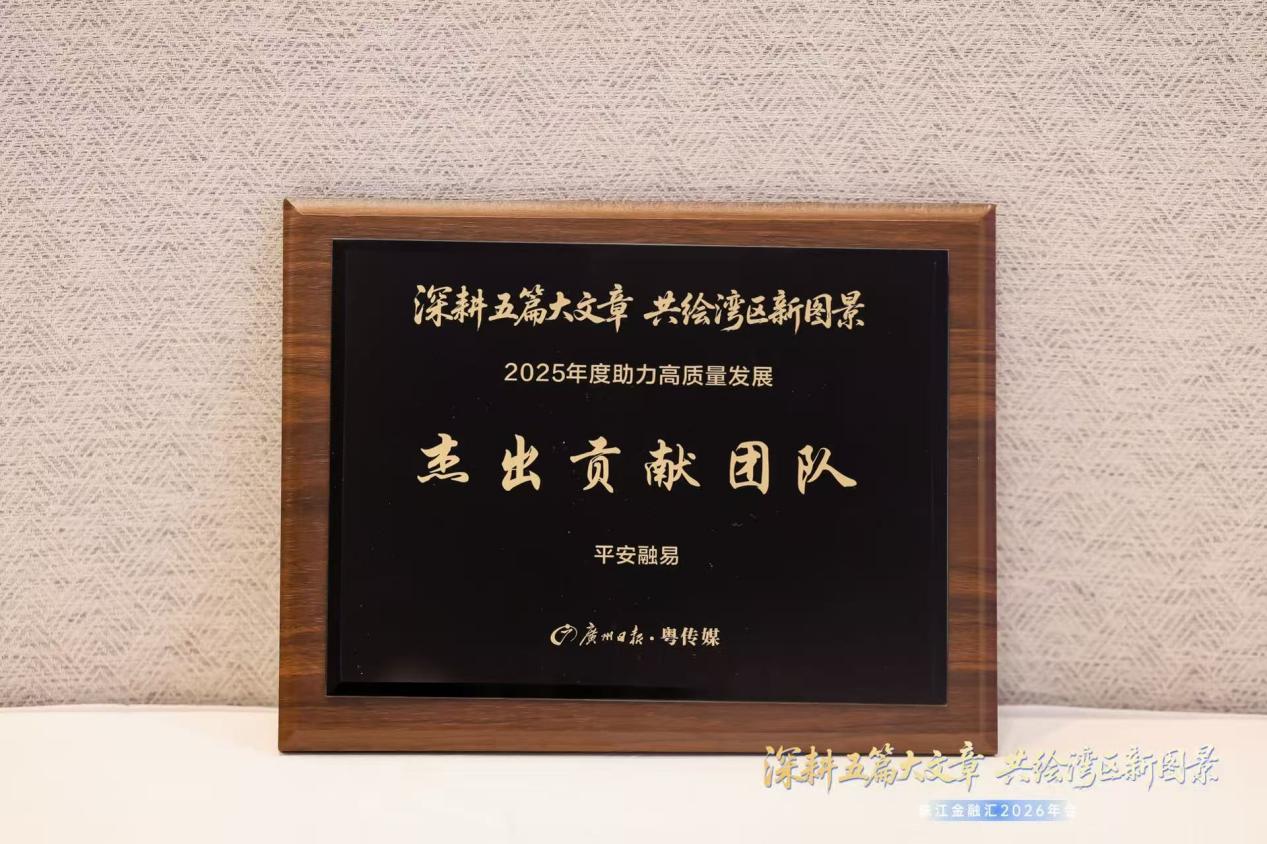
做好金融“五篇大文章”,平安融易助力激活大湾区经济
Jin Rong Jie· 2026-02-06 01:44
Core Insights - The "Pearl River Financial Summit 2026" was held, focusing on the theme of "Deepening the 'Five Major Articles' to Paint a New Picture for the Bay Area," attracting over 200 guests from regulatory bodies, academia, and financial institutions to explore new financial opportunities in the first year of the 14th Five-Year Plan [1][8] Group 1: Awards and Recognition - Ping An Rongyi, a micro-financing service under Lufax Holding, won the "2025 Outstanding Contribution Team Award for High-Quality Development" for its support and innovative models for small and micro enterprises in the Greater Bay Area [3] - The award signifies recognition of its achievements in inclusive finance and the expectation to continue empowering the real economy during the new journey of the 14th Five-Year Plan [3][9] Group 2: Financial Strategies and Innovations - Inclusive finance is highlighted as a crucial link between financial resources and the real economy, playing an irreplaceable role in stabilizing employment and promoting livelihoods [4] - Ping An Rongyi has been deeply engaged in inclusive finance since 2005, focusing on addressing the financing challenges faced by small and micro enterprises in the Bay Area, which are often hindered by difficulties in obtaining financing [5] Group 3: Service Model and Technology Integration - The company has developed a Bay Area-specific service model that emphasizes speed, precision, and a human touch, utilizing AI for rapid loan approvals and remote consultations [6][7] - The "Prism" project aims to provide customized financial solutions based on in-depth research of local industries, enhancing the accessibility and efficiency of financial services for small enterprises [11][12] Group 4: Future Outlook - Experts at the summit believe that during the 14th Five-Year Plan, the Greater Bay Area will accelerate its development towards becoming a world-class bay area, with a shift from quantitative expansion to qualitative improvement in the financial sector [8] - Ping An Rongyi plans to deepen its digital finance applications and enhance its service coverage while focusing on technology finance, inclusive finance, and green finance through the "Prism" project [10][11]

机构行为更新专题:理解‘平准基金’的三个视角
Guoxin Securities· 2026-02-06 01:20
Investment Rating - The report maintains an "Outperform" rating for the non-bank financial sector [5][4]. Core Insights - The report emphasizes that the intervention of stabilization funds has become a normalized and institutionalized mechanism in capital markets, which requires institutional investors to adapt their asset allocation strategies to include policy variables for long-term considerations [2][11]. - The shift from direct intervention in individual stocks to a focus on broad-based ETFs represents a strategic evolution aimed at maintaining market stability while minimizing distortions in price signals [3][52]. - The report highlights that the actions of the "national team" in stabilizing the market have led to a gradual formation of a "slow bull" market, improving the operating environment for non-bank financial sectors and enhancing long-term valuations for brokerages and insurance companies [3][12]. Summary by Sections Overseas Perspective - Stabilization funds are viewed as essential stabilizing forces in capital markets, with examples from Japan and the U.S. demonstrating their long-term operational roles rather than short-term emergency measures [2][11]. - Japan's central bank has become a major player in market interventions, with its ETF holdings reaching approximately 37 trillion yen by the end of 2025, indicating a shift to a normalized intervention strategy [14][20]. Domestic Practice - Since 2023, the central financial institutions in China have optimized their strategies by focusing on increasing holdings in broad-based ETFs like the CSI 300 and SSE 50, which has effectively reduced irrational market volatility and guided investors towards core market assets [3][12]. - The report notes that this transition from precise stock interventions to macro-guided asset combinations has laid a solid foundation for a long-term value return in the market [3][12]. Key Company Earnings Forecasts - The report provides earnings per share (EPS) and price-to-earnings (PE) ratios for several companies, all rated as "Outperform": - China Ping An: EPS 7.87 (2025E), PE 8.56 (2025E) [4] - China Life: EPS 6.07 (2025E), PE 8.02 (2025E) [4] - China Pacific Insurance: EPS 5.40 (2025E), PE 8.28 (2025E) [4] - CITIC Securities: EPS 2.21 (2025E), PE 12.83 (2025E) [4] - Guotai Junan: EPS 1.53 (2025E), PE 13.08 (2025E) [4] - Industrial Securities: EPS 0.39 (2025E), PE 17.69 (2025E) [4] - Dongfang Securities: EPS 0.69 (2025E), PE 14.84 (2025E) [4]



SpaceX 100万颗卫星申请获受理,马斯克否认将推出星链手机;李斌兑现承诺!蔚来:2025年Q4经营利润至少7个亿;千问APP启动30亿免单
雷峰网· 2026-02-06 00:46
Key Points - SpaceX's application to launch 1 million satellites has been accepted by the FCC, aiming to create a data center network in orbit to support advanced AI models [4][5] - NIO has announced a profit forecast for Q4 2025, expecting an adjusted operating profit between RMB 700 million (approximately $100 million) and RMB 1.2 billion (approximately $172 million), marking its first quarterly profit [7][8] - The 2025 Hurun China 500 list shows TSMC retaining the top position with a value increase of RMB 3.5 trillion, while Xiaomi enters the top ten for the first time with a valuation of RMB 1 trillion [13][14] - Alibaba has unified its AI model branding under "Qwen" and launched a promotional campaign offering 3 billion RMB in discounts through its Qwen app [15][16] - Baidu plans to distribute dividends for the first time in 2026 and has authorized a share buyback program of up to $5 billion [16][17] - Li Auto is set to implement a "store partner" program to enhance operational efficiency and market responsiveness, giving store managers greater decision-making power [19] - Intel has appointed a new chief GPU architect, while Qualcomm has lost three key executives in a month [45][46] - Coupang has reported an expansion of a personal information leak affecting an additional 165,000 accounts, following a previous incident [53][54]





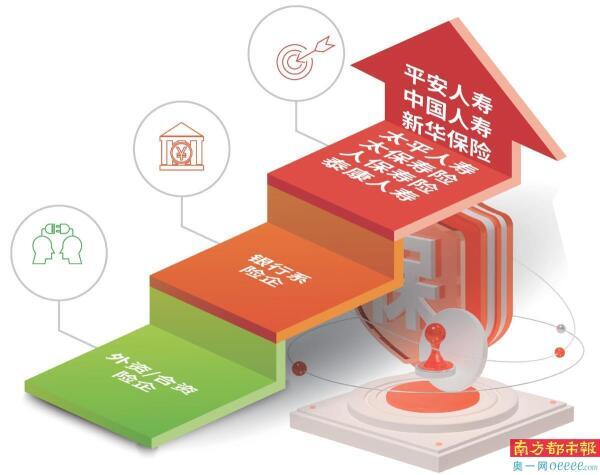
寿险银保渠道保费增速榜 透视三大阵营分化
Nan Fang Du Shi Bao· 2026-02-05 23:13
Core Insights - The article discusses the increasing trend of banks promoting insurance products, driven by the ongoing "deposit migration" and the urgent need for banks to boost their intermediary business revenue [2][6] - The insurance industry is witnessing a competitive landscape in the bancassurance channel, with significant growth in premium income, particularly among leading insurance companies [3][6] Group 1: Industry Trends - In 2025, the bancassurance channel for life insurance is expected to see an overall premium growth rate of approximately 10%, with leading insurers outperforming the industry average [3] - The "old seven" life insurance companies (including Ping An Life and China Life) achieved over 40% growth in bancassurance premiums, with Ping An Life leading at a remarkable 163% year-on-year increase [3][6] - The total premium income of the insurance industry surpassed 6 trillion yuan in 2025, marking a 7.4% year-on-year growth, with life insurance companies contributing significantly [6] Group 2: Competitive Landscape - There is a clear division among bank-affiliated insurance companies, with some experiencing significant growth while others face declines; for instance, Everbright Life Insurance saw a 111% increase, while others like China Merchants Life faced negative growth [4][5] - Foreign and joint venture insurers, although smaller in size, are achieving impressive growth rates by focusing on high-net-worth clients and long-term value services [5] Group 3: Strategic Developments - The removal of restrictions on the number of insurance companies a single bank branch can partner with has expanded product selection and improved matching with customer needs [7] - Insurers are actively enhancing their bancassurance channel strategies, with predictions indicating that new business value growth will be primarily driven by this channel in 2026 [8][11] - Major insurers are establishing extensive partnerships with banks, with China Life collaborating with over 100 banks and other companies also expanding their banking partnerships [9][11]