
ICBC(601398)

Search documents
山东省政协委员李峰:金融“活水”支持民营经济贵在精准滴灌
Zhong Guo Xin Wen Wang· 2026-01-28 07:15
Core Viewpoint - The development of the private economy in Shandong Province relies heavily on precise financial support, referred to as "financial lifeblood" [1] Financial Support for Private Economy - Shandong's private economy contributes over 50% of the province's GDP, nearly 70% of tax revenue, and over 80% of employment [1] - The provincial government has implemented significant policies to optimize the business environment and reduce operational costs for private enterprises [2] - The total loan balance for private enterprises in Shandong has exceeded 4 trillion RMB [2] Financial Institution Initiatives - The Industrial and Commercial Bank of China (ICBC) Shandong Branch has introduced 16 measures to support the high-quality development of private enterprises, resulting in an average annual growth rate of nearly 20% in private loans over the past two years [2] - The loan balance for private enterprises at ICBC Shandong has surpassed 280 billion RMB, accounting for one-third of the total corporate loan balance [2] Targeted Financial Services - There are over 50,000 technology-based small and medium-sized enterprises in Shandong, with 90% being private enterprises [2] - ICBC has established a three-tiered technology service mechanism and created 43 technology branches to enhance efficiency and simplify processes [2] - By 2025, ICBC Shandong aims for the loan balance for private technology enterprises to exceed 100 billion RMB, with a doubling of "specialized, refined, distinctive, and innovative" small giant enterprises [2] Supply Chain Financing - ICBC has provided 12 billion RMB in digital supply chain financing support to over 5,000 enterprises across 190 supply chains, improving financing accessibility for small and medium-sized enterprises [3] Financial Innovation and Solutions - The bank has launched 180 specialized financing products to address the unique financial needs of different private enterprises [5] - ICBC has tailored comprehensive financial solutions for 60 key private enterprises, focusing on areas such as financing, intelligence, technology, and connectivity [5] - The bank is also providing cross-border financial services to 40 key private enterprises to support their international expansion [5] Commitment to Private Economy - The bank emphasizes the symbiotic relationship between the private economy and financial institutions, committing to continue supporting the high-quality development of the private sector [5]



2025银行综合评选获奖名单重磅出炉!这些银行榜上有名
Xin Lang Cai Jing· 2026-01-28 06:00
1月28日金融一线消息,"2025(第十三届)银行综合评选"活动获奖名单今日正式揭晓!本次评选活动 从多领域、多视角对银行机构各方面进行了综合评估,最终评选出多家行业佼佼者。 本次评选活动经过网络投票、第三方机构调研、专家评审、综合审核多项环节,最终角逐出"综合评 选""业务价值评选""社会责任评选""五大篇章评选"四大类26个奖项,20家银行机构上榜,充分体现了 银行业的发展趋势和行业标杆。 于时代脉搏中坚守使命,于转型发展中谱写新篇。本次获奖银行机构在过去一年的发展中展现了卓越的 综合实力和优秀的专业素养,在业务经营、服务能力、风控管理、创新发展等多方面取得了卓越成绩, 赢得了广泛的赞誉和认可。期待各银行机构在未来能够继续发挥自身优势和综合实力,坚守初心和使 命,为银行业高质量发展与金融强国建设贡献更多力量。 以下为获奖名单: 综合评选 中国工商银行获评"年度最佳国有商业银行" 中国进出口银行获评"年度最佳政策性银行" 招商银行获评"年度最佳股份制商业银行" 宁波银行获评"年度最佳城市商业银行" 北京农村商业银行获评"年度最佳农村商业银行" 微众银行获评"年度最佳民营银行" 业务价值评选 交通银行获评"年 ...






港股银行股震荡上扬,徽商银行(03698.HK)涨近4%,工商银行(01398.HK)、汇丰控股(00005.HK)、中国银行(03988.HK)涨超2...
Jin Rong Jie· 2026-01-28 03:13
Group 1 - Hong Kong bank stocks experienced a significant upward trend, with Huishang Bank (03698.HK) rising nearly 4% [1] - Industrial and Commercial Bank of China (01398.HK), HSBC Holdings (00005.HK), and Bank of China (03988.HK) all saw increases of over 2% [1] - Bank of China Hong Kong (02388.HK) and China Construction Bank (00939.HK) both rose nearly 2% [1]

嘉兴金融监管分局核准陈诚工商银行嘉兴分行副行长任职资格
Jin Tou Wang· 2026-01-28 03:13
三、工商银行嘉兴分行应督促上述核准任职资格人员持续学习和掌握经济金融相关法律法规,牢固树立 风险合规意识,熟悉任职岗位职责,忠实勤勉履职。 2026年1月23日,嘉兴金融监管分局发布批复称,《中国工商银行(601398)浙江省分行关于陈诚同志 任职资格审查的请示》(工银浙报〔2025〕186号)收悉。经审核,现批复如下: 一、核准陈诚工商银行嘉兴分行副行长的任职资格。 二、工商银行嘉兴分行应要求上述核准任职资格人员严格遵守金融监管总局有关监管规定,自工商银行 政许可决定作出之日起3个月内到任,并按要求及时报告到任情况。未在上述规定期限内到任的,本批 复文件失效,嘉兴金融监管分局将办理行政许可注销手续。 ...
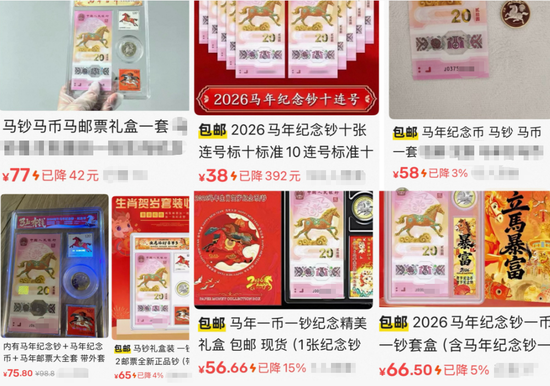
“马币马钞”兑换期限延长!二手市场价格如何?
Xin Lang Cai Jing· 2026-01-28 01:01
Core Viewpoint - The People's Bank of China has announced an extension for the exchange period of the 2026 Year of the Horse commemorative coins and notes, with various regions extending the deadline to early February 2026 to accommodate public demand [1][2][3]. Group 1: Exchange Period and Regions - The nationwide unified exchange period for the 2026 Year of the Horse commemorative coins and notes is set from January 20 to January 26, 2026 [2]. - Regions such as Beijing, Ningxia, Shenzhen, Chongqing, Inner Mongolia, Heilongjiang, and Shanxi have extended the exchange deadline, with some areas allowing exchanges until February 2, 2026 [1][2][3]. Group 2: Bank Participation and Procedures - Major banks including Industrial and Commercial Bank of China (ICBC), China Construction Bank (CCB), and Bank of Communications have issued announcements regarding the extension and exchange rules [3][4]. - Customers who successfully reserved the commemorative coins and notes but did not exchange them during the initial period can now do so from January 27 to January 31, 2026, at their designated bank branches [4][3]. Group 3: Current Exchange Status - As of January 25, 2026, the exchange progress for the 2026 Year of the Horse commemorative coins was 80.8%, with 80.8 million coins reserved, while the commemorative notes had a progress of 89.47% with 89.45 million notes reserved [7]. - Specific regions reported varying exchange rates, with Beijing achieving a 95.34% exchange rate for coins and 98.02% for notes by January 26, 2026 [7]. Group 4: Market Trends - The secondary market for the commemorative coins and notes has seen a decline in prices, with many sellers reducing their asking prices below 1,000 yuan, contrasting with previous high prices [8][12]. - However, the price for sequentially numbered commemorative notes has increased, with some listings showing prices that have doubled compared to their face value [14].

国有大行陆续提高黄金积存业务投资门槛
Zheng Quan Ri Bao· 2026-01-27 16:50
Core Viewpoint - Recent adjustments by major state-owned banks in China, including Agricultural Bank of China and Industrial and Commercial Bank of China, to increase the risk assessment requirements for gold accumulation business reflect a proactive approach to risk management in response to rising gold prices and market volatility [1][2]. Group 1: Changes in Risk Assessment Requirements - Agricultural Bank of China announced that starting January 30, 2026, personal clients must undergo a risk assessment to participate in its gold accumulation business, requiring a cautious rating or higher [1]. - Industrial and Commercial Bank of China previously set a requirement for clients to achieve a balanced rating or higher for opening accounts and initiating gold accumulation plans [1]. Group 2: Rationale Behind the Changes - The increase in risk assessment requirements aims to protect investors from irrational investment risks and to comply with regulatory demands for investor suitability management [2]. - The adjustments are seen as a rational risk control measure by financial institutions, reinforcing investor protection and reducing potential complaints related to price volatility [2]. Group 3: Market Positioning of Gold Accumulation Products - Some banks, like China Merchants Bank, are positioning their gold accumulation products as medium-risk investments, indicating a shift from low-threshold financial products to those requiring appropriate risk tolerance [3]. - The industry is moving towards enhancing the quality of gold accumulation business rather than merely expanding its scale, emphasizing the need for risk matching and compliance management [3].

一则协助客户解决亲情账户换绑难题的案例分析
Jiang Nan Shi Bao· 2026-01-27 12:38
Case Overview - A young mother faced difficulties in changing the binding of her child's "Baby Growth Card" account from the father's mobile banking to her own due to family reasons, leading her to visit the bank for assistance [1] - The customer service manager promptly addressed the customer's concerns, actively listened to her needs, and investigated the issue, ultimately identifying that the relationship type needed to be changed to "guardian and ward" [1] Case Analysis - The resolution of this case highlights the professional competence and adaptability of the customer service staff in handling complex and rare business scenarios, enhancing customer satisfaction and accumulating valuable experience for future similar situations [2] - The process reflects the improved comprehensive service capabilities of the customer service manager, supported by the bank's investment in financial technology [2] Case Insights - Strengthening the review and learning mechanism for special and rare business cases is essential, including regular employee training and sharing sessions on complex and uncommon business processes [3] - Enhancing customer service quality is crucial, with a focus on attentive listening to customer needs and providing detailed solutions, as well as creating a positive atmosphere to alleviate customer anxiety during longer processes [3] - Improving the business acumen and problem-solving skills of customer service managers is necessary, encouraging them to seek guidance from experienced colleagues and participate in internal skill competitions for practical training [3]
“银”为有你
Jiang Nan Shi Bao· 2026-01-27 12:38
"真没想到,十年前随手买的白银,居然变成了三十多万!因为有你们,才帮我找回了这笔钱,真的太 感谢你们了!"近日,市民李女士在工行南通文明支行,经历了一场"失而复得"的惊喜。 在工作人员的专业指导下,李女士顺利完成了平仓操作,将浮动盈利变为实实在在的资产。办理完业务 后,李女士难掩心中的惊喜与感激,出于对该网点的信任,当场将这笔三十余万元资金转为定期存款, 让财富再度"安家"。 这场惊喜的背后,是因为工行南通文明支行长期以来对客户资产的默默守护与专业坚守!从发送平仓短 信,到高效查证办理,体现了工行"以客户为中心"的服务理念。 未来,工行南通文明支行将继续优化服务流程,以专业和温度护航每一位客户的财富旅程。卢艳阳 这一切,始于一条服务提示短信。原来,在十年前,李女士在工行借记卡上投资了10万余元,购买了账 户贵金属白银。后因家庭事务繁忙及银行卡更换,这笔投资被李女士彻底遗忘在时光里。期间,李女士 一直收到平仓提示短信,但李女士一直误以为该账户白银已平仓转出用于消费,便没理会。当再次收到 短信后,李女士将信将疑,恰逢因家中有事需要现金,她便前往工行南通文明支行求证。 柜员小丁某了解情况后,高效为已更换银行卡的李女 ...
岁末聚力强宣传 筑牢防线护钱袋
Jiang Nan Shi Bao· 2026-01-27 12:38
立足厅堂,筑牢网点阵地。该行充分利用网点物理空间,在大厅醒目位置张贴宣传海报,并在填单台、 自助设备区等客户动线区域规范陈列宣传折页,营造浓厚氛围。尤其聚焦到店办理业务的老年客户、学 生等易受骗群体,实施精准宣导。工作人员通过耐心细致的面对面讲解、发放宣传资料,透彻剖析非法 金融活动的本质、常见伎俩与严重危害,反复叮嘱客户及其家人务必提高警惕,理性辨别各类"高收 益"陷阱。同时,积极引导客户通过银行等正规金融机构进行储蓄、理财等资产配置,从源头守护好"钱 袋子"。 主动延伸,深化社区联动。该行主动"走出去",组织员工深入周边社区开展集中宣传。创新结合社区活 动场景,如在社区运动会现场设立金融安全咨询台,分发宣传折页,并现场答疑解惑,普及金融知识。 已开展集中宣传活动2场,覆盖群众90余人次,反响良好。此外,积极联动周边合作商户,在其经营场 所常态化摆放宣传折页,进一步织密宣传网络,扩大覆盖范围。 南通开发区支行营业室将持续履行社会责任,加大宣传力度,创新宣传方式,以实际行动践行金融为民 的初心,为守护辖区金融安全、保障人民群众度过一个平安祥和的春节贡献力量。尹天容 岁末年初,各类金融案件进入高发期。为切实保障 ...
打造适老服务阵地 让金融温情守护“夕阳红”
Jiang Nan Shi Bao· 2026-01-27 12:31
Core Viewpoint - The company is committed to enhancing financial services for elderly clients, addressing their specific needs and ensuring they benefit from financial development [1][2][3] Group 1: Service Enhancements - The bank has upgraded hardware facilities to cater to elderly clients, including providing reading glasses and magnifying glasses to assist with document reading [1] - Safety measures have been implemented, such as non-slip flooring and handrails, to ensure a secure environment for elderly customers [1] Group 2: Service Process Optimization - A dedicated "Love Window" has been established to reduce waiting times for elderly clients, with staff trained to provide "three slow services"—slower speech, detailed explanations, and longer waiting times [2] - A green channel for special elderly clients, including those who are bedridden or live alone, has been introduced to offer home service, allowing them to access financial services without leaving their homes [2] Group 3: Financial Education and Awareness - The bank has set up a financial knowledge promotion corner in the waiting area, featuring large-font posters and easy-to-read materials on topics like fraud prevention and financial product understanding [2] - Staff actively educate elderly clients on common scams and protective measures, enhancing their awareness and self-protection capabilities [2] Group 4: Future Commitment - The bank plans to continuously optimize services for elderly clients, focusing on hardware upgrades and enhancing the service team's capabilities to better meet the needs of this demographic [3] - The goal is to ensure elderly clients experience convenience in financial services while feeling the warmth and responsibility of the bank, ultimately achieving a state of well-being for the elderly [3]