PSBC(601658)

Search documents
邮政集团副总经理刘建军退休,深耕金融领域三十余载
Xin Lang Cai Jing· 2025-12-24 01:13
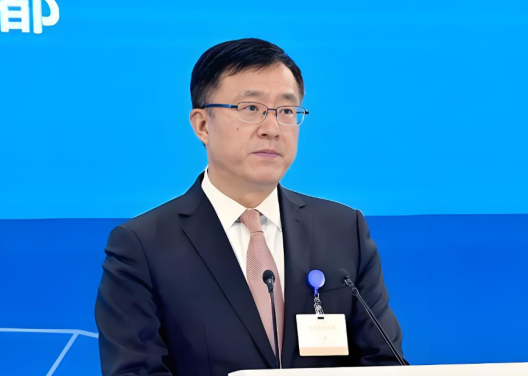
Core Viewpoint - The recent leadership changes at China Postal Group, with Lu Wei appointed as Vice President and Liu Jianjun removed from the position, highlight a strategic shift in the company's management as it continues to focus on retail banking and wealth management growth. Group 1: Leadership Changes - Liu Jianjun has been relieved of his duties as Vice President and Party Member of China Postal Group, effective immediately [1] - Lu Wei has been appointed as the new Vice President and Party Member of China Postal Group [1] Group 2: Liu Jianjun's Background - Liu Jianjun, born in August 1965, has extensive experience in state-owned and joint-stock banks, starting his career at China Construction Bank in 1988 [2][4] - He played a significant role in the retail banking transformation at China Merchants Bank, contributing to its reputation as a leader in retail banking [5] Group 3: Postal Savings Bank Performance - Under Liu Jianjun's leadership, Postal Savings Bank reported a retail AUM of 17.89 trillion yuan, a growth of over 7% compared to the previous year [8] - The bank's net income for Q3 reached 767.94 billion yuan, with a year-on-year increase of 1.07% [6] - The bank maintained a low non-performing loan ratio of 0.94%, significantly lower than its peers [6] Group 4: Strategic Focus on Retail Banking - Liu Jianjun emphasized the importance of transforming Postal Savings Bank from a "savings bank" to a "wealth management bank," leveraging its extensive network and customer base [7] - The bank's new organizational structure includes a dedicated wealth management department to enhance its service offerings [7] Group 5: Technological Integration - Liu Jianjun highlighted the role of technology in transforming financial services, advocating for the integration of AI, big data, and cloud computing into banking operations [9] - The bank aims to become a digital ecosystem bank, focusing on innovation and technology-driven financial services [9] Group 6: Support for Technology Enterprises - Postal Savings Bank has developed a comprehensive service strategy for technology enterprises, serving over 100,000 tech firms and achieving a technology loan balance exceeding 940 billion yuan [10] - The bank is committed to promoting inclusive finance, with significant investments in rural and small micro-enterprise loans [11]


银行车企年末冲业绩“0”字组合超常规车贷揽客
Zhong Guo Zheng Quan Bao· 2025-12-23 20:18
Core Insights - The automotive finance market in China is experiencing intensified competition due to various favorable policies, leading to unconventional financial offerings such as "0 down payment + 0 interest" [1][3][4] - Financial institutions are collaborating with both traditional fuel vehicle manufacturers and new energy vehicle producers to lower purchase costs and simplify loan processes, aiming to capture market share during peak sales seasons [1][2][5] Group 1: Market Dynamics - December is identified as a critical month for sales, with automakers and financial institutions increasing consumer incentives to boost vehicle sales [1][2] - Financial institutions are strategically increasing auto loan offerings to compensate for declines in other lending areas, such as housing loans, while also aiming to expand their market presence [5][6] Group 2: Financial Offerings - Various auto loan options are being presented, including significant discounts on vehicle prices and flexible repayment terms, such as "loan for 5 years, pay back in 2 years" [1][2] - Some dealerships are offering "0 down payment + 0 interest" financing options, which have become more common since the new auto loan regulations were implemented in 2024 [3][4] Group 3: Industry Transformation - The automotive finance sector is undergoing a transformation, moving from a focus on high commissions and short-term incentives to a more compliant and customer-oriented service model [5][6] - Financial institutions are expected to develop customized financial solutions tailored to specific purchasing scenarios, such as for new energy vehicles and used car transactions, while enhancing digital and online service capabilities [6]




邮储银行夏津县支行让智能服务惠及老年群体
Qi Lu Wan Bao· 2025-12-23 16:39
Core Insights - The article highlights the importance of intelligent services in banking, particularly focusing on how Postal Savings Bank is addressing the digital divide for elderly customers [1][2] - The bank's initiative includes user-friendly smart devices and personalized guidance to enhance customer experience and efficiency [1][2] Group 1: Intelligent Services - Intelligent services have become the new norm in banking, with a focus on making technology accessible to all customers, especially the elderly [1] - The smart devices at Postal Savings Bank's Xiangjin County branch are designed to be simple to operate and transparent in process, significantly improving business efficiency [1] Group 2: Customer Experience - The bank emphasizes a one-on-one companion service for elderly clients, ensuring staff are present to guide them through the process and alleviate their concerns [2] - Feedback from customers, such as Mr. Zhang, indicates a positive shift in perception towards technology, highlighting satisfaction with the ease of use and the supportive staff [2] Group 3: Commitment to Service - Postal Savings Bank is committed to continuously optimizing service processes, making the "cloud cabinet" not just an efficient tool but also a means of conveying care and warmth [2] - The bank aims to provide professional, standardized, and heartfelt financial services, particularly focusing on the needs of elderly customers [2]
邮储银行取得基于SAGA的分布式事务实现方法专利
Jin Rong Jie· 2025-12-23 13:25
国家知识产权局信息显示,中国邮政储蓄银行股份有限公司取得一项名为"基于SAGA的分布式事务实 现方法以及装置"的专利,授权公告号CN114327796B,申请日期为2021年12月。 本文源自:市场资讯 作者:情报员 天眼查资料显示,中国邮政储蓄银行股份有限公司,成立于2007年,位于北京市,是一家以从事货币金 融服务为主的企业。企业注册资本9916107.6038万人民币。通过天眼查大数据分析,中国邮政储蓄银行 股份有限公司共对外投资了7家企业,参与招投标项目5000次,财产线索方面有商标信息1214条,专利 信息1014条,此外企业还拥有行政许可99个。 声明:市场有风险,投资需谨慎。本文为AI基于第三方数据生成,仅供参考,不构成个人投资建议。 ...
年内险资举牌39次:偏爱红利资产,科技板块迎布局机遇
2 1 Shi Ji Jing Ji Bao Dao· 2025-12-23 13:16
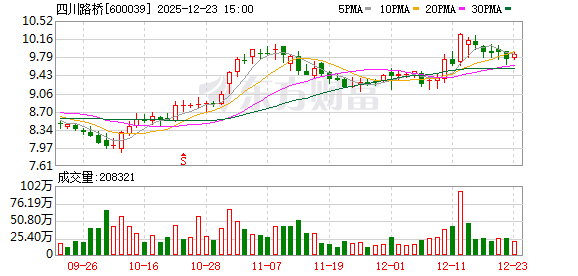
Core Insights - The article highlights the increasing trend of insurance capital (险资) in China, particularly focusing on the surge in shareholding activities, with a total of 39 instances of shareholding increases recorded in 2025, marking the second-highest level in history after 2015 [2][4]. Group 1: Shareholding Activities - Zhongyou Insurance has increased its stake in Sichuan Road and Bridge, reaching a total of 435 million shares, which constitutes 5.00% of the company's total equity, marking its fourth shareholding increase this year [3]. - Other insurance companies, such as Ruizhong Life and Taikang Life, have also engaged in similar shareholding activities, with Taikang Life triggering multiple shareholding increases in companies like Fuhong Hanlin and participating as a cornerstone investor in the IPO of Fengcai Technology [3][4]. - The trend of multiple shareholding increases by the same insurance company in a single target has been observed, with companies like Hongkang Life and Ping An Life making several increases in their holdings in banks [4]. Group 2: Investment Trends and Characteristics - The insurance capital's shareholding activities are characterized by a preference for high Return on Equity (ROE) and high dividend stocks, indicating a strategic focus on long-term investments that enhance the ROE of the insurance companies themselves [6]. - The asset allocation of insurance funds has seen an increase, with the proportion of stocks and funds rising to 15.5% by the third quarter of 2025, creating more room for shareholding activities [6]. - The insurance capital's preference for H-shares reflects a broader trend of favoring dividend-paying assets, which is expected to continue into 2026, with a potential shift towards growth sectors [7][8]. Group 3: Regulatory Support and Future Outlook - Recent regulatory changes, including the adjustment of risk factors for long-term holdings of certain equity assets, are expected to support the ongoing trend of shareholding increases by insurance companies [7]. - Analysts predict that the high frequency of shareholding activities will persist into 2026, with a gradual shift in focus towards more dynamic sectors, particularly technology stocks [8].


刘建军卸任,中信银行行长芦苇出任中国邮政集团副总经理
Bei Jing Shang Bao· 2025-12-23 13:14
与刘建军一样,此次"接棒"的芦苇亦具备深厚的金融行业积淀,从业经历覆盖银行、信托等多个核心金 融领域。芦苇1971年10月出生,澳大利亚迪肯大学会计学硕士,1994年7月参加工作,1997年1月入职中 信银行,曾任中信银行党委委员、副行长,同时兼任中信银行深圳分行党委书记、行长及阿尔金银行董 事;历任中信银行总行营业部(现北京分行)副总经理、中信银行计划财务部总经理、资产负债部总经 理、董事会秘书、公司秘书、授权代表、业务总监、香港分行筹备组副组长及中信百信银行股份有限公 司董事。2023年3月起芦苇任中信信托有限责任公司总经理,2024年5月起任中信信托有限责任公司董事 长。 2025年2月,中信银行发布公告称,刘成因工作调整,辞去其所担任的该行执行董事、行长、董事会风 险管理委员会主席、董事会战略与可持续发展委员会委员职务;同日,中信银行召开董事会,同意聘任 芦苇为该行行长,自监管机构核准其行长任职资格之日起正式就任,任期三年。 业内普遍认为,在履行相应程序后,芦苇将接替刘建军担任邮储银行行长职位。 北京商报讯(记者 宋亦桐)12月23日,据中国邮政网发布的消息,12月23日,中国邮政集团有限公司 召开党 ...

芦苇履新
Zhong Guo Ji Jin Bao· 2025-12-23 12:32
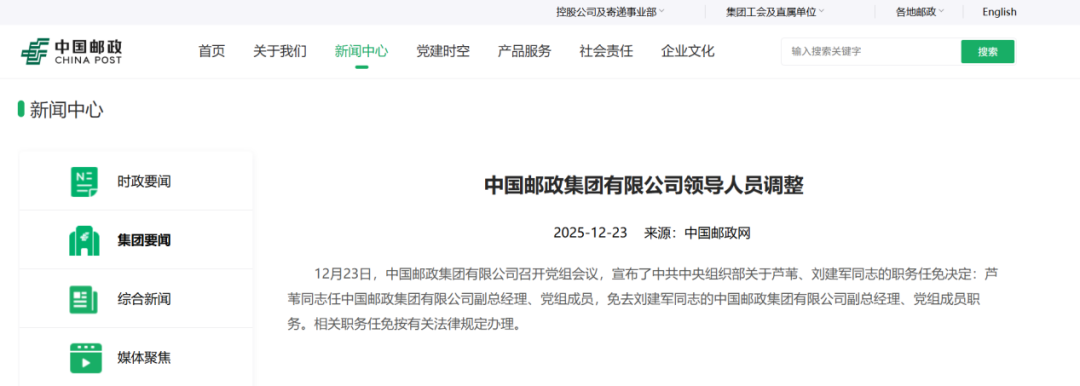
【导读】芦苇任中国邮政集团有限公司副总经理、党组成员 芦苇履新,正式官宣! 12月23日,中国邮政官网显示,中国邮政集团有限公司领导人员调整。 | | | | | | | 将于青岛体育官网分别网 | | 集团工会及直属单位 × | | 各地部改 Y | English | | --- | --- | --- | --- | --- | --- | --- | --- | --- | --- | --- | --- | | 中国邮政 | | 直页 | 关于我们 新闻中心 | 党建时空 | 产品服务 | 社会责任 | 企业文化 | | 输入搜索关键字 | | 搜索 | | 新闻中心 | | | | | | | | | | | | | izi | 时政要闻 | | 中国邮政集团有限公司领导人员调整 | | | | | | | | | | | 集团要闻 | | 2025-12-23 来源:中国邮政网 | | | | | | | | | | 비 | 综合新闻 | | 12月23日,中国邮政集团有限公司召开党组会议,宣布了中共中央组织部关于芦苇、刘建军同志的职务任免决定:芦 苇同志任中国邮政集团有限公司副总经理、党组成员 ...
又一家大行关停信用卡App
Di Yi Cai Jing Zi Xun· 2025-12-23 12:29
Core Viewpoint - The trend of integrating credit card services into main banking apps is accelerating as banks face slowing user growth and rising customer acquisition costs, leading to the closure of independent credit card apps [2][3][6] Group 1: Bank Actions - Postal Savings Bank of China announced the gradual cessation of updates to its "Postal Savings Credit Card App," migrating functions to the "Postal Savings Bank App" [3] - China Bank was the first major state-owned bank to close its independent credit card app, integrating services into the "China Bank App" [3] - Several smaller banks, including Jiangxi Bank and Beijing Rural Commercial Bank, have also shut down or integrated their credit card apps into main mobile banking platforms [4] Group 2: Market Dynamics - The credit card industry has shifted from rapid expansion to a phase of stock competition, with growth in card issuance slowing and some banks experiencing declines in card volume [6] - The operational costs of maintaining independent credit card apps have become unsustainable due to overlapping functionalities and the need for continuous updates and security measures [6][7] Group 3: User Experience and Regulatory Influence - Users prefer a unified app experience, as managing multiple apps for different services leads to a fragmented service experience [7] - Regulatory guidance has emphasized the need for banks to optimize or terminate underperforming apps, supporting the trend towards app consolidation [7] Group 4: Future Trends - The integration of credit card services into main apps is seen as an upgrade in service delivery rather than a reduction in credit card offerings [8] - Future banking strategies will focus on enhancing user experience through data-driven personalized services and integrating financial services with everyday life [8][9] - Banks are expected to face challenges in technology integration and user adaptation during this transition, necessitating investments in IT infrastructure and security [8]

这家国有大行或迎新行长
券商中国· 2025-12-23 12:16
18万亿零售大行, 或将再迎来 一位股份行背景的新任行长! 12月23日晚,中国邮政集团有限公司(下称"中国邮政集团")公告,集团召开党组会议,宣布中共中央组织部 的任免决定:芦苇任中国邮政集团副总经理、党组成员,免去刘建军的中国邮政集团副总经理、党组成员职 务。 据了解,刘建军已出任邮储银行党委书记、行长职位近4年半,目前已年满60岁。 现年54岁的芦苇是中信银行"老将",在该行任职达26年,其间曾调任中信信托。此次加入邮储银行,距离其重 返中信银行仅过去10个月。今年8月,芦苇在中信银行业绩说明会上曾表态,该行已摒弃规模情结,更专注于 效益和质量并重的增长。 1997年1月,芦苇加入中信银行,历任总行计划财务部(现财务会计部)副总经理、总经理,资产负债部总经 理,香港分行筹备组副组长,中信银行董事会秘书,深圳分行党委书记、行长;2020年10月任中信银行党委委 员,2021年4月任中信银行副行长。 2022年10月,因工作调整,芦苇辞任中信银行副行长,同时赴任中信信托,2023年3月起任中信信托总经理, 2024年5月升任中信信托董事长。 今年2月,芦苇回归中信银行,接任行长职位,中信银行原行长刘成则赴任 ...

又一家大行关停信用卡App
第一财经· 2025-12-23 11:35
Core Viewpoint - The article discusses the trend of banks, particularly state-owned banks, integrating credit card services into their main banking apps, leading to the shutdown of independent credit card apps due to rising operational costs and changing user preferences [3][5][6]. Group 1: Bank Actions - Postal Savings Bank of China announced the gradual cessation of its independent credit card app, integrating its functions into the main Postal Savings Bank app, ensuring that customer services remain unaffected [5][6]. - China Bank was the first major state-owned bank to close its independent credit card app, merging its services into the "China Bank App" [6]. - Several smaller banks have also shut down or integrated their credit card apps into their main banking platforms, indicating a broader trend across the banking sector [6][7]. Group 2: Market Environment - The credit card industry has shifted from rapid expansion to a phase of stock competition, with growth in credit card issuance slowing down and some banks experiencing a decline in card numbers [6][7]. - The operational costs of maintaining independent credit card apps have become unsustainable compared to the value they provide, leading to their closure [7]. Group 3: User Experience and Regulatory Influence - Users have faced challenges with multiple apps, leading to a demand for a unified platform that enhances service experience and reduces the need for frequent app switching [7][8]. - Regulatory guidance has encouraged banks to optimize or terminate underperforming apps, further supporting the trend of app integration [8]. Group 4: Future Trends - The integration of credit card services into main banking apps is seen as an upgrade in service delivery, focusing on better user experience and operational efficiency [8][9]. - Future banking strategies may include expanding functionalities in main apps, such as wealth management and enhanced security features, to increase user engagement [9].