
CHINA TELECOM(601728)

Search documents
中国电信等在天津成立低空量子网络科技发展公司
2 1 Shi Ji Jing Ji Bao Dao· 2026-01-23 02:26
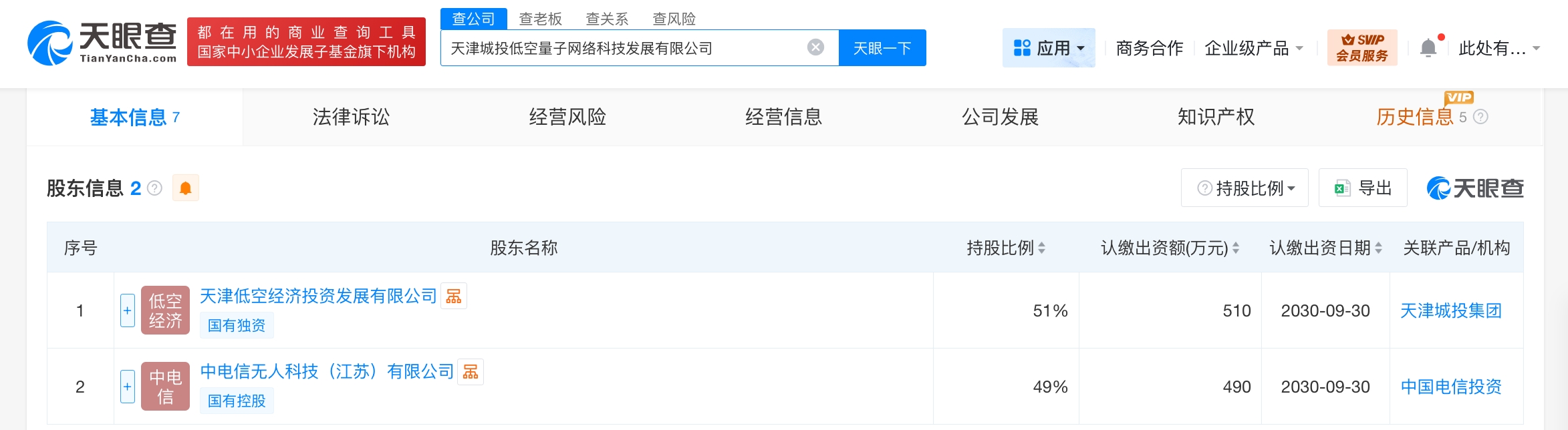
Group 1 - The core point of the news is the establishment of Tianjin Urban Investment Low-altitude Quantum Network Technology Development Co., Ltd., which focuses on various technology services including smart drone sales and 5G communication technology [1] - The company has a registered capital of 10 million RMB and is co-owned by Tianjin Low-altitude Economic Investment Development Co., Ltd. (51%) and China Telecom Unmanned Technology (Jiangsu) Co., Ltd. (49%) [1][2] - The legal representative of the company is Wang Baoqun, and it is registered under the Tianjin Municipal Market Supervision Administration [2] Group 2 - The business scope of the company includes intelligent unmanned aerial vehicle sales, data processing and storage support services, and artificial intelligence application system integration services [1] - The company is classified as a limited liability company and has an indefinite business term starting from January 22, 2026 [2] - The company is involved in various technology services such as technical consulting, technology transfer, and internet data services [2][3]


80.19亿元资金今日流入通信股
Zheng Quan Shi Bao Wang· 2026-01-22 14:23
Core Viewpoint - The communication industry experienced a significant increase of 2.83% on January 22, with a net inflow of 8.019 billion yuan in capital, indicating strong investor interest in this sector [1][2]. Market Performance - The Shanghai Composite Index rose by 0.14% on January 22, with 22 out of 28 sectors showing gains. The top-performing sectors included building materials and defense industries, which increased by 4.09% and 3.23%, respectively [1]. - The communication industry led the gains with a 2.83% increase, while the beauty care and banking sectors faced declines of 0.76% and 0.43% [1]. Capital Flow Analysis - Throughout the day, the main capital outflow from the two markets totaled 21.612 billion yuan, with 12 sectors experiencing net inflows. The communication sector had the highest net inflow of 8.019 billion yuan [1]. - The electronic industry saw the largest net outflow, totaling 13.206 billion yuan, followed by the power equipment sector with a net outflow of 7.206 billion yuan [1]. Communication Industry Details - Within the communication sector, 124 stocks were tracked, with 94 stocks rising and 3 hitting the daily limit. The top three stocks by net inflow were Zhongji Xuchuang (21.50 billion yuan), Xinyi Sheng (21.38 billion yuan), and Tianfu Communication (12.88 billion yuan) [2]. - The stocks with the highest capital outflow included Hengtong Optic-Electric (-3.50%), China Telecom (0.52%), and Zhongtian Technology (-1.67%) [5]. Top Gainers in Communication Sector - The top gainers in the communication industry included: - Zhongji Xuchuang: +6.72% with a capital flow of 2.1499251 billion yuan - Xinyi Sheng: +3.77% with a capital flow of 2.1376988 billion yuan - Tianfu Communication: +5.96% with a capital flow of 1.2876867 billion yuan [3]. Top Losers in Communication Sector - The top losers in the communication industry included: - Hengtong Optic-Electric: -3.50% with a capital outflow of -339.5335 million yuan - China Telecom: +0.52% with a capital outflow of -200.1121 million yuan - Zhongtian Technology: -1.67% with a capital outflow of -173.9190 million yuan [5].


黑猫投诉2025年度通讯服务领域投诉数据报告:投诉量超17万件 套餐资费相关投诉占比超5成
Xin Lang Cai Jing· 2026-01-22 06:06
Core Insights - The telecommunications service industry received a total of 173,629 complaints in 2025, representing a year-on-year decrease of 7.05% compared to 2024 [1][12] - The Ministry of Industry and Information Technology initiated the "Clear and Reassuring Use" campaign in April 2025 to address key issues such as complex packages and unclear charges, leading to a significant reduction in complaints in the second half of the year [1][12] Complaint Categories - The primary complaint category is package fee disputes, accounting for over 50% of all complaints, followed by poor customer service at 16.7%, broadband faults at 5.96%, and account cancellation issues at 2.44% [3][15] - Common issues include unclear billing rules, unauthorized subscription renewals, and poor customer service quality, such as long wait times and unhelpful staff [2][14] Complaint Handling - The overall complaint handling performance in the telecommunications sector is positive, with a complaint response rate exceeding 98% among major operators like China Mobile, China Unicom, China Telecom, and China Broadcasting [4][16] Demographics of Complainants - Male consumers dominate the complaint demographic, making up 70.02% of complaints, while female consumers account for 29.98% [5][17] - The average age of complainants is 30, with the majority being young consumers aged 20-25 (36.45%) and 26-30 (26.24%) [6][18] Geographic Distribution - Guangdong province has the highest number of complaints, accounting for 16.77% of the total, followed by Jiangsu and Zhejiang provinces at 8.65% and 7.71%, respectively [7][19]



中国电信江苏公司“智云行动”赋能“数字江苏”建设
Xin Hua Ri Bao· 2026-01-22 00:24
Group 1 - The core narrative of Jiangsu's development is being rewritten by digital technology, focusing on cloud, network, and computing power as the foundation, with data and artificial intelligence as the soul [1] - Jiangsu Telecom is committed to building a strong network and technology nation, contributing significantly to the information "artery" of Jiangsu's economic and social development [1] - A strategic cooperation agreement was signed between Jiangsu Provincial Government and China Telecom Group, leading to the launch of the "Smart Cloud Jiangsu" brand and the "Smart Cloud Store" AI service platform [1] Group 2 - Jiangsu leads the nation with 44 out of 274 projects in the "2025 Annual Excellent Intelligent Factory Project List," marking a fundamental shift in development logic from "machine replacement" to "system reconstruction" [2] - The integration of AI and 5G technology in manufacturing has transformed production processes, shifting the focus from human experience to algorithmic insights [2][3] - The deployment of dedicated 5G networks and smart scheduling systems in ports has enhanced operational efficiency and safety, turning traditional factories into modern, collaborative environments [3] Group 3 - Digital technology is reshaping traditional agricultural practices in Jiangsu, introducing innovations such as drones and big data analytics for precision farming [4] - The integration of digital platforms has revitalized rural areas, enhancing tourism and local economies through improved connectivity and resource management [5] - Digital governance initiatives have made rural management more efficient and accessible, attracting younger generations back to rural communities [5] Group 4 - Jiangsu Telecom is enhancing urban infrastructure with a focus on smart city development, utilizing 5G networks and advanced computing capabilities to create a responsive urban environment [6][7] - The establishment of an integrated intelligent scheduling platform for computing resources addresses the challenges of uneven demand and supply in computing power [7] - Various smart systems have been implemented in cities to improve safety, healthcare, and community engagement, showcasing the practical applications of digital technology in urban life [8][9] Group 5 - The overall digital transformation in Jiangsu emphasizes the importance of practical applications of technology, moving from mere availability to effective usability in real-world scenarios [9] - Jiangsu Telecom's approach balances technological advancement with humanistic considerations, contributing to a unique blend of efficiency and warmth in digital governance [10]
超200股已跌破“924”!千亿市值权重占一成,这些板块临近行情起点
Xin Lang Cai Jing· 2026-01-21 09:28
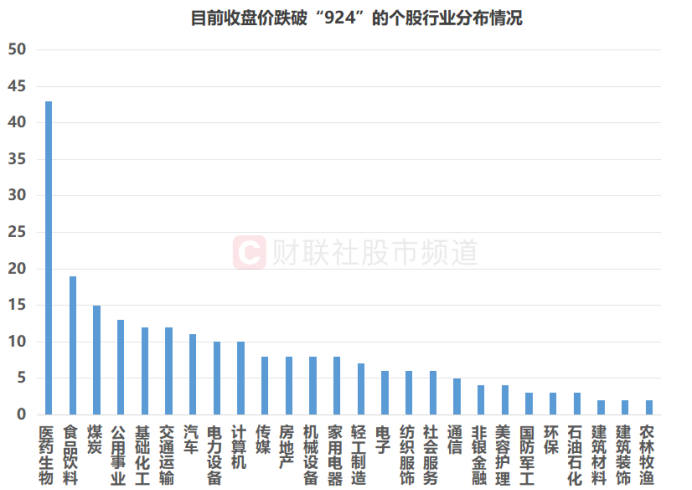
Core Viewpoint - The A-share market has shown overall stability, but nearly 230 stocks have seen their closing prices fall below the level recorded on September 24, 2024, accounting for approximately 4.3% of the total market [1]. Industry Analysis - The pharmaceutical sector has the highest number of stocks below the September 24 closing price, making up 18.7% of the total. Other sectors with significant representation include food and beverage, coal, public utilities, basic chemicals, and transportation, each exceeding 10% [2]. - Among the sub-sectors, stocks in the liquor, traditional Chinese medicine, thermal coal, coking coal, and residential development categories are the most affected, with a notable presence of chemical preparations, in vitro diagnostics, and medical consumables [2]. Market Capitalization Insights - The average total market capitalization of the over 200 stocks currently below the September 24 closing price is approximately 43.6 billion, with a median market capitalization of 10.8 billion. Stocks with a market capitalization below 5 billion account for nearly 30%, while those above 100 billion represent close to 10% [5]. - Notably, China Mobile, the only stock with a market capitalization exceeding 1 trillion, has seen a decline of about 3.7% from its September 24 closing price, currently fluctuating around 96 yuan [5]. Performance of Major Stocks - Key large-cap stocks that have fallen below the September 24 closing price include China Petroleum, Yangtze Power, China Telecom, Wuliangye, and others. Six stocks, including Pizaihuang and Daqin Railway, have experienced declines exceeding 10% [7]. - The performance of the dividend index has lagged behind the broader market, with a cumulative increase of only 5.9% since September 24, while other indices have shown more substantial gains [8]. Index Performance Overview - As of January 21, all 31 first-level industry indices are above their September 24 levels, with an average increase of approximately 58.12% and a median increase of 53.42%. The communication, non-ferrous metals, electronics, and comprehensive sectors have seen increases exceeding 130% [10]. - Conversely, sectors such as coal, food and beverage, public utilities, banking, and transportation have shown relatively lower growth, with the coal sector only increasing by 0.6% [10].



通信服务板块1月21日跌1.48%,三维通信领跌,主力资金净流出9.78亿元
Zheng Xing Xing Ye Ri Bao· 2026-01-21 09:08
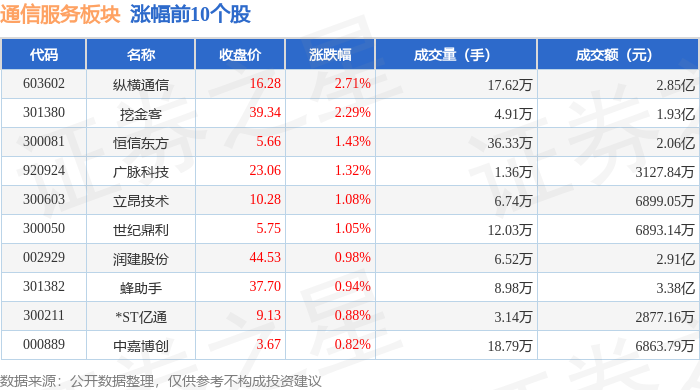
Market Overview - The communication services sector experienced a decline of 1.48% on January 21, with Sanwei Communication leading the drop [1] - The Shanghai Composite Index closed at 4116.94, up 0.08%, while the Shenzhen Component Index closed at 14255.12, up 0.7% [1] Stock Performance - Notable gainers in the communication services sector included: - Zongheng Communication: closed at 16.28, up 2.71% with a trading volume of 176,200 shares and a turnover of 285 million yuan [1] - Wajingke: closed at 39.34, up 2.29% with a trading volume of 49,100 shares and a turnover of 193 million yuan [1] - Hengxin Oriental: closed at 5.66, up 1.43% with a trading volume of 363,300 shares and a turnover of 206 million yuan [1] - Conversely, significant decliners included: - Sanwei Communication: closed at 13.43, down 5.75% with a trading volume of 2.215 million shares and a turnover of 2.994 billion yuan [2] - China Telecom: closed at 5.80, down 2.52% with a trading volume of 3.0047 million shares and a turnover of 1.758 billion yuan [2] - Putian Technology: closed at 31.49, down 1.47% with a trading volume of 223,400 shares and a turnover of 708 million yuan [2] Capital Flow - The communication services sector saw a net outflow of 978 million yuan from institutional investors, while retail investors contributed a net inflow of 495 million yuan [2] - Key stocks with notable capital flows included: - Data Port: net outflow of 55.1 million yuan from institutional investors, with a retail net outflow of 74.6 million yuan [3] - China Mobile: net inflow of 37.96 million yuan from institutional investors, but a net outflow of 83.09 million yuan from retail investors [3] - Hengxin Oriental: net inflow of 15.33 million yuan from institutional investors, with a retail net outflow of 18.77 million yuan [3]


中国电信跌2.02%,成交额9.88亿元,主力资金净流出2.90亿元
Xin Lang Cai Jing· 2026-01-21 05:47
Core Viewpoint - China Telecom's stock has experienced a decline of 7.46% year-to-date, with significant drops over various time frames, indicating potential challenges in the market [1]. Financial Performance - For the period from January to September 2025, China Telecom reported a revenue of 394.27 billion yuan, reflecting a year-on-year growth of 0.59% [2]. - The net profit attributable to shareholders for the same period was 30.77 billion yuan, showing a year-on-year increase of 5.03% [2]. Stock Market Activity - As of January 21, China Telecom's stock price was 5.83 yuan per share, with a market capitalization of 533.49 billion yuan [1]. - The stock has seen a trading volume of 988 million yuan on the same day, with a turnover rate of 0.22% [1]. - Major funds have seen a net outflow of 290 million yuan, with significant selling pressure observed [1]. Shareholder Information - As of September 30, 2025, the number of shareholders for China Telecom was 273,700, an increase of 22.83% from the previous period [2]. - The average circulating shares per person remained at 0 shares, indicating a stable shareholder base [2]. Dividend Distribution - Since its A-share listing, China Telecom has distributed a total of 95.19 billion yuan in dividends, with 68.65 billion yuan distributed over the last three years [3]. Company Overview - China Telecom, established on September 10, 2002, and listed on August 20, 2021, primarily engages in telecommunications and related services [1]. - The company's revenue composition includes mobile communication services (39.56%), industrial digital services (27.78%), fixed-line and smart home services (23.80%), and other income sources [1].
中美竞逐万亿美元新赛道,五层解构下的投资蓝图
Tebon Securities· 2026-01-21 04:07
Investment Rating - The report maintains an "Outperform" rating for the commercial aerospace industry [1] Core Insights - The aerospace sector is transitioning from being viewed as a "cost center" driven by national will to a "growth engine" driven by commercial demand, with significant investments and strategic planning from both the US and China [6][9] - The global aerospace economy is projected to reach $613 billion in 2024, with commercial aerospace contributing 78%, and is expected to exceed $1 trillion by 2032 [6][9] - The value chain of commercial aerospace is divided into five core levels: "space, ground, terminal, rocket, and application," each presenting unique market opportunities and technical challenges from 2026 to 2030 [10][29] Summary by Sections 1. Space: Satellite Manufacturing - The satellite manufacturing market in China is expected to grow from approximately 7.1 billion yuan in 2025 to about 39.4 billion yuan by 2030, reflecting a shift from sporadic research models to continuous, batch engineering deliveries [16][18] 2. Ground: Ground Systems - The ground systems market is projected to increase from around 1.2 billion yuan in 2025 to approximately 39.1 billion yuan by 2030, evolving from a supporting role to a core infrastructure essential for stable satellite constellation operations [21][22] 3. Terminal: Key Variable for Commercial Aerospace - The terminal market is anticipated to grow from 500 million yuan in 2025 to about 141.9 billion yuan by 2030, driven by multiple vertical industries and potential consumer scenarios [23][24] 4. Rocket: Core Constraint - The cost of rocket launches is a critical constraint, with reusable technology expected to reduce costs by 80%-90% compared to traditional expendable rockets. The market for rocket launch services is projected to grow from approximately 10.7 billion yuan in 2025 to about 34.3 billion yuan by 2030 [25][26] 5. Application: Final Value Realization - The application market is expected to expand from 200 million yuan in 2025 to 525 billion yuan by 2030, with the revenue share from applications projected to rise from single digits to over 67% by around 2030 [27][28] 6. Investment Opportunities - Investment opportunities in commercial aerospace can be categorized into three main tracks: 1. Launch and manufacturing segments, which are expected to benefit directly from increased orders and visibility 2. Core components and systems, characterized by high technical barriers and critical for long-term competitiveness 3. Downstream applications and operational services, which, while currently limited in scale, hold the greatest long-term potential for value realization [29][30]


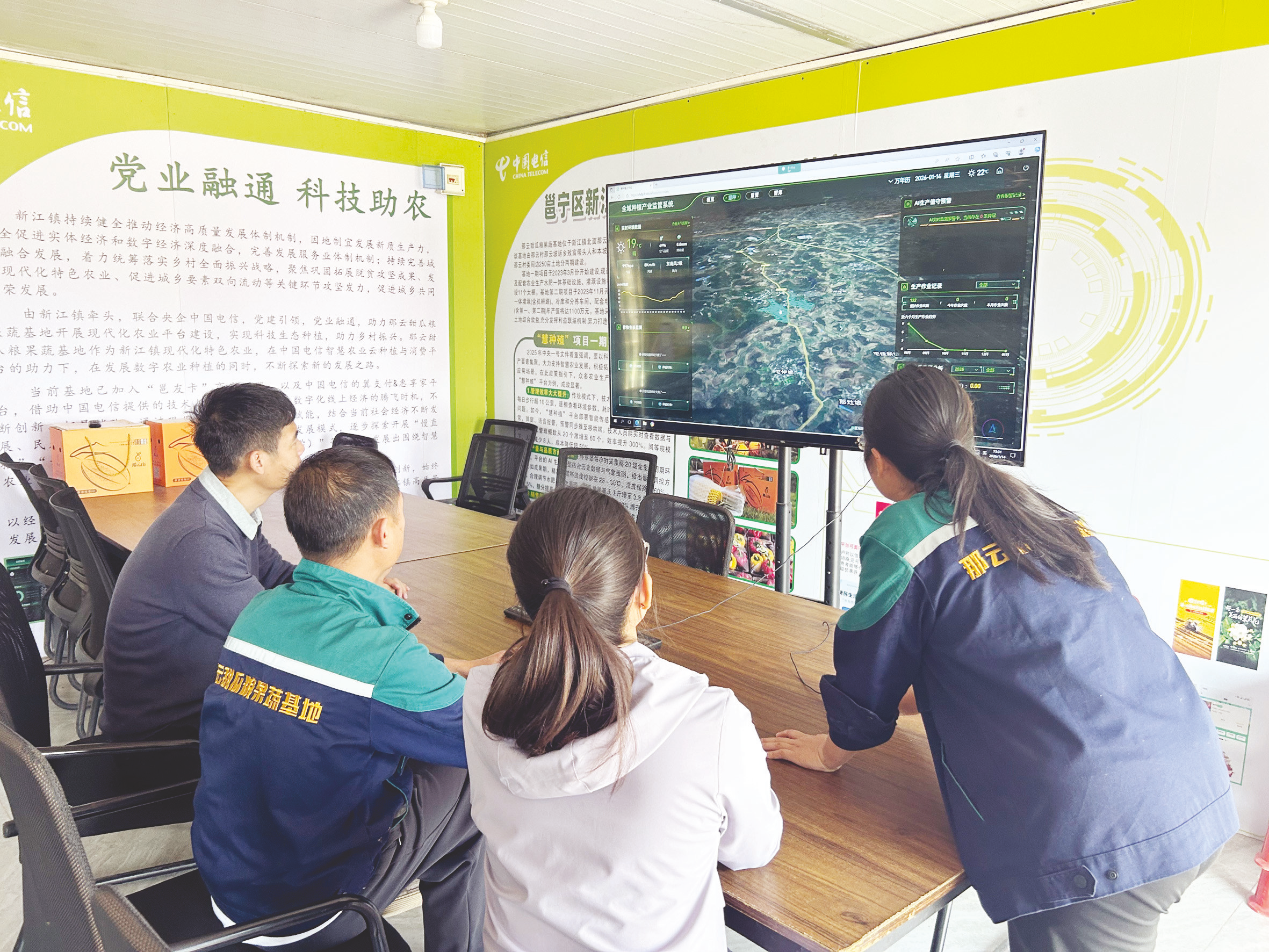
一颗甜瓜甜了家乡 一片大棚富了乡亲
Xin Lang Cai Jing· 2026-01-20 21:55
Core Insights - The article highlights the integration of technology in modern agriculture to promote rural revitalization and economic development in Xinjiang Town, focusing on the "Nayun Sweet Melon" brand and its impact on local farmers [2][4][6]. Group 1: Economic Development - Xinjiang Town is enhancing its economic development mechanisms to promote high-quality growth, focusing on the integration of the real economy and digital economy [2]. - The "Nayun Sweet Melon" base, supported by China Telecom, is a key player in modern agricultural platform construction, utilizing smart agriculture technologies [2][4]. Group 2: Agricultural Innovation - The base employs advanced technology for monitoring and managing greenhouse conditions, leading to improved crop yields and quality [5]. - The first batch of sweet melons was successfully marketed in May 2023, achieving significant economic benefits and expanding its market reach to regions like the Yangtze River Delta and Pearl River Delta [5]. Group 3: Community Impact - The initiative has encouraged local farmers to participate in the cooperative, with over a hundred households benefiting from various income channels, including land transfer and cooperative farming [5]. - The village's collective economic income surpassed 500,000 yuan for the first time in 2023, demonstrating the positive impact of the agricultural project on the local economy [5]. Group 4: Future Prospects - The brand aims to enhance its recognition and explore agritourism opportunities to further increase local economic benefits and support community wealth [6].
三大运营商定调2026:继续战略收缩 聚焦AI转型
Zhong Guo Jing Ying Bao· 2026-01-20 13:24
Core Insights - The three major telecom operators in China are shifting their strategies towards "strategic contraction and focused transformation," moving away from a "large and comprehensive" approach to concentrate resources on core business areas such as computing power, AI applications, and enterprise markets [1][4] Financial Performance - In 2024, the total revenue of the three operators approached 2 trillion yuan, with a year-on-year growth rate slowing to approximately 3%, a significant decline compared to previous years. The combined net profit was about 192 billion yuan, reflecting a year-on-year increase of approximately 6.1%. The combined EBITDA was around 574 billion yuan, showing a slight decline of about 0.7%, indicating a fatigue in profitability [2] Strategic Focus - China Telecom is upgrading its strategy from "cloud transformation" to "intelligent and beneficial cloud transformation," emphasizing AI empowerment and security in enterprise construction. In 2024, the revenue from digitalization in its industry is expected to increase, with a 22% year-on-year growth in capital expenditure for computing power [3] - China Unicom is focusing on four core areas: connectivity, computing power, services, and security, moving away from a comprehensive coverage model. Its investment in computing power is expected to rise by 19% in 2024, with plans to build a multi-layered computing supply system [3] - China Mobile aims to strengthen its three main businesses: communication services, computing services, and intelligent services, with a focus on technology leadership and scale synergy. The planned investment in computing power for 2025 is 37.3 billion yuan, maintaining the same level as 2024 but increasing its share in capital expenditure to 25% [4] Embracing AI - All three operators are sending a clear signal of "fully embracing AI." China Unicom is focusing on the synergy between AI and its core areas, while China Telecom is integrating AI throughout its operations. China Mobile is also prioritizing intelligent services and plans to develop 15 million AI terminals by 2026 [5][6] Capital Expenditure Trends - The capital expenditure of the three operators is showing a trend of "overall contraction with localized increases," with a total planned capital expenditure for 2025 reduced by 9.1% to 289.8 billion yuan. The focus is shifting towards "intelligent computing centers" and "massive card clusters" [7]