BANK OF CHINA(601988)

Search documents
2万亿巨头,历史新高!发生了什么?
Zhong Guo Zheng Quan Bao - Zhong Zheng Wang· 2025-11-23 00:14
Core Viewpoint - The A-share market experienced significant corrections during the week of November 17 to 21, with a notable retreat in previously strong technology stocks and increased risk aversion among investors. Bank stocks, particularly China Bank, saw active trading and reached new historical highs multiple times during the week [1][4]. Market Performance - A total of 46 stocks reached historical highs this week, a decrease from 83 the previous week. Year-to-date, 1003 stocks have achieved historical highs as of November 21 [1]. - Among the 46 stocks, the power equipment, basic chemicals, and machinery sectors had six stocks each reaching new highs, while the electronics sector saw a significant drop to three stocks [1]. - The main board had 31 stocks reaching new highs, while the Sci-Tech Innovation Board had six, the Growth Enterprise Market had five, and the Beijing Stock Exchange had four [1]. Trading Activity - The overall trading activity of strong stocks decreased. The top five stocks by trading volume were China Minmetals Resources, China Bank, Industrial and Commercial Bank of China, Foshan Plastics Technology, and Dazhong Mining, with trading volumes of 15.795 billion, 15.195 billion, 12.66 billion, 12.18 billion, and 12.13 billion respectively [1][6]. Bank Sector Insights - The recent performance of bank stocks is driven by several core factors, including policy support from the central bank aimed at stabilizing net interest margins and enhancing the effectiveness of monetary policy [4]. - The current price-to-book (PB) ratio for A-share banks is 0.73, while Hong Kong's state-owned banks have a PB ratio of approximately 0.55, indicating that valuations remain significantly low compared to international peers [4]. - The banking sector's dividend yield is notably higher than the risk-free rate, creating an attractive investment logic in the current low-interest-rate environment [4]. Investment Recommendations - Investment strategies suggested by analysts include focusing on regional banks with strong certainty and high dividend yields, particularly large banks and joint-stock banks [5]. - The stocks that reached new highs most frequently over the past 30 trading days include Electric Power Investment Energy (14 times), Hanlan Environment (13 times), and Zhiyang Innovation (12 times) [5]. Stock Price Movements - The stocks with the highest price increases this week included Zhenai Meijia (up 38.96%), Tengjing Technology (up 34.50%), and Huaci Co., Ltd. (up 31.69%) [8]. - Among the 46 stocks, two stocks had prices exceeding 100 yuan, with Tengjing Technology at 152 yuan and Tianpu Co., Ltd. at 108.61 yuan [8].




2万亿巨头 历史新高!发生了什么?
Zhong Guo Zheng Quan Bao· 2025-11-23 00:01
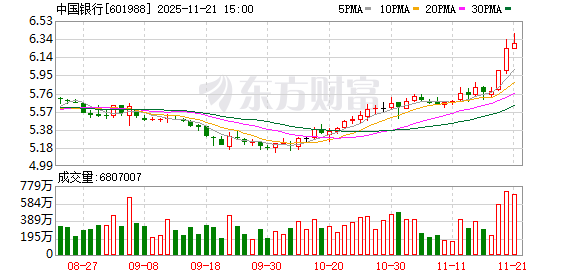
Core Viewpoint - The A-share market experienced a significant pullback during the week of November 17-21, with a notable decline in previously strong technology stocks and an increase in risk-averse sentiment, leading to heightened activity in bank stocks, particularly China Bank, which reached new historical highs multiple times during the week [2][4]. Market Performance - A total of 46 stocks reached historical highs this week, a decrease from 83 the previous week. Year-to-date, 1,003 stocks have achieved historical highs as of November 21 [2]. - Among the 46 stocks, the power equipment, basic chemicals, and machinery sectors had a concentration of 6 stocks each reaching new highs, while the electronics sector saw a significant drop to only 3 stocks [2]. - The main board had 31 stocks reaching new highs, the Sci-Tech Innovation Board had 6, the Growth Enterprise Market had 5, and the Beijing Stock Exchange had 4 [2]. Trading Activity - The overall trading activity of strong stocks decreased, with the top five stocks by trading volume being Zhongjin Resources, China Bank, Industrial and Commercial Bank of China, Foshan Plastics, and Dazhong Mining, with trading volumes of 15.795 billion, 15.195 billion, 12.66 billion, 12.18 billion, and 12.13 billion respectively [2][6]. Bank Sector Insights - The recent performance of bank stocks is driven by several core factors, including policy support from the central bank aimed at stabilizing net interest margins and enhancing the effectiveness of monetary policy [4]. - The current price-to-book (PB) ratio for A-share banks is 0.73, while Hong Kong's state-owned banks have a PB of approximately 0.55, indicating that valuations remain significantly low compared to international peers [4]. - The banking sector's dividend yield is notably higher than the risk-free rate, creating an attractive investment logic in the current low-interest-rate environment [4]. Investment Recommendations - Investment strategies suggested by Zhongtai Securities include focusing on regional banks with strong certainty and high dividend yields, particularly large banks and joint-stock banks [5]. - The stocks that reached new highs most frequently over the past 30 trading days include Electric Power Investment Energy (14 times), Hanlan Environment (13 times), and Zhiyang Innovation (12 times) [5]. Stock Price Movements - The stocks with the highest price increases this week were Zhenai Meijia (up 38.96%), Tengjing Technology (up 34.50%), Huaci Co. (up 31.69%), and others [7]. - Among the 46 stocks, two stocks had prices exceeding 100 yuan, with Tengjing Technology at 152 yuan and Tianpu Co. at 108.61 yuan [7].
中国银行伦敦分行举办国际会议 探讨可持续发展合作
Xin Hua She· 2025-11-22 20:25
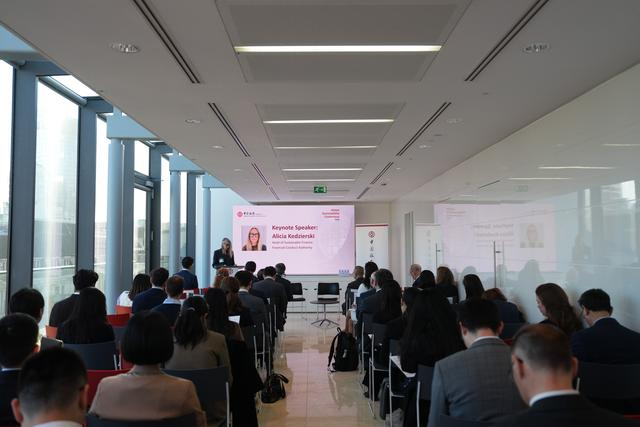
新华社伦敦11月22日电(记者高文成 赵小娜)中国银行伦敦分行20日举办2025年"全球可持续发展大 会",吸引来自监管机构、国际组织、金融机构、研究机构及企业的近80名代表出席。 这是11月 20日在伦敦拍摄的"全球可持续发展大会"会场。 新华社发(主办方供图) 与会嘉宾普遍表示,中国在绿色产业、清洁技术制造、生物多样性保护等领域政策力度的持续加大,不 仅为绿色转型提供制度保障,也为中英合作开辟了更广阔的空间。 日,在伦敦举行的"全球可持续发展大会"上,中国银行伦敦分行行长方文建在发表致辞。 新华社发 (主办方供图) 围绕低碳转型,与会嘉宾分享了在电动交通、清洁能源、供应链减排等领域的最新进展。美国杰富瑞投 资银行可持续发展团队负责人阿尼凯特·沙阿从国际视角对美国企业的绿色投资趋势进行了分析,指出 即便面对外部政策的不确定性,美国企业在低碳投资和绿色创新方面仍保持增长态势。 日,在伦敦举行的"全球可持续发展大会"上,与会嘉宾展开讨论。 新华社发(主办方供图) 11月20 会议还就推进投资转型战略等议题展开深入讨论。来自联合国气候技术合作与信息中心的朱莉娅·肯普 尼分享了该机构在支持发展中国家推动气候项目中的 ...
养老金融新政 密集落地!多家银行发力
Zhong Guo Zheng Quan Bao· 2025-11-22 14:12
Core Viewpoint - The Guangdong Provincial Financial Regulatory Bureau has issued an implementation plan aimed at promoting high-quality development of pension finance, targeting the establishment of a distinctive pension financial system by 2028 and achieving a virtuous cycle of pension finance and the silver economy by the end of the 14th Five-Year Plan [1] Group 1: Implementation Plans and Directions - Various regions, including Beijing, Chongqing, and Guangdong, have developed specific implementation plans emphasizing the crucial role of the banking sector in enhancing pension finance [2] - The plans highlight the responsibility of the banking industry in enriching the supply of pension financial products, with Beijing proposing to promote personal pension products and specialized commercial pension insurance [3] Group 2: Empowerment of the Pension System and Silver Economy - Banks are encouraged to support the construction of pension institutions and community service stations by developing innovative credit products tailored to their operational characteristics [4] - In Guangdong, banks are urged to increase credit investment in elderly goods and services, infrastructure construction, and smart elderly assistance device development, with favorable loan terms [4] Group 3: Active Engagement of the Banking Sector - The banking sector is actively focusing on pension finance through strategic planning, brand building, product design, and business development, with China Construction Bank leading in loan support for the pension industry [5] - China Bank has launched the "Zhongyin Silver Age" pension finance brand, offering diverse products to meet individual pension needs and reporting significant figures in pension fund management [5] Group 4: Potential Opportunities in the Pension Finance Sector - Experts suggest that banks can leverage their network advantages to explore opportunities in pension finance, including deep involvement in social security fund management and customized solutions for corporate annuities [7] - The personal pension market presents significant potential, with banks capable of providing comprehensive retirement planning services to clients [7] Group 5: Digital Transformation in Pension Finance - The trend of digital transformation in the banking sector is becoming more evident, with banks expected to enhance financial services for traditional pension industries and explore new business models like smart elderly care [8]
2025中国银行业竞争力100强出炉,国有大行稳居第一梯队
2 1 Shi Ji Jing Ji Bao Dao· 2025-11-22 10:31
Core Insights - The "2025 China Banking Industry Competitiveness Research Report" was released, highlighting the evolving competitive landscape of the banking sector amid economic adjustments, fintech innovations, and regulatory improvements [1] - The report ranks the top 100 banks based on a comprehensive evaluation system focusing on scale, profitability, growth, and stability, providing a multidimensional assessment of the industry [1] Group 1: Overall Ranking and Structure - The ranking includes 6 state-owned banks, 12 joint-stock banks, 53 city commercial banks, 27 rural commercial banks, 2 private banks, and 5 foreign banks, showcasing a diverse competitive landscape [2] - State-owned banks dominate the top tier, with all 6 making it into the top ten, led by Industrial and Commercial Bank of China, which excels in asset scale and profitability [2] Group 2: Joint-Stock Banks - Among the 12 joint-stock banks, 10 are positioned between 5th and 30th place, with China Merchants Bank leading this group at 5th place due to its strong profitability and growth potential [3] - Other notable banks include CITIC Bank and Industrial Bank, ranked 8th and 9th respectively, indicating a clear differentiation in performance among these institutions [3] Group 3: City Commercial Banks - City commercial banks represent the largest group with 53 institutions, with Jiangsu Bank leading at 17th place, showcasing strong profitability and growth [4] - Other top performers include Shanghai Bank and Ningbo Bank, ranked 18th and 19th, respectively, emphasizing the importance of regional advantages in their competitive strategies [4] Group 4: Rural Commercial Banks - Rural commercial banks, with 27 institutions on the list, demonstrate robust growth and stability, with Shanghai Rural Commercial Bank ranked 22nd [4] - These banks focus on serving local farmers and small enterprises, contributing significantly to rural economic development [4] Group 5: Private and Foreign Banks - The two private banks on the list, WeBank and MyBank, rank 13th and 15th respectively, highlighting their competitive edge in the internet finance sector [5] - The 5 foreign banks, including Citibank (China) and HSBC (China), leverage their international service capabilities to establish a competitive position in cross-border financing and corporate services [6]

重磅发布!《2025 中国银行业竞争力研究报告》解码行业未来
2 1 Shi Ji Jing Ji Bao Dao· 2025-11-22 10:30
Core Insights - The report emphasizes the critical year of 2025 as a pivotal point for China's banking industry, highlighting the historical achievements during the "14th Five-Year Plan" and the industry's high-quality development amidst internal and external challenges [1][2]. Group 1: Overall Industry Trends - The banking industry is facing uncertainties but demonstrates resilience, with signs of stabilization in net interest margins and a recovery in middle-income sources [3]. - The global economic growth is characterized by fragmentation, with increasing policy divergence among major central banks, while domestic economic stability is challenged by insufficient effective demand [3]. - The financial regulatory framework is being enhanced to support stable development, focusing on risk prevention, strong regulation, and promoting growth [3]. Group 2: Competitiveness Rankings - The report includes a comprehensive analysis of the "Top 100 Competitiveness Rankings of China's Banking Industry (2025)" based on four key indicators: scale, profitability, stability, and growth [4]. - Sub-rankings include "Top 100 by Scale," "Top 100 by Profitability," and "Top 100 by Growth," providing a multidimensional view of banks' strengths [4]. - The scale ranking focuses on total assets and liabilities, while the profitability ranking examines operating income and return on assets (ROA), and the growth ranking considers revenue growth rates and capital adequacy [4]. Group 3: Key Development Areas - The report covers five major areas of development: technology finance, digital finance, pension finance, green finance, and inclusive finance, showcasing practical outcomes and development paths for 2025 [5]. - It highlights advancements in technology finance, including organizational upgrades in major banks and rapid growth in technology loans from smaller banks [5]. - The report also notes the entry of five banks into the "trillion club" for green credit and the evolution of inclusive finance towards differentiated and precise services [5].
中国银行云南省分行织密金融安全网 共筑支付新防线
Zhong Guo Jin Rong Xin Xi Wang· 2025-11-22 09:35
Core Viewpoint - The Bank of China Yunnan Branch has launched a comprehensive financial education campaign themed "Smart Card Safe Payment," aimed at enhancing financial consumer safety across various demographics in the province [1][7]. Group 1: Financial Education Initiatives - The branch has transformed its service halls into "financial knowledge hubs," utilizing banners, brochures, and risk warning signs to create an engaging educational atmosphere [2]. - Staff members act as "financial ambassadors," providing on-site training on mobile banking, digital currency, and payment tools, while also offering personalized guidance on card usage and credit protection [2]. Group 2: Targeted Outreach Programs - The bank has conducted specialized actions focusing on "salary card safety management" in local enterprises, addressing common workplace scams and providing practical skills for financial security [3]. - In collaboration with universities, the bank has organized lectures on safe payment practices, using interactive methods to educate students about the dangers of campus loans and online scams [4]. Group 3: Community Engagement - The bank has reached out to middle-aged and elderly populations in communities, offering "anti-fraud micro-classes" that explain prevalent scams and teach basic payment operations [4]. - The initiative emphasizes the importance of security principles such as "do not trust, do not transfer, do not disclose" to help older adults navigate digital financial services safely [4]. Group 4: Comprehensive Financial Education Ecosystem - The bank has established a "financial knowledge harbor" to disseminate essential information on ATM safety, online banking verification, and credit card management, ensuring broad coverage across urban and rural areas [5]. - The campaign has successfully reached various demographics, conducting nearly a hundred specialized events and distributing over ten thousand educational materials, engaging over ten thousand participants [7].
【中国经济新看点】保险业服务全链条科技创新
Jing Ji Ri Bao· 2025-11-21 22:53
Group 1: Market Growth and Support - The technology insurance market in China has been experiencing rapid growth, supported by increasing policy backing and a richer product system, providing substantial risk protection for technological innovation [1] - During the "14th Five-Year Plan" period, technology insurance has provided cumulative risk protection exceeding 10 trillion yuan, with 3,600 projects supported for innovative applications [1] Group 2: Policy Support and Product Innovation - China Pacific Insurance has launched a dedicated insurance product called "Smart Insurance" for humanoid robots, addressing the risk protection needs associated with their commercialization [2] - Various provinces have introduced technology insurance policies, such as Beijing's subsidy for insurance premiums on major technological equipment, covering 80% of the premium costs up to 2 million yuan per enterprise annually [3] - The Ministry of Science and Technology and other departments have issued policies to enhance the technology finance system, emphasizing the importance of technology insurance in supporting innovation [3] Group 3: Reinsurance Functionality - Reinsurance serves as an effective risk management tool, providing support for major technology projects and facilitating international market interaction [4] - Reinsurance companies enhance risk protection for technological innovation by offering technical support and underwriting capacity, helping to mitigate and transfer risks [4] Group 4: Challenges and Future Directions - The technology insurance sector faces challenges such as inadequate risk protection capabilities and a lack of innovative products tailored to specific enterprise needs [7] - There is a need for improved risk pricing support and the development of mature pricing models to better assess risks associated with technology insurance [7] - Future efforts should focus on optimizing technology risk management models, enhancing insurance product innovation for strategic emerging industries, and building an information-sharing platform among government, technology enterprises, and insurance companies [8]


高股息股受追捧 银行股走势最亮眼
Zheng Quan Shi Bao· 2025-11-21 16:31
证券时报记者 毛军 受外围市场大幅震荡,以及上证指数月线连续6个月上涨积累大量获利盘的影响,本周A股出现年内第二大周线级 别调整。上证指数跌破3900点,深证成指跌破13000点,创业板指、上证50双双失守3000点大关。 本周,日成交均萎缩至2万亿元以下,全周成交9.33万亿元,较上周减少近9000亿元。从分类指数来看,微盘股缩 量最为明显,环比减少约15%。 展望后市,渤海证券指出,A股短期由外部风险释放带来指数层面的调整。就现阶段而言,行情总体风险适中,监 管强调"坚决防止市场大起大落、急涨急跌"的背景下,市场不具有持续下跌的基础,市场调整为资金重新布局提 供了窗口期。若未来有增量利好政策出台,将有望推动政策主线或科技主线的展开。 太平洋证券表示,目前海外股市表现更弱,多个主要经济体如德国、英国、美国股市皆已转弱,建议投资者谨慎 为上。即使A股进入中期调整,但长期的上涨趋势预计不变,建议投资者采取高筑墙(红利),广积粮(降低仓 位),缓称王(等待时机)的策略。从近几日的行情来看,热点板块的持续性普遍不佳,仍建议投资者以避险的 高股息红利为主,留出仓位等待未来的加仓时机。 虽然银行股近年来连续上涨,但整体 ...

9只股收盘价创历史新高
Zheng Quan Shi Bao Wang· 2025-11-21 13:46
Core Points - The Shanghai Composite Index fell by 2.45% today, with 9 stocks reaching historical closing highs [1] - Among the tradable A-shares, 354 stocks rose (6.50%) while 5072 stocks fell (93.17%), with 33 stocks hitting the daily limit up and 107 stocks hitting the limit down [1] Group 1: Historical Highs - A total of 9 stocks reached historical closing highs today, with 4 from the main board, 1 from the ChiNext, and 2 from the Sci-Tech Innovation Board [1] - The industries with the most stocks reaching historical highs include computer, electric equipment, and banking, with 2, 2, and 1 stocks respectively [1] - The average price of stocks that reached historical highs was 47.68 yuan, with one stock priced over 100 yuan and another between 50-100 yuan [1] Group 2: Stock Performance - Stocks that reached historical highs saw an average increase of 7.00%, with notable gainers including Pingao Co., Yidian Tianxia, and Luokai Co. [1] - The highest closing price was for Pinming Technology at 148.56 yuan, which increased by 4.77%, followed by Zhenai Meijia and Pingao Co. at 57.00 yuan and 49.02 yuan respectively [1] Group 3: Capital Flow - The total net inflow of main funds into stocks reaching historical highs was 658 million yuan, with the highest net inflows seen in Yidian Tianxia, Luokai Co., and Pingao Co. [2] - The average total market capitalization of stocks reaching historical highs was 174.197 billion yuan, with the highest market capitalizations belonging to China Bank, Yidian Tianxia, and Pinming Technology [2] Group 4: Recent Performance - Among the stocks that reached historical highs, Zhenai Meijia recorded 9 new highs in the past month, while Kunong Technology, Shanghai Port, and China Bank recorded 6, 5, and 4 new highs respectively [2]