BANK OF CHINA(601988)

Search documents
华瑞银行下调存款利率,各地小银行也在下调,零利率时代已到来?
Sou Hu Cai Jing· 2025-10-26 23:09
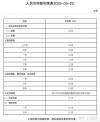
Core Viewpoint - The report from the Bank of China Research Institute indicates that more banks, particularly small and medium-sized banks, are expected to lower deposit interest rates in the last quarter of 2025, especially for medium- and long-term deposits [1] Group 1: Deposit Rate Changes - In the second quarter, the six major state-owned banks lowered their deposit rates, with the current deposit rate dropping to an unprecedented 0.05%, meaning a deposit of 10,000 yuan yields only 5 yuan in annual interest [3] - The one-year fixed deposit rate is now at 0.95%, while the three-year fixed deposit rate is only 1.25%, aligning with the zero-interest rate environment seen in developed economies [3] - Joint-stock banks have also joined the trend of lowering interest rates, with one-year fixed deposit rates around 1.15%, while some city commercial banks and provincial rural commercial banks have rates between 1% and 1.1% [4] Group 2: Comparison of Bank Rates - A table shows various banks' deposit rates, with state-owned banks offering rates of 0.95% for one-year fixed deposits and 1.25% for three-year fixed deposits, while some smaller banks still maintain higher rates [6] - Smaller banks like Shanghai Huari Bank have begun to lower their deposit rates, but their rates remain higher than those of the six major state-owned banks, with one-year fixed deposit rates at 1.5% and three-year rates at 2.3% [12] Group 3: Economic Context - The decline in deposit rates is attributed to banks' varying operational conditions and the need to lower costs in a competitive lending environment, particularly affecting smaller banks that rely heavily on interest rate spreads [7] - The People's Bank of China has not adjusted the benchmark deposit rates since July 2011, leading to a situation where the rates set by the six major banks effectively replace the central bank's rates [12] - The financial system's structural changes have resulted in deposit rates for major banks nearing zero, with current rates at 0.05% for current accounts and 0.9% for one-year fixed deposits [13]







工行、农行、中行、建行、交行、邮储银行集体表态
Jin Rong Shi Bao· 2025-10-26 22:56
Group 1: Core Points of the Meeting - The Fourth Plenary Session of the 20th Central Committee of the Communist Party of China was held from October 20 to 23, 2025, in Beijing, where the "15th Five-Year Plan" was discussed, outlining China's development blueprint for the next five years [1] - Major state-owned banks held meetings to convey the spirit of the plenary session and to plan the implementation of the "15th Five-Year Plan" [1] Group 2: Industrial Bank Responses - Industrial and Commercial Bank of China emphasized supporting economic stability and high-quality development, integrating major tasks from the "15th Five-Year Plan" [2] - Agricultural Bank of China focused on enhancing financial services for rural areas and supporting agricultural modernization, while also promoting domestic demand and effective investment [3] - Bank of China aimed to improve global competitiveness and support the internationalization of the RMB, while enhancing financial services for the Belt and Road Initiative [4] - China Construction Bank highlighted its role in supporting advanced manufacturing and infrastructure development, while also enhancing risk management [5] - Bank of Communications stressed the importance of public engagement in planning and maintaining economic recovery momentum [7] - Postal Savings Bank of China committed to high-quality development and effective financial services, aligning with national strategic goals [8]


又有银行开启“随金价浮动”机制!业内人士:怕追高可以这样做
Xin Lang Cai Jing· 2025-10-26 22:35
Core Viewpoint - The recent adjustments by multiple banks in China to their gold accumulation plans reflect a response to the volatile gold market, with banks shifting to a pricing mechanism linked to real-time gold prices to better align with market fluctuations [5][10]. Group 1: Bank Adjustments - Bank of Communications announced that starting from October 27, 2025, the starting amount for its "Gold Wallet" accumulation plan will no longer be fixed but will instead fluctuate with gold prices, requiring the set amount to be at least equal to the real-time gold price [1][2]. - Agricultural Bank of China has also adjusted its gold accumulation plan to a floating pricing model, effective from September, to comply with regulatory requirements and enhance customer convenience [4]. - Several banks, including Industrial and Commercial Bank of China and China Bank, have raised their minimum investment thresholds for gold accumulation plans in October, indicating a trend among banks to increase entry barriers [6][7][8]. Group 2: Market Dynamics - The recent surge in gold prices is attributed to three main factors: the inverse relationship between gold prices and real interest rates, rising geopolitical tensions increasing demand for gold as a safe-haven asset, and central banks in emerging markets increasing their gold reserves [10]. - Analysts suggest that the floating pricing mechanism adopted by banks helps avoid delays in adjusting entry thresholds during periods of significant price volatility, thus providing a more responsive investment environment [8][9]. Group 3: Investor Guidance - Financial institutions have issued risk warnings to investors regarding the heightened volatility in precious metal prices, urging them to assess their risk tolerance and manage their investment positions carefully [9]. - Experts recommend that investors focus on long-term strategies for gold accumulation, emphasizing the importance of gradual investment rather than attempting to capitalize on short-term price movements [11].


贯彻落实党的二十届四中全会精神 多家银行为“十五五”金融工作“划重点”
Zheng Quan Ri Bao· 2025-10-26 16:38
Core Viewpoint - Recent meetings held by policy banks and major state-owned banks focus on implementing the spirit of the 20th Central Committee's Fourth Plenary Session, emphasizing financial services for the "14th Five-Year Plan" period and aligning with national development strategies [1][2]. Group 1: Policy Banks and State-Owned Banks' Focus - Policy banks are crucial platforms for implementing national development strategies, with the Agricultural Development Bank of China emphasizing support for food security, poverty alleviation, rural development, and ecological construction [1]. - The Export-Import Bank of China aims to enhance high-level opening-up and promote trade innovation and investment cooperation, contributing to the Belt and Road Initiative [1]. - State-owned banks are committed to balancing service to the real economy with sustainable development, integrating high-quality development into their management processes [1][2]. Group 2: Specific Strategies of Major Banks - Industrial and Commercial Bank of China plans to leverage international platforms to support high-level opening-up [3]. - Agricultural Bank of China focuses on common prosperity and increasing financial support for rural areas [3]. - Bank of China aims to enhance global competitiveness and support the internationalization of the RMB [3]. - China Construction Bank emphasizes infrastructure support and consumer finance initiatives [3]. - Bank of Communications is refining its strategic direction and priorities [3]. - Postal Savings Bank of China is committed to high-quality development and its unique financial strategies [3]. Group 3: Future Planning and Strategic Directions - Agricultural Bank of China will focus on key areas such as modern industrial systems, green transformation, and regional coordinated development over the next five years [4]. - The bank will prioritize intelligent, green, and integrated development while enhancing service quality for the real economy [4]. - China Construction Bank plans to optimize funding structures and promote regional development while managing potential risks [4].
贷款炒金的“黄金赌徒”后悔了:三天亏掉两个月工资
Di Yi Cai Jing· 2025-10-26 12:58
Core Insights - The recent decline in gold prices has led to significant losses for investors who leveraged loans to buy gold, highlighting the risks associated with such strategies [1][2][3] - The gold market has experienced extreme volatility, with prices reaching a peak of $4,381 per ounce before falling to around $4,100, resulting in substantial losses for many investors [2][3] - The trend of young investors entering the gold market is driven by perceived arbitrage opportunities, with many using loans to amplify their investments [5][6] Group 1: Investor Behavior - Many investors, like Ms. Li, initially profited from rising gold prices but are now facing losses due to price corrections, leading to difficult decisions about whether to sell at a loss or hold [1][3] - Investors are increasingly using various forms of credit, including personal loans and credit cards, to finance their gold purchases, often underestimating the risks involved [2][5] - The strategies of gold investors are diverging, with some opting to sell portions of their holdings to repay loans, while others choose to hold and wait for potential price rebounds [4] Group 2: Market Dynamics - The gold market has seen a dramatic price increase of nearly 70% since August, attracting a wave of new investors eager to capitalize on the trend [2] - Social media and online platforms have played a significant role in promoting gold investment, with influencers encouraging speculative trading behaviors among inexperienced investors [6] - The high volatility of gold prices poses a risk for leveraged investors, as they may face significant losses if they cannot accurately time their trades [6][7] Group 3: Institutional Responses - Several banks have raised the investment thresholds for gold products, reflecting concerns over market volatility and the risks associated with leveraged trading [8] - Financial institutions are increasingly warning investors about the potential for significant losses in the gold market, urging them to assess their risk tolerance and manage their positions carefully [7][8] - Some banks have implemented dynamic adjustments to their gold investment products, aligning purchase requirements with real-time gold prices to mitigate risks [8]

二永新债定价主导权在谁?
SINOLINK SECURITIES· 2025-10-26 09:13
Report Industry Investment Rating No relevant content provided. Core Viewpoints The report conducts a preliminary exploration of the pricing rules of secondary and perpetual bonds (referred to as "two - perpetual bonds") issued by state - owned large - scale banks and their association with institutional behaviors. It analyzes the influence of the new VAT regulation on the pricing of new and old bonds, the pricing rules in the primary and secondary markets, and potential trading opportunities [2][11]. Group 1: Bank Sub - debt Subtle Clues - The new VAT regulation took effect on August 8th, dividing the interest income of bonds into taxable and tax - exempt based on the issuance time. To make the after - tax yields of new and old bonds of the same variety with similar remaining maturities and issued by the same entity equal, the coupon rate of new bonds should be higher than that of old bonds. For general financial institutions, the pre - tax yield ratio of new and old bonds should be around 1.068; for asset management institutions, this ratio is 1.034 [2][11]. - After August 8th, three new two - perpetual bonds were issued by large - scale banks. The ratio of the coupon rate to the issuance - day valuation of 5 + 5 - year and 10 + 5 - year secondary capital bonds is 1.035 and 1.071 respectively, indicating that the 10 + 5 - year variety contains more tax cost compensation. The difference between the coupon rate and the valuation of 5 + N - year bank perpetual bonds is only 0.01bp, showing that the tax cost compensation in the pricing of perpetual bonds is not significant [2][15]. - The pricing of new two - perpetual bonds is related to the subscription power of institutions participating in the primary market. For 5 + 5 - year secondary capital bonds, large - scale and city commercial banks' self - operations are net sellers on the first active trading day, while joint - stock banks, funds, and other product categories are net buyers. For 10 + 5 - year secondary capital bonds, city commercial banks, joint - stock banks, and securities self - operations are net sellers, and insurance, funds, and other product categories are net buyers. For bank perpetual bonds, large - scale, joint - stock, city commercial, and rural commercial banks are net sellers, and other product categories, funds, and insurance are net buyers [18][24][32]. Group 2: Review of Two - perpetual Bond Pricing Rules - The pricing logic of new bonds in the cash market is dominated by trading desks. For 5 - year large - scale bank secondary capital bonds, the yield ratio of new and old bonds is generally between 1.03 and 1.04 and shows an upward trend. The slow decline in the valuation of new bonds is due to the immature pricing mechanism after the implementation of the new VAT regulation, which makes investors prefer old bonds [4][42]. - For 10 - year large - scale bank secondary capital bonds, the yield ratio of new and old bonds is concentrated between 1.028 and 1.038 and has decreased significantly compared to the initial listing. After the holiday, the ratio has rebounded, affected by the lower liquidity of new bonds and the increased profit - taking by bank self - operations. The continuous buying by insurance indicates that ultra - long - term secondary bonds still need to stabilize [4][48]. - For large - scale bank perpetual bonds, the yield ratio of new and old bonds fluctuates between 1.015 and 1.022. It is lower than that of secondary capital bonds because the trading volume of bank self - operations and other institutions is relatively small, and the liquidity of perpetual bonds is poor. When funds net - buy new perpetual bonds, the yield ratio of new and old bonds increases; when the selling volume of funds increases, the yield ratio decreases, indicating that new perpetual bonds have better defensive properties [5][55]. Group 3: Some Thoughts on Trading Opportunities - The yield of 5 - year large - scale bank secondary capital bonds fluctuates around the spread range of 10 - year treasury bonds. When the yield breaks through the upper limit of 10 - year treasury bonds + 30bp, the probability of a subsequent rebound increases; when it breaks through the lower limit of treasury bonds + 20bp, the probability of a subsequent correction rises. However, the new bonds issued after August 8th may be affected by the VAT on interest income, which may interfere with the effectiveness of the signal [64]. - One way to deal with new bonds is to convert the yield of new secondary capital bonds through the yield ratio of comparable new and old bonds, but its effectiveness is difficult to verify. Another way is to construct a new rotation signal using new 5 - year secondary capital bonds and 10 - year treasury bonds. The new bond combination will indicate an oversold rebound later and an over - bought defense earlier compared to the initial signal. Institutions with a lower VAT rate can obtain excess tax compensation by investing in new bonds with higher tax compensation [68].
买金门槛变了!多家银行出手
新浪财经· 2025-10-26 08:04
Core Viewpoint - The article discusses the adjustment of the gold accumulation plan by Bank of Communications, which will now be linked to real-time gold prices, reflecting the recent volatility in gold prices and potentially influencing other banks to follow suit [2][4]. Group 1: Bank Adjustments - Starting from October 27, Bank of Communications will adjust its gold accumulation plan's minimum investment amount to be at least equal to the real-time gold price, with increments in multiples of 100 [2]. - Other banks, including Industrial and Commercial Bank of China, Bank of China, Ping An Bank, and Industrial Bank, have also raised their minimum investment thresholds for gold accumulation products in October [6][7]. - For instance, ICBC raised its minimum investment for its gold accumulation product from 850 to 1000 yuan, while Bank of China increased its minimum from 850 to 950 yuan [7]. Group 2: Market Dynamics - Gold prices have seen significant fluctuations, with a 24% increase since late August, reaching historical highs [4]. - The recent rise in gold prices is attributed to three main factors: declining real interest rates, increasing geopolitical tensions, and central banks in emerging markets boosting their gold reserves [9]. - Market volatility is expected, with recent price corrections linked to changes in geopolitical situations and positive signals regarding the U.S. government shutdown [9].

工行、农行、中行、建行、交行、邮储银行,集体表态!
券商中国· 2025-10-26 04:51
Core Viewpoint - The six major state-owned banks in China are aligning their strategies with the spirit of the 20th National Congress, focusing on supporting economic stability and high-quality development while enhancing risk management and financial services [1][2][3][4][5][6][7][8]. Group 1: Industrial Bank Strategies - Industrial Bank emphasizes the importance of integrating domestic and international strategies, supporting high-quality development, and enhancing risk management while fulfilling its responsibilities as a major bank [2]. - Agricultural Bank focuses on serving the rural economy, increasing financial supply in rural areas, and supporting the modernization of agriculture while ensuring financial risk management [3]. - Bank of China aims to enhance its global competitiveness, optimize financial resource allocation, and support the development of a modern industrial system while promoting the internationalization of the RMB [4]. - Construction Bank is committed to supporting the development of advanced manufacturing and enhancing its financial service system to promote new quality productivity [6]. - Bank of Communications emphasizes the importance of public engagement in strategic planning and aims to contribute to economic recovery while ensuring a smooth transition between the 14th and 15th Five-Year Plans [7]. - Postal Savings Bank prioritizes high-quality development, focusing on effective financial supply to meet the evolving needs of the economy and society [8].

交通银行重要公告,工商银行、中国银行、兴业银行等都出手了!
Mei Ri Jing Ji Xin Wen· 2025-10-26 01:20
Core Viewpoint - The Bank of Communications announced an adjustment to its precious metals wallet accumulation plan, linking the minimum investment amount to real-time gold prices, effective from October 27, 9:30 AM [1][4]. Group 1: Changes in Investment Thresholds - The minimum investment amount for the Bank of Communications' accumulation plan will now be greater than or equal to the real-time gold price, with increments required in multiples of 100 [1][3]. - Other banks, including Industrial and Commercial Bank of China, Bank of China, and Ping An Bank, have also raised their minimum investment thresholds for gold accumulation products in October [4][5]. - For instance, ICBC increased its minimum investment from 850 yuan to 1000 yuan, while Bank of China raised it from 850 yuan to 950 yuan [5]. Group 2: Market Dynamics and Investor Behavior - There has been a significant increase in inquiries and trading activity in gold accumulation products, particularly as international gold prices show strong momentum [8]. - The shift in customer asset allocation is attributed to the low yields of traditional financial products and time deposits, making gold accumulation an attractive option due to its clear investment threshold and direct linkage to physical gold [8]. - Experts indicate that banks are upgrading their risk management for gold accumulation businesses due to increased gold price volatility and regulatory requirements [8]. Group 3: Gold Price Trends and Market Sentiment - Gold prices have surged over 50% this year, leading to increased volatility and a rise in the risk of margin calls, prompting banks to raise minimum investment amounts and margin requirements [8]. - Analysts predict that gold prices are likely to experience high-level fluctuations in the short term, with underlying support from global central bank purchases and expectations of monetary easing [9]. - The current market is characterized by a crowded long position in gold, with profit-taking contributing to short-term volatility, while long-term upward trends remain intact due to ongoing global uncertainties [9].

买金门槛变了!多家银行出手 上调积存金起投门槛
Zhong Guo Zheng Quan Bao· 2025-10-25 23:43
Core Viewpoint - The Bank of Communications announced a change in its precious metals wallet accumulation plan, linking the minimum investment amount to real-time gold prices, reflecting the recent volatility in gold prices [1][3]. Group 1: Changes in Investment Thresholds - Starting from October 27, the minimum investment amount for the precious metals wallet will be adjusted to be greater than or equal to the real-time gold price, with increments in multiples of 100 [1]. - Other banks, including ICBC, Bank of China, and Ping An Bank, have also raised their minimum investment thresholds for gold accumulation products in October [3]. - For example, ICBC increased its minimum investment from 850 yuan to 1000 yuan, while Bank of China raised it from 850 yuan to 950 yuan [3]. Group 2: Market Context and Drivers - Gold prices have seen significant fluctuations, with a reported increase of 24% since late August, reaching historical highs [1]. - The rise in gold prices is attributed to three main factors: declining real interest rates, increasing geopolitical tensions, and central banks in emerging markets boosting their gold reserves [4]. - Recent market corrections in gold prices are linked to changes in geopolitical situations and easing concerns over the U.S. government shutdown [4].