CNCB(601998)

Search documents
中信银行重庆分行获评跨境人民币业务自律机制“优秀”成员单位
Sou Hu Cai Jing· 2026-01-08 07:29
2025年,中信银行重庆分行严格对标跨境人民币自律机制展业规范与工作要求,以合规经营为底线,以 服务实体为导向,全面推进人民币业务提质增效。一是践行服务宗旨,紧扣稳外贸稳外资工作布署。落 地多笔跨境人民币的"跨境直贷"业务,为企业出海提供高效融资支持,定制多样化授信方案,切实助力 企业纾困发展;二是深化便利化改革,积极参与跨境人民币便利化试点,扩大优质企业范围,为其精简 业务办理流程,提升服务效率;三是传导汇率中性理念,通过举办多场专项活动引导企业树立科学的汇 率风险管理意识,助力企业稳健经营;四是严守展业原则,扎实落实"了解你的客户、了解你的业务、 尽职审查"要求,强化跨境业务全流程合规管控,确保业务真实合规、风险可控。 2025年12月,重庆市银行跨境人民币业务自律机制通报2025年度评估考核结果,中信银行重庆分行凭借 优异表现斩获"优秀"成员单位,实现该荣誉六年蝉联。 下一步,中信银行重庆分行将以此次获评优秀为契机,持续做大跨境人民币业务规模,践行"一带一 路"国家战略,进一步强化政策执行力,提升实体经济服务精准度,全力打造领先的外汇服务银行,为 区域开放型经济高质量发展注入金融动能。(来源:中信银行重 ...

银行积存金投资门槛大摸底
Bei Jing Shang Bao· 2026-01-08 06:43
Core Viewpoint - The recent announcement by Industrial and Commercial Bank of China (ICBC) to raise the risk acceptance level for personal gold accumulation business to C3 (balanced) and above has triggered significant changes in the precious metals investment market, reflecting a broader industry trend towards stricter risk management in response to increased market volatility and rising gold prices [1][6]. Group 1: Industry Trends - Major banks have collectively raised the entry-level risk tolerance for gold accumulation products to at least a balanced level (C3), with some banks even setting it to aggressive levels, indicating a comprehensive industry-wide upgrade in risk control measures [1][3][4]. - The international gold price has surpassed $4,400 per ounce, prompting banks to filter out investors with lower risk tolerance to prevent significant losses due to market volatility [6][7]. Group 2: Bank-Specific Requirements - ICBC requires personal clients to achieve a C3 (balanced) risk assessment result to engage in gold accumulation business, a shift from the previous requirement of C1 (conservative) [3][4]. - Other banks, such as Postal Savings Bank and Shanghai Rural Commercial Bank, have also raised their risk assessment standards, with some requiring a minimum of C3 or higher for participation in gold accumulation products [4][6]. - Banks like China CITIC Bank and Ningbo Bank have announced future adjustments to their risk assessment requirements, aligning with the trend of increasing risk thresholds for gold investment [6][7]. Group 3: Investor Behavior and Risks - There is a growing concern about investors attempting to misrepresent their risk tolerance in order to qualify for gold accumulation products, which undermines the integrity of the risk assessment process [8][9]. - The industry is urged to enhance investor education and awareness regarding the risks associated with gold investments, especially in a volatile market environment [8][9].








2026年理财资产配置展望:2026钱往何处:理财真净值化时代的攻守之道
KAIYUAN SECURITIES· 2026-01-08 06:31
Investment Rating - The industry investment rating is "Positive" (maintained) [1] Core Viewpoints - The report anticipates steady growth in wealth management, estimating an increase of 3.8 trillion yuan in 2026, driven by the gradual maturity of residents' "excess savings" [4][17] - The report highlights a seasonal pattern in wealth management growth, with Q1 typically showing lower figures due to seasonal adjustments, while Q2 to Q4 exhibit stronger growth [22][27] - The report emphasizes the importance of short-term products, particularly those with a minimum holding period of 1 month, which are expected to be the main growth drivers in the wealth management sector [30] Summary by Sections 1. Liability Side - Growth is assured, with "deposit migration" as the main catalyst, leading to an expected wealth management growth of 3.8 trillion yuan in 2026 [4][17] - The proportion of residents' fixed deposits peaked at 85.57% in mid-2023, but is projected to decline to 55.33% by the end of 2023 and 48.14% by the end of 2024, indicating potential for further decreases [4][17] 2. Product Side - Short-term products, particularly those with a minimum holding period of 1 month, are the fastest-growing segments, with annualized yields close to 3-year fixed deposit rates [5][30] - The report notes that the liquidity and yield of these products make them attractive to wealth management clients, with non-managed daily opening and short-term products showing significant growth [5][30] 3. Asset Side - Deposits serve as the main base for wealth management, but their ability to contribute excess returns is limited as high-interest agreements mature [6][17] - The report suggests that credit bonds are becoming more attractive due to a steepening yield curve, with a focus on finding relatively high-yielding assets [6][17] - The report indicates that the allocation to equity products remains low, with a focus on "fixed income plus" strategies, reflecting clients' risk preferences [7][20] 4. Investment Recommendations - In a low-interest environment, wealth management subsidiaries with diverse product lines, strong research capabilities, and extensive distribution channels are expected to have a competitive advantage. Recommended banks include CITIC Bank and China Everbright Bank, with beneficiaries including Shanghai Pudong Development Bank, Hangzhou Bank, and Beijing Bank [8][16]

按揭、信用卡、消费贷与经营贷深度:深度银行四大零售资产的风险分析框架
ZHONGTAI SECURITIES· 2026-01-07 11:17
Investment Rating - The report maintains an "Overweight" rating for the banking sector [2] Core Insights - The four categories of retail loans (mortgages, credit cards, consumer loans, and business loans) collectively constitute household liabilities, each with distinct collateral types, duration structures, and policy influences. The report aims to establish a risk framework for these retail assets and assess their impact on banking operations in the future [2][4] - Under stress testing, the non-performing loan (NPL) ratios for mortgages, credit cards, and consumer loans are projected to increase by 11, 12, and 20 basis points respectively in 2026, while the growth in non-performing amounts remains manageable. The overall quality of corporate assets is expected to continue improving, indicating a stable banking sector [2][4] - Retail asset risks are deemed controllable, with policies expected to maintain stability in the near term [2] Summary by Sections Retail Asset Analysis Framework: Collateral Types + Duration Structure + Policy Impact - The overall NPL ratio for retail loans of listed banks is estimated at 1.27% in the first half of 2025, slightly above the corporate NPL ratio of 1.26%, but the increase in NPL ratios is stabilizing. The composition of existing NPLs is 63% corporate and 37% retail, with business loans and mortgages showing higher proportions of both existing and newly added NPLs [2][12] - The report establishes a risk analysis framework for retail assets, highlighting the differences in collateral types, duration structures, and policy impacts among the four categories of retail loans [2][4] Consumer Loans: "High-Risk" Assets - The relationship between consumer loans and consumption trends is closely aligned, with notable deviations occurring during strict property purchase restrictions and regulatory cycles for online loans. The market structure for consumer credit (excluding credit cards and mortgages) shows that listed banks hold over 51.5% of the market, while non-listed banks account for 17% and other players for 31% [2][4] - The risk logic for consumer credit indicates that risk pricing is primarily determined by interest rates, which can be categorized into four tiers based on risk levels. The report estimates that 4.4% of consumer loans fall into the "high-risk" category, with commercial banks' high-risk consumer loans representing only 0.6% of their total consumer loans [2][4] Mortgage Loans: Risk Sources and International Comparisons - The primary sources of mortgage risk include negative cash flow and high loan-to-value (LTV) ratios, with 1.2% of respondents reporting monthly incomes below their mortgage payments. The report anticipates that the current high LTV portion, which constitutes 2.9% of total mortgage balances, will not necessarily lead to increased NPLs [2][4] - International comparisons indicate that mortgage NPL ratios in most countries remain below 2%, suggesting that the risks in the domestic market are manageable [2][4] Business Loans: High-Risk Assets - The report estimates that approximately 2 trillion yuan of high-risk business loans were outstanding at the end of 2021, with nearly one-third of these high-risk assets already exposed. The peak of risk exposure is expected in 2024 and the first half of 2025, with NPL ratios projected to rise by 18 basis points to 1.96% under stress testing conditions [2][4] Credit Cards: Early NPL Exposure - Credit cards have historically shown early exposure to NPLs, with the NPL ratio at 2.44% in the first half of 2025. The report notes that the net increase in credit card NPLs has significantly decreased, indicating that credit cards are not currently a major pressure point for banks [2][4] Investment Recommendations - The report suggests two main investment lines for bank stocks: focusing on regional banks with strong certainty and advantages, particularly in areas like Jiangsu, Shanghai, Chengdu, Shandong, and Fujian, and recommending large banks with high dividend yields such as Agricultural Bank, Construction Bank, and Industrial and Commercial Bank [2][4]


中信银行多家一级分行行长调整
Xin Lang Cai Jing· 2026-01-07 09:19
Group 1 - Major changes in the core management of CITIC Bank are expected by the end of 2025, with Lu Wei resigning from his positions as executive director and president due to work adjustments [1][15] - Chairman Fang Heying will temporarily assume the responsibilities of the president following Lu Wei's departure [1][15] - Multiple first-level branch leaders of CITIC Bank have also undergone changes, indicating a significant restructuring within the organization [1][15] Group 2 - Zhu Yiming, the former president of the Shijiazhuang branch, has been appointed as the president of the Shanghai branch, which is the third-largest branch of CITIC Bank with total assets of 619.609 billion yuan as of June 2025 [3][18] - The former president of the Kunming branch, Cao Yaming, has been assigned to lead the Shijiazhuang branch [5][20] - Xu Zhen, the deputy president of the Nanjing branch, will now oversee the Kunming branch, while Li Yi and Ge Jun have been promoted to deputy presidents of the Chengdu branch [7][22][29] Group 3 - As of June 2025, CITIC Bank has established 1,477 business outlets in 153 major cities across the country, including 37 first-level branches and 125 second-level branches [12][27] - The bank has faced multiple administrative penalties, including a fine of 2.3 million yuan for the Chengdu branch due to mismanagement in credit, trade financing, and bill business [12][27] - In December 2025, eight branches in Jiangsu received fines totaling 6.6 million yuan for various issues, highlighting systemic management deficiencies at the local branch level [14][29]

华泰保兴基金管理有限公司 关于旗下基金增加中信银行股份有限公司为销售机构及开通相关业务的公告
Zhong Guo Zheng Quan Bao - Zhong Zheng Wang· 2026-01-06 23:44
根据华泰保兴基金管理有限公司(以下简称"本公司")与中信银行股份有限公司(以下简称"中信银 行")签署的基金销售和服务协议,该机构将自2026年1月7日起销售本公司旗下部分基金。现将有关事 项公告如下: 一、适用基金及业务范围 ■ 从2026年1月7日起,投资者可以通过中信银行办理上述列表中对应基金的账户开户、认/申购、赎回、 定投、转换等业务。 二、费率优惠内容 投资者通过上述代销机构办理本公司旗下基金的相关业务,可享受相应费率优惠,具体优惠规则及优惠 期限以上述代销机构规定为准。相关基金的原费率详见其《基金合同》《招募说明书》(更新)和《基 金产品资料概要》(更新)等法律文件,以及本公司发布的最新业务公告。 三、重要提示 3、投资者欲了解基金产品的详细情况,请仔细阅读相关基金的《基金合同》《招募说明书》(更新) 和《基金产品资料概要》(更新)等法律文件。 四、投资者可通过以下途径了解或咨询相关情况 ■ 五、风险提示 本公司承诺以诚实信用、勤勉尽责的原则管理和运用基金财产,但不保证基金一定盈利,也不保证最低 收益。投资人应当充分了解基金定期定额投资业务和零存整取等储蓄方式的区别。定期定额投资是引导 投资者进 ...
华泰保兴基金管理有限公司关于旗下基金增加中信银行股份有限公司为销售机构及开通相关业务的公告
Zhong Guo Zheng Quan Bao· 2026-01-06 20:43
■ 根据华泰保兴基金管理有限公司(以下简称"本公司")与中信银行股份有限公司(以下简称"中信银 行")签署的基金销售和服务协议,该机构将自2026年1月7日起销售本公司旗下部分基金。现将有关事 项公告如下: 从2026年1月7日起,投资者可以通过中信银行办理上述列表中对应基金的账户开户、认/申购、赎回、 定投、转换等业务。 二、费率优惠内容 投资者通过上述代销机构办理本公司旗下基金的相关业务,可享受相应费率优惠,具体优惠规则及优惠 期限以上述代销机构规定为准。相关基金的原费率详见其《基金合同》《招募说明书》(更新)和《基 金产品资料概要》(更新)等法律文件,以及本公司发布的最新业务公告。 三、重要提示 1、费率优惠活动解释权归上述代销机构所有,有关优惠活动的具体规定如有变化,敬请投资者留意上 述代销机构的有关公告。 一、适用基金及业务范围 2、费率优惠活动期间,业务办理的流程以上述代销机构的规定为准。 3、投资者欲了解基金产品的详细情况,请仔细阅读相关基金的《基金合同》《招募说明书》(更新) 和《基金产品资料概要》(更新)等法律文件。 四、投资者可通过以下途径了解或咨询相关情况 ■ 五、风险提示 本公司承诺以 ...
股份制银行AIC多元投资项目密集落地
Zheng Quan Ri Bao· 2026-01-06 16:39
Group 1 - The core viewpoint of the article highlights the rapid deployment of investment projects by newly established Asset Investment Companies (AICs) under joint-stock banks, focusing on strategic emerging industries and preferring high-quality subsidiaries of listed companies [1][3][4] Group 2 - Since its establishment on November 16, 2025, Xingyin Financial Asset Investment Co., Ltd. has invested over 6 billion yuan in more than 10 projects, targeting sectors such as semiconductors, photovoltaics, lithium mining, and engineering plastics across various regions [2][3] - Xingyin Investment has participated in capital increases for three subsidiaries of listed companies, including a 500 million yuan investment in Sichuan Zhiyuan Lithium Industry, a 300 million yuan investment in Jiangsu Jinfang Technology, and a 700 million yuan investment in Dongyangguang Fluorine [2] Group 3 - The investment strategies of joint-stock bank AICs differ from those of state-owned bank AICs, with the former focusing on emerging industries and technology sectors, while the latter historically concentrated on traditional infrastructure [4][5] - The operational model of joint-stock bank AICs is characterized by a shorter decision-making chain and higher approval efficiency, emphasizing equity investments for high growth returns [4][5] Group 4 - The establishment of AICs has reduced capital consumption for banks, allowing both state-owned and joint-stock banks to complement each other's advantages in serving technology innovation enterprises and projects [6]



年内举牌超30次 让险资为之“疯狂”的机构都有哪些特点
Mei Ri Jing Ji Xin Wen· 2026-01-06 10:36
Core Viewpoint - Insurance capital's involvement in listed companies is increasing, with a record number of shareholding actions in 2025, particularly favoring the financial sector, especially H-shares [1][2][4]. Group 1: Shareholding Activities - By the end of 2025, insurance capital had conducted over 30 shareholding actions, marking a significant increase compared to previous years [1]. - A total of 14 insurance institutions participated in 35 shareholding actions in 2025, with Ping An Life being the most active, conducting 12 actions [2]. - The month of August saw the highest activity, with 7 shareholding actions, including Ping An Life's investments in major banks [2]. Group 2: Investment Preferences - Financial stocks, particularly H-shares of banks, are the primary targets for insurance capital, with 15 actions in the financial sector [4]. - Insurance companies prefer low-valuation, high-dividend stocks with stable performance, which aligns with the new accounting standards that favor high-dividend stocks [4][5]. - The valuation of H-shares is generally lower than A-shares, providing greater appreciation potential, along with tax benefits through the Hong Kong Stock Connect [4][5]. Group 3: Market Impact and Trends - The shareholding actions by insurance capital have positively influenced stock prices, with notable increases following such actions [7]. - Major insurance companies have shown strong stock performance, with significant annual increases in share prices, outperforming the broader market indices [9]. - The trend of insurance capital's involvement in the equity market is expected to continue, driven by considerations of dividend yield and return on equity (ROE) [10].


939亿增持狂潮!523家A股公司扫货,多家银行股将披露业绩
2 1 Shi Ji Jing Ji Bao Dao· 2026-01-06 10:18
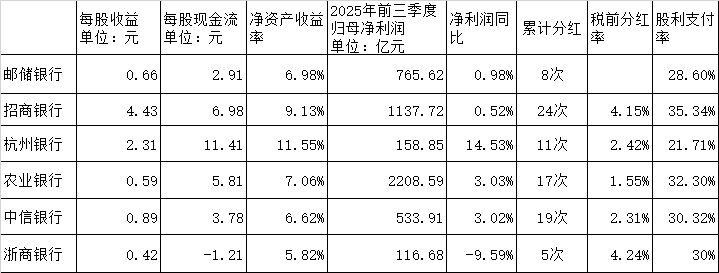
Core Viewpoint - The A-share banking sector is expected to maintain a positive outlook for 2026, driven by stable performance and increased dividend attractiveness, despite a slower growth rate compared to 2024 [3][4][9]. Group 1: Annual Report Disclosure - Ping An Bank will be the first to disclose its 2025 annual report on March 21, marking the second consecutive year it leads in this regard [1]. - A total of 42 A-share listed banks will disclose their annual reports, with 10 banks, including major state-owned banks, reporting on March 31, 2026, which is the highest number for a single day [3]. Group 2: Market Performance - The banking sector index rose by 12.05% in 2025, underperforming the CSI 300 index, which increased by 17.66% [3]. - The total market capitalization of 42 banks exceeded 15 trillion yuan, an increase of approximately 2.1 trillion yuan from the end of 2024 [3]. - Agricultural Bank of China had the highest stock price increase at 52.66%, followed by Xiamen Bank and Shanghai Pudong Development Bank with increases of 35.78% and 24.56%, respectively [3]. Group 3: Investment Drivers - The strong performance of the banking sector in 2025 was supported by both liquidity and fundamental factors, including inflows from passive index funds and insurance investments [4]. - Over 500 shareholders increased their stakes in A-share listed banks, with a total investment of 93.96 billion yuan in 2025 [6]. - Nanjing Bank led in shareholder increases with 7.378 billion yuan [7]. Group 4: Future Outlook - Analysts predict that 2026 will see stable bank performance due to a recovering real economy and high dividend yields, making bank stocks attractive [9][10]. - The demand for high-dividend stocks is expected to rise, particularly for state-owned banks like ICBC and CCB, which are seen as stable investments [10]. - The banking sector is anticipated to experience a valuation recovery, with estimates suggesting a return to a price-to-book ratio of around 1 [10]. Group 5: Seasonal Trends - Historical data indicates that the banking sector has a high success rate for absolute and excess returns before the Spring Festival, with an average absolute return of 4.4% [11]. - Analysts recommend a balanced investment strategy, suggesting a 30% allocation to state-owned banks and 70% to high-quality joint-stock and city commercial banks for the upcoming Spring Festival [11].