
Daqo Energy(688303)

Search documents
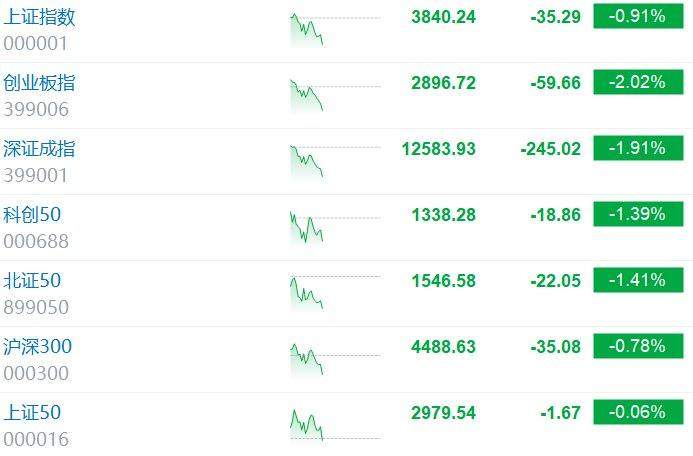
A股三大指数集体下跌!科创50指数跌超2%,成份股中,思特威跌超7%,澜起科技跌超6%,大全能源跌超5%
Ge Long Hui· 2025-09-02 03:48
Market Performance - The ChiNext Index fell by 2.02%, closing at 2896.72, down by 59.66 points [2] - The STAR 50 Index decreased by 1.39%, ending at 1338.28, down by 18.86 points [2] - The Shanghai Composite Index dropped by 0.91%, closing at 3840.24, down by 35.29 points [2] - The Shenzhen Component Index declined by 1.91%, finishing at 12583.93, down by 245.02 points [2] - The CSI 300 Index fell by 0.78%, closing at 4488.63, down by 35.08 points [2] Individual Stock Performance - Siwei Technology (思特威) experienced a decline of over 7% [1] - Lanke Technology (澜起科技) dropped by more than 6% [1] - Daqo New Energy (大全能源) fell by over 5% [1]


光伏行业月度报告:7月光伏新增装机同比下降47.6%,逆变器出口额同比维持增长-20250901
Shanxi Securities· 2025-09-01 05:33
Investment Rating - The report maintains a "Buy" rating for several companies in the solar sector, with specific ratings as follows: - Aishuo Co., Ltd. (600732.SH) - Buy-B - Longi Green Energy (601012.SH) - Buy-B - Daqian Energy (688303.SH) - Buy-B - Flat Glass Group (601865.SH) - Buy-A - Hengdian East Magnetic (002056.SZ) - Buy-A - Sungrow Power Supply (300274.SZ) - Buy-A - Canadian Solar (688472.SH) - Buy-A - Deye Technology (605117.SH) - Buy-A - Langxin Group (300682.SZ) - Buy-B - Quartz Co., Ltd. (603688.SH) - Buy-A [1] Core Insights - In July 2025, the domestic photovoltaic (PV) new installed capacity was 11.0 GW, a year-on-year decrease of 47.6% and a month-on-month decrease of 23.1%. Cumulatively, from January to July, the new installed capacity reached 223.25 GW, representing an increase of 80.7% year-on-year [2][12]. - The export value of PV components in July was 15.89 billion yuan, down 13.7% year-on-year but up 0.5% month-on-month. The cumulative export value from January to July was 111.25 billion yuan, down 22.6% year-on-year [2][14]. - In contrast, the inverter export value in July was 6.51 billion yuan, showing a year-on-year increase of 16.3% but a slight month-on-month decline of 1.2%. The cumulative export value from January to July was 37.11 billion yuan, up 9.0% year-on-year [3][29]. - Solar power generation in July increased by 28.7% year-on-year, with a total generation of 74.43 billion kWh, accounting for 8.03% of the total industrial power generation in the country [4][42]. Summary by Sections 1. Installed Capacity - In July 2025, the domestic PV new installed capacity was 11.0 GW, reflecting a year-on-year decline of 47.6% and a month-on-month decline of 23.1%. The cumulative installed capacity from January to July reached 223.25 GW, marking an 80.7% increase year-on-year [12]. 2. Exports - **Components**: The export value of PV components in July was 15.89 billion yuan, down 13.7% year-on-year but up 0.5% month-on-month. The cumulative export value from January to July was 111.25 billion yuan, down 22.6% year-on-year [14]. - **Inverters**: The inverter export value in July was 6.51 billion yuan, with a year-on-year increase of 16.3% and a month-on-month decrease of 1.2%. The cumulative export value from January to July was 37.11 billion yuan, up 9.0% year-on-year [29]. 3. Solar Power Generation - In July, solar power generation increased by 28.7% year-on-year, totaling 74.43 billion kWh, which accounted for 8.03% of the total industrial power generation in the country [42]. 4. Investment Recommendations - The report recommends focusing on companies based on various strategic directions: - New technology: Aishuo Co., Ltd., Longi Green Energy - Supply-side improvement: Daqian Energy, Flat Glass Group - Overseas expansion: Hengdian East Magnetic, Sungrow Power Supply, Canadian Solar, Deye Technology - Market-oriented power: Langxin Group - Domestic substitution: Quartz Co., Ltd. - Additional companies to watch include Xinyi Solar, GCL-Poly Energy, Tongwei Co., Ltd., TCL Zhonghuan, New Special Energy, Dier Laser, Foster, Haiyou New Materials, JA Solar, Trina Solar, JinkoSolar, CITIC Bo, Maiwei, Jinglong Technology, Shanghai Ailu, and Guangxin Materials [47].





28只科创板股获融资净买入额超5000万元
Zheng Quan Shi Bao Wang· 2025-09-01 02:01
Group 1 - The total margin balance of the STAR Market reached 227.46 billion yuan on August 29, an increase of 2.82 billion yuan compared to the previous trading day [1] - The financing balance amounted to 226.70 billion yuan, increasing by 2.83 billion yuan from the previous trading day, while the margin short balance decreased by 0.06 billion yuan to 0.76 billion yuan [1] - A total of 343 stocks on the STAR Market experienced net financing purchases, with 28 stocks having net purchases exceeding 50 million yuan [1] Group 2 - Semiconductor Manufacturing International Corporation (SMIC) topped the list with a net financing purchase of 523 million yuan [1] - Other notable stocks with significant net financing purchases include Lattice Semiconductor, BeiGene, Haiguang Information, Daqo New Energy, and Ambow Education [1]


大全能源盘中跌超11%
Bei Jing Shang Bao· 2025-09-01 01:59
北京商报讯(记者 马换换 王蔓蕾)9月1日,大全能源(688303)低开低走,盘中一度跌超11%。 截至北京商报记者发稿,大全能源股价跌幅9.79%,报29.04元/股,总市值615.5亿元。 ...
14只科创板个股主力资金净流入超亿元
Sou Hu Cai Jing· 2025-08-29 12:40
Market Overview - The main funds in the Shanghai and Shenzhen markets experienced a net outflow of 69.47 billion yuan, with the Sci-Tech Innovation Board seeing a net outflow of 3.65 billion yuan [1] - A total of 251 stocks saw net inflows, while 333 stocks experienced net outflows [1] Sci-Tech Innovation Board Performance - On the Sci-Tech Innovation Board, 215 stocks rose, with one stock, Hangke Technology, hitting the daily limit, while 367 stocks fell [1] - The top three stocks with the highest net inflows were Yuntian Lifa (23.77 million yuan), Baijie Shenzhou (23.09 million yuan), and Daqian Energy (20.33 million yuan) [1] Continuous Fund Flow Analysis - There were 52 stocks with continuous net inflows for more than three trading days, with KHHW leading at nine consecutive days of inflow [1] - Conversely, 155 stocks had continuous net outflows, with ST Nuotai and Xuantai Pharmaceutical both experiencing 14 consecutive days of outflow [1] Top Fund Inflows - The top stocks by net inflow included: - Yuntian Lifa: 23.77 million yuan, 6.20% inflow rate, 6.38% increase [1] - Baijie Shenzhou: 23.09 million yuan, 9.56% inflow rate, 12.55% increase [1] - Daqian Energy: 20.33 million yuan, 16.32% inflow rate, 7.12% increase [1] Notable Outflows - The stock with the highest net outflow was SMIC, with a net outflow of 1.92 billion yuan and a 3.74% decrease [1] - Other significant outflows included Haiguang Information (864 million yuan) and Shijia Photon (382 million yuan) [1]


产量增加叠加需求下滑,光伏涨价遭遇拦路虎
经济观察报· 2025-08-29 12:01
Core Viewpoint - The "anti-involution" policy is expected to lead to price increases in upstream silicon materials, which could help the photovoltaic industry escape the low-price competition dilemma. However, due to weak terminal demand, the price transmission effect has been poor, resulting in new issues such as upstream inventory accumulation and increased costs in the midstream [1][17]. Upstream Price and Inventory Issues - The photovoltaic industry is currently facing challenges such as inventory accumulation and declining terminal demand. The China Nonferrous Metals Industry Association's silicon division reported that while there is still bullish sentiment, the supply-demand fundamentals have not improved, with September's polysilicon production expected to be around 125,000 to 130,000 tons, continuing to face inventory risks [2][4]. - In the first half of the year, domestic polysilicon production was approximately 596,000 tons, a significant decrease of 44.1% year-on-year. However, due to a sharp price increase in July, the market has reversed from a "reduction, quality improvement, and destocking" process to a situation of "price increase and inventory accumulation" [3][4]. - Despite the inventory accumulation, polysilicon prices have surged, with the average price of N-type polysilicon rising from 34,400 yuan/ton at the end of June to 47,900 yuan/ton by August 27, marking a short-term increase of about 38% [4][5]. Midstream Price Transmission Challenges - Following the significant price increase in upstream polysilicon, there have been reports of "shortages and price increases" in photovoltaic modules. However, major companies indicate that there is sufficient supply of photovoltaic components, and any shortages are likely isolated incidents. The price increases in modules have not been substantial due to weak downstream demand [8][9]. - The recent price increases in high-efficiency components are attributed to structural and phase adjustments in the market, driven by technological iterations and differentiated demand in the downstream market [9][10]. Declining Terminal Demand - The recent data indicates a significant decline in terminal demand, with July's newly installed solar power capacity at only 11.04 million kilowatts, a year-on-year decrease of 47.55% [12][13]. - The decline in demand is attributed to a combination of policy changes, market factors, and the industry's transition from rapid growth to high-quality development. The "136 document" has led to a cautious approach among investors, delaying new project approvals and installations [13][14][15]. Potential Solutions for Industry Challenges - To address the inventory accumulation in polysilicon, industry self-discipline in production reduction is necessary. The "anti-involution" policy may help mitigate low-price competition, but the industry must focus on self-regulation and collaboration to avoid blind expansion and price wars [17][19]. - Key strategies for breaking the industry deadlock include enhancing self-discipline and collaboration, driving technological innovation, extending value chains into storage and energy operations, and strengthening global presence to reduce reliance on single markets [19][20].
产量增加叠加需求下滑,光伏涨价遭遇拦路虎
Jing Ji Guan Cha Bao· 2025-08-29 09:42
Core Viewpoint - The photovoltaic industry is currently facing challenges due to upstream inventory accumulation and a decline in terminal demand, leading to a complex situation of rising prices amidst high inventory levels [1][2][3]. Upstream Price and Inventory Issues - The recent surge in multi-crystalline silicon prices has occurred despite an increase in inventory, with production in July rising to approximately 107,800 tons, a month-on-month increase of 5.7% [2]. - The expected production for September is projected to be between 125,000 to 130,000 tons, exceeding the monthly demand by about 16,000 tons, indicating a growing oversupply situation [2][3]. - The average price of N-type raw materials increased from 34,400 yuan per ton at the end of June to 47,900 yuan per ton by August 27, marking a short-term increase of approximately 38% [2]. Midstream Price Transmission Challenges - Despite the price increases in upstream multi-crystalline silicon, midstream photovoltaic module manufacturers report that supply remains sufficient, and any price increases are limited due to weak downstream demand [5][6]. - The recent price hikes in modules are not uniformly successful, as the demand side does not support significant price increases, leading to only moderate adjustments [5][6]. Downstream Demand Decline - The newly installed solar power generation capacity in July was only 11.04 million kilowatts, a significant year-on-year decrease of 47.55% and a month-on-month decrease of 23.12% [8][9]. - This decline in demand is attributed to a combination of policy changes, market conditions, and the industry's transition from rapid growth to a focus on high-quality development [9][10]. Industry Outlook and Solutions - The "anti-involution" policy is expected to help the industry escape low-price competition, but the current weak terminal demand hampers effective price transmission across the supply chain [11][12]. - To address the inventory issues, companies are encouraged to self-regulate production and avoid blind expansion and price wars [12]. - Key strategies for breaking the industry deadlock include industry self-discipline, technological innovation, and expanding into new value chains such as energy storage and digital services [12].
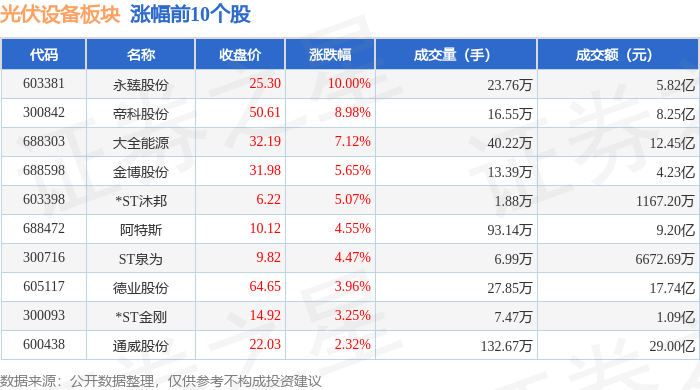
光伏设备板块8月29日涨1.26%,永臻股份领涨,主力资金净流入10.45亿元
Zheng Xing Xing Ye Ri Bao· 2025-08-29 08:48
Core Insights - The photovoltaic equipment sector experienced a rise of 1.26% on August 29, with Yongzhen Co. leading the gains [1] - The Shanghai Composite Index closed at 3857.93, up 0.37%, while the Shenzhen Component Index closed at 12696.15, up 0.99% [1] Stock Performance - Yongzhen Co. (603381) closed at 25.30, with a gain of 10.00% and a trading volume of 237,600 shares, amounting to a transaction value of 582 million [1] - Jinke Co. (300842) saw a closing price of 50.61, up 8.98%, with a trading volume of 165,500 shares and a transaction value of 825 million [1] - Daqian Energy (688303) closed at 32.19, increasing by 7.12%, with a trading volume of 402,200 shares and a transaction value of 1.245 billion [1] - Other notable performers include Jinbo Co. (688598) with a 5.65% increase and a closing price of 31.98, and Artes (688472) with a 4.55% increase and a closing price of 10.12 [1] Capital Flow - The photovoltaic equipment sector saw a net inflow of 1.045 billion in main funds, while retail investors experienced a net outflow of 484 million [2][3] - Major stocks like Tongwei Co. (600438) had a net inflow of 269 million, while Longi Green Energy (601012) saw a net inflow of 252 million [3] - Daqian Energy (688303) recorded a net inflow of 218 million, indicating strong institutional interest [3]


“反内卷”纠偏初显成效!光伏行业扭困现曙光
证券时报· 2025-08-29 08:14
Core Viewpoint - The photovoltaic industry is facing significant losses across the supply chain, with major manufacturers reporting substantial deficits in their financial results for the first half of the year [1][4][6]. Financial Performance - The top five manufacturers in terms of module shipments reported a combined loss of approximately 160 billion yuan in the first half of the year [1][6]. - JinkoSolar reported a revenue of 31.83 billion yuan, a year-on-year decrease of 32.63%, with a net loss of 2.91 billion yuan, a year-on-year increase in losses of 342.4% [4]. - Longi Green Energy's revenue was 32.81 billion yuan, down 14.83% year-on-year, with a net loss of 2.57 billion yuan, a reduction in losses of 26.61% compared to the previous year [4]. - Trina Solar and JA Solar both reported significant revenue declines and net losses, with Trina Solar's revenue at 31.06 billion yuan (down 27.72%) and a net loss of 2.92 billion yuan (up 654.47%) [4]. - Tongwei Co. achieved a revenue of 40.51 billion yuan, down 7.51%, with a net loss of 4.96 billion yuan, an increase in losses of 58.35% [5]. Cash Flow Health - Cash flow has emerged as a critical indicator of survival for photovoltaic companies, with several firms reporting improvements in cash flow despite overall losses [8][9]. - TCL Zhonghuan reported a net cash flow from operating activities of 523 million yuan, a year-on-year increase of 308.4% [9]. - Trina Solar's net cash flow was 1.843 billion yuan, with a second-quarter figure of 2.679 billion yuan [9]. - However, companies like Daqo New Energy reported negative cash flow, with a net cash flow of -1.608 billion yuan [9]. Industry Pricing and Competition - The photovoltaic industry is undergoing a "reverse involution" movement, with a reduction in low-price sales and fierce competition [1][10]. - Regulatory bodies have initiated measures to combat low-price, disorderly competition, emphasizing the need for quality improvement and the orderly exit of outdated production capacity [11]. - Recent trends indicate a recovery in prices across various segments of the supply chain, with manufacturers expressing hope for prices to stabilize above cost levels [11][12].



产量增加叠加需求下滑,光伏涨价遭遇拦路虎
Jing Ji Guan Cha Wang· 2025-08-29 07:52
Core Viewpoint - The photovoltaic industry is currently facing challenges due to upstream inventory accumulation and a decline in terminal demand, leading to a complex situation of rising prices amidst high inventory levels [1][3][11]. Upstream Price and Inventory Dynamics - The recent surge in multi-crystalline silicon prices has not effectively transmitted through the industry chain to downstream sectors, raising concerns about the sustainability of the price increase [1][3]. - In the first half of the year, domestic multi-crystalline silicon production was approximately 596,000 tons, a significant year-on-year decrease of 44.1%, while inventory dropped from about 400,000 tons at the end of 2024 to approximately 366,000 tons by the end of June [1][2]. - Despite a production increase to around 107,800 tons in July (up 5.7% month-on-month), the anticipated production for September is projected to be between 125,000 and 130,000 tons, leading to an expected inventory rise to approximately 390,000 tons by the end of September [2][3]. Midstream Pricing Challenges - The price increase in multi-crystalline silicon has not led to a corresponding rise in photovoltaic module prices due to sufficient supply and resistance from downstream demand [5][6]. - The recent reports of "shortages and price increases" in photovoltaic modules are primarily structural and phase-related, rather than a direct result of upstream price hikes [6][7]. Downstream Demand Decline - The newly installed solar power capacity in July was only 11.04 million kilowatts, a significant year-on-year decline of 47.55%, indicating a downward trend in demand [8][9]. - The decline in demand is attributed to a combination of policy changes, market conditions, and the industry's transition from rapid growth to high-quality development [9][10]. Industry Outlook and Solutions - The "anti-involution" policy is expected to help stabilize the market by curbing low-price competition, but its effectiveness in addressing upstream inventory issues remains uncertain [11][12]. - Key strategies for overcoming the current challenges include industry self-discipline, technological innovation, and expanding into new value chains such as energy storage and digital services [12].