
Swancor Advanced Materials (688585)

Search documents
「智元机器人」向左,[宇树科技]向右,产业链公司“齐飞”!
Robot猎场备忘录· 2025-08-23 00:02
Core Viewpoint - The article discusses the competitive landscape of humanoid robotics in China, focusing on two leading companies: ZhiYuan Robotics and YuShu Technology, highlighting their strategies, partnerships, and market positioning. Group 1: ZhiYuan Robotics - ZhiYuan Robotics held its first partner conference on August 22, showcasing its "high-profile" development model and a comprehensive layout across the entire robotics industry chain [4][5] - The company aims to complete its Series C financing by the end of the year, with expectations of thousands of units shipped this year and tens of thousands next year, primarily targeting B2B markets [4][5] - ZhiYuan has established partnerships with numerous companies in the robotics supply chain, including Lens Technology and LiJing Innovation, and has invested in 15 early-stage projects [5][6] - The company has launched an open-source robotics middleware and a general-purpose embodied intelligence operating system, aiming to create a self-evolving intelligent system [6][7] - ZhiYuan's strategy includes a focus on three core capabilities: motion intelligence, interaction intelligence, and operational intelligence, with a goal of creating a comprehensive product lineup [5][14] Group 2: YuShu Technology - YuShu Technology is characterized as a "hardware-focused" company, emphasizing its strong motion capabilities and targeting educational and research markets for its humanoid robots [10][16] - The company has achieved annual revenue exceeding 1 billion yuan, with a significant portion coming from its biped humanoid robots, and plans to deliver over 1,500 units in 2024 [16][20] - YuShu has initiated its IPO process, with expectations of a high valuation, indicating strong market interest and potential for growth [20] Group 3: Market Dynamics and Comparisons - The article contrasts the two companies' approaches, with ZhiYuan focusing on software and AI capabilities while YuShu emphasizes hardware performance [10][14] - Both companies are racing towards IPOs, with ZhiYuan successfully acquiring a controlling stake in a listed company, enhancing its market position [17][18] - The competition between ZhiYuan and YuShu reflects broader trends in the humanoid robotics sector, where technological advancements and market strategies will determine future success [21][22]


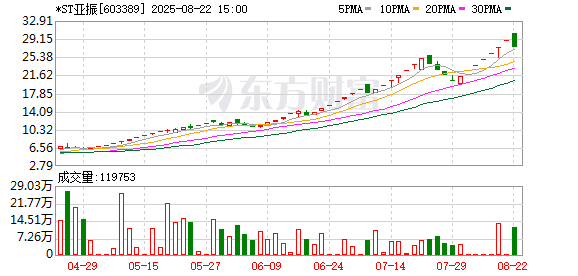
上交所:本周对*ST亚振等异常波动风险警示股票 以及东芯股份、上纬新材等严重异常波动股票进行重点监控


Di Yi Cai Jing· 2025-08-22 10:26
据上交所发布,2025年8月18日至8月22日,上交所对253起拉抬打压、虚假申报等证券异常交易行为采 取了书面警示、暂停交易等监管措施,对*ST亚振等异常波动风险警示股票,以及东芯股份、上纬新材 等严重异常波动股票进行重点监控,对17起上市公司重大事项等进行专项核查。 (文章来源:第一财经) ...
上交所:本周对东芯股份、上纬新材等严重异常波动股票进行重点监控
Zheng Quan Shi Bao Wang· 2025-08-22 10:25
Group 1 - The Shanghai Stock Exchange implemented regulatory measures such as written warnings and trading suspensions for 253 cases of abnormal trading behaviors including price manipulation and false declarations from August 18 to August 22, 2025 [1] - Stocks with abnormal volatility, such as *ST Yazhen, received risk warnings, while stocks like Dongxin Co. and Shangwei New Materials faced close monitoring due to severe abnormal fluctuations [1] - The exchange conducted special investigations into 17 significant events related to listed companies [1]
A股行情升温下创投基金频现减持退出 “募投管退”链条趋于完整
2 1 Shi Ji Jing Ji Bao Dao· 2025-08-22 10:15
Group 1 - The A-share market has seen a significant increase, with the Shanghai Composite Index surpassing 3,800 points, reaching a nearly ten-year high [1] - There has been a notable wave of share reductions, particularly in July and August, with 428 A-share listed companies' shareholders reducing their stakes, totaling approximately 600 billion yuan [1][2] - The number of reduction events in the first half of 2025 has doubled compared to the same period in 2024, indicating a strong trend in shareholder exits [1][2] Group 2 - Venture capital funds are key participants in the reduction wave, marking a significant operational phase for these funds as they seek to exit investments [2][3] - The improvement in market conditions has allowed venture capital funds to realize returns, reflecting a recovery in the capital market's exit function [2][3] Group 3 - Venture capital funds typically have a lifespan of 8-10 years, necessitating timely exits to distribute returns to limited partners (LPs) [3][4] - The recent market recovery has provided a rare opportunity for these funds to exit investments, which had been delayed due to previous market volatility [3][4] Group 4 - Specific examples include DeFu Technology and Shangwei New Materials, where venture capital funds have begun to reduce their stakes following significant stock price increases [5][6] - The reduction actions are not short-term but rather part of a long-term investment strategy, demonstrating a complete cycle of fundraising, investment, management, and exit [5][6] Group 5 - The reduction process must consider market capacity and the needs of the companies involved, emphasizing compliance and gradual exit strategies to avoid market disruption [7][8] - Effective communication and expectation management are crucial to mitigate market concerns regarding sudden or opaque reductions [7][8] Group 6 - The short-term impact of reductions on stock prices can be managed through compliance and transparency, with long-term value being determined by the company's fundamentals [8][9] - Some venture capital funds choose to maintain a stake in companies post-IPO to benefit from continued growth, particularly in sectors like hard technology and new energy [8][9] Group 7 - The relationship between venture capital funds and companies can extend beyond equity, fostering collaboration and resource synergy through continued investment [9][10] - The ability to maintain long-term relationships post-IPO is often limited by the fund's lifecycle and the need for cash flow to LPs [10]
17只科创板个股主力资金净流入超亿元
Sou Hu Cai Jing· 2025-08-22 08:54
Market Overview - The net inflow of main funds in the Shanghai and Shenzhen markets reached 25.419 billion yuan, with the Sci-Tech Innovation Board seeing a net inflow of 6.497 billion yuan [1] - A total of 278 stocks experienced net inflows, while 309 stocks faced net outflows [1] Sci-Tech Innovation Board Performance - On the Sci-Tech Innovation Board, 470 stocks rose, with 6 stocks hitting the daily limit, including Shengmei Shanghai and Yuntian Lefe [1] - 112 stocks declined in value [1] Key Stocks with Significant Fund Inflows - The top three stocks with the highest net inflows were: - SMIC (中芯国际) with a net inflow of 2.579 billion yuan, ranking first [2] - Haiguang Information (海光信息) with a net inflow of 1.459 billion yuan [2] - Lanke Technology (澜起科技) with a net inflow of 481.64 million yuan [2] Stocks with Continuous Fund Inflows - A total of 56 stocks have seen continuous net inflows for more than three trading days, with Huahai Qingke (华海清科) leading at 10 consecutive days [2] - The stocks with the most extended net outflows included Fudan Zhangjiang (复旦张江) with 15 consecutive days of outflows [2] Fund Inflow Rankings - The top stocks by net inflow and their respective data include: - SMIC (中芯国际): 2.579 billion yuan, 12.69% inflow rate, 14.19% increase [2] - Haiguang Information (海光信息): 1.459 billion yuan, 10.97% inflow rate, 20.00% increase [2] - Lanke Technology (澜起科技): 481.64 million yuan, 7.00% inflow rate, 8.70% increase [2] Summary of Fund Outflows - The stock with the highest net outflow was Yingshi Innovation (影石创新) with a net outflow of 332 million yuan and a decline of 4.34% [1] - Other notable outflows included Sainuo Medical (赛诺医疗) and Tiebian Heavy Industry (铁建重工) with outflows of 223 million yuan and 143 million yuan, respectively [1]



统计称今年以来股民人均赚超2万元 股民赚钱“因人而异”
Shen Zhen Shang Bao· 2025-08-20 17:25
Market Overview - The A-share market has seen a significant rise this year, with all three major indices increasing by over 10% [1] - As of August 20, the Shanghai Composite Index closed at 3766.21 points, marking a 12.37% increase year-to-date [1] - The total market capitalization of A-shares reached 101.31 trillion yuan, an increase of 15.63 trillion yuan from the end of last year [1] Individual Investor Performance - Approximately 2.4 million individual investors have seen an average net gain of about 21,500 yuan this year [1] - Individual investors hold about 33% of the market, translating to a net increase of 5.16 trillion yuan in their market value [1] Sector Performance - Certain sectors have experienced remarkable gains, with 23 popular concepts rising over 50% this year [2] - Notable sectors include optical communication, which surged by 91%, and the AI computing sector, which saw increases exceeding 60% [2] - The rare earth sector, a key industry in China, has risen by 96% [2] Stock Performance - A total of 362 stocks in the A-share market have doubled in value this year, with 1287 stocks increasing by over 50% [2] - The top-performing stock, Zhiyuan Robotics, saw a staggering increase of 1205.62%, making it the only tenfold stock this year [2] - Other significant gainers include *ST Yushun and Shushentai, with increases of 695.79% and 644.40%, respectively [2] Investment Trends - The top 30% of stocks this year are concentrated in themes such as restructuring, AI applications, and defense [3] - The market has shown uneven performance, with technology growth sectors outperforming traditional value stocks [3]

注意!近50家外资机构盯上科创板公司
Shang Hai Zheng Quan Bao· 2025-08-20 16:02
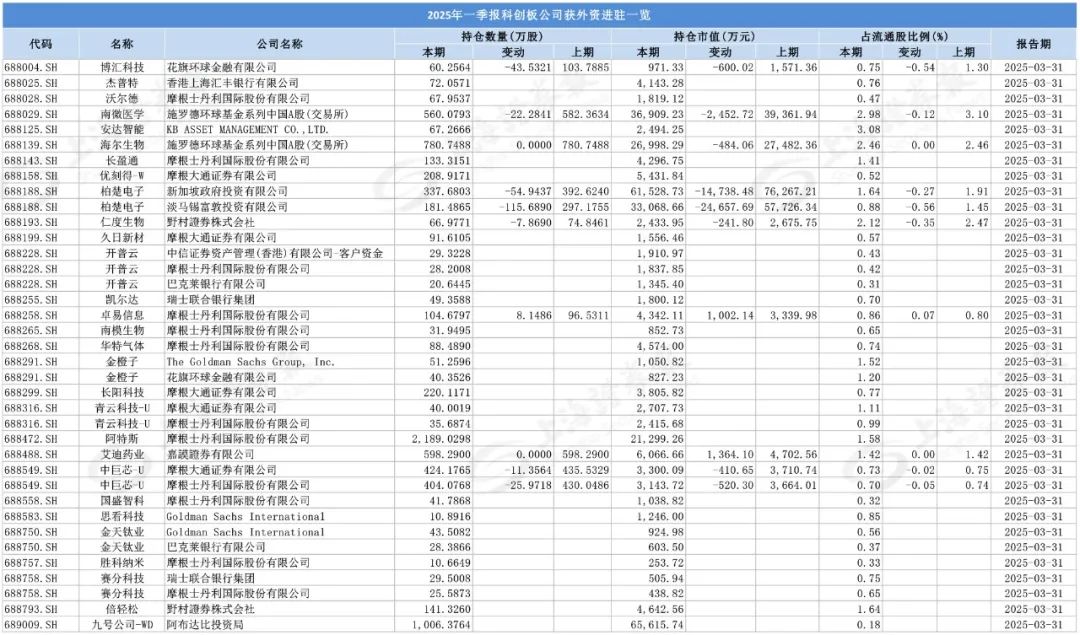
Group 1 - The Shanghai Stock Exchange hosted an online roadshow event focusing on the sixth anniversary of the Sci-Tech Innovation Board, with nearly 50 institutions from major markets participating to enhance international investors' understanding of the board and its listed companies [1][4] - The event highlighted the latest developments, reform policies, and index investment situations of the Sci-Tech Innovation Board, showcasing investment opportunities and the potential of Chinese assets [1][4] - Over 30 companies on the Sci-Tech Innovation Board attracted foreign institutional investment in their first-quarter reports this year [1] Group 2 - The Sci-Tech Innovation Board has achieved significant results in serving technological innovation and guiding capital towards "hard technology" enterprises over the past six years [4] - The board's index and ETF categories have been continuously enriched, playing an important role in attracting new capital and supporting key technological innovations [4] - The Shanghai Stock Exchange plans to enhance its product system's attractiveness and competitiveness while improving services for international investors [4] Group 3 - Since July, the related indices of the Sci-Tech Innovation Board have shown strong performance, with the Sci-Tech Composite Index reaching a new high since September 24, 2024 [6] - From January to date, 547 companies on the Sci-Tech Innovation Board have recorded positive price changes, with 65 companies seeing their stock prices more than double [7] - Notable stocks include Shangwei New Materials, which has seen a price increase of 1,205.62%, and other companies like Dongxin Co. and Ruisheng Intelligent with significant gains [8][11] Group 4 - Shangwei New Materials became the first tenfold stock of 2025, with its price increasing over ten times from July 9 to July 30, driven by a control change announcement [9] - The company is backed by significant investors, including Tencent and JD.com, and operates in the AI chip sector, which is experiencing explosive growth in demand [9] - Other strong performers include Hanwha and Dongxin Co., which have also shown remarkable stock price increases in the current technology stock rally [11]

智氪|人形机器人万亿市场,A股哪些公司分蛋糕?
3 6 Ke· 2025-08-20 03:30
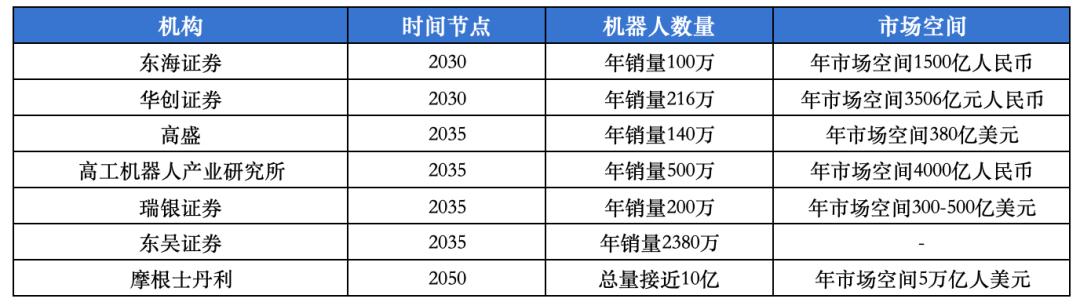
Core Insights - The humanoid robot sector has seen significant positive developments since July, including acquisitions and new product launches, indicating a potential shift towards commercialization [1][2] - The market for humanoid robots is projected to grow substantially, with various institutions providing differing forecasts for market size and sales volume by 2030 and beyond [3][4][5] - The humanoid robot industry is currently in its early stages, with expectations of reaching a market size in the hundreds of billions within the next 5-10 years, and potentially exceeding one trillion in the long term [4][5] Market Predictions - Donghai Securities predicts global humanoid robot sales of 1 million units by 2030, corresponding to a market size of 150 billion RMB [3] - Huachuang Securities estimates sales of 2.16 million units by 2030, leading to a market size of approximately 350.6 billion RMB [5] - Goldman Sachs forecasts 1.4 million units sold by 2035, with a market size of 38 billion USD, while UBS predicts 2 million units and a market size between 30-50 billion USD [3][5] Industry Dynamics - The humanoid robot industry is characterized by a mix of established companies entering the market to create new growth avenues, which is seen as a divergence from traditional business models [2] - The capital market is primarily focused on hardware components of humanoid robots, as these have clearer valuation metrics compared to software and algorithmic components [9][10] Component Breakdown - Humanoid robots can be divided into three functional modules: perception layer, decision layer, and execution layer, each comprising various components [8][9] - The execution system is estimated to account for 53.2% of the value, while the perception system accounts for 7.3%, and other components collectively make up 39.5% [10] - Key components include planetary roller screws (19% value share), frameless torque motors (17%), and reducers (13%) [12][21] Beneficiary Companies - Over 80 listed companies have announced plans to produce or are already producing components for humanoid robots, with a significant concentration in the automotive and machinery sectors [14][15] - Companies like 汇川技术 (Inovance Technology) and 五洲新春 (Wuzhou New Spring) are actively developing planetary roller screws and other key components for humanoid robots [16][18] - The market for reducers is competitive, with companies like 绿的谐波 (Green Harmonic) and 双环传动 (Double Ring Transmission) leading in the production of harmonic and RV reducers [22][23] Sensor Technology - Force/moment sensors, particularly six-dimensional sensors, are crucial for humanoid robots to perceive their own movement states, with a current market size of approximately 224 million USD [24] - Companies like 柯力传感 (Keli Sensor) and 安培龙 (Amperelong) are focusing on developing these sensors for humanoid applications [25] Motor Technology - The hollow cup motor market is projected to grow, with companies like 鸣志电器 (Mingzhi Electric) and 拓邦股份 (Topband) leading in production and development [26] - The global market for hollow cup motors was valued at approximately 5.1 billion RMB in 2022, with significant competition from foreign manufacturers [26]



金风科技炼金有术:抓超级牛股,卡热门赛道,一年狂赚20亿元
2 1 Shi Ji Jing Ji Bao Dao· 2025-08-19 22:31
Core Viewpoint - JinWind Technology's subsidiary, JinWind Investment Holdings, has been actively reducing its stake in its associate company, Shangwei New Materials, amid a significant rise in the latter's stock price, indicating JinWind's growing capital management capabilities beyond its core wind power equipment manufacturing business [1][2]. Group 1: Shareholding and Financial Performance - Since July, JinWind Investment has reduced its holdings in Shangwei New Materials by 1.6328 million shares, generating over 100 million RMB in cash [1]. - The investment income from JinWind Investment reached 1.962 billion RMB in 2024, surpassing JinWind Technology's net profit of 1.86 billion RMB during the same period [2][13]. - JinWind Investment's shareholding in Shangwei New Materials was originally acquired at an issue price of 2.49 RMB per share, while the stock price surged to 85.65 RMB per share by August 19 [11]. Group 2: Market Dynamics and Investment Strategy - The stock price of Shangwei New Materials experienced a remarkable increase of 992.54% from July 9 to August 12, coinciding with JinWind Investment's reduction in holdings [11]. - JinWind Technology has built a diversified investment portfolio across various sectors, including new energy, equipment manufacturing, and agriculture, indicating a strategic focus on emerging industries [12]. - The company has invested in several key players in the new energy sector, including companies involved in core components for wind power and smart operation technologies [12]. Group 3: Broader Market Trends - The A-share market has seen a resurgence, with 57 companies announcing plans to use idle funds for securities investment this year, reflecting a growing trend among listed companies to engage in stock market investments [14]. - Despite the overall positive market sentiment, there are concerns regarding the risks associated with stock market investments, as evidenced by the mixed financial outcomes for companies involved in such activities [15][16].

上市公司炒股比主业更猛,1年暴赚20亿,减持上纬新材套现上亿
2 1 Shi Ji Jing Ji Bao Dao· 2025-08-19 14:14
Core Viewpoint - The core business of a listed company primarily engaged in wind power equipment manufacturing has achieved significant investment gains, earning 1.962 billion RMB in investment income, surpassing its net profit of 1.86 billion RMB for the same period [1][15]. Group 1: Investment Performance - Goldwind Investment Holdings Co., Ltd. (金风投控), a subsidiary of Goldwind Technology, has been actively reducing its stake in its investee company, Upwind New Materials Technology Co., Ltd. (上纬新材), amid a substantial increase in the latter's stock price [1][8]. - Since July, Goldwind Investment has cumulatively reduced its holdings in Upwind New Materials by 1.6328 million shares, generating over 100 million RMB in cash [1][9]. - Upwind New Materials' stock price has surged by 1151.67% from July 9 to August 18, significantly outperforming related indices [13][9]. Group 2: Market Dynamics - The stock price of Upwind New Materials experienced a dramatic rise following an announcement of a major investment from a prominent robotics company, which has attracted significant market attention and capital [6][8]. - Goldwind Technology's investment strategy includes diversifying across various sectors, including renewable energy and advanced materials, to enhance financial resilience and mitigate industry risks [15][16]. - The overall A-share market has seen increased activity, with 57 companies announcing plans to use idle funds for securities investment, reflecting a broader trend of companies engaging in stock market investments [16][18].
