
TCL TECH.(000100)

Search documents
TCL科技发预增,预计2025年度归母净利润42.1亿元—45.5亿元,同比增长169%—191%
Zhi Tong Cai Jing· 2026-01-13 15:31
Group 1: TCL Technology Performance - TCL Technology (000100.SZ) forecasts a net profit attributable to shareholders of 4.21 billion to 4.55 billion yuan for 2025, representing a year-on-year increase of 169% to 191% [1] - The company expects to achieve operating revenue exceeding 100 billion yuan and net profit exceeding 8 billion yuan, with operating cash flow net exceeding 40 billion yuan, indicating high-quality growth [1] - The company completed the acquisition of 100% equity in the former LG Display (China) Co., Ltd., enhancing its capacity layout for large and medium-sized LCD panels [1] Group 2: TCL Zhonghuan and Industry Challenges - TCL Zhonghuan (002129) is experiencing significant fluctuations in the photovoltaic industry due to oversupply across various segments [2] - The company adheres to a strategy of product technology innovation and globalization, aiming to improve profitability amid challenges [2] - The company continues to expand its leading position in the TV OEM business and is actively developing high-value-added products in commercial displays and gaming monitors, significantly enhancing profitability [2]

TCL科技:预计2025年净利润42.10亿元~45.50亿元 同比增169.00%~191.00%
Zheng Quan Shi Bao Wang· 2026-01-13 14:45
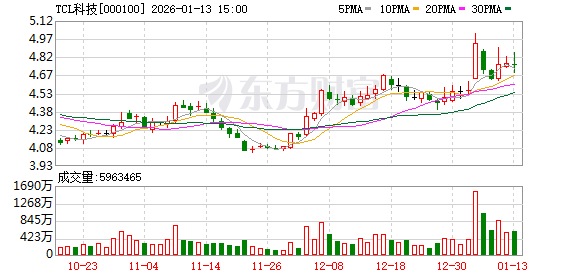
TCL科技(000100)1月13日发布2025年业绩预增公告,预计实现净利润为42.10亿元~45.50亿元,净利 润同比增长169.00%~191.00%。 证券时报·数据宝统计显示,TCL科技今日收于4.76元,下跌0.21%,日换手率为3.30%,成交额为28.39 亿元,近5日下跌3.45%。通过对2025年业绩预增50%以上的个股走势进行统计发现,预告发布后当日股 价上涨的占比70.59%,股价发布当日股价涨停的有1家。预告发布后5日股价上涨的占比70.59%。 资金面上,该股今日主力资金净流入1.55亿元,近5日资金净流出5.53亿元。最新(1月12日)两融余额 36.16亿元,其中,融资余额36.05亿元,环比前一交易日增长0.94%,近5日融资余额累计增长20.64%。 (数据宝) (文章来源:证券时报网) ...

容百科技签下1200亿元巨单;佰维存储去年净利预增超4.2倍丨公告精选
2 1 Shi Ji Jing Ji Bao Dao· 2026-01-13 14:08
Group 1: Rongbai Technology and CATL Cooperation - Rongbai Technology signed a procurement cooperation agreement with CATL for lithium iron phosphate cathode materials, with a total sales amount exceeding 120 billion yuan [1] - The agreement will supply a total of 3.05 million tons of lithium iron phosphate cathode materials from Q1 2026 to 2031 [1] - The development of solar cells, energy storage technologies, and AI is expected to drive significant growth in the energy storage industry, indicating a large market space for lithium iron phosphate [1] Group 2: Baiwei Storage Profit Forecast - Baiwei Storage expects a net profit of 850 million to 1 billion yuan for 2025, representing a year-on-year increase of 427.19% to 520.22% [1] - The decline in storage prices is anticipated to reach a low point in Q1 2025, followed by a recovery starting in Q2 2025 as key projects are delivered [1] - The company is focusing on high-speed growth in the AI edge sector and enhancing advanced packaging capabilities [1] Group 3: TCL Technology Profit Forecast - TCL Technology forecasts a net profit of 4.21 billion to 4.55 billion yuan for 2025, an increase of 169% to 191% year-on-year [2] - The company is concentrating on three core businesses: semiconductor displays, new energy photovoltaics, and semiconductor materials [2] Group 4: Guizhou Moutai Retail Price Adjustment Mechanism - Guizhou Moutai is implementing a dynamic adjustment mechanism for retail prices to better align with market and consumer trends [3] - The new marketing system aims to be consumer-centric and driven by market demand [3] Group 5: Shanghai Pudong Development Bank Performance - Shanghai Pudong Development Bank reported a net profit of 50.017 billion yuan for 2025, a year-on-year increase of 10.52% [4] - The bank's non-performing loan balance decreased by 11.64 billion yuan, with a non-performing loan ratio of 1.26% [4] Group 6: *ST Wan Fang Financial Status - *ST Wan Fang anticipates a revenue of less than 300 million yuan for 2025, with both net profit and net profit after non-recurring items expected to be negative [8] - The company may face delisting due to financial criteria if these projections are realized [8] Group 7: Performance Forecasts of Other Companies - Haopeng Technology expects a net profit increase of 113.69% to 141.09% for 2025 [9] - Tengyuan Cobalt anticipates a net profit increase of 50.02% to 69.87% for 2025 [9] - Longcable Technology forecasts a net profit increase of 74.07% to 114.24% for 2025 [9] - Dongpeng Beverage expects a net profit increase of 30.46% to 37.97% for 2025 [9] - WoHua Pharmaceutical anticipates a net profit increase of 119.76% to 215.90% for 2025 [9] - Dazhu CNC expects a net profit increase of 161% to 194% for 2025 [9] - Changjiang Electric Power reported a net profit of 34.2 billion yuan for 2025, a year-on-year increase of 5.14% [9] - Chenguang Biotech expects a net profit increase of 272.14% to 330.62% for 2025 [9]





1月13日重要资讯一览
Zheng Quan Shi Bao Wang· 2026-01-13 13:59
Group 1 - New stock offering: Guoliang New Materials has an offering code of 920076, with an issue price of 10.76 yuan per share and a subscription limit of 812,000 shares [1] - The Ministry of Commerce announced the continuation of anti-subsidy measures on imported solar-grade polysilicon from the United States, effective January 14, 2026, for a period of five years [2] - The Ministry of Industry and Information Technology issued an action plan for the high-quality development of industrial internet platforms, aiming for over 450 influential platforms by 2028 and a connection of over 120 million industrial devices [3] Group 2 - The Ministry of Civil Affairs and eight other departments released measures to promote the silver economy, focusing on optimizing elderly care services and encouraging community-based operations [4] - Guangzhou's draft policy for integrated circuit industry development aims to support major projects through financial institutions and encourage venture capital participation [5] - Sichuan Province's action plan for a green manufacturing system aims to establish a comprehensive green manufacturing framework by 2030, with significant reductions in energy consumption and carbon emissions [6] Group 3 - Kweichow Moutai's board approved a market-oriented operation plan for 2026, establishing a dynamic adjustment mechanism for retail prices [7] - TCL Technology expects a net profit increase of 169% to 191% year-on-year for 2025 [9] - Baiwei Storage anticipates a net profit increase of 427.19% to 520.22% year-on-year for 2025 [10] - Morning Light Bio forecasts a net profit increase of 272.14% to 330.62% year-on-year for 2025 [11]


TCL科技(000100.SZ)发预增,预计2025年度归母净利润42.1亿元—45.5亿元,同比增长169%—191%
智通财经网· 2026-01-13 13:55
Core Viewpoint - TCL Technology (000100.SZ) forecasts a net profit attributable to shareholders of 4.21 billion to 4.55 billion yuan for 2025, representing a year-on-year increase of 169% to 191% [1] Group 1: Financial Performance - The company expects to achieve an operating revenue exceeding 100 billion yuan, with net profit surpassing 8 billion yuan and operating cash flow net amount exceeding 40 billion yuan, indicating high-quality growth [1] - TCL Huaxing maintains a competitive advantage in large-size products such as TVs and commercial displays, while experiencing rapid growth in the small and medium-size product sector [1] Group 2: Strategic Developments - The company completed the acquisition of 100% equity in the former LG Display (China) Co., Ltd., enhancing its capacity layout for large and medium-size LCD panels [1] - TCL Technology acquired a minority stake in Shenzhen Huaxing Optoelectronics Semiconductor Display Technology Co., Ltd., which is expected to boost the company's net profit attributable to shareholders [1] - The expansion of the G5.5 generation printed OLED production line and the establishment of the world's first high-generation printed OLED production line are set to advance the commercialization of printed OLED technology [1] Group 3: Industry Position - TCL Zhonghuan adheres to a strategy of "domestic leadership, global catch-up," solidifying its leading position in the semiconductor materials sector, with annual revenue exceeding 5.7 billion yuan [2] - The company is navigating significant fluctuations in the photovoltaic industry due to oversupply across various segments, focusing on product technology innovation and global strategies to improve profitability [2] - Miao Jia Technology continues to expand its leading advantage, with the TV OEM business further solidifying its industry leadership and the display OEM business maintaining rapid growth [2]
今日晚间重要公告抢先看——杭萧钢构称公司不存在“商业航天”业务 天龙集团称当前未因AI工具产生额外收入




Jin Rong Jie· 2026-01-13 13:54
Group 1 - Hangxiao Steel Structure announced that it does not have a "commercial aerospace" business, with its main operations focused on steel structure contracting and related services, and a recent project contributing less than 1% to its 2024 audited revenue [1] - Tianlong Group stated that it has not generated additional revenue from AI tools, which are currently used internally for advertising content creation, and that the overall business operations remain unaffected [1] - Wanxing Technology confirmed that there are no undisclosed significant matters affecting its operations, and its business environment remains stable [2] Group 2 - Yaxing Chemical announced the termination of a share issuance and cash purchase of assets due to market changes and disagreements on asset valuation [2] - Zhejiang Shuculture clarified that its subsidiaries do not engage in GEO business, which has been misreported by media [2] - Luxshare Precision terminated the acquisition of assets from Wintime Technology due to delivery restrictions, with a request for the return of 1.53 billion RMB [3] Group 3 - Jinyu Group reported that its subsidiaries' revenues from specific projects are minimal compared to its overall revenue, with a small contribution from recent contracts [4] - Tongyu Communication highlighted that its stock price has significantly outpaced its fundamentals, indicating potential risks of a price correction [4] - Dongfang Mingzhu noted that the listing process for its investment in Chaoguhuan has uncertainties but currently does not impact its performance [5] Group 4 - Luyin Investment warned of risks associated with its stock price surge, which has increased by 86.92% over the last ten trading days [5] - Puyuan Information stated that its AI software platform is in the early commercialization stage, with limited revenue impact expected [6] - Zhejiang Wenhu Intermediary reported that its GEO business has not yet generated revenue, reflecting uncertainties in market acceptance [6] Group 5 - Xinhua News confirmed that its GEO business lacks a mature profit model and has not generated income [7] - People's Daily stated that it does not engage in GEO business and has not been affected by market rumors [7] - China First Heavy Industries reported minimal involvement in controllable nuclear fusion projects, with no significant revenue generated [8] Group 6 - Xibu Mining announced an increase in copper resources at the Yulong Copper Mine, adding 131.42 million tons of copper metal resources [8] - Jiurui New Materials commenced trial production of a new photoinitiator project, expected to cater to mainstream markets [9] - Tongda Sea indicated that AI-related revenue is low and does not significantly impact overall business performance [10] Group 7 - Zhenai Meijia's stock price has deviated significantly from market indices, prompting caution for investors [11] - Guizhou Moutai approved a new marketing strategy to enhance its sales channels and adapt to consumer demands [12] - Shunhao Co. plans to increase its stake in a subsidiary, reflecting confidence in future business prospects [14] Group 8 - A number of companies, including TCL Technology and Dazhu CNC, forecast significant profit increases for 2025, driven by operational improvements and market demand [19][22] - Long Cable Technology expects a profit increase due to changes in its employee stock plan and market conditions [22] - Jiangsu Electric Power reported a profit increase attributed to higher sales and reduced financial costs [29]
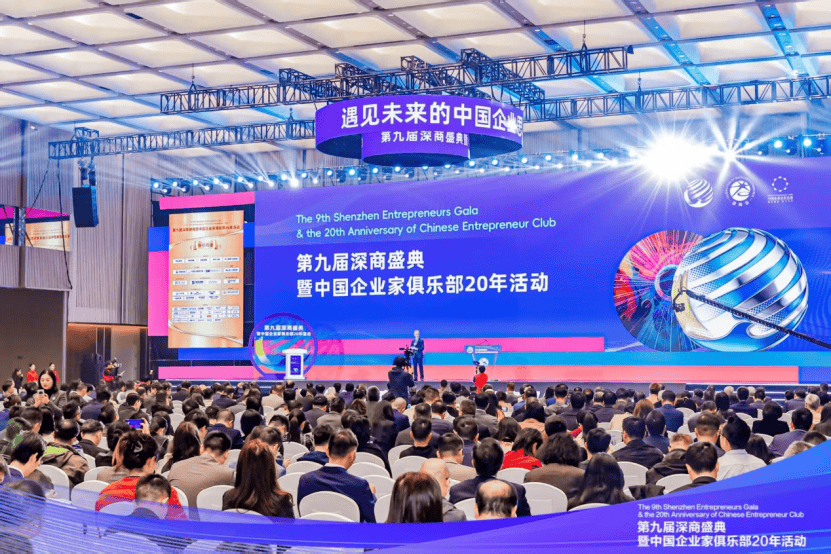
深圳这场盛会,TCL李东生、小鹏汽车何小鹏等企业家都说了啥?
Sou Hu Cai Jing· 2026-01-13 12:35
Group 1 - The event "The 9th Shenzhen Business Convention and 20 Years of China Entrepreneurs Club" focused on themes such as industrial innovation, technological breakthroughs, ecological construction, and social responsibility [1] - Notable entrepreneurs shared insights on technology innovation and development paths, highlighting China's evolution from a follower in the global supply chain to a pioneer in new strategic industries [3] - The global competition in technology is intensifying, with artificial intelligence transitioning from concept to deep industrialization, becoming a key driver of future economic growth [3] Group 2 - Companies like TCL, iFlytek, and XPeng Motors discussed their advancements in AI, automotive technology, and the importance of core technology autonomy for long-term success [3][4] - The Chinese automotive industry is moving from "electrification" to "intelligent competition," with breakthroughs in autonomous driving and smart cockpit technologies being crucial for gaining a competitive edge globally [3] - The concept of ESG (Environmental, Social, and Governance) has become a significant guiding principle for high-quality corporate development, emphasizing the integration of sustainability into business strategies [4]



李东生与TCL的45年:为什么他们没错过时代?
远川研究所· 2026-01-13 12:30
Core Viewpoint - TCL has evolved from a traditional television manufacturer to a global technology leader, emphasizing innovation in display technology and strategic restructuring to enhance its market position and technological capabilities [5][11][22]. Group 1: Historical Context and Evolution - TCL first participated in CES in 1991, marking its entry into the global consumer electronics arena, and has since become a significant player with a 2453 square meter booth in 2026, showcasing advanced technologies like SQD-Mini LED and printed OLED displays [3][5]. - The company faced significant challenges in the early 2000s, including losses from overseas acquisitions, which led to a strategic pivot towards global integration and technology ownership [6][7]. Group 2: Strategic Decisions and Restructuring - After experiencing setbacks, TCL focused on vertical integration by establishing its own LCD panel production, investing over 300 billion yuan since 2009, which was crucial for maintaining pricing power in the television market [10][11]. - In 2017, TCL initiated a "twin restructuring" to streamline operations, selling off non-core businesses and focusing on high-value sectors like semiconductor displays and smart terminals, resulting in a doubling of revenue from approximately 75 billion yuan in 2019 to an estimated 165 billion yuan in 2024 [12][14]. Group 3: Technological Innovations - TCL has been a pioneer in display technology, launching the world's first Mini LED television in 2019 and developing printed OLED technology, which significantly improves material utilization and production efficiency [15][16]. - The company is set to lead in the printed OLED market with the establishment of the world's first high-generation printed OLED production line in Guangzhou, marking a significant advancement in display technology [17][21]. Group 4: Leadership and Vision - CEO Li Dongsheng's leadership reflects a commitment to "real economy" and a deep understanding of the challenges faced by Chinese manufacturers in a global context, emphasizing the importance of continuous innovation and adaptation [21][22]. - The company's journey illustrates the broader narrative of Chinese manufacturing's integration into the global market, with TCL serving as a case study of resilience and strategic foresight in overcoming industry challenges [22][24].

TCL科技2025年业绩预增:净利润最高45.5亿元,同比增长191%
Bei Jing Shang Bao· 2026-01-13 12:22
公告显示,2025年1—12月,TCL科技归属于上市公司股东的净利润预计为42.1亿元—45.5亿元,较上年 同期的15.64亿元增长169%—191%;扣除非经常性损益后归属于上市公司股东的净利润预计为28.9亿元 —32.0亿元,较上年同期的2.98亿元大幅增长869%—973%。 北京商报讯(记者 陶凤 王天逸)1月13日,TCL科技集团股份有限公司发布2025年度业绩预告,公司业 绩预计实现大幅上升。 ...
2025年TCL科技预计净利润为42.1—45.5亿元!TCL华星净利润超 80 亿元!
Xin Lang Cai Jing· 2026-01-13 11:27
Core Viewpoint - TCL Technology (000100.SZ) announced a profit forecast for 2025, expecting net profit attributable to shareholders to be between 4.21 billion and 4.55 billion yuan, representing a year-on-year increase of 169% to 191% [1][7]. Financial Performance - The projected net profit for 2025 is between 4.21 billion and 4.55 billion yuan, compared to 1.564 billion yuan in the previous year, indicating an increase of 169% to 191% [3][9]. - The net profit after deducting non-recurring gains and losses is expected to be between 2.89 billion and 3.2 billion yuan, up from 298 million yuan last year, reflecting an increase of 869% to 973% [3][9]. - Basic earnings per share are projected to be between 0.2174 yuan and 0.2350 yuan, compared to 0.0842 yuan per share in the previous year [3][9]. Business Strategy and Operations - The company focuses on three core areas: semiconductor displays, new energy photovoltaics, and semiconductor materials, aiming for sustainable high-quality development [3][9]. - TCL Huaxing is committed to a leading strategy, achieving a revenue of over 100 billion yuan and a net profit exceeding 8 billion yuan, with a net operating cash flow of over 40 billion yuan [3][9]. - The company maintains a competitive advantage in large-size products like TVs and commercial displays, while also rapidly growing in the small and medium-size product sectors [4][10]. Acquisitions and Expansions - The company completed the acquisition of 100% of the shares of the former LG Display (China) Co., Ltd., enhancing its capacity layout for large and medium-size LCD panels [4][10]. - TCL Huaxing is expanding its G5.5 generation printed OLED production line and building the world's first high-generation printed OLED production line, which will support future display technology upgrades [4][10]. Market Position - TCL Zhonghuan achieved over 5.7 billion yuan in revenue, maintaining its position as the leading domestic player in the semiconductor materials sector [4][10]. - The company is navigating significant fluctuations in the photovoltaic industry due to oversupply across various segments, focusing on product innovation and global strategies to improve profitability [4][10].
