
FENGHUA(000636)

Search documents
风华高科:4.3亿元高端电阻生产基地项目正有序推进产能建设,建成后将实现高端片阻月产能新增100亿只
Mei Ri Jing Ji Xin Wen· 2026-01-28 02:46
Group 1 - The core point of the article is the progress of the 430 million yuan high-end resistor production base project by Fenghua Advanced Technology, which is advancing in capacity construction [2][3] - Upon completion, the project will add a monthly production capacity of 10 billion high-end resistors, focusing on high-value products such as 01005 resistors, alloy resistors, automotive-grade resistors, and ultra-low resistance types [2]


未知机构:风华高科000636高盛MLCC当前产能利用率已超90-20260127
未知机构· 2026-01-27 01:55
Company and Industry Summary Company: 风华高科 (Fenghua Advanced Technology, 000636) Key Points 1. **Core Investment Logic**: The profitability growth momentum of Murata Manufacturing Co., Ltd. for the fiscal year ending March 2027 is strong, primarily benefiting from the tightening supply and demand of Multi-Layer Ceramic Capacitors (MLCC), price stabilization, and profit improvement in non-MLCC businesses [1] 2. **MLCC Business Contribution**: The MLCC segment accounts for over 60% of the company's sales, with current capacity utilization exceeding 90%. Seasonal demand and the demand from AI server applications are expected to further drive this, with full capacity operation anticipated by March-April 2026, alleviating downward price pressure due to tight supply and demand [1] 3. **Growth Drivers**: The AI server sector is identified as a key growth point, with the MLCC market size expected to expand at a compound annual growth rate (CAGR) of 34%. The power consumption of servers is projected to grow at a CAGR of 37%, while the demand for related capacitors from Murata is expected to grow at a CAGR of 30% [1] 4. **Non-MLCC Business Contributions**: In the non-MLCC segment, products such as AI server power supplies (expected to start mass production in 2026 with sales ramping up in the fiscal year 2027, targeting sales of 50 billion yen per project), RF modules, MetroCirc, and secondary batteries are anticipated to contribute positively year-on-year in the fiscal year 2027 [2]
开源证券:成本端驱动涨价潮 被动元件高端需求开启新周期
Zhi Tong Cai Jing· 2026-01-26 05:55
Core Viewpoint - The global passive component market is entering a new upcycle driven by price increases announced by leading companies since 2025, primarily due to rising upstream metal raw material prices and increased labor/power costs, with inflation being a dominant factor [1] Price Increase Situation - Major companies such as Yageo, Walsin, Panasonic, Fenghua, and Sunlord have announced price hikes, with Yageo starting from the second half of 2025, increasing prices for various capacitor and resistor products by 10%-30% [2] - Panasonic has notified dealers of price increases for 30-40 models of tantalum capacitors by 15%-30%, effective February 1, 2026 [2] - Fenghua announced price increases for inductor products by 5%-25% and for various capacitor products by 10%-30% starting November 2025 [2] - Walsin plans to adjust prices for resistor products due to rising costs, effective February 1, 2026 [2] Supply Side - The continuous rise in upstream metal raw material prices, including silver, palladium, ruthenium, tin, and copper, is a major driver of the price increases in passive components [4] - The production costs have significantly increased due to the rise in metal prices, which is being passed down through the supply chain [4] - The operating rates of major manufacturers have remained high since 2025, with a trend of further improvement [4] Demand Side - Demand from emerging sectors such as AI servers, new energy vehicles, and industrial control is strong, which may lead to a longer upcycle for the passive component industry compared to previous cycles [5] - For instance, each AI server is equipped with approximately 15,000 to 25,000 MLCCs, with the market for MLCCs in AI servers expected to grow at an annual rate of 30%, reaching 3.3 times the 2025 level by 2030 [5] Target Companies - Companies to watch include SanHuan Group, Sunlord Electronics, JiangHai Co., and Fala Electronics [6] - Beneficiary companies include Fenghua, Placo New Materials, Jiemai Technology, and Maijie Technology [6]

巨头提价!被动元件接连涨价,高增长概念股出炉
Xin Lang Cai Jing· 2026-01-23 00:20
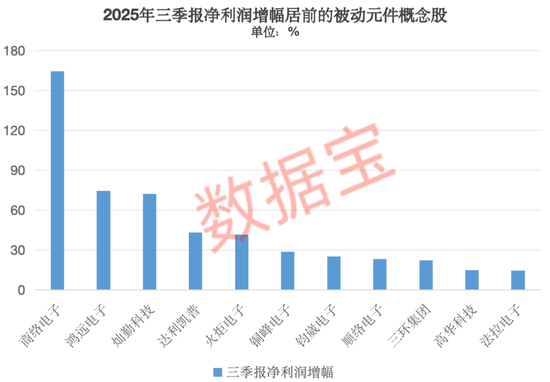
Core Viewpoint - The passive component industry is experiencing price increases due to rising raw material costs, with major companies like Huaxinke and Guoju announcing price adjustments for their products [1][2][14]. Price Increases - Huaxinke announced a price adjustment for resistors ranging from sizes 0201 to 1206, effective February 1, with expected increases around 20% [1][14]. - Guoju has also issued a price increase notice for certain resistor products, with adjustments between 15% and 20% [1][14]. - Panasonic plans to raise prices for some tantalum capacitors by 15% to 30% starting February 1, 2026 [1][14]. - The price hikes are attributed to the rising costs of core metal materials such as silver, palladium, tin, and copper, which have intensified cost pressures [2][14]. Market Dynamics - The demand for passive components is being driven by the rapid development of AI technologies, which is significantly increasing the usage of MLCCs (multi-layer ceramic capacitors) in AI server motherboards, with usage rising to 3000-4000 units, over 100% more than traditional servers [2][14]. - The structural changes in demand are leading to increased prices for MLCC products and exacerbating supply-demand conflicts in the industry [2][14]. Market Size and Growth - The passive component market in China was valued at 123.765 billion yuan in 2023, with projections to reach 258.359 billion yuan by 2030, reflecting a compound annual growth rate (CAGR) of 11.09% from 2023 to 2030 [3][15]. Stock Performance - Over 20 listed companies in the passive component sector have shown positive stock performance, with leading company Fenghua Gaoke's stock price increasing over 26% this year [4][17]. - Other companies like Guoci Materials and Dali Kaipu have also seen stock price increases exceeding 15% [4][17]. Profit Growth - Many companies reported significant year-on-year profit growth in their Q3 2025 reports, with Shangle Electronics doubling its net profit with an increase of over 160% [5][18]. - Other companies such as Hongyuan Electronics and Canqin Technology reported profit increases exceeding 70% [5][18]. Institutional Predictions - Among 10 concept stocks rated by four or more institutions, Torch Electronics is predicted to have a net profit of around 500 million yuan in 2025, with an expected growth rate of over 157% [7][20]. - Hongyuan Electronics is forecasted to achieve a net profit of approximately 339 million yuan in 2025, with a growth rate exceeding 120% [7][20]. Institutional Research - In January 2026, Junwei Electronics was investigated by 11 institutions, revealing progress in its current sensor business, which is being integrated into projects with major clients in the new energy vehicle and AI server sectors [10][21]. - Sunluo Electronics was also investigated by three institutions, indicating strong market acceptance and ongoing progress in supplying various tantalum capacitor products [11][22].
研判2026!中国磁珠电感器行业产业链、市场现状、重点企业及发展趋势分析:随着下游电磁环境复杂化,行业作为高频噪声抑制关键元件的战略价值持续攀升[图]
Chan Ye Xin Xi Wang· 2026-01-20 01:11
Core Insights - The strategic value of magnetic beads, essential for absorbing high-frequency noise and suppressing electromagnetic interference (EMI), is increasingly recognized in China's electronic information industry, with the market size projected to reach approximately 3.45 billion yuan in 2024, reflecting a year-on-year growth of 5.50% [1][8]. Industry Overview - Magnetic bead inductors are passive components designed to suppress high-frequency noise and EMI, operating based on hysteresis and eddy current losses in ferrite materials, converting high-frequency signal energy into heat rather than reflecting or storing it [3]. - The key applications include signal/power line filtering, RF circuits, and ultra-high-frequency memory circuits, particularly excelling in frequencies above 100 MHz [3]. Market Size - The market for magnetic bead inductors in China is expected to grow significantly, driven by the large-scale deployment of 5G infrastructure, rapid growth in new energy vehicle sales, and the penetration of IoT terminals in both consumer and industrial sectors [1][8]. Key Companies - Leading companies in the magnetic bead inductor industry include: - **Shunluo Electronics**: A leader in the industry, known for its micro magnetic beads and strong presence in high-end applications like AI servers and 5G communications [9][11]. - **Fenghua Advanced Technology**: Maintains a leading position in the general magnetic bead market, focusing on cost-effective products and continuous innovation [9][13]. - **Majie Technology**: Specializes in RF patch magnetic beads and has a strong competitive edge in communication and consumer electronics [9]. Industry Development Trends 1. **Technological Innovation**: The industry is moving towards "high frequency, miniaturization, and integration" to meet the demands of 5G and AI technologies, with a focus on developing high-performance low-loss soft magnetic materials [14]. 2. **Market Demand Shift**: The growth drivers are shifting from consumer electronics to high-end strategic markets, particularly in new energy vehicles and AI infrastructure, which require high reliability and low-loss performance [14]. 3. **Evolving Industry Ecosystem**: Competition is transitioning from product-based to collaborative supply chain competition, with leading companies focusing on vertical integration and collaboration with upstream material suppliers to enhance product performance and stability [15].


元件板块1月19日跌0.19%,景旺电子领跌,主力资金净流出5.06亿元
Zheng Xing Xing Ye Ri Bao· 2026-01-19 08:52
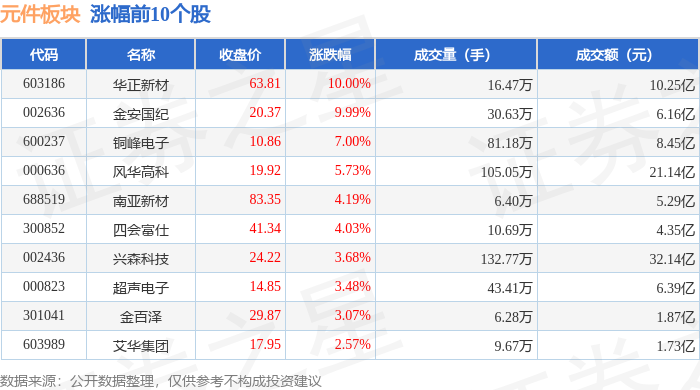
Market Overview - The component sector experienced a decline of 0.19% on January 19, with Jingwang Electronics leading the drop [1] - The Shanghai Composite Index closed at 4114.0, up 0.29%, while the Shenzhen Component Index closed at 14294.05, up 0.09% [1] Top Gainers in the Component Sector - Huazheng New Materials (603186) saw a closing price of 63.81, with a significant increase of 10.00% and a trading volume of 164,700 shares, totaling a transaction value of 1.025 billion [1] - Jin'an Guoji (002636) closed at 20.37, up 9.99%, with a trading volume of 306,300 shares and a transaction value of 616 million [1] - Tongfeng Electronics (600237) increased by 7.00% to close at 10.86, with a trading volume of 811,800 shares [1] Top Losers in the Component Sector - Jingwang Electronics (603228) closed at 68.60, down 4.62%, with a trading volume of 293,900 shares [2] - Dongshan Precision (002384) decreased by 3.14% to close at 77.81, with a trading volume of 406,700 shares [2] - Shengyi Electronics (688183) saw a decline of 2.93%, closing at 95.00, with a trading volume of 135,100 shares [2] Capital Flow Analysis - The component sector experienced a net outflow of 506 million from main funds, while retail investors saw a net inflow of 488 million [2][3] - Notable net inflows from retail investors were observed in several companies, including Xingsen Technology (002436) with a net inflow of 34.3 million [3] - Jin'an Guoji (002636) had a significant retail net inflow of 183 million, despite a main fund outflow of 92.6 million [3]


最高20%!大厂上调部分电阻价格
Shang Hai Zheng Quan Bao· 2026-01-17 15:52
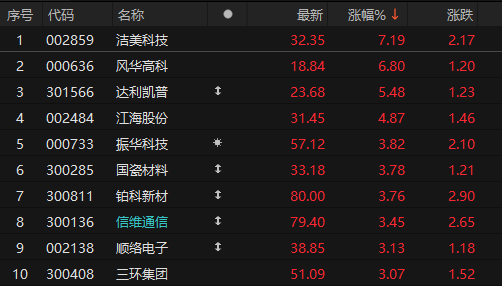
Core Viewpoint - The passive components industry, particularly capacitors and resistors, is expected to experience a price increase due to rising raw material costs and accelerated AI application deployment [1]. Group 1: Price Increases - Yageo has announced a price increase of 15%-20% for certain resistor products starting February 1, driven by significant wafer cost increases [1]. - Panasonic will also raise prices for some tantalum capacitors by 15%-30% starting February 1, 2025 [4]. - Windfall High-Tech has adjusted prices for various products, including inductors and varistors, due to ongoing raw material price increases [5]. Group 2: Market Reactions - On January 16, 2025, A-share passive component stocks saw notable price increases, with Windfall High-Tech rising by 6.8%, Jiemai Technology by 7.19%, and others following suit [1]. - The price adjustments reflect a broader trend in the industry, with Yageo having frequently raised prices for multiple passive components since mid-2025 [3]. Group 3: Cost Factors - The primary driver for the price increases in passive components is the pressure from rising raw material costs, including metals like silver, copper, and others [6][7]. - Silver prices have surged significantly, with a year-on-year increase of 201%, contributing to the cost pressures faced by manufacturers [8]. Group 4: Future Outlook - The continuation of price increases in passive components will largely depend on supply and demand dynamics, particularly driven by AI applications and automotive electronics [9]. - Current observations indicate that there has not yet been a noticeable impact on consumer electronics from rising storage prices [10].
涨价、暂停报价,被动元件现在咋样了?
芯世相· 2026-01-16 06:37
Core Viewpoint - The passive component market is experiencing a price increase and order suspension due to rising demand and material costs, particularly in resistors and capacitors, driven by AI and other technological advancements [4][20]. Group 1: Market Situation - Before the New Year, many passive component manufacturers issued price increase notices, leading to a suspension of quotes and orders in the market [4][6]. - Distributors reported that the main reason for suspending quotes was the uncertainty of price increases from manufacturers, which could render pre-holiday quotes ineffective [6][9]. - After the New Year, most channels resumed normal quoting, but some specific models remained in short supply, causing continued order suspensions [6][9]. Group 2: Price Changes - Resistors have seen significant price increases, with some models rising by 10-30%, while capacitors experienced more moderate increases, particularly in high-demand types like polymer tantalum capacitors [7][9]. - The price of magnetic beads and inductors has also risen significantly, reflecting broader trends in the passive component market [8][9]. Group 3: Causes of Price Increases - The current price surge is attributed to two main factors: rising raw material costs, particularly for precious metals like silver, and increased demand driven by AI technologies [15][16]. - Silver prices surged by 143% in 2025, significantly impacting the cost structure of passive components, especially inductors [16][17]. - The rapid growth in AI demand is pushing the need for high-end components, further driving prices up [18][19]. Group 4: Future Outlook - The demand for passive components is expected to remain stable in 2025, with significant increases in AI-related applications, particularly for MLCCs [9][20]. - The market is likely to see a structural differentiation where high-end products maintain stable growth while standard consumer-grade components may struggle [19][20].

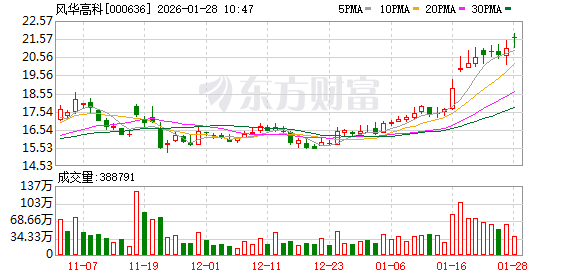
风华高科股价涨5.33%,南方基金旗下1只基金位居十大流通股东,持有1178.98万股浮盈赚取1108.24万元
Xin Lang Cai Jing· 2026-01-16 05:48
Group 1 - The core viewpoint of the news is that Fenghua High-Tech has seen a stock price increase of 5.33%, reaching 18.58 CNY per share, with a trading volume of 556 million CNY and a turnover rate of 2.67%, resulting in a total market capitalization of 21.497 billion CNY [1] - Fenghua High-Tech, established on March 23, 1994, and listed on November 29, 1996, is primarily engaged in the research, production, and sales of electronic components and materials, with 98.36% of its revenue coming from these core businesses [1] Group 2 - Among the top circulating shareholders of Fenghua High-Tech, the Southern Fund's Southern CSI 500 ETF (510500) reduced its holdings by 192,100 shares in the third quarter, now holding 11.7898 million shares, which accounts for 1.02% of the circulating shares [2] - The Southern CSI 500 ETF (510500) was established on February 6, 2013, with a current scale of 140.098 billion CNY, achieving a year-to-date return of 10.19% and a one-year return of 51.54% [2]
2025年中国被动元器件行业政策背景、发展现状、细分市场未来发展趋势研判:国产替代纵深突破,MLCC市场增长潜力凸显[图]
Chan Ye Xin Xi Wang· 2026-01-16 01:07
Core Viewpoint - The passive components industry is crucial for electronic devices, providing essential functions such as signal regulation and energy storage without external power. The industry is supported by various national policies aimed at promoting innovation and domestic production, with significant growth expected in both global and Chinese markets by 2024 [1][4][7]. Industry Overview - Passive components, also known as passive devices, operate without external power and rely on physical properties to perform functions like current/voltage regulation and energy storage. They are essential for ensuring signal transmission and circuit stability, forming the backbone of the electronic industry [2][3]. Policy Support - China has implemented several key policies to support the passive components industry, including reforms in management systems, strategies to expand domestic demand, and guidelines for energy electronics development. These policies aim to enhance local companies' capabilities in high-end material research and precision manufacturing [4][5]. Industry Chain - The upstream of the passive components industry consists of raw material and equipment suppliers, with critical materials largely imported. The midstream includes manufacturing of capacitors, inductors, and resistors, with domestic companies like Fenghua Advanced Technology and SanHuan Group leading in mid-to-low-end markets. The downstream market is driven by consumer electronics, automotive electronics, and emerging fields like AI and 5G [5][6]. Market Dynamics - The global passive components market is expected to reach $39.1 billion by 2024, with a growth rate of 7.7%. The Asia-Pacific region dominates, accounting for over 70% of the market share. China, as the largest demand market, is projected to grow to 142.3 billion yuan in 2024, with a compound annual growth rate of 15.2% from 2020 to 2024 [7][8]. Competitive Landscape - The competitive landscape of the passive components industry in China is characterized by international giants dominating high-end markets, while domestic companies are making strides in mid-to-low-end segments. Key players like Fenghua Advanced Technology and SanHuan Group are focusing on high-end product certifications and technological advancements [9][10]. Development Trends - The future of the passive components industry in China will focus on three main areas: technological upgrades, deepening domestic substitution, and ecological collaboration. Products will evolve towards higher capacitance, miniaturization, and reliability, with a strong emphasis on self-sufficiency in materials and core technologies [11][12].


