
YUNDA Corp.(002120)

Search documents
韵达股份(002120) - 第八届监事会第十六次会议决议公告
2025-10-13 11:45
本公司及监事会全体成员保证信息披露内容的真实、准确和完整,没有虚 假记载、误导性陈述或重大遗漏。 一、监事会会议召开情况 韵达控股集团股份有限公司(以下简称"公司")第八届监事会第十六次会 议通知于 2025 年 10 月 9 日以书面方式送达各位监事,会议于 2025 年 10 月 13 日以通讯表决的方式进行,会议应参加表决的监事 3 人,实际参加表决的监事 3 人。会议由监事会主席赖雪军先生召集,本次会议的出席人数、召集、召开程序 和审议内容符合《中华人民共和国公司法》《中华人民共和国证券法》等有关法 律、行政法规、部门性规章、规范性文件及《韵达控股股份有限公司章程》等有 关规定。 二、监事会会议审议情况 证券代码:002120 证券简称:韵达股份 公告编号:2025-064 韵达控股集团股份有限公司 第八届监事会第十六次会议决议公告 本议案需提交公司 2025 年第一次临时股东会审议。 2、以 3 票同意,0 票反对,0 票弃权,审议通过了《关于申请注册发行超 短期融资券的议案》。 1、以 3 票同意,0 票反对,0 票弃权,审议通过了《关于续聘会计师事务 所的议案》。 经认真审议,公司监事会认为:容 ...

韵达股份(002120) - 第八届董事会第二十二次会议决议公告
2025-10-13 11:45
第八届董事会第二十二次会议决议公告 本公司及董事会全体成员保证信息披露的内容真实、准确、完整,没有虚 假记载、误导性陈述或重大遗漏。 一、董事会会议召开情况 韵达控股集团股份有限公司(以下简称"公司")第八届董事会第二十二次 会议于 2025 年 10 月 9 日以电子邮件和书面方式通知各位董事,会议于 2025 年 10 月 13 日以通讯表决的方式进行。会议应出席的董事 8 人,实际出席的董事 8 人。会议由董事长聂腾云先生召集,本次会议的出席人数、召集、召开程序和审 议内容均符合《中华人民共和国公司法》等有关法律、行政法规、部门性规章、 规范性文件及《韵达控股集团股份有限公司章程》等有关规定。 二、董事会会议审议情况 1、以 8 票同意,0 票反对,0 票弃权,审议通过了《关于续聘会计师事务 所的议案》。 证券代码:002120 证券简称:韵达股份 公告编号:2025-063 韵达控股集团股份有限公司 公司拟续聘容诚会计师事务所(特殊普通合伙)为公司 2025 年度财务报表 及内部控制审计机构。董事会提请股东会授权公司管理层与其签署相关协议并根 据行业标准和公司审计工作的实际情况决定其报酬。 本议案已经 ...
韵达股份(002120) - 关于公司股东股份质押的公告
2025-10-13 11:00
证券代码:002120 证券简称:韵达股份 公告编号:2025-062 韵达控股集团股份有限公司 关于公司股东股份质押的公告 本公司及董事会全体成员保证信息披露的内容真实、准确、完整,没有虚 假记载、误导性陈述或重大遗漏。 截至公告披露日,上述股东及其一致行动人所持质押股份情况如下: | | | | 本次质押前 | 本次质押后 | 占其所 | 占公司 | 已质押股份情况 | | 未质押股份情况 | | | --- | --- | --- | --- | --- | --- | --- | --- | --- | --- | --- | | 股东名称 | 持股数量 (股) | 持股比 例 | 质押股份数 | 质押股份数 | 持股份 | 总股本 | 已质押股份 限售和冻 | 占已 质押 | 未质押股份 | 占未质 | | | | | 量(股) | 量(股) | 比例 | 比例 | 结、标记数 | 股份 | 限售和冻结 数量(股) | 押股份 比例 | | | | | | | | | 量(股) | 比例 | | | | 上海罗颉思投 资管理有限公 司 | 1,520,260,088 | 52.44% | 213,6 ...
“双11大战”在即,快递涨价反内卷,韵达为何还吃不到肉?
Xin Lang Cai Jing· 2025-10-13 01:27
Core Viewpoint - The express delivery industry in China is experiencing a price increase due to intense competition and cost pressures, impacting e-commerce sellers and the financial performance of express companies, particularly Yunda Express, which has seen a significant decline in profits [1][3][8]. Price Increase and Market Dynamics - The price increase in the express delivery sector is not solely due to rising costs but is a reaction to extreme competition within the industry [3]. - Starting from July, cities like Yiwu and Guangdong have raised the minimum express delivery price, with Guangdong's price increasing by 0.4 yuan per ticket, setting a new average of over 1.4 yuan [4][5]. - The price adjustments are expected to influence the entire industry, as Guangdong and Zhejiang account for nearly half of the national express delivery capacity [5]. Impact on E-commerce and Profitability - The increase in delivery costs is affecting the sales and profit margins of e-commerce sellers, particularly for low-margin small items, leading some sellers to seek cheaper delivery options or shift to higher-margin products [6][7]. - The overall growth rate of express delivery business volume has slowed, with August's growth dropping to 12.3% from 15.1% in July, despite a total of 161.5 billion packages delivered in August [6]. Performance of Major Express Companies - Among the major express companies, SF Express leads with a revenue of 146.86 billion yuan, followed by YTO Express and Shentong Express, with Yunda Express experiencing a 49.19% decline in net profit, the largest drop among listed express companies [9][10]. - Yunda Express's single ticket revenue fell to 1.92 yuan, a decrease of 3.52%, placing it at the bottom among its peers [10][11]. Industry Positioning and Future Outlook - Yunda Express's market position is increasingly precarious, with its business volume growth lagging behind competitors like Shentong Express, which may surpass Yunda in performance during the peak e-commerce season [13][14]. - The express delivery industry is entering a new phase where technological advancements and service quality improvements are becoming critical for growth, as the market approaches a saturation point [19][20]. - Companies like SF Express and Zhongtong are investing heavily in technology and infrastructure, while Yunda's technological investments and fixed asset growth are comparatively slower, raising concerns about its competitive edge [21][22].

交运行业2025Q3业绩前瞻:快递三季报验证利润修复弹性,造船进入业绩释放,把握油运造船上行机会
Shenwan Hongyuan Securities· 2025-10-10 13:49
Investment Rating - The report maintains an "Overweight" rating for the transportation industry, indicating a positive outlook compared to the overall market performance [12]. Core Insights - The report highlights a recovery in profits for the express delivery sector driven by anti-competition policies, with an expected increase in prices leading to improved profitability for companies like Shentong Express and YTO Express [5][6]. - The shipping sector is experiencing strong demand, particularly for oil tankers, with historical high freight rates observed in August and September 2025. The report anticipates continued demand growth due to OPEC+ production increases and a release of pent-up inventory demand [5]. - The shipbuilding industry is in a phase of profit release as high-priced orders are being delivered, with a strong demand for replacing old vessels. The report notes that the implementation of the 301 policy is expected to stimulate order volumes and ship prices [5]. - The airline sector is projected to see significant improvements in operational performance due to increased capacity and a recovery in international travel, with major airlines like China Eastern Airlines and Southern Airlines expected to benefit [5][6]. - The report also indicates that the highway and railway sectors are likely to maintain growth in traffic volumes, with improvements in railway freight performance anticipated due to the retraction of previous freight rate reductions [5]. Summary by Sections Shipping - Oil tanker freight rates reached historical highs in August and September 2025, with a projected 14% decline in VLCC market rates for Q3, while Cape-sized bulk carriers are expected to see a 19% increase in rates [5]. - The report recommends companies such as China Merchants Energy Shipping and China Merchants Heavy Industry, highlighting the strong demand and supply constraints in the sector [5]. Shipbuilding - The shipbuilding industry is characterized by a tight supply-demand balance, with ongoing demand for replacing old vessels. The report suggests that the implementation of the 301 policy will positively impact order volumes and ship prices [5]. - Recommended companies include China Shipbuilding Industry Corporation and China State Shipbuilding Corporation, which are expected to benefit from the current market dynamics [5]. Airlines - The airline sector is entering a peak travel season with increased capacity and improved passenger flow. The report anticipates significant operational improvements for major airlines due to favorable external factors such as lower oil prices [5][6]. - Companies like China Eastern Airlines and Spring Airlines are highlighted as key beneficiaries of this trend [5]. Express Delivery - The express delivery sector is expected to see a recovery in profits due to rising prices and reduced competition. The report notes a 12.3% year-on-year growth in express delivery volume in August 2025 [5]. - Recommended companies include Shentong Express and YTO Express, which are expected to benefit from the ongoing price increases [5]. Highway and Railway - The report forecasts growth in highway traffic and railway passenger and freight volumes, with a notable increase in railway freight performance expected in Q3 2025 [5]. - Recommended companies include Zhejiang Huhangyong and Beijing-Shanghai High-Speed Railway, which are expected to perform well in the current environment [5].






韵达股份:公司第一时间向客户发布了关于受台风、暴雨天气影响的提示性告知书
Zheng Quan Ri Bao· 2025-10-09 13:41
(文章来源:证券日报) 证券日报网讯韵达股份10月9日在互动平台回答投资者提问时表示,台风预警发布后,公司第一时间向 客户发布了关于受台风、暴雨天气影响的提示性告知书。公司坚持"安全第一、预防为主"的原则,成立 运营、网络、安全等部门组成的应急指挥小组,统筹指挥转运中心与网点的台风防御工作,全力保障网 络平稳运行。同时,针对台风可能带来的时效影响,公司已制定了完善的客户预案,将通过客服等渠道 及时通报服务变动,确保客户权益得到保障。 ...
韵达股份(002120) - 关于2025年第三季度可转换公司债券转股情况的公告
2025-10-09 12:17
| 证券代码:002120 | 证券简称:韵达股份 | 公告编号:2025-061 | | --- | --- | --- | | 债券代码:127085 | 债券简称:韵达转债 | | 本公司及董事会全体成员保证信息披露的内容真实、准确、完整,没有虚 假记载、误导性陈述或重大遗漏。 特别提示: 根据《深圳证券交易所股票上市规则》《深圳证券交易所上市公司自律监管 指引第 15 号——可转换公司债券》的有关规定,韵达控股集团股份有限公司(以 下简称"公司")现将 2025 年第三季度可转换公司债券(以下简称"可转债") 转股及公司股份变动的情况公告如下: 一、可转换公司债券基本情况 (一)可转债发行情况 经中国证券监督管理委员会《关于核准韵达控股股份有限公司公开发行可转 换公司债券的批复》(证监许可[2022]2408 号)核准,公司于 2023 年 4 月 11 日 向不特定对象发行 2,450 万张可转换公司债券,期限 6 年,发行价格为每张 100 元,发行总额为人民币 245,000.00 万元。 (二)可转债上市情况 韵达控股集团股份有限公司 关于 2025 年第三季度可转换公司债券 转股情况的公告 ...
服务中国中西部,韵达的又一场升级
Guan Cha Zhe Wang· 2025-10-09 12:09
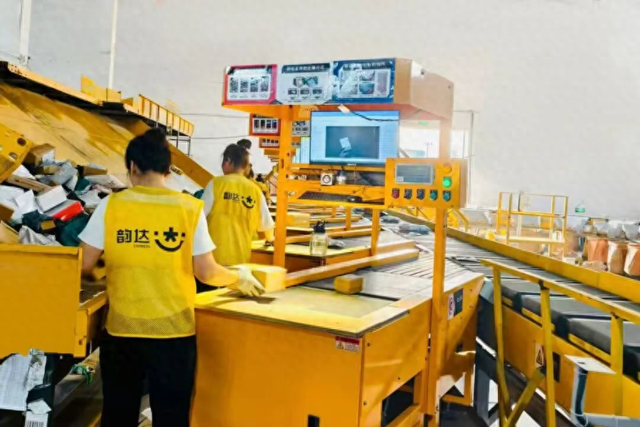
Core Viewpoint - Yunda Express is deeply rooted in the western regions of China, integrating logistics services with local agricultural products to support rural revitalization and enhance local economies [3][5][10]. Group 1: Logistics Network Development - Yunda has established a "county-town-village" three-tier logistics service network, achieving over 99.6% coverage in county-level areas and 99.8% in townships [3][8]. - The company has expanded its service network to cover all 31 provinces and municipalities in China, with 100% coverage in cities above the prefecture level and over 99.8% in county-level areas [8]. - Yunda has built 39 express stations in Sichuan and 16 in Xinjiang, creating a robust logistics network in these regions [1][3]. Group 2: Technological Advancements - Yunda is implementing a "1+N+AI" technology strategy, focusing on the integration of AI, unmanned vehicles, and drones to enhance supply chain efficiency [3][12]. - The company has developed four digital management tools tailored for different operational needs, enabling comprehensive empowerment from management to operations [12]. - Yunda has constructed 59 sets of automated equipment across its network, with each set capable of processing over 1.5 million packages daily [13]. Group 3: Cost Efficiency and Business Growth - In 2024, Yunda's core operating cost per package decreased by 21.91%, while overall business volume reached 18.365 billion packages, reflecting a year-on-year growth of 28.19% [10][11]. - The company has achieved a 72-hour delivery rate that ranks among the best in the industry, driven by significant investments in technology [3][10]. - Yunda's operational efficiency improvements have led to a 13.85% reduction in four major expenses, enhancing overall business health [3][10]. Group 4: Social Responsibility and ESG Initiatives - Yunda's "Express into Villages" project has been recognized as a best practice for rural revitalization, demonstrating its commitment to integrating logistics with agricultural development [3][5]. - The company has invested 9.2416 million yuan in social welfare initiatives in 2024, including educational support for underprivileged students [16]. - Yunda has adopted green logistics practices, with over 3,875 new energy vehicles in its fleet and a 99.9% usage rate of electronic waybills, significantly reducing paper consumption [15].
中泰证券首次覆盖韵达股份:“反内卷”提票价 公司盈利改善可期
Quan Jing Wang· 2025-10-09 11:31
近期,中泰证券(600918)发布研报首次覆盖韵达股份(002120),研报指出,韵达股份是国内加盟制 快递头部公司,近几年持续聚焦主业优化经营、控本降费,随着"反内卷"等政策红利持续释放,价格竞 争改善背景下公司盈利修复可期。 "韵达速递"品牌创立于1999年8月,是较早实现网络扁平化、平台化、信息化的公司之一,2018-2022年 快递业务量市场份额位居行业第二;近几年,公司深入贯彻"全网一体、共建共享"的发展理念,以科技 创新、精细管理为驱动,实施"聚焦主航道"的发展战略,逐步实现经营与管理优化。 研报认为,公司降本增效成果显著,规模效应叠加精细管控单票核心运营成本呈下降趋势,"反内卷"背 景下价格改善有望持续。 7月8日,国家邮政局党组召开会议,旗帜鲜明反对"内卷式"竞争。7月以来,浙江、广东、福建等多地 已落实涨价措施。8月,公司快递服务单票收入为1.92元,环比增长0.01元;随着政策红利持续释放,竞 争环境改善背景下公司单票收入有望实现环比继续提升。 研报指出,韵达股份近些年在核心枢纽转运中心投建、设备自动化智能化布局、运力运能提升以及数字 化信息化建设等方面持续投入,根据公司公告2022年起扩 ...

韵达股份(002120):经营优化控本降费仍有空间 “反内卷”提票价盈利改善可期
Xin Lang Cai Jing· 2025-10-06 04:26
Core Viewpoint - The company, Yunda Express, has faced challenges in recent years but is now focusing on operational optimization and cost reduction to regain market share and improve profitability [1][5]. Group 1: Company Overview - Yunda Express was established in August 1999 and was one of the first companies to implement a flat, platform-based, and information-driven network [1]. - From 2018 to 2022, the company held the second-largest market share in express delivery volume, but due to various factors, its market share dropped to third place in 2023 [1]. Group 2: Operational Efficiency - The company has been investing in core hub transfer centers, automation, capacity enhancement, and digitalization, leading to a decrease in core operating costs per package by 15.62% year-on-year in the first half of 2025 [2]. - The company achieved a total express delivery volume of 12.726 billion packages in the first half of 2025, reflecting a year-on-year growth of 16.50% [2]. Group 3: Cost Management - The company has successfully reduced operational expenses, with a decrease of 3.18 billion yuan in four major expense categories, representing a 13.85% year-on-year decline [4]. - The company’s sorting cost per package is estimated at 0.32 yuan, which is higher than its competitor Zhongtong Express's cost of 0.27 yuan, indicating room for improvement in service efficiency [4]. Group 4: Shareholder Confidence - The controlling shareholder, Shanghai Luojisi Investment Management Co., Ltd., is actively increasing its stake in the company, reflecting confidence in the company's long-term development [3][4]. - As of August 7, 2025, the controlling shareholder has acquired a total of 1.4744 million shares, amounting to approximately 9.9998 million yuan [4]. Group 5: Financial Projections - The company is projected to achieve revenues of 52.41 billion yuan, 57.33 billion yuan, and 62.72 billion yuan for the years 2025 to 2027, with net profits of 1.58 billion yuan, 1.93 billion yuan, and 2.25 billion yuan respectively [5]. - The earnings per share are expected to be 0.55 yuan, 0.67 yuan, and 0.78 yuan for the same period, with corresponding price-to-earnings ratios of 13.6X, 11.1X, and 9.6X [5].