
IFLYTEK(002230)

Search documents
历史首届!直击机器人运动会,亮点颇多!干货来了
Zhong Guo Ji Jin Bao· 2025-08-18 00:07
继机器人马拉松引爆后,8月14日正式开启的首届人形机器人运动会,也成为市场关注焦点。 此次人形机器人运动会的竞技赛包括田径、羽毛球、篮球、足球3v3、足球5v5等,在运动场上拼搏的成为一个个人形机器人。和人类比赛一样,赛场气 氛热烈,精彩纷呈。 作为这场科技盛会的唯一公募基金官方赞助商,机器人ETF易方达(159530)全程参与赛会。 人形机器人高灵活性令人印象震撼 2025年处于量产元年 此次易方达基金指数研究部高级研究员王浩然来到了现场。谈观赛感受,王浩然直言首先感到的是"震撼",尤其是在开幕式时,很多机器人能随着现场的 音乐展示一些很复杂的舞蹈动作,说明目前我国人形机器人在平衡系统或运动系统上已取得显著进步。 王浩然表示,此次机器人运动会值得关注的信号主要有两个:灵活性和场景化。以往机器人更多集中在物理形态的展示,完成动作的复杂度是有限的, 但从今年以来能看到人形机器人产业变化很大,在动态表现方面好了很多,这跟背后的控制系统有很大的联系。另一方面,人形机器人在具体场景下所 展现出来的处理能力亦有明显提升,比如酒店迎宾提行李箱、医疗药品分拣等。这些场景化展示对其未来的实际落地带来的示范性作用是比较明显的。 ...




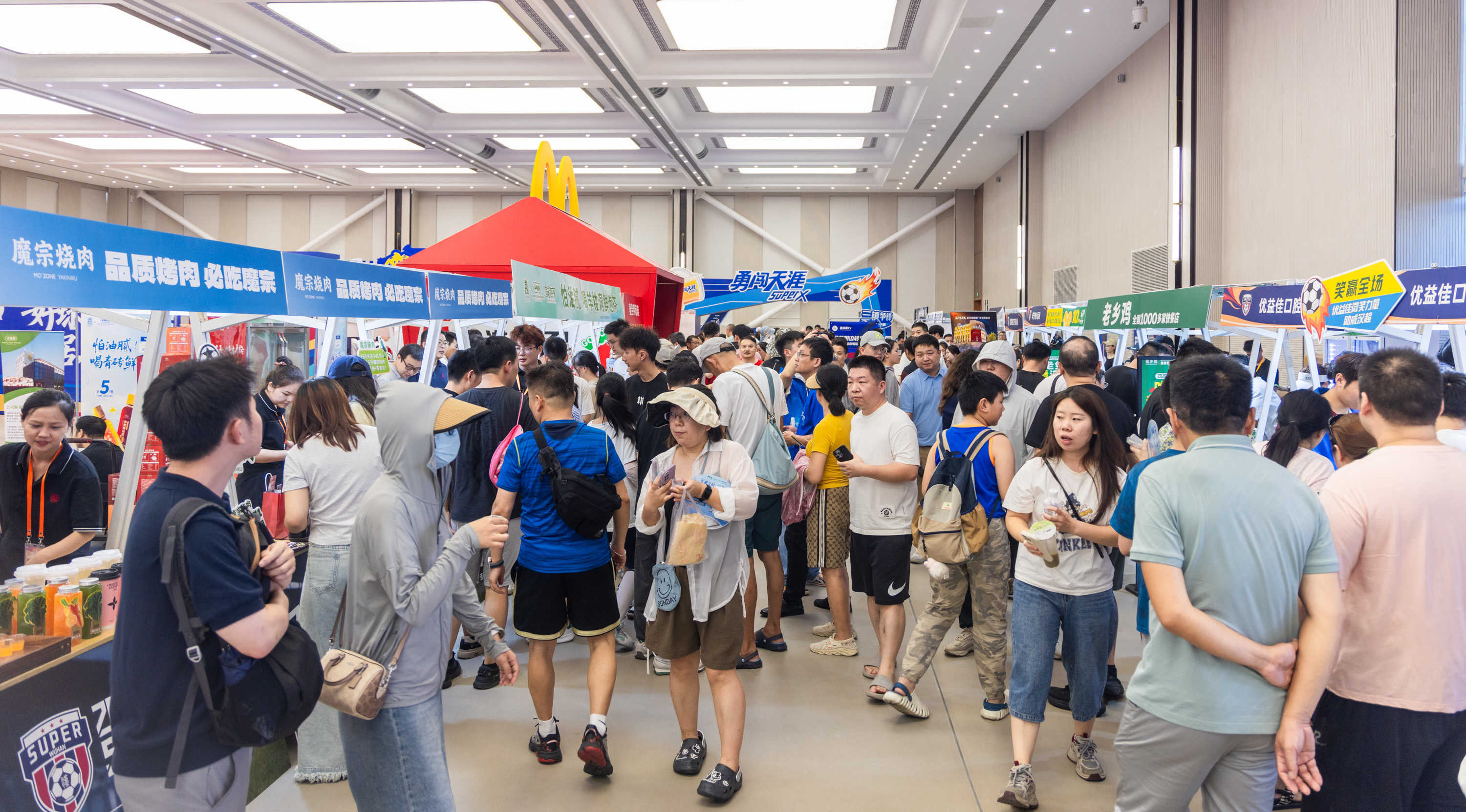
中国车谷品牌运营中心开业,已有45家企业签约入驻
Chang Jiang Ri Bao· 2025-08-17 08:45
Group 1 - The "Han Super" football league is set to kick off in Wuhan, attracting nearly 50,000 fans and visitors to the food and lifestyle event [1][4] - Wuhan Sports Center hosts over 100 cultural and sports events annually, receiving more than 5 million visitors [3] - The China Car Valley Brand Operation Center, covering approximately 23,000 square meters, will serve as a platform for product display, brand promotion, and e-commerce [3] Group 2 - Ten companies, including Jinhuixuan, New Agricultural Beef, and Xiaomi, have signed agreements to enter the China Car Valley Brand Operation Center [6][7] - The center aims to enhance the brand ecosystem and create a commercial vitality zone around the Wuhan Sports Center [7] - Future plans include developing a night economy and hosting various promotional activities to boost consumption [7]




研判2025!中国鼠标行业产业链、市场规模、竞争格局及发展趋势分析:PC出货量回暖,行业市场规模有望上涨[图]
Chan Ye Xin Xi Wang· 2025-08-17 01:02
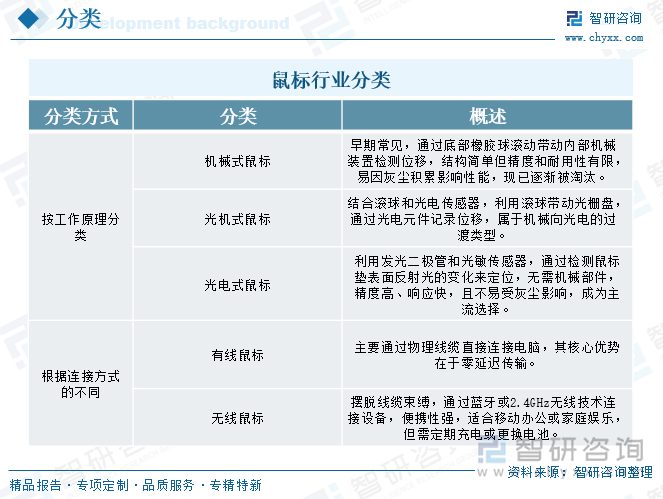
Core Insights - The mouse industry has evolved significantly, witnessing changes in computer technology and consumer electronics, with China being the largest producer and consumer market globally [1][9] - The market is expanding beyond traditional PC peripherals into mobile office, esports, and creative design applications, with a projected market size of 16.183 billion yuan in China by 2024, reflecting an 8.09% year-on-year increase [1][9] - The demand for professional-grade gaming mice is growing, driven by lightweight designs, programmable buttons, and RGB lighting, while silent keys and multi-device connectivity are favored in office settings [1][12] Industry Overview - The mouse is a key input device for computers, categorized by working principles into mechanical, optical-mechanical, and optical types, and by connection methods into wired and wireless [3][4] - The industry supply chain includes upstream suppliers of raw materials and components, midstream manufacturers, and downstream sales channels [5] Market Trends - The global PC shipment volume is expected to recover in 2024, with a 3.8% year-on-year increase, which will subsequently boost the demand for peripheral products like mice [7] - In China, the PC shipment volume is also recovering, with a 19% year-on-year increase projected for the first quarter of 2025 [7] Competitive Landscape - The Chinese mouse market is characterized by low concentration and numerous players, with major domestic companies including Inphic, Rapoo, and others competing against established foreign brands like Logitech and Razer [15][17] - Domestic companies are increasing R&D investments to enhance their technological capabilities and product offerings, leading to a gradual increase in market competitiveness [15] Consumer Preferences - The most popular price segments in the Chinese mouse market are below 39 yuan, above 400 yuan, and between 100-199 yuan, indicating a strong preference for affordable products while also showing interest in high-end options [10] - Gaming mice dominate market attention, accounting for 59.65% of consumer interest, driven by the growth of the esports industry [12] Future Development Trends - Multi-mode connectivity (Bluetooth/2.4G/Wired) is becoming a standard feature in mid-to-high-end mice, enhancing usability across different scenarios [21] - Lightweight design is a key trend, with mainstream products weighing under 60g, improving user experience and operational agility [22][23] - The industry is moving towards increased production intelligence and flexibility to meet the rising demand for customized products [24]





科大讯飞申请同传翻译训练数据生成专利,节省人工成本
Jin Rong Jie· 2025-08-16 04:11
Group 1 - The core viewpoint of the news is that iFlytek Co., Ltd. has applied for a patent related to simultaneous translation training data generation, which aims to enhance the efficiency of training data acquisition without manual annotation [1] - The patent application, titled "Method for Generating Simultaneous Translation Training Data, Related Equipment and Program Products," was published with the number CN120493956A and was filed on July 2025 [1] - The method involves using bilingual subtitle audio-visual data to extract source and target language texts, performing speech recognition, and aligning texts to generate training data efficiently [1] Group 2 - iFlytek Co., Ltd. was established in 1999 and is located in Hefei City, primarily engaged in software and information technology services [2] - The company has a registered capital of 231,173.4185 thousand RMB and has invested in 129 enterprises [2] - iFlytek has participated in 5,000 bidding projects and holds 2,744 trademark records and 5,000 patent records, along with 60 administrative licenses [2]
媒体视点 | 决胜“十四五”打好收官战 增供给、降成本!金融发力破解民营、小微企业融资难题
证监会发布· 2025-08-16 03:05
Core Viewpoint - Supporting the development of private and small micro enterprises is an inherent requirement of financial services for the real economy, with a focus on enhancing financing accessibility, inclusiveness, and convenience during the "14th Five-Year Plan" period [2][5]. Financing Accessibility - The average annual growth rate of inclusive small micro loans has exceeded 20% over the past five years, with the balance of such loans increasing from 15.1 trillion yuan at the end of 2020 to 35.6 trillion yuan by June 2025 [4][5]. - The proportion of credit loans has reached nearly 30%, and the balance of loans to privately held enterprises has risen to approximately 45 trillion yuan [4]. - Financial institutions have been guided to innovate and better assist enterprises facing collateral shortages and financing difficulties, leading to significant increases in loan disbursements [5]. Cost Reduction - The average interest rate for newly issued inclusive small micro enterprise loans has decreased from 5.08% in December 2020 to 3.48% by June 2025, reflecting a substantial reduction in financing costs [8][9]. - Financial management departments have implemented various measures to lower the comprehensive financing costs for private and small micro enterprises, benefiting a larger number of businesses [8][9]. Diversified Financing - There is a need to expand more diversified financing channels for private and small micro enterprises, as their financing needs and methods vary at different growth stages [10]. - The issuance of technology innovation bonds has gained traction, with 288 entities issuing approximately 600 billion yuan in bonds by June, indicating a growing interest in direct financing [11]. - The proportion of private enterprises among listed companies is significant, with 63% of A-share companies being private, and high representation in the Sci-Tech Innovation Board and other platforms [11].






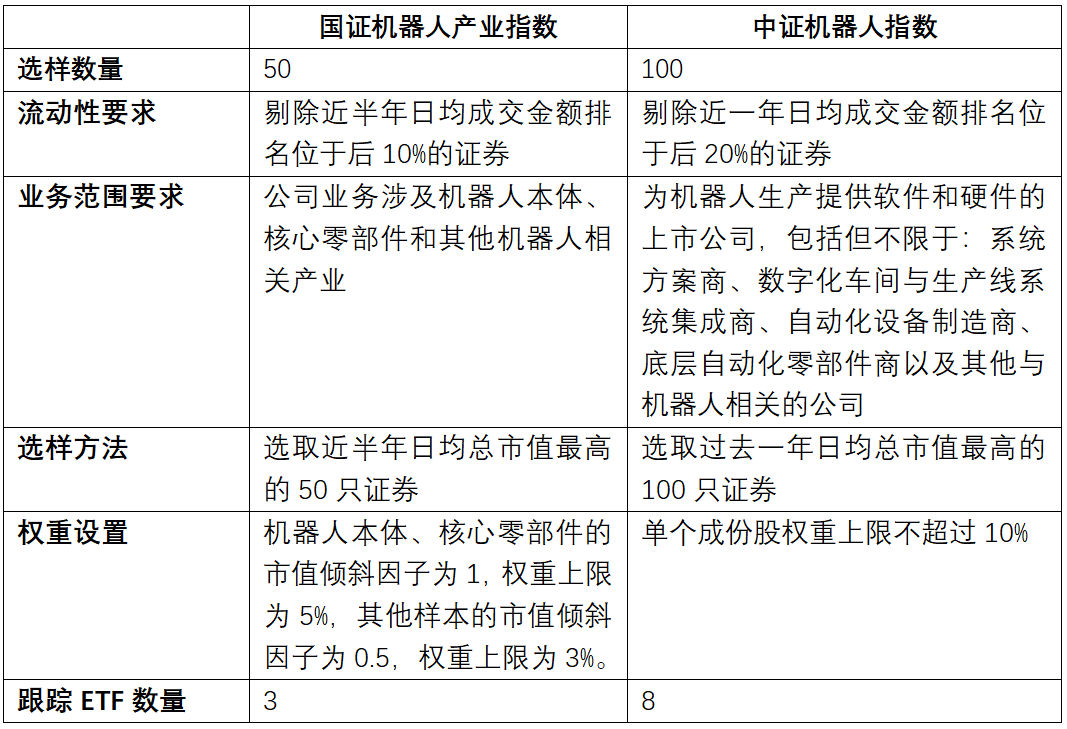
全球首个人形机器人运动会今日决出8金,深市规模最大机器人ETF(159770)近一年涨72%居同标的第一
2 1 Shi Ji Jing Ji Bao Dao· 2025-08-16 02:43
Group 1 - The robotics sector has gained significant market attention, with the CSI Robotics Index rising by 20.07% from June 23 to August 15 [1] - The Robotics ETF (159770) has increased by 1.94% as of August 15, with a weekly gain of 3.53%, leading among similar products in the Shenzhen market [1] - The Robotics ETF (159770) has reached a record high of 7.062 billion yuan in size as of August 14, ranking first among similar products in the Shenzhen market [1] Group 2 - The world's first humanoid robot sports competition has commenced in Beijing, featuring 13 events on August 16, including athletics, football, and gymnastics [2] - The World Artificial Intelligence Conference will be held in Shanghai in July 2025, showcasing over 60 intelligent robots, followed by the World Robot Conference in Beijing in August 2025, featuring over 200 companies and numerous new products [2] - The humanoid robot sector is experiencing multiple catalysts, with the industry entering a "technological breakthrough → mass production cost reduction → scenario penetration" golden cycle, expected to become a core investment theme by 2025 [2]

科大讯飞股价上涨1.11% 安徽加速布局通用人工智能产业
Sou Hu Cai Jing· 2025-08-15 11:53
Group 1 - As of August 15, 2025, the stock price of iFlytek is reported at 49.07 yuan, an increase of 1.11% from the previous trading day [1] - The trading volume on that day reached 1.855 billion yuan, with a total of 380,551 hands traded and a fluctuation of 1.88% [1] - iFlytek operates in the software development industry, focusing on intelligent voice and artificial intelligence technology research and development, with products spanning education, healthcare, and consumer sectors [1] Group 2 - Anhui Province has recently proposed to seize the high ground in the development of general artificial intelligence industry, aiming to deepen original technology breakthroughs and build significant application scenarios [1] - The "Smart Medical Assistant" developed by iFlytek has covered over 73,000 grassroots medical institutions in 692 districts and counties nationwide, providing more than 1 billion AI-assisted diagnosis recommendations [1] - On August 15, the net inflow of main funds was 2.2482 million yuan, while the net outflow over the past five days was 38.4791 million yuan [1]
AI行业跟踪报告第62期:GPT-5商业化潜力释放,AI应用生态持续繁荣
EBSCN· 2025-08-15 10:58
Investment Rating - The report maintains a "Buy" rating for the AI industry, indicating an expected investment return exceeding 15% over the next 6-12 months compared to the market benchmark index [6]. Core Insights - GPT-5 is expected to fully unleash OpenAI's commercialization potential, emphasizing practicality and productivity rather than solely pursuing technological breakthroughs. The model's enhanced capabilities, better cost-effectiveness, and lower hallucination rates are anticipated to improve user retention and revenue generation [1][20]. - Domestic AI products have demonstrated global competitiveness, with Chinese AI products accounting for approximately 10% of the total web traffic among the top 100 AI products globally [2][21]. - The share of application projects in domestic large model bidding continues to rise, with application projects making up about 59% of the total [3][31]. Summary by Sections GPT-5 Commercialization Potential - GPT-5's competitive pricing is set at $1.25 per million input tokens and $10 per million output tokens, significantly lower than competitors [8][10]. - The hallucination rate of GPT-5 has decreased significantly, making it more reliable for generating accurate long-form content [11][20]. - Efficiency in reasoning has improved, with GPT-5 achieving better performance in various tasks while reducing output token usage by 50-80% [13][14]. C-end Market Insights - In July, the total web traffic for the top 100 AI products reached 12.689 billion, with Chinese products generating 1.334 billion visits [2][21]. - Three Chinese AI products achieved an annual recurring revenue (ARR) exceeding $10 million, including Meitu's AirBrush-AI with $37.65 million [2][30]. B-end Market Insights - In July, 574 large model-related bidding projects were disclosed, amounting to 1.335 billion yuan, with application projects accounting for 59% of the total [3][31]. - The education sector led in the number of large model projects, followed by government, telecommunications, energy, and finance [37][38]. Investment Recommendations - Focus on companies that control C-end interaction entry points, such as Kingsoft Office and iFLYTEK, and B-end companies with rich customer bases and know-how, such as Hikvision and Yonyou Network [4][40]. - Emphasize the demand for independent third-party big data platforms, recommending companies like Puyuan Information and Star Ring Technology [4][40].





当AI从炫技走向实用,自主可控才真正站得住脚
Guan Cha Zhe Wang· 2025-08-15 10:21
Core Viewpoint - The article discusses the competitive landscape of Chinese tech companies in the AI sector, particularly focusing on iFLYTEK's strategies to leverage domestic computing power and enhance user experience while expanding internationally [1][2][4]. Group 1: iFLYTEK's Unique Features - iFLYTEK's large model is based on deep reasoning with long thinking chains, excelling in translation, mathematics, and logical reasoning [2]. - The company emphasizes 100% domestically produced computing power, collaborating with other Chinese firms like Huawei to advance core technologies [4]. - iFLYTEK's products are designed to address high-frequency needs in real-world applications, moving beyond mere technological advancements to practical user experiences [4]. Group 2: Product Development and User Experience - iFLYTEK categorizes its smart hardware into three types: basic devices (computers and phones), wearable devices (smart glasses, headphones), and new forms (home robots, exoskeletons) [5]. - The company has improved its translation model, achieving a 20% enhancement in translation accuracy compared to previous versions, with a target of achieving real-time translation speeds comparable to human interpreters [7]. - iFLYTEK's translation machine supports over 80 languages and includes a vast vocabulary of 80,000 specialized terms across various industries, enhancing its utility for business professionals [9][8]. Group 3: International Expansion - iFLYTEK is actively pursuing international markets, with successful product launches in South Korea through crowdfunding platforms, achieving top sales rankings [12][11]. - The company has adapted its products for local markets, such as creating a Korean version of its smart office device and optimizing software interactions based on user feedback [11][12]. - iFLYTEK's translation devices have gained popularity in Japan, particularly due to their offline capabilities, addressing local privacy concerns [16][18]. Group 4: Future Directions - The integration of large models with hardware is seen as a significant growth area, particularly in wearable technology like smart glasses and industrial applications [22]. - iFLYTEK aims to enhance user experience by developing products that meet specific consumer needs, ensuring that technology is not just innovative but also practical and user-friendly [5][7].

当AI从“炫技”走向实用,自主可控才真正站得住脚
Guan Cha Zhe Wang· 2025-08-15 10:20
Core Viewpoint - The article discusses the challenges and strategies of Chinese technology companies, particularly iFlytek, in the context of the global AI model wave, emphasizing the importance of domestic computing power, user experience, and international competition. Group 1: Company Strategy - iFlytek aims to build large model capabilities in core areas such as translation, mathematics, and reasoning, while embedding products into practical scenarios like learning machines and translation devices to meet high-frequency needs [1][4] - The company emphasizes the use of 100% domestically produced computing power, collaborating with other major Chinese companies like Huawei to develop core technologies in critical fields [4][6] - iFlytek's large model is the only one in China based on fully domestic computing power, showcasing its commitment to national technological sovereignty [4] Group 2: Product Development and User Experience - The company has developed several products that have gained popularity among consumers, including learning machines, translation devices, and smart office notebooks, indicating a focus on user-friendly applications [5][6] - iFlytek's translation model has seen a 20% improvement in performance compared to its previous version, achieving a score of 90 out of 100 in tests measuring translation completeness, accuracy, and language quality [8] Group 3: Market Position and Competition - The article highlights the intense competition in the tech industry, with many players entering the market, leading to price wars; iFlytek aims to differentiate itself by enhancing the effectiveness of technology applications [5][8] - The company is positioned as a national team in AI, having received significant recognition, such as the National Science and Technology Progress Award for its multilingual intelligent voice technology project [2][4]
