BYD(002594)
Search documents
比亚迪全球销量首超福特
Ge Long Hui A P P· 2026-02-12 12:12
Group 1 - Ford's wholesale sales for 2025 are projected to be less than 4.4 million units, which is lower than BYD's previously announced target of 4.6 million units for the same year [1] - This marks the first time BYD has surpassed the century-old automaker Ford in terms of projected sales, positioning BYD among the top six global automakers by 2025 [1]
传比亚迪、吉利等多家国产车企竞购日产奔驰墨西哥汽车工厂,官方暂无回应
Xin Lang Ke Ji· 2026-02-12 12:07
Group 1 - BYD and Geely are reportedly bidding for the Nissan-Benz automotive plant in Mexico, with Chery and Great Wall Motors also expressing interest in the acquisition [1] - The plant is scheduled to close in May 2026, and BYD has been identified as a leading potential buyer since late last year [1] - The acquisition could leverage the benefits of the USMCA agreement, allowing localized production to avoid high tariffs in the US [1]
全固态电池产业化,迈入关键验证期
财联社· 2026-02-12 12:06
Core Viewpoint - The solid-state battery industry is advancing rapidly, with multiple companies outlining their technological paths and industrial plans for commercialization by 2026 and beyond [1][2][3]. Group 1: Company Developments - Geely has established three technological routes for solid-state batteries, focusing on polymer, sulfide, and halide composite solutions, with a goal to launch prototype vehicles by 2026 and achieve small-scale production by 2027 [1]. - Chery plans to produce a 0.5GWh pilot line and commence continuous production of 60Ah solid-state cells by 2026, with vehicle demonstration work starting in 2027 [2]. - FAW's Hongqi brand has successfully developed a solid-state battery prototype, achieving significant breakthroughs in key areas such as sulfide electrolyte performance and cell testing [2]. - BYD is focusing on sulfide solid-state batteries, aiming for small-scale production by 2027, while Sunwoda has already achieved mass production of its first and second-generation semi-solid batteries [2]. Group 2: Policy and Standards - The development of national standards for solid-state batteries is underway, with a draft expected to be completed by December 2025 and formal publication planned for July 2026 [3]. - The Ministry of Industry and Information Technology emphasizes enhancing the self-controllability of the supply chain and accelerating breakthroughs in core technologies, including solid-state batteries [3]. Group 3: Industry Challenges and Future Directions - Despite the recognized potential of solid-state batteries, challenges remain, including unclear material systems and engineering difficulties that could affect safety and lifespan [4]. - The domestic solid-state battery market is expected to evolve from semi-solid scale production to small-scale full solid-state production and then to mid-to-high-end large-scale production between 2026 and 2030 [4].
1月我国乘用车零售销量约154.4万辆 乘联分会:预期内的短期波动,不代表长期走势
Mei Ri Jing Ji Xin Wen· 2026-02-12 12:05
Core Viewpoint - The retail sales of passenger cars in China experienced a significant decline in January 2026, with a total of approximately 1.544 million units sold, representing a year-on-year decrease of 13.9% [1][2]. Retail Performance - In January 2026, retail sales for different vehicle categories were as follows: sedans at 622,000 units (down 24.7%), MPVs at 79,000 units (up 1.0%), SUVs at 843,000 units (down 5.2%), and microvans at 14,000 units (up 2.5%) [2]. - The total retail sales for narrow passenger vehicles were 1.544 million units, down 13.9% compared to the same month last year [2]. Market Analysis - The decline in the passenger car market is viewed as a short-term fluctuation rather than a long-term trend, attributed to the expiration of the new energy vehicle purchase tax exemption policy at the end of 2025 [3]. - The market is expected to face a low point in February 2026 due to the post-holiday consumption slowdown, which may help alleviate retail inventory pressure [3]. Brand Performance - In January 2026, retail sales for domestic brands were 890,000 units (down 18%), while mainstream joint venture brands sold 470,000 units (down 4%), and luxury vehicles sold 180,000 units (down 15%) [4]. - Major domestic brands like Geely, BYD, Changan, and Chery saw significant declines in retail sales, with Geely down 12.6%, BYD down 53%, Changan down 33.5%, and Chery down 41% [4][6]. Joint Venture Brands - Joint venture brands showed relatively stable performance, with FAW-Volkswagen down 3.5%, SAIC Volkswagen down 9.3%, and BMW Brilliance down 3.9% [6]. - Some joint venture brands, such as FAW Toyota and GAC Toyota, experienced year-on-year growth of 8.3% and 0.3%, respectively [6]. New Energy Vehicle Market - In January 2026, retail sales of new energy vehicles (NEVs) were 596,000 units, down 20% year-on-year, while wholesale sales were 864,000 units, down 3.3% [9]. - The A00-class pure electric vehicle segment saw a drastic decline, with wholesale sales dropping 62%, significantly impacting the overall performance of the new energy vehicle market [11]. Export Performance - New energy vehicles have become a major force in China's passenger car exports, with 139,000 units exported in January 2026, marking a year-on-year increase of 29.4% [13]. - The export of pure electric vehicles accounted for 66% of new energy vehicle exports, with A0 and A00-class vehicles making up 38% of the total new energy vehicle export volume [13]. Future Outlook - The market is expected to enter a recovery phase in February 2026, driven by the gradual implementation of vehicle replacement policies [16]. - However, rising costs due to increased prices of raw materials like lithium and copper may pressure automakers, potentially leading to cautious consumer behavior and affecting demand [16].
Exclusive-Seeking Mexico foothold, China's BYD and Geely bid to buy car plant
Yahoo Finance· 2026-02-12 11:07
Core Viewpoint - Chinese automakers, particularly BYD and Geely, are competing to acquire a Nissan–Mercedes-Benz plant in Mexico, indicating a significant shift in the Mexican automotive industry as they seek to establish a manufacturing presence amid U.S. tariffs impacting local factories [1][3]. Group 1: Chinese Automakers' Interest - BYD and Geely are among the finalists for the acquisition of the plant, alongside Vietnamese electric vehicle maker VinFast, emerging from a pool of nine interested companies [1][2]. - Other notable Chinese manufacturers expressing interest include Chery and Great Wall Motor, highlighting a broader trend of Chinese investment in the Mexican automotive sector [2]. Group 2: Market Dynamics - The interest from Chinese automakers marks a potential transformation in Mexico's car industry, which has historically been dominated by U.S., European, and Japanese manufacturers focused on vehicles for the U.S. market [3]. - Chinese automakers have increased their market share in Mexico from zero in 2020 to approximately 10% last year, with annual car sales in Mexico around 1.5 million [6]. Group 3: Economic Implications - The Mexican government is in a challenging position, as U.S. tariffs are negatively affecting the local auto sector, while Chinese investments could create essential jobs [4]. - However, there are concerns that increased Chinese production in Mexico could provoke tensions with the U.S. and complicate ongoing North American trade negotiations [4]. Group 4: Growth of Chinese Auto Industry - The ambitions of BYD and Geely reflect the rapid global expansion of China's auto industry, with BYD's vehicle sales increasing ten-fold since 2020 and Geely's sales doubling, both selling over 4 million vehicles last year [5]. - The collective market share of Chinese automakers in Mexico has significantly risen, indicating their growing influence in the region [6].
锂电池行业月报:销量略增,板块持续关注
Zhongyuan Securities· 2026-02-12 10:24
Investment Rating - The report maintains an investment rating of "Outperform the Market" for the lithium battery industry [1][6]. Core Insights - The lithium battery sector showed a strong performance in January 2026, with the lithium battery index rising by 3.31%, outperforming the Shanghai Composite Index by 1.66 percentage points [3][10]. - In January 2026, China's new energy vehicle sales slightly increased to 945,000 units, a year-on-year growth of 0.11%, while the monthly sales accounted for 40.28% of total vehicle sales [6][16]. - The report highlights a general increase in upstream raw material prices, with battery-grade lithium carbonate and lithium hydroxide prices rising by 19.17% and 26.67%, respectively, as of February 12, 2026 [6][44]. - The overall industry outlook remains positive, with expectations of continued growth in the new energy vehicle and lithium battery sectors, despite potential fluctuations in sales growth rates due to policy changes and market conditions [20][23]. Summary by Sections 1. Market Review - The lithium battery index outperformed the Shanghai Composite Index in January 2026, with a 3.31% increase compared to the 1.65% rise of the latter [3][10]. - Among individual stocks, 55 lithium battery-related stocks rose, while 49 fell, with a median increase of 0.87% [10]. 2. New Energy Vehicle Sales and Industry Prices - In January 2026, new energy vehicle sales in China reached 945,000 units, showing a slight year-on-year increase of 0.11% [6][16]. - The report notes that the sales of new energy vehicles are expected to maintain a high growth trajectory, with exports also showing significant increases [20][26]. 3. Industry and Company News - The report mentions significant developments in the industry, including strategic partnerships and advancements in battery technology, which are expected to enhance the competitive landscape [58].
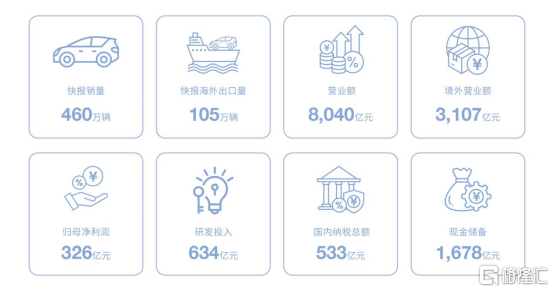
包揽中国、全球双料冠军,比亚迪2025年销量超460万辆获机构看好
Jin Rong Jie· 2026-02-12 09:41
Core Insights - In 2025, China's automotive industry continues to lead globally, achieving record production and sales figures, with a total of 34.53 million vehicles produced and 34.40 million sold, marking year-on-year increases of 10.4% and 9.4% respectively, maintaining its position as the world's largest market for 17 consecutive years [1] - BYD has emerged as a standout performer, achieving significant growth in both domestic sales and overseas exports, and becoming a benchmark for the rise of the Chinese automotive industry [1][3] Group 1: BYD's Performance - BYD's global sales reached 4.602 million units in 2025, a year-on-year increase of 7.7%, with pure electric vehicle sales surpassing 2.25 million units, a remarkable growth of 28%, significantly outpacing Tesla's sales of 1.64 million units [3][5] - BYD has entered the global top five automotive manufacturers for the first time, ranking behind Toyota, Volkswagen, Stellantis, and Hyundai-Kia, marking a historic breakthrough for Chinese automotive brands [5] - The company's strong performance is attributed to its focus on new energy technology and its ability to meet global consumer demands with high-quality products [9] Group 2: Market Dynamics - BYD's growth is driven by both domestic and international markets, with key models like Qin, Yuan, and Sea Lion leading their segments, and high-end sub-brands like Fangchengbao and Tengshi showing impressive sales increases [7] - In the domestic market, Fangchengbao's sales surged by 316.1% to 235,000 units, while overseas sales exceeded 1.0496 million units, reflecting a 145% year-on-year increase [7] Group 3: Technological Advancements - BYD's sustained growth is fundamentally driven by technological innovation, with R&D expenses reaching 43.75 billion yuan in the first three quarters of 2025, a 31% increase year-on-year [12] - The company has a robust R&D team of over 120,000 personnel, with daily patent applications and a comprehensive technology portfolio covering batteries, electric drives, and intelligent driving [12] - BYD's technological breakthroughs include advancements in hybrid technology and autonomous driving systems, showcasing its commitment to innovation and industry leadership [12][14] Group 4: Future Outlook - Looking ahead to 2026, BYD has set an overseas sales target of 1.3 million units, representing a 24% year-on-year growth, indicating its determination to expand its global market presence [16] - The company aims to maintain its domestic sales leadership while further improving its global ranking, contributing to the overall competitiveness of the Chinese automotive industry [18]
锂电池行业月报:销量略增,板块持续关注-20260212
Zhongyuan Securities· 2026-02-12 09:24
Investment Rating - The report maintains an investment rating of "Outperform" for the lithium battery industry [6][10]. Core Insights - The lithium battery sector index outperformed the CSI 300 index in January 2026, with a rise of 3.31% compared to the CSI 300's 1.65% [3][10]. - In January 2026, China's new energy vehicle sales slightly increased to 945,000 units, a year-on-year growth of 0.11%, while the power battery installation reached 42.0 GWh, up 8.25% year-on-year [6][16]. - The prices of upstream raw materials have generally increased, with battery-grade lithium carbonate and lithium hydroxide prices rising by 19.17% and 26.67% respectively since early January 2026 [6][44][46]. - The report emphasizes the overall upward trend in industry prosperity, driven by domestic and international developments, price trends in sub-sectors, monthly sales, and industry growth expectations [6][10]. Summary by Sections 1. Market Review - The lithium battery sector index showed a strong performance in January 2026, outperforming the CSI 300 index by 1.66 percentage points [3][10]. - Among individual stocks, 55 stocks in the lithium battery concept sector rose, while 49 fell, with a median increase of 0.87% [10]. 2. New Energy Vehicle Sales and Industry Prices - In January 2026, new energy vehicle sales in China were 945,000 units, with a monthly market share of 40.28% [6][16]. - The report forecasts continued growth in the new energy vehicle sector, despite a projected slowdown in sales growth due to policy changes and base effects [20][23]. 3. Industry and Company News - The report highlights significant industry developments, including the establishment of a large electric vehicle charging network in China, which supports over 40 million new energy vehicles [58]. - Notable partnerships and technological advancements in the battery sector are also discussed, indicating ongoing innovation and collaboration within the industry [58].
China issues new rules to curb auto price war after January passenger car sales drop 20%
Yahoo Finance· 2026-02-12 09:11
HONG KONG (AP) — China moved on Thursday to curb a fierce price war among automakers that has caused massive losses for the industry, after passenger car sales dropped nearly 20% in January from the year before, the fastest pace in almost two years. The State Administration for Market Regulation released guidelines for manufacturers, dealers and parts suppliers aimed at preventing a race-to-the-bottom price war. They ban automakers from setting prices below the cost of production to “squeeze out competi ...
湖北楚能新晋、鹏辉能源重返 2025年全球储能电池出货量TOP10出炉
Jing Ji Guan Cha Bao· 2026-02-12 08:32
Core Insights - The global energy storage battery market is experiencing explosive growth, with Chinese companies maintaining a dominant position and significant reshuffling occurring among industry players [1][2][3] Group 1: Market Growth and Trends - By 2025, global energy storage battery shipments are projected to reach 651.5 GWh, representing a year-on-year increase of 76.2%, with Chinese companies accounting for 614.7 GWh, or 94.4% of the total [1] - The top 10 companies in the energy storage battery market for 2025 will be entirely composed of Chinese firms, further increasing their global market share [1] - The market is characterized by a stable top tier and intensified competition among mid-tier companies, with the total market share of the top ten Chinese energy storage lithium battery companies decreasing slightly from 95% in 2024 to 90% in 2025, indicating enhanced market vitality [3] Group 2: Company Rankings and Dynamics - The top four companies—CATL, EVE Energy, Xiamen Hicharge, and BYD—remain unchanged, continuing to capture core market shares [2] - Significant changes in rankings include Ruipu Lanjun rising from seventh to fifth place, while Hubei Chuangneng and Penghui Energy entered the top ten, replacing Samsung SDI and LGES [2][3] Group 3: Technological Advancements - The industrialization process of large-capacity energy storage batteries is accelerating, with ongoing technological breakthroughs leading to reduced energy storage costs, laying the foundation for large-scale development [4] Group 4: Future Outlook - The global energy storage battery market is expected to enter a phase of high-quality development by 2026, with competition logic evolving and core competencies shifting towards technological innovation, capacity layout, and market expansion [5] - The reshuffling of the 2025 top ten list reflects the inevitable evolution of the industry and the strengthening competitiveness of Chinese energy storage battery companies [5]