
BYD(002594)

Search documents
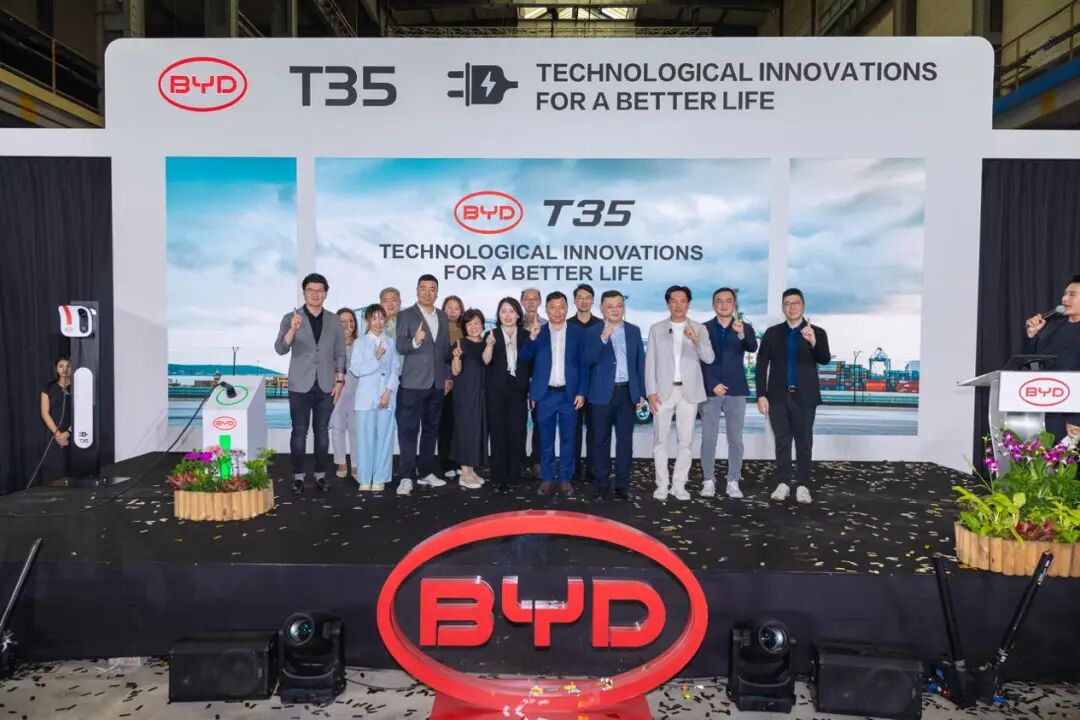
售价77万人民币!比亚迪T35登陆新加坡,田春龙揭秘“破局密码”
Xin Lang Cai Jing· 2026-03-30 06:43
Core Viewpoint - BYD has officially launched the T35 electric light truck in Singapore at a price of 143,000 SGD (approximately 770,000 RMB), marking another significant step in its global expansion after Japan, Wuhan, and Mexico [1][10]. Product Localization - The T35's specifications, including a payload capacity of 1,800 kg, were tailored to meet local regulations, specifically the weight limit for parking in Singapore's public housing [5][14]. - The vehicle is designed to ensure a practical range of over 300 km while incorporating lightweight and intelligent design features [5][14]. - The T35 has been optimized for Singapore's high-temperature and high-humidity climate, with enhancements in battery cooling systems, air conditioning efficiency, and chassis durability to handle frequent stops and urban road conditions [5][14]. Market Strategy - BYD's pricing strategy reflects the high-quality expectations of the Singapore market, where competition is based on quality rather than price [5][14]. - The company has established a comprehensive charging infrastructure, offering solutions from DC and AC charging to future fast-charging options, ensuring users receive charging support alongside vehicle purchases [7][16]. - A localized after-sales service system has been developed, including a 10-year maintenance service included in the T35's price, addressing the long usage cycles of commercial vehicles in Singapore [7][16]. Competitive Landscape - The primary competitors for electric trucks in Singapore are expected to be other Chinese brands, as evidenced by the recent procurement projects in the electric bus sector, all of which were awarded to Chinese companies [9][18]. - BYD has achieved over 60% market share in the electric bus sector and aims to replicate this success in the electric truck market [7][16]. - The company’s approach to product development is centered around local regulations, user habits, and infrastructure conditions, which has proven effective over its 12 years in Singapore [9][18].


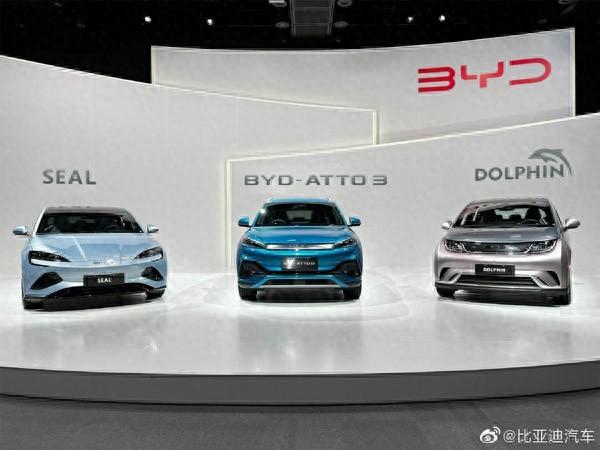
仅为丰田1/10!日本大幅削减比亚迪购车补贴
Guan Cha Zhe Wang· 2026-03-30 06:42
Core Viewpoint - The Japanese Ministry of Economy, Trade and Industry has significantly reduced the subsidy for BYD's electric vehicles, dropping it to 150,000 yen (approximately 936 USD or 6,486.15 RMB), which is more than a 50% cut from previous levels [1][5]. Group 1: Subsidy Changes - The revised subsidy scheme will take effect in April 2023, with the new rules applying to affected models starting January 2027 [1][5]. - Previously, BYD's subsidies ranged from 350,000 to 400,000 yen (approximately 1,510 to 1,730 RMB), but the new amount places BYD at the lowest subsidy level among Japanese car dealers [3][7]. - In contrast, Toyota's bZ4X, which uses domestically produced batteries, maintains the highest subsidy of 1,300,000 yen (approximately 59,200 RMB), about ten times that of BYD [3][7]. Group 2: Industry Reactions - BYD's Japan representative expressed disappointment over the subsidy cuts, indicating that it would negatively impact consumers [3][7]. - The Japanese government justified the subsidy reductions by stating that BYD's models received lower comprehensive evaluation scores [3][7]. - Concerns have been raised regarding the fairness of the evaluation process, with BYD's president claiming that the company received an unjust score despite its efforts in establishing fast-charging infrastructure [4][9]. Group 3: Broader Implications - Analysts suggest that the subsidy adjustments may be a result of the US-Japan tariff agreement, aimed at ensuring fair competition conditions [4][9]. - The Ministry of Economy, Trade and Industry acknowledged that the adjustments were based on the consensus reached in the US-Japan tariff agreement [4][9]. - There are allegations of preferential treatment towards certain automakers, as the evaluation criteria have not changed, raising questions about transparency [5][9].
小摩:升比亚迪股份(01211)目标价至120港元 油价波动下电车销售或更强
Zhi Tong Cai Jing· 2026-03-30 06:18
该信息由智通财经网提供 智通财经APP获悉,摩根大通发布研报称,比亚迪股份(01211)H股年初至今上升8%,跑赢MSCI中国指 数及同业,部分因市场预期若今年油价维持在每桶80美元或以上,国内及全球的新能源汽车需求将较预 期强劲。该行分析亦显示,在过往油价波动期间,比亚迪不仅跑赢MSCI中国汽车股,更跑赢整体市 场,尤其当油价高于每桶80美元时。基本面方面,该行上调比亚迪国内及出口的销量预测,将比亚迪H 股目标价由110港元升至120港元,比亚迪(002594.SZ)A股目标价由95元升至120元人民币,维持"增 持"评级。 摩根大通指比亚迪推动正面动能的因素包括:(1)比亚迪近期在国内市场推出的超快充策略; (2)全球工厂 自2026年第二季起陆续投产,例如匈牙利、印尼、马来西亚及巴西。 ...
小摩:升比亚迪股份(01211.HK)目标价至120港元 油价波动下电车销售或更强
Sou Hu Cai Jing· 2026-03-30 06:18
Core Viewpoint - Morgan Stanley's report indicates that BYD Company Limited (01211.HK) has risen 8% year-to-date, outperforming the MSCI China Index and peers, driven by strong expectations for domestic and global electric vehicle demand if oil prices remain above $80 per barrel [1] Group 1: Performance Analysis - BYD has historically outperformed the MSCI China automotive stocks and the overall market during periods of oil price fluctuations, particularly when oil prices exceed $80 per barrel [1] - The company's H-shares target price has been raised from HKD 110 to HKD 120, while the A-shares target price has been increased from RMB 95 to RMB 120, maintaining a "Buy" rating [1] Group 2: Market Position - BYD's market capitalization in Hong Kong is HKD 378.285 billion, ranking it first in the automotive manufacturing industry [1] - In the past 90 days, one investment bank has issued a "Trading Buy" rating for BYD, with an average target price of HKD 106 [1] Group 3: Institutional Ratings - The latest report from KGI Securities (Hong Kong) also assigns a "Trading Buy" rating to BYD, with a target price of HKD 106 [1]

小摩:升比亚迪股份目标价至120港元 油价波动下电车销售或更强
Zhi Tong Cai Jing· 2026-03-30 06:16
摩根大通指比亚迪推动正面动能的因素包括:(1)比亚迪近期在国内市场推出的超快充策略; (2)全球工厂 自2026年第二季起陆续投产,例如匈牙利、印尼、马来西亚及巴西。 智通财经APP获悉,摩根大通发布研报称,比亚迪股份(01211)H股年初至今上升8%,跑赢MSCI中国指 数及同业,部分因市场预期若今年油价维持在每桶80美元或以上,国内及全球的新能源汽车需求将较预 期强劲。该行分析亦显示,在过往油价波动期间,比亚迪不仅跑赢MSCI中国汽车股,更跑赢整体市 场,尤其当油价高于每桶80美元时。基本面方面,该行上调比亚迪国内及出口的销量预测,将比亚迪H 股目标价由110港元升至120港元,比亚迪(002594.SZ)A股目标价由95元升至120元人民币,维持"增 持"评级。 ...
比亚迪:关注国内闪充平权及海外销量高增-20260330
HTSC· 2026-03-30 05:50
Investment Rating - The report maintains a "Buy" rating for the company with a target price of RMB 115.17, adjusted from the previous RMB 130.63 [7][12]. Core Insights - The company reported a revenue of RMB 804 billion for 2025, a year-on-year increase of 3%, but a decline in net profit attributable to shareholders to RMB 32.6 billion, down 19% year-on-year, primarily due to intensified industry competition affecting gross margins [1][2]. - The company is expected to benefit from advancements in fast-charging and intelligent driving technologies, which are anticipated to enhance domestic market share. Additionally, European carbon emission policies are expected to create opportunities for new installations, and localized production is projected to unlock profit potential [1][2]. - The company plans to launch a comprehensive new vehicle lineup in 2026, featuring the second-generation blade battery and fast-charging technology, which significantly reduces charging times [3]. - The company's overseas revenue reached RMB 310.7 billion in 2025, increasing its revenue share from 29% to 39%. The outlook for 2026 is optimistic, with expectations of a 49% year-on-year increase in export volume, driven by demand in Europe and localized production in various regions [4]. Financial Performance Summary - The automotive gross margin for 2025 was 20.5%, a decrease of 1.8 percentage points year-on-year. The average selling price (ASP) per vehicle and net profit per vehicle (excluding BYD Electronics) were RMB 141,000 and RMB 6,000, respectively, both showing declines of 2% and 25% year-on-year [2]. - Research and development expenses for 2025 were RMB 63.4 billion, a 17% increase year-on-year, reflecting the company's commitment to maintaining a leading position in battery technology [2]. - The company expects revenues of RMB 922.5 billion and RMB 1,075.4 billion for 2026 and 2027, respectively, with net profits projected at RMB 40 billion and RMB 52.4 billion [5][11]. Valuation and Estimates - The report employs a segmented valuation approach, estimating a price-to-earnings (P/E) ratio of 26 times for the automotive business in 2026, reflecting a 30% premium over comparable companies due to anticipated acceleration in overseas expansion [5][12]. - The estimated total market capitalization for the company is projected at RMB 1,050 billion, with the automotive segment valued at RMB 910 billion and the mobile components and assembly business at RMB 140 billion [12][13].
大行评级丨小摩:上调比亚迪AH股目标价,油价波动下电车销售或更强
Ge Long Hui· 2026-03-30 05:28
摩根大通发表研报指,比亚迪H股年初至今表现跑赢MSCI中国指数及同业,部分因市场预期若今年油 价维持在每桶80美元或以上,国内及全球的新能源汽车需求将较预期强劲。该行分析亦显示,在过往油 价波动期间,比亚迪不仅跑赢MSCI中国汽车股,更跑赢整体市场,尤其当油价高于每桶80美元时。 基本面方面,该行上调比亚迪国内及出口的销量预测,将比亚迪H股目标价由110港元上调至120港元, A股目标价由95元升至120元,维持"增持"评级。该行指,比亚迪推动正面动能的因素包括:(1)比亚迪 近期在国内市场推出的超快充策略;(2)全球工厂自2026年第二季起陆续投产,例如匈牙利、印尼、马 来西亚及巴西。 ...
中国汽车行业-石油冲击:本次与过往有何不同-China Auto Industry_ The oil shock - how will this time differ from the pas
2026-03-30 05:15
Summary of the China Auto Industry Conference Call Industry Overview - The report focuses on the **China Auto Industry**, particularly the impact of rising oil prices on the market dynamics and the performance of electric vehicles (NEVs) compared to internal combustion engine (ICE) vehicles [2][5][27]. Key Points Total Cost of Ownership (TCO) - **NEVs are more attractive than ICE vehicles**: The TCO for NEVs is significantly lower due to favorable trade-in subsidies and purchase tax incentives (5% for NEVs vs. 10% for ICE) [2][12]. - **Annual operation costs**: BEV/PHEV operation costs are approximately **40-70% lower** than ICE vehicles. Over three years, BEVs or PHEVs are **10-25% cheaper** than ICE on a TCO basis [7][12]. Oil Price Impact - **Stock performance correlation**: The initial impact of oil price hikes leads consumers to prefer NEVs over ICE vehicles, which is expected to positively influence stock performance for NEV manufacturers [5][27]. - **Historical performance**: During past oil price surges, EV stocks, particularly BYD, have outperformed the broader auto sector [27][30]. NEV Market Dynamics - **Growth in NEV penetration**: NEV market share in China has surged from **6% in 2020 to 51% in 2025**, indicating a strong shift in consumer preference towards electric vehicles [27][28]. - **Key players**: Companies like **BYD, Geely, XPeng, Leapmotor, and Nio** are highlighted as having competitive product portfolios and growing international footprints, making them attractive investment opportunities [5][27]. Export Opportunities - **Overseas market growth**: Chinese OEMs are expected to see overseas markets account for **30-60% of revenue** in 2026, up from **15-30%** in volume, driven by higher average selling prices (ASPs) and margins outside China [5][32]. - **Export strategies**: Chinese manufacturers are establishing production capabilities in markets with significant demand, such as Brazil and the EU, to mitigate tariffs and enhance market access [31][35]. Buyer Sentiment - **JPM's China Auto Buyer Sentiment Index**: The index has shown a rebound, particularly for BYD and Geely, indicating a recovery in consumer interest. The index has improved for four consecutive weeks, suggesting a potential "recovery trade" opportunity [5][40]. - **Comparative sentiment**: While BYD and Geely have seen significant improvements, other brands like XPeng and Nio have experienced a slight decline in sentiment, possibly due to competitive pressures [40]. Regulatory Environment - **Oil pricing mechanisms**: China's oil prices are influenced by global market dynamics and domestic regulatory frameworks, with the National Development and Reform Commission (NDRC) adjusting prices based on international benchmarks [15][16]. Conclusion - The China Auto Industry is poised for growth, particularly in the NEV segment, as rising oil prices shift consumer preferences. Key players are expected to benefit from both domestic and international market dynamics, with a focus on TCO advantages and expanding overseas operations [5][27][32].

