
BYD(002594)

Search documents
比亚迪年报点评
数说新能源· 2026-03-30 03:02
Core Viewpoint - The company reported a decline in revenue and net profit for Q4 2025, but showed signs of recovery in terms of sales volume and average selling price (ASP) due to new product launches and improved sales structure [1][2]. Group 1: Financial Performance - In Q4 2025, the company achieved revenue of 237.7 billion yuan, a year-on-year decrease of 14% but a quarter-on-quarter increase of 22% [1]. - The net profit attributable to shareholders for Q4 2025 was 9.3 billion yuan, down 38% year-on-year but up 19% quarter-on-quarter [1]. - For the full year 2025, total revenue reached 804 billion yuan, reflecting a 3% year-on-year increase, while net profit decreased by 19% to 32.6 billion yuan [1]. Group 2: Revenue Breakdown - The automotive business revenue in Q4 2025 was 181.5 billion yuan, down 17% year-on-year but up 19% quarter-on-quarter [2]. - The company sold 1.33 million passenger vehicles in Q4 2025, with year-on-year and quarter-on-quarter changes of -12% and +20%, respectively [2]. - The ASP for vehicles in Q4 2025 was 137,000 yuan, showing a slight year-on-year decrease of 800 yuan but a quarter-on-quarter increase of 200 yuan [2]. Group 3: Profitability Analysis - The gross margin for the automotive business in Q4 2025 was 21.6%, down 1.5 percentage points year-on-year but up 1.0 percentage point quarter-on-quarter [2]. - The company’s domestic and overseas ASPs were 130,000 yuan and 180,000 yuan, with corresponding gross margins of 17% and 28% [2]. - R&D expenses in Q4 2025 were 14.2 billion yuan, remaining flat year-on-year, while financial expenses were 2.3 billion yuan, impacted by foreign exchange losses [2][3]. Group 4: Cash Flow and Future Outlook - The net cash flow from operating activities for 2025 was 59.1 billion yuan, a 56% year-on-year decrease, influenced by overseas expansion and shortened payment terms with suppliers [3]. - The company anticipates benefiting from rising oil prices, with significant growth in both domestic and export orders, and aims to exceed its sales target of 1.5 million vehicles [4].



比亚迪(002594):海内外经营表现韧性向上 三重周期共振发力在即
Xin Lang Cai Jing· 2026-03-30 02:36AI Processing
事件:3 月27 日,比亚迪发布2025 年业绩报告。公司2025 年全年营收8039.65 亿元,同比增长3.46%。 全年归母净利润326.2 亿元,同比下降19%。全年毛利1426.6 亿元,同比下降5.73%。 盈利预测:我们预测公司2026-2028 年实现营收9688/10792/12186 亿元,同比分别 +20.5%/+11.4%/+12.9%,实现利润470/580/700 亿元,同比分别+44.1%/+23.4%/+20.7%,对应PE 分别为 20x/17x/14x,维持"推荐"评级。 风险提示:出海销量不及预期,新车销量不及预期,新技术研发不及预期。 内需疲弱行业承压,公司经营指标略超预期。2025 年公司完成460.24 万台销量,其中海外销量实现 104.96 万台,Q4 公司海外销量占比提升至26%。 在内需承压情况下,公司ASP 持续上行,Q4 实现ASP17.7 万元,环比提升0.21 万元,同时环比市占率 不降反升:主品牌Q4 实现13.3%的国内市占率,环比Q3 基本持平,其中方程豹市占率Q4 达1.4%,首 次突破1%大关。全部四大品牌合计市占率达15.3%,环比Q3 ...
市场消息:日本将把比亚迪电动车补贴削减至15万日元(约合936美元)。
Xin Lang Cai Jing· 2026-03-30 02:26
Core Viewpoint - Japan will reduce subsidies for BYD electric vehicles to 150,000 yen (approximately 936 USD) [1] Group 1 - The subsidy cut is expected to impact the pricing strategy of BYD electric vehicles in the Japanese market [1] - This reduction may influence consumer demand for BYD electric vehicles in Japan [1] - The change in subsidy could affect BYD's competitive position against other electric vehicle manufacturers in Japan [1]
比亚迪:Overseas sales could be a positive surprise in FY26-20260330
Zhao Yin Guo Ji· 2026-03-30 02:24
Investment Rating - The report maintains a BUY rating for BYD, indicating a potential return of over 15% over the next 12 months [3][7]. Core Views - Despite a miss in earnings for 4Q25, the report suggests that BYD could benefit from rising oil prices in overseas markets, which may lead to positive surprises in FY26 [1][7]. - The report emphasizes BYD's strong earnings quality and industry-leading technologies as foundations for net profit growth in FY26-27E [1][7]. - The projected revenue growth for BYD is expected to be 9% YoY in FY26 and 8% YoY in FY27, with gross profit margin remaining stable at 17.8% [7][9]. Financial Summary - Revenue projections for BYD are as follows: FY25A at RMB 803,965 million, FY26E at RMB 872,654 million, and FY27E at RMB 945,030 million, reflecting YoY growth rates of 3.5%, 8.5%, and 8.3% respectively [2][11]. - Net profit is projected to rise from RMB 32,619 million in FY25A to RMB 36,305 million in FY26E and RMB 43,828 million in FY27E, with YoY growth rates of -19.0%, 11.3%, and 20.7% respectively [2][11]. - The report notes a significant decrease in net profit per vehicle in 4Q25, which was approximately RMB 6,900, about RMB 100 lower than in 3Q25 [7]. Earnings and Valuation - BYD's operating cash flow for FY25 was RMB 59 billion, the lowest since FY21, attributed to shortened payable days [7]. - The report projects R&D expenses to grow at a slower pace of 3% YoY in FY26 and 2% YoY in FY27, indicating a more prudent approach to R&D spending [7]. - The target price for BYD shares is set at HK$125/RMB125, based on a P/E ratio of 23x for FY27E, reflecting a brighter outlook for overseas sales [3][7].
摩根士丹利:维持对比亚迪的增持评级
Jin Rong Jie· 2026-03-30 01:57
Core Viewpoint - Morgan Stanley analyst Tim Hsiao maintains an "Overweight" rating on BYD with a target price of HKD 126, anticipating improved operating cash flow by 2026 as a new vehicle cycle begins [1] Group 1 - The stock performance will depend on the terminal sales of new models equipped with the second-generation blade battery [1] - The overseas expansion progress will also be a critical factor for stock performance [1] - An increase in per-vehicle profit is expected to contribute positively to the company's financial outlook [1]
比亚迪 | 2025整装待发 2026出口加电【国联民生汽车 崔琰团队】
汽车琰究· 2026-03-30 01:21
Core Viewpoint - The company is expected to see revenue growth in the coming years, with a projected revenue of 921.9 billion yuan in 2026, reflecting a 14.7% increase from 2025, despite a decline in net profit for 2025 [10][11]. Revenue and Delivery - In Q4 2025, the company's revenue was 237.7 billion yuan, a year-on-year decrease of 13.5% but a quarter-on-quarter increase of 21.9%, primarily due to a significant rise in sales volume [3]. - The sales volume in Q4 2025 reached 1.342 million vehicles, down 11.9% year-on-year but up 20.5% quarter-on-quarter, with export sales showing a remarkable increase of 191.7% year-on-year [3]. Profitability - The overall gross margin in Q4 2025 was 17.4%, with a year-on-year increase of 0.4 percentage points, while the automotive and battery gross margin was 21.6%, up 1.8 percentage points year-on-year [4]. - The net profit attributable to the parent company in Q4 2025 was 9.29 billion yuan, down 38.2% year-on-year but up 18.6% quarter-on-quarter [5]. Electric Vehicle Technology - The company launched its second-generation blade battery and flash charging technology, achieving record charging speeds, which addresses key challenges in electric vehicle charging [6]. Export Growth - The company is expected to maintain its position as the leading exporter of Chinese electric vehicles, with exports in January-February 2026 reaching 201,000 units, a year-on-year increase of 50.8% [7]. Production and Sales - The company is making steady progress in building overseas factories, with significant milestones achieved in Brazil and Thailand, enhancing its global supply chain capabilities [8]. High-End Product Strategy - The company has seen a doubling in sales of its high-end brands, with continued strong performance in early 2026, indicating a successful high-end product strategy [9].

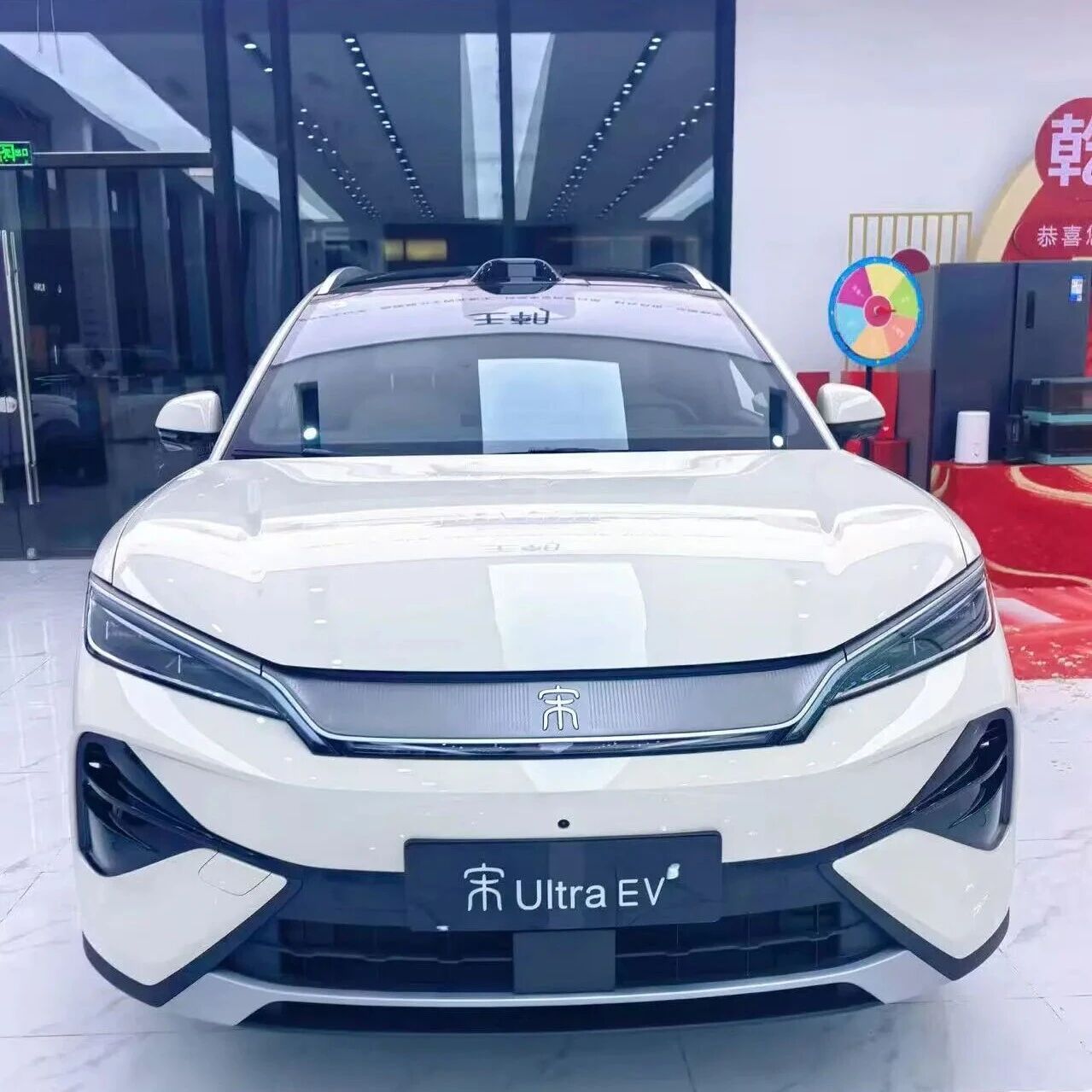
宋Ultra EV 72小时新车上市一线快报
车fans· 2026-03-30 01:05
Order Situation - New orders per store: 15 units [1] - Store visit ratio: 35% [1] - Increase in store visits: 40% [3] - The listing price meets customer expectations, with overall stable order growth and large-scale deliveries starting in April [5] - High order ratio for pure electric vehicles in first- and second-tier cities, with fast charging significantly boosting interest in the Song Ultra model [5] Customer Profile - Age range: 35 to 45 years [6] - Male ratio: 70% [4] - Replacement and upgrade ratio: 70% [6] - Typical customers are families with children, having sufficient budgets, seeking family transportation, valuing aesthetics, and focusing on second-generation batteries and fast charging [6] Configuration Choices - "Heavenly Eye B" optional rate: 45% [6] - Preference for versions: 75% choose the "Surpassing" version, 25% choose the "Excellence" version [8] - Range preference: 70% choose the 710KM version, 30% choose the 605KM version [8] - Color preferences: Main selling colors are Smoke Purple, Snow Mountain White, and Galaxy Rice, with a relatively even distribution [9] Competitor Comparison - Among 10 comparisons, 5 are against the Hai Si 06 EV, 1 against the XPeng G6, 1 against the Leap C11, 1 against the Deep Blue S7, and 1 against the Tesla Model Y [10] - Comparisons focus on pure electric models, primarily within the same brand, considering local ownership levels, while other brands show significant dispersion and price variation across different regions [12]
先抑后扬三月收官,慢牛蓄力贯穿四月
Orient Securities· 2026-03-30 00:45
Market Strategy - The market is expected to experience a "slow bull" phase in April after a "first suppress then rise" trend in March, providing a valuable window for long-term investment opportunities [2][6] - The external geopolitical risks, particularly in the Middle East, are anticipated to continue affecting market sentiment, but the internal stability of the market remains intact [6] Style Strategy - The investment style is characterized by a focus on energy security and advanced manufacturing, with the renewable energy sector (solar, wind, and power transmission) being a core theme due to China's competitive advantages [3] - The agricultural sector is highlighted as a potential area for investment due to recent price corrections, presenting opportunities for a second left-side layout [3] Industry Strategy - In the agricultural sector, pig prices have dropped to a historical low of 9.4 yuan/kg, leading to accelerated capacity reduction and production adjustments, which are expected to result in a price rebound before May [7] - The report emphasizes the potential for growth in the livestock breeding sector and related animal health industries [7] Thematic Strategy - The report reaffirms that energy security concerns will accelerate the international expansion of China's new energy vehicles (NEVs), with significant increases in orders from countries like Australia, the Philippines, and Thailand [4][7] - Domestic companies such as BYD and SAIC are noted for their rising sales and market presence in the NEV sector [7]



电力设备行业跟踪周报:油价高企新能源受益,锂电需求和盈利有望超预期
Soochow Securities· 2026-03-30 00:24
Investment Rating - The report maintains an "Overweight" rating for the power equipment industry, indicating a positive outlook for investment opportunities [1]. Core Insights - High oil prices are benefiting the renewable energy sector, with expectations for increased demand and profitability in lithium batteries [1]. - The report highlights significant growth in energy storage and electric vehicle markets, driven by government policies and technological advancements [4][5]. Industry Trends - The energy storage sector is experiencing robust growth, with countries like Croatia and Spain investing heavily in solar and storage projects. The report anticipates a global energy storage installation growth of over 60% in 2026, with a compound annual growth rate of 30-50% from 2027 to 2029 [4][5]. - In the electric vehicle market, there was a notable decline in retail sales in early March, but expectations for recovery are set for April, with a projected annual growth of around 3% [4][5]. - The report also notes a significant increase in lithium prices, with battery-grade lithium carbonate reaching 158,000 CNY/ton, reflecting a 4.8% increase [4]. Company Performance - Notable company performances include: - Ningde Times: 2025 revenue of 804 billion CNY, a 4% year-on-year increase, with a net profit of 32.6 billion CNY, down 19% [4]. - BYD: 2025 revenue of 804 billion CNY, with a net profit of 32.6 billion CNY, reflecting a 19% decrease [4]. - Other companies like Ganfeng Lithium and CATL are also highlighted for their strong market positions and growth potential [4][5]. Investment Strategy - The report suggests a focus on companies leading in energy storage and lithium battery production, such as Ningde Times, Ganfeng Lithium, and others, due to their strong growth prospects and market leadership [4][5]. - It emphasizes the importance of technological advancements and government policies in driving the growth of the renewable energy sector, particularly in energy storage and electric vehicles [4][5].





汽车行业周报:Optimus团队启动大规模人才招聘,千万台机器人量产工厂开始建设
Huaxin Securities· 2026-03-30 00:24
Investment Rating - The report maintains a "Recommended" rating for the automotive industry, particularly focusing on the humanoid robot sector and its potential growth opportunities [2][8]. Core Insights - The Optimus team at Tesla is accelerating towards mass production of humanoid robots, with a factory capable of producing 10 million units under construction. The team is currently hiring extensively, with 147 positions available, and aims to start large-scale production by the end of this year [4]. - The report highlights the overall low positioning of the robotics sector, with a positive outlook for the T-chain as the Optimus Gen3 is expected to be released in April. It suggests prioritizing investments in T-chain companies before the release [5]. - Several automotive companies, including BYD and Great Wall, are expanding their overseas operations, with BYD's international revenue reaching 310.74 billion yuan, accounting for 38.7% of total revenue, a significant increase from the previous year [6][7]. Summary by Sections Humanoid Robot Sector - The humanoid robot index increased by 0.23% this week, with a cumulative return of 81.1% since 2025. The trading volume of the humanoid robot sector accounted for 13.2% of the CSI 2000 index [16]. - Among the sub-sectors, the reducer segment performed relatively well, increasing by 0.8%, while other components like the total assembly and dexterous hands saw slight declines [19]. - Key companies in the robotics sector include Fulin Precision, Slin Intelligent Drive, and Zhenyu Technology, which have shown significant gains [23]. Automotive Sector - The CITIC automotive index fell by 0.2%, outperforming the broader market by 1.2 percentage points. The new energy vehicle index rose by 4.5%, indicating strong performance in that segment [33][36]. - Among tracked companies, Hunan Tianyan and Xiyi Co. saw significant gains, while Huada Technology and Xuelong Group faced substantial declines [41]. - The automotive industry's PE ratio is at 33.3, positioned at the 50.7% percentile over the past four years, indicating a relatively stable valuation environment [50]. Recommended Stocks - The report recommends several stocks, including Mould Technology, Shuanglin Co., and KaiDi Co., all rated as "Buy" based on their growth potential in the humanoid robot and automotive sectors [10][11].

