EVE(300014)

Search documents
亿纬锂能(300014) - 关于子公司收到其合资公司归还财务资助部分款项暨子公司对外提供财务资助的进展公告
2025-12-24 08:44
截至2025年8月29日,亿纬亚洲收到华飞镍钴归还的上述财务资助本金4,000万美 元。具体内容详见公司在创业板信息披露网站巨潮资讯网披露的《关于子公司收到其 合资公司归还财务资助部分款项暨子公司对外提供财务资助的进展公告》(公告编号: 2025-108)。 一、财务资助事项概述 惠州亿纬锂能股份有限公司(以下简称"公司")于2021年5月23日召开第五届董 事会第三十次会议审议通过了《关于子公司亿纬亚洲拟签署<印尼华宇镍钴红土镍矿湿 法冶炼项目合资协议>并向合资公司提供财务资助的议案》,同意公司全资子公司亿纬 亚洲有限公司(以下简称"亿纬亚洲")向其合资公司华飞镍钴(印尼)有限公司(以 下简称"华飞镍钴")提供21,420万美元的财务资助,主要用于华飞镍钴建设红土镍 矿湿法冶炼项目。2021年7月23日,亿纬亚洲与华飞镍钴签署了《华飞镍钴(印尼)有 限公司股东借款协议》,协议项下项目借款总金额为21,420万美元、借款期限为7年、 借款年利率为5%。具体内容详见公司于2021年5月24日在创业板信息披露网站巨潮资 讯网披露的《关于子公司亿纬亚洲签署<印尼华宇镍钴红土镍矿湿法冶炼项目合资协 议>并拟向合资公司 ...

锂电材料涨价落地节奏加速,新能车ETF(515700)冲击4连涨
Sou Hu Cai Jing· 2025-12-24 02:57
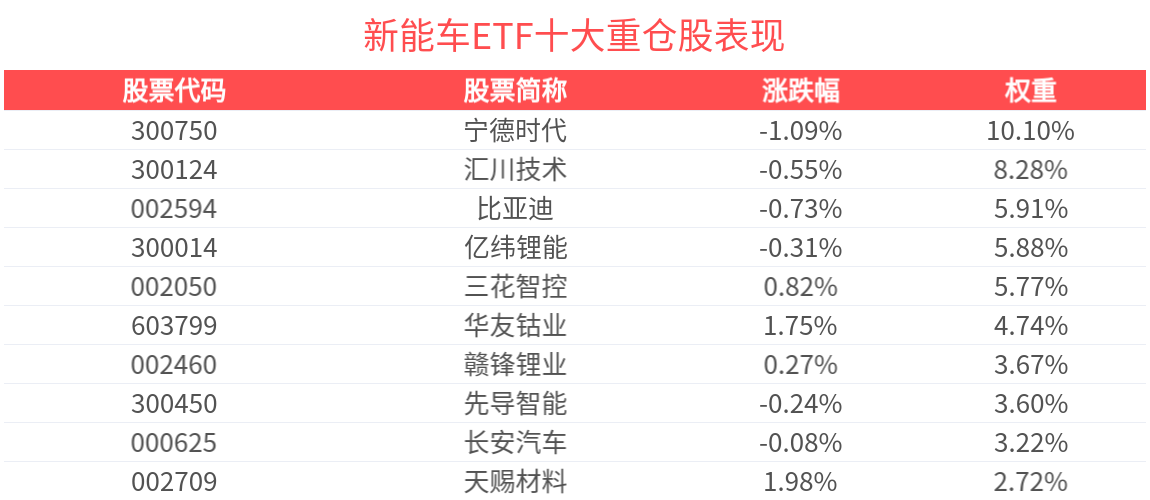
Group 1 - The core material for electrolytes, lithium hexafluorophosphate, has seen a price increase that exceeds market expectations, reaching an average price of 177,250 yuan per ton, which is over a 200% increase since early November [1] - The demand from energy storage and new energy vehicles has triggered a boom in the lithium battery industry chain, marking a turning point in industry prosperity since December 2025, with price increases expected to continue until the second quarter of 2026 due to supply-demand mismatches [1] - As of December 24, 2025, the CSI New Energy Vehicle Industry Index (930997) rose by 0.36%, with notable increases in component stocks such as Weichai Power (8.32%) and Zhongmin Resources (4.77%) [1] Group 2 - The CSI New Energy Vehicle Industry Index closely tracks the performance of 50 listed companies involved in the new energy vehicle sector, including manufacturers of electric vehicles, electric motors, battery equipment, and materials [2] - As of November 28, 2025, the top ten weighted stocks in the CSI New Energy Vehicle Industry Index accounted for 51.96% of the index, with leading companies including CATL, BYD, and Ganfeng Lithium [2]




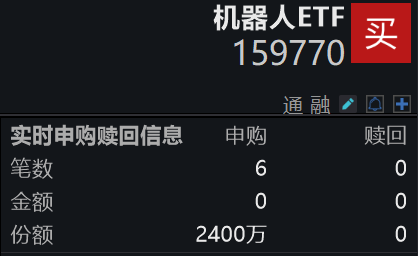
宇树科技交互控制专利获授权!规模冲百亿的机器人ETF(159770)实时净申购2400万份深市同类居首,近5日“吸金”1.85亿元!
Sou Hu Cai Jing· 2025-12-24 02:11
Core Viewpoint - The Robot ETF (159770) is experiencing significant growth, with a notable increase in fund inflows and a record high in shares, indicating strong investor interest in the robotics sector [3]. Fund Performance - As of December 24, 2025, the Robot ETF (159770) had a transaction volume of 22.96 million yuan, with the underlying index (CSI Robot Index H30590) rising by 0.31% [1]. - The Robot ETF (159770) has seen a week-on-week growth of 181 million yuan, reaching a total share count of 10.141 billion, marking a new high since its inception [3]. - The latest net inflow for the Robot ETF (159770) was approximately 80.88 million yuan, with four out of the last five trading days showing net inflows totaling 185 million yuan [3]. Product Highlights - The Robot ETF (159770) is the largest robot-themed ETF in the Shenzhen market, covering various segments such as humanoid robots, industrial robots, and service robots, allowing investors to easily access the entire robotics supply chain [3]. Recent Developments - Yushutech has received authorization for a patent related to robot control technology, which enhances the precision and reliability of robot interactions [3]. - EVE Energy has initiated a project with a total investment of approximately 1 billion yuan to establish a sodium battery and AI robot integration base, expected to be completed by 2027 [5]. - The humanoid robot industry is transitioning from a "technology demonstration phase" to a "productization and order validation phase," with increasing investment activity and significant developments in the industry ecosystem [5].

动力电池和储能电池需求旺盛,锂电材料价格回升 | 投研报告
Zhong Guo Neng Yuan Wang· 2025-12-24 02:04
Core Viewpoint - The lithium battery industry is experiencing significant growth in production and demand, with notable increases in both battery and phosphoric iron lithium cathode material output in November 2025 compared to the same period in 2024 [1][2]. Production - In November 2025, domestic battery production reached 176.3 GWh, marking a year-on-year increase of 49.66% and a month-on-month increase of 3.34% [1][2]. - The production of phosphoric iron lithium cathode materials in November 2025 was 26.89 million tons, reflecting a year-on-year growth of 29.43% and a month-on-month growth of 0.75%, with a capacity utilization rate of 62.53% [1][2]. Pricing - The price of industrial-grade lithium carbonate rose to 101,000 yuan per ton as of December 19, 2025, with a weekly increase of 7.44% [3]. - The price of phosphoric iron lithium (power type) remained stable at 39,100 yuan per ton as of December 19, 2025 [3]. - The average price of square phosphoric iron lithium energy storage cells remained stable, with prices reported at 0.385, 0.310, and 0.310 yuan/Wh for different capacities [3]. Demand - In November 2025, the monthly shipment of phosphoric iron lithium batteries reached 75.3 GWh, a year-on-year increase of 43.62% and a month-on-month increase of 11.56%, setting a new high for the year [4]. - The monthly shipment of ternary power batteries was 18.2 GWh, showing a year-on-year increase of 33.82% and a month-on-month increase of 10.30% [4]. - The export volume of Chinese power batteries in November 2025 was 21.2 GWh, a year-on-year increase of 69.60% and a month-on-month increase of 9.28% [4]. Investment Recommendations - The company suggests focusing on core enterprises in the battery sector that are leading in both domestic and overseas markets, particularly those with a collaborative layout in power batteries and energy storage [5]. - Companies to watch include CATL (300750.SZ), Yiwei Lithium Energy (300014.SZ), and others involved in lithium battery materials [5].




锂电2025:从深度回调到迅速复苏
Shang Hai Zheng Quan Bao· 2025-12-23 19:06
Core Viewpoint - The lithium battery industry is experiencing a significant recovery in 2025, driven by unexpected growth in global energy storage demand and a mismatch between actual production capacity and planned capacity in China [2][3]. Group 1: Industry Recovery - The year 2025 is identified as a "value return year" for the energy storage industry, with companies like Ruipu Lanjun reporting full production capacity and orders extending into the first quarter of 2026 [3]. - Major lithium battery companies, including XINWANDA and YIWAI Lithium Energy, are experiencing "full production and sales," indicating a strong demand for energy storage batteries [3]. - The total shipment of lithium batteries in China for the first three quarters of 2025 reached 430 GWh, exceeding the total for 2024 by 30% [3]. Group 2: Supply Chain Dynamics - The price of lithium battery materials, particularly lithium hexafluorophosphate, has surged over 240% from its low point earlier in the year, affecting various components in the supply chain [4]. - There is a growing trend of long-term contracts in the lithium battery supply chain, with companies securing large procurement agreements to ensure supply chain stability [4]. - The tightening of lithium mining approvals has led to a significant increase in lithium carbonate prices, with futures contracts surpassing 120,000 yuan/ton [4][8]. Group 3: Industry Transformation - The lithium battery industry is transitioning from a reliance on "price for volume" to a focus on technological innovation and high-quality development [5]. - The concept of "anti-involution" is becoming a key theme in the lithium battery sector, reflecting a broader trend in Chinese manufacturing towards quality and efficiency over mere scale [6]. - The net profit margin for battery companies remains low, with a median of 2.78% for 105 listed companies in the sector, indicating ongoing challenges despite the recovery [7]. Group 4: Solid-State Battery Development - Solid-state batteries are gaining attention as the next generation of battery technology, with significant investments and production capacity planned [9]. - The industry is moving towards a more organized competitive landscape, with breakthroughs in standardization and collaboration across the supply chain [10]. - The commercialization timeline for solid-state batteries is projected to accelerate, with expectations for large-scale applications between 2028 and 2030 [10][11]. Group 5: Future Outlook - The lithium battery industry is expected to face new growth challenges, with ongoing efforts to address internal competition and enhance supply chain security [11]. - The central economic work conference has highlighted the need for a unified national market and further measures to combat "involution," which may improve profit margins in the lithium battery sector [11]. - The future of the lithium battery industry is tied to new technologies and applications, with significant opportunities arising from the global transition to low-carbon energy and increased demand for energy storage solutions [11].


亿纬锂能双线出击:钠电补位锂电短板,机器人重构制造生态
Nan Fang Du Shi Bao· 2025-12-23 15:25
Core Viewpoint - The construction of the "EVE Sodium Energy Headquarters and Jinyuan Robot AI Center" marks a significant step for EVE Energy, aiming to transition from a leading lithium battery supplier to a provider of comprehensive hydrogen-lithium-sodium electrochemical energy storage solutions and industrial intelligent factory services [2][4]. Group 1: Sodium Battery Development - EVE Energy's sodium battery project has a total investment of approximately 1 billion yuan, with a planned construction area of 90,000 square meters and a target annual production capacity of 2 GWh [6]. - The company emphasizes that sodium batteries are not a replacement for lithium batteries but serve as a complementary solution, particularly suitable for large-scale energy storage and backup power for AI data centers due to their safety and long cycle life [8]. - The concept of "zero-carbon sodium batteries" is introduced, aiming for natural degradation of batteries at the end of their life cycle, aligning with sustainable energy goals [8]. Group 2: Robotics and AI Center - The Jinyuan Robot AI Center will cover a 50,000 square meter area, focusing on the entire chain from research and development to manufacturing and training [9]. - EVE Energy's approach to robotics is driven by specific tasks and scenarios, aiming to replace high-risk and repetitive jobs in manufacturing, with seven series of industrial robots already developed for various applications [9][11]. - The integration of self-developed automation equipment with robotics is highlighted as a unique advantage, ensuring data security and alignment with real manufacturing processes through private cloud environments [11]. Group 3: Strategic Ambitions - EVE Energy aims to play three roles: core component supplier, complete machine integrator, and provider of intelligent solutions for industrial scenarios, particularly in high-reliability sectors like new energy and pharmaceuticals [11]. - The dual strategy of expanding into both upstream material innovation and downstream intelligent manufacturing reflects the ambition of leading Chinese manufacturing enterprises to create a closed-loop ecosystem of "technology + equipment + solutions" [12].
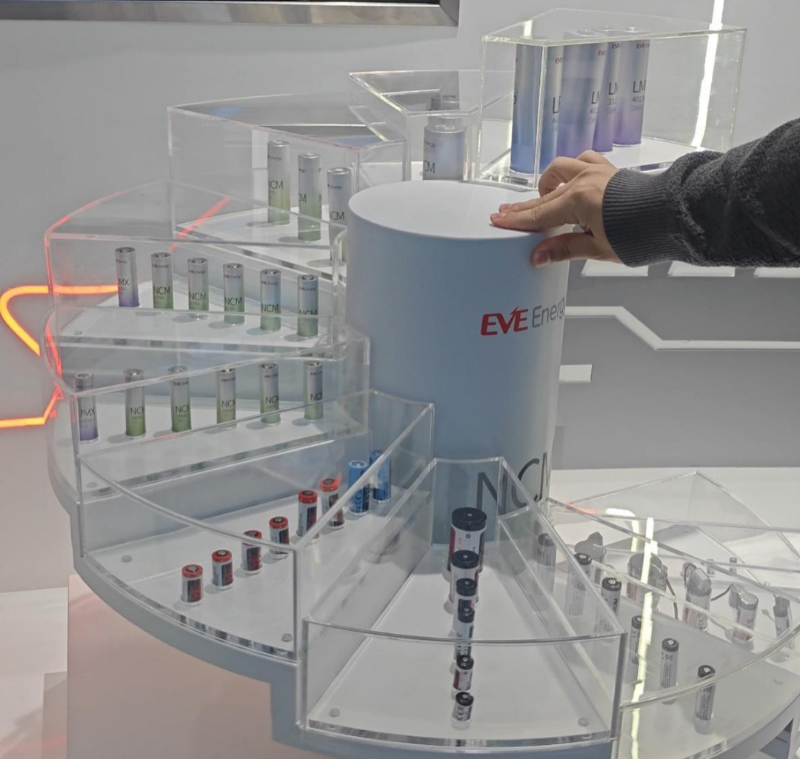
亿纬锂能,要用机器人给机器人造电池
Xin Lang Cai Jing· 2025-12-23 12:15
Core Viewpoint - The company EVE Energy (300014.SZ) is expanding its production capacity in response to the growing global demand for energy storage, with new projects focused on sodium batteries and AI innovation [1][8]. Group 1: Sodium Battery Expansion - EVE Energy is launching a new sodium battery project with a total investment exceeding 1 billion yuan, covering a planned area of 90,000 square meters and designed to produce approximately 2 GWh of capacity [2][9]. - The sodium battery is expected to fill market supply gaps and promote large-scale applications in energy storage and AI data centers, reducing reliance on lithium resources [1][8]. - The sodium battery features advantages such as wide temperature range, high power, long lifespan, and enhanced safety, with products developed that are environmentally friendly and non-flammable [2][9]. Group 2: AI Robotics Development - The company is establishing its first AI robotics industrial park, which will include a 50,000 square meter innovation and research center for AI and robotics, covering the entire process from research and trial production to mass production [4][12]. - EVE Energy's subsidiary, Huizhou Jinyuan Intelligent Robot Co., Ltd., is responsible for the AI robotics project, leveraging its extensive experience in smart equipment and AI technology [4][12]. - The company has developed various types of intelligent robots and plans to launch new models in the coming year, with expectations for overseas output [4][12]. Group 3: Company Overview - EVE Energy was founded in 2001 and was one of the first companies to be listed on the Shenzhen Growth Enterprise Market in 2009, evolving into a global player in the lithium battery industry [6][14]. - The company has a diverse factory layout across multiple regions, including Guangdong, Hubei, Sichuan, Yunnan, Jiangsu, Zhejiang, Liaoning, Hungary, Malaysia, and the United States [6][14]. - In the energy storage battery sector, EVE Energy ranks second globally, following CATL, and is the fifth largest in the domestic power battery market [7][14].
锂电巨头杀入机器人赛道
Hua Er Jie Jian Wen· 2025-12-23 11:44
Core Viewpoint - The battery giant EVE Energy is making significant investments in the robotics sector, aiming to transition from being solely an "energy supplier" to a key player in the trillion-dollar robotics market [2][4]. Group 1: Investment and Development - EVE Energy announced an investment of 1 billion to establish a sodium battery headquarters and a 50,000 square meter AI robotics center, which will cover the entire process from R&D to mass production [1]. - The company has developed seven series of robots, including bipedal, wheeled, and heavy-load types, indicating a diverse product range [2]. Group 2: Strategic Positioning - EVE Energy plans to play three roles in the robotics ecosystem: core component supplier (including batteries and AI parts), complete machine integrator, and provider of industrial intelligent solutions [2][4]. - The company is focusing on solving internal manufacturing challenges before offering solutions externally, creating a 1:1 replica training center for practical robot skill training [3]. Group 3: Industry Context and Competition - The entry of EVE Energy into the robotics field reflects a broader trend among battery giants to diversify their roles beyond being Tier 1 suppliers to becoming intelligent manufacturing platforms [7]. - As the penetration rate of new energy vehicles exceeds 50%, the industry is experiencing a slowdown, prompting companies to seek new growth avenues, with robotics seen as the next major intelligent terminal [4][6]. Group 4: Manufacturing Innovation - EVE Energy's approach aims to revolutionize factory layouts by utilizing high-degree-of-freedom robots, potentially reducing production line lengths significantly and maximizing production density [5]. - The shift from traditional battery production lines to smart manufacturing capabilities represents a new competitive dimension for battery manufacturers [6].
锂电股,高光回归
Ge Long Hui A P P· 2025-12-23 09:59
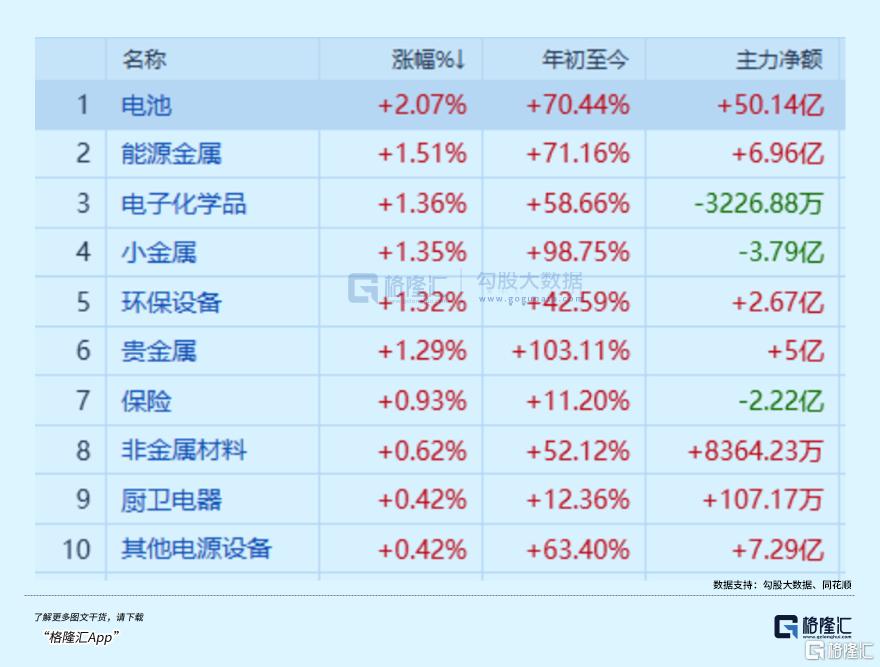
Core Viewpoint - The lithium battery sector has rebounded strongly after a two-month correction, with significant inflows of capital and a notable increase in stock prices, indicating a potential new upward trend for the industry [1][5]. Market Performance - As of December 23, the lithium battery concept index rose by 2.07%, with a net inflow of 5 billion in main capital, leading all sectors [1]. - The price of lithium carbonate futures surged by 5.96%, reaching 120,000 yuan/ton, marking a return to the high point seen in March 2024 [3]. Supply and Demand Dynamics - The recent price increase in lithium is attributed to a tight supply-demand balance, with domestic lithium carbonate production decreasing to a three-year low [7]. - In November 2025, domestic production of battery-grade lithium carbonate was approximately 66,000 tons, down 0.2% month-on-month, while imports of lithium carbonate fell by 7.6% [7]. - The demand for lithium remains robust, driven by the growth in the electric vehicle market, with November 2025 seeing production and sales of 1.88 million and 1.823 million units respectively, both up by over 20% year-on-year [7][8]. Price Trends and Industry Recovery - The price of battery-grade lithium carbonate has risen from 81,000 yuan/ton at the beginning of November to 92,000 yuan/ton by the end of the month, reflecting a monthly increase of 13.58% [5]. - The overall profitability of the lithium battery industry is recovering, with the net profit of 118 lithium battery concept stocks in the A-share market reaching 117.196 billion yuan in the first three quarters, a year-on-year increase of 26.97% [14]. Key Players and Financial Performance - Leading companies like Ganfeng Lithium reported a significant revenue increase of 44.1% year-on-year, with net profit soaring by 364.02% in the third quarter [15]. - Other companies such as Tianqi Lithium and Guoxuan High-Tech also reported substantial profit increases, indicating a positive trend across the sector [16]. Future Outlook - The global energy storage market is expected to see explosive growth, with predictions of lithium battery shipments reaching 580 GWh in 2025, a year-on-year increase of 65% [9]. - Major institutions are optimistic about the lithium battery sector, with forecasts suggesting a new upward cycle starting in 2026, driven by strong demand and favorable policies [18][19].
锂电股,高光回归
格隆汇APP· 2025-12-23 09:52
Core Viewpoint - The lithium battery sector has rebounded strongly after a two-month correction, with significant capital inflow and a notable increase in lithium prices, indicating a potential new upward trend for the industry [2][6]. Market Performance - As of December 23, the lithium battery concept index rose by 2.07%, with a year-to-date increase of 70.44% and a net capital inflow of 5 billion [3]. - Key sectors such as battery materials and energy-related industries also showed strong performance, with notable stocks like Binhai Energy and Tianqi Lithium seeing gains of over 10% [4]. Price Trends - The price of battery-grade lithium carbonate surged by 5.96% to over 120,000 yuan per ton, marking a significant recovery from earlier lows [4]. - In November 2025, the average price of battery-grade lithium carbonate rose from 81,000 yuan to 92,000 yuan per ton, reflecting a monthly increase of 13.58% [7]. Supply and Demand Dynamics - The lithium supply has contracted due to proactive supply-side reforms, with lithium carbonate production in November 2025 at approximately 66,000 tons, a 0.2% decrease month-on-month [9]. - Demand for lithium remains robust, driven by the growth in the electric vehicle market, with November 2025 seeing production and sales of 1.88 million and 1.823 million new energy vehicles, respectively, both up over 20% year-on-year [10]. Industry Growth - The global energy storage market is experiencing explosive growth, with significant increases in both domestic and international demand for energy storage solutions [11]. - In November 2025, the production of power and other batteries reached 176.3 GWh, a year-on-year increase of 49.2% [11]. Profit Recovery - The lithium battery industry's profitability is recovering rapidly, with a reported net profit of 117.196 billion yuan for 118 lithium battery concept stocks in the first three quarters, a year-on-year increase of 26.97% [18]. - Leading companies like Ganfeng Lithium reported a substantial increase in revenue and net profit, indicating a strong correlation between rising lithium prices and improved financial performance [19][20]. Policy and Institutional Support - Recent policy initiatives are expected to boost the energy storage battery industry, while institutional forecasts predict a significant increase in lithium battery demand through 2026 [21][22]. - Major institutions have raised their price forecasts for lithium, reflecting a consensus on the industry's growth potential [22]. Valuation and Investment Focus - The lithium battery sector is currently in a phase of valuation recovery, with leading companies trading at significantly lower multiples compared to industry growth rates [25]. - Investors are advised to focus on three core areas: leading lithium mining companies, materials firms benefiting from supply-demand balance, and stable battery manufacturers with strong profitability [26][27].