Sungrow Power Supply(300274)

Search documents
中国十大储能巨头海外订单排行榜(2025年)
鑫椤储能· 2025-12-11 02:12
Core Viewpoint - The continuous emergence of "GWh-level" energy storage orders overseas demonstrates that leading Chinese energy storage companies are becoming a key force in reshaping the global energy storage landscape [2][5]. Group 1: Market Overview - From 2025 onwards, the total scale of overseas orders signed by the top 10 energy storage giants reached 166.26 GWh, which is 2.04 times the new installed capacity of 81.5 GWh in the overseas energy storage market in 2024 [2]. - Australia leads with an order volume of 41.16 GWh, followed by the Middle East with 38 GWh, and Asia (excluding China) with 33.642 GWh [2]. Group 2: Company Performance - All top 10 energy storage giants have overseas order volumes exceeding 4 GWh, with six companies surpassing 10 GWh. The top three are CATL (52.9 GWh), Hicharge (34.01 GWh), and BYD (19.7 GWh) [3]. - Specific overseas order details are provided in the appendix of the article, highlighting the significant contributions of these companies to the global market [3]. Group 3: Risks and Challenges - Many overseas orders are merely intention orders, with execution cycles lasting 2-3 years or longer. The global energy storage industry is currently facing unprecedented challenges, with potential risks accumulating behind the surge in overseas orders [5][6]. - The bankruptcy of Powin, a former top 3 global energy storage system integrator, could significantly impact the global development of many companies. Powin has built and is constructing energy storage systems exceeding 17 GWh globally [5][6]. - The future of many overseas projects is likely to face delays or terminations due to ongoing global policy and market negotiations, which will profoundly affect the globalization and structure of the energy storage industry [6]. Group 4: Financial Health and Strategy - Maintaining financial health is crucial for companies in the current industry landscape. Historically, financially healthy companies are more likely to survive industry downturns, while financially weak companies may face severe challenges, including debt defaults or bankruptcy [6]. - Companies must prioritize survival before expanding their global market influence and capabilities, especially considering the volatility of global economic and market demands [6].





中金:2026储能行业“高光”延续,概念股或迎爆发契机!
Jin Rong Jie· 2025-12-11 00:21
Group 1 - The core viewpoint of the report indicates that the demand for the energy storage industry will remain high in 2026, supported by solid and diverse factors, providing a broad development prospect for related concept stocks [1] - The global energy transition trend is deepening, with the share of renewable energy sources like wind and solar power continuously increasing, necessitating the optimization of the grid and the construction of energy storage systems to ensure stable power supply [1] - The development of AI data centers is creating new electricity demand challenges, highlighting the growing issue of electricity shortages, which is expected to lead to more AI-related energy storage projects in the coming year [1] Group 2 - In addition to the large-scale storage market, the demand for household and commercial storage is also strong, particularly in emerging markets where electricity shortages are common, making these storage solutions vital for power supply [2] - Technological advancements and decreasing costs are expected to enhance the adoption of household and commercial storage, providing new growth momentum for the energy storage industry [2] - Key companies in the energy storage sector include CATL, which holds a significant position in the global energy storage battery market; Sungrow, known for its advantages in storage inverters and system integration; Pylontech, focusing on the household storage market; and Kehua Data, excelling in data center storage and commercial storage solutions [2]


量价齐升!PCS正C位引领储能价值聚变
行家说储能· 2025-12-10 12:14
Core Insights - The energy storage PCS market is entering a phase of "volume and price increase" as multiple provinces reach critical stages of project delivery and grid connection, leading to a trend of price increases due to extended production cycles [2][20] - The role of PCS is transforming from a simple energy conversion device to a key node in the intelligent grid, prompting companies to consider how to innovate and collaborate to become the core hub for value realization in the new power system [2][5] Market Dynamics - The energy storage PCS market is experiencing a significant shift in competition logic, moving from a focus on single device performance to a comprehensive endurance race that includes technological sophistication, system collaboration, supply chain resilience, brand influence, and global layout [20][21] - The industry is witnessing a transition from a policy-driven model to a market-driven value model, necessitating a rapid shift in business models from hardware sales to integrated solutions [23][24] Technological Innovations - Companies are emphasizing the need for hardware innovation and intelligent algorithm upgrades to enhance the interaction between energy storage and the grid, with a focus on achieving millisecond-level response times and multi-objective optimization capabilities [6][10] - The trend towards larger power capacities in energy storage PCS is evident, with centralized PCS power ratings increasing from 1.725MW to 2.5MW, and string PCS moving from 125kW–375kW to over 400kW [14][15] System Integration - The core competitiveness of energy storage PCS products is shifting from individual component performance to system integration capabilities, requiring deep collaboration with battery management systems (BMS) and energy management systems (EMS) [11][12] - Companies are developing customized solutions that leverage a deep understanding of grid scheduling rules and market mechanisms to enhance system performance and reduce integration complexity [11][12][18] Future Trends - The growth of string architecture is expected to dominate large-scale energy storage, with its unique advantages in system management and efficiency [17][18] - The mainstream trends for energy storage PCS technology by 2025 include the large-scale application of grid-constructing technology, increased power capacity, and the integration of AC and DC systems [18][19]


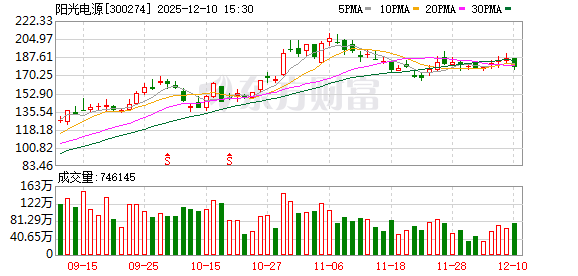
电力设备行业今日净流出资金55.71亿元,阳光电源等16股净流出资金超亿元
Zheng Quan Shi Bao Wang· 2025-12-10 09:07
Market Overview - The Shanghai Composite Index fell by 0.23% on December 10, with 26 industries experiencing gains, led by real estate and retail, which rose by 2.53% and 1.97% respectively [2] - The banking and power equipment sectors saw the largest declines, with drops of 1.58% and 0.87% respectively [2] Capital Flow Analysis - The main capital outflow from the two markets totaled 27.547 billion yuan, with 10 industries seeing net inflows [2] - The real estate sector had the highest net inflow of 1.965 billion yuan, while the retail sector followed with a net inflow of 1.307 billion yuan [2] Power Equipment Sector Performance - The power equipment industry experienced a decline of 0.87%, with a net capital outflow of 5.571 billion yuan [3] - Out of 364 stocks in the sector, 103 rose while 252 fell [3] - Notable stocks with significant net inflows included Hualing Cable (net inflow of 409 million yuan), Xingyuan Material (316 million yuan), and Tianhua New Energy (214 million yuan) [3] Top Gainers in Power Equipment - Hualing Cable: +5.39%, turnover rate 37.65%, net inflow 408.93 million yuan [4] - Xingyuan Material: +8.13%, turnover rate 13.97%, net inflow 316.48 million yuan [4] - Tianhua New Energy: +4.14%, turnover rate 7.27%, net inflow 214.25 million yuan [4] Top Losers in Power Equipment - Sunshine Power: -4.25%, turnover rate 4.69%, net outflow -1.567 billion yuan [5] - CATL (Ningde Times): -1.34%, turnover rate 0.46%, net outflow -770 million yuan [5] - TBEA: -1.88%, turnover rate 3.05%, net outflow -275 million yuan [5]

今日这些个股异动 主力加仓房地产板块



Di Yi Cai Jing· 2025-12-10 09:03
-今日A股共有7只个股换手率超过40%; -N百奥、德艺文创等个股换手率居前; 【主力资金】 -主力资金今日净流入房地产、商贸零售、有色金属等板块,净流出电子、电力设备、计算机等板块; -永辉超市、万科A、神农种业、C百奥、步步高资金净流入规模居前,分别净流入7.37亿元、6.58亿 元、4.72亿元、4.69亿元、4.58亿元; -阳光电源、胜宏科技、天孚通信、中科曙光、宁德时代资金净流出规模居前,分别净流出15.89亿元、 10.92亿元、10.62亿元、8.54亿元、8.43亿元。 【振幅大】 -今日A股共有4只个股振幅超过20%; -N百奥、C摩尔-U等个股振幅居前; 【换手率高】 (本文来自第一财经) ...
【新华500】新华500指数(989001)10日跌0.04% 万科A涨停
Xin Hua Cai Jing· 2025-12-10 07:40
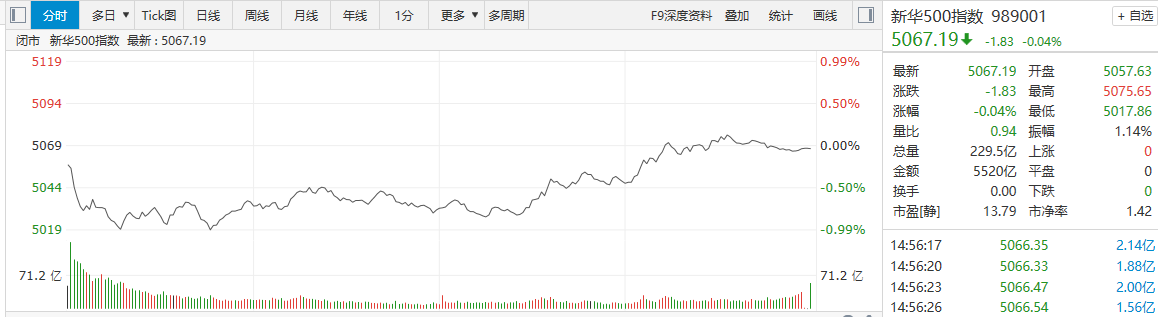
Core Points - The Xinhua 500 Index closed at 5067.19 points on December 10, with a slight decline of 0.04% [1] - The index experienced minor adjustments during the day, reaching a high of 5075.65 points and a low of 5017.86 points, with a total trading volume of 552 billion yuan [1][3] Component Stocks - Notable gainers among component stocks included Yonghui Supermarket, Vanke A, Lianang Micro, and Zhonggong Education, all of which hit the daily limit [3] - Conversely, Zhongke Shuguang faced a limit down, with Hongyuan Green Energy and Sunshine Power also experiencing significant declines [3] Index Information - The Xinhua 500 Index is published by the National Financial Information Platform and is maintained by Xinhua Index (Beijing) Co., Ltd., measuring the price levels of major large and medium-cap stocks in the A-share market [3]


安徽上市公司系列榜单发布,六安上榜的是……
Sou Hu Cai Jing· 2025-12-10 03:57
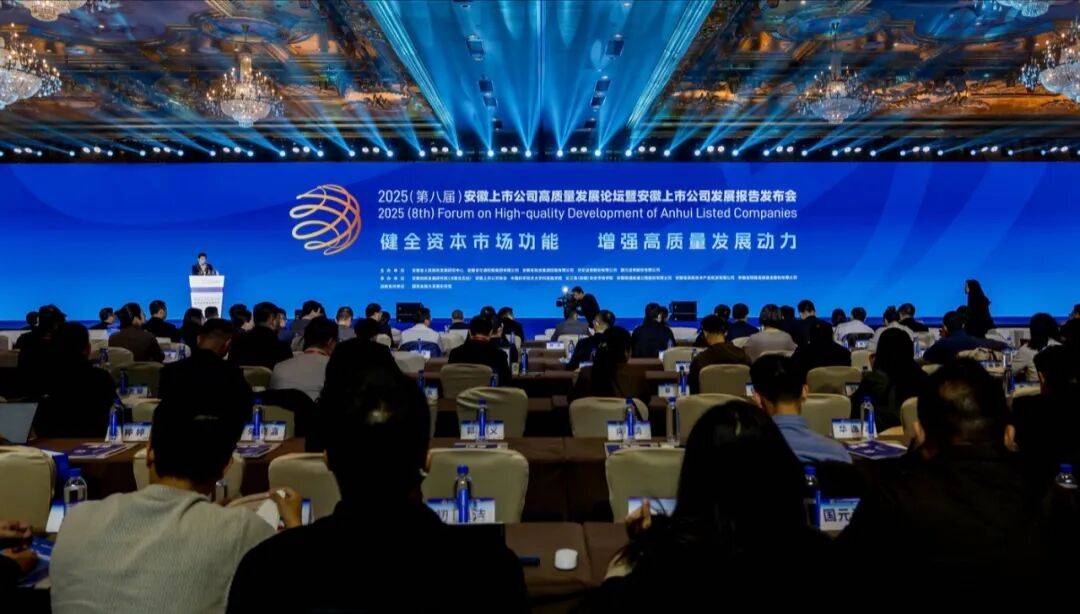
Core Insights - The 2025 Anhui Listed Companies High-Quality Development Forum highlighted the growth and performance of listed companies in Anhui province, showcasing a significant increase in the number of companies and their overall development capabilities [1][3]. Group 1: Company Growth and Performance - As of the end of November, Anhui has 186 listed companies, marking a nearly 50% increase since the end of the 13th Five-Year Plan, ranking 7th nationally and first in Central China [3]. - In the first 11 months of this year, Anhui added 5 new listed companies, ranking 5th in the country, with 12 new IPO applications and 21 companies in counseling, also ranking 4th nationally [3]. Group 2: Ranking of Comprehensive Development Ability - The 2025 Anhui Listed Companies series rankings evaluated companies based on comprehensive development ability, total investment scale, innovation capability, operational efficiency, and ESG performance [4]. - iFlytek ranked first in comprehensive development ability, followed by Jinghe Integration and Aiko Optoelectronics [5]. Group 3: Investment and Financing Scale - The total investment scale of listed companies in Anhui is steadily increasing, with Conch Cement, Anhui Construction, and Sunshine Power leading in total investment scale [6][7]. - Conch Cement has a total investment scale of 2270.46 billion, followed by Gujing Distillery at 379.80 billion and Anhui Construction at 1373.55 billion [7]. Group 4: Operational Efficiency - The operational efficiency of listed companies is crucial for revenue generation, with Shannon Chip, Koushijiao, and Gujing Distillery ranking highest in operational capability [8]. Group 5: Innovation Capability - Aiko Optoelectronics, Rena Intelligent, and Koweil ranked highest in innovation capability, indicating a steady improvement in the innovation capacity of Anhui listed companies [10][11]. Group 6: ESG Performance - Three companies achieved a comprehensive ESG score above 0.7, indicating strong performance in environmental, social, and governance metrics [12].


ESG动态跟踪月报(2025年11月):碳市场新增行业配额方案落地,国际政策分化下绿色金融保持活跃-20251209
CMS· 2025-12-09 15:08
Quantitative Models and Construction Methods Model 1: Carbon Emission Intensity Deviation and Carbon Emission Intensity Coefficient - **Model Name**: Carbon Emission Intensity Deviation and Carbon Emission Intensity Coefficient - **Model Construction Idea**: The model aims to allocate carbon quotas based on the deviation of a company's carbon emission intensity from the industry average, incentivizing companies to reduce emissions. - **Model Construction Process**: - The carbon emission intensity deviation (X) is calculated as the difference between a company's unit product carbon emission and the industry average, divided by the industry average: $$ X = \frac{I - BP}{BP} $$ where \( I \) is the company's unit product carbon emission, and \( BP \) is the industry average. - The carbon emission intensity coefficient (α) is determined based on the deviation (X): $$ \alpha = \begin{cases} -3\% & \text{if } X \leq -20\% \\ 15\% \times X & \text{if } -20\% < X \leq 20\% \\ +3\% & \text{if } X > 20\% \end{cases} $$ - The quota amount (A) is calculated as: $$ A = E \times (1 + \alpha) $$ where \( E \) is the company's verified emissions for the year. - **Model Evaluation**: This model ensures that differences in emission control levels among companies are reflected in their quota allocations, providing positive incentives for emission reduction while maintaining overall quota stability.[8][9][11] Model Backtesting Results - **Carbon Emission Intensity Deviation and Carbon Emission Intensity Coefficient**: - The model's implementation is expected to significantly expand the coverage of the national carbon market, enhancing the price discovery function of carbon prices and reflecting marginal abatement costs more clearly.[12][13] Quantitative Factors and Construction Methods Factor 1: National Certified Voluntary Emission Reduction (CCER) Methodology - **Factor Name**: National Certified Voluntary Emission Reduction (CCER) Methodology - **Factor Construction Idea**: The factor aims to provide a quantifiable method for voluntary emission reduction projects, converting emission reductions into tradable environmental credits. - **Factor Construction Process**: - The methodology includes three key scenarios: offshore oilfield associated gas recovery, onshore gas field test gas recovery, and onshore oilfield low-gas-volume associated gas recovery. - Each scenario has specific mechanisms for emission reduction, monitoring, and accounting requirements. - For example, the offshore oilfield associated gas recovery scenario involves recovering gas that would otherwise be flared, converting it into usable products, and reducing methane emissions. - **Factor Evaluation**: This methodology provides clear technical specifications and market incentives for methane emission reduction projects in the oil and gas industry, supporting the achievement of methane control targets.[14][15] Factor Backtesting Results - **National Certified Voluntary Emission Reduction (CCER) Methodology**: - The implementation of this methodology is expected to lead to the initiation of more associated gas recovery projects, contributing to the achievement of China's dual carbon goals and supporting the green and low-carbon transition of the oil and gas industry.[14][15]




AI点燃史无前例的“电力需求周期”! 亚洲电网设备与储能股票站上超级风口
Zhi Tong Cai Jing· 2025-12-09 09:27
Core Insights - Citi's report highlights that the rapid expansion of AI data centers and the acceleration of global electrification will lead to a significant increase in global electricity demand, potentially creating a critical bottleneck for the expansion of AI technology and data centers [1] - The report emphasizes that the competition in AI is fundamentally a race for AI computing infrastructure, which relies heavily on a stable and large electricity supply [1] - Goldman Sachs has revised its forecast for global data center electricity demand by 2030, predicting it will exceed 945 terawatt-hours (TWh), driven primarily by AI applications [2] Group 1: Electricity Demand Drivers - The combination of AI data centers, electrification, and renewable energy integration is identified as the "triple driver" of electricity demand [3] - The demand for high-voltage transformers is significantly increasing due to AI data centers, grid reinforcement, and renewable energy integration [3] - The report indicates that the electrification and renovation of aging power grids will also create substantial demand for grid equipment [4] Group 2: Investment Opportunities - Asian markets are expected to benefit from a bull market trajectory in grid equipment and large-scale storage stocks, particularly high-voltage and ultra-high-voltage transformers [5] - Large-scale energy storage systems (ESS) will benefit from grid upgrades, renewable energy fluctuations, and backup power needs for data centers [6] - Companies like Sungrow Power Supply and Chung Hsin Electric are highlighted as key beneficiaries, with potential stock price increases of approximately 32% and 35% respectively [6]
11月国内光伏组件产量环比下降,储能电芯延续高景气态势 | 投研报告
Zhong Guo Neng Yuan Wang· 2025-12-09 07:02
Core Viewpoint - The photovoltaic and energy storage industry is experiencing a decline in production and demand, with domestic and international markets showing signs of weakness, leading to adjustments in production plans and pricing strategies [1][2]. Production - Photovoltaic module production in November 2025 decreased by 2.43% compared to October, with domestic installation progress in December falling short of expectations, leading to increased inventory levels [1][2]. - In December 2025, the production forecast for China's market of power, storage, and consumer batteries is 220 GWh, a 5.3% increase month-on-month, with energy storage batteries accounting for approximately 35.3% of this production [2]. Pricing - As of December 3, 2025, the price of polysilicon remained stable at 52.00 CNY/kg, while the average price of 183N monocrystalline silicon wafers decreased slightly to 1.18 CNY/piece [3]. - The average bid price for lithium iron phosphate battery storage systems in October 2025 was 0.5547 CNY/Wh, reflecting a 10% increase month-on-month [3]. Demand - In October 2025, the export value of photovoltaic modules was approximately 2.258 billion USD, a year-on-year increase of 4.39% but a month-on-month decrease of 19.34% [4]. - Domestic photovoltaic installations in October 2025 reached 12.6 GW, a month-on-month increase of 30.4%, while cumulative installations for the year totaled 252.87 GW, a year-on-year increase of 39.5% [4]. Investment Recommendations - The report suggests focusing on companies related to photovoltaic and energy storage sectors, recommending stocks such as Sungrow Power Supply (300274.SZ), Narada Power Source (300068.SZ), and others [5].