ASML Holding(ASML)

Search documents
半导体基石系列之三:自主可控驱动业绩高增+订单兑现,把握设备材料投资机遇
Changjiang Securities· 2025-06-19 13:19
Investment Rating - The report maintains a "Positive" investment rating for the semiconductor and semiconductor production equipment industry [11]. Core Insights - Since early 2025, the semiconductor sector has entered an adjustment period following a surge driven by AI, facing multiple challenges such as geopolitical tensions and macroeconomic uncertainties, which have hindered demand growth [4][7]. - Despite these challenges, the report suggests that the valuation pressure on semiconductor equipment and materials is limited, with expectations for improved performance and order fulfillment as domestic wafer manufacturing capabilities enhance [4][7]. Summary by Sections Market Overview - The semiconductor sector has transitioned from a valuation-driven logic to one focused on performance, with dynamic P/E ratios reflecting a normalization to mid-2024 levels [4][21]. - The semiconductor equipment and materials sectors are currently undervalued compared to the broader semiconductor sector, with dynamic P/E ratios at 12.5% and 63.2% percentile points respectively [4][21]. Industry Growth Drivers - Global semiconductor sales are projected to grow by 11.2% in 2025, with semiconductor equipment and materials expected to see sales growth rates of 7.7% and 8% respectively [8][29]. - The domestic demand for semiconductor equipment remains strong, driven by local foundries' expansion and the potential for domestic companies to capture market share from foreign competitors [8][47]. Company-Specific Insights - In the equipment sector, companies like North Huachuang are noted for their stable growth and market leadership, while firms in niche segments like Zhongke Feicai and Xinyuanwei are highlighted for their potential breakthroughs [9]. - In the materials sector, companies such as Anji Technology and Xingfu Electronics are recognized for successfully replacing domestic products and expanding into overseas markets [9]. Future Outlook - The report anticipates that the domestic semiconductor industry will continue to grow, with significant opportunities for local companies to replace foreign products and expand their market presence [8][47]. - The ongoing development of new production lines and technologies by leading domestic firms is expected to further enhance their competitive positioning in the global market [66].


【环时深度】摆脱对美依赖,欧洲想要“科技独立”
Huan Qiu Shi Bao· 2025-06-18 22:51
Core Viewpoint - The concept of "de-risking" has emerged in Western discourse, particularly regarding the selective decoupling from China, but it is now being applied to the U.S. by some European media and figures, highlighting concerns over technological dependence on the U.S. and calls for technological independence in Europe [1][2]. Group 1: Technological Dependence - Europe is increasingly viewed as a "digital colony" of the U.S., with significant reliance on American technology across various sectors, including cloud computing and artificial intelligence [2][3]. - Approximately 80% of Europe's digital infrastructure is controlled by foreign companies, with U.S. firms like Amazon, Microsoft, and Google dominating the cloud services market, holding about 72% of the market share as of Q2 2022 [4]. - The semiconductor industry in Europe is heavily reliant on U.S. designs and patents, with Europe's share of global semiconductor production dropping to around 9% [4]. Group 2: Calls for Independence - European leaders and industry experts are increasingly advocating for reducing reliance on U.S. technology, citing national security concerns and the need for technological sovereignty [5][6]. - Initiatives are underway in various European countries to establish independent technological infrastructures, such as the Netherlands' plans for a national cloud and Germany's shift towards open-source software [6][7]. - The "European Stack" initiative aims to promote the development of European technologies and reduce dependence on U.S. companies, with a proposed budget of €300 billion [8]. Group 3: Challenges and Opportunities - Experts acknowledge that achieving technological independence from the U.S. is a complex challenge, requiring significant investment and reform in Europe's technology regulation and market structure [10][11]. - Despite the challenges, Europe possesses potential in fields like microelectronics, cybersecurity, and artificial intelligence, supported by a strong talent pool and research capabilities [11]. - The movement towards reducing dependence on U.S. technology is gaining traction among the public, with many Europeans actively seeking local alternatives to American products [9][12].





ASML (ASML) Upgraded to Buy: Here's What You Should Know
ZACKS· 2025-06-18 17:00
Core Viewpoint - ASML has received a Zacks Rank 2 (Buy) upgrade, indicating a positive earnings outlook that may lead to increased buying pressure and stock price appreciation [1][3]. Earnings Estimates and Stock Price Impact - The Zacks rating system is based on changes in earnings estimates, which are strongly correlated with near-term stock price movements [4][6]. - Institutional investors often rely on earnings estimates to determine a stock's fair value, influencing their buying and selling decisions, which in turn affects stock prices [4]. ASML's Earnings Outlook - ASML is projected to earn $27.33 per share for the fiscal year ending December 2025, with no year-over-year change expected [8]. - Over the past three months, the Zacks Consensus Estimate for ASML has increased by 7.7%, reflecting a positive trend in earnings estimates [8]. Zacks Rank System - The Zacks Rank system classifies stocks into five groups based on earnings estimates, with only the top 20% receiving a "Strong Buy" or "Buy" rating [9][10]. - ASML's upgrade to Zacks Rank 2 places it in the top 20% of Zacks-covered stocks, suggesting potential for market-beating returns in the near term [10].

Has ASML Holding (ASML) Outpaced Other Computer and Technology Stocks This Year?
ZACKS· 2025-06-18 14:41
Group 1: ASML Performance - ASML has returned approximately 9.6% year-to-date, outperforming the average gain of 1.6% in the Computer and Technology sector [4] - The Zacks Consensus Estimate for ASML's full-year earnings has increased by 7.7% over the past quarter, indicating improved analyst sentiment and a stronger earnings outlook [4] - ASML holds a Zacks Rank of 2 (Buy), suggesting it has characteristics that may lead to outperformance in the market over the next one to three months [3] Group 2: Industry Context - ASML is part of the Semiconductor Equipment - Wafer Fabrication industry, which ranks 16 in the Zacks Industry Rank, with an average gain of 9.6% this year [6] - In comparison, Bentley Systems, Incorporated, another outperforming stock in the Computer and Technology sector, has increased by 7.9% year-to-date and is part of the Internet - Software industry, which has gained 13% this year [5][7] - The Computer and Technology group is currently ranked 4 within the Zacks Sector Rank, reflecting the overall strength of this sector [2]
ASML: This Lithography Leader Has A Few More Layers To Etch
Seeking Alpha· 2025-06-17 16:23
Editor's note: Seeking Alpha is proud to welcome Davide Duca as a new contributing analyst. You can become one too! Share your best investment idea by submitting your article for review to our editors. Get published, earn money, and unlock exclusive SA Premium access.Analyst’s Disclosure:I/we have no stock, option or similar derivative position in any of the companies mentioned, but may initiate a beneficial Long position through a purchase of the stock, or the purchase of call options or similar derivative ...
EUV光刻机,七个难关
半导体芯闻· 2025-06-17 10:05
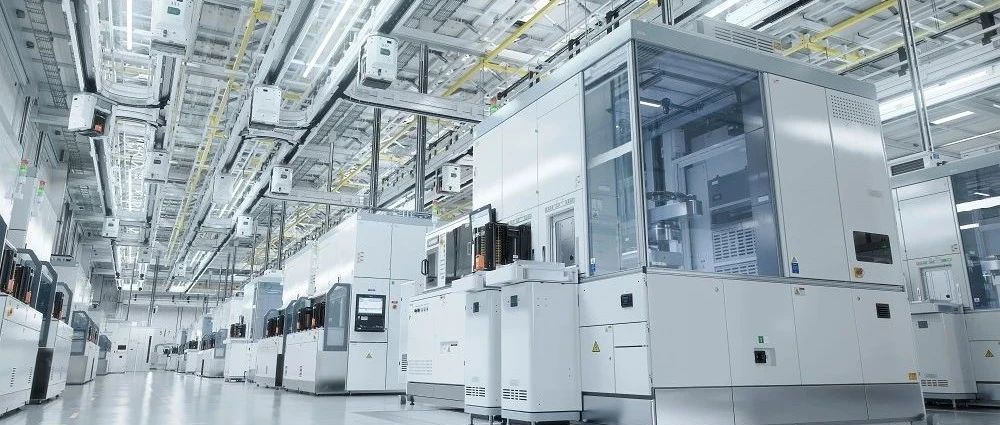
Core Insights - The article discusses advancements in EUV lithography technology by ASML, focusing on the efficiency and effectiveness of their systems in producing advanced chips for major companies like Nvidia, Apple, Samsung, and Intel [1][2][4]. Group 1: EUV Technology and Research - ASML has collaborated with Cymer for over 20 years to enhance EUV technology, which is crucial for producing high-performance chips with extremely fine patterns [1][2]. - ARCNL, established in collaboration with Amsterdam University, plays a significant role in researching the fundamental principles of lithography, with a budget of approximately €4 million annually [2][4]. - The primary challenge for ASML is the economic viability of their machines, which must generate profits for chip manufacturers to be marketable [4][5]. Group 2: Performance and Efficiency Improvements - The latest EUV systems can print lines with a spacing of 8 nanometers, but the rate of size reduction in chip components is slowing down, now at about 20% compared to historical rates of 70% [6][7]. - ASML is developing a new high numerical aperture (Hyper-NA) system that will improve imaging capabilities and speed, potentially allowing for clearer and faster printing of chip designs [7][8]. - The power output of EUV lithography machines is expected to increase from 500 watts to 1000 watts, significantly enhancing system efficiency [8][9]. Group 3: Optical System Enhancements - The optical systems in EUV machines are being improved to increase light utilization, with current systems reflecting about 70% of light, and efforts are underway to enhance this further [10][11]. - Research is ongoing to address issues such as bubble formation on EUV mirrors, which emerged after power increases, by adding new materials to the mirror coatings [11][12]. Group 4: Future Directions and Challenges - ASML is exploring shorter wavelengths for lithography, such as 6.7 nanometers, but faces challenges with lower reflectivity and increased error rates at these wavelengths [13][14]. - The company is also investigating alternative light sources, such as free electron lasers, but these present logistical challenges for integration into chip manufacturing environments [19][20]. - There is a growing interest from companies like Huawei in developing their own EUV lithography technology, which could impact ASML's market position [20].
EUV光刻机,要过七关
半导体行业观察· 2025-06-17 01:34
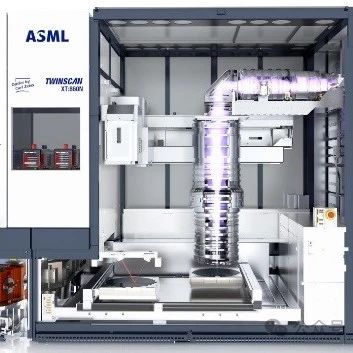
Core Viewpoint - The article discusses advancements in EUV lithography technology by ASML and its collaboration with ARCNL, focusing on improving efficiency and performance in chip manufacturing through innovative techniques and research [1][2][4]. Group 1: EUV Technology and Research - ASML's EUV lithography machines utilize crushed tin droplets to generate plasma, producing EUV light essential for high-performance chip manufacturing [1]. - ARCNL, established in collaboration with Amsterdam University, plays a crucial role in researching the fundamental principles of lithography, with a budget of approximately €4 million annually [2]. - The collaboration between ARCNL and ASML aims to enhance the economic viability of EUV technology, which is critical for the profitability of chip manufacturers [4][5]. Group 2: Challenges and Innovations - The pace of reducing chip component sizes is slowing, with current reductions around 20% compared to historical rates of 70% [6]. - ASML is developing high numerical aperture (High-NA) systems to improve imaging capabilities, with ongoing research into Hyper-NA technology that could enhance both clarity and speed [7]. - The power efficiency of EUV machines is expected to improve significantly, with plans to increase output power from 500 watts to 1000 watts, aiming for an 80% reduction in energy consumption per wafer by 2033 [8]. Group 3: Optical Systems and Materials - The optical systems in EUV machines face challenges with light absorption, necessitating improvements in reflective coatings to enhance output [11][12]. - Research is ongoing to develop shorter wavelengths for EUV light, with potential materials being explored to achieve better transparency and reflectivity [14][15]. Group 4: Future Directions and Alternatives - ASML is investigating alternative light sources, such as free electron lasers (FEL), but faces challenges in practical implementation within chip manufacturing environments [21][22]. - The article highlights the importance of collaboration and innovation in maintaining leadership in the semiconductor industry, particularly in the context of competition from countries like China [22].
Ten AI Stocks To Buy Now
Joseph Carlson After Hours· 2025-06-16 19:53
Welcome back everyone. Today on the Joseph Carlson show, we've had a busy week. Over the past weekend, we have had major conflicts break out in the world, macroeconomic concerns, oil prices changing, lots of attention-grabbing headlines, and very concerning things. But regardless of all of that, the market continues upwards, up 1%. Defying the expectation of many people that were concerned about this day, Monday, how would the markets open? We know that there's lots of concerns going on. We know that there' ...


半导体设备市场,风云突变
半导体芯闻· 2025-06-16 10:13
Core Viewpoint - The global semiconductor equipment market is projected to grow by 21% year-on-year in Q1 2025, reaching $32.05 billion, despite a 5% quarter-on-quarter decline, indicating resilience in the industry amidst geopolitical uncertainties and supply chain adjustments [1][35]. Regional Summaries China Mainland - In Q1 2025, the revenue from the Chinese mainland reached $10.26 billion, maintaining its position as the largest single market globally, but showing a 14% quarter-on-quarter and 18% year-on-year decline, reflecting a "double drop" trend [4][5]. - The market share of the Chinese mainland in the overall semiconductor equipment sales shrank from 47% in the same period last year to 32% [5]. South Korea - South Korea's semiconductor equipment market saw a robust performance in Q1 2025, with revenues of $7.69 billion, marking a 24% quarter-on-quarter and 48% year-on-year increase, driven by a recovery in memory chips and significant investments from major manufacturers [8][10]. - The Korean government has implemented the "K-Semiconductor Strategy," providing substantial tax incentives and subsidies to boost the industry [9]. Taiwan - Taiwan's semiconductor equipment market experienced a remarkable growth of 203% year-on-year in Q1 2025, reaching $7.09 billion, fueled by expansion plans from leading companies like TSMC and UMC [11][14]. - TSMC's advanced process development and capacity expansion significantly contributed to the surge in equipment demand, with a focus on cutting-edge technologies [11][12]. North America - North America's equipment market revenue reached $2.93 billion in Q1 2025, reflecting a 41% quarter-on-quarter decline but a 55% year-on-year increase, indicating a "pulse-like" expansion pattern influenced by concentrated procurement in the previous quarter [15][16]. - The CHIPS Act's funding and Intel's production ramp-up are expected to support continued growth in the region [16]. Japan - Japan's semiconductor equipment market saw a 20% year-on-year increase in Q1 2025, driven by government subsidies and capacity expansions, despite an 18% quarter-on-quarter decline due to seasonal fluctuations [18][19]. Europe - Europe's semiconductor equipment market faced a significant downturn, with a 54% year-on-year and 11% quarter-on-quarter decline, attributed to ineffective policy execution and reduced capital expenditures [20][21]. - The region's lack of competitive semiconductor manufacturing capabilities has exacerbated its market challenges, leading to a systemic decline in the industry [22][23]. Industry Trends - The semiconductor equipment market is undergoing structural changes, with high-end chip demand driven by AI applications maintaining price resilience, while mature process segments face oversupply issues [37][39]. - The overall industry is expected to enter an expansion phase in the latter half of 2025, supported by increased demand for advanced chips and a recovery in capacity utilization [38][39].



4 Reasons to Buy ASML Holding Stock Like There's No Tomorrow
The Motley Fool· 2025-06-14 08:50
Core Viewpoint - ASML is a crucial player in the semiconductor manufacturing industry, known for its advanced EUV lithography technology, which is essential for producing high-performance microchips at scale [2][3][6][9]. Group 1: Company Overview - ASML is a Dutch company that designs and builds complex equipment for the semiconductor manufacturing industry, serving major clients like Taiwan Semiconductor Manufacturing, Samsung, and Intel [3][4]. - The company holds over 20,000 active patents protecting its technology, ensuring a strong competitive edge against potential rivals [10][7]. Group 2: Market Demand - The demand for semiconductor chips is expected to grow significantly, driven by advancements in technology and applications such as AI, home automation, and healthcare, with the global microchip market projected to grow at an average annual rate of 10.7% through 2034 [11][12][13]. Group 3: Financial Performance - ASML has demonstrated reliable profitability, consistently earning enough to sustain operations without incurring debt, even during challenging periods [14]. - The company has a forward-looking dividend yield of 1% and has engaged in substantial stock buybacks, repurchasing over $27 billion worth of its own stock since 2020 [16][17]. Group 4: Investment Opportunity - ASML's stock is currently considered undervalued, trading 27% below its peak from last July, with analysts setting a consensus price target of $857, indicating a potential upside [18][19]. - Despite some volatility and inconsistent revenue growth, ASML is viewed as a reliable investment for those willing to endure short-term fluctuations for long-term gains in the technology sector [20][23].