ASML Holding(ASML)

Search documents
ASML的尴尬
是说芯语· 2025-06-14 07:13
Core Viewpoint - TSMC's decision to limit the purchase of ASML's new High-NA EUV lithography machines indicates a significant shift in the semiconductor industry, reflecting a broader trend of changing power dynamics and technological advancements that reduce reliance on high-cost equipment [1][2]. Group 1: TSMC's Position on High-NA EUV Machines - TSMC has only symbolically purchased one unit of ASML's new High-NA EUV lithography machine, which has sold only five units globally, indicating a lack of demand [1]. - TSMC executives stated that the 1.4nm chip process does not require High-NA EUV technology, as significant performance improvements have already been achieved without it [1][2]. - The high price of the High-NA EUV machine, at $400 million (approximately 3 billion RMB), is a major factor in TSMC's decision to delay its adoption [2]. Group 2: Industry Dynamics and Technological Advancements - The semiconductor industry is undergoing a major restructuring, with a consensus among international media that the era of high-price monopolies maintained by Western companies is ending [2]. - Chinese companies have made significant technological breakthroughs in areas such as 7nm chip manufacturing and SiC power devices, prompting foreign companies to reduce prices by 30% by 2025 to remain competitive [2]. - TSMC's technology team has achieved notable advancements, extending the lifespan of EUV lithography machines and improving the 1.4nm process performance by 15% or reducing power consumption by 25%-30% at the same frequency [2]. Group 3: EUV Lithography Technology Overview - ASML's EUV lithography machines are essential for manufacturing chips below 7nm, with ASML being the sole producer of these machines globally [2][4]. - The transition from Low NA EUV machines (0.33 NA) to High NA EUV machines (0.55 NA) is crucial for processes below 3nm, as the latter offers higher resolution and lower power consumption [3]. - ASML's EUV machines support advanced process nodes of 5nm and below, with a registration accuracy of ≤1.5nm, while domestic lithography machines lag behind in capabilities [4].


数据总结2024全球半导体产业园
半导体行业观察· 2025-06-14 03:09
Core Insights - The semiconductor industry is a cornerstone of modern technology and industry, significantly impacting economic, technological, and political domains [1] - Semiconductor advancements drive economic growth, with every $1 of semiconductor output generating over $10 in downstream economic benefits [1] - The industry is crucial for technological revolutions, powering key components in computers, smartphones, and communication devices [1] - Geopolitically, semiconductors are tools for power, with the U.S. implementing measures to maintain dominance in the global semiconductor value chain [1] Industry Overview - The semiconductor industry encompasses a complex ecosystem including EDA & IP, design companies, wafer foundries, packaging and testing, and equipment materials [2] EDA & IP - EDA (Electronic Design Automation) is essential for integrated circuit design, with a projected global market size of approximately $15 billion in 2024, supporting a semiconductor industry worth over $600 billion [3] - IP (Intellectual Property) includes pre-designed circuit modules, with a market size of $7.8 billion in 2024, where processor IP accounts for 47% [3] Market Growth - The global semiconductor market is expected to reach $655.9 billion in 2024, a 21% increase from 2023, driven by AI infrastructure and storage chip demand [5] Fabless Companies - Fabless companies focus on chip design and IP development, outsourcing manufacturing to foundries, with a projected market size of $215 billion in 2024, accounting for 32.9% of the IC industry [6] - Key global fabless companies include NVIDIA, Qualcomm, Broadcom, AMD, and MediaTek, with revenues of $124.3 billion, $34.9 billion, $30.6 billion, $25.8 billion, and $16.5 billion respectively in 2024 [8] Foundry Sector - Foundries specialize in chip manufacturing, with the top five global foundries including TSMC, Samsung, SMIC, UMC, and GlobalFoundries, generating revenues of $106.8 billion, $21.2 billion, $8 billion, $7.6 billion, and $6.75 billion respectively in 2024 [12] Packaging & Testing - The packaging and testing segment is crucial for ensuring chip reliability, with top companies like ASE, Amkor, JCET, TFMC, and PTI generating revenues of $18.54 billion, $6.32 billion, $5 billion, $3.32 billion, and $2.28 billion respectively in 2024 [16] Equipment & Materials - Semiconductor equipment and materials are foundational to the industry, with a global equipment market size exceeding $250 billion in 2024, and materials accounting for approximately 32.9% of the market [19] - Leading equipment companies include ASML, Applied Materials, Lam Research, Tokyo Electron, and KLA, with revenues of $30.5 billion, $26.5 billion, $17 billion, $12 billion, and $10.9 billion respectively in 2024 [20]


数据总结2024全球半导体产业园
半导体行业观察· 2025-06-14 03:05
Core Insights - The semiconductor industry is a cornerstone of modern technology and industry, significantly impacting economic, technological, and political domains [1][2]. Economic Impact - Semiconductors are central to the information industry and are strongly correlated with global GDP growth, with every $1 of semiconductor output generating over $10 in downstream economic benefits [2]. - The industry has seen substantial revenue growth, driving economic progress and creating vast employment opportunities [2]. Technological Significance - Semiconductors are the driving force behind the information technology revolution, essential for key components like CPUs, GPUs, and communication devices [2]. - They enhance production efficiency and intelligence across various sectors, including industrial automation, energy, and automotive [2]. Political Dynamics - The semiconductor sector has become a critical tool in geopolitical strategies, with the U.S. implementing measures like the CHIPS and Science Act and export controls to maintain its dominance in the global semiconductor value chain [2]. - These actions have led to shifts in the global semiconductor supply chain and prompted other nations to intensify their focus on semiconductor development [2]. Industry Structure - The semiconductor industry operates as a complex ecosystem, including EDA & IP, design companies, wafer foundries, packaging and testing, and equipment materials [3][4]. - EDA (Electronic Design Automation) is projected to reach a market size of approximately $15 billion in 2024, supporting a semiconductor industry worth over $600 billion [4]. - The global semiconductor market is expected to grow to $655.9 billion in 2024, a 21% increase from 2023, with AI infrastructure and storage chip demand driving this growth [6]. Fabless Companies - Fabless companies focus on chip design and IP development while outsourcing manufacturing to foundries, significantly reducing capital investment and allowing for rapid market response [9][10]. - The global fabless market is projected to reach $215 billion in 2024, accounting for 32.9% of total IC industry revenue [9]. Foundry Operations - Foundries specialize in the physical production of chips, significantly lowering industry entry barriers and fostering global innovation [13][14]. - TSMC is the leading foundry with projected revenues of $106.8 billion in 2024, followed by Samsung and SMIC [16][19]. Packaging and Testing - The packaging and testing segment is crucial for ensuring chip reliability and performance, with major players like ASE and Amkor leading the market [20][21]. Equipment and Materials - Semiconductor equipment and materials are foundational to the industry, with a global equipment market size exceeding $250 billion in 2024 [22][24]. - The top equipment companies include ASML, Applied Materials, and Lam Research, with ASML being the sole supplier of EUV lithography machines for advanced processes [24].
Will Logic and Memory Growth Help ASML Meet 30-35B Euro Sales Target?
ZACKS· 2025-06-12 15:35
Group 1: Company Performance - ASML Holding reported net sales of €7.74 billion for Q1 fiscal 2025, reflecting a year-over-year increase of 46.4% and aligning with management's guidance of €7.5-€8 billion [1][10] - The company reaffirmed its full-year revenue outlook of €30 billion to €35 billion, indicating a potential year-over-year growth of 15% at the mid-point [1] - Bookings for the first quarter totaled €3.9 billion, with 60% from logic customers and 40% from memory, showcasing strong demand in both segments [2][10] Group 2: Technology Advancements - All NXE:3800E systems are now fully operational, supporting 220 wafers per hour, which is crucial for high-volume manufacturing in logic and memory applications [3] - ASML has shipped its fifth and final NXE:5000 system and plans to begin shipments of the NXE:5200 from Q2 2025, indicating progress in High NA EUV technology [4][10] - The adoption of EUV and High NA technologies is expected to enhance customer confidence and drive growth momentum in the near term [5] Group 3: Competitive Landscape - Applied Materials anticipates over 40% growth in DRAM revenues for fiscal 2025, driven by increased adoption of advanced etch systems [6] - Lam Research reported record foundry revenues, supported by demand for advanced packaging and DRAM technologies [7] Group 4: Valuation and Estimates - ASML trades at a forward price-to-sales ratio of 8.05X, which is higher than the industry average of 7.5X [11] - The Zacks Consensus Estimate for ASML's fiscal 2025 earnings implies a year-over-year growth of 30.45%, while fiscal 2026 estimates suggest a growth of 13.58% [14]
半导体设备:光刻机及三大核心部件分析报告
材料汇· 2025-06-12 12:58
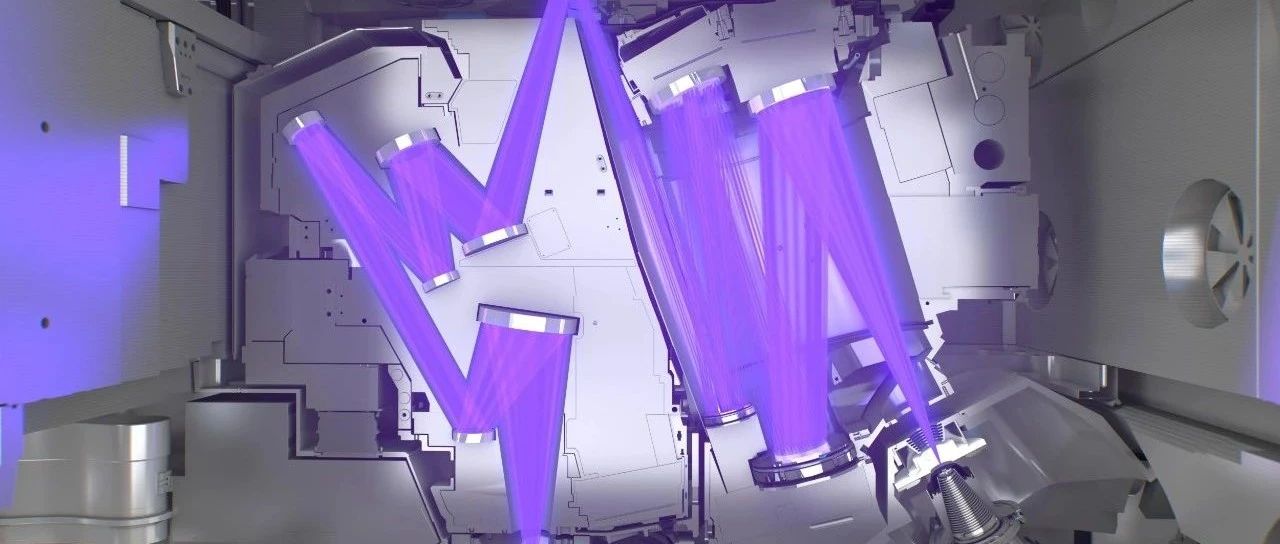
Group 1 - The core viewpoint of the article emphasizes that lithography machines are the most critical equipment in wafer manufacturing, with the highest technical difficulty and currently the lowest domestic production rate [2][7][31] - Lithography machines are the cornerstone for sustaining the "Moore's Law" in the semiconductor industry, with advancements in lithography technology being essential for increasing chip integration and performance [7][11] - The global lithography machine market is dominated by a few players, with ASML holding a 61.2% market share in 2024, particularly as the sole supplier of EUV lithography machines [19][22][27] Group 2 - The optical system is identified as the most critical component of lithography machines, with Carl Zeiss being the exclusive supplier of optical components for ASML [36][40] - The global market for lithography optical components is estimated to be $3.5 billion, with Zeiss holding a dominant position [36][44] - Domestic production of optical components has made progress, but significant gaps remain compared to Zeiss, particularly in terms of surface accuracy and quality [58][60] Group 3 - The light source and dual-stage systems are also crucial components that significantly impact the efficiency of lithography machines, with the wavelength of the light source being a key determinant of the machine's processing capability [4][60] - The main light sources have evolved from g-line (436nm) and i-line (365nm) to KrF (248nm), ArF (193nm), and now to EUV (13.5nm) [60][61] Group 4 - Domestic supply chain companies are making efforts to overcome challenges, with significant advancements expected in the high-end lithography machine sector [4][32] - The Chinese market has a high demand for lithography machines, with ASML being the largest customer, and the revenue from China is projected to grow from 29% in 2023 to 41% in 2024 due to increased production capacity [27][30]
阿斯麦CEO怒怼特朗普:芯片禁令搞垮自己,美国这招是在帮中国
Sou Hu Cai Jing· 2025-06-12 09:03
Core Viewpoint - The CEO of ASML, Peter Wennink, expressed strong dissatisfaction with the U.S. export restrictions, stating that these measures not only harm ASML's business but also push China to become a leader in lithography technology [1][3]. Group 1: Impact of U.S. Export Restrictions - The U.S. export ban has disrupted decades of established supply chains, particularly affecting sectors like AI that rely on global collaboration [4]. - The restrictions are forcing China to accelerate its technological advancements, which could threaten ASML's market position in the future [4][6]. - Wennink criticized the U.S. policy as foolish, highlighting that it inadvertently provides China with an opportunity to enhance its capabilities [4][8]. Group 2: Financial Implications for ASML - ASML reported a revenue of $32.3 billion last year, but its stock price has dropped by 25% over the past year due to geopolitical tensions and export restrictions [6]. - The potential imposition of tariffs by the U.S. has raised production costs for chip manufacturing, making it less attractive for companies to establish operations in the U.S. [6]. Group 3: ASML's Response and Industry Dynamics - ASML has formed lobbying teams in Washington, Brussels, and The Hague to advocate for the protection of the semiconductor industry and to maintain trade relations with China [6]. - Other industry leaders, such as NVIDIA's CEO Jensen Huang, have echoed similar sentiments, stating that U.S. export controls are fundamentally flawed and could lead to a technological dominance shift towards China [6][8]. Group 4: China's Strategic Approach - In response to U.S. restrictions, China is pursuing a dual strategy of self-research and continued global collaboration in semiconductor technology [8]. - Chinese companies like SMIC and Huawei are investing heavily in lithography technology, showing visible progress despite the challenges [8].
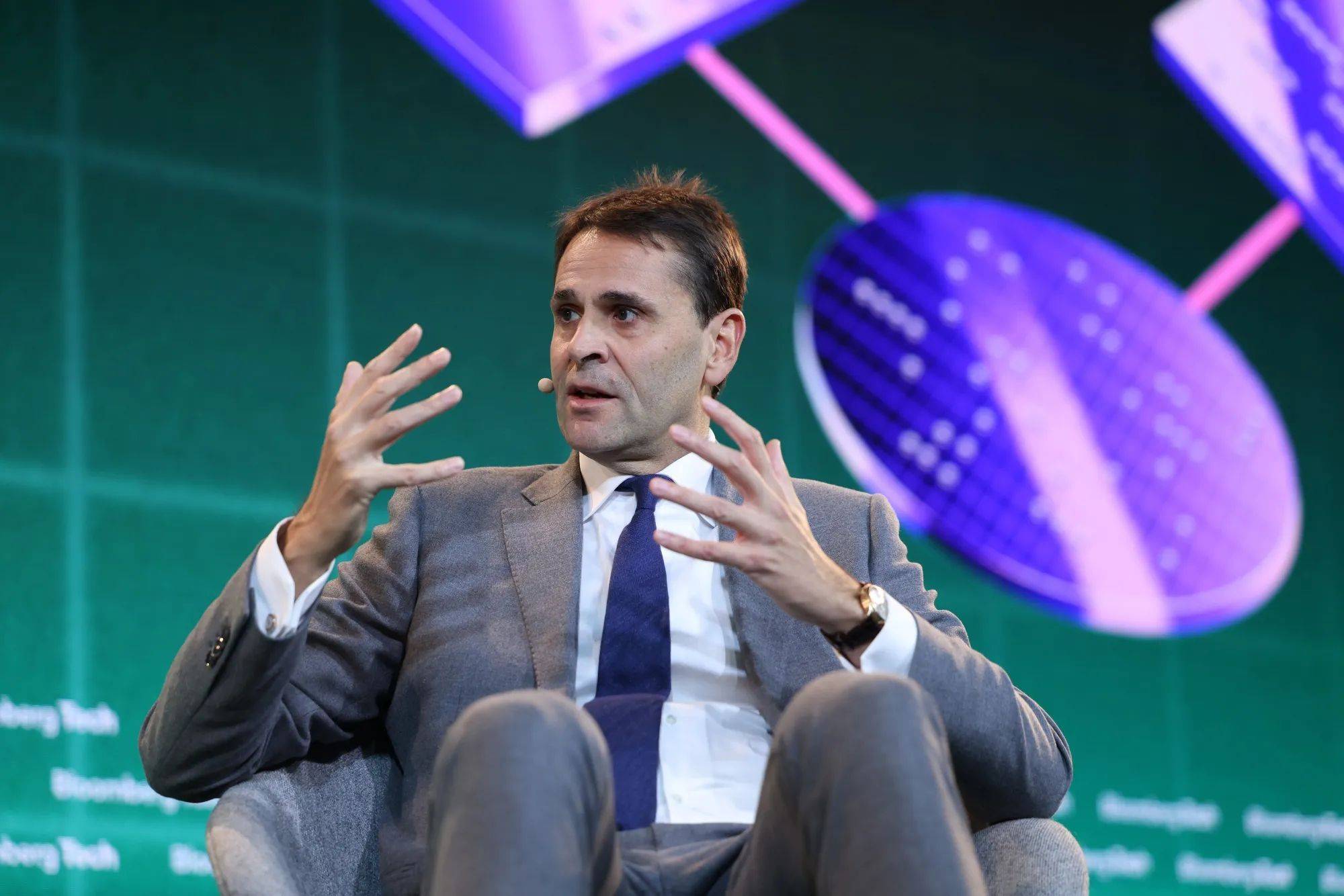
ASML's new $400 million chip machine
CNBC· 2025-06-11 16:00
We're here at ASML's headquarters in the Netherlands where 100% of the world's extreme ultraviolet lithography machines are made and now the next generation machines called hyena. We were the first journalists to bring cameras inside a clean room to see where hyena is made and to see the machine itself. We had to wear these bunny suits to protect these extremely precise machines from getting contaminated by our own hair and skin cells.Each one of these insanely complex high NA machines costs about $400 mill ...

2 semiconductor ETFs to buy and hold forever
Finbold· 2025-06-11 11:07
Group 1 - The semiconductor sector is experiencing a resurgence, with stocks like Nvidia rallying as part of a broader recovery in early 2024 [1] - Recent optimism in the sector is attributed to the conclusion of key trade negotiations between the United States and China, potentially easing restrictions on semiconductor exports [1] - Investors are looking at exchange-traded funds (ETFs) as a timely opportunity to gain exposure to the semiconductor industry, particularly in relation to artificial intelligence [2] Group 2 - The iShares Semiconductor ETF (SOXX) tracks the ICE Semiconductor Index and includes major U.S.-listed chipmakers such as Nvidia, Broadcom, and AMD, offering a balanced blend of growth and stability [2][3] - Year-to-date, SOXX has gained nearly 5%, closing at $227.32 [3] - The VanEck Semiconductor ETF (SMH) provides targeted exposure to global semiconductor leaders, including Nvidia, TSMC, and ASML, appealing to growth-oriented investors [4][6] - As of the latest trading session, SMH is priced at $262.07, up nearly 2% in the last 24 hours and more than 7% year-to-date [6] - Both ETFs are well-positioned to capitalize on evolving demands in the AI-driven semiconductor space due to their diverse nature [7]
ASML's AI Edge: How Its EUV Tech Is Creating a New Monopoly
MarketBeat· 2025-06-10 14:21
Core Viewpoint - The semiconductor industry is experiencing a significant transformation driven by artificial intelligence (AI), creating a competitive landscape where ASML stands out as a foundational investment due to its unique technology and market position [2][8]. Group 1: Company Overview - ASML Holding N.V. is a Dutch company that specializes in manufacturing the essential machines required for advanced chip production, specifically through its exclusive Extreme Ultraviolet (EUV) lithography technology [2][3]. - The company has a current stock price of $783.48, with a price target of $906.00, indicating a potential upside of 17.63% based on analyst ratings [1][6]. Group 2: Technology and Market Position - ASML is the only company globally that has successfully commercialized EUV lithography systems, granting it a monopoly on a critical tool for advanced chip manufacturing [4][8]. - The complexity of EUV technology involves firing a high-power laser at molten tin droplets to create EUV light, which is essential for producing smaller and more complex transistors needed for AI applications [5][6]. Group 3: Financial Performance - In Q1 2025, ASML reported net sales of €7.7 billion (approximately $8.798 billion) and a gross margin of 54.0%, reflecting strong demand and significant pricing power [10]. - The company secured €3.9 billion (approximately $4.456 billion) in net bookings during the same quarter, indicating a solid backlog and predictability for future revenue [10]. Group 4: Shareholder Returns - ASML approved a total dividend of €6.40 ($7.10) per share for the 2024 financial year, marking a 4.9% increase from the previous year, demonstrating confidence in cash flow and commitment to shareholder returns [10]. - The company has authorization to repurchase up to 10% of its issued share capital through October 2026, providing a mechanism to return value to investors [10].

4 Stocks to Watch on Steady Growth in Semiconductor Sales
ZACKS· 2025-06-10 13:35
Industry Overview - Semiconductor sales have shown steady growth, driven by optimism around artificial intelligence (AI), particularly generative AI, with robust demand from various industries significantly boosting revenues [1][3] - Global chip sales increased by 2.5% sequentially in April, reaching $57 billion, and year-over-year sales jumped 22.7%, marking the 11th consecutive month of growth above 17% [3][4] - The Semiconductor Industry Association (SIA) forecasts continued double-digit growth in 2025, supported by strong demand for chips in data centers and the memory chip market [6] Financial Performance - In 2024, global semiconductor sales reached $627.6 billion, a 19.1% increase from $526.8 billion in 2023, with the final quarter of 2024 alone seeing $170.9 billion in sales, up 17.1% year-over-year [5] - Advanced Energy Industries, Inc. (AEIS) leads peers with a projected earnings growth of 39.1% and a 10% rise in earnings estimates over the past 60 days [8][15] Company Highlights - Taiwan Semiconductor Manufacturing Company Limited (TSM) is the world's largest dedicated integrated circuit foundry, with an expected earnings growth rate of 30.5% for the current year [7][9] - Texas Instruments (TXN) has an expected earnings growth rate of 6.7% for next year, with a 3.5% improvement in current-year earnings estimates over the past 60 days [10][11] - ASML Holding N.V. is a leader in advanced technology systems for the semiconductor industry, with an expected earnings growth rate of 30.5% for the current year [12][13] - Advanced Energy Industries, Inc. focuses on power subsystems and process-control technologies for the semiconductor industry, with an expected earnings growth rate of 39.1% [14][15]