
BHP(BHP)

Search documents
Market Open: ASX outage hurts 80 companies as bourse struggles in arvo trade
The Market Online· 2025-12-01 03:39
Core Points - The ASX experienced a significant outage affecting around eighty companies, including Metcash and Ovanti Limited, disrupting their planned newsflow [2][3] - The ASX's performance was negatively impacted, with the XJO index down 0.4% during trading [3] - Energy and materials sectors showed slight gains, while healthcare lagged, particularly CSL Ltd and Sigma Healthcare [4] - Unico Silver and other silver miners saw price increases due to rising silver and gold prices, indicating potential bullish trends [4] - Woodside Energy's shares rose over 1.2% due to stronger oil prices, while BHP Group increased nearly 1% amid iron ore futures uptick [5] - Treasury Wine Estates faced a decline after announcing an impairment in its US business, compounded by weak sales in China [5] - AUB Group's shares plummeted nearly 20% after a key takeover partner withdrew, causing discontent among shareholders [6] - Digico Infrastructure REIT and HMC Capital also fell as interest in data center stocks waned following previous spending boom reports [6]



投行Jefferies:矿业股跑赢大盘 因投资者关注美联储降息
Sou Hu Cai Jing· 2025-12-01 00:28
Jefferies分析师报告称,矿业"重获青睐"。过去一周,矿业公司股票大幅跑赢大盘,因投资者押注美联 储将在即将召开的会议上降息。Jefferies的分析师表示:"这可能是2026年将要发生的事情的预演,因为 美联储主席鲍威尔的继任者可能会支持更大幅度的降息。"他们表示,此举将成为矿商的看涨驱动因 素,因为降息往往会支持经济增长。这些分析师表示,过去一个月,买方对矿商的平均预期出现了"重 大的积极转变"。在悉尼市场,必和必拓和力拓分别上涨0.9%和0.3%。 ...

铁矿石周报 2025/11/29:铁水小幅下滑,矿价区间内运行-20251129
Wu Kuang Qi Huo· 2025-11-29 11:56
1. Report Industry Investment Rating No relevant content provided. 2. Core View of the Report - The overall inventory of iron ore remains high, but due to limited availability of some resources, structural contradictions still exist, providing some support for spot prices. - In November, there were no significant macro - events. Starting from December, the macro - impact is expected to gradually increase. - Overall, iron ore prices are expected to move within an oscillatory range [11][13][14]. 3. Summary According to the Table of Contents 3.1 Week - on - Week Assessment and Strategy Recommendation - **Supply**: The total global iron ore shipment volume was 32.784 million tons, a week - on - week decrease of 2.38 million tons. The total shipment volume from Australia and Brazil was 26.374 million tons, a decrease of 2.713 million tons. Australia's shipment volume was 18.396 million tons, a decrease of 2.109 million tons, and the volume shipped from Australia to China was 15.536 million tons, a decrease of 3.194 million tons. Brazil's shipment volume was 7.978 million tons, a decrease of 0.604 million tons. The total arrival volume at 47 Chinese ports was 29.395 million tons, an increase of 5.696 million tons; the total arrival volume at 45 Chinese ports was 28.171 million tons, an increase of 5.482 million tons [11][13]. - **Demand**: The daily average pig iron output was 2.3468 million tons, a decrease of 0.016 million tons from the previous week. The blast furnace iron - making capacity utilization rate was 87.98%, a decrease of 0.60 percentage points from the previous week; the steel mill profitability rate was 35.06%, a decrease of 2.60 percentage points from the previous week [11][13]. - **Inventory**: The total inventory of imported iron ore at 47 ports across the country was 159.0122 million tons, an increase of 1.6637 million tons; the daily average port clearance volume was 3.4406 million tons, an increase of 0.0067 million tons [11][13]. 3.2 Futures and Spot Market - **Price Spread**: The PB - Super Special powder price spread was 111 yuan/ton, a week - on - week change of - 3.0 yuan/ton. The Carajás fines - PB powder price spread was 91 yuan/ton, a change of - 4.0 yuan/ton. The Carajás fines - Jinbuba powder price spread was 147 yuan/ton, a change of - 1.0 yuan/ton. The ((Carajás fines + Super Special powder)/2 - PB powder) price spread was - 10.0 yuan/ton, a change of - 0.5 yuan/ton [17][19][22]. - **Feed Ratio and Scrap Steel**: The pellet feed ratio was 14.52%, a change of - 0.03 percentage points from the previous period. The lump ore feed ratio was 12.22%, a change of - 0.23 percentage points. The sinter feed ratio was 73.27%, a change of + 0.27 percentage points. The price of scrap steel in Tangshan was 2145 yuan/ton, a week - on - week change of - 10 yuan/ton. The price of scrap steel in Zhangjiagang was 2080 yuan/ton, a change of - 50 yuan/ton [23][25]. - **Profit**: The steel mill profitability rate was 35.06%, a change of - 2.6 percentage points from the previous week; the import profit of PB powder according to the Steel Union's data was - 8.18 yuan/wet ton [26][28]. 3.3 Inventory - The inventory of imported iron ore at 45 ports across the country was 152.1012 million tons, a week - on - week change of + 1.5547 million tons. The pellet inventory was 302,350 tons, a change of + 91,800 tons. The iron concentrate powder inventory at ports was 1.28443 million tons, a change of + 360,000 tons. The lump ore inventory at ports was 1.97937 million tons, a change of + 163,300 tons. The Australian ore port inventory was 63.0746 million tons, a change of + 0.8122 million tons. The Brazilian ore port inventory was 59.8703 million tons, a change of - 0.1998 million tons. The inventory of imported iron ore at 247 steel mills this week was 8.94248 million tons, a change of - 0.05875 million tons from the previous week [32][35][45]. 3.4 Supply Side - **Overseas Shipments**: The latest shipment volume from Australia to China through 19 ports was 15.27 million tons, a week - on - week change of - 2.851 million tons. Brazil's shipment volume was 7.931 million tons, a change of - 0.548 million tons. Rio Tinto's shipment volume to China was 4.975 million tons, a week - on - week decrease of 0.497 million tons. BHP Billiton's shipment volume to China was 4.445 million tons, a decrease of 1.045 million tons. Vale's shipment volume was 5.462 million tons, a decrease of 1.254 million tons. FMG's shipment volume to China was 4.002 million tons, a decrease of 0.184 million tons [47][50][53]. - **Arrival and Import**: The latest arrival volume at 45 ports was 28.171 million tons, a week - on - week increase of 5.482 million tons. In October, China's non - Australian and non - Brazilian iron ore imports were 19.8492 million tons, a month - on - month increase of 1.2656 million tons [47][59]. - **Domestic Mines**: The latest domestic mine capacity utilization rate was 60.77%, a change of - 0.02 percentage points. The daily average output of iron concentrate powder from domestic mines was 474,800 tons, a change of - 20,000 tons [47][65]. 3.5 Demand Side - The daily average pig iron output in China was 2.3468 million tons, a decrease of 0.016 million tons from the previous week. The blast furnace capacity utilization rate was 87.98%, a decrease of 0.60 percentage points from the previous week. The daily average port clearance volume of iron ore at 45 ports was 3.3058 million tons, a week - on - week change of + 0.0066 million tons. The daily consumption of imported iron ore at 247 steel mills was 2.8943 million tons, a week - on - week change of - 0.0225 million tons [67][70][73]. 3.6 Basis - As of November 28, the calculated basis of iron ore BRBF was 44.83 yuan/ton, and the basis rate was 5.34% [75][78].

Nickel Miners News For The Month Of November 2025
Seeking Alpha· 2025-11-28 15:38
Group 1 - The Trend Investing group focuses on trending and emerging themes in the financial markets, particularly in electric vehicles, EV metals supply chain, stationary energy storage, and AI [2] - The service offers features such as access to a portfolio, monthly news updates, macro trends updates, stock watchlists, CEO interviews, and community interaction [2] - The analysts involved have extensive experience, with over 20 years in financial markets and qualifications in Applied Finance and Investment [2] Group 2 - The article emphasizes the importance of conducting personal research and making independent investment decisions [4] - It clarifies that past performance does not guarantee future results and that the views expressed may not reflect the overall stance of Seeking Alpha [5]
Investor Pulse - Copper’s Multi-Year Opportunity Taking Shape on the ASX
Small Caps· 2025-11-27 21:36
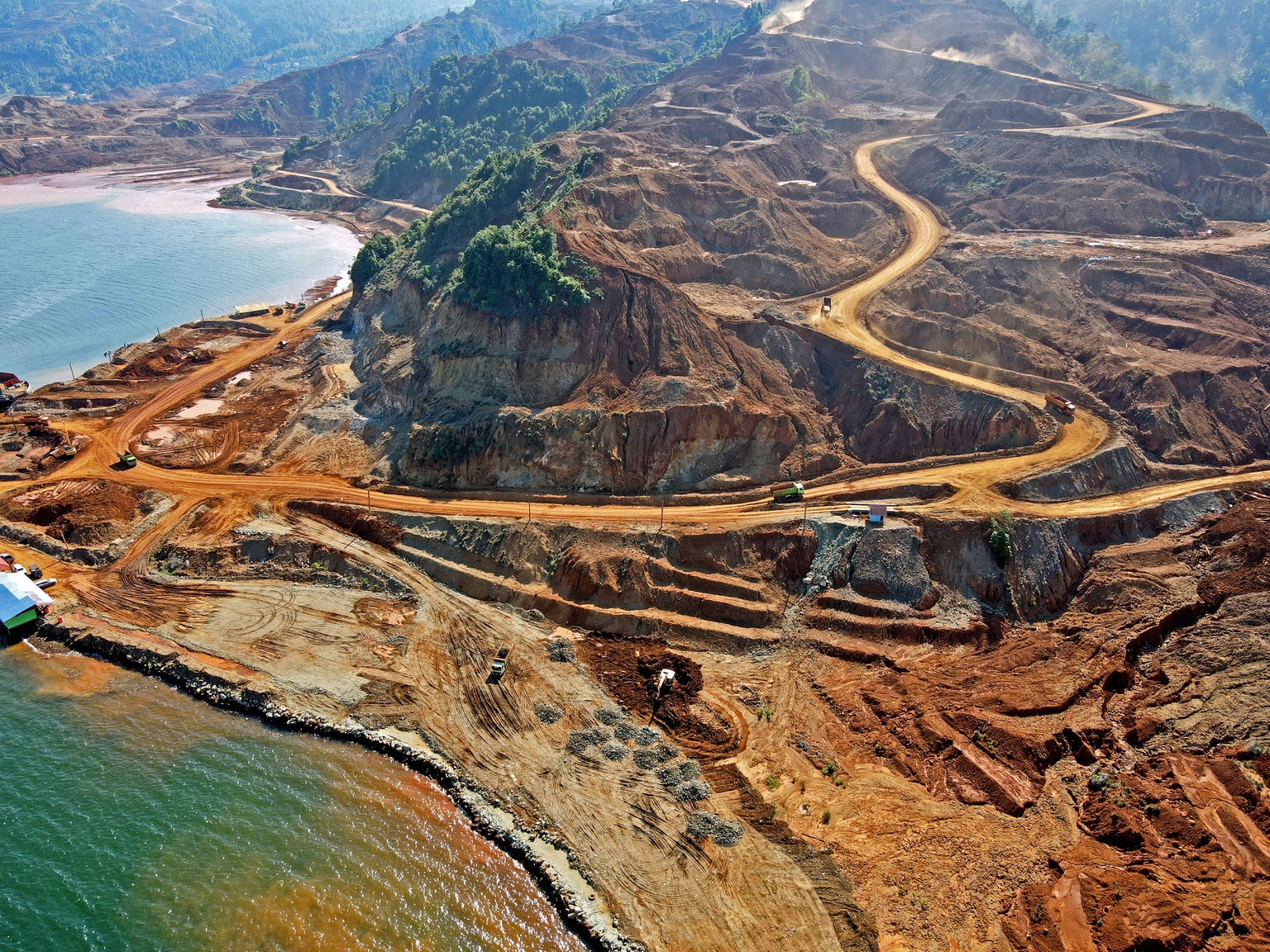
Industry Overview - The global copper market is entering a new era characterized by structural tightness due to supply constraints and surging demand from electrification and renewables, creating a compelling medium-to-long-term investment window [1][2] - Supply is tightening with production growth expected to be muted at 1.2% in 2025 and 2.2% in 2026, which is insufficient to meet global demand [3] - The deficit outlook indicates a shortfall of around 230,000 tonnes in 2025, increasing to over 400,000 tonnes in 2026, highlighting the fragility of the supply chain [4] Demand Dynamics - Demand for copper is accelerating across various sectors, including electrification, grid renewal, renewable energy expansion, and data-center infrastructure, with electric vehicles requiring significantly more copper than traditional vehicles [5][8] - Demand is projected to expand by 2.8% in both 2025 and 2026, supported by AI-driven power infrastructure and faster EV adoption, indicating a robust consumption profile [8] Pricing and Market Sentiment - The price trajectory suggests a market struggling to find balance, with forecasts indicating copper prices could reach approximately $13,000 per tonne by late 2026 [9][11] - The current environment is viewed as the early stages of a longer repricing cycle, necessitating structurally higher prices to incentivize capital commitments for rebuilding global supply [11] Investment Opportunities in Australia - Australia is emerging as a prime destination for investors due to its stable regulatory environment and high-quality ASX-listed producers, offering both stability and upside potential [2][12] - The ASX-listed copper stocks are well-positioned to benefit from the structural shift in the copper market, with companies identified that combine balance sheet resilience and strong operating leverage [14] Key ASX-listed Companies - **BHP Group (ASX: BHP)**: The world's largest copper miner, providing stability through diversification across various commodities and maintaining financial strength amid market fluctuations [16][18] - **Sandfire Resources (ASX: SFR)**: A mid-to-large-cap producer with a market value of approximately $7.52 billion, positioned to capture elevated margins as supply deficits deepen [23][25] - **Aeris Resources (ASX: AIS)**: A high-growth mid-tier company with a clear expansion pathway and strong price momentum, expected to benefit from the widening structural copper deficit [27][29] - **Develop Global (ASX: DVP)**: Focused on the Sulphur Springs project, showcasing strong financial metrics and a stable regulatory environment, making it a compelling investment proposition [31][34] - **Hot Chili (ASX: HCH)**: Advancing the Costa Fuego project in Chile, with strategic advantages in resource consolidation and logistical achievements, enhancing operational certainty [36][37] Conclusion - The copper market is transitioning from a cyclical commodity to a long-duration strategic asset, with structural constraints on supply and intensifying demand, presenting significant investment opportunities for those positioned early in this shift [39]

铁矿石争夺战,价格波动剧烈,投资机会全掌握
Sou Hu Cai Jing· 2025-11-27 07:44
Core Viewpoint - The article discusses the evolving dynamics of the iron ore market, highlighting China's increasing influence and strategic maneuvers in securing pricing power and supply sources, moving from a passive buyer to an active player in the global market [1][13]. Group 1: Historical Context - In 2003, China's imports of Australian iron ore surged, displacing domestic low-grade ore due to the attractiveness of high-grade 62% ore [1]. - From 2004 to 2005, major companies raised prices, forcing Chinese steel mills to accept high costs, leading to chaotic market conditions with rampant bribery and insider trading [3]. - The 2008 financial crisis caused a significant drop in spot prices, intensifying internal conflicts within the industry and prompting the Chinese government to seek changes in pricing mechanisms [3][5]. Group 2: Market Changes and Strategies - After the collapse of long-term contracts, pricing began to align with the Platts index, creating a less transparent pricing mechanism for Chinese buyers [6]. - Between 2010 and 2024, China's steel production continued to grow, with iron ore consumption projected at 1.956 billion tons in 2024, of which 1.237 billion tons will be imported, with Australia supplying 743 million tons [6]. - China aims to increase its equity mines to over 20% by 2025, with significant investments in overseas projects, particularly in Africa and South America, exemplified by the Simandou project in Guinea [8][10]. Group 3: Recent Developments - China's import structure is shifting, with Australia's share of exports to China decreasing from 60% to 45%, enhancing China's bargaining power [11]. - In late 2023, China initiated negotiations for pricing in RMB, leading to major Australian miners like BHP agreeing to RMB settlements, which could reshape global iron ore trade practices [11][13]. - By the end of 2025, it is anticipated that around 70% of iron ore trade will involve RMB settlements, significantly increasing China's influence over pricing and trade terms [13].

Asian Markets Mostly Higher
RTTNews· 2025-11-27 03:09
Market Overview - Asian stock markets are mostly higher, driven by positive cues from Wall Street and optimism regarding interest rates following dovish comments from US Fed officials [1][2] - The Nikkei 225 Index in Japan is trading sharply higher, with gains across most sectors, particularly in technology and financial stocks [9][10] Interest Rate Outlook - Recent comments from New York Fed President John Williams and other Fed officials suggest a preference for lowering interest rates, with an 84.7% chance of a 25-basis-point cut at the Federal Reserve's December meeting, up from 30.1% a week ago [2][3] - Investor confidence is bolstered by speculation that Kevin Hassett, who supports lower interest rates, may become the next U.S. Fed Chair [3] Australian Market Performance - The S&P/ASX 200 Index is gaining, with a rise of 15.80 points or 0.18% to 8,622.30, following three sessions of gains [5] - The value of new private capital expenditure in Australia increased by a seasonally adjusted 6.4% in Q3 2025, reaching A$48.999 billion, surpassing forecasts [8] Sector Performance - In the Australian market, gold miners are performing well, with Evolution Mining gaining over 2% and Northern Star Resources up more than 1% [7] - Technology stocks in Australia are also seeing gains, with Afterpay owner Block up more than 2% and Zip surging over 5% [6] Japanese Market Highlights - The Nikkei 225 closed the morning session at 50,203.38, up 644.31 points or 1.30%, with major gains in technology stocks like Advantest and Screen Holdings [10][11] - Market heavyweight SoftBank Group is surging more than 6%, contributing to the overall positive sentiment in the Japanese market [10] Broader Asian Market Trends - South Korea's market is up 1.2%, while other Asian markets like China, Hong Kong, Singapore, and Taiwan are higher by 0.2% to 0.7% [13] - The major averages on Wall Street closed higher for the fourth consecutive session, indicating a continued upward trend [14]

BHP Group Stock: Making A Long-Term Bet On The Developing World (NYSE:BHP)
Seeking Alpha· 2025-11-27 01:23
Group 1 - BHP Group is well-positioned to benefit from global industrialization and infrastructure expansion [1] - The company is producing a broad range of crucial commodities that will be needed in growing volumes around the world [1]

BHP Group: Making A Long-Term Bet On The Developing World
Seeking Alpha· 2025-11-27 01:23
Core Viewpoint - BHP Group is strategically positioned to capitalize on global industrialization and infrastructure expansion, producing essential commodities that will see increased demand worldwide [1] Group 1: Company Positioning - BHP Group is producing a diverse range of crucial commodities necessary for global growth [1]
World’s biggest miner BHP tried to stop $60B Anglo-Teck deal — and failed. Here’s why
The Economic Times· 2025-11-25 09:27
Core Viewpoint - BHP Group's last-minute proposal to acquire Anglo American Plc aimed to prevent Anglo from completing its $60 billion merger with Teck Resources, but the bid was quickly withdrawn, raising questions about BHP's strategy and confidence in its copper growth plans [21][22][40]. Group 1: BHP's Acquisition Attempt - BHP's bid was seen as a last-chance effort to negotiate a friendly deal for coveted copper mines, particularly Anglo's South American operations, which are highly regarded in the industry [5][39]. - The offer included a premium to Anglo's current share price, valuing shares at comfortably above £30 compared to a closing price of £27.36 [27][36]. - BHP's proposal was simpler than a previous bid that required Anglo to partially break itself up, which had been rejected as overly complex [28][39]. Group 2: Market Reactions and Implications - The rapid reversal of BHP's bid has left investors and analysts questioning the company's confidence in its standalone growth plans for copper, a metal increasingly critical for global governments [22][40]. - Some investors praised BHP for walking away from the deal rather than risking overpayment, highlighting the challenges of mergers and acquisitions in the current copper market environment [20][41]. - The ongoing conflict between BHP's dependence on iron ore and its relationship with China adds complexity to any potential stock deal, making the acquisition landscape challenging [37][41]. Group 3: Future Considerations - BHP has significant copper growth options, including new mines in Australia and Argentina, but these projects are costly and may not offset short-term production declines [34][39]. - The Anglo and Teck merger is set for a shareholder vote on December 9, which could complicate future acquisition attempts for BHP [25][39]. - Investors are left speculating about the terms of BHP's offer, as the company is now restricted from making another bid for six months under UK takeover rules [35][41].
