BMW(BMWYY)

Search documents
全球能源循环计划亮相慕尼黑车展,宁德时代、奔驰、宝马共同参与
Huan Qiu Wang· 2025-09-11 03:26
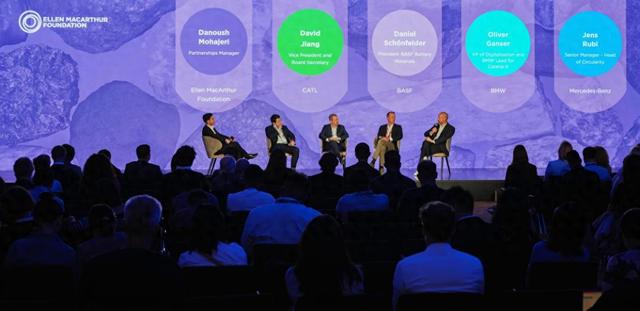
Group 1 - The forum focused on the "path to achieving a circular battery value chain" and "policy and financial collaboration to promote a circular economy" [1][3] - CATL's Vice President emphasized the need for the entire industry to be "born for recycling," highlighting that achieving a battery circular economy is a systematic project requiring a collaborative network and knowledge sharing [1][3] - Mercedes-Benz's circular economy head stressed the importance of understanding cooperation mechanisms within the entire supply chain and value chain, particularly in quality responsibility and localization strategies [3] Group 2 - Participants discussed the significance of digital tools like battery passports and the Catena-X project for enhancing supply chain transparency and traceability, which are essential for efficient recycling and repurposing [3] - Key design principles for promoting battery pack circularity and the selection of chemical materials affecting recycling rates were also key topics of discussion, leading to a broad consensus on establishing cross-industry cooperation mechanisms [3] - The Global Energy Circular Program, the first circular economy initiative involving a Chinese company, aims to create a collaborative network across the entire industry chain, targeting a 50% reduction in new mineral extraction for battery production over the next 20 years [3]



宝马新世代BMW iX3在慕尼黑全球首发
Huan Qiu Wang· 2025-09-11 02:07
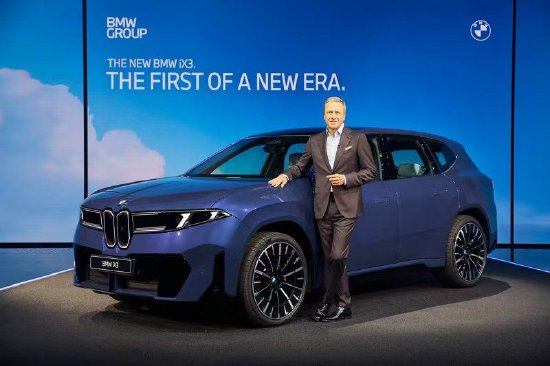
Core Viewpoint - The launch of the new generation BMW iX3 marks a significant step in BMW's transition towards electrification and smart technology, tailored specifically for the Chinese market, embodying the "global technology + China customization" strategy [1][10]. Design Highlights - The new generation BMW iX3 features a "Monolithic" design language that combines classic elements with modern aesthetics, retaining iconic features like the kidney grille and angel eyes while integrating advanced lighting technology [3]. - The interior focuses on enhancing the driving experience with a "visual cone" concept to minimize distractions, utilizing a panoramic display and 3D head-up display for improved safety and user experience [3]. Technological Advancements - The vehicle is built on a new intelligent electronic architecture, incorporating breakthrough technologies such as panoramic iDrive, BMW's Heart of Joy, and a large cylindrical battery, which significantly reduces weight and enhances performance [4]. - The sixth-generation electric drive technology, combined with an 800V high-voltage platform, improves energy efficiency by reducing energy loss by 40% and increasing overall vehicle efficiency by 20% [6]. Localization and Customization - The China-exclusive version of the BMW iX3 is tailored for local market needs, featuring a new operating system that integrates with local digital ecosystems and supports natural language interaction through a collaboration with Alibaba [7]. - The vehicle's driving assistance system, developed in partnership with Momenta, is designed to adapt to Chinese road conditions and user preferences, enhancing comfort and usability [9]. Strategic Importance - The introduction of the new generation BMW iX3 is seen as a crucial milestone in BMW's electrification and smart technology transformation, with plans to launch over 40 new or upgraded products globally by 2027, all incorporating new generation technologies [9][10].
这届慕尼黑车展,德国车企渴望强势回归,中国车企想要“分一杯羹”
Xin Lang Cai Jing· 2025-09-10 20:43
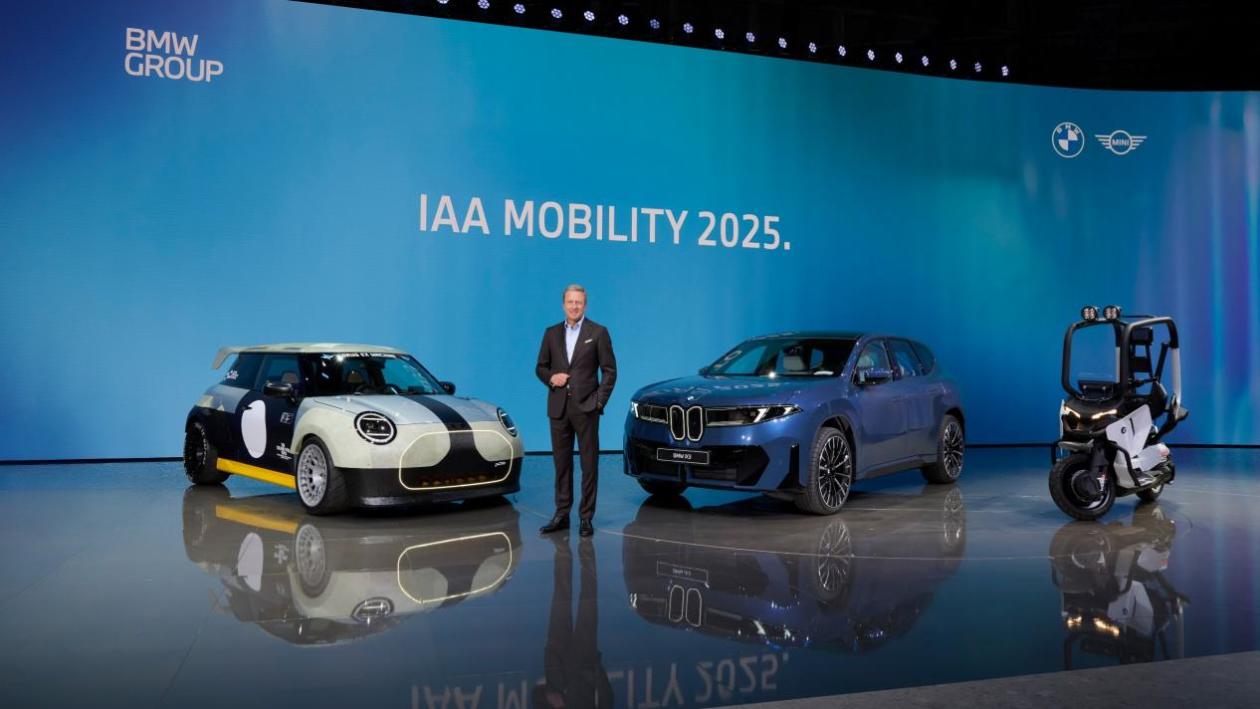
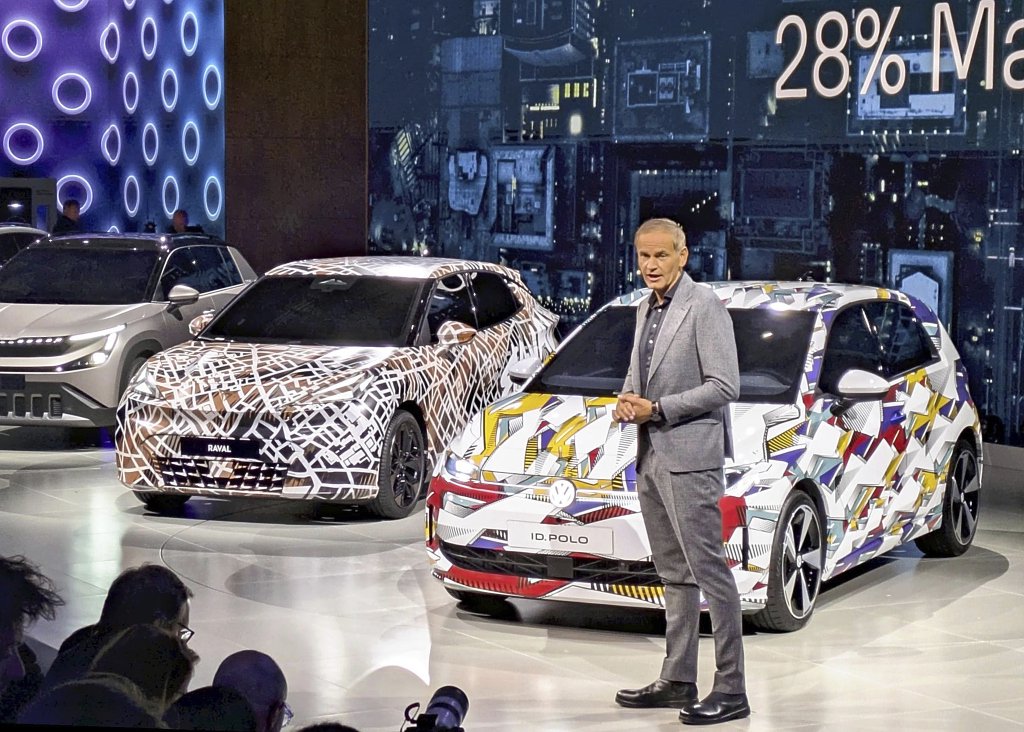
Core Insights - German automakers are leveraging the IAA Mobility 2025 to showcase new electric vehicle models, aiming to regain market dominance against rising Chinese competitors and the cost pressures from the Trump trade war [1][3][4] - The European automotive industry is under significant pressure due to the EU's stringent 2035 ban on combustion engine vehicles and the rapid market share gains of Chinese electric vehicle brands [3][4] - Major German manufacturers are investing billions in new technologies and software to enhance vehicle features such as charging time, range, and customer entertainment systems [3][4] Group 1: Market Dynamics - The number of Chinese exhibitors at the IAA Mobility 2025 increased from over 70 to 103, highlighting the growing competition in the European market [6] - Chinese brands have seen their market share in Europe more than double, reaching 5.9% in May compared to 2.9% the previous year [7] - Despite the rise of Chinese competitors, traditional European brands like Volkswagen, Renault, and Stellantis still dominate vehicle registrations in Europe, indicating strong brand loyalty [7] Group 2: Strategic Responses - German automakers are restructuring operations and have laid off over 50,000 employees to streamline processes and respond to competition from China [4] - Volkswagen's CEO emphasized the need for a strategic repositioning in the industry, marking a shift from traditional practices to a more proactive approach [3] - Renault is looking to re-enter the Chinese market by developing more economical batteries and accelerating the development cycle of its electric vehicles [11] Group 3: Technological Advancements - New electric models from German manufacturers feature advanced technologies such as AI, longer ranges, and faster charging capabilities [7][9] - Mercedes-Benz's new GLC model offers a range of 443 miles (approximately 713 kilometers) and can regain 25% of its battery charge in just 10 minutes [9] - Volkswagen is planning to launch the ID.Polo, targeting the sub-€25,000 small car market, as part of its strategy to recover from losses in the Chinese market and the impact of U.S. tariffs [9]
这届慕尼黑车展:新车不多,伤害极大
3 6 Ke· 2025-09-10 12:25
Core Insights - The Munich Auto Show has seen a significant presence of Chinese automotive companies, with one-third of the exhibition space occupied by them, indicating China's rising influence in the global automotive industry [1] - The show highlights a shift in strategy for both Chinese and German automakers, focusing on product innovation and global expansion rather than just vehicle sales [3][18] Group 1: Differences in Auto Shows - Munich Auto Show is characterized by its compactness, with less than half the exhibition space compared to domestic shows, yet it showcases the latest strategic models from major brands [3] - Unlike domestic shows that emphasize vehicle sales, the Munich Auto Show serves as a strategic platform for global players, with Chinese companies using it as a launchpad for international markets [3][18] - The presence of both automakers and suppliers in the same venue reflects a more integrated approach to the automotive supply chain [3] Group 2: German Automakers' Strategies - German automakers, particularly BMW and Mercedes-Benz, are shifting focus from concept cars to new production models, indicating a response to market demands [6][7] - Mercedes-Benz has streamlined its naming strategy for electric vehicles, moving away from the EQ branding to simplify consumer recognition [9] - The new Mercedes-Benz GLC electric version features advanced technology and design, aiming to meet consumer preferences for spacious and comfortable vehicles [15][11] Group 3: Expansion of Chinese Automakers - Chinese automakers are increasingly participating in international auto shows, with a notable increase in the number of Chinese companies at the Munich Auto Show compared to previous years [18] - Companies like AITO and Xiaopeng are using the show to establish their brands in Europe, with plans for direct sales and localized production [20][22] - Leap Motor's Lafa5 is positioned as a sporty model targeting younger consumers, marking a new phase in the company's product strategy [26] Group 4: Competitive Landscape - The competition in the automotive industry is intensifying, with Chinese brands gaining market share in Germany, evidenced by a projected 4% market share for new entrants [32] - Chinese automakers are achieving high customer satisfaction ratings, surpassing traditional German brands in net promoter scores [33] - The shift towards electric vehicles and the need for differentiation in technology and product offerings are driving the evolution of the automotive market [36][41] Group 5: Globalization and Market Strategy - The ultimate goal for Chinese automakers is profitability in international markets, with Europe emerging as a key battleground for growth [37][40] - Successful international expansion requires a combination of technology, product quality, and effective distribution channels [41] - The increasing presence of Chinese brands at international events signals a significant transformation in the global automotive landscape [44]

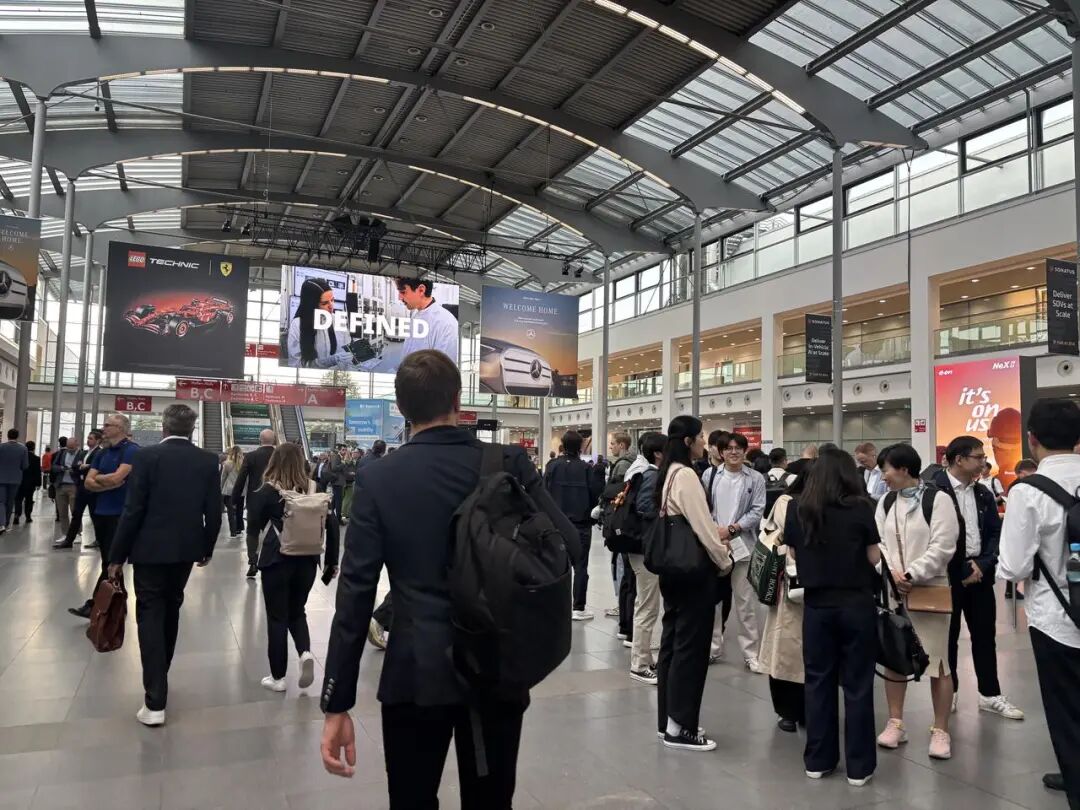
专访|中国已成为汽车产业创新策源地——访宝马集团董事长齐普策
Xin Hua She· 2025-09-10 10:44
Core Viewpoint - China has become a significant source of innovation in the automotive industry, and BMW is committed to deepening cooperation with Chinese partners in electrification and intelligence [1][2]. Group 1: BMW's Strategy in China - BMW's new electric model, iX3, will be launched in China in 2026, marking it as the most "localized" BMW model to date, responding to local consumer demands [1]. - The collaboration with Chinese suppliers is crucial for BMW's global R&D and manufacturing, transforming China from a mere sales market to an important hub for R&D and innovation [1][2]. - BMW has made significant investments in China, with approximately 116 billion RMB invested in its Shenyang production base since 2010, making it the largest investment outside Germany [2]. Group 2: Collaboration and Market Dynamics - BMW's partnerships with leading Chinese technology companies have elevated its product intelligence to industry-leading levels, combining German engineering with Chinese supply chain capabilities [2]. - The competitive landscape in China is intense, but it enhances Sino-German cooperation, providing more opportunities for collaboration in addressing climate change and industrial development [2]. - BMW has established four major R&D innovation bases and three software companies in China, employing over 3,000 R&D personnel, forming the largest R&D team outside Germany [2]. Group 3: Electric Vehicle Performance - In the first half of this year, BMW delivered 318,900 electric vehicles globally, representing an 18.5% year-on-year increase, with the Chinese market playing a critical role in this growth [3]. - Looking ahead, BMW aims to continue deepening its presence in the Chinese market, collaborating with local partners to drive technological innovation and green transformation [3].
专访丨中国已成为汽车产业创新策源地——访宝马集团董事长齐普策
Xin Hua Wang· 2025-09-10 10:41
Core Insights - China has become a significant source of innovation in the automotive industry, according to BMW Group Chairman Zipse, who emphasizes the importance of collaboration with Chinese partners in the fields of electrification and intelligence [1][2]. Group 1: Innovation and Collaboration - BMW's new generation electric vehicle, the iX3, is set to launch a long-wheelbase version in China in 2026, marking it as the most "localized" BMW model to date, reflecting the company's commitment to the Chinese market [1]. - The collaboration with Chinese suppliers is crucial for BMW's global research and manufacturing, with a focus on the high level of specialization and efficiency in partnerships with companies like CATL and EVE Energy [1][2]. - Zipse highlights that combining German engineering capabilities with Chinese component supply and innovation can create a new industrial synergy [2]. Group 2: Market Presence and Investment - BMW has made significant investments in China, with approximately 116 billion RMB invested in the Shenyang production base since 2010, making it the largest investment outside Germany [2]. - The company has established four major R&D innovation centers and three software companies in China, employing over 3,000 researchers, forming the largest R&D team outside Germany [2]. - In the first half of this year, BMW delivered 318,900 electric vehicles globally, a year-on-year increase of 18.5%, with the Chinese market playing a critical role in this growth [3]. Group 3: Future Outlook - Looking ahead, BMW plans to deepen its engagement in the Chinese market, collaborating with local partners to drive technological innovation and green transformation [3]. - Zipse asserts that the success of the future automotive industry will rely on cooperation, with China being an indispensable force in this process [3].
从宝马iX3到比亚迪匈牙利工厂:慕尼黑车展,一场决定未来汽车格局的中德对弈
Mei Ri Jing Ji Xin Wen· 2025-09-10 10:17
Core Viewpoint - The Munich International Motor Show is showcasing a significant competition between Chinese and German automotive companies, highlighting the shift from traditional auto shows to comprehensive mobility platforms [1][3]. Group 1: Event Overview - The 2025 Munich International Motor Show opened on September 8, 2023, with the theme "It's All About Mobility," focusing on innovative technologies and emerging mobility trends [1]. - A total of 748 exhibitors participated, with 57% coming from outside Germany, and China being the largest foreign participant, accounting for nearly one-third of overseas exhibitors [1]. Group 2: Chinese Automotive Presence - The number of Chinese companies participating in the show increased from over 70 in 2023 to 116 in 2024, covering various sectors including complete vehicles and automotive intelligence [3][4]. - Chinese brands captured 9.9% of electric vehicle sales in Europe as of July, with an overall market share of 5.3%, demonstrating resilience and growth potential [4]. Group 3: Strategic Moves by Chinese Companies - XPeng Motors announced the opening of its first European R&D center during the show, aiming to better understand and meet European consumer needs [5]. - BYD plans to launch multiple new hybrid models in Europe and has set a target to open over 1,000 stores by the end of 2023 and more than 2,000 by the end of 2026 [5][6]. - Hongqi, representing China's luxury segment, unveiled its EHS5 electric SUV, targeting urban and family commuting markets [6][7]. Group 4: German Automotive Response - German automakers like BMW, Mercedes-Benz, and Volkswagen showcased their latest electric models, indicating a strong commitment to compete against Chinese brands [9][10]. - Mercedes-Benz highlighted its new GLC 400 4MATIC electric model, set to launch in 2026, while BMW introduced the iX3, with plans for mass production by 2026 [9][10]. Group 5: Industry Collaboration and Integration - Chinese battery manufacturers such as CATL have established deep ties with European automakers, with CATL already collaborating with over 90% of mainstream car manufacturers in Europe [8][11]. - Companies like Momenta are forming partnerships with numerous global automakers, enhancing the potential for collaboration in smart driving technologies [11].

全球能源循环计划亮相慕尼黑 为汽车产业绿色转型提供支持
Xin Hua Cai Jing· 2025-09-10 08:25
Core Viewpoint - The global battery circular economy high-end forum, supported by CATL and hosted by the Ellen MacArthur Foundation, aims to promote the "Global Energy Circular Plan" and establish a collaborative network for battery recycling and circular economy in the automotive industry [1][2][3] Group 1: Forum Highlights - The forum gathered over a hundred representatives from leading companies in the automotive supply chain, including CATL, BMW, Mercedes-Benz, and BASF, to discuss the pathways for achieving a circular battery value chain and the role of policy and finance in promoting the circular economy [1][2] - CATL's Vice President emphasized the need for a collaborative network and knowledge sharing to maximize the value of each battery, integrating circular concepts from the design stage [1][2] Group 2: Key Discussions - Discussions included the importance of innovative cooperation mechanisms in supply chain management, quality responsibility, and localization strategies [2] - The significance of digital tools like battery passports and Catena-X for enhancing supply chain transparency and traceability was highlighted as essential for efficient recycling and repurposing [2] Group 3: Global Energy Circular Plan - The Global Energy Circular Plan is the first circular economy initiative involving a Chinese enterprise, aiming to create a collaborative network across the entire industry chain, including policymakers and social organizations [2][3] - The project seeks to eliminate the need for new mineral extraction in 50% of global battery production over the next 20 years [2] Group 4: Next Steps - The forum marked a consensus in the industry, indicating that the Global Energy Circular Plan is entering a phase of substantial advancement, with plans to launch pilot projects and develop replicable circular economy models [3]
奔驰推出电动版GLC,拟于宝马iX3和特斯拉Model Y竞争
Ge Long Hui· 2025-09-08 01:40
Core Viewpoint - Mercedes-Benz is launching the electric version of its popular GLC SUV to improve the performance of its previous electric models, which have not performed well [1] Group 1 - The new GLC SUV electric model was unveiled at the Munich Auto Show and is set to compete directly with BMW iX3 and Tesla Model Y [1] - The electric GLC SUV boasts a range of up to 713 kilometers [1] - The vehicle is planned for release in the upcoming year [1]

宝马首款新世代车型BMW iX3全球首发,中国专属版将于年内正式亮相
Xin Lang Ke Ji· 2025-09-06 04:22
Core Viewpoint - BMW has launched its first new generation model, the BMW iX3, designed specifically for the Chinese market, with plans for mass production by 2026 [1] Group 1: Product Features - The new generation BMW iX3 pays homage to the classic 1960s BMW 1500 model, featuring iconic design elements such as the double kidney grille and angel eyes headlights [1] - The vehicle incorporates advanced technology with a fully upgraded sixth-generation electric drive system, achieving over 400 kilometers of range with just 10 minutes of charging and a CLTC range exceeding 900 kilometers [2] - The iX3 features a new electronic architecture with four "super brains" that manage entertainment, driving assistance, dynamic control, and comfort functions, enhancing the overall user experience [3] Group 2: Customization for Chinese Market - The iX3 China-exclusive version is tailored to local consumer needs, with customizations in smart cockpit design, driving pleasure, and comfort features [4] - Collaborations with Alibaba and Momenta have led to the development of a customized language model and driving assistance solutions adapted to Chinese road conditions [4] - The vehicle's production will involve partnerships with Chinese battery suppliers, with trial production of large cylindrical battery packs set to begin by the end of 2024 in Shenyang [4]