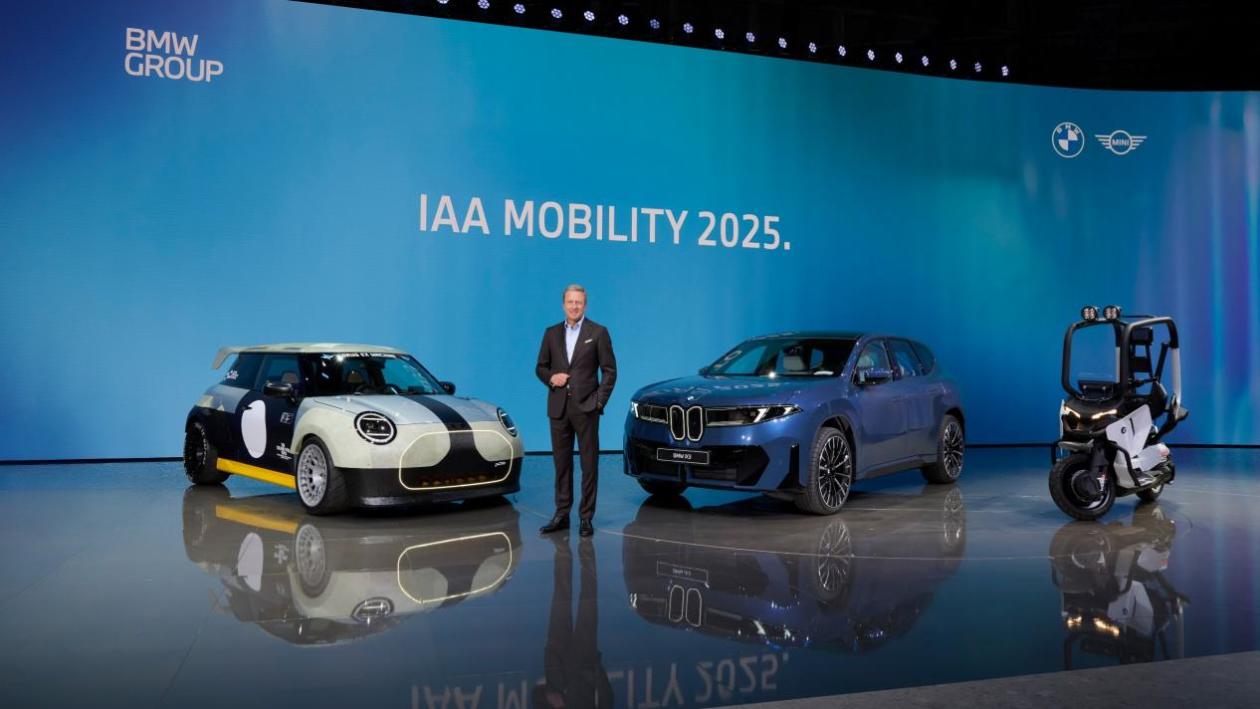
BMW(BMWYY)

Search documents
德国的世界第一,正在批量阵亡
创业邦· 2025-09-16 10:26
Core Viewpoint - The article discusses the concept of "hidden champions," which are small to medium-sized enterprises that dominate niche markets but remain largely unknown to the general public. These companies are characterized by their strong technological capabilities, high product value, and difficulty for competitors to imitate. Germany has a significant number of these hidden champions compared to other countries, particularly China, which has fewer than 100 such companies [9][12]. Group 1: Definition and Characteristics of Hidden Champions - The term "hidden champion" was introduced by German scholar Hermann Simon in 1990, referring to companies that are not well-known but hold a leading position in a specific niche market [9]. - Hidden champions typically exhibit several unusual characteristics: they are often rooted in small towns, have a long history of family ownership, maintain low employee turnover, and focus on highly specialized core businesses [10]. - Simon's criteria for identifying hidden champions include being among the top three in a niche market globally or the top in a continent, having annual revenues not exceeding 5 billion euros, and being relatively unknown to the public [10]. Group 2: Germany's Hidden Champions - Germany is home to nearly half of the world's hidden champions, with around 3,000 such companies globally [12]. - The article highlights examples of hidden champions like Wanzl, which dominates the global market for shopping carts with over 50% market share, and Körber, a leader in high-speed cigarette manufacturing machines [14][16]. - The strength of Germany's manufacturing sector is attributed to its small and medium-sized enterprises, which make up over 99% of all companies and contribute 55% to the GDP [22]. Group 3: Challenges Faced by Hidden Champions - Recently, many German hidden champions, particularly in the automotive sector, have faced bankruptcy due to rising costs and external pressures, such as the impact of the Russia-Ukraine conflict on energy prices [30][34]. - The aging workforce in Germany is leading to a significant labor shortage, with projections indicating a shortfall of up to 7 million jobs by 2035 [36]. - The rise of Chinese automotive manufacturing has also affected the revenues of German hidden champions, as Chinese suppliers offer competitive pricing and quality, leading to a decline in demand for German products [36][37].

德国的世界第一,正在批量阵亡
Hu Xiu· 2025-09-15 13:50
Core Insights - The article discusses the concept of "invisible champions," which are companies that dominate niche markets but remain relatively unknown to the general public. These companies do not seek to increase their exposure or go public, yet they achieve significant success in their specialized fields [1][5][6]. Group 1: Invisible Champions in Germany - Germany has a significant number of invisible champions, with nearly half of the global total located there, while China has fewer than 100 [7][8]. - The characteristics of these invisible champions include being rooted in small towns, having low employee turnover, and focusing on highly specialized products that are difficult to replicate [8][24]. - Examples of successful invisible champions include Wanzl, which dominates the global market for shopping carts, and Körber, a leader in high-speed cigarette manufacturing [11][15]. Group 2: Challenges Facing German Invisible Champions - Recently, many German invisible champions, particularly in the automotive sector, have faced bankruptcy, with notable companies like Gerhardi going under [34][38]. - Contributing factors to this trend include rising costs due to geopolitical issues, such as the energy crisis following the Russia-Ukraine conflict, and a looming labor shortage as the workforce ages [39][44]. - The decline in demand for German products is also attributed to the rise of Chinese automotive supply chain companies, which offer competitive pricing and quality [43][45]. Group 3: Economic Impact of Invisible Champions - German small and medium-sized enterprises (SMEs), which include many invisible champions, account for over 99% of all companies and contribute 55% to the GDP [24]. - These SMEs play a crucial role in job creation, employing over 70% of the workforce and providing around 80% of vocational training positions [24][46]. - The article emphasizes the need for attention and protection for these less visible but vital companies, as they form the backbone of the German economy [46].


中企推动全球汽车产业电动化、智能化、低碳化转型
Ren Min Ri Bao· 2025-09-15 06:31
Group 1: Event Overview - The 2025 International Motor Show in Munich, themed "'Moving' Everything," attracted around 750 exhibitors from over 30 countries, with 116 exhibitors from China, marking a historical high in participation [1] - The event showcased a shift towards electric, intelligent, and low-carbon mobility, reflecting the global automotive industry's transformation [1][2] Group 2: Electric Vehicle Trends - The International Energy Agency's report indicates that global electric vehicle sales surpassed 4 million units in Q1 2023, with an expected annual total exceeding 20 million units, a 25% increase year-on-year, representing 25% of global new car sales [2] - By 2030, the number of public charging stations is projected to increase nearly eightfold to approximately 40 million [2] Group 3: Innovations from Major Automakers - Major automakers like BMW, Mercedes, and Volkswagen are focusing on electric and intelligent development, with BMW's new iX3 model capable of over 900 km range and rapid charging [2][3] - Volkswagen introduced the ID Polo electric vehicle priced at €25,000, while Mercedes launched the GLC electric model with smart driving assistance [2] Group 4: Chinese Brands and Technologies - Chinese exhibitors showcased innovations in vehicle manufacturing, battery production, and intelligent driving software, with BYD presenting models like the Seal 06DM-i and the Z9GT, along with rapid charging technology [4][6] - GAC Group debuted its global strategic models AION V and AION UT, along with a mass-produced autonomous flying car [5] Group 5: Battery Technology Advancements - EVE Energy displayed high-density eVTOL batteries with a discharge rate of 14C and a density of 288 Wh/kg, while CATL introduced the NP3.0 technology platform for lithium iron phosphate batteries [6] - The Chinese automotive industry is experiencing significant growth in exports, with 3.083 million vehicles exported in the first half of 2025, a 10.4% increase, and 1.06 million of those being new energy vehicles, up 75.2% [6] Group 6: International Collaboration - The automotive industry is highly globalized, with German automakers relying on international supply chains and partnerships, as highlighted by the collaboration between Chinese and European companies [7][8] - Companies like Bosch and ZF are leveraging their presence in China to support local manufacturers in expanding their global reach [8]




8月国内乘用车召回环比激增80倍 日系、德系占超九成
Xi Niu Cai Jing· 2025-09-14 03:12
Core Insights - In August 2025, the domestic passenger car recall market experienced significant activity, with a total of 499,254 vehicles recalled, marking an 80-fold increase compared to July [2] Group 1: Recall Statistics - A total of 17 recall announcements were made in August 2025 [2] - The top three brands by recall volume were Toyota (236,630 vehicles), BMW (230,503 vehicles), and Alfa Romeo (23,004 vehicles) [3] - Japanese and German brands accounted for over 90% of the total recalls, with Toyota and BMW alone representing 93.57% of the recalls [3] Group 2: Main Issues Leading to Recalls - The three primary issues leading to recalls in August were electrical system problems, issues with new energy vehicle components, and engine-related problems [4] - Toyota recalled 230,476 vehicles due to a control program issue that could cause a black screen on the instrument panel, affecting visibility of speed and warning lights [4] - BMW recalled 229,106 vehicles due to a monitoring mechanism issue that could lead to a loss of power in the high-voltage system, increasing collision risk [4] Group 3: Consumer Awareness and Communication - A significant 95.24% of consumers reported not receiving recall notifications, primarily learning about recalls through media or word of mouth [5] - 50% of consumers indicated they had experienced similar defects as those involved in the recalls, an increase of 10% from the previous month, highlighting communication gaps between manufacturers and consumers [5]

中国46大圆柱电池上车!宝马iX3全球首发
起点锂电· 2025-09-13 04:33
Core Viewpoint - BMW officially launched the new generation BMW iX3, marking its entry into a new era of electric and intelligent vehicles, with a focus on local market needs in China [2][3]. Group 1: Product Features - The new generation BMW iX3 features a fully upgraded sixth-generation electric drive system, incorporating two major technological breakthroughs: large cylindrical batteries and a new 800V high-voltage platform architecture [2]. - The battery pack utilizes a "cell-to-pack" design, integrating cells directly into the battery pack and incorporating "battery-body integration" technology, which reduces weight, lowers the center of gravity, and enhances interior space and aerodynamic performance [2]. - The large cylindrical battery allows the domestic version of the BMW iX3 to achieve over 400 kilometers of range with just 10 minutes of charging, and a CLTC range exceeding 900 kilometers [3]. Group 2: Battery Technology - The Omnicell large cylindrical battery, developed by EVE Energy, boasts features such as standardization, zero expansion, and high strength, with a 60% reduction in impedance, significantly improving power and thermal stability [4]. - The new generation silicon-based anode technology enhances energy density by over 15%, and the structural strength of the battery is superior to that of square batteries, achieving a steel shell strength of 550 MPa [4]. Group 3: Production and Collaboration - EVE Energy's cylindrical battery production began trial runs at the Shenyang production base in late 2024, supporting the localization of new generation models [5]. - As of June 30, EVE Energy's Shenyang cylindrical battery base entered the trial production phase, marking a significant step in the collaboration between BMW and EVE Energy [5]. - EVE Energy's cylindrical batteries have been validated in over 60,000 vehicles globally, with a total mileage exceeding 230,000 kilometers and no safety incidents or major quality issues reported [6]. Group 4: Market Strategy - BMW aims to launch over 40 new generation models by 2027, covering all market segments, with the iX3's production expected to set a precedent for the domestic large cylindrical battery market in high-end passenger vehicles [7]. - Other battery suppliers for BMW's new generation models include CATL and Envision AESC, with CATL set to supply large cylindrical batteries starting in 2026 [9]. - Envision AESC has already shipped its 46 series large cylindrical battery products to the U.S. for BMW's global electric platform models, indicating a significant acceleration in the adoption of large cylindrical batteries in the automotive sector [10].

各大车展难觅身影,外资豪车“失宠”?
Qi Lu Wan Bao· 2025-09-12 10:40
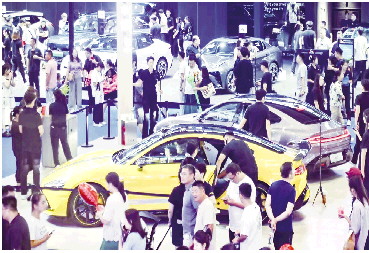
Core Insights - The absence of foreign luxury car brands at major auto shows in China signals a significant shift in the automotive market, particularly as domestic electric vehicles (EVs) gain popularity [2][4][6] - Sales and profits for foreign luxury brands have plummeted, with notable declines in retail volumes and market share [2][3][5] Group 1: Market Trends - In July 2025, luxury car retail volume dropped to 170,000 units, a year-on-year decrease of 20%, with market share shrinking to 9.3% [2] - Specific brands faced severe declines: Porsche's sales fell by 28%, Maserati's by 58%, and the BBA brands (Benz, BMW, Audi) saw declines of 37.2%, 26.6%, and 21.7% respectively [2] Group 2: Cost and Profitability - Participation in auto shows incurs high costs, with expenses reaching millions, leading dealers to reconsider their marketing strategies amid declining sales and profits [3] - The luxury car market's profit margins have diminished significantly, prompting brands to engage in price wars to maintain market presence [4][5] Group 3: Consumer Behavior - The rise of affordable luxury vehicles has altered consumer perceptions, with many now viewing luxury cars as more accessible, leading to a shift in purchasing behavior [4] - Consumers are increasingly favoring second-hand vehicles over new luxury cars due to concerns over depreciation and value retention [5][6] Group 4: Competitive Landscape - Foreign luxury brands are struggling to compete with domestic EVs, which offer better value and faster product updates [6][7] - The market dynamics are shifting, with consumers becoming more rational and demanding better product experiences, which foreign brands have been slow to adapt to [6][7] Group 5: Future Outlook - The absence of luxury brands from auto shows does not indicate a complete withdrawal from the Chinese market but rather a necessary adaptation to new market conditions [7] - To survive, luxury brands must focus on enhancing product-market fit and accelerating technological advancements rather than engaging in price competition [7]
绿牌BBA大溃败
投资界· 2025-09-11 08:44
Core Viewpoint - The article discusses the decline of traditional luxury car brands BBA (BMW, Benz, Audi) in the Chinese market, particularly in the context of the rising competition from domestic electric vehicle manufacturers. It highlights the challenges BBA faces in adapting to the new energy vehicle (NEV) landscape and the consequences of their strategies. Group 1: Market Position and Performance - BBA has historically dominated the global luxury car market, holding over 70% of the market share in the segment of vehicles priced above 500,000 yuan as of 2023 [10] - However, their market share has rapidly declined to approximately 50% due to the emergence of popular Chinese models like the AITO M9 [10] - In 2022, BBA's global sales totaled 6.1054 million units, a decrease of nearly one million units compared to the previous year [10] Group 2: Product Strategy and Consumer Perception - BBA's approach to NEVs has been criticized for relying on "oil-to-electric" conversions, which do not meet consumer expectations for performance and efficiency [12] - The article notes that BBA's vehicles often sacrifice space and performance, leading to negative consumer feedback, such as the perception of paying for a brand rather than quality [14][15] - The use of outdated technology in BBA's NEVs, such as the Audi Q4 e-tron utilizing older platforms, has further alienated consumers [11] Group 3: Investment and R&D Challenges - BBA's investment in NEV development is significantly lower compared to Chinese competitors, with companies like BYD investing over 180 billion yuan in R&D since 2015 [14] - The article highlights that BBA's reluctance to fully commit to electric vehicle development stems from their established supply chain relationships and the desire to maintain profits from traditional fuel vehicles [20] - BBA's leadership has shown hesitation in fully transitioning to electric vehicles, with statements indicating a preference for gradual integration rather than a complete overhaul [18][19] Group 4: Competitive Landscape - The article emphasizes that BBA's traditional strategies are ineffective against the rapid advancements of Chinese automakers, which are more agile and innovative in the NEV space [12][21] - The competitive pressure from domestic brands has forced BBA to engage in price wars, which have eroded their profit margins [10] - The article concludes that BBA's failure to adapt to the changing market dynamics may lead to a further loss of consumer trust and market share [21]

新突破!固态电池实车演示
鑫椤锂电· 2025-09-11 08:19
Core Viewpoint - Mercedes-Benz has successfully tested a solid-state battery prototype in its pure electric EQS, achieving a remarkable range of 1205 kilometers on a single charge, surpassing the previous record of 1202 kilometers set by the VISION EQXX in 2022 [1][3] Group 1: Testing and Performance - The solid-state battery-equipped EQS test vehicle traveled from Germany to Sweden, covering 1205 kilometers under various climate and road conditions, with a remaining range of 137 kilometers upon arrival [1] - The solid-state battery developed by Mercedes-Benz's passenger car team and HPP team utilizes sulfur-based solid electrolyte technology, achieving an energy density of 450 watt-hours per kilogram and enhancing range by 25% [1][2] Group 2: Industry Developments - Other automakers, such as BMW, are also advancing solid-state battery technology, with the BMW i7 starting real-world testing in May 2023, featuring a battery cell developed by Solid Power [3] - Both Mercedes-Benz and BMW are on track to bring solid-state battery technology to mass production, with Mercedes-Benz aiming for commercialization within five years and BMW targeting 2028 for its solid-state battery models [3]

全球能源循环计划亮相慕尼黑车展,宁德时代、奔驰、宝马共同参与
Huan Qiu Wang· 2025-09-11 03:26
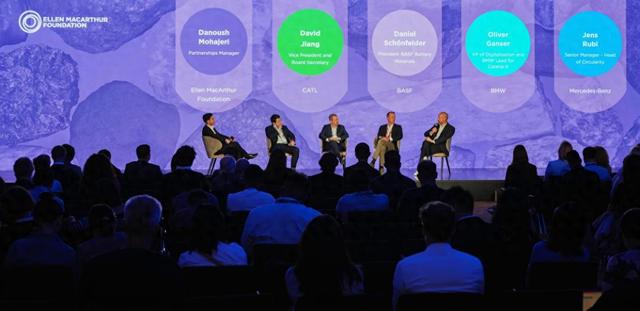
Group 1 - The forum focused on the "path to achieving a circular battery value chain" and "policy and financial collaboration to promote a circular economy" [1][3] - CATL's Vice President emphasized the need for the entire industry to be "born for recycling," highlighting that achieving a battery circular economy is a systematic project requiring a collaborative network and knowledge sharing [1][3] - Mercedes-Benz's circular economy head stressed the importance of understanding cooperation mechanisms within the entire supply chain and value chain, particularly in quality responsibility and localization strategies [3] Group 2 - Participants discussed the significance of digital tools like battery passports and the Catena-X project for enhancing supply chain transparency and traceability, which are essential for efficient recycling and repurposing [3] - Key design principles for promoting battery pack circularity and the selection of chemical materials affecting recycling rates were also key topics of discussion, leading to a broad consensus on establishing cross-industry cooperation mechanisms [3] - The Global Energy Circular Program, the first circular economy initiative involving a Chinese company, aims to create a collaborative network across the entire industry chain, targeting a 50% reduction in new mineral extraction for battery production over the next 20 years [3]
宝马新世代BMW iX3在慕尼黑全球首发
Huan Qiu Wang· 2025-09-11 02:07
Core Viewpoint - The launch of the new generation BMW iX3 marks a significant step in BMW's transition towards electrification and smart technology, tailored specifically for the Chinese market, embodying the "global technology + China customization" strategy [1][10]. Design Highlights - The new generation BMW iX3 features a "Monolithic" design language that combines classic elements with modern aesthetics, retaining iconic features like the kidney grille and angel eyes while integrating advanced lighting technology [3]. - The interior focuses on enhancing the driving experience with a "visual cone" concept to minimize distractions, utilizing a panoramic display and 3D head-up display for improved safety and user experience [3]. Technological Advancements - The vehicle is built on a new intelligent electronic architecture, incorporating breakthrough technologies such as panoramic iDrive, BMW's Heart of Joy, and a large cylindrical battery, which significantly reduces weight and enhances performance [4]. - The sixth-generation electric drive technology, combined with an 800V high-voltage platform, improves energy efficiency by reducing energy loss by 40% and increasing overall vehicle efficiency by 20% [6]. Localization and Customization - The China-exclusive version of the BMW iX3 is tailored for local market needs, featuring a new operating system that integrates with local digital ecosystems and supports natural language interaction through a collaboration with Alibaba [7]. - The vehicle's driving assistance system, developed in partnership with Momenta, is designed to adapt to Chinese road conditions and user preferences, enhancing comfort and usability [9]. Strategic Importance - The introduction of the new generation BMW iX3 is seen as a crucial milestone in BMW's electrification and smart technology transformation, with plans to launch over 40 new or upgraded products globally by 2027, all incorporating new generation technologies [9][10].