
BYD(BYDDY)

Search documents
比亚迪Q3净利润为78.23亿元,同比下降32.60%
Hua Er Jie Jian Wen· 2025-10-30 11:13
Core Viewpoint - BYD reported a decline in revenue and net profit for the third quarter, indicating potential challenges in maintaining growth momentum in a competitive market [1] Group 1: Financial Performance - In the third quarter, BYD's revenue was 194.985 billion yuan, a year-on-year decrease of 3.05% [1] - The net profit for the third quarter was 7.823 billion yuan, reflecting a year-on-year decline of 32.60% [1] - For the first three quarters, BYD's revenue reached 566.266 billion yuan, showing a year-on-year growth of 12.75% [1] - The net profit for the first three quarters was 23.333 billion yuan, which represents a year-on-year decrease of 7.55% [1]
比亚迪(002594) - 2025 Q3 - 季度财报
2025-10-30 11:10
比亚迪股份有限公司 2025 年第三季度报告 证券代码:002594 证券简称:比亚迪 公告编号:2025-058 比亚迪股份有限公司 2025 年第三季度报告 本公司及董事会全体成员保证信息披露的内容真实、准确、完整,没有虚假记载、误导性陈述或重大遗漏。 重要内容提示: 1.董事会、监事会及董事、监事、高级管理人员保证季度报告的真实、准确、完整,不存在虚假记载、误导性陈述或重 大遗漏,并承担个别和连带的法律责任。 2.公司负责人、主管会计工作负责人及会计机构负责人(会计主管人员)声明:保证季度报告中财务信息的真实、准确、 完整。 3.第三季度报告是否经过审计 □是 否 1 比亚迪股份有限公司 2025 年第三季度报告 一、主要财务数据 (一) 主要会计数据和财务指标 公司是否需追溯调整或重述以前年度会计数据 □是 否 2 比亚迪股份有限公司 2025 年第三季度报告 其他符合非经常性损益定义的损益项目的具体情况: □适用 不适用 公司不存在其他符合非经常性损益定义的损益项目的具体情况。 | | 本报告期 | 本报告期比上年同期 | 年初至报告期末 | 年初至报告期末比 | | --- | --- | --- ...
比亚迪在日本发布K-EV和海狮06DM-i,已建立66家销售据点
Xin Lang Ke Ji· 2025-10-30 10:56
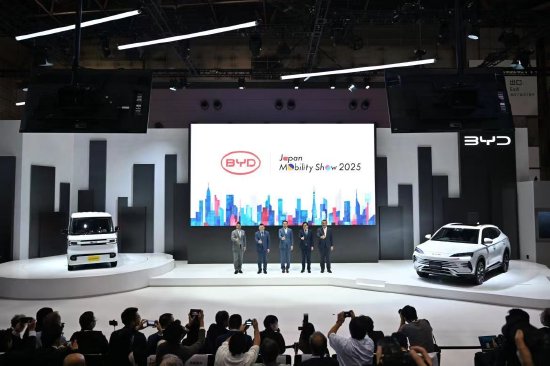
Core Insights - BYD showcased its K-EV BYD RACCO, a model tailored for the Japanese market, and introduced its first plug-in hybrid vehicle, the Sea Lion 06DM-i, at the 2025 Japan Mobility Show [2] - The company aims to build a comprehensive product matrix in Japan, combining both hybrid and pure electric vehicles, to enhance its brand and product influence [2] - BYD plans to expand its product lineup to 7-8 pure electric and hybrid models in Japan by 2027, having already established 66 sales points in the country [2] Passenger Vehicle Segment - The passenger vehicle display featured the K-EV BYD RACCO, Sea Lion 06DM-i, and popular upgraded models such as Yuan PLUS, Dolphin, and Seal, along with the U9 supercar [2] - Since entering the Japanese passenger vehicle market in July 2022, BYD has launched several successful pure electric models, including Yuan PLUS, Dolphin, Seal, and Sea Lion 07 [2] Commercial Vehicle Segment - BYD globally unveiled the pure electric truck T35 and the small pure electric bus J6 living car concept, alongside the medium-sized J7 and large K8 electric buses [3] - The T35 is set to launch in Japan in 2026, designed to meet local regulations and specifications, and will be released in mainland China on November 13 this year [3] - BYD has become the leading brand in Japan's electric bus market since entering in 2015, with its electric buses operating across various public transport systems from Hokkaido to Okinawa [3] Strategic Commitment - The General Manager of BYD's Asia-Pacific Automotive Sales Division emphasized the company's commitment to providing high-quality, locally relevant electric products that meet safety and efficiency standards [3] - BYD plans to continue investing in the Japanese market, enhancing its service system, and expanding its product matrix to explore sustainable future mobility solutions with Japanese users [3]

比亚迪电子公布前三季度业绩 母公司权益拥有人应占溢利约31.37亿元 同比增长2.4%
Zhi Tong Cai Jing· 2025-10-30 09:55
Core Viewpoint - BYD Electronics (00285) reported its performance for the first three quarters of 2025, showing modest growth in revenue and profit [1] Financial Performance - The company's revenue reached 123.285 billion yuan, reflecting a year-on-year increase of 0.95% [1] - The profit attributable to equity holders of the parent company was approximately 3.137 billion yuan, representing a year-on-year growth of 2.4% [1] - Earnings per share stood at 1.39 yuan [1]
比亚迪电子(00285)公布前三季度业绩 母公司权益拥有人应占溢利约31.37亿元 同比增长2.4%
智通财经网· 2025-10-30 09:55
Group 1 - The core viewpoint of the article highlights BYD Electronics' performance for the first three quarters of 2025, showing a slight increase in revenue and profit [1] - The company's revenue reached 123.285 billion, reflecting a year-on-year growth of 0.95% [1] - The profit attributable to equity holders of the parent company was approximately 3.137 billion, marking a year-on-year increase of 2.4% [1] - Earnings per share stood at 1.39 [1]
比亚迪电子(00285.HK)前三季度纯利增长2.40%至31.37亿元
Ge Long Hui· 2025-10-30 09:43
Core Viewpoint - BYD Electronics (00285.HK) reported a revenue of RMB 123.285 billion for the nine months ending September 30, 2025, reflecting a year-on-year growth of 0.95% [1] - The profit attributable to equity holders of the parent company was RMB 3.137 billion, representing a year-on-year increase of 2.40%, with earnings per share at RMB 1.39 [1] Financial Performance - Revenue for the nine-month period reached RMB 123.285 billion, showing a slight increase of 0.95% compared to the previous year [1] - The net profit attributable to shareholders was RMB 3.137 billion, which is a 2.40% increase year-on-year [1] - Earnings per share stood at RMB 1.39 [1]
比亚迪在日本首次发布轻型电动车“RACCO”,计划2026年上市
Xin Lang Cai Jing· 2025-10-30 08:56
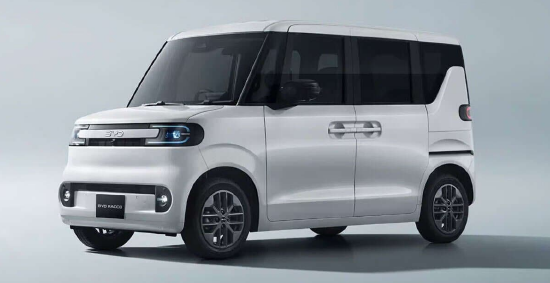
Core Insights - BYD unveiled its lightweight electric vehicle prototype "RACCO" at the Japan Mobility Show, planning to launch it in the Japanese market by summer 2026, marking its first independently developed model for overseas markets [2] - The vehicle dimensions are 3395×1475×1800 mm, designed to accommodate four passengers, targeting the "super high roof" segment that holds over 50% of the Japanese lightweight vehicle market share [2] - The RACCO features front-wheel drive, lithium iron phosphate batteries, and dual sliding doors in the rear, differentiating it from competitors like Nissan's "Sakura" and Honda's "N-ONE e:" [2] - BYD plans to offer both standard and long-range versions of the vehicle, aimed at daily commuting and outdoor travel, with an expected price range of around 2 million yen [2] - The specific battery capacity and range have not yet been disclosed [2] - BYD's Japan President, Atsuki Tofukuji, noted the rapid growth in demand for lightweight electric vehicles amid Japan's aging population, emphasizing the need for models that meet local market characteristics and competitive pricing strategies [2] - Lightweight vehicles account for approximately 40% of new car sales in Japan, a segment traditionally challenging for foreign automakers to penetrate [2] - BYD's entry into the market is expected to intensify competition in the lightweight electric vehicle sector, currently dominated by Nissan's "Sakura" and Mitsubishi's "eK X EV" [2]
李云飞:电池核心是安全,比亚迪坚持磷酸铁锂路线
Guan Cha Zhe Wang· 2025-10-30 07:43
Core Viewpoint - BYD insists on the lithium iron phosphate battery route, emphasizing battery safety as the core issue in the electric vehicle industry [1]. Summary by Relevant Sections Battery Safety - During the 2025 Tokyo Motor Show, BYD's General Manager of Brand and Public Relations, Li Yunfei, highlighted that battery safety is the most critical issue for electric vehicles [1]. - Li Yunfei expressed concerns over recent safety incidents involving electric vehicles equipped with ternary lithium batteries, suggesting that these issues could negatively impact consumer perception of the entire electric vehicle industry [1]. Commitment to Lithium Iron Phosphate - BYD has consistently adhered to the lithium iron phosphate battery strategy and plans to continue this approach in the future [1]. - Li Yunfei noted that while many brands may opt for ternary lithium batteries to enhance range in the coming years, he urges caution regarding their safety implications [1].
宁德时代、比亚迪、途虎三股势力争相入局,谁能破解新能源后市场“千亿蓝海”的盈利密码?
Zheng Quan Shi Bao· 2025-10-30 07:29
Core Insights - The article highlights the emergence of a significant after-sales market for electric vehicles (EVs) as over 3 million EVs are expected to be out of warranty by 2025, leading to a potential market worth hundreds of billions [1][8] - Major players like CATL, BYD, and Tuhu are competing for market share in the after-sales service sector, each adopting different strategies to capture the needs of out-of-warranty users [1][5] Group 1: Company Strategies - **CATL**: Focuses on technology-driven services with its "Ningjia Service," which extends from B2B to B2C, leveraging proprietary non-destructive testing technology for quick fault detection [1][2] - **BYD**: Develops a closed-loop ecosystem from battery production to dedicated repair centers, ensuring quality control and a unified customer experience, but faces limitations due to its closed service model [3][4] - **Tuhu**: Concentrates on the out-of-warranty market through platform integration, offering services across all brands and regions, while also innovating in supply chain management for EV-specific products [4][7] Group 2: Market Dynamics - The after-sales market for EVs is transitioning from a warranty-based model to a more diversified service ecosystem, with increasing competition from various players including insurance companies and traditional service groups [8][10] - The rapid growth of the out-of-warranty user base is creating a supply-demand imbalance, leading to challenges in service accessibility and quality, particularly for independent service providers [6][9] - Tuhu's extensive network of over 7,200 service locations positions it advantageously in the market, especially in less urbanized areas where demand for out-of-warranty services is rising [7][9] Group 3: Future Outlook - The article suggests that the after-sales service landscape for EVs will evolve, with companies that can integrate resources and establish trust with consumers likely to achieve significant value growth [10] - The increasing regulatory scrutiny and technical requirements in the industry will favor well-established players with professional qualifications and sustainable service capabilities [8][10]

对话比亚迪刘学亮:中国车企出海没有从零开始的机会
Feng Huang Wang· 2025-10-30 07:03
Core Insights - BYD has demonstrated the strength of Chinese brands by achieving success in both affluent and underdeveloped markets, proving that electric vehicle (EV) adoption is a global trend [8][6]. Group 1: Market Entry and Strategy - BYD's entry into the Japanese market was surprising to many, but the company has been preparing for this move for 20 years, establishing a presence in Tokyo as early as 2001 [2][3]. - The company has not set specific sales targets in Japan, focusing instead on building a dealer network, with a goal of 100 dealerships by 2025 [3]. - BYD's approach in Japan includes adapting vehicles to local needs, such as lowering vehicle height to fit parking regulations and adding safety features to prevent child lock-ins [3]. Group 2: Performance and Recognition - In Japan, BYD has sold 7,123 vehicles over three years, which, while modest compared to domestic sales, represents a significant acceptance by Japanese consumers [2]. - The company has achieved a ten-year zero-failure record with its electric buses in Japan, showcasing reliability and quality [3]. Group 3: Regional Impact and Expansion - In Thailand, BYD has created a phenomenon where consumers are queuing overnight to purchase vehicles, disrupting the long-standing dominance of Japanese brands in the region [5]. - BYD plans to establish a comprehensive presence across all 77 provinces in Thailand within six months, ensuring accessibility and service availability [5]. Group 4: Global Market Position - BYD has become the top-selling EV brand in both Singapore, one of the wealthiest countries, and Nepal, one of the least developed, highlighting its versatile appeal [6][8]. - The company emphasizes that achieving the number one position in any market elevates the focus on EV adoption in that region, contributing to environmental improvements [6][9]. Group 5: Brand Development and Future Outlook - Brand building is viewed as a long-term endeavor, with BYD acknowledging that it is still in the early stages compared to established Japanese brands [7]. - The company is committed to its lithium iron phosphate battery technology, prioritizing safety as a fundamental aspect of its product offerings [7].