
BYD(BYDDY)

Search documents
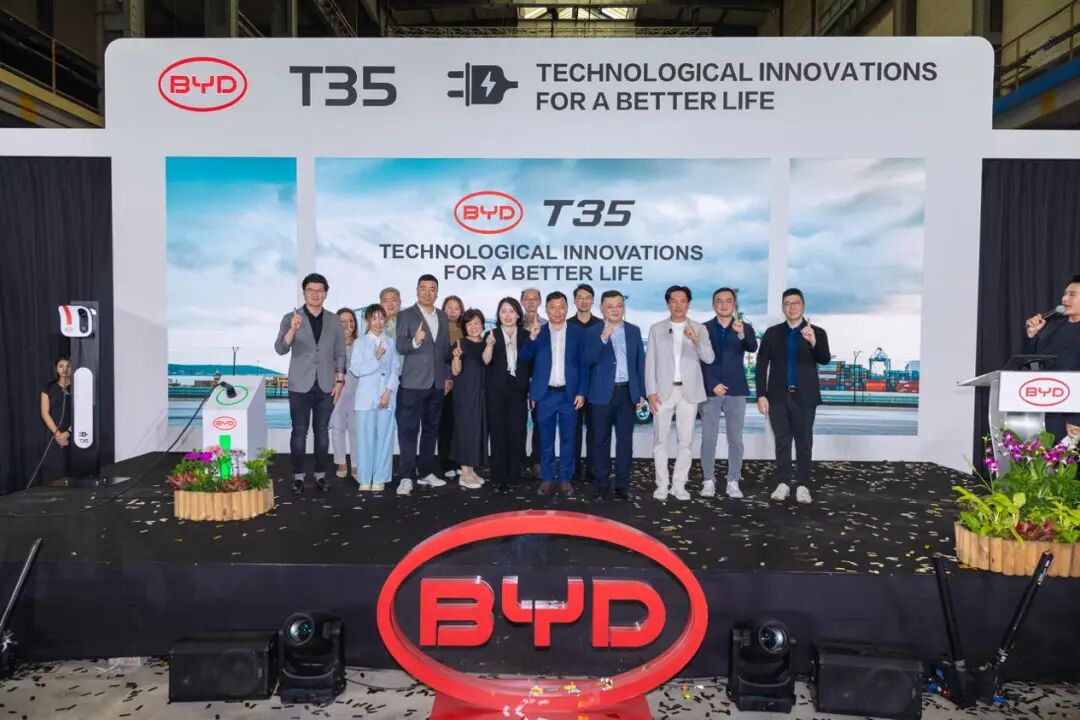
售价77万人民币!比亚迪T35登陆新加坡,田春龙揭秘“破局密码”
Xin Lang Cai Jing· 2026-03-30 06:43
除了法规限制,新加坡的气候和路况也对车辆配置提出了额外要求。全年高温高湿,加上城市路况高密度、频繁启停,对电池热管理、空调系统、底盘耐 久性都是考验。针对这些条件,T35在电池冷却系统上做了强化设计,确保在持续高温环境下电池温度仍能控制在合理区间;空调系统的能耗效率也经过 优化,以平衡驾驶舱舒适度与整车续航;底盘和悬挂系统则针对城市道路频繁启停和部分路面条件进行了耐久性加强。这些,都是为了让T35真正适应新 加坡的日常运营。 "新加坡绝对是一个靠品质,而不是打价格战就能进入的市场。所以大家看到我们的定价也很惊讶,14.3万新币(77万人民币)!"田春龙补充道。 除了在产品方面精雕细琢,比亚迪在充电桩选择和充电标准制定上同样深度参与当地建设。田春龙表示,从早期的电动大巴、环卫车,到如今的T35小 卡,比亚迪结合本地使用习惯,提供了从直流桩、交流桩到未来快充桩的整体方案。通过"车+桩"的打包方式,能够让用户在购车时同步获得充电配套支 持。 "在T35上市之前,我们的电动大巴、重卡、乘用车已经进入了当地市场。尤其是公交车,新加坡的公交车是政府采购,有非常严格的认证和审核过程, 这实际上代表了一个政府对整个品牌的信任 ...


仅为丰田1/10!日本大幅削减比亚迪购车补贴
Guan Cha Zhe Wang· 2026-03-30 06:42
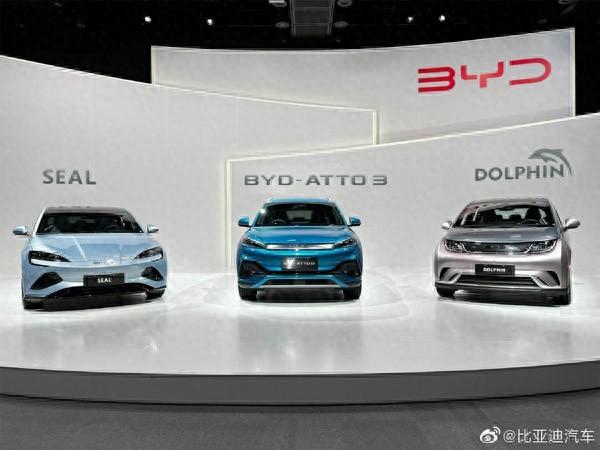
Core Viewpoint - The Japanese Ministry of Economy, Trade and Industry has significantly reduced the subsidy for BYD's electric vehicles, dropping it to 150,000 yen (approximately 936 USD or 6,486.15 RMB), which is more than a 50% cut from previous levels [1][5]. Group 1: Subsidy Changes - The revised subsidy scheme will take effect in April 2023, with the new rules applying to affected models starting January 2027 [1][5]. - Previously, BYD's subsidies ranged from 350,000 to 400,000 yen (approximately 1,510 to 1,730 RMB), but the new amount places BYD at the lowest subsidy level among Japanese car dealers [3][7]. - In contrast, Toyota's bZ4X, which uses domestically produced batteries, maintains the highest subsidy of 1,300,000 yen (approximately 59,200 RMB), about ten times that of BYD [3][7]. Group 2: Industry Reactions - BYD's Japan representative expressed disappointment over the subsidy cuts, indicating that it would negatively impact consumers [3][7]. - The Japanese government justified the subsidy reductions by stating that BYD's models received lower comprehensive evaluation scores [3][7]. - Concerns have been raised regarding the fairness of the evaluation process, with BYD's president claiming that the company received an unjust score despite its efforts in establishing fast-charging infrastructure [4][9]. Group 3: Broader Implications - Analysts suggest that the subsidy adjustments may be a result of the US-Japan tariff agreement, aimed at ensuring fair competition conditions [4][9]. - The Ministry of Economy, Trade and Industry acknowledged that the adjustments were based on the consensus reached in the US-Japan tariff agreement [4][9]. - There are allegations of preferential treatment towards certain automakers, as the evaluation criteria have not changed, raising questions about transparency [5][9].
小摩:升比亚迪股份(01211)目标价至120港元 油价波动下电车销售或更强
Zhi Tong Cai Jing· 2026-03-30 06:18
该信息由智通财经网提供 智通财经APP获悉,摩根大通发布研报称,比亚迪股份(01211)H股年初至今上升8%,跑赢MSCI中国指 数及同业,部分因市场预期若今年油价维持在每桶80美元或以上,国内及全球的新能源汽车需求将较预 期强劲。该行分析亦显示,在过往油价波动期间,比亚迪不仅跑赢MSCI中国汽车股,更跑赢整体市 场,尤其当油价高于每桶80美元时。基本面方面,该行上调比亚迪国内及出口的销量预测,将比亚迪H 股目标价由110港元升至120港元,比亚迪(002594.SZ)A股目标价由95元升至120元人民币,维持"增 持"评级。 摩根大通指比亚迪推动正面动能的因素包括:(1)比亚迪近期在国内市场推出的超快充策略; (2)全球工厂 自2026年第二季起陆续投产,例如匈牙利、印尼、马来西亚及巴西。 ...
小摩:升比亚迪股份(01211.HK)目标价至120港元 油价波动下电车销售或更强
Sou Hu Cai Jing· 2026-03-30 06:18
摩根大通发布研报称,比亚迪股份(01211.HK)H股年初至今上升8%,跑赢MSCI中国指数及同业,部分 因市场预期若今年油价维持在每桶80美元或以上,国内及全球的新能源汽车需求将较预期强劲。该行分 析亦显示,在过往油价波动期间,比亚迪不仅跑赢MSCI中国汽车股,更跑赢整体市场,尤其当油价高 于每桶80美元时。基本面方面,该行上调比亚迪国内及出口的销量预测,将比亚迪H股目标价由110港 元升至120港元,比亚迪(002594.SZ)A股目标价由95元升至120元人民币,维持"增持"评级。 投行对该股的评级以区间操作(Tranding Buy)为主,近90天内共有1家投行给出区间操作(Tranding Buy)评 级,近90天的目标均价为106港元。群益证券(香港)有限公司最新一份研报给予比亚迪股份区间操作 (Tranding Buy)评级,目标价106港元。 以上内容为证券之星据公开信息整理,由AI算法生成(网信算备310104345710301240019号),不构成 投资建议。 机构评级详情见下表: 比亚迪股份港股市值3782.85亿港元,在汽车整车行业中排名第1。主要指标见下表: ...

小摩:升比亚迪股份目标价至120港元 油价波动下电车销售或更强
Zhi Tong Cai Jing· 2026-03-30 06:16
摩根大通指比亚迪推动正面动能的因素包括:(1)比亚迪近期在国内市场推出的超快充策略; (2)全球工厂 自2026年第二季起陆续投产,例如匈牙利、印尼、马来西亚及巴西。 智通财经APP获悉,摩根大通发布研报称,比亚迪股份(01211)H股年初至今上升8%,跑赢MSCI中国指 数及同业,部分因市场预期若今年油价维持在每桶80美元或以上,国内及全球的新能源汽车需求将较预 期强劲。该行分析亦显示,在过往油价波动期间,比亚迪不仅跑赢MSCI中国汽车股,更跑赢整体市 场,尤其当油价高于每桶80美元时。基本面方面,该行上调比亚迪国内及出口的销量预测,将比亚迪H 股目标价由110港元升至120港元,比亚迪(002594.SZ)A股目标价由95元升至120元人民币,维持"增 持"评级。 ...
比亚迪:关注国内闪充平权及海外销量高增-20260330
HTSC· 2026-03-30 05:50
Investment Rating - The report maintains a "Buy" rating for the company with a target price of RMB 115.17, adjusted from the previous RMB 130.63 [7][12]. Core Insights - The company reported a revenue of RMB 804 billion for 2025, a year-on-year increase of 3%, but a decline in net profit attributable to shareholders to RMB 32.6 billion, down 19% year-on-year, primarily due to intensified industry competition affecting gross margins [1][2]. - The company is expected to benefit from advancements in fast-charging and intelligent driving technologies, which are anticipated to enhance domestic market share. Additionally, European carbon emission policies are expected to create opportunities for new installations, and localized production is projected to unlock profit potential [1][2]. - The company plans to launch a comprehensive new vehicle lineup in 2026, featuring the second-generation blade battery and fast-charging technology, which significantly reduces charging times [3]. - The company's overseas revenue reached RMB 310.7 billion in 2025, increasing its revenue share from 29% to 39%. The outlook for 2026 is optimistic, with expectations of a 49% year-on-year increase in export volume, driven by demand in Europe and localized production in various regions [4]. Financial Performance Summary - The automotive gross margin for 2025 was 20.5%, a decrease of 1.8 percentage points year-on-year. The average selling price (ASP) per vehicle and net profit per vehicle (excluding BYD Electronics) were RMB 141,000 and RMB 6,000, respectively, both showing declines of 2% and 25% year-on-year [2]. - Research and development expenses for 2025 were RMB 63.4 billion, a 17% increase year-on-year, reflecting the company's commitment to maintaining a leading position in battery technology [2]. - The company expects revenues of RMB 922.5 billion and RMB 1,075.4 billion for 2026 and 2027, respectively, with net profits projected at RMB 40 billion and RMB 52.4 billion [5][11]. Valuation and Estimates - The report employs a segmented valuation approach, estimating a price-to-earnings (P/E) ratio of 26 times for the automotive business in 2026, reflecting a 30% premium over comparable companies due to anticipated acceleration in overseas expansion [5][12]. - The estimated total market capitalization for the company is projected at RMB 1,050 billion, with the automotive segment valued at RMB 910 billion and the mobile components and assembly business at RMB 140 billion [12][13].
大行评级丨小摩:上调比亚迪AH股目标价,油价波动下电车销售或更强
Ge Long Hui· 2026-03-30 05:28
摩根大通发表研报指,比亚迪H股年初至今表现跑赢MSCI中国指数及同业,部分因市场预期若今年油 价维持在每桶80美元或以上,国内及全球的新能源汽车需求将较预期强劲。该行分析亦显示,在过往油 价波动期间,比亚迪不仅跑赢MSCI中国汽车股,更跑赢整体市场,尤其当油价高于每桶80美元时。 基本面方面,该行上调比亚迪国内及出口的销量预测,将比亚迪H股目标价由110港元上调至120港元, A股目标价由95元升至120元,维持"增持"评级。该行指,比亚迪推动正面动能的因素包括:(1)比亚迪 近期在国内市场推出的超快充策略;(2)全球工厂自2026年第二季起陆续投产,例如匈牙利、印尼、马 来西亚及巴西。 ...
比亚迪-第四季度初步解读:营业利润符合高盛预期,净利润因汇兑损失及补贴减少而不及预期
Goldman Sachs· 2026-03-30 05:15
Investment Rating - The report assigns a "Buy" rating for BYD Co. with a 12-month price target of Rmb137 for A-shares and HK$134 for H-shares, indicating an upside potential of 30.1% and 25.8% respectively [7][9]. Core Insights - BYD is positioned as a leading NEV maker both in China and globally, capturing mass-market demand while building premium brands domestically. The company is expected to see significant growth from overseas markets, contributing 92% of incremental vehicle sales volume from 2024 to 2028E and increasing overseas profit contribution from 21% in 2024 to 76% by 2028E [6]. - The total vehicle sales volume is projected to grow from 4.3 million in 2024 to 7.1 million by 2030E, supported by a comprehensive product portfolio and strong in-house capabilities for vehicle technology innovation [6]. - The report highlights that BYD's A/H shares are trading below their historical average 12-month forward P/Es, which is viewed as attractive for investors [6]. Financial Performance Summary - In 4Q25, BYD reported revenue of Rmb237.7 billion, which was 6% lower than expected, primarily due to higher dealer rebates and lower revenue from external battery sales [1]. - Gross profit increased by 7% to Rmb41.4 billion, with a gross profit margin of 17.4%, exceeding expectations due to better cost control and increased premium brand contributions [1][5]. - Net profit fell by 20% to Rmb9.3 billion, missing expectations mainly due to foreign exchange losses of Rmb1.66 billion and lower government subsidies of Rmb3.3 billion [1][5].