
BYD(BYDDY)

Search documents
高盛:新款折叠手机带动比亚迪电子(00285)增长 重申“买入”评级
智通财经网· 2026-01-20 09:49
Core Viewpoint - Goldman Sachs reports that BYD Electronics (00285) management anticipates higher unit value from upcoming foldable smartphones from major brand clients, which is expected to support future growth [1] Group 1: Business Outlook - Management remains optimistic about the AI infrastructure cycle and is seeking opportunities among global and local clients [1] - BYD Electronics expects an increase in automotive parts business shipments by 2026, with a faster rise in suspension system shipments and greater penetration of ADAS systems into more economical models [1] Group 2: Strategic Focus - The company maintains a positive view on its strategy of focusing on leading clients and expanding its product line into AI infrastructure [1] - Goldman Sachs reiterates a "Buy" rating for BYD Electronics with a target price of HKD 53.08 [1]

理奇智能IPO:过半收入来自宁德比亚迪,回款压力大坏账攀升
3 6 Ke· 2026-01-20 08:02
Core Viewpoint - The company, Wuxi Riqi Intelligent Equipment Co., Ltd., is preparing for an IPO on the Shenzhen Stock Exchange, aiming to raise 1 billion yuan, but faces challenges such as slowing revenue growth, declining gross margins, and increasing legal disputes with suppliers [1][2][4]. Financial Performance - Revenue and net profit for the company have shown rapid growth in recent years, with figures of 619 million yuan, 1.721 billion yuan, 2.173 billion yuan, and 1.189 billion yuan for the first half of 2025 [2]. - The growth rates for revenue in 2023 and 2024 were 178.17% and 26.32%, respectively, while net profit growth rates were 122.65% and 13.05% [2]. Gross Margin Trends - The company's gross margin has been declining, with figures of 16.48%, 27.80%, 28.78%, and 27.13% over the reporting periods. When excluding inventory valuation impacts, the margins were 41.93%, 40.08%, 35.97%, and 31.20% [3]. - The decline in gross margin is attributed to customer price pressures and intensified competition, leading to lower pricing strategies to maintain orders [3]. Customer Concentration Risks - Revenue is highly concentrated among major clients, with the top five customers accounting for over 70% of total revenue. Notably, BYD and CATL contribute nearly half of the company's revenue [1][3]. - Sales to CATL peaked in 2023 and have since begun to decline, indicating increasing dependency risks on a few large clients [3]. Legal and Financial Pressures - The company has faced multiple lawsuits from suppliers over contract performance and payment issues, with three ongoing cases involving amounts exceeding 1 million yuan [4][5]. - The accounts receivable and contract assets have been rising, with balances of 228 million yuan, 414 million yuan, 666 million yuan, and 725 million yuan, indicating increasing financial pressure [6]. Bad Debt Trends - Bad debt losses have been increasing, with amounts of 3 million yuan, 11 million yuan, 11 million yuan, and 0 million yuan reported over the periods, reflecting the growing scale of accounts receivable [6]. Information Disclosure Issues - The company has faced scrutiny over incomplete disclosures regarding its executives' external positions and tax compliance issues, including a tax debt of 16.3364 million yuan [7][9].

韩国本土电动车企份额萎缩,比亚迪、特斯拉异军突起
Guan Cha Zhe Wang· 2026-01-20 07:16
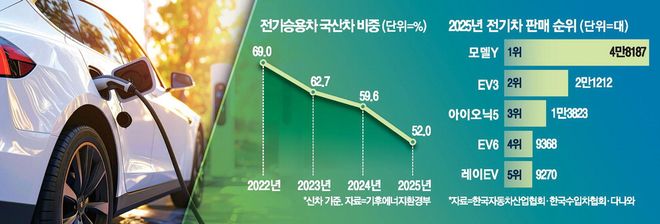
Core Insights - The market share of South Korean domestic electric vehicle manufacturers is declining, with a significant shift towards imported models like Tesla and BYD, raising concerns about the competitiveness of the local automotive industry [1][3][5] Market Trends - By 2025, the market share of South Korean domestic electric vehicle companies is projected to be 52%, down from 69% in 2022, with a gradual decline to 62.7% in 2023 and 59.6% in 2024 [1][3] - The younger consumer demographic shows a strong preference for imported models, particularly the Tesla Model Y and BYD Atto 3 [3][4] Sales Data - In 2025, Tesla and BYD are expected to be the top two electric vehicle brands in South Korea, with Tesla selling 59,916 units and BYD selling 6,107 units [3] - The Tesla Model Y is projected to be the best-selling imported vehicle in South Korea in 2025, with sales reaching 48,187 units [3] Competitive Landscape - Tesla's success in South Korea is attributed to cost advantages from its Shanghai Gigafactory, allowing for significant price reductions, including a decrease of approximately 20 million KRW (around 94,600 RMB) for a lower-priced Model Y version [3][4] - BYD is also making strides in the South Korean market with competitive pricing for models like the Atto 3, which has an official price around 30 million KRW (approximately 141,900 RMB) and can drop to just over 20 million KRW (around 94,600 RMB) after government subsidies [4] Government Policies and Industry Response - The South Korean government aims for half of new car sales to be zero-emission vehicles by 2030, but there are concerns that the market share of imported electric vehicles will continue to grow under current trends [4][5] - Experts suggest that existing subsidy policies are insufficient to boost the adoption of domestic electric vehicles, despite higher subsidies for local brands compared to Tesla and BYD [5] - Recommendations include increasing budget support for future vehicle development and introducing a "domestic production incentive tax" to protect and nurture local manufacturing [5]


福特或采购比亚迪电池加码混动市场?官方回应
Mei Ri Jing Ji Xin Wen· 2026-01-20 06:35
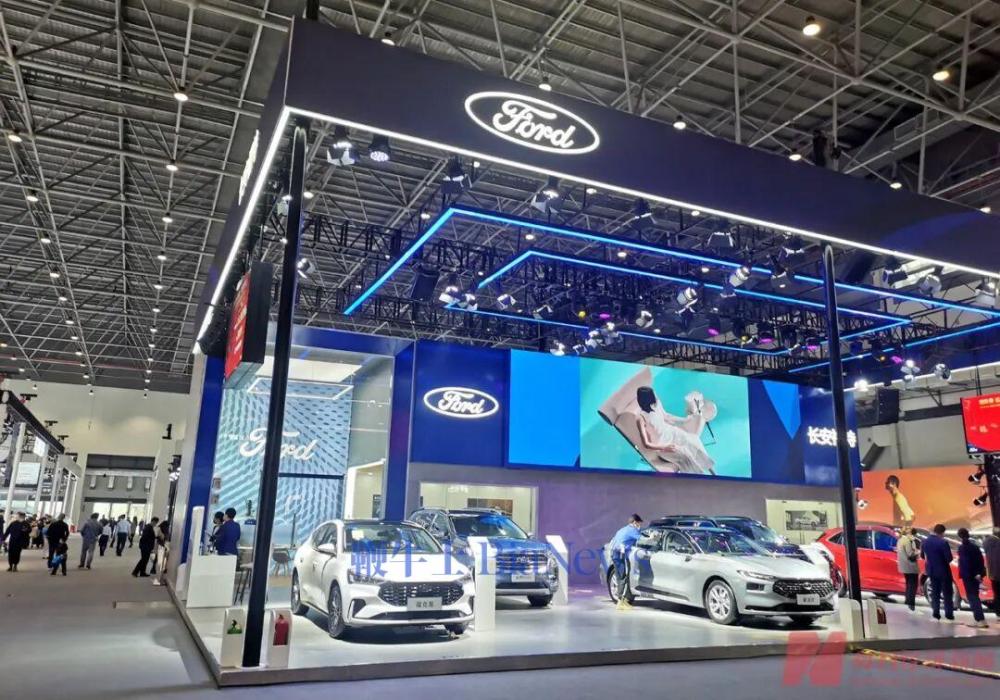
Core Viewpoint - Ford is in discussions with BYD for a battery cooperation plan, focusing on procuring BYD batteries for some of Ford's hybrid models, particularly for use in factories outside the U.S. [1] Group 1: Ford's Strategic Shift - Recently, Ford canceled a significant battery procurement contract with LG Energy Solution worth approximately 459 million RMB, retaining only a portion of the supply for 2026 to 2030 [2] - The cancellation was attributed to changes in policy environment and electric vehicle demand outlook, leading Ford to stop production of certain electric vehicle models [2] - Ford's recent strategic adjustment includes a shift towards high-return businesses, increasing investments in commercial vehicles and battery storage, while reducing focus on large electric vehicle production [4] Group 2: Battery Market Dynamics - The global battery installation volume reached 1,046 GWh in the first 11 months of 2025, marking a 32.6% year-on-year increase, with Chinese companies holding six out of the top ten spots in the global battery market [3] - BYD's lithium iron phosphate (LFP) battery technology is favored for its lower cost (30% cheaper than nickel-cobalt-manganese batteries) and superior safety and lifecycle performance [3] - The demand for LFP batteries is projected to grow by 38% to 420 GWh in 2025, capturing over 54% of the total battery market share [3] Group 3: Historical Context and Future Prospects - Ford and BYD have previously collaborated on battery supply, notably for the launch of the Ford Mustang's first electric SUV in 2021, establishing a foundation for renewed partnership [6] - The current strategic shift towards hybrid vehicles creates a pressing need for reliable and adaptable hybrid batteries, aligning with BYD's expertise in LFP battery production [6]

纯电续航超210km,综合续航破2000km!2026款比亚迪秦/宋长续航版南京上市
Yang Zi Wan Bao Wang· 2026-01-20 04:45
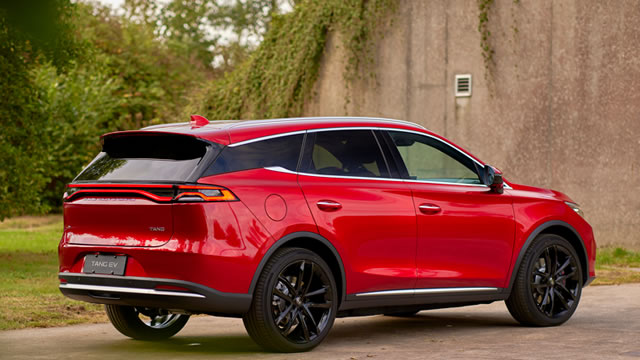
Core Viewpoint - The launch of BYD's 2026 models, including the Qin and Song series, emphasizes long-range capabilities and enhanced comfort for family travel, positioning these vehicles as leaders in the plug-in hybrid market [1][2][3] Group 1: Product Features - The 2026 Qin PLUS DM-i features a 25.28 kW·h battery, offering a pure electric range of up to 210 kilometers and a fuel consumption of only 2.79 liters per 100 kilometers when the battery is depleted [2] - The 2026 Qin L DM-i also includes a 25.28 kW·h battery, with a combined range of 2110 kilometers when fully charged and fueled, and a low fuel consumption of 2.79 liters per 100 kilometers [2] - The 2026 Song Pro DM-i is equipped with a larger blade battery, providing a pure electric range of 220 kilometers, allowing for zero fuel consumption during daily commutes [3] Group 2: Technological Innovations - The vehicles are equipped with the "Tian Shen Zhi Yan" auxiliary driving system, enhancing safety and driving ease [2][3] - The interior of the Qin L DM-i features advanced technology such as an 8.8-inch full LCD instrument panel and smart connectivity with devices like intelligent child seats [2] - The Song Pro DM-i supports OTA remote upgrades, ensuring that the smart configurations remain up-to-date [3] Group 3: Market Positioning and Strategy - The launch event highlighted BYD's commitment to innovation in smart, electric, and comfortable vehicles, aiming to redefine family travel standards [1][3] - The Qin and Song families are positioned as core models in BYD's strategy to capture the mainstream market with their strong sales and reputation [1] - The delivery ceremony for the first batch of vehicles marked a significant step in BYD's outreach to families, symbolizing the brand's vision of enhancing everyday life through advanced automotive technology [3]
高盛:新款折叠手机带动比亚迪电子增长 重申“买入”评级
Jin Rong Jie· 2026-01-20 03:20
Group 1 - Goldman Sachs reports that BYD Electronic (00285.HK) management anticipates higher unit value from new foldable phones launched by major brand clients, which is expected to support future growth [1] - Management remains optimistic about the AI infrastructure cycle and is seeking opportunities among global and local clients [1] - BYD Electronic expects an increase in automotive parts shipment volume by 2026, with a faster rise in suspension system shipments and greater penetration of ADAS systems into more economical models [1] Group 2 - The firm maintains a positive view on BYD Electronic's strategy of focusing on leading clients and expanding its product line into AI infrastructure initiatives [1] - Goldman Sachs reiterates a "Buy" rating for BYD Electronic with a target price of HKD 53.08 [1]
大行评级|高盛:主要客户的新款折叠手机料将带动比亚迪电子增长,重申“买入”评级
Ge Long Hui· 2026-01-20 03:08
Core Viewpoint - Goldman Sachs reports that BYD Electronics' management anticipates higher unit value from new foldable phones launched by major brand clients, which is expected to support future growth [1] Group 1: Business Outlook - Management remains optimistic about the AI infrastructure cycle and is actively seeking opportunities among global and local clients [1] - The company expects an increase in automotive parts shipment volume by 2026, with a notable acceleration in suspension system shipments and greater penetration of ADAS systems into more economical models [1] Group 2: Investment Rating - Goldman Sachs maintains a positive view on BYD Electronics' strategy of focusing on leading clients and expanding its product line into AI infrastructure, reiterating a "Buy" rating with a target price of HKD 53.08 [1]
Can BYD Ever Earn Premium Margins?
The Motley Fool· 2026-01-19 22:30
Core Viewpoint - BYD has achieved significant scale in the electric vehicle (EV) market but faces challenges in earning premium margins that justify long-term multiple expansion for investors [1][10]. Group 1: Margin Structure - BYD's strategy focuses on cost leadership rather than premium pricing, which limits its margin potential [2][3]. - The company's product mix is heavily oriented towards mass-market vehicles and plug-in hybrids, where competition is fierce and pricing power is restricted [3][5]. - BYD's brand recognition is improving, particularly in China, but it still lacks the emotional connection necessary for premium pricing [4][5]. Group 2: Software and Services - Software could be a key factor in achieving premium margins, with BYD making strides in advanced driver-assistance systems and a unified operating system [6][7]. - The challenge lies in monetizing these software features, as offering them at low costs may hinder future revenue generation [7]. - For margins to improve, BYD needs to charge for advanced software features and develop subscription or service-based revenue streams [7][12]. Group 3: Investment Outlook - BYD is unlikely to achieve luxury-brand margins but could still deliver respectable long-term returns through durable profitability on a large scale [8][10]. - The company may evolve into a high-quality industrial compounder rather than a premium-margin tech firm [9][10]. - Investors should focus on BYD's ability to maintain solid operating margins, strong free cash flow, and incremental upside from software and energy [12][13].
比亚迪:公司成功开发了多款圆柱电池以及软包电池
Zheng Quan Ri Bao Wang· 2026-01-19 13:42
Core Viewpoint - BYD has successfully developed multiple cylindrical and soft-pack batteries to meet the increasing demand for small power batteries in various applications [1] Group 1: Company Developments - The company has responded to investor inquiries regarding the growing demand for small power batteries [1] - BYD's small power batteries can be applied in various fields, including electric two-wheelers, electric three-wheelers, and micro electric vehicles [1] Group 2: Market Trends - There is an increasing market demand for small power batteries, prompting the company to focus on technological innovation [1]
粤企领跑扩招涨薪潮,腾讯、比亚迪、研祥如何招才引智
Nan Fang Du Shi Bao· 2026-01-19 13:17
以上内容由AI大模型生成,仅供参考 "稳就业"关乎"稳经济"的大局。2025年12月,中央经济工作会议在部署2026年经济工作时明确要求,实 施稳岗扩容提质行动,切实稳定高校毕业生、农民工等重点群体就业。开年以来,广东作为"我国经济 第一大省",率先把稳岗扩容提质的要求落到企业用工与人才机制上,一批粤企在校招、实习、技能岗 位补充等方面持续加力,成为稳就业的重要承接端。 从用工市场信号看,扩招与涨薪正在同步出现。据不完全统计,2025年,比亚迪(002594)新发"AI infra算法工程师"岗位平均月薪上涨超过36%;大疆"工业设计师"岗位平均月薪上涨20%,腾讯"AI 产品 经理"岗位平均月薪上涨5.56%。岗位与薪酬变化背后,指向同一条主线:新技术驱动的岗位需求加速 释放,企业在关键岗位上提升吸引力,同时通过更系统的人才培养与发展通道提高留用率、提升就业质 量。 腾讯滨海总部大厦。 近日,南都湾财社记者采访了腾讯、比亚迪、研祥集团三家企业,发现"稳就业"的落点正在发生迁移: 从"多招人"转向"招对人、育好人、留住人"。腾讯作为平台企业,将扩招重点更多压在AI等新兴业务 上;比亚迪作为制造业龙头,在产业链 ...
