
CDL(CDEVY)

Search documents
推动城市发展绿色低碳转型 重磅文件明确三大任务
Di Yi Cai Jing· 2025-08-29 09:05
Core Viewpoint - The recent issuance of the "Opinions on Promoting High-Quality Urban Development" emphasizes the need for cities to transition towards green and low-carbon development, focusing on energy conservation, low-carbon lifestyles, and ecological environment governance [1] Group 1: Urban Development and Industrialization - Cities are crucial for industrial development and are closely linked to economic growth and urbanization in China, with urban areas accounting for 40% of the population and 60% of the economic output [2] - Major cities like Shanghai, Shenzhen, and Guangzhou are leading in green and low-carbon transitions, implementing actions to enhance industrial energy and water efficiency [2] - The urbanization rate in China is projected to reach 67% by 2024, indicating a significant concentration of energy consumption in urban areas [2] Group 2: Ecological Environment Governance - Urban areas are identified as key regions for ecological environment protection, with a significant portion of cities failing to meet air quality standards [6] - The "Opinions" propose measures for ecological restoration, urban green space development, and improved waste management to enhance urban environmental quality [6] - The "Implementation Plan for Beautiful Cities" aims for noticeable green and low-carbon transformation by 2027, with a comprehensive governance system by 2035 [8] Group 3: Transportation Modernization - The modernization of urban transportation is essential for urban development, with initiatives promoting public transport and green commuting [4] - Beijing has developed a comprehensive transportation system that prioritizes public transit, achieving a high integration of bus and rail services [5] Group 4: Policy Implementation and Local Government Role - Local governments are encouraged to tailor their urban development plans based on the "Beautiful City" construction indicators, focusing on local characteristics [9] - The establishment of an evaluation mechanism for urban ecological governance is planned to monitor progress and guide future initiatives [9]


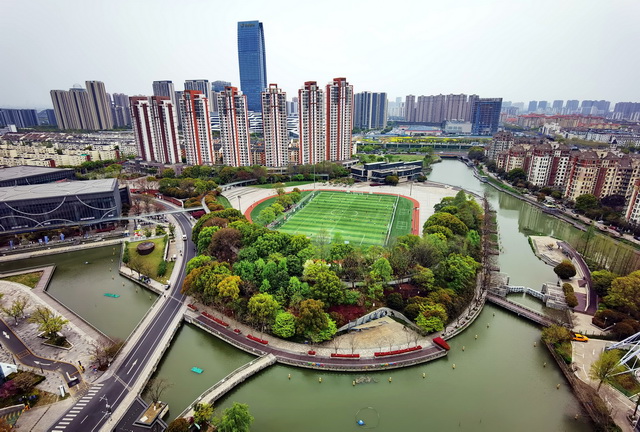
推动城市发展绿色低碳转型,重磅文件明确三大任务
Di Yi Cai Jing· 2025-08-29 03:26
Group 1: Urban Development and Economic Impact - Urban areas occupy only 2% of China's total land but house 40% of the population, contribute 60% of the economic output, and account for 70% of the service industry [2][4] - The "Opinions" document emphasizes the need for green and low-carbon transformation in urban development, focusing on energy conservation and carbon reduction in production, promoting green lifestyles, and enhancing urban ecological environment governance [1][2] Group 2: Industrial Development and Green Transition - Cities are crucial for industrial development and have a close relationship with economic growth and urbanization in China [2][4] - The "Opinions" document outlines actions to improve industrial energy and water efficiency, promote advanced green technologies, and manage high-energy-consuming projects [2][4] Group 3: Urban Transportation Modernization - The modernization and intelligence of urban transportation are essential for urban development, with a focus on public transport and green commuting [4][5] - Beijing has developed a comprehensive transportation system that prioritizes rail and bus integration, achieving a high level of connectivity [5] Group 4: Ecological Environment Governance - Urban areas are key to ecological environment protection, with significant challenges remaining in air quality and waste management [6][8] - The "Opinions" document calls for enhanced ecological environment management, including urban ecological restoration, green space development, and improved waste and sewage management [6][8] Group 5: Future Goals and Implementation - By 2027, the aim is to see significant progress in green and low-carbon urban lifestyles, with a comprehensive ecological governance system established by 2035 [8][9] - The government encourages local initiatives to address ecological challenges and optimize urban layouts, with a focus on sustainable development across various regions [8][9]
中共中央 国务院:推动城市发展绿色低碳转型
Xin Hua She· 2025-08-29 00:14
Group 1: Core Views - The document outlines the central government's opinions on promoting high-quality urban development, emphasizing green and low-carbon transformation in cities [4][5][12] - It highlights the shift from rapid urbanization to stable development, focusing on quality improvement and efficiency in existing urban structures [4][5] Group 2: Urban Infrastructure and Services - The plan calls for optimizing urban infrastructure layout, structure, and function, including the construction of underground utility corridors and enhancing 5G and gigabit optical network coverage [2][11] - It emphasizes the need for a modern comprehensive transportation system to improve commuting efficiency and the development of convenient facilities like parking spaces and charging stations [2][11] Group 3: Green and Low-Carbon Transition - The document stresses the importance of energy conservation and carbon reduction in production, promoting advanced green technologies and the orderly exit of outdated capacities [12] - It advocates for the development of green buildings and the implementation of a carbon footprint labeling system for key products [12] Group 4: Urban Governance and Management - The document proposes enhancing urban governance capabilities through a coordinated management system that involves various stakeholders, including community organizations [19][20] - It emphasizes the need for digital transformation in urban governance, promoting data integration and efficient service delivery [19][20] Group 5: Cultural and Community Development - The plan encourages the protection and utilization of urban historical and cultural resources, promoting community engagement in cultural heritage preservation [17][18] - It aims to enrich urban cultural life by enhancing public cultural spaces and promoting diverse cultural products [18]
中央发布重磅文件 明确城市高质量发展“路线图” 优化现代化城市体系 培育壮大城市发展新动能
Shang Hai Zheng Quan Bao· 2025-08-28 19:39
Core Viewpoint - The document outlines the "Opinions on Promoting High-Quality Urban Development" released by the Central Committee of the Communist Party of China and the State Council, emphasizing the need for significant progress in modern urban construction by 2030 and the establishment of a modern urban system by 2035 [1] Group 1: Key Tasks - The opinions focus on seven key tasks, including optimizing the modern urban system, fostering new urban development momentum, creating high-quality urban living spaces, promoting green and low-carbon urban transformation, enhancing urban safety resilience, fostering cultural prosperity, and improving urban governance capabilities [1] - The document advocates for the development of group-style and networked modern urban clusters, supporting world-class urban clusters in regions like Beijing-Tianjin-Hebei, Yangtze River Delta, and Guangdong-Hong Kong-Macao Greater Bay Area [1][2] Group 2: Urban Development Momentum - The opinions suggest enhancing urban development dynamics through tailored strategies, activating existing urban resources, establishing a sustainable urban construction and operation financing system, and improving urban openness and cooperation [2] - It emphasizes the need to implement national strategic emerging industry cluster development projects and to cultivate advanced manufacturing clusters [2] Group 3: Resource Activation and Financing - The document calls for a comprehensive inventory of urban assets, including buildings and land, and the renovation of old factories and inefficient buildings [3] - It proposes the establishment of a sustainable financing system for urban construction, involving local government responsibilities and innovative financial policies to attract social capital [3] Group 4: High-Quality Living Spaces - The opinions advocate for systematic promotion of quality housing and complete community construction, aiming to meet diverse housing needs and support the renovation of old residential areas [3] Group 5: Implementation and Impact - The opinions serve as a top-level design to implement the spirit of the Central Urban Work Conference, providing a clear roadmap for urban high-quality development, which is expected to drive urban structure optimization and quality enhancement [4]
中央重磅文件提及房地产 专家:对于下一阶段城市发展具有战略意义
Mei Ri Jing Ji Xin Wen· 2025-08-28 17:46
Core Viewpoint - The document outlines a strategic shift in urban development in China, moving from rapid growth to stable development, emphasizing quality improvement in existing urban areas and housing [1]. Group 1: Urban Development Strategy - The central government emphasizes the transition from large-scale expansion to enhancing existing urban quality, focusing on "good housing" and complete community construction [1]. - The document highlights the importance of improving housing design, construction, maintenance, and service levels to meet diverse housing needs [1]. - It calls for systematic urban renewal, including the renovation of old neighborhoods and the transformation of dilapidated housing [1]. Group 2: Implications for Real Estate Sector - The new policies are expected to benefit various sectors, including commodity housing, property management, and community renewal [2]. - The focus on activating urban stock resources and utilizing underperforming assets is seen as a positive step for the next phase of real estate development [2]. - The emphasis on understanding the inventory of urban housing, facilities, and land resources will provide clearer goals and pathways for local urban development [3].
“微更新 轻改造”为城市发展添活力 老街巷、老厂房、老社区重“焕”生
Yang Shi Wang· 2025-08-26 14:36
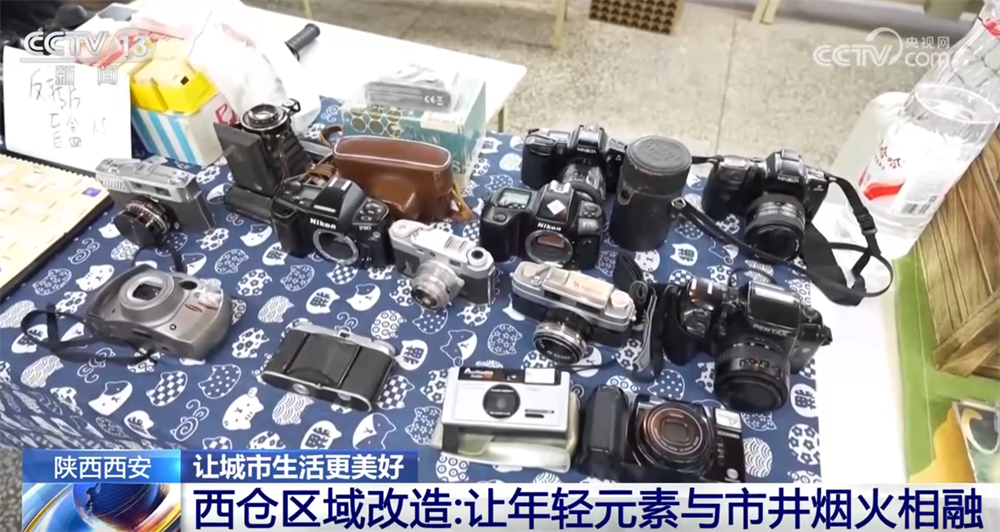
Core Viewpoint - The "micro-update and light renovation" model emphasizes small-scale, low-cost urban transformations that preserve historical context while enhancing functionality [1] Group 1: Urban Renewal in Shaanxi - Various regions in Shaanxi have adopted the "micro-update and light renovation" concept to revitalize old streets, factories, and communities [1][6] - The West Cang area in Xi'an has been transformed into a cultural park, integrating young elements with traditional urban life, attracting numerous visitors [2][4] - The former Northwest Cotton Factory has been repurposed into a textile industrial museum, while old warehouses have been converted into creative districts [8] Group 2: Community Engagement and Development - In Xi'an, local residents are actively involved in the development of old streets, with individuals like Ju A Qiao renovating their homes to open creative cafes [10] - In Yan'an, pocket parks have been created to enhance community life, addressing local recreational needs through small-scale, targeted improvements [11][13] - The focus in Yan'an is on transforming neglected urban corners, repairing roads, and upgrading old neighborhoods to improve residents' quality of life [13]
夯实城市发展的绿色底色——深圳践行绿色低碳发展理念观察
Xin Hua Wang· 2025-08-26 13:38
Group 1 - The "Green Car Charging Green Electricity" incentive program was launched in Shenzhen, allowing over 400 car owners who charged 1,000 kilowatt-hours of green electricity to apply for a personal green certificate issued by the National Energy Administration [1] - Shenzhen has integrated green low-carbon concepts into various sectors, establishing a sustainable development path and enhancing the city's green foundation [1] - The Southern Power Grid Shenzhen Supply Bureau reported that 11 charging stations in Shenzhen supply 100% green electricity from regions like Yunnan, Guizhou, and Guangxi, and have facilitated over 680 billion kilowatt-hours of green electricity and certificate transactions for more than 1,200 key enterprises in the Guangdong-Hong Kong-Macao Greater Bay Area [1] Group 2 - Shenzhen's carbon emission trading market has been operational for over 10 years, with cumulative trading volume exceeding 10 million tons and transaction value surpassing 2.3 billion yuan by May 2024 [2] - The city achieved 100% electrification of public buses in 2017, followed by the electrification of taxis and ride-hailing services, resulting in a total of 971,000 new energy vehicles by the end of 2023 [2] Group 3 - In the industrial sector, Shenzhen has created over 120 national-level green factories through energy efficiency diagnostics and energy-saving technology renovations [3] - The city has implemented strict energy-saving measures in construction, monitoring carbon emissions from over 20,000 key buildings in real-time [3] - By 2023, Shenzhen's energy consumption, water consumption, and carbon emission intensity per 10,000 GDP were reduced to one-third, one-eighth, and one-fifth of the national average, respectively [3] - Shenzhen has built 1,320 parks, promoting a lifestyle where residents can easily access green spaces [3] - The Director of the Shenzhen Development and Reform Commission emphasized the city's commitment to green low-carbon development, aiming for carbon peak and neutrality while promoting economic growth [3]
从“苏超力量”看城市发展逻辑转变
Xin Hua Ri Bao· 2025-08-26 07:25
Core Perspective - The emergence of "Su Super" reflects a shift in urban development logic from a material-oriented approach to a people-oriented approach, emphasizing emotional resonance and multi-dimensional collaboration [1][2][4][5][7][8] Group 1: Transition in Urban Development Logic - The transition from "material-oriented" to "people-oriented" development highlights the awakening of public participation, where citizens evolve from passive spectators to active participants in urban growth [2] - The shift from "homogeneous cities" to "unique cities" emphasizes the importance of cultural identity, where local characteristics become core competitive advantages [3] - The change from "function satisfaction" to "emotional resonance" indicates a focus on fulfilling emotional needs rather than just material requirements [4] Group 2: Economic and Structural Implications - The movement from "resource dependence" to "demand-driven" growth reflects a transformation in consumption preferences, prioritizing emotional experiences over mere material satisfaction [5][6] - The evolution from "single entity" to "multi-party collaboration" in urban governance promotes shared responsibilities and cooperative strategies among various stakeholders [7] - The transition from "local circulation" to "global outreach" signifies the need for cities to expand their influence beyond local boundaries, enhancing their attractiveness and competitive edge [8]
“微更新 轻改造”为城市发展添活力 老街巷、老厂房、老社区重“焕”生机
Yang Shi Wang· 2025-08-26 06:31
Core Viewpoint - The "micro-renovation and light transformation" model emphasizes small-scale, low-cost urban updates that preserve historical context while enhancing functionality [1] Group 1: Urban Renewal in Shaanxi - Shaanxi has been implementing the "micro-renovation and light transformation" concept to empower urban development, revitalizing old streets, factories, and communities [1][6] - The West Warehouse area in Xi'an, historically a granary, has been transformed into a cultural park, integrating modern elements with traditional aesthetics [4] - The transformation includes the establishment of a "new second-hand market" and other youth-oriented activities, breathing new life into the old city core [4] Group 2: Revitalization of Old Factories and Streets - In Xi'an, old factories and streets are being revitalized through urban "micro-renovation" efforts [6] - The former Northwest Cotton Mill has been converted into a textile industrial museum, while old warehouses have been transformed into creative districts [8] - Local residents are actively participating in the development of the old streets, with plans for creative businesses like cafes [10] Group 3: Community Enhancements in Yan'an - In Yan'an, small parks are being created in previously neglected areas, enhancing community life [11] - The focus is on transforming corner spaces, repairing roads, and upgrading old neighborhoods to improve residents' quality of life [13] - The "micro-renovation" approach in Yan'an aims for gradual improvements that meet local recreational and fitness needs [13]
城市发展要兼顾速度与温度
Jing Ji Ri Bao· 2025-08-25 21:59
Group 1 - The core idea of the article is the implementation of the "HuiShangBao" project in Taiyuan, Shanxi Province, which provides insurance compensation to individual businesses affected by road construction, reflecting a shift in urban development philosophy that balances infrastructure projects with public welfare [1][2] - The first batch of 64 eligible merchants received approximately 718,500 yuan in pre-compensation funds, highlighting the project's immediate financial support for those impacted by urban development [1] - The "HuiShangBao" project has covered 16,400 merchants and has cumulatively compensated over 106 million yuan, indicating its significant impact on the livelihoods of many families [1][2] Group 2 - The implementation of the "HuiShangBao" project serves as a supplement to administrative functions, internalizing the external costs of business losses due to road construction, which promotes a fairer commercial environment [2] - This innovative policy mechanism establishes a sustainable risk-sharing model rather than relying solely on fiscal subsidies, enhancing merchants' understanding and support for urban renovations [2] - The project exemplifies a governance model that balances efficiency and equity in urban development, suggesting that effective urban management requires translating humanistic care into institutional design [3]