Deutsche Bank AG(DB)

Search documents
历史重演?“大空头2.0”再现了!
华尔街见闻· 2025-11-06 10:31
Group 1 - Michael Burry is heavily shorting Nvidia and Palantir, with 80% of his portfolio focused on these positions, indicating a bearish outlook on the AI sector [2][3] - Deutsche Bank is considering shorting AI stocks to hedge against significant loan risks in the data center sector, reflecting a cautious approach similar to strategies used during the 2008 financial crisis [1][6] - Global regulatory bodies are warning about the potential AI asset bubble, with specific alerts from the Monetary Authority of Singapore and the Korean Exchange regarding overvalued tech and AI sectors [1][2] Group 2 - Deutsche Bank has made substantial loans to major tech companies like Alphabet, Microsoft, and Amazon, with estimates of total loans reaching several billion dollars [5][6] - The bank is exploring options for risk hedging, including shorting a basket of AI-related stocks and utilizing synthetic risk transfer (SRT) derivatives to manage loan default risks [6][8] - There is a notable internal contradiction within Deutsche Bank, as some analysts downplay concerns about an AI bubble while simultaneously considering risk mitigation strategies [8]



德银:AI眼中的2025年市场,人类投资者太悲观,自认为已进化,但行为模式依旧
美股IPO· 2025-11-06 08:43
Core Insights - The core conclusion of the Deutsche Bank report is that human investors are overly pessimistic and their investment behaviors are driven by irrationality, emotional responses, and cognitive biases, despite their belief in having evolved into a new investment era [2][6]. Group 1: Market Sentiment Analysis - The AI system dbLumina identified that investors exhibited extreme irrationality during market lows, particularly in April 2025, where fear dominated their actions [3][4]. - A significant finding was that "euphoria" was only detected during the peak of fear in April and May, serving as a perfect buy signal as investors rushed to cover positions after panic selling [5][9]. - Throughout 2025, the prevailing emotion among investors was "anxiety," which persisted regardless of market fluctuations [4][9]. Group 2: Cognitive Biases and Behavioral Patterns - The report highlights that investors are still influenced by outdated cognitive biases such as "recency bias" and "availability heuristic," indicating that their decision-making is based on recent news and emotions rather than rational analysis [6][11]. - The emotional index generated by AI was consistently more optimistic than that of human investors, particularly during market downturns, suggesting that AI can see through short-term panic [7][13]. - The analysis categorized investor psychology into three phases throughout the year, revealing a reactive behavior driven by short-term events rather than a strategic approach [11]. Group 3: Investment Strategies and Recommendations - The report emphasizes that selling during short-term market declines was a detrimental strategy for investors in 2025, advocating for a more composed approach to market fluctuations [15]. - The findings suggest that the best buying opportunities arise during periods of extreme fear, as indicated by the "euphoria" signal detected by AI [5][9].

德银在怕什么?砸数十亿贷款后,该行正秘密布局“做空AI泡沫”!
Jin Shi Shu Ju· 2025-11-06 06:08
Core Insights - Deutsche Bank is exploring methods to hedge its exposure to data center risks after providing billions in loans to meet the demand for artificial intelligence and cloud computing [1][2] - Concerns are rising about a potential bubble in the AI infrastructure spending, reminiscent of the internet bubble, as significant investments are made in an untested industry [2][3] Group 1: Risk Management Strategies - The bank is considering shorting a basket of AI-related stocks to mitigate downside risk [1] - Deutsche Bank is also looking into synthetic risk transfer (SRT) transactions to purchase default protection on some debts [1][2] Group 2: Industry Investment and Concerns - The scale of spending on AI infrastructure is estimated to reach $3 trillion, driving demand for services from companies in this sector [3] - Deutsche Bank has provided debt financing to companies like EcoDataCenter and 5C, totaling over $1 billion for their expansion [2] - Analysts at Deutsche Bank believe concerns about an AI bubble are exaggerated, suggesting that the real bubble is the discussion around the "bubble theory" itself [3]
历史重演还是纯属巧合?先是Burry做空,后是德银对冲,“大空头2.0”真实再现了!
美股IPO· 2025-11-06 04:26
Core Viewpoint - Michael Burry, known for his successful shorting of the housing bubble during the 2008 financial crisis, is now warning about an AI bubble, with 80% of his portfolio betting on an AI market crash [1][4][5]. Group 1: Michael Burry's Actions - Burry's Scion Asset Management has approximately 80% of its holdings focused on shorting Palantir and Nvidia, with a nominal value exceeding $1 billion [4][7]. - The put options for Palantir have a nominal value of $912 million, while those for Nvidia are valued at $186 million [7]. - Burry's strategy mirrors his previous actions before the subprime mortgage crisis, indicating a belief that many leading companies in the current AI hype will ultimately fail [7]. Group 2: Deutsche Bank's Position - Deutsche Bank is heavily invested in data center financing, primarily lending to major tech companies like Alphabet, Microsoft, and Amazon, with estimated loans reaching several billion dollars [8]. - The bank is considering shorting a basket of AI-related stocks and exploring "synthetic risk transfer" (SRT) transactions to mitigate loan default risks [9]. - The discussions within Deutsche Bank about hedging risks echo the strategies employed during the 2008 financial crisis, raising concerns about potential similarities in risk management practices [9]. Group 3: Market Sentiment and Regulatory Warnings - Global regulatory bodies are issuing warnings about the AI asset bubble, with the Monetary Authority of Singapore highlighting "relatively tight valuations" in the tech and AI sectors [4]. - Major financial institutions, including Goldman Sachs and Morgan Stanley, have cautioned that U.S. stock valuations are excessively high, predicting at least a 10% market correction [4].

历史重演还是纯属巧合?先是Burry做空,后是德银对冲,“大空头2.0”真实再现了!
Hua Er Jie Jian Wen· 2025-11-06 02:47
Core Insights - A situation reminiscent of the 2008 financial crisis is unfolding around the AI investment frenzy, with Michael Burry heavily shorting Nvidia and Palantir, echoing his previous actions during the housing bubble [1][2] - Deutsche Bank is considering shorting AI stocks to hedge against significant loan risks in the data center sector, marking a shift from real estate to AI-related loans [1][3] Group 1: Michael Burry's Actions - Michael Burry has concentrated approximately 80% of his portfolio on shorting Palantir and Nvidia, with a notional value exceeding $1 billion [1][2] - His bearish stance is supported by a belief that AI investment returns are too low and that many leading companies may ultimately collapse, similar to the internet bubble [2] Group 2: Deutsche Bank's Strategy - Deutsche Bank has made substantial bets on data center financing, primarily lending to major tech firms like Alphabet, Microsoft, and Amazon, with estimated loans reaching several billion dollars [3][4] - The bank is exploring options to hedge risks, including shorting a basket of AI-related stocks and utilizing a synthetic risk transfer (SRT) strategy to package and sell loan default risks to external investors [3][4] Group 3: Market Reactions and Concerns - Global regulatory bodies have issued warnings about the AI asset bubble, with Singapore's Monetary Authority highlighting "stretched valuations" in the tech and AI sectors [1] - Analysts have noted that Deutsche Bank's consideration of SRT structures resembles the debt collateralized obligations (CDOs) from the past, raising concerns about potential risks [4]
How the EU’s Digital Euro Plan Could Hand Power to the US
Yahoo Finance· 2025-11-05 21:01
Core Points - Fourteen major European banks are opposing the European Central Bank's (ECB) plan for a digital euro, arguing it could undermine private payment systems [1][2] - The banks believe the digital euro would duplicate existing private initiatives aimed at creating a unified European payments network [2][3] - Lawmakers are advocating for a scaled-back version of the digital euro that would function as a digital form of cash, allowing offline payments and avoiding competition with established commercial networks [4][5] Group 1: Opposition from Banks - Major lenders, including Deutsche Bank, BNP Paribas, and ING, have united against the ECB's digital euro proposal [2] - The banks are promoting their alternative payment system, Wero, which is already operational in Belgium, France, and Germany, and aims to expand across the eurozone [3] - The banks argue that the ECB's proposed digital currency could disrupt their progress in developing a European payments network [3] Group 2: Legislative Concerns - Lawmakers are increasingly questioning the necessity and benefits of the digital euro, suggesting it may not complement private payment systems [4] - The ECB is moving forward with plans for a pilot program in 2027, but full implementation requires political approval from the European Parliament and national governments [4] - There is growing support for a digital euro model that would not require internet access, thereby reducing overlap with existing payment networks [5]

Deutsche Bank chairman Wynaendts nominated for another term
Reuters· 2025-11-05 16:26
Core Viewpoint - Deutsche Bank's supervisory board has nominated Chairman Alexander Wynaendts for another term, indicating confidence in his leadership and continuity in the bank's strategic direction [1] Group 1 - The nomination reflects the supervisory board's support for Wynaendts' performance and vision for the bank [1] - This decision may influence investor sentiment and market perception of Deutsche Bank's stability and governance [1]
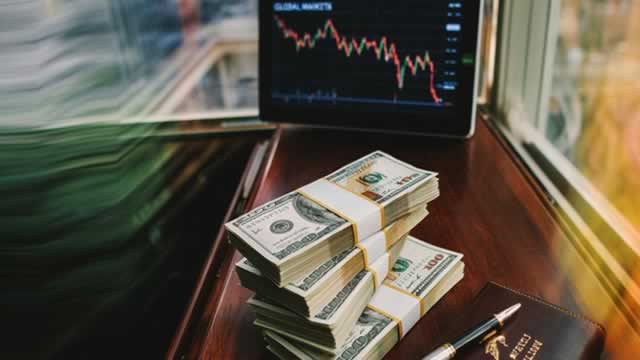
警惕泡沫!德银考虑做空AI股票进行风险对冲
硬AI· 2025-11-05 13:22
Group 1 - Deutsche Bank is exploring ways to hedge its multi-billion dollar risk exposure in the data center industry, considering options such as shorting a basket of AI-related stocks and using synthetic risk transfer (SRT) through derivatives [2][3] - The bank has made significant bets on data center financing, providing loans to companies serving major tech giants like Alphabet, Microsoft, and Amazon, with estimates of total loans reaching several billion dollars [5] - Concerns about an AI bubble are rising, with regulatory bodies like the Monetary Authority of Singapore warning about "relatively tight valuations" in the tech and AI sectors, indicating potential for a sharp market correction [7] Group 2 - Notable investors, including Michael Burry, have taken a bearish stance, with Burry's fund reportedly shorting major AI companies like Nvidia and Palantir, with a nominal value exceeding $1 billion [9] - Hedging against AI risks is challenging; shorting AI stocks can be costly in a booming market, and SRT transactions require a sufficiently diversified loan pool to achieve ratings [9][10] - There are conflicting views within Deutsche Bank regarding AI risks, with some analysts previously stating that concerns about an AI bubble are exaggerated, highlighting the complex situation faced by large financial institutions [11][12]

警惕泡沫!德银考虑做空AI股票进行风险对冲
Hua Er Jie Jian Wen· 2025-11-05 08:39
Core Insights - The surge in investment driven by artificial intelligence (AI) has pushed the data center industry to peak valuations, prompting key financial players to reassess potential risks [1] - Deutsche Bank is actively discussing risk management strategies related to its significant loans in the data center sector, which are primarily aimed at meeting AI and cloud computing demands [1][2] Group 1: Deutsche Bank's Position - Deutsche Bank has made substantial bets on data center financing, providing loans to companies serving major tech giants like Alphabet, Microsoft, and Amazon, with estimates of total loans reaching several billion dollars [2] - The bank is considering hedging strategies, including shorting a basket of AI-related stocks and utilizing synthetic risk transfer (SRT) derivatives to protect against potential loan defaults [2][3] Group 2: Market Concerns and Regulatory Warnings - There is a growing concern in the market regarding an AI-driven asset bubble, with comparisons being drawn to the early 2000s internet bubble due to rapid capital inflow into an untested industry [3] - Regulatory bodies, such as the Monetary Authority of Singapore, have issued warnings about the "relatively tight valuations" in the tech and AI sectors, indicating that a reversal in market sentiment could lead to significant corrections [3] Group 3: Challenges in Hedging - Notable investors, including Michael Burry, have taken short positions against leading AI companies, reflecting a bearish outlook on the AI hype [4] - Hedging against AI risks presents challenges, as shorting AI stocks can be costly in a thriving market, and SRT transactions require a diversified loan pool to achieve favorable ratings [4] Group 4: Internal Contradictions at Deutsche Bank - There are conflicting views within Deutsche Bank regarding AI risks, with some analysts previously suggesting that concerns about an AI bubble were overstated [6] - This internal contradiction highlights the complex situation faced by large financial institutions, balancing the desire to capitalize on AI opportunities while remaining vigilant about potential risks [6][7]
财经早报:央行恢复暂停近10个月的国债买卖操作 外资机构纷纷上调中国GDP增速预期丨2025年11月5日
Xin Lang Zheng Quan· 2025-11-05 00:13
Core Points - The People's Bank of China has resumed government bond trading operations after a nearly 10-month pause, injecting 20 billion yuan into the banking system to support the real economy and stabilize market expectations [3] - Multiple foreign institutions have raised their GDP growth forecasts for China, reflecting optimism about the country's economic prospects, particularly in technology and export growth [7][6] - The eighth China International Import Expo has opened, showcasing innovations and products from over 4,100 foreign companies, emphasizing China's commitment to global trade and cooperation [8] Group 1 - The U.S. stock market experienced a significant decline, with major tech companies losing a combined market value of approximately 3.2 trillion yuan in a single day [4][21] - Analysts predict further downturns in the U.S. market, with concerns about high valuation levels and potential corrections of 10% to 20% in the next 12 to 24 months [13][21] - The Chinese public fund management industry is seeing growth, with the total net asset value of public funds reaching 36.74 trillion yuan, a nearly 7% increase from the previous quarter [10] Group 2 - The "national team" of investors in China holds nearly 4 trillion yuan in A-share stocks, with a strong preference for financial stocks [11] - The demand for flu medications has surged, leading to increased competition among companies in the pharmaceutical sector [19] - The travel market is experiencing a boost due to the announcement of a nine-day Spring Festival holiday in 2026, significantly increasing inquiries for long-distance travel [9] Group 3 - The restructuring plan for Suning Group was rejected, leading to a significant drop in the company's stock price by 7.86% [16] - Reddick plans to acquire a 20.41% stake in Shanghai Aoyi Technology for approximately 160 million yuan, marking its entry into the brain-computer interface sector [17] - The public offering of shares by Visual China is in the planning stages, with no confirmed timeline yet [33]