
Alphabet(GOOGL)

Search documents
143亿打水漂?Meta惨翻车,谷歌逆袭OpenAI拉响红色警报
Sou Hu Cai Jing· 2026-01-05 16:50
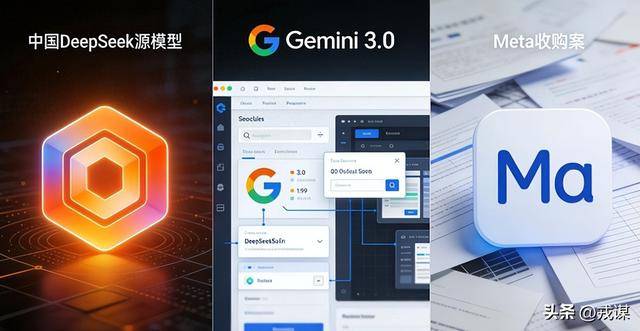
Core Insights - The article discusses key events in the AI industry for 2025, highlighting significant developments and shifts among major players like DeepSeek, Meta, and Google [1]. Group 1: Major Events - DeepSeek's release of an open-source large model that reportedly matches OpenAI's performance has disrupted the perception of American technology dominance, leading to increased interest in reinforcement learning [3]. - Meta's struggles are evident as its Llama4 model fails to gain traction, prompting the company to invest $14.3 billion in talent acquisition, which resulted in the creation of an underwhelming video application called Vibes [5]. - Google's Gemini 3.0 has marked a significant comeback, challenging OpenAI and changing the competitive landscape, although it still lags in user numbers compared to ChatGPT [5][7]. Group 2: Industry Trends - The trend of "circular financing" is emerging, where AI companies secure funding from firms like Microsoft and NVIDIA, only to reinvest in purchasing their chips, creating a unique financial ecosystem [7]. - Despite the hype around AI robots, practical applications remain limited, with products like Tesla's Optimus still requiring human intervention, raising questions about their utility [9]. - The AI community is divided on the effectiveness of continuous learning capabilities, with no consensus on a reliable solution for achieving Artificial General Intelligence (AGI) [9]. Group 3: Future Outlook - The AI landscape in 2025 is characterized by intense competition and contrasting fortunes among companies, with questions remaining about profitability and the stability of Google's position in 2026 [11].


We're trimming our position in a stock that is off to a strong new year
CNBC· 2026-01-05 16:03
Core Viewpoint - The company is selling 45 shares of BlackRock, reducing its ownership to 65 shares and decreasing its portfolio weighting from approximately 3.10% to 1.90% [1] Summary by Relevant Sections Stock Performance - BlackRock's stock has shown a positive trend at the beginning of the new year, with a 5% increase over the past two sessions, following a disappointing 2025 where shares gained only about 6% [1] Portfolio Management - The sale of BlackRock shares is part of a strategy to capitalize on recent stock strength and to rebuild cash reserves to over 7% of the portfolio [1] - Recent purchases include stocks from Nike, Procter & Gamble, and Alphabet, with the BlackRock sale intended to offset these acquisitions and provide flexibility for future investments in Alphabet [1] Financial Gains - The sale will result in a realized gain of approximately 9% on shares that were purchased in late 2024 [1]



三星拟今年部署谷歌Gemini AI的移动设备数量翻番,这些公司受益Gemini端侧应用
Xuan Gu Bao· 2026-01-05 15:16
Group 1 - Samsung Electronics is accelerating the expansion of Gemini AI, aiming to double the number of mobile devices equipped with Google Gemini AI this year to gain an advantage in the global AI competition [1] - Currently, Samsung has deployed Gemini-related AI features on approximately 400 million mobile devices, with a target to increase this to 800 million by 2026 [1] - Google released Gemini 3 in November last year, which leads in several mainstream AI performance metrics, and has restructured its Android 16 system around Gemini to support large-scale AI deployment on Android devices [1] Group 2 - Wankey Technology is benefiting from the expansion of the Gemini ecosystem, with its AIGC products in video, image, and audio aligning with Google Gemini ecosystem products [2] - Kunlun Wanwei is engaging in multi-layered cooperation with the Google ecosystem in areas such as browsers, AI music, and AI search, highlighting the global advantages of its content and tool ecosystem [2]
高通与谷歌扩大十年合作
Xin Lang Cai Jing· 2026-01-05 14:34
据悉,此次合作建立了端到端的汽车技术解决方案,无缝集成高通科技领先的Snapdragon数字底盘™谷 歌汽车软件的解决方案,赋能汽车制造商打造更能预见、响应和适应驾驶者需求的下一代车辆。 观点网讯:1月5日,高通与谷歌扩大十年合作,推动汽车创新和人工智能驱动的移动出行。 免责声明:本文内容与数据由观点根据公开信息整理,不构成投资建议,使用前请核实。 ...

Claude Code 一小时「复刻」谷歌一年成果,那一年能读完五年半的博士吗?
Sou Hu Cai Jing· 2026-01-05 13:12
Core Insights - The emergence of AI tools like Claude Code, Gemini, and ChatGPT has significantly reduced project completion times for engineers in Silicon Valley, as highlighted by Google engineers [2][3] - The discussion around AI's impact on education suggests that it could drastically shorten the time required for academic achievements, with some arguing that traditional educational methods need fundamental updates to incorporate AI [7][8] Group 1: AI Tools in Engineering - Engineers at Google have reported that using AI tools has allowed them to complete projects in a fraction of the time previously required, with one engineer stating that a task that took a year was accomplished in just one hour using Claude Code [2][3] - The ability of AI to generate solutions quickly has led to a shift in how engineers approach problem-solving, with new employees now familiarizing themselves with large codebases in days instead of months [4] Group 2: AI's Role in Education - There is a divide in opinions regarding AI's role in education, with some believing that AI can enhance learning efficiency by simplifying complex tasks, while others argue that critical thinking and deep understanding still require time and effort [8][9] - A notable example includes a parent teaching their child to code using AI tools, raising questions about the relevance of traditional higher education in the face of rapidly advancing technology [10]

AI浏览器杀疯了,创业者的机会窗口在哪?
3 6 Ke· 2026-01-05 13:00
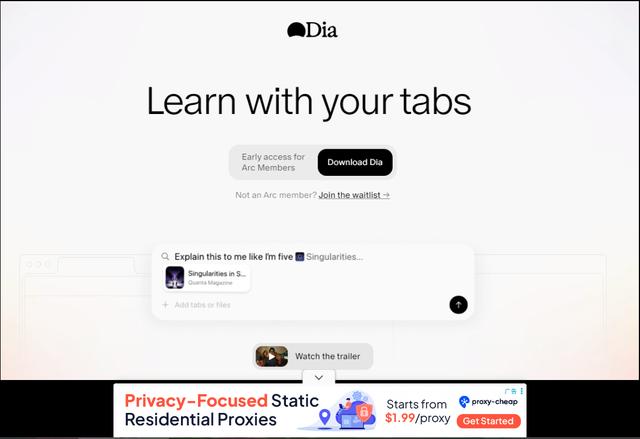
Core Insights - The traditional browser market has been stagnant for years, dominated by Microsoft’s IE and Google’s Chrome, with little innovation beyond cosmetic changes and plugins [1] - The emergence of generative AI has disrupted this stagnant market, leading to the development of AI-driven browsers like Dia and Quark, which aim to redefine user interaction with web information [2][3] Group 1: Transformation of Browsers - The core transformation of AI browsers is shifting from merely being "information windows" to becoming "execution agents" that can perform tasks for users [3] - Dia, an AI browser, exemplifies this shift by automatically gathering and summarizing information from multiple sources, allowing users to receive direct answers without manual searching [3][4] - The ambition of Dia extends to becoming a "Web operating system," integrating various applications and services directly within the browser, thus enhancing user productivity [4] Group 2: Different Approaches in the Market - In the U.S., companies like Dia are pursuing a disruptive approach by completely overhauling traditional browser interfaces and deeply integrating AI [6][9] - In contrast, Chinese players like Quark and 360 AI Browser focus on enhancing existing browser frameworks with AI tools to address specific user needs, which may lead to quicker commercialization [10][11] - Quark has transformed into a "mobile intelligent laboratory," providing various AI functionalities tailored for students and professionals, leveraging its ecosystem for data storage and processing [13] Group 3: Challenges for Entrepreneurs - The AI browser market faces significant challenges, including competition from tech giants like Google and Apple, which are integrating AI features into their existing browsers [16] - The high computational costs associated with AI functionalities pose a financial risk for startups, necessitating innovative monetization strategies beyond traditional advertising [17] - Ethical concerns regarding content scraping and potential copyright issues may arise as AI browsers generate summaries from original web content, impacting the overall web ecosystem [20] Group 4: Future Outlook - The evolution of AI browsers represents a significant opportunity for investment, as they are seen as the next step in human-computer interaction rather than mere upgrades to existing browsers [21][22] - Entrepreneurs are encouraged to explore niche markets and specific user pain points rather than replicating existing models like Chrome, as the landscape is shifting towards more integrated and intelligent solutions [22]


Alphabet acquires clean energy developer Intersect for $4.75B
Yahoo Finance· 2026-01-05 12:47
Group 1 - The core focus of the article is Google's acquisition of clean energy and data center infrastructure developer Intersect for $4.75 billion, aimed at addressing rising emissions and enhancing sustainability efforts [3][7]. - Google aims to achieve net-zero emissions across its supply chain by 2030, with a reported 51% increase in overall emissions in 2024 compared to a 2019 baseline [3]. - The acquisition will include projects in Texas and California, with a total capacity of approximately 3.6 GW in solar and wind energy, along with battery energy storage systems of 3.1 gigawatt hours [5][7]. Group 2 - Intersect has a portfolio valued at $15 billion, which includes 10.8 gigawatts of clean energy capacity expected to be operational or under construction by late 2028 [4]. - Following the acquisition, Intersect will continue collaborating with Google's infrastructure team on existing and new projects, maintaining its operational independence [5][7]. - The deal is part of Google's broader strategy to decarbonize its operational electricity consumption, particularly in data centers and offices [3][6].
GOOGL, AMZN, and DASH: J.P. Morgan Picks the Top Internet Stocks to Buy for 2026
Yahoo Finance· 2026-01-05 12:09
Core Insights - Alphabet reported a strong quarter with a 16% year-over-year revenue increase, exceeding expectations by $2.2 billion, and an EPS of $2.87, which was 61 cents above forecasts [1][2] Alphabet Performance - In Q3 2025, Google Ads contributed $74.2 billion to Alphabet's total revenue of $102.3 billion, while Google Cloud revenue reached $15.16 billion, growing 33.5% year-over-year due to enterprise AI workloads and infrastructure demand [2] - The third quarter marked Alphabet's first-ever quarter with revenue exceeding $100 billion, driven by AI-powered service enhancements, including AI Overviews and the interactive AI Mode in Google Search [8] - Alphabet's shares surged 65% in 2025, indicating strong market confidence in the company's future prospects [9] Analyst Insights - Doug Anmuth from J.P. Morgan highlighted Alphabet as a top pick, emphasizing its strong position in search-driven digital advertising and AI ambitions, projecting low to mid-teens percentage growth in search revenue [3][10] - Anmuth set a price target of $385 for Alphabet, suggesting a 22% upside from current levels, with a consensus rating of Strong Buy from 27 out of 34 analysts [11] Industry Trends - The AI revolution has significantly impacted digital companies, with productivity improvements and new monetization paths emerging as platforms integrate AI into ads, search, and customer engagement [7] - The overall digital trends and internet sector are expected to continue growing, with major companies projected to achieve low to mid-teens revenue growth in 2026, despite mixed operating income and EPS results [5][6]


美股策略周报:圣诞、新年假期成交清淡,重点关注消费电子展-20260105
Eddid Financial· 2026-01-05 11:17
Economic Data - Initial jobless claims decreased to 199,000, better than the expected 220,000, marking a continuous decline for four weeks [6][8] - The number of individuals continuing to receive unemployment benefits fell to 1.866 million, with a four-week moving average also declining [6][8] - The New York Fed's weekly economic index stood at 2.23, with a 13-week moving average of 2.26 [7][10] Market Sentiment - The overall market sentiment remained in the "neutral" range, with the S&P 500 fear and greed index indicating a slight decrease compared to the previous week [11][12] - The volatility index (VIX) closed at 14.51, below the critical value of 20 and the 50-day moving average [11][13] Global Market Overview - Global equity markets experienced a weekly decline of 0.3%, with emerging markets up by 2.3% and developed markets down by 0.6% [14] - The US dollar index increased by 0.4%, while gold fell by 4.6% and Bitcoin rose by 3.1% [14] US Stock Market Performance and Style - The S&P 500 index decreased by 1.0% for the week, while the Nasdaq index fell by 1.5% [15] - The technology sector, represented by the "seven giants," saw a decline of 1.9%, and small-cap stocks, represented by the Russell 2000, also dropped by 1.0% [15] - Value stocks outperformed growth stocks, with large-cap stocks leading small-cap stocks [15] Industry Performance - Among the 36 secondary industries in the US stock market, 14 saw gains, with the top five performers being coal, oil and petrochemicals, defense and military, electrical equipment, and semiconductors, with weekly increases of 5.9%, 3.1%, 1.8%, 1.7%, and 1.4% respectively [17] - The automotive and parts sector lagged with a weekly decline of 5.0% [17]


三星:计划2026年将搭载谷歌Gemini的移动设备数量增至8亿部
Xin Lang Cai Jing· 2026-01-05 10:44
1月5日,据报道,三星计划2026年将在8亿移动设备上部署谷歌的Gemini AI。报道称,去年该公司成功 在大约4亿台移动设备(包括智能手机和平板电脑)上部署了由Gemini驱动的AI功能。 1月5日,据报道,三星计划2026年将在8亿移动设备上部署谷歌的Gemini AI。报道称,去年该公司成功 在大约4亿台移动设备(包括智能手机和平板电脑)上部署了由Gemini驱动的AI功能。 ...