
Goldman Sachs(GS)

Search documents
Rich people have trillions of dollars they want to give to hedge funds
Yahoo Finance· 2025-11-21 18:34
Core Insights - The hedge fund industry, valued at $5 trillion, is facing a cash crunch due to capital being tied up in illiquid private equity and venture funds, creating an opportunity for growth from private wealth [1][7] - Private wealth, including funds from private banking divisions and family offices, is eager to invest in hedge funds, with significant capital available [2] - Goldman's report indicates that less than $500 billion of the $50.7 trillion in private wealth assets are currently allocated to hedge funds, suggesting a potential increase of over $4 trillion if private wealth follows investment recommendations [3] Investment Trends - A survey by Goldman Sachs revealed that 68% of private bank advisors and registered investment advisors (RIAs) want to increase hedge fund investments, contrasting with only 31% of pension and insurance investors [5] - The demand for hedge fund exposure is particularly strong among private wealth managers, who have historically avoided hedge funds due to perceptions of high fees and mediocre performance [6] Market Dynamics - Notable hedge fund managers, such as Millennium and Jain Global, have begun to tap into private wealth channels for capital, indicating a shift in fundraising strategies [4] - The hedge fund industry is shifting its focus from traditional institutional investors to wealthy individuals, as institutions are currently constrained by illiquid investments [7]

高盛对冲基金负责人:美股出现多头缴械迹象,AI周期似乎进入被怀疑的新阶段
Hua Er Jie Jian Wen· 2025-11-21 17:17
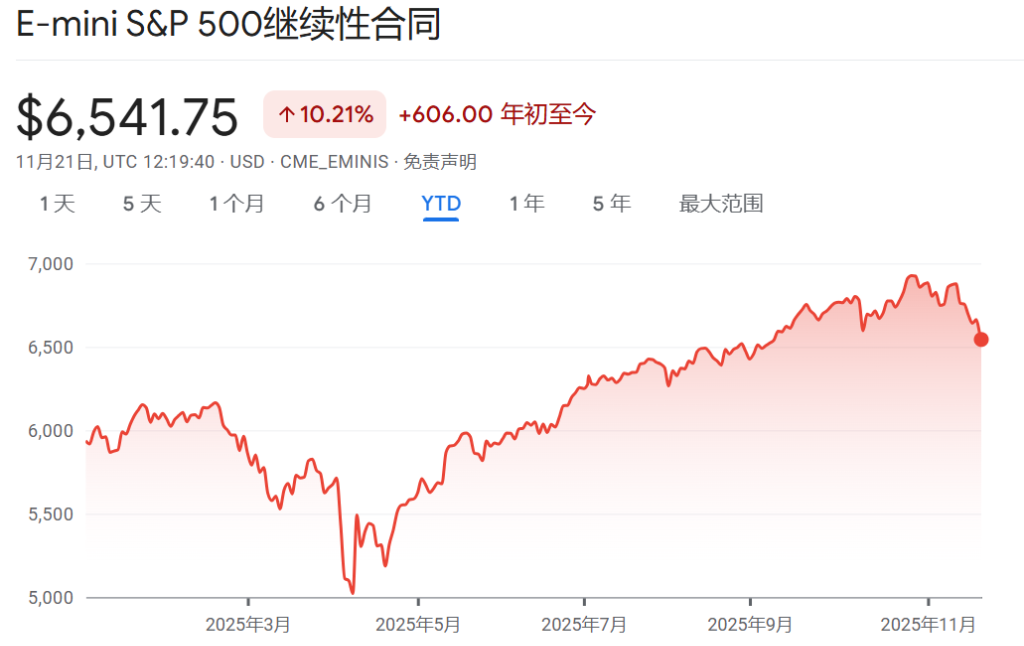
Group 1 - Goldman Sachs partner Tony Pasquariello indicates signs of a bullish "surrender" in the U.S. stock market, suggesting a new phase in the AI cycle, with skepticism about the sustainability of capital expenditures and future returns from large cloud service providers [1][3] - Despite a recent drop in the S&P 500 index, which fell nearly 1.6% and lost over $2 trillion in market capitalization, Pasquariello maintains a positive long-term outlook, expecting the index to close above current levels by the end of 2025, although he has lowered expectations for next year's performance [1][7] - The S&P 500 has seen a cumulative decline of about 4% since November began, potentially marking the worst November performance since 2008 [1][3] Group 2 - New York Fed President John Williams signals a dovish stance, suggesting that there is room for further interest rate cuts as the labor market cools, which has increased market expectations for a 25 basis point cut in December from about 30% to 56% [2][5] - Williams' comments are significant as he is a key voting member of the FOMC, and his stance could influence the direction of the December rate decision [2][5] Group 3 - The market is experiencing significant risk transfer, with investors eager to lock in year-to-date gains, leading to increased selling pressure despite Nvidia's strong earnings report [3][6] - The focus of AI narratives is shifting towards Google's Gemini-3 model, which is seen as a disruptive breakthrough, potentially reshaping the AI investment landscape and increasing uncertainty around capital expenditures and returns [3][6] Group 4 - Employment data presents a mixed picture, with a three-month average job growth deemed "decent," but a rise in the unemployment rate to 4.44% raises concerns, indicating a shift in the Fed's previously smooth path towards rate cuts [4][6] - The recent hawkish comments from Fed officials have reignited policy uncertainty, with some suggesting reluctance to cut rates in December [4][5] Group 5 - The current market volatility is attributed to a combination of factors, including the Fed's unexpected hawkish turn, internal divisions within the AI sector, and significant sell-offs in the cryptocurrency market, leading to a structural decline in the market [6][7] - Retail investor behavior has shifted from buying to selling, indicating a change in risk appetite, particularly affecting unprofitable tech and AI-related stocks [6][7] Group 6 - Despite increased market volatility, Pasquariello believes the primary upward trend in the stock market remains intact, with expectations of economic acceleration and improved liquidity [7] - The S&P 500 futures may further decline to the 6500 level, but the fundamental value logic of AI technology remains unchanged, with long-term winners likely to be labor-intensive companies that achieve profit expansion through automation [7]
AI Boom May Be Priced in, Says Goldman Sachs—Is a Worse Pullback on the Way?
Yahoo Finance· 2025-11-21 14:44
Core Viewpoint - The recent volatility in the stock market has raised concerns about the sustainability of returns, particularly in the context of the AI boom, which Goldman Sachs suggests may already be priced in [1][6]. Group 1: Market Conditions - The S&P 500 has experienced a decline of over 5% from its all-time high, leading to fears of an AI bubble burst [2][6]. - There is uncertainty regarding short-term market performance, with potential for both a rebound led by the Nasdaq 100 or further declines [4]. Group 2: Investment Strategy - Investors are advised to maintain a long-term perspective and not overreact to negative market commentary [2][3]. - High-quality stocks are being sold off due to fear rather than fundamental reasons, indicating potential buying opportunities for long-term investors [5]. Group 3: Earnings Outlook - The upcoming fourth quarter earnings may benefit from a lower performance expectation if the selling trend continues into the next reporting season [6].
一文读懂大跌逻辑--高盛“复盘”:美联储转鹰“拉开帷幕”,谷歌而非英伟达重塑“AI交易”,币圈重创散户,最终是“系统性抛售”
美股IPO· 2025-11-21 14:36
Core Viewpoint - The recent market decline is attributed to multiple factors breaking market consensus, including the Federal Reserve's unexpected hawkish stance, the transformative impact of Google's Gemini-3 on the AI landscape, retail investors' shift in sentiment due to cryptocurrency volatility, and systematic selling triggered by quantitative funds [1][2][3]. Group 1: Federal Reserve's Stance - The Federal Reserve's unexpected hawkish shift has led to a rapid withdrawal of rate cut expectations, with the probability of a rate cut in December now deemed "essentially zero" [7][8]. - Recent employment data presents mixed signals, with a rise in unemployment to 4.44% despite steady job growth, raising concerns about the Fed's policy direction [7][9]. Group 2: AI Market Dynamics - The focus of AI investment has shifted from Nvidia to Google's Gemini-3 model, which is seen as a game-changing development that could delay product cycles for other companies and increase capital expenditure [10]. - The market is experiencing a "winner-takes-all" dynamic, with significant differentiation between companies in the AI sector, leading to increased uncertainty in investment returns [10]. Group 3: Cryptocurrency Market Impact - The recent crash in the cryptocurrency market has caused a shift in retail investor behavior from "diamond hands" to active selling, reflecting a significant change in risk appetite [11][12]. - The decline in cryptocurrency values has had a spillover effect on unprofitable tech stocks and AI-related equities, indicating a broader market sentiment shift [12]. Group 4: Systematic Selling Pressure - Systematic funds, particularly trend-following funds (CTAs), have been forced to liquidate positions as market volatility increased, leading to a chain reaction of selling [13][14]. - The market's previously stable low-volatility structure collapsed, resulting in significant price drops without specific news or events triggering them [14]. Group 5: Capital Constraints in AI Expansion - The rising cost of capital is becoming a critical factor for AI investments, with concerns about the corporate debt market and the implications for AI data center financing [15]. - The potential slowdown in AI expansion due to higher capital costs represents a risk that the market has not fully priced in [15]. Group 6: Market Stabilization Conditions - For the market to stabilize, three conditions must be met: clearing of CTA positions, retail investors being squeezed out of excessive long positions, and at least two of the following triggers: stabilization in cryptocurrency, a clear dovish shift from the Fed, or some form of support for AI capital expenditure [17].



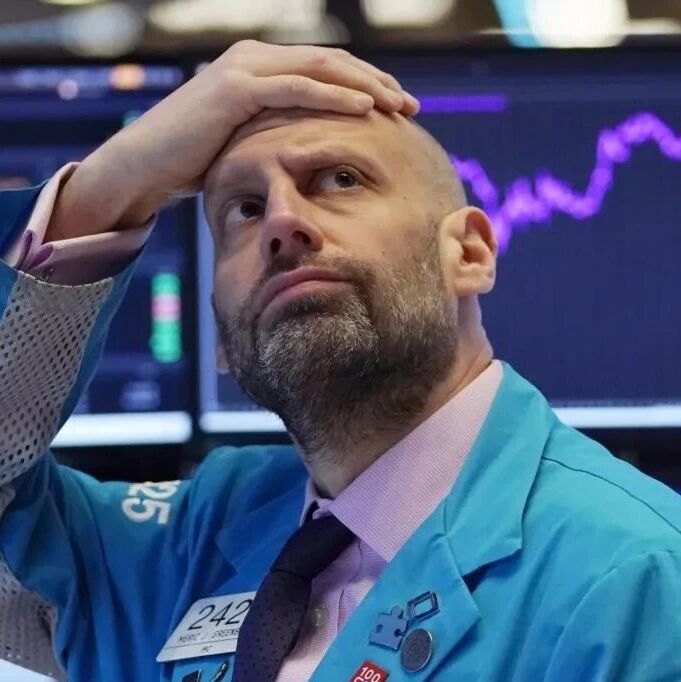
一文读懂大跌逻辑--高盛交易员“复盘”:美联储转鹰“拉开帷幕”,谷歌而非英伟达重塑“AI交易”,币圈重创散户,最终是“系统性抛售”
Hua Er Jie Jian Wen· 2025-11-21 12:35
Core Insights - The recent global market decline is attributed to a combination of factors leading to a systemic sell-off, including the Fed's unexpected hawkish stance, internal divisions within the AI sector, a crash in the cryptocurrency market, and concentrated selling pressure from quantitative funds [1][5][8] Group 1: Federal Reserve's Impact - The Fed's subtle shift towards a hawkish stance has surprised analysts, especially given the mixed employment data showing a rise in unemployment to 4.44% despite steady job growth [5] - The market's expectations for a rate cut in December have diminished significantly, with the probability now considered "basically zero" [5] Group 2: AI Sector Dynamics - The focus of AI investment has shifted from Nvidia to Google's Gemini-3 model, which is seen as a game-changer in the AI landscape, causing delays in product cycles and increasing capital expenditure [1][6] - The market is witnessing a "winner-takes-all" dynamic, with significant differentiation between companies based on their AI capabilities [7] Group 3: Cryptocurrency Market Influence - The recent decline in the cryptocurrency market has led to a shift in retail investor behavior from "diamond hands" to active selling, impacting non-profitable tech stocks and AI-related equities [8][9] - The cryptocurrency market is now viewed as a barometer for retail risk appetite, with significant sell-offs triggering broader market declines [8][10] Group 4: Systematic Selling Pressure - Trend-following funds and systematic trading strategies have held over $500 billion in long positions since August, which, once key levels were breached, triggered a wave of selling [9][10] - The market's previously stable low-volatility structure collapsed under the pressure of systematic selling, leading to rapid declines without specific news events [10][11] Group 5: Capital Constraints in AI Expansion - The rising cost of capital is becoming a critical factor for AI investments, with concerns about the corporate debt market and the implications for AI data center financing [12] - The potential slowdown in AI expansion due to increased capital costs is a risk that the market has not fully priced in [12] Group 6: Market Stabilization Conditions - For the market to stabilize, three conditions must be met: clearing of CTA positions, reduction of excessive retail bullishness, and at least two triggers from cryptocurrency stabilization, a clear dovish shift from the Fed, or supportive policies for AI capital expenditure [14]
美股为何巨震暴跌?高盛给出九大理由
华尔街见闻· 2025-11-21 11:19
Core Viewpoint - The recent volatility in the U.S. stock market, triggered by Nvidia's earnings report and a mixed non-farm payroll report, highlights the fragility of market sentiment and the interconnectedness of various risk factors [1][2][3]. Group 1: Market Reaction - Following Nvidia's earnings report, which exceeded expectations, the S&P 500 initially surged by 1.9% but ultimately closed down by 1.5%, resulting in a market value loss exceeding $2 trillion from peak to trough [1]. - The volatility observed was the largest since April, with the VIX index spiking above 26, indicating heightened market fear [2]. Group 2: Contributing Factors - High volatility was attributed to nine interrelated factors identified by Goldman Sachs, including Nvidia's inability to sustain its initial gains, leading to increased hedging among investors [5][6]. - The cryptocurrency market also faced significant pressure, with Bitcoin dropping below the psychological threshold of $90,000, contributing to broader risk asset sell-offs [8]. - Concerns regarding private credit were raised by Federal Reserve Governor Lisa Cook, warning of potential vulnerabilities in asset valuations and their implications for the financial system [9]. - The non-farm payroll report, while stable, did not provide clear guidance for the Federal Reserve's December interest rate decision, with the probability of a rate cut only slightly increasing to 35% [10]. Group 3: Technical and Market Structure - Technical analysis revealed a fragile market structure, exacerbated by systematic selling pressure from Commodity Trading Advisors (CTAs), which are expected to remain net sellers regardless of market movements [12][13]. - The liquidity in the S&P 500 has significantly deteriorated, with top buy-sell liquidity dropping to approximately $500,000, well below the average of $1.1 million for the year, making the market more susceptible to large trades [15]. - The increasing dominance of ETF trading, which accounted for 41% of total market volume, indicates a shift towards macro-driven trading rather than individual stock fundamentals [15]. Group 4: Market Sentiment and Future Outlook - The overall market sentiment is fragile, with a broad sell-off affecting major tech stocks and meme stocks, leading to their worst single-day performance since the "Tariff Liberation Day" [20]. - The upcoming expiration of a massive $3.1 trillion in options, including $1.7 trillion in SPX index options, is expected to further increase market volatility [23][26]. - The cryptocurrency market's decline appeared to precede the stock market's downturn, suggesting a potential transmission of risk sentiment from high-risk assets to broader markets [24].

Goldman Sachs Just Delivered Bad News for U.S.
The Motley Fool· 2025-11-21 09:25
Core Viewpoint - Goldman Sachs predicts that the S&P 500 will achieve an average annual gain of only 6.5% over the next decade, a significant decrease from the historical average of around 10% [2] Valuation Concerns - U.S. stocks are currently considered expensive, with the S&P 500's trailing price-to-earnings ratio near a multiyear high of 23 [4] - The valuation issue is exacerbated by a few large companies in the AI sector, which may lead to a broader market correction, potentially reducing market progress by about 1% per year through 2035 [5] Interest Rates Impact - The widening of the S&P 500's profit margins since 1990 has been largely due to falling interest rates and corporate tax rates, neither of which are expected to decline significantly in the next decade [6] Strategic Adjustments - Investors are encouraged to diversify their portfolios by considering stocks outside the current market favorites [7] - International markets, particularly in Japan and Asia, are projected to perform better, with average market growth outlooks of 8.2% and 10.3% respectively, and emerging markets expected to yield 10.9% annualized returns through 2035 [8] Spotlight on Foreign Stocks - Companies like Alibaba and MercadoLibre are highlighted as potential investment opportunities, with Alibaba focusing on AI for growth and MercadoLibre benefiting from the rise of web-connected smartphones in South America [9] Currency Dynamics - Both Alibaba and MercadoLibre's American depositary receipts are denominated in U.S. dollars, which may provide an additional 2 percentage points of net growth annually as the dollar is considered overvalued [11] Importance of Dividends - Dividends are expected to play a crucial role in total returns across all regions, benefiting dividend-focused companies like Coca-Cola and pharmaceutical firms such as Pfizer and Merck [12][13] Market Adaptation - Investors are advised to adapt their strategies in response to changing market conditions, including interest rates, government debt, and competitive dynamics introduced by AI [15]

Goldman Sachs Just Delivered Bad News for U.S. Investors ... Sort Of. Here's What You Need to Know.
Yahoo Finance· 2025-11-21 09:25
Core Viewpoint - The stock market is expected to deliver subpar gains, with Goldman Sachs projecting an average annual gain of only 6.5% for the S&P 500 over the next decade, a decline from the historical average of around 10% [1][2] Valuation Concerns - U.S. stocks are currently considered expensive, with the S&P 500's trailing price-to-earnings ratio near a multiyear high of 23 [4] - The concentration of massive companies involved in the AI revolution is contributing to the broader valuation issues, and a correction in these stocks could negatively impact the overall market and economy, potentially reducing net market progress by about 1% per year through 2035 [5] Interest Rate Impact - The widening of the S&P 500's profit margins since 1990 has largely been due to falling interest rates and corporate tax rates, neither of which are expected to decline significantly in the next decade [6] Investment Strategy - Despite the lackluster outlook, Goldman Sachs encourages investors to remain in the stock market but suggests adapting strategies by favoring stocks outside the current high-flying sectors [7][9] Regional Market Performance - The subdued outlook is primarily an American issue, with other regions like Japan and Asia expected to perform better, projecting average market growth of 8.2% and 10.3% respectively, while emerging markets are anticipated to achieve average annualized returns of 10.9% through 2035, driven by earnings growth [10]
高盛上调年底铜价预测 同时看跌铝价前景
智通财经网· 2025-11-21 07:05
随着向清洁能源的转型步伐加快,铜等金属正成为全球经济增长的关键驱动力——从电动汽车到智能电 网,无所不在。高盛的预测表明,项目延误和供应链缺口波及整个经济体。对于着眼于长期基础设施建 设的政府和企业而言,确保这些关键资源的供应正迅速成为一项战略要务。 智通财经APP获悉,高盛刚刚将其对 2025 年 12 月铜价的目标上调至每吨 10610 美元,显示出其对铜价 前景的乐观态度;与此同时,该行预计随着新供应进入市场,铝价将会走软。 高盛预测铜供应将持续短缺,而来自可再生能源和电动汽车等关键领域的需求将不断增长。该银行维持 其对 2026 至 2027 年每吨 10000 至 11000 美元的预期,并预计到 2035 年长期目标为每吨 15000 美元 ——远高于大多数其他预测。这种看涨观点基于许多推迟的采矿项目将被搁置,从而在未来造成供应不 足。另一方面,高盛预计铝可能面临困境:由于预计会有新的供应,高盛现在预计到 2026 年底铝价将 跌至每吨 2350 美元,直到下个十年的某个时候才会反弹至 2025 年的高点。 ...
英伟达“宇宙级”财报竟成美股“多头陷阱” 高盛预警:市场已伤痕累累
智通财经网· 2025-11-21 03:04
Group 1 - The core viewpoint is that despite Nvidia's impressive earnings, the US stock market experienced a significant reversal, indicating that traders did not receive the risk "full relief" signal they anticipated, leading them to seek hedges against further losses [1] - The S&P 500 index initially surged by 1.9% but later fell by 1.1%, marking the largest intraday volatility since April, with over $2 trillion in market value evaporating from its peak [1] - The VIX index rose above 26, reflecting increased market fear and uncertainty [1] Group 2 - Goldman Sachs' trading department noted an increase in short positions across macro products, including ETFs and futures, indicating a shift in market sentiment [1] - The report highlighted poor market liquidity, with the depth of S&P 500 orders dropping below $5 million, compared to an average of $11.5 million over the past year, which may amplify market volatility [1] - Historical data shows that since 1957, there have been eight instances of the S&P 500 opening up over 1% and then reversing to close down, with an average positive performance following such events [2]