
Goldman Sachs(GS)

Search documents
Goldman Sachs is about to report fourth-quarter earnings — here's what the Street expects
CNBC· 2026-01-15 05:01
Core Viewpoint - Goldman Sachs is positioned to benefit from several favorable trends in the fourth quarter, with expectations for strong earnings and revenue growth [1]. Group 1: Earnings Expectations - Goldman Sachs is scheduled to report fourth-quarter earnings, with expectations of earnings per share at $11.67 and revenue at $13.79 billion [4]. - The trading revenue is anticipated to include $2.93 billion from fixed income and $3.70 billion from equities, alongside investment banking fees of $2.58 billion [4]. Group 2: Market Trends and Performance - Trading desks across Wall Street have seen benefits from market volatility driven by President Trump's policies, with JPMorgan Chase exceeding expectations in fourth-quarter results by $460 million in trading revenue [2]. - Global investment banking revenue is reported to be 12% higher than the previous year, which is expected to positively impact Goldman Sachs' advisory business [3]. - The asset and wealth management division of Goldman Sachs is also expected to see gains due to buoyant stock market levels during the quarter [3]. Group 3: Strategic Moves - Goldman Sachs' recent deal to offload its Apple Card business to JPMorgan is projected to provide a 46-cent per share boost to its quarterly results [3].



高盛:中国房地产市场现状
Xin Lang Cai Jing· 2026-01-15 03:34
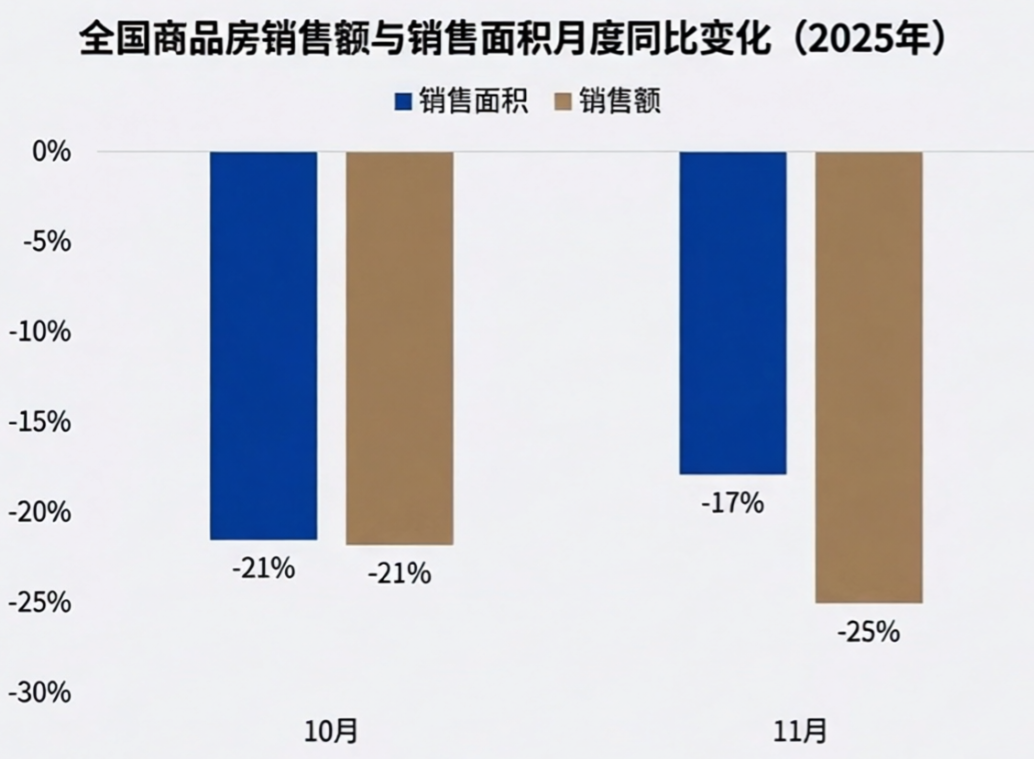
(来源:谭谈研究) 高盛发布了一篇关于中国房地产市场的分析报告,这篇报告非常详细地分析了中国一二三线城市的房地产现状,还是比较有参考意义的。 首先是商品房销量数据,销售额和销售面积都在下滑。11月,全国商品房销售面积同比下降17%,销售额同比下降25%。这个降幅还是非常夸张的,而且 分化是比较严重的。其实核心一二线城市目前虽然房价在跌,但是成交量同比去年是变化不大的,这个数据意味着众多三四线城市房子的流动性趋近于冻 结。 然后是房价的角度来看,整体还是跌的,结构上来看,各城市新房/二手房跌幅在分化。首先新房的表现是比二手房好的,新房环比只下跌了0.4%,但是 二手房环比下跌0.7%,跌幅都快到新房的两倍了。其次,就是对于一线城市二手房来说,目前表现是最弱的,环比跌幅达到了1.1%,这个数字不仅比新 房高,甚至连二三线城市的二手房也比不过。 | 70个大中城市住宅销售价格指数环比变化(2025年11月) | | | --- | --- | | 新房 | 二手房 | | 平均:-0.4%(10月为 -0.5%) | 平均:-0.7%(与10月持平) | | 一线城市: -0.3% | 一线城市: -1.1%(表现 ...
高盛风险指标飙升至历史高位!华尔街陷入“极度亢奋”,是增长繁荣还是见顶前奏?
智通财经网· 2026-01-15 03:33
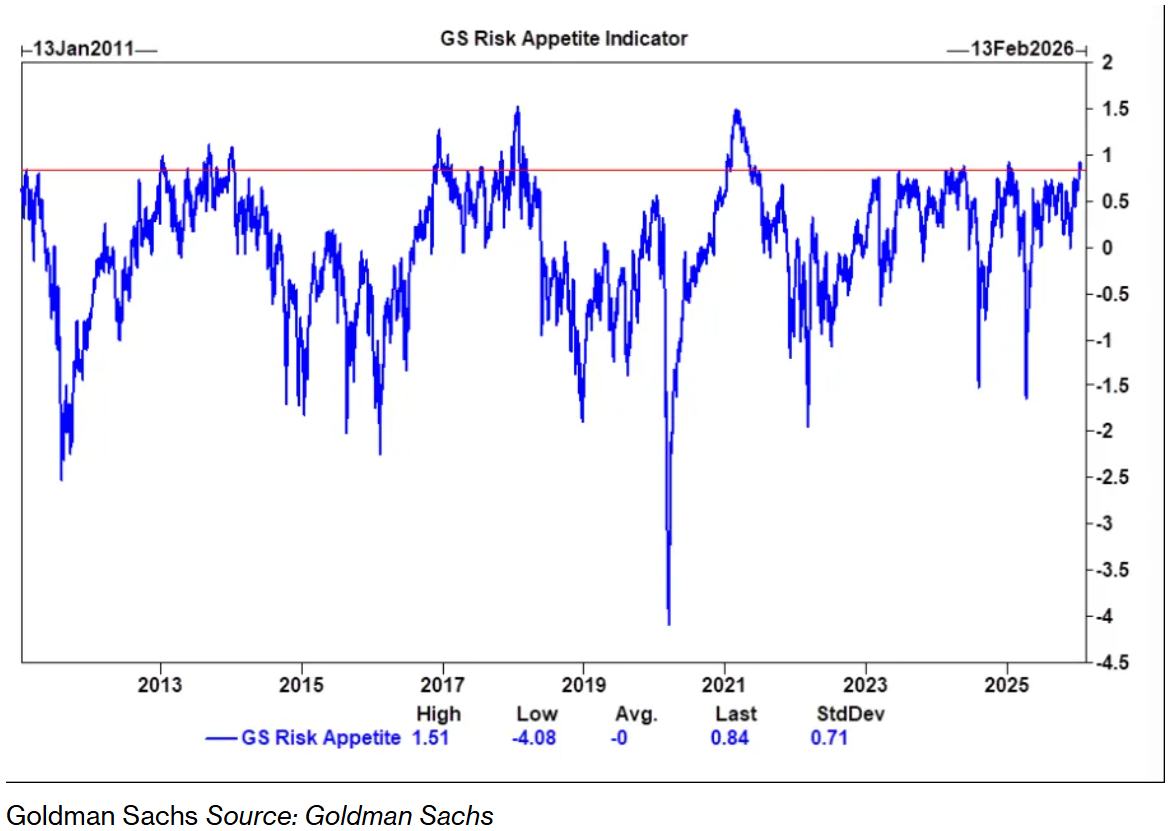
Group 1 - Goldman Sachs clients' optimism has surged to its highest level in about a year, driven by confidence in global growth outweighing geopolitical and macroeconomic concerns [1] - The firm's "risk appetite indicator" has risen to its highest point since early 2025, positioned at the 96th percentile historically [1] - Goldman Sachs' managing director, Lee Koppesmith, noted that while increased risk appetite is often seen as a sign of investor exuberance, the current growth momentum in the U.S. and other regions may support a bullish outlook [1] Group 2 - The S&P 500 index has risen approximately 0.7% in 2026, maintaining a position near historical highs, aligning with Wall Street strategists' optimistic views for strong performance this year [3] - Geopolitical concerns have recently impacted the market, with the benchmark index dropping about 1% due to worries over potential U.S. actions against Iran [3] Group 3 - Goldman Sachs reported a significant jump in indicators measuring global growth optimism, with investors showing a preference for stocks over bonds and cyclical stocks over defensive ones, alongside narrowing credit spreads and rising inflation expectations [4] - This shift is particularly evident in U.S. cyclical sectors, indicating strong confidence in growth, with small-cap stocks outperforming the S&P 500 for nine consecutive trading days, matching the longest winning streak since the financial crisis [4] Group 4 - Other sentiment indicators also reflect similar bullishness, with Goldman Sachs' Marquee client survey showing bullish sentiment levels not seen in the past decade, occurring only three other times [4] - In two of those instances, the market experienced a pullback within three months [4] Group 5 - A key distinction this time is the broadness of positions, with about 22% of respondents still identifying as bearish, indicating that while positive sentiment is high, it has not reached a dangerously one-sided state [6]
高盛:上调2026年LME铜价预估至12,200美元/吨
Wen Hua Cai Jing· 2026-01-15 03:12
Group 1 - Goldman Sachs raised its 2026 London Metal Exchange copper price forecast to $12,200 per ton from $11,400 per ton due to increased investor inflows, adding a scarcity premium to copper prices amid low inventory coverage outside the U.S. [2] Group 2 - China's copper industry chain faces three major challenges: rising dependence on foreign resources in the upstream, overcapacity in the midstream processing sector, and downstream demand being suppressed by high copper prices [2] - Shanghai Nonferrous Metals Network, in collaboration with copper industry chain enterprises, has compiled a bilingual version of the "2026 China Copper Industry Chain Distribution Map" to assist the industry in navigating changes [2]

原油评论:市场对伊朗、委内瑞拉供应冲击的定价-Oil Comment_ Market Pricing of Iran and Venezuela Shocks [Corrected]
2026-01-15 02:51
Summary of Key Points from the Conference Call Industry Overview - The report focuses on the global crude oil market, specifically the impacts of potential disruptions in oil production from Iran and Venezuela [5][9]. Core Insights and Arguments - A permanent decline of 1 million barrels per day (mb/d) in oil production is expected to increase prices by approximately $8 per barrel within 12 months, assuming OPEC does not compensate for the shortfall [2]. - Venezuela's crude production is projected to rise from 0.83 mb/d in December 2025 to 1.07 mb/d in December 2026, attributed to easing sanctions and increased investments in existing assets [2]. - The Polymarket prediction market indicates a 13% probability of the Iranian regime falling by January 31, and a 70% probability of the US striking Iran by the end of the month [5][9]. - Brent crude prices have increased year-to-date to above $66 per barrel, reflecting a nearly $6 per barrel rise, consistent with a forecasted 0.7 mb/d disruption in Iranian oil production over the next 12 months [5]. - Options markets show a significant increase in the probability of Brent futures expiring in the $70s, rising from below 7% to 15% in two weeks, while the probability of prices exceeding $80 remains modest at 5% [10]. Production and Tariff Implications - The forecast for Iranian crude production in 2026 remains stable at 3.5 mb/d despite the announcement of a 25% tariff on Iranian oil [5][17]. - A similar 25% tariff on Venezuelan oil buyers was threatened but did not materialize in March 2025 [5]. - China, as the main importer of Iranian crude, holds significant bargaining power due to its dominance in rare earth supply chains [5]. - Russian oil flows to India have continued despite a similar tariff imposed on India for importing Russian crude [5][17]. Market Reactions - Energy equity markets and regional crude markets are adjusting to the anticipated increase in Venezuelan crude supply, with equities of US oil majors, US Gulf Coast refineries, and international services operators experiencing a rally [20][21]. - The quality differential between heavy and light crude has widened by approximately $2 per barrel, aligning with expectations of a 0.3 mb/d increase in Venezuelan heavy crude production by year-end [25]. Additional Considerations - Refining coking margins, which are profits from processing heavy crude into high-value products like diesel, are favorable for US Gulf Coast refineries designed to process heavier Latin American crudes [7]. - The report emphasizes that investors should consider this analysis as one of many factors in their investment decisions [4]. This summary encapsulates the critical insights and data points from the conference call, providing a comprehensive overview of the current state and expectations for the crude oil market, particularly concerning Iran and Venezuela.
原油评论:市场对伊朗、委内瑞拉供应冲击的定价-Oil Comment_ Market Pricing of Iran and Venezuela Shocks
2026-01-15 02:51
Summary of Key Points from the Conference Call Industry Overview - The report focuses on the global crude oil market, specifically the impacts of potential disruptions in oil production from Iran and Venezuela [5][8]. Core Insights and Arguments - A permanent decline of 1 million barrels per day (mb/d) in oil production is projected to increase prices by $8 per barrel within 12 months, assuming OPEC does not compensate for the shortfall [2]. - Venezuela's crude production is expected to rise from 0.83 mb/d in December 2025 to 1.07 mb/d in December 2026 due to easing sanctions and increased investments [2]. - The Polymarket prediction indicates a 70% probability of the U.S. striking Iran by the end of the month, which is contributing to market volatility [5][8]. - Brent crude prices have increased by nearly $6 per barrel year-to-date, surpassing $66 per barrel, reflecting concerns over a potential 0.7 mb/d disruption in Iranian oil production over the next year [5]. - The probability of Brent futures expiring in the $70s has risen from below 7% to 15% in two weeks, indicating increased market speculation [9]. Production and Tariff Implications - Iran's crude production is forecasted to remain stable at approximately 3.5 mb/d in 2026, despite the announcement of a 25% tariff on Iranian oil [5][16]. - The U.S. previously threatened a similar tariff on Venezuelan oil buyers, which did not materialize, indicating potential for market fluctuations based on geopolitical developments [5][16]. - China, as the main importer of Iranian crude, holds significant bargaining power due to its dominance in rare earth supply chains [5]. Market Reactions - Energy equity markets are responding positively to the anticipated increase in Venezuelan crude supply, with equities of U.S. oil majors and Gulf Coast refineries rallying [19][20]. - The quality differential between heavy and light crude has widened by approximately $2 per barrel, aligning with expectations of a 0.3 mb/d increase in Venezuelan heavy crude production by year-end [24]. Refining Margins - U.S. Gulf Coast refineries, designed to process heavier Latin American crudes, are expected to benefit from higher coking margins, which are profits from processing heavy crude into high-value products like diesel [6]. Additional Considerations - The report emphasizes that investors should consider this analysis as one of many factors in their investment decisions [4]. - The potential for geopolitical events, such as U.S. military actions or sanctions, remains a significant risk factor for oil prices and production levels [5][8].
Earnings live: Big bank stocks fall, with Morgan Stanley, Goldman Sachs results on deck
Yahoo Finance· 2026-01-14 21:02
Core Viewpoint - The fourth quarter earnings season has commenced, with significant reports from Delta Air Lines and JPMorgan Chase, and additional bank earnings expected later in the week [1]. Group 1: Earnings Expectations - Wall Street analysts project an 8.3% earnings per share growth rate for S&P 500 companies in Q4, marking the 10th consecutive quarter of annual earnings growth if realized [2]. - Prior to the reporting period, analysts had increased earnings expectations, particularly for tech companies, with the consensus estimate for S&P 500 Q4 earnings growth at 7.2% as of September 30 [3]. Group 2: Market Influences - The earnings season will assess the improved stock market breadth observed at the start of 2026, with ongoing themes from 2025, such as artificial intelligence and economic policies, continuing to influence investor sentiment [4]. Group 3: Upcoming Earnings Reports - Major financial companies scheduled to report earnings this week include Bank of New York Mellon, Bank of America, Citigroup, Wells Fargo, BlackRock, Goldman Sachs, and Morgan Stanley, alongside Delta and JPMorgan [5].


Goldman Sachs Q4 Preview: Largest Dow Jones Industrial Average Holding Goes For 10th Straight Double Beat
Benzinga· 2026-01-14 20:23
Core Viewpoint - Goldman Sachs faces challenges in managing earnings volatility, impacting its stock performance ahead of the fourth-quarter financial results announcement [1] Earnings Forecast - Analyst estimates for Goldman Sachs' fourth quarter include an EPS estimate of $11.67 (down from $11.95 year-over-year) and a revenue estimate of $14.12 billion (up from $13.87 billion year-over-year) [9] Analyst Consensus & Recent Actions - The stock carries a Hold rating with an average price target of $765.47. BofA raised its target to $1,050 from $900 while maintaining a Buy rating, citing earnings volatility as a significant challenge for CEO David Solomon [4][10] - Other analysts have also raised their targets: JP Morgan to $775.00, Barclays to $1,048.00, and Keefe, Bruyette & Woods to $971.00 [10] Revenue and Growth Insights - Goldman Sachs has beaten analyst estimates for earnings per share for nine consecutive quarters and for revenue for ten consecutive quarters [3] - The capital markets business, which accounts for approximately 70% of total revenue, presents inherent swings that concern investors. However, a 20% year-over-year rebound in investment banking revenue is estimated for FY26, alongside mid-single-digit growth in trading and financing [5] Stock Performance and Trends - Goldman Sachs shares have increased 62.03% over the past 12 months and are currently trading 1.8% above its 20-day simple moving average and 14% above its 100-day simple moving average, indicating a strong long-term trend [8] - The stock was down 1.24% at $933.50 at the time of publication, with a 52-week trading range between $439.38 and $961.69 [15] Market Position and Importance - Goldman Sachs is a significant component of the Dow Jones Industrial Average, currently the top holding at 11.74% of assets in the SPDR Dow Jones Industrial Average ETF Trust [6] - A strong earnings report from Goldman Sachs could positively influence the overall Dow Jones Industrial Average and related ETFs [7] Valuation Insights - The stock trades at a fair P/E multiple of 19.1x, with analysts viewing the expected 2% earnings decline as justifiable for the current valuation [12] - The Benzinga Edge scorecard indicates strong momentum and a healthy balance sheet for Goldman Sachs, suggesting it is outperforming the broader market [13][16]

Dave Cantin Group Announces Sale of Midwestern Auto Group to Jeff Wyler Automotive Family; Ferrari and Lamborghini Among 14 Franchises in Historic $500 Million in Total Acquisition Value Transaction
Globenewswire· 2026-01-14 17:50
Core Insights - The Jeff Wyler Automotive Family has acquired Midwestern Auto Group for a total acquisition value of $500 million, marking it as one of the largest franchise automotive transactions by a privately held company and the largest overall auto retail transaction in 2026 [1][4] Group 1: Acquisition Details - The acquisition includes 14 premium and luxury brands such as Ferrari and Lamborghini, significantly expanding Wyler's portfolio to a total of 64 franchises [1][5] - This transaction is noted as the second-largest luxury automotive retail transaction in the U.S. since early 2025 and ranks among the top three largest Midwest dealership transactions by total enterprise value [4] Group 2: Advisory Role - Dave Cantin Group served as the exclusive sell-side advisor to Midwestern owner Mark Brentlinger, facilitating a succession plan that took nearly two years to execute [2] - The advisory process involved collaboration with legal and wealth management teams to ensure the protection of Brentlinger's legacy [2] Group 3: Industry Context - Transactions like the acquisition of Midwestern Auto Group are exceptionally rare in the automotive industry, particularly for a single-site campus offering multiple premium and luxury franchises [2] - The deal is characterized as a "unicorn" luxury campus deal, highlighting its significance in private-to-private acquisitions within the U.S. retail automotive sector [5]


Thursday Earnings Preview: Look to These Banking Giants for Key Consumer Insights
Yahoo Finance· 2026-01-14 16:48
Group 1 - The upcoming earnings reports from major banks like Morgan Stanley, Goldman Sachs, PNC Financial, and U.S. Bancorp are crucial for assessing the health of the American consumer and the regional lending landscape [1][3] - Morgan Stanley and Goldman Sachs are larger institutions that significantly influence the S&P 500 Index and various financial sector ETFs, while PNC and U.S. Bancorp represent key regional players focused on traditional lending [2][6] - The market is particularly interested in the net interest income trajectories of these banks, as well as updates on credit loss provisions, which could indicate their outlook on economic conditions [3] Group 2 - Morgan Stanley's wealth management division has provided stability, making it a smoother investment compared to Goldman Sachs, which is a major component of the Dow Jones Industrial Average [5] - The anticipated "thaw" in the deal-making environment for 2026 suggests a potential increase in mergers and acquisitions and initial public offerings, driven by pent-up demand [4] - PNC and U.S. Bancorp are seen as a reality check for the regional banking sector, focusing on mortgages, auto loans, and small business credit rather than high-profile M&A activities [6]