Honda Motor(HMC)

Search documents
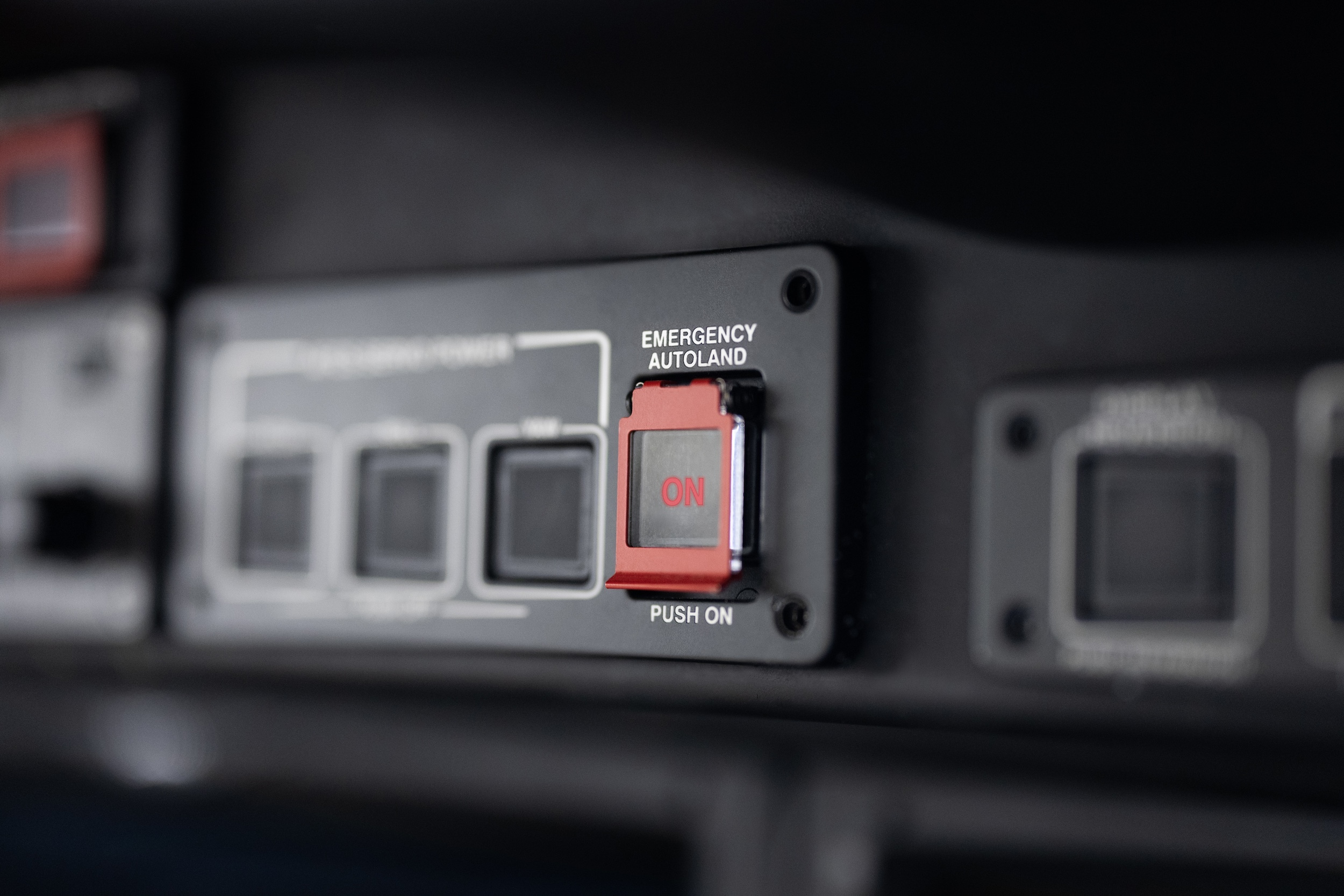
Honda Aircraft Company Completes Type Inspection Authorization for HondaJet Elite II Emergency Autoland
Globenewswire· 2025-10-15 13:00
Core Points - Honda Aircraft Company has completed FAA certification flight testing for its Emergency Autoland system on the HondaJet Elite II, making it the first twin turbine very light business jet to feature this technology [1][2][6] - The Emergency Autoland system can autonomously land the aircraft in case the pilot becomes incapacitated, enhancing safety for operators [3][6] - The successful certification of the autothrottle system in October 2024 was a precursor to this achievement, demonstrating the company's commitment to technological innovation [4] Company Overview - Honda Aircraft Company is a subsidiary of American Honda Motor Co., Inc., focusing on the research, development, and manufacturing of the HondaJet Elite II [5] - The company has announced plans to develop the HondaJet Echelon, a new 11-occupant aircraft, which will complement the existing HondaJet Elite II [5] - Cumulative deliveries of HondaJets surpassed 250 globally in 2024, reflecting the company's growth and market presence [5]


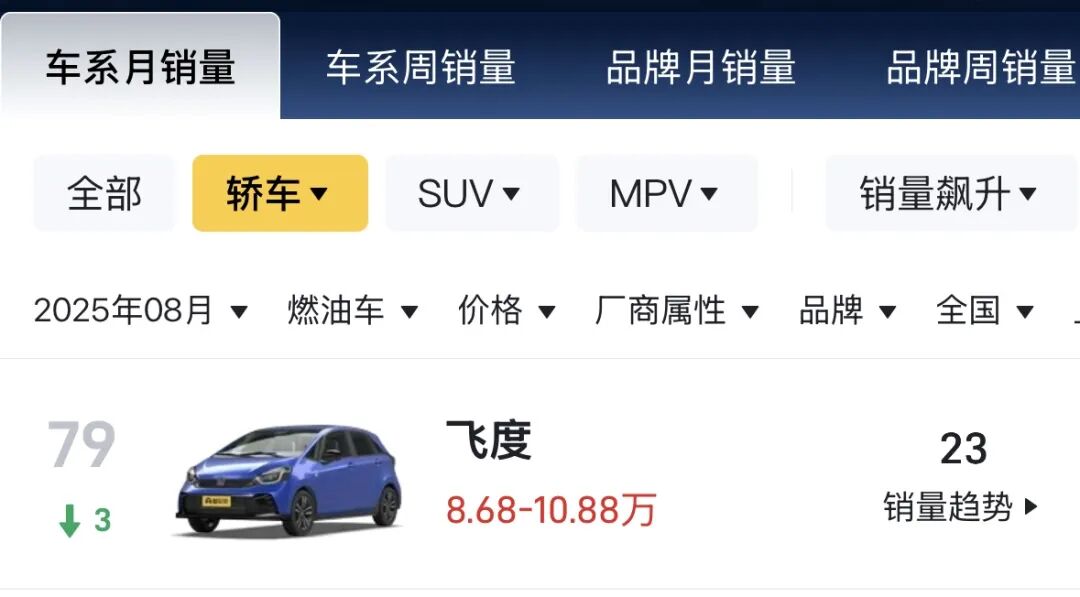
昔日「国民神车」,月销量只剩两位数了
创业邦· 2025-10-15 03:23
Core Viewpoint - The Honda Fit, once a popular compact car in China, has seen a dramatic decline in sales, with August 2025 sales dropping to just 23 units, highlighting the shift in consumer preferences towards electric vehicles and the challenges faced by traditional fuel-powered cars [6][8][10]. Group 1: Sales Performance - The Honda Fit's sales peaked at 146,000 units annually but have plummeted to a mere 23 units in August 2025, marking a significant decline in market presence [8][10]. - In July 2025, the Fit's sales fell below double digits for the first time, with only 75 units sold, ranking 76th in the market [11]. - Cumulatively, the Fit sold 2,676 units in the first three quarters of 2025, with a sharp decline in monthly sales from an average of 400 units in the first half to just 23 in the second half [11][15]. Group 2: Market Context - The rise of electric vehicles has overshadowed traditional compact cars like the Fit, with the top-selling small cars now being electric models such as the Geely Xingyuan, BYD Seagull, and Dolphin [17][19]. - In August 2025, Geely Xingyuan alone sold over 46,000 units, while the Seagull and Dolphin sold 23,000 and 14,000 units respectively, indicating a strong consumer shift towards electric options [17][19]. Group 3: Consumer Preferences - Consumers who previously favored the Fit for its fuel efficiency and compact design are now opting for electric vehicles due to lower operating costs and advanced technology [19][22]. - The Fit's fuel consumption is approximately 39.6 yuan per 100 km, while the Geely Xingyuan's electric cost is only about 5.35 yuan per 100 km, making the latter significantly more economical [19][22]. - The Fit's outdated technology and lack of modern features compared to newer electric models have contributed to its decline in popularity [20][22]. Group 4: Brand and Model Evolution - Honda is attempting to revitalize the Fit brand with a new model set to launch in late 2025, which will include a hybrid version with improved fuel efficiency [27][29]. - Despite the introduction of a new model, there are concerns about whether the Fit can regain its former popularity, as consumer expectations have shifted significantly [29].

汽车早报|理想汽车首个海外零售中心开业 Stellantis将在美国投资130亿美元
Xin Lang Cai Jing· 2025-10-15 00:37
Group 1: Automotive Market Trends - The total number of vehicles for trade-in is expected to exceed 12 million, driven by effective government policies that have significantly stimulated consumer activity in the automotive market, leading to new car sales worth approximately 1.7 trillion yuan [1] - In September, passenger car sales reached 2.859 million units, marking a year-on-year increase of 13.2%, with production and sales for the first nine months of the year showing growth of 13.9% and 13.7% respectively [1] - By 2025, China's automotive exports are projected to exceed 6.5 million units, with cumulative sales of new energy vehicles expected to surpass 16 million units [1] Group 2: Company Developments - Shandong Li Auto Battery Co., Ltd. was established with a registered capital of 300 million yuan, focusing on battery manufacturing and electric vehicle charging infrastructure [2] - Seres has increased its registered capital from approximately 1.509 billion yuan to about 1.633 billion yuan, reflecting an increase of around 8% [3] - The pre-sale price for the Alpha T5 extended-range version has been announced at 123,800 yuan, featuring a pure electric range of 215 km and a combined range of 1,215 km [4] - Xpeng Motors reported cumulative deliveries of 80,000 units for the P7+ model [5] Group 3: Sales Performance - Honda's terminal vehicle sales in China for September were 54,544 units, a year-on-year decline of 12.85%, with cumulative sales for the first nine months down 20.43% [6] - Nissan's sales in China for September reached 61,552 units, slightly up from 61,395 units in the same month last year [7] Group 4: Regulatory and Market Changes - The State Administration for Market Regulation has unconditionally approved Mitsubishi Motors' acquisition of shares in GAC Mitsubishi Motors Sales Co., Ltd. [8] - General Motors announced a $1.6 billion charge due to adjustments in electric vehicle production, anticipating a slowdown in EV adoption following recent government policy changes [9] - The average transaction price for new cars in the U.S. has surpassed $50,000 for the first time, reaching $50,080 in September, reflecting a 2.1% month-on-month increase and a 3.6% year-on-year increase [9] - Stellantis plans to invest $13 billion in the U.S. over the next four years to expand its business, marking the largest single investment in the U.S. since the company began operations there [9]




Honda Launches All-New ProZision™ Lineup of Battery-Powered ZTR Lawn Mowers
Globenewswire· 2025-10-14 16:58
Core Insights - Honda Power Sports & Products has launched the ProZision™ lineup of battery-powered zero-turn-radius (ZTR) lawn mowers, featuring 54-inch and 60-inch models, including a 60-inch autonomous version, aimed at professional-level durability and cutting quality [1][7] Product Features - The ProZision™ mowers are designed to deliver clean, even, best-in-class cutting on the first pass, ensuring maximum comfort for operators and durability for owners [2][7] - The mowers utilize five 48-volt brushless electric motors and six lithium-ion batteries, featuring a 4.3-inch touchscreen for operational status and battery charge [4][19] - Advanced cutting systems include three MicroCut® Twin Blades for finer clippings and a durable steel chassis to enhance longevity [6][15] Operator Comfort - ProZision™ ZTRs feature full mower suspension and the Ideal Operator Position System (IOPS) for adjustable seating and controls, reducing vibration and operator fatigue [8][3] Autonomous Features - The ProZision™ Autonomous model can operate in manual or autonomous modes, utilizing GNSS for accurate route mapping and obstacle detection through radar and LiDAR sensors [11][16] - It includes a load control system to adjust mowing speed based on grass conditions, ensuring a professional cut quality [14][12] Market Positioning - The launch of the ProZision™ lineup aims to address workforce stability and operational cost controls in the landscaping industry, providing zero-emission options that complement existing gasoline-powered equipment [18][19] - Production will occur at Honda's facility in Swepsonville, North Carolina, with availability set for February 2026 for manual models and Summer 2026 for the autonomous version [19][7]
本田中国9月汽车销量54544辆,同比下降约13%
Bei Jing Shang Bao· 2025-10-14 06:17
北京商报讯(记者蔺雨葳)10月14日,本田中国发布的2025年9月终端汽车销量数据显示,9月,本田在中 国的终端汽车销量为54544辆,同比下降约13%。2025年1—9月,本田在中国的终端汽车累计销量为 467867辆,同比下降约20.46%。 ...
俄罗斯又拖全球车市后腿了
Zhong Guo Qi Che Bao Wang· 2025-10-14 02:09
Group 1 - Global automotive markets, except for Russia, showed growth in September and the first three quarters of the year, driven by various factors such as electric vehicle (EV) subsidies in the US and tax reforms in India [2] - In the US, electric vehicle sales surged before the expiration of a $7,500 subsidy, with Q3 sales exceeding 438,000 units, marking a record quarter and a market share of 10.5% [3][4] - Major automakers in the US reported increased sales, with Ford's sales up 8.2%, General Motors up 8%, and Hyundai up 13%, largely driven by electric vehicle demand [4] Group 2 - In Europe, the automotive market saw a slight increase in passenger car sales, with a total of 8.69 million units sold from January to August, a 0.4% year-on-year growth [6] - Chinese automakers, particularly BYD and SAIC, have become significant players in the European market, with BYD's sales skyrocketing by 280% [7] - The UK experienced its highest new car sales in September since 2015, driven by strong electric vehicle performance and government subsidies [8] Group 3 - India's automotive market showed resilience with a total of 3.8 million new vehicles sold in the first three quarters, a 2.3% increase year-on-year, supported by tax reforms [9][10] - The new GST 2.0 tax structure in India has significantly improved the affordability of small cars, boosting consumer confidence and sales [10] - In Japan, new car sales reached 3.465 million units in the first nine months, a 5% increase, although the market faced challenges in the latter part of the year [11][12] Group 4 - Brazil's automotive market reported a 2.9% increase in September sales, with a total of 1.91 million vehicles sold in the first nine months, driven by strong export performance [13][14] - The Brazilian government plans to reintroduce tariffs on electric and hybrid vehicles starting in 2024, aiming to stimulate local production [15] - Russian automotive sales plummeted by 23% in the first nine months, with a significant decline in new car sales due to geopolitical factors and rising costs [16][17]





昔日「国民神车」,月销量只剩两位数了
3 6 Ke· 2025-10-14 01:39
Core Insights - The Honda Fit, once a popular compact car in China, has seen a dramatic decline in sales, with only 23 units sold in August 2025, marking a significant drop from its peak sales of 146,000 units annually [2][4][8] - The decline is attributed to changing consumer preferences towards electric vehicles (EVs) and the rise of domestic brands offering better value and technology [9][10][12] Sales Performance - In August 2025, the Fit's sales plummeted to just 23 units, a stark contrast to its previous high of 14.6 million units annually [2][4] - Cumulative sales for the first three quarters of 2025 reached only 2,676 units, with an average monthly sales of around 400 units in the first half of the year [4][8] - The Fit's sales dropped below double digits for the first time in July 2025, with only 75 units sold [4][8] Market Position - The Fit was once celebrated for its compact size, affordability, and fuel efficiency, appealing primarily to young consumers [5][7] - The vehicle's competitive edge has diminished as domestic brands like Geely and BYD have introduced electric models that outperform the Fit in terms of cost and technology [10][12][14] Consumer Shift - Many former Fit buyers are now opting for electric vehicles due to lower operating costs and advanced technology features [10][12] - For instance, the Geely Star Wish has a monthly operating cost of approximately 5.35 yuan per 100 km, significantly lower than the Fit's cost of about 39.6 yuan per 100 km [10][12] Brand Evolution - Honda is attempting to revitalize the Fit brand with a new model set to launch in the fourth quarter of 2025, which will include both gasoline and hybrid versions [19][20][22] - The new Fit will feature improved fuel efficiency, with the hybrid version achieving a WLTC combined fuel consumption of 3.8L/100km [22] Industry Context - The decline of the Fit reflects broader challenges faced by Japanese automakers in the Chinese market, with significant drops in profits reported by major brands like Honda, Toyota, and Nissan [18][19] - Honda is shifting its focus towards electric vehicles and has plans to launch a new electric brand in China, aiming to adapt to the evolving market landscape [19][20]
Honda Aircraft Company Becomes First Twin-Turbine Very Light Business Jet Manufacturer to Fly HondaJet on 100% Sustainable Aviation Fuel
Globenewswire· 2025-10-13 14:01
Core Insights - Honda Aircraft Company has successfully conducted a test flight of the HondaJet using a 100% blend of sustainable aviation fuels (SAF), marking it as the first twin-turbine very light business jet to achieve this milestone [1][2]. Company Developments - The test flight utilized a production-model HondaJet fueled with Hydroprocessed Esters and Fatty Acids Synthetic Paraffinic Kerosene (HEFA-SPK) and Hydrodeoxygenated Synthetic Aromatic Kerosene (HDO-SAK) [2]. - The engineering team at Honda Aircraft, in collaboration with GE Honda Aero, has been instrumental in this achievement, showcasing the feasibility of using 100% SAF blends [2][3]. - Honda Aircraft Company has been recognized for its commitment to sustainable aviation, having received Sustainable Flight Department Accreditation from the National Business Aviation Association (NBAA) in October 2024 [4]. Environmental Commitment - The successful test flight aligns with Honda's global goal of decarbonizing business activities by 2050, as stated by the Senior Vice President and Chief Commercial Officer of Honda Aircraft Company [4]. - The HondaJet design emphasizes fuel efficiency, achieving up to a 20% improvement in fuel economy compared to similar aircraft, which supports the company's sustainability initiatives [4]. Product Information - Honda Aircraft Company, a subsidiary of American Honda Motor Co., Inc., is responsible for the development and manufacturing of the HondaJet Elite II and is planning to introduce the HondaJet Echelon, an 11-occupant aircraft [5]. - Cumulative deliveries of the HondaJet surpassed 250 units globally by 2024, indicating strong market presence and demand [5].

从日本车企定价看美国通胀的“隐退”与“回涌”
Hu Xiu· 2025-10-09 12:35
Core Viewpoint - The article discusses how Japanese automakers have responded to increased tariffs imposed by the Trump administration by collectively lowering prices instead of passing costs onto consumers, creating an unexpected buffer against inflation in the U.S. market [1][3][4]. Group 1: Japanese Automakers' Pricing Strategy - Following the announcement of a 25% tariff on imported vehicles, Japanese automakers adopted a "price reduction" strategy to maintain market share in the U.S. [3][5]. - The price index for cars exported to North America dropped by 19.4% year-on-year, indicating a significant reduction aimed at stabilizing prices in the U.S. market [5][6]. - Despite a decline in profits, Japanese manufacturers managed to maintain a 1.3% increase in sales revenue, demonstrating the effectiveness of their pricing strategy [6]. Group 2: Impact of Tariffs on Inflation - The collective price reductions by Japanese automakers have contributed to a decrease in the Personal Consumption Expenditures (PCE) index for imported vehicles, which fell by 0.52% in May, marking the largest drop in nearly a year [16][17]. - However, the overall impact on U.S. inflation has been limited, as the weight of Japanese cars in the PCE index is relatively small, accounting for only about 0.5% [17][19]. - The strong U.S. market has allowed for a "neutralization" effect on inflation, where competitive pressures have absorbed tariff impacts without significantly raising consumer prices [14][19]. Group 3: Broader Global Manufacturing Trends - Other countries, including South Korea and Germany, have also seen similar price reductions in key export sectors, indicating a widespread response to U.S. tariffs [4][19]. - The phenomenon of "price elasticity" in the U.S. market has forced foreign manufacturers to absorb costs rather than pass them on to consumers, creating a temporary buffer against inflation [12][20]. - The overall trend suggests that the competitive landscape in the U.S. has led to a collective effort among global manufacturers to mitigate inflationary pressures through price adjustments [20][39]. Group 4: Future Implications for Inflation - As Japanese automakers begin to raise prices in response to profit pressures, the previous buffer against inflation may diminish, potentially leading to renewed inflationary pressures in the U.S. [22][28]. - The combination of rising import prices and the depletion of existing inventory is expected to contribute to an upward trend in inflation indicators [34][39]. - The ongoing monetary policy changes, including potential interest rate cuts, may further complicate the inflation landscape, suggesting a challenging environment for both manufacturers and consumers [38][39].


Honda's grip on Vietnam motorbike market looks shaky on EV switch
Reuters· 2025-10-08 04:02
Core Insights - Honda's leading position in Vietnam's motorbike market is being challenged due to government initiatives promoting a swift transition to electric vehicles (EVs) [1] - The push for EVs is expected to benefit local manufacturer VinFast, which is positioned to capitalize on this shift [1] Industry Impact - The Vietnamese government is actively encouraging the adoption of electric vehicles, which may disrupt traditional motorbike sales dominated by Honda [1] - The transition to EVs aligns with global trends towards sustainability and reducing carbon emissions, potentially reshaping the automotive landscape in Vietnam [1] Company Implications - Honda may face increased competition from VinFast as the latter seeks to expand its market share in the emerging EV segment [1] - The shift towards electric mobility could necessitate strategic adjustments from Honda to maintain its market leadership in Vietnam [1]