
Honda Motor(HMC)

Search documents
这一日系氢燃料电池商用车即将在华示范运行
第一财经· 2025-10-23 11:39
Core Viewpoint - Honda China and Dongfeng Motor Group have launched a hydrogen fuel cell commercial vehicle demonstration project in Wuhan, aiming to validate fuel cell technology in real transport environments and assess market competitiveness and user acceptance [3][4]. Group 1: Project Overview - The demonstration project will initially operate in Wuhan's existing logistics routes, with plans to expand to Guangzhou and Shanghai [3]. - The project aims to evaluate vehicle performance, operational costs, and the added value from the end-user perspective [3]. Group 2: Industry Context - Japanese automakers have been focusing on hydrogen fuel cells as a key strategy for low-carbon initiatives since the 1980s, with Toyota and Honda launching hydrogen fuel cell vehicles in the early 2000s [4]. - Toyota's new hydrogen fuel cell system, unveiled in February, promises a 20% increase in range and is set to be deployed in various markets starting in 2026 [4]. Group 3: Policy and Market Challenges - Japan's revised hydrogen strategy aims for a hydrogen supply of 300 million tons by 2030 and 2 billion tons by 2050, with a planned investment of 15 trillion yen over the next 15 years [4]. - Despite advancements, hydrogen fuel cell vehicles face technical challenges and high costs, leading Honda to adjust its production plans for next-generation fuel cell modules [4][5]. Group 4: Future Goals - Honda aims for carbon neutrality across all products and operations by 2050 and has identified four core application areas for its next-generation fuel cell modules: fuel cell electric vehicles, commercial vehicles, stationary generators, and construction machinery [5].




燃油车智能化反攻:L2+成标配,合资品牌的价量博弈
3 6 Ke· 2025-10-23 08:16
Core Viewpoint - The Chinese automotive market is witnessing a significant shift as the penetration rate of new energy vehicles approaches 60%, prompting traditional fuel vehicles to adopt a strategy of "configuration upgrades + price reductions" to maintain market share [1][6]. Group 1: Market Dynamics - Fuel vehicle sales have shown a month-on-month increase, challenging the perception of their decline [1]. - The strategy of "precise configuration + price concessions" is being employed by fuel vehicles to solidify their market position, with L2+ level assisted driving becoming a mainstream feature [2][4]. - The introduction of competitive pricing models, such as "full payment at a fixed price," has lowered the price threshold for consumers, enhancing market accessibility [2][4]. Group 2: Technological Advancements - Fuel vehicles are integrating advanced technologies, such as the L2+ intelligent driving system, to enhance user experience and meet consumer demands for smart features [2][6]. - The new generation of fuel platforms is undergoing a technological revolution, with centralized electronic architectures enabling high-level intelligent driving capabilities [7]. - Collaborations with local tech firms, such as Huawei and DJI, are crucial for the technological advancement of fuel vehicles, allowing them to compete effectively with new energy vehicles [7][6]. Group 3: Competitive Strategies - Major brands like FAW-Volkswagen and GAC Toyota are implementing strategies that include lowering prices and enhancing technology to attract consumers [4][6]. - The luxury segment is also participating in this trend, with models like the Audi A5L offering advanced features at competitive prices compared to electric counterparts [4][6]. - Fuel vehicle manufacturers are leveraging economies of scale to reduce R&D costs and optimize supply chain efficiency, allowing them to offer smart configurations at lower prices [4][6]. Group 4: Future Outlook - Despite the advancements, fuel vehicles face structural challenges, including limitations in computing power and slower OTA upgrade capabilities compared to new energy vehicles [9]. - The competition in the automotive market is shifting from a simple fuel vs. electric debate to a focus on balancing mechanical reliability with digital intelligence [9]. - Fuel vehicles are expected to maintain a significant presence in niche markets due to their advantages in value retention and adaptability to various scenarios [9].
东南亚两轮车“油改电”,日企叫苦
Huan Qiu Shi Bao· 2025-10-23 00:15
Core Insights - The Southeast Asian two-wheeler market is undergoing a significant shift towards electric vehicles (EVs), challenging the dominance of Japanese motorcycle manufacturers [1][2][10] - Vietnam's government has announced plans to restrict gasoline-powered motorcycles, aiming for a substantial transition to electric models by 2030, which has raised concerns among Japanese companies about job losses and market disruption [2][3][4] Group 1: Market Dynamics - Vietnam has the highest per capita motorcycle ownership globally, with a market value of approximately $4.6 billion [2] - The Vietnamese government plans to ban gasoline motorcycles from certain areas starting July 2026, with a goal of having over 20% of motorcycles powered by electricity by 2030 [2][3] - Japanese companies, particularly Honda, hold a dominant market share of about 80% in Vietnam, with Honda selling 2.6 million units last year [3][4] Group 2: Japanese Companies' Response - Japanese manufacturers, including Honda and Yamaha, are urging the Vietnamese government to reconsider the rapid timeline for electrification, citing potential job losses and supply chain disruptions [4][5] - Honda reported a decline in motorcycle sales by 11.4% year-on-year in September, indicating a shift in consumer behavior due to the impending ban on gasoline motorcycles [7][8] - The Japanese embassy in Vietnam has expressed concerns that the ban could negatively impact dealers and parts suppliers, urging for a more gradual transition [4][5] Group 3: Local and Chinese Competitors - Local Vietnamese manufacturers like VinFast and Dat Bike are capitalizing on the shift to electric motorcycles, with VinFast capturing over 55% of the electric motorcycle market [10][11] - Chinese manufacturers are also increasing their presence in the Southeast Asian market, with companies like Yadea expanding production capabilities and sales networks [11][12] - The competition is intensifying as local and Chinese firms leverage their understanding of consumer preferences and government policies to gain market share [12][13]

财经观察:东南亚两轮车“油改电”,日企叫苦
Huan Qiu Shi Bao· 2025-10-22 22:52
Core Viewpoint - The Southeast Asian two-wheeler market is undergoing a significant shift towards electric vehicles, challenging the dominance of traditional Japanese motorcycle manufacturers, as local and Chinese manufacturers seize the opportunity presented by the transition from gasoline to electric [1][2][11]. Group 1: Market Dynamics - Vietnam has the highest per capita motorcycle ownership globally, with a market value of $4.6 billion [2][3]. - The Vietnamese government plans to ban gasoline motorcycles in urban areas by 2026 and aims for over 20% of motorcycles to be electric by 2030 [2][3]. - Honda holds approximately 80% of the Vietnamese motorcycle market, with sales of 2.6 million units last year [3][8]. Group 2: Japanese Manufacturers' Concerns - Japanese manufacturers, including Honda and Yamaha, are concerned that the rapid electrification timeline may lead to job losses and disrupt the market [2][5]. - Honda reported a year-on-year decline in motorcycle sales of 0.2% for the first half of 2025, with a significant drop in automotive sales by 52.8% [8][10]. - The Japanese embassy in Vietnam has urged the government to consider a more gradual transition to electric vehicles [5][8]. Group 3: Local and Chinese Manufacturers' Strategies - Local manufacturers like VinFast and Dat Bike are capitalizing on the electric motorcycle market, with VinFast accounting for over 55% of electric motorcycle sales in Vietnam [11][12]. - Dat Bike has secured $22 million in funding to expand its operations and plans to enter the Thai market by the end of the year [11][12]. - Chinese manufacturers are also increasing their presence, with Yadea establishing a factory in Thailand and aiming for significant production capacity [12][13]. Group 4: Future Trends - The transition to electric motorcycles is seen as an irreversible trend, with local manufacturers and Chinese companies poised to lead the market [11][13]. - The Vietnamese market is expected to see a surge in electric motorcycle sales, with a nearly 100% year-on-year increase in the first half of 2025 [11]. - The overall Southeast Asian market is projected to shift towards electric vehicles, driven by government policies and consumer demand [10][12].
日本汽车股走高,丰田汽车股价涨4.7%
Mei Ri Jing Ji Xin Wen· 2025-10-22 00:29
Core Viewpoint - Japanese automotive stocks experienced a rise, with notable increases in share prices for major manufacturers [1] Company Summaries - Toyota's stock price increased by 4.7% [1] - Honda's stock price rose by 4.0% [1] - Mazda's stock price saw a gain of 3.6% [1]

Factbox-Automakers pool with EV makers to avoid EU emissions fines
Yahoo Finance· 2025-10-21 14:43
Core Insights - Automakers are forming alliances to purchase carbon credits from electric vehicle companies to avoid potential fines from the European Union, which could reach up to 15 billion euros ($17.5 billion) [1][8] - The European Commission has allowed compliance based on average emissions over the period of 2025-2027, rather than solely on 2025 levels [1] Alliances and Collaborations - Nissan has formed a pool with Chinese EV giant BYD in October [3] - KG Mobility from South Korea partnered with Chinese EV maker Xpeng at the end of September [4] - Tesla established a pool in January with Stellantis, Toyota, Ford, Leapmotor, Mazda, and Subaru, with Honda and Suzuki joining in March [5] - A separate pool formed in January includes Mercedes, Volvo Car, Polestar, and Smart Automobile, with Geely holding significant stakes in these companies [6] Market Trends - Electric vehicles accounted for 12% of total European light vehicle sales last year, projected to rise to 15% this year, and expected to reach 24% by 2027 and 40% by the end of the decade according to AlixPartners [7]






Honda Announces On-Sale Date for Battery-Powered Walk-Behind Lawn Mowers
Globenewswire· 2025-10-21 14:30
Core Insights - Honda Power Sports & Products is launching a new lineup of battery-powered walk-behind lawn mowers in November 2025, enhancing its reputation in lawn care equipment [2][3][6] - The new models include HRN-BV, HRX-BV, HRX-BE, and HRC-BE, all designed for premium quality, reliability, and performance, catering to both residential and commercial users [3][6][7] Product Features - The new battery-powered mowers utilize advanced features such as the Honda MicroCut® Twin Blade System, providing superior cut quality and performance [5][6] - Models are equipped with air-cooled, brushless electric motors and can accommodate one or two lithium-ion batteries, with interchangeable batteries across all models [5][6] - The HRN-BV model features a 1.5kW motor, intuitive variable speed control, and a dual-lever height adjustment system with seven cutting heights [8] - The HRX-BV model offers a 4-in-1 Versamow System™ for versatile mowing options and a 21-inch NeXite® deck for durability [9] - The HRX-BE model includes an electronic Roto-Stop® blade stop system and precise speed control, enhancing user convenience [10] - The HRC-BE model is designed for commercial use, featuring a robust frame and electronic Cruise Control transmission for efficiency [15] Pricing and Availability - The pricing for the new models is as follows: HRN-BV at $899, HRX-BV at $1,049, HRX-BE at $1,299, and HRC-BE at $1,999 [6][21] - All models will be available for sale at selected Honda Power Equipment dealers nationwide starting November 2025 [6][21] Market Positioning - Honda aims to redefine its position in the lawn and garden push-mower market by offering environmentally sound options alongside traditional gas-powered products [3][6] - The new lineup is expected to meet the demands of modern lawn care enthusiasts and professionals seeking superior performance and efficiency [7]

Exclusive: Japan warns Vietnam of job losses as Hanoi motorbike ban hits Honda
Reuters· 2025-10-21 05:19
Core Viewpoint - The Japanese government and leading manufacturers have expressed concerns that Vietnam's proposed ban on petrol-powered motorbikes in Hanoi may lead to job losses and disrupt a significant market valued at $4.6 billion [1] Group 1: Government and Manufacturer Concerns - The Japanese government has warned Vietnam about the potential negative impacts of the motorbike ban [1] - Top manufacturers in Japan are also voicing their apprehensions regarding the job losses that could result from this policy [1] - The market for petrol-powered motorbikes in Vietnam is substantial, estimated at $4.6 billion, highlighting the economic implications of the ban [1]
“隐形冠军”神话终破灭
Hu Xiu· 2025-10-21 04:59
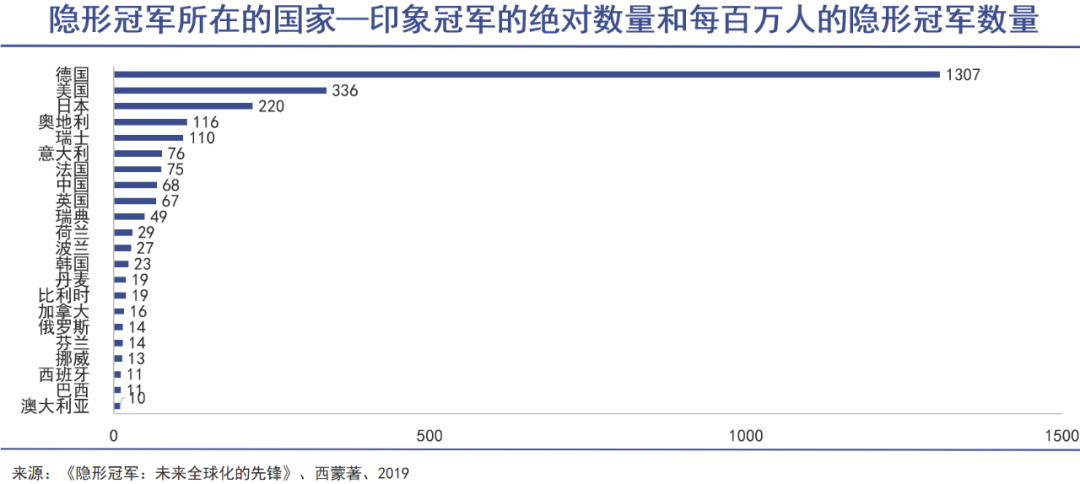
Core Insights - The article discusses the concept of "hidden champions," small and medium-sized enterprises (SMEs) that dominate niche markets but remain largely unknown to the public, particularly in Germany, Japan, and the U.S. [2][3][4] - The number of hidden champions has significantly increased in China, with a unique survival and operational philosophy that differs from Western companies [5][54] - However, the myth of hidden champions is facing challenges due to structural economic issues in Germany and Japan, leading to a decline in their prominence [6][23][36] Group 1: Definition and Characteristics of Hidden Champions - Hermann Simon defines hidden champions as companies that hold the top two global market shares, have annual sales below $1 billion, and are not widely recognized [8] - The number of hidden champions globally is estimated at 3,406, with Germany accounting for 1,573, nearly half of the total [9][13] - These companies often operate in overlooked industries, focusing on specialized products like fasteners and pet leashes, and maintain a low profile as part of their business model [14][15] Group 2: Economic Context and Decline - Germany's economy is experiencing a structural crisis, with GDP shrinking for two consecutive years, a rare occurrence since 1950 [27][28] - The automotive industry, a cornerstone of Germany's manufacturing sector, is facing systemic decline, with a reported 80% increase in bankruptcies since 2021 [28][30] - Major automotive suppliers are also struggling, with significant layoffs announced by companies like Bosch and ZF [28][29] Group 3: Comparison with China - In contrast to the decline of hidden champions in Germany and Japan, China's hidden champions are on the rise, with over 14,000 specialized small and medium enterprises identified [53][54] - Chinese companies are increasingly entering the global market, with 15 firms listed among the top 100 automotive parts suppliers, showcasing higher profit margins than their European counterparts [52] - The article notes that the number of identified hidden champions in China has tripled in the past five years, indicating a robust growth trajectory [54][55] Group 4: Future Outlook - The article suggests that the traditional manufacturing powerhouses of Germany and Japan are losing their competitive edge due to slow digital transformation and a lack of innovation [39][42][46] - The rise of Chinese technology and manufacturing capabilities is reshaping the global industrial landscape, with a notable absence of German and Japanese firms in the emerging sectors like AI and renewable energy [36][37] - The future of hidden champions in Germany and Japan appears uncertain as they struggle to adapt to changing market dynamics and increasing competition from China [58]

研发投入比下滑,日本车企没钱了?
Zhong Guo Qi Che Bao Wang· 2025-10-20 09:57
Core Insights - Japanese automakers are expected to adopt a conservative approach to R&D spending in the fiscal year 2025, with R&D expenditure projected to be less than 4% of sales, significantly lower than their overseas competitors [2][11] - The R&D spending of Japan's seven major automakers is projected to total 3.94 trillion yen, a slight increase of 2% year-on-year, with the R&D expenditure ratio at 3.92%, marking the second consecutive year below 4% [2][3] R&D Spending Breakdown - Honda leads the group with an R&D expenditure ratio of 5.7%, while Toyota ranks last at 2.8%. However, in terms of total R&D spending, Toyota remains the highest at 1.37 trillion yen, a 3.3% increase year-on-year [3][4] - Nissan plans to invest 630 billion yen in R&D, a 1.8% increase, with a ratio of 5% of expected sales. Suzuki's R&D spending is expected to rise by 13% to 300 billion yen, with a ratio of 5.2% [3][4] - Subaru anticipates a 12.5% decline in R&D spending, while Mitsubishi's spending remains unchanged from the previous year [3] Market Challenges - Japan's automotive industry faces significant challenges, including a 13.8% year-on-year decline in exports to the U.S., with automotive exports dropping by 28.4% due to U.S. tariff policies [6] - The seven major Japanese automakers are expected to see a combined operating profit reduction of approximately 2.67 trillion yen in the fiscal year 2025, which is over 30% of their total operating profit for the fiscal year 2024 [6] Strategic Shifts - Japanese automakers are adjusting their R&D strategies in response to the global slowdown in electric vehicle market growth, with some projects being postponed or scaled down [6][13] - Toyota plans to diversify its investments in carbon neutrality, focusing on hybrid and hydrogen technologies alongside electric vehicles, while also developing a software-defined vehicle platform [13][14] - Honda is prioritizing R&D in software-defined vehicles and advanced driver-assistance systems (ADAS), collaborating with Chinese companies to adapt to local market needs [13][14] Competitive Landscape - German automakers are significantly outpacing Japanese firms in R&D spending, with Volkswagen, BMW, and Mercedes-Benz leading the global rankings [7][8] - BYD has emerged as a strong competitor, ranking seventh in global R&D spending, reflecting the aggressive investment strategies of Chinese automakers in the electric and smart vehicle sectors [8]
