Intel(INTC)

Search documents
Intel偷塔英伟达,比Google狠多了,直接挖角台积电核心人物
Tai Mei Ti A P P· 2025-11-29 08:15
Core Viewpoint - Nvidia is facing significant challenges due to increased competition and potential threats to its business model, particularly from Google and Intel, which could undermine its high profit margins and market dominance [1][2]. Group 1: Nvidia's Current Challenges - Nvidia's crisis began with major investors like Masayoshi Son reducing their stakes, leading to a public dispute over its financial performance and valuation [1]. - The company's high profit margins are under threat from Google's aggressive push with its TPU technology, which is now being offered to clients for on-premises deployment, potentially eroding Nvidia's market share [1]. - The departure of TSMC's senior vice president, who joined Intel, raises concerns about the stability of Nvidia's supply chain and its reliance on TSMC for advanced manufacturing processes [2][5]. Group 2: Impact of Key Personnel Movements - The former TSMC executive, who has extensive experience in advanced process technology, is now tasked with enhancing Intel's manufacturing capabilities, which could shift the competitive landscape [3][4]. - Intel's response to TSMC's legal actions indicates a strategic move to position itself as a viable alternative in the semiconductor manufacturing space, potentially impacting Nvidia's pricing power [5][7]. Group 3: Long-term Implications for Nvidia - The ongoing legal battle and personnel shifts may accelerate the emergence of a second top-tier foundry, which could diminish Nvidia's exclusive advantages in advanced manufacturing [6][8]. - If Intel successfully narrows the technological gap, Nvidia may lose its ability to leverage its manufacturing dominance to justify its high valuation and profit margins [7][8]. - The market's perception of the long-term stability of the Nvidia-TSMC partnership is changing, suggesting that Nvidia's competitive edge may not be as secure as previously thought [8].


曝:英特尔将拿下苹果M芯片18A订单!股价大涨!
是说芯语· 2025-11-29 06:51
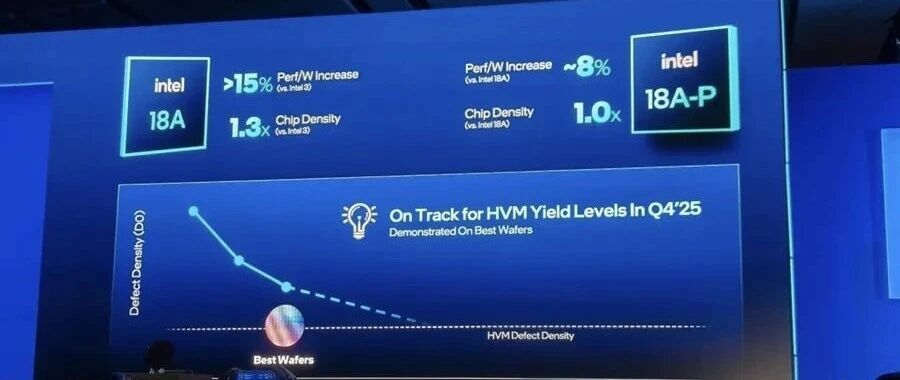
Core Viewpoint - Apple is likely to adopt Intel Foundry's 18A-P process for producing low-end MacBook and iPad chips, which could mark a significant breakthrough for Intel's foundry business by securing a key external customer [1][4]. Group 1: Intel's 18A-P Process - The 18A-P process is a derivative of Intel's 18A technology, introduced during the "Direct Connect 2025" initiative, featuring Foveros Direct 3D hybrid bonding technology that enhances chip integration and performance [5]. - Apple has signed a Non-Disclosure Agreement (NDA) with Intel and has received the 0.9.1GA version of the PDK for the 18A-P process, with key simulations and PPA studies meeting expectations [4][5]. - If progress continues smoothly, Apple plans to start mass production of low-end M-series chips based on the 18A-P process as early as Q2 to Q3 of 2027, contingent on the quality of Intel's 1.0/1.1 PDK delivery [4][8]. Group 2: Market Impact and Strategic Positioning - Following the announcement, Intel's stock surged by 10.19%, indicating strong market confidence in the potential collaboration with Apple [2]. - Apple's projected shipment volume for low-end M-series chips is expected to reach between 15 million to 20 million units by 2027, which would significantly boost Intel Foundry's order volume and serve as a key growth driver [6]. - The collaboration reflects Apple's strategy to diversify its supply chain, supporting "Made in America" initiatives by utilizing Intel's advanced wafer fabrication facilities while still relying on TSMC for high-end chips [6]. Group 3: Industry Implications - The adoption of the 18A-P process by Apple could set a precedent, encouraging other fabless companies to follow suit, potentially making this process a mainstream choice in the mid-to-low-end chip market [8]. - The collaboration is still in the "intent stage," with the success of the partnership hinging on the validation of the 18A-P process's PDK sampling and Intel's production capacity and yield performance [8].


英特尔一夜暴涨10%,老树真的要开新花?
Sou Hu Cai Jing· 2025-11-29 06:16
Core Viewpoint - Intel's stock price surged over 10%, marking its largest single-day increase in nearly two months, raising questions about whether this is a fleeting spike or the beginning of a turnaround [1] Group 1: Market Reaction - The catalyst for this surge was a prediction from analyst Ming-Chi Kuo that Intel may start shipping entry-level M-series processors for Apple as early as 2027 [3] - This potential order from Apple, although initially small and focused on products like MacBook Air and iPad Pro, is symbolically significant as it represents a key step for Intel in securing external major clients [4] Group 2: Financial Performance and Challenges - Despite the stock price doubling this year, the optimism surrounding Apple's orders is accompanied by ongoing challenges in Intel's foundry business, which reported a loss of approximately $0.46 for every dollar of revenue last year [4] - Investors are advised to remain cautious, as the stock price has already reflected some optimistic expectations, and focus should be on Intel's advancements in advanced processes like 18A and its ability to secure more top-tier clients like Apple [5] Group 3: Strategic Considerations - The long-term success of Intel's transformation will depend on both technological advancements and commercial viability, highlighting the importance of monitoring improvements in its foundry business losses [5] - The investment strategy emphasizes the need for rational decision-making over impulsive reactions to market fluctuations, suggesting that the volatility may present opportunities for discerning investors [5]

Intel (INTC) Shares Strategic Direction at Global Technology Conference
Yahoo Finance· 2025-11-29 05:39
Core Insights - Intel Corporation (NASDAQ: INTC) is recognized as one of the 15 best-performing AI stocks heading into 2026, with strategic plans shared at the RBC Capital Markets Global Technology, Internet, Media and Telecommunications Conference 2025 [1] Group 1: Strategic Plans and Investments - John Pitzer, corporate vice president at Intel, discussed the company's focus on improving margins, increasing market share, and its AI strategy, while also addressing supply constraints expected to peak in Q1 2026 [2] - A significant part of Intel's strategy involves a $5 billion investment from NVIDIA Corporation (NASDAQ: NVDA), which is anticipated to close by the end of the year. Intel will provide a custom Xeon part for data centers, which NVIDIA will integrate and manage the go-to-market strategy [3] Group 2: AI Strategy and Market Focus - Intel is concentrating on its AI strategy, which includes advancements in both PC and server markets, as well as inference-specialized GPUs that support agentic and physical AI [4] - Improving gross margins is a critical focus for Intel, as the company aims to enhance cost efficiency, particularly given the current depressed margins in the data center segment [4]
Wall Street edges higher in thin post-holiday trade
The Economic Times· 2025-11-29 04:31
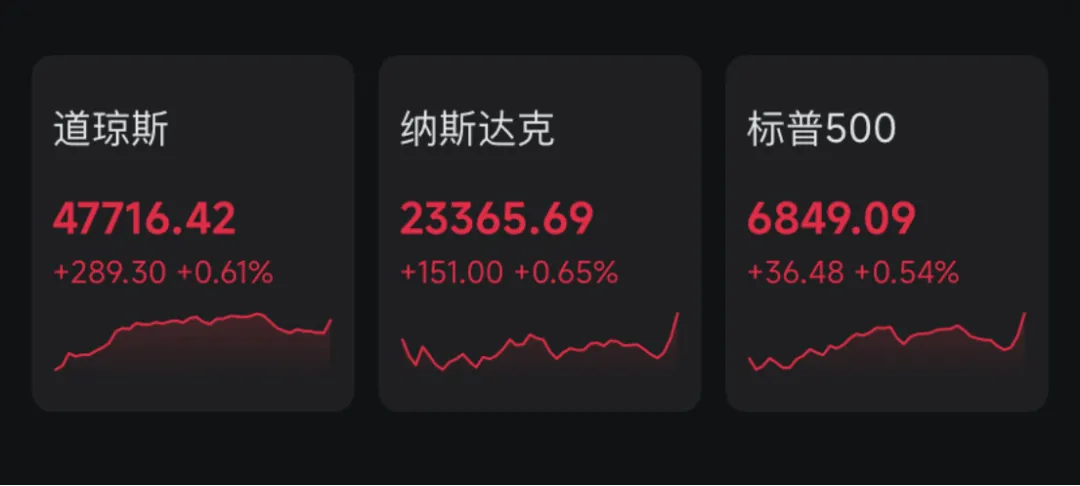
Market Performance - The Dow Jones Industrial Average rose 0.61% to 47,716.42 points, the S&P 500 gained 0.54% to 6,849.09 points, and the Nasdaq Composite added 0.65% to 23,365.69 points, driven by gains in retail and a recovery in tech stocks [1][6] - The three main indexes posted weekly gains: S&P 500 rose 3.73%, Nasdaq gained 4.91%, and Dow climbed 3.18% [4][6] - The S&P and Dow turned marginally positive for the month, while the Nasdaq closed down 1.51% due to concerns about stretched AI and tech valuations [4][6] Sector Performance - All major S&P 500 sectors were up except for healthcare, with Eli Lilly down 2.6% [1][6] - Intel led the S&P 500 with a significant 10.2% gain after an analyst indicated the company would start shipping Apple's lowest-end M processor as early as 2027 [1][6] Trading Activity - The trading session was characterized by light volume post-holiday, with minimal activity noted [5][6] - Futures trading experienced a temporary disruption due to a cooling issue at CME's CyrusOne data centers, which affected global currencies, commodities, and equity contracts [5][6] Upcoming Events - The week marked the beginning of the holiday shopping season, starting with Thanksgiving, followed by Black Friday and Cyber Monday, which are critical sales days for retailers [7]

11月收官,纳指终结7连阳!英伟达跌超12%!英特尔牵手苹果,一夜飙升超10%
雪球· 2025-11-29 04:09
Market Overview - On November 28, U.S. stock markets experienced a rise despite a trading halt caused by a technical issue at the Chicago Mercantile Exchange, with the Dow Jones up 0.61%, Nasdaq up 0.65%, and S&P 500 up 0.54%, marking five consecutive days of gains [1] - For the week, the Dow Jones rose over 3%, while Nasdaq and S&P 500 saw nearly 4% increases [1] November Performance - November saw a pullback in technology stocks due to rising concerns about the future profitability of AI companies, leading to a 1.51% decline in the Nasdaq Composite Index, ending a seven-month streak of gains [3] - The S&P 500 and Dow Jones managed slight monthly increases, achieving seven consecutive months of gains [3] Notable Stock Movements - In November, notable stock performances included Eli Lilly up 24.82%, Google A up 13.87%, and Apple up 3.24%, while Meta, TSMC, Amazon, Microsoft, Tesla, and Nvidia saw declines ranging from 0.06% to 12.59% [5] AI Market Dynamics - Citic Securities highlighted that Google's model optimization reflects ongoing iterations in large models, which will drive sustained demand for computing power, supported by Nvidia's strong earnings report [7] - Concerns have arisen regarding Google's self-developed TPU potentially impacting Nvidia's market share in AI chips, but Nvidia's CEO emphasized the vast and rapidly growing AI market, asserting the company's unique position in providing comprehensive solutions [7] Federal Reserve Focus - As the December FOMC meeting approaches, market attention is on the increasing expectations for a 25 basis point rate cut, with the probability rising to 86.9% from under 30% a week prior [9][10] - Recent comments from Federal Reserve officials have reinforced the likelihood of a rate cut due to economic and employment weaknesses [10] Commodity Market Insights - Gold prices performed well, with COMEX gold futures rising 3.36% to $4257.30 per ounce, supported by strong ETF demand and central bank purchases [11] - Morgan Stanley's commodity strategists forecast gold prices could reach $4500 per ounce by mid-2026 [11] Intel's Strategic Move - Intel's stock surged 10.2% following reports that it may begin shipping M-series processors to Apple as early as 2027, marking a significant collaboration after a five-year hiatus [13] - This partnership is seen as strategically beneficial for both companies, with Intel potentially overcoming its challenges in advanced process technology and improving its long-term outlook [15]

X @Investopedia
Investopedia· 2025-11-29 04:00
Intel shares surged Friday after an analyst's social media post added fuel to rumors the iPhone maker Apple could become a new customer for the chipmaker. https://t.co/kv2NRm2j7x ...
分析师爆料:英特尔或最快2027年为苹果出货低端M系列处理器
Huan Qiu Wang· 2025-11-29 03:08
Core Insights - Intel is expected to start shipping the lowest-end M series processors for Apple as early as 2027 [1] Group 1: Partnership and Development - Apple has signed a Non-Disclosure Agreement (NDA) with Intel and has successfully obtained the advanced process 18AP's PDK 0.9.1GA [3] - Progress on key simulation and research projects, such as PPA, is in line with expectations, with Intel anticipated to release PDK 1.0/1.1 in Q1 2026 [3] Group 2: Product and Market Impact - The lowest-end M chips are primarily used in MacBook Air and iPad Pro, with a projected combined shipment of approximately 20 million units in 2025 [3] - The shipment of the lowest-end M processors is expected to be between 15 million to 20 million units in 2026 and 2027, influenced by the introduction of a new low-end MacBook equipped with iPhone processors [3]

英特尔将为苹果代工芯片?
半导体行业观察· 2025-11-29 02:49
Core Viewpoint - Apple may shift to Intel for its M-series chips by 2027, with significant implications for both companies, as indicated by supply chain analyst Ming-Chi Kuo [1][2][3]. Group 1: Potential Agreement with Intel - The likelihood of Apple entering into an agreement with Intel has increased recently, as Apple has signed a confidentiality agreement to procure Intel's 18AP PDK 0.9.1GA chips [1][3]. - If successful, Intel could start delivering entry-level M-series processors based on the 18AP advanced process node as early as Q2 or Q3 of 2027, depending on the progress after receiving PDK 1.0/1.1 [1][3][4]. Group 2: Strategic Implications - This potential deal could help Apple demonstrate its commitment to "buying American" by incorporating more domestic companies into its supply chain [2]. - For Intel, this agreement may signal the end of its most challenging period, with future nodes like 14A expected to attract more orders from Apple and other major clients, enhancing Intel's long-term outlook [2][3]. Group 3: Technical Aspects of 18A-P Process - The 18A-P process is designed for various power and voltage ranges, optimizing threshold voltage for better energy efficiency, aligning with Apple's high-performance chip design philosophy [4][6]. - Intel's 18A-P process is particularly attractive for companies focused on energy efficiency, and Apple is likely to lead the adoption of this process node [6]. Group 4: Production Estimates - By 2027, Apple is estimated to produce between 15 million to 20 million entry-level M-series chips for MacBook and iPad, indicating significant production capacity if the collaboration with Intel materializes [5].

一则消息 英特尔大涨
Shang Hai Zheng Quan Bao· 2025-11-29 01:15
Core Viewpoint - The expectation of a Federal Reserve interest rate cut has led to a strong performance in the stock market, with major U.S. indices recording five consecutive days of gains, particularly in technology stocks and commodities [1][2]. Group 1: Stock Market Performance - Major U.S. indices closed higher for the fifth consecutive trading day, with the Dow Jones up 0.61% to 47,716.42 points, the S&P 500 up 0.54% to 6,849.09 points, and the Nasdaq up 0.65% to 23,365.69 points [3]. - For the week, the Dow Jones rose 3.18%, the S&P 500 increased by 3.73%, and the Nasdaq gained 4.91%. In November, the Dow Jones saw a cumulative increase of 0.32%, the S&P 500 rose by 0.13%, while the Nasdaq fell by 1.51% [5]. Group 2: Technology Stocks - Large technology stocks generally rose, with Meta gaining over 2%, Amazon up more than 1%, and Microsoft increasing by over 1%. Intel saw a significant rise of over 10% following positive analyst predictions [5][8]. - The Philadelphia Semiconductor Index rose by 1.82%, with notable gains in semiconductor stocks such as Intel, which surged over 10%, and Micron Technology, which increased by over 2% [5]. Group 3: Intel and Apple Collaboration - Analyst Ming-Chi Kuo predicts that Intel may start shipping Apple's entry-level M-series processors as early as 2027, following a recent increase in the likelihood of Intel becoming a supplier for Apple's advanced process technology [6][9]. - Apple has reportedly signed a confidentiality agreement with Intel and is awaiting the release of the PDK 1.0/1.1 in early 2026, which will determine the timeline for production [9]. - The expected shipment volume for the standard M chips, primarily used in MacBook Air and iPad Pro, is around 20 million units for this year, with projections of 15 to 20 million units for the low-end M-series chips in 2026 and 2027 [9]. Group 4: Commodity Market Performance - The commodity market continued its upward trend, with spot gold prices rising above $4,200 per ounce, reaching a near two-week high, and spot silver prices breaking the $55 per ounce mark, setting a new historical high [1][11]. - Silver prices have increased for seven consecutive months, with spot silver closing at $56.397 per ounce, up 5.66%, and COMEX silver futures rising by 6.06% to $57.085 per ounce [11].