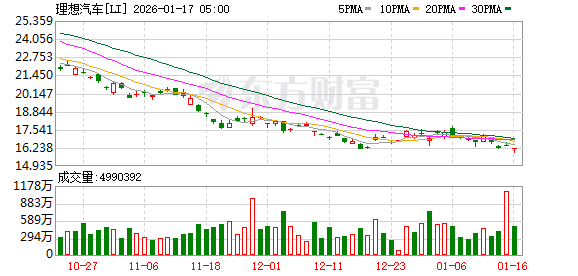
LI AUTO(LI)

Search documents
Inquiry Into Tesla's Competitor Dynamics In Automobiles Industry - Tesla (NASDAQ:TSLA)
Benzinga· 2026-01-20 15:00
Core Insights - The article provides a comprehensive evaluation of Tesla in comparison to its competitors in the automobile industry, focusing on financial indicators, market positioning, and growth potential [1] Company Overview - Tesla is a vertically integrated battery electric vehicle manufacturer and developer of artificial intelligence software, with a diverse vehicle lineup including luxury sedans, SUVs, and trucks [2] - The company aims to deliver approximately 1.8 million vehicles globally in 2024 and also engages in battery sales, solar energy solutions, and operates a fast-charging network [2] Financial Metrics Comparison - Tesla's Price to Earnings (P/E) ratio is 301.72, significantly higher than the industry average, indicating a premium valuation [5] - The Price to Book (P/B) ratio of 18.19 also exceeds the industry average by 6.32x, suggesting a premium relative to book value [5] - Tesla's Price to Sales (P/S) ratio stands at 16.12, which is 11.27x the industry average, indicating potential overvaluation based on sales performance [5] - The Return on Equity (ROE) for Tesla is 1.75%, which is 2.81% above the industry average, reflecting efficient equity utilization for profit generation [5] - Tesla's EBITDA is $3.66 billion, slightly below the industry average, which may indicate financial challenges [5] - The gross profit of Tesla is $5.05 billion, also below the industry average, suggesting lower revenue after production costs [5] - The company demonstrates robust revenue growth of 11.57%, surpassing the industry average of 0.91%, indicating strong sales expansion [5] Debt to Equity Ratio - Tesla has a debt-to-equity (D/E) ratio of 0.17, which is lower than its top four peers, indicating a stronger financial position and less reliance on debt financing [9]



【整车主线周报】12月零售符合预期,看好26年景气度向上
东吴汽车黄细里团队· 2026-01-20 14:07
Investment Highlights - The passenger car sector is expected to see a recovery in Q1 2026 due to the implementation of subsidy policies, with a focus on high-end electric vehicles that are less sensitive to policy changes, such as Jianghuai Automobile, Geely, Great Wall Motors, BAIC Blue Valley, Seres, and Li Auto [2][7] - For exports, priority should be given to leading companies with established overseas systems and proven execution capabilities, including BYD, Great Wall Motors, Chery, Leap Motor, Xpeng, SAIC Motor, and Changan Automobile [2][7] Heavy Truck Sector - In 2025, wholesale heavy truck sales reached 1.144 million units, up 26.8% year-on-year, with domestic sales of 799,000 units, up 32.8%, and exports of 341,000 units, up 17.2% [3][37] - The expected domestic sales for heavy trucks in 2026 is optimistic, projected at 800,000 to 850,000 units, a 3% increase year-on-year [3][37] - Recommended leading heavy truck companies include China National Heavy Duty Truck Group, Weichai Power, Foton Motor, FAW Jiefang, and CIMC Vehicles [3][37] Bus Sector - The implementation of the vehicle replacement policy in 2026 is slightly better than expected, with bus sales in 2025 projected at 38,000 units, a 25% increase year-on-year [3][37] - For 2026, bus sales are expected to grow to 40,000 units, a 5% increase year-on-year, supported by the number of buses over eight years old that need replacement [3][37] - Recommended leading bus companies include Yutong Bus, King Long Motor, and Zhongtong Bus [3][37] Motorcycle Sector - The motorcycle industry is projected to achieve total sales of 19.38 million units in 2026, a 14% increase year-on-year, with large-displacement motorcycles expected to reach 1.26 million units, a 31% increase [4][34] - Domestic sales of large-displacement motorcycles are expected to grow slightly to 430,000 units in 2026, a 5% increase year-on-year, while exports are projected to reach 830,000 units, a 50% increase [4][34] - Recommended leading motorcycle companies include Chunfeng Power and Longxin General [4][34]






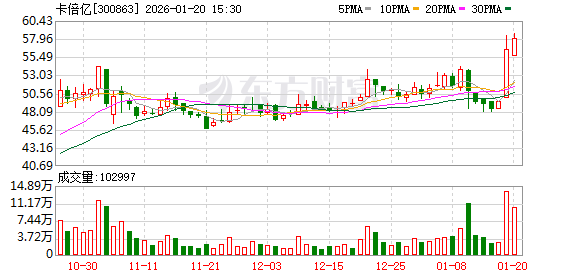
卡倍亿:在新能源汽车领域,公司已进入比亚迪等整车厂商的供应链
Zheng Quan Ri Bao· 2026-01-20 12:16
Group 1 - The company, Kabeiyi, has entered the supply chains of major electric vehicle manufacturers including BYD, Tesla, Geely, NIO, Li Auto, Xpeng, and Xiaomi in the new energy vehicle sector [2]


理想推出7年低月供方案,部分车型前三年免息,这波操作实在吗?
Xin Lang Cai Jing· 2026-01-20 10:41
想买理想的朋友可以等等看了,近日,理想正式推出7年超低月供购车方案,还针对MEGA、L8两款车 型给出前三年免息福利,这波政策看似门槛降低,实际值不值得冲,得好好扒一扒。 要知道,之前车企分期主流年限也就5年,7年方案算是行业少见的长周期了。理想这波没玩虚的,核心 亮点就是部分车型前三年免息,能大幅降低前期还款压力。这次的7年期限直接拉满,对预算有限但想 一步到位买大车的家庭来说,吸引力确实够强。 不过别光看月供低就上头。长期分期的通病就是总利息更高,哪怕前三年免息,后四年的利息叠加下 来,总支出大概率比5年方案多。而且贷7年享3年0息的方案只有MEGA和i8才能享受,像走量的L6、L7 是不能享受的。 个人觉得,理想这次的动作也算实在了。多少也让那些想买理想汽车用户不再纠结首付和月供压力了, 这个7年分期能把月供压到更低,降低购车门槛。但要知道的是,这波操作是行业内卷的必然结果,就 比如特斯拉、小米都有7年贷款了,理想再不做出动作,就会失去潜在客户。对消费者来说,核心还是 算清总成本,别被低月供迷惑。如果资金周转紧张、想减轻每月负担,这方案值得考虑,毕竟买车不是 只看月供,总支出和自身财务状况才是最重要的。 ...
汽车市场或步入“7年购车”时代
Xin Hua Cai Jing· 2026-01-20 06:21
Group 1 - The core viewpoint of the articles highlights the introduction of a 7-year low monthly payment car purchase plan by Li Auto, which includes interest-free options for the first three years on models MEGA and i8 [1] - Since 2026, multiple brands including Tesla, Xiaomi, and Li Auto have adopted similar 7-year low-interest monthly payment policies, indicating a potential shift in the automotive market towards a "7-year car purchase" era [1]
理想超充服务区站各省分布情况
理想TOP2· 2026-01-20 06:13
Core Viewpoint - The article discusses the expansion plans of Li Auto, highlighting the growth in the number of supercharging stations across various provinces in China, with a target of 1,680 high-speed supercharging stations by the end of 2026, representing a potential increase of approximately 40% from current numbers [1]. Summary by Relevant Sections Expansion Plans - By January 2026, Li Auto aims to have approximately 1,104 service area supercharging stations (excluding nearby highway stations) and plans to build 1,680 high-speed supercharging stations by the end of 2026 [1]. - The company is focusing on increasing its presence in provinces with high highway mileage and service area supercharging stations [1]. Provincial Breakdown - Six provinces have over 90 high-speed service stations: Chongqing (135), Zhejiang (121), Jiangxi (113), Hebei (93), Anhui (92), and Sichuan (92) [1]. - Eight provinces have an average of one Li Auto supercharging station within 120 kilometers in one direction: Chongqing (33), Tianjin (42), Zhejiang (46), Jiangxi (61), Anhui (65), Hebei (94), Tibet (102), and Sichuan (112) [1]. - Fourteen provinces have fewer than 15 service area stations, with the lowest being Inner Mongolia, Heilongjiang, and Liaoning, each having no stations [1]. Highway Mileage and Service Stations - The article provides a detailed table of highway mileage and the number of service area supercharging stations for various provinces, indicating the average distance between stations [2][3][5][6][7][8][9][10]. - For example, Chongqing has 4,500 km of highways with 135 service area stations, averaging 33 km between stations, while Tibet has only 407 km of highways with 4 service area stations, averaging 102 km between stations [2][10].
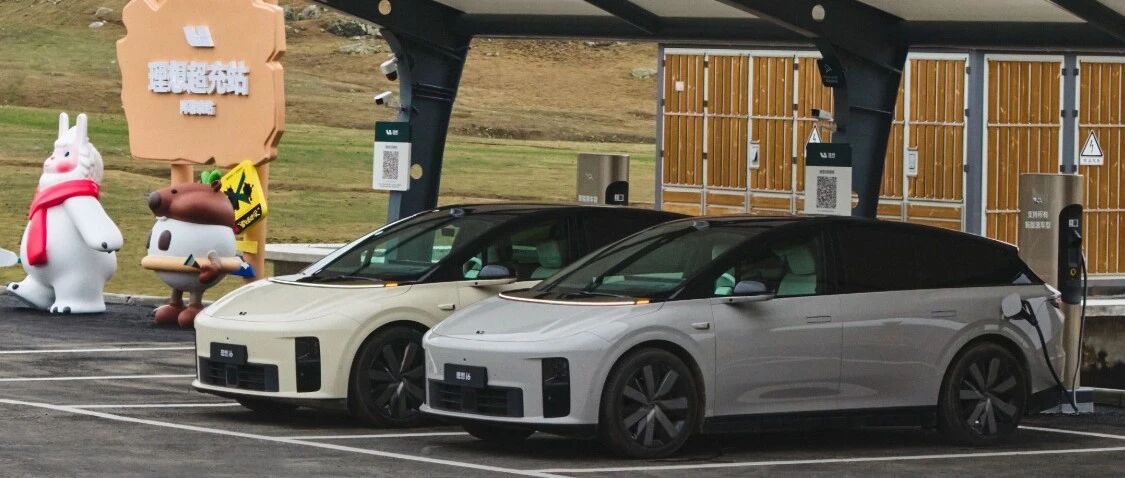
理想汽车7年超低月供购车方案公布:首付3.25万元起,月供低至2578元
Feng Huang Wang· 2026-01-20 04:23
Core Viewpoint - The announcement of a 7-year low monthly payment car purchase plan by Li Auto and Xiaomi indicates a competitive strategy to attract customers in the electric vehicle market, highlighting the trend of offering extended financing options to enhance affordability [1] Group 1: Li Auto - Li Auto officially announced a 7-year ultra-low monthly payment car purchase plan starting from January 20, 2026, with a down payment as low as 32,500 yuan and monthly payments starting at 2,578 yuan [1] - The Li MEGA and Li i8 models have exclusive 7-year loan plans, offering interest-free payments for the first 3 years, with monthly payments starting at 2,857 yuan [1] Group 2: Xiaomi - Xiaomi Auto announced a 7-year low-interest policy starting from January 16, with a down payment of 49,900 yuan and monthly payments starting at 2,593 yuan for the Xiaomi YU7 model [1]

2026 中国新能源汽车与动力电池手册_从自动驾驶到人工智能-2026 China EV & EV Battery Handbook_ From Autonomous Driving to AI
2026-01-20 01:50
Summary of Key Points from the Conference Call Industry Overview: Greater China Auto, EV, and EV Battery Industry Forecasts - **China's Auto Industry**: Expected to face challenges in 2026 with a forecasted decline in auto wholesales by **1.6% YoY** compared to a **10% YoY** increase in 2025. This decline is attributed to front-loaded demand in 2025 [1] - **Domestic EV Sales**: Anticipated to grow only **7% YoY** in 2026 due to a **5% increase in purchase tax** and reduced trade-in subsidies [1] - **Export Sales**: Projected to increase by **12% YoY**, reaching **7.9 million units** in 2026, with EV exports expected to surge by **40% YoY** [1] - **Competition Dynamics**: Shift from price competition to configuration-based competition, necessitating more investment in autonomous driving (AD) and smart cabin technologies [1] Key Automotive/EV Themes for 2026 Theme 1: Export Growth - **Export Growth**: Companies like Chery and BYD are expected to benefit significantly from exports, especially with the EU's minimum EV price replacing tariffs [2] Theme 2: Autonomous Driving Development - **ADAS to AD Transition**: L3 permits issued to Changan and BAIC, with highway/city NOA penetration expected to exceed **40%** in 2026 and **85%** by 2030. L4/L5 penetration is projected to reach **8%** by 2030 [3] Theme 3: Cost Concerns - **Battery and Memory Costs**: Rising costs and supply stability of memory are key concerns for auto OEMs [3] Key Battery Themes for 2026 Theme 1: Energy Storage Systems (ESS) - **ESS Demand**: Global battery ESS installations expected to grow by **33% YoY** in 2026, with shipments increasing by **41% YoY** [4] Theme 2: Global Expansion - **Overseas Capacity Expansion**: Chinese battery manufacturers are accelerating their overseas capacity expansion, particularly in Europe and Southeast Asia, in response to rising tariffs and trade tensions [4] Theme 3: VAT Rebate Changes - **Export VAT Rebate Cut**: Anticipated to lead to a rush in battery production and shipment in Q1 2026, potentially increasing raw material prices and exerting cost pressure on battery makers and auto OEMs [5] Theme 4: Technological Innovation - **Sodium-Ion Battery**: Launch of Gen-2 sodium-ion battery expected, with ASSB (all-solid-state battery) small-batch production anticipated to start in 2027 and scale up significantly post-2029 [5] Investment Recommendations - **Top Picks**: - **XPeng**: Launch of Mona SUV and HR in 2H26, with a focus on AI-related businesses [6] - **CATL**: Growth driven by CEV, ESS, and overseas capacity despite short-term cost pressures [6] - **Tuopu**: Major supplier for humanoid robots with overseas expansion [6] - **Minth**: Resilient earnings growth supported by high overseas market exposure [6] - **Hesai**: Increased LiDAR adoption in China alongside L3 ADAS development [6] Additional Insights - **Market Dynamics**: The shift in competition and the focus on technological advancements highlight the evolving landscape of the automotive and EV sectors in China, emphasizing the need for companies to adapt to changing consumer preferences and regulatory environments [1][3][4][5]




英伟达正在被中国车企抛弃
阿尔法工场研究院· 2026-01-20 00:08
Core Viewpoint - The automotive industry is shifting from reliance on NVIDIA's chips to self-developed solutions, as companies like Xiaopeng and NIO are moving towards their own chip development to reduce costs and enhance performance [2][5][20]. Group 1: Market Dynamics - Xiaopeng has released four new models equipped with its self-developed Turing driving chip, marking a complete departure from NVIDIA's chips [2]. - NIO is transitioning to its self-developed Shenqi chip, which is expected to significantly reduce costs compared to purchasing NVIDIA chips [2][8]. - NVIDIA's market share in China's high-end driving chip sector is projected to decline from 39% in 2024 to 25% in 2025, indicating a significant shift in the competitive landscape [2][9]. Group 2: Competitive Landscape - In 2024, NVIDIA's Orin-X chip held a 39.8% market share with 2.1 million units, but competitors like Horizon are gaining ground with lower-cost alternatives [5][6]. - Horizon's J5 chip has secured contracts with over nine automakers, including major brands like BYD and SAIC, highlighting the increasing competition in the market [6][9]. - By 2025, NVIDIA's partnerships with major clients like NIO and Xiaopeng have diminished, indicating a loss of influence in the market [6][8]. Group 3: Financial Performance - In the first three quarters of fiscal year 2025, NVIDIA reported $147.8 billion in total revenue, with only $1.7 billion (approximately 1%) coming from automotive business, underscoring the limited impact of automotive sales on overall performance [14][16]. - The automotive segment's revenue is significantly overshadowed by NVIDIA's data center business, which accounts for nearly 90% of its income [14][16]. Group 4: Future Outlook - NVIDIA is attempting to pivot from being a chip supplier to a comprehensive smart driving solution provider, but this transition faces challenges as competitors strengthen their positions [20]. - The launch of NVIDIA's open-source VLA model, aimed at assisting automakers lacking full-stack development capabilities, reflects its strategy to maintain relevance in the evolving market [20][21]. - However, the practical utility of the VLA model has been questioned, indicating potential hurdles in its adoption and effectiveness [21].



理想汽车旗下驱动技术公司注册资本增至3亿元
Zheng Quan Ri Bao· 2026-01-19 12:39
Group 1 - The core point of the article is that Jiangsu Ideal Drive Technology Co., Ltd. has increased its registered capital from 180 million to 300 million yuan [2] - The company is fully owned by Jiangsu Ideal Automotive Intelligent Technology Co., Ltd., which is a subsidiary of Ideal Automotive [2]